
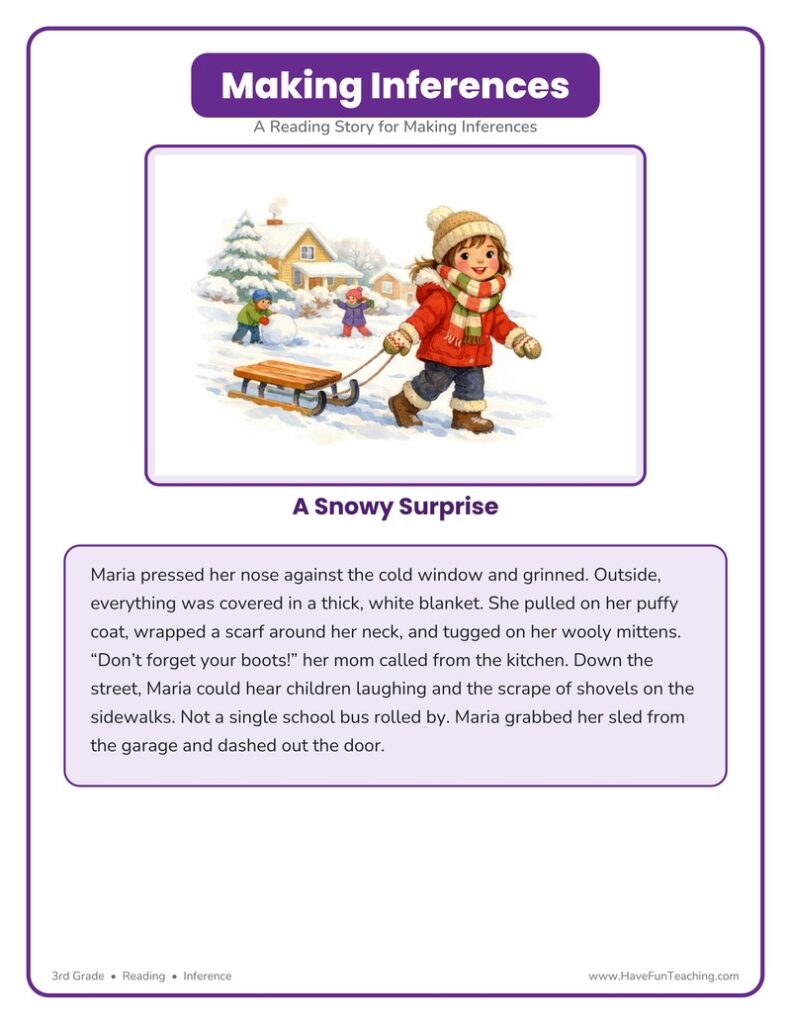
Reading Inferences Worksheet
This reading inferences worksheet gives 3rd graders a short snow-day story and five clue-based questions that build evidence-driven thinking. Includes a complete answer key — perfect for no-prep reading comprehension practice at home or in class.
$6.97
Want this one free?
Tell us where to send it and it’s yours — no card, no catch.
One free resource per teacher. We’ll also send free teaching ideas each week — unsubscribe anytime.
Free teacher account · no credit card
Membership
Get every game, song, & printable
- Every game, on any device
- 10,000+ printables
- Assign online with HFT Classroom
Then $39.97/year · cancel anytime · See plans
- Instant digital download
- Printable PDF + answer key
- Made by real teachers
Teacher / Family membership
Teaching is easier with every resource
One membership for your whole year: 10,000+ worksheets, games, songs and videos for Preschool–6th, for your classroom or homeschool.
- Unlimited printables & downloads
- Every game, on any device
- Assign online with HFT Classroom
- Cancel anytime
Teacher / Family membership · 3 days free
Yearly
Monthly would be $119.64 a year
$3.33/month
Billed $39.97 once a year
You save $79.67 every year
Start My 3 Free Days$0 today · cancel anytime
Monthly
$9.97/month
Flexible, month to month
Yearly is just $3.33/mo. Switch and save $79.67
Start My 3 Free Days$0 today · cancel anytime
About this resource
Description
Making inferences is one of the most important reading comprehension skills a young reader can build, and this reading inferences worksheet gives third graders focused practice doing exactly that. An inference is a smart guess a reader makes by combining clues in the text with what they already know. Good stories leave hints instead of stating everything directly, so readers have to read between the lines to understand what is really happening. This worksheet helps students slow down, notice details, and support their thinking with evidence from the passage.
This 3rd grade inference worksheet centers on a short, engaging snow-day story about a girl named Maria. After reading the passage, students answer five inference questions that ask not only what they think, but how they know. To use it, have students read the story once for enjoyment, then reread it with a pencil to underline clues. Each question includes lines for a complete written answer, so learners practice explaining their reasoning in full sentences. The included answer key models strong, evidence-based responses.
What’s Included
- 1 print-ready PDF worksheet
- Answer key
- A short reading passage and 5 inference questions
There are three big reasons this reading inferences worksheet helps kids learn. First, it connects inference to real text evidence, so students learn that a strong inference is backed up by clues rather than random guessing. Second, the write-to-explain format strengthens comprehension and writing at the same time. Third, the friendly, relatable story keeps young readers engaged, making a challenging skill feel approachable and fun.
Teachers and parents can extend this skill in many playful ways. Read a picture book aloud and pause to ask, “What do you think happens next, and what clue tells you that?” Play a guessing game where you describe a scene and children infer the season, place, or feeling. During everyday moments, model your own thinking out loud: “The sidewalk is wet, so I can infer it rained last night.” The more children practice noticing clues, the stronger their reading comprehension becomes.
Related Resources
What teachers say
Reviews
You must be logged in to post a review.
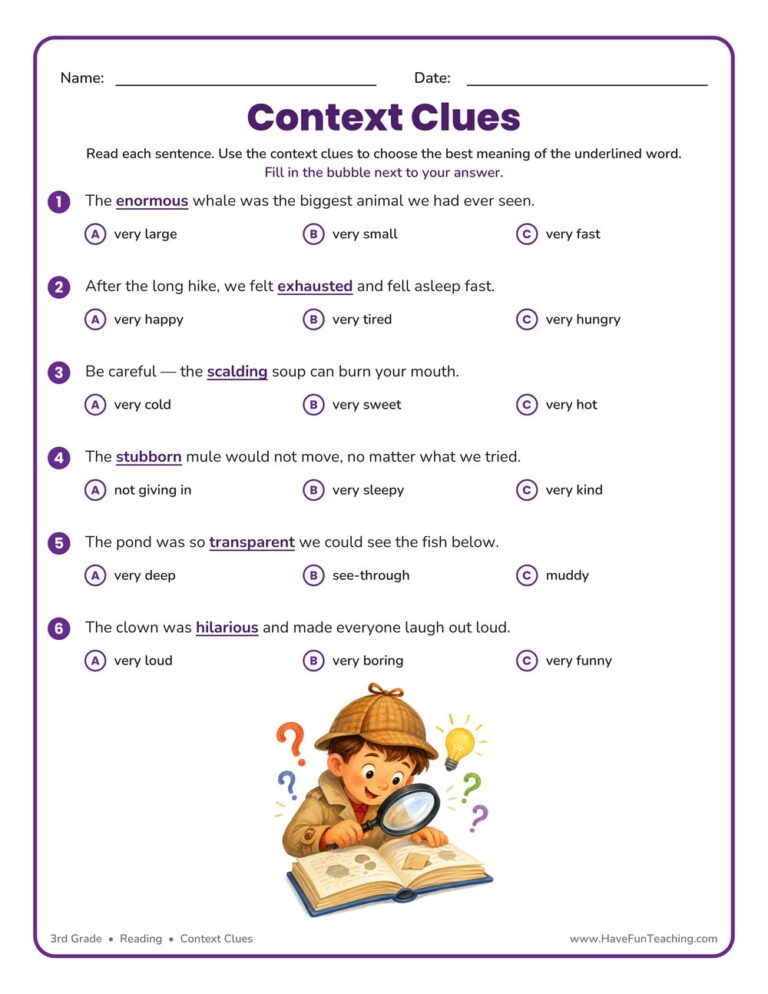
A 3rd grade Context Clues Worksheet with six multiple-choice sentences where students use the surrounding words to find the meaning of each underlined word. Answer key included for fast, no-prep vocabulary practice.

A reusable What I Read What I Know Inference Graphic Organizer Worksheet that walks 3rd grade readers from text clues to background knowledge to a written inference. Use it with any book, all year long.
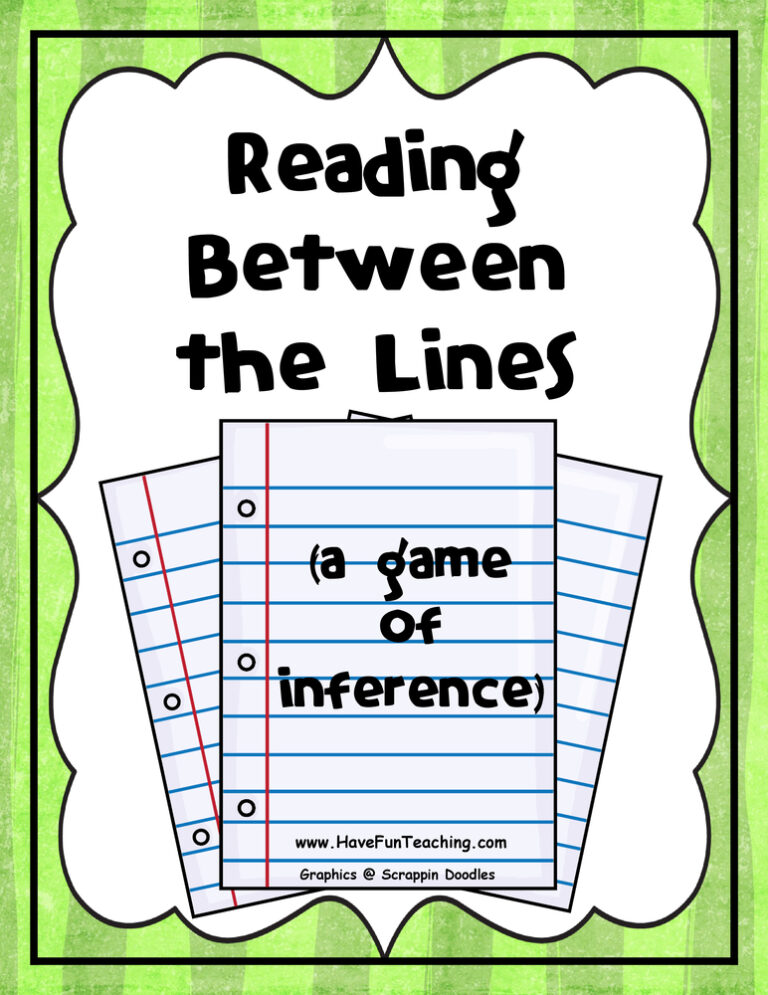
This reading between the lines inference activity lets 1st to 3rd grade students use story clues to figure out how a character feels. An answer key is included for easy checking.

This What I Know About the Text Inference Graphic Organizer Worksheet gives 3rd Grade readers three story clues to turn into inferences using what they already know. An answer key is included for quick, no-prep practice.
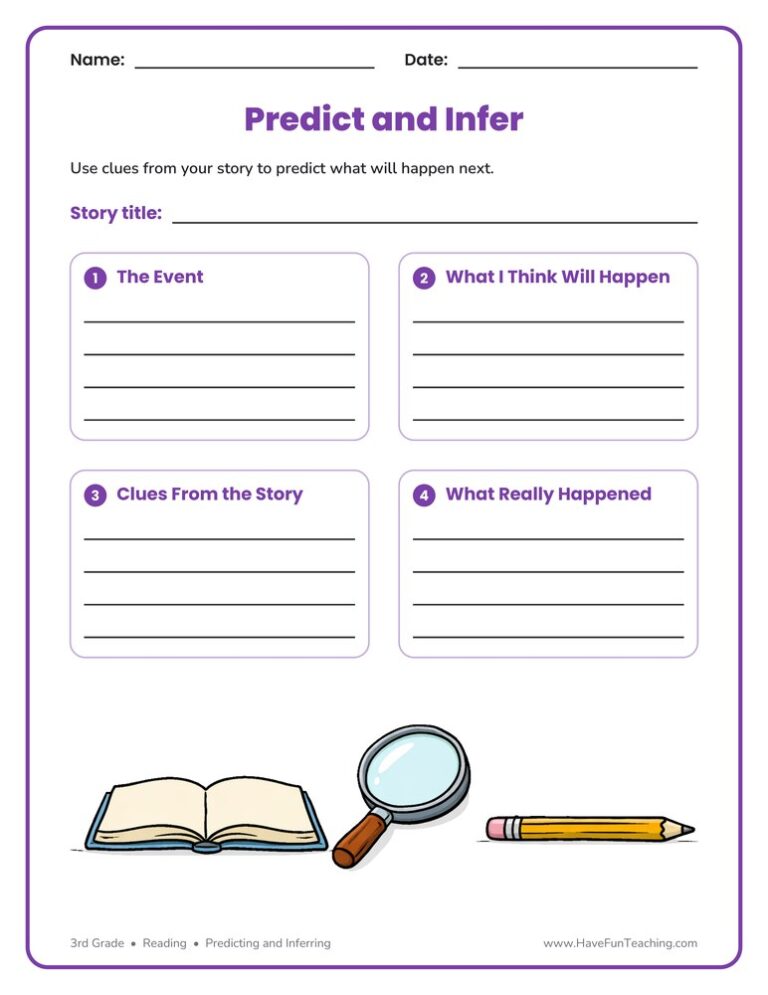
This predict and infer graphic organizer worksheet gives 3rd grade readers one page to name an event, predict what happens next, list the clues behind the guess, and then check it against the real ending.
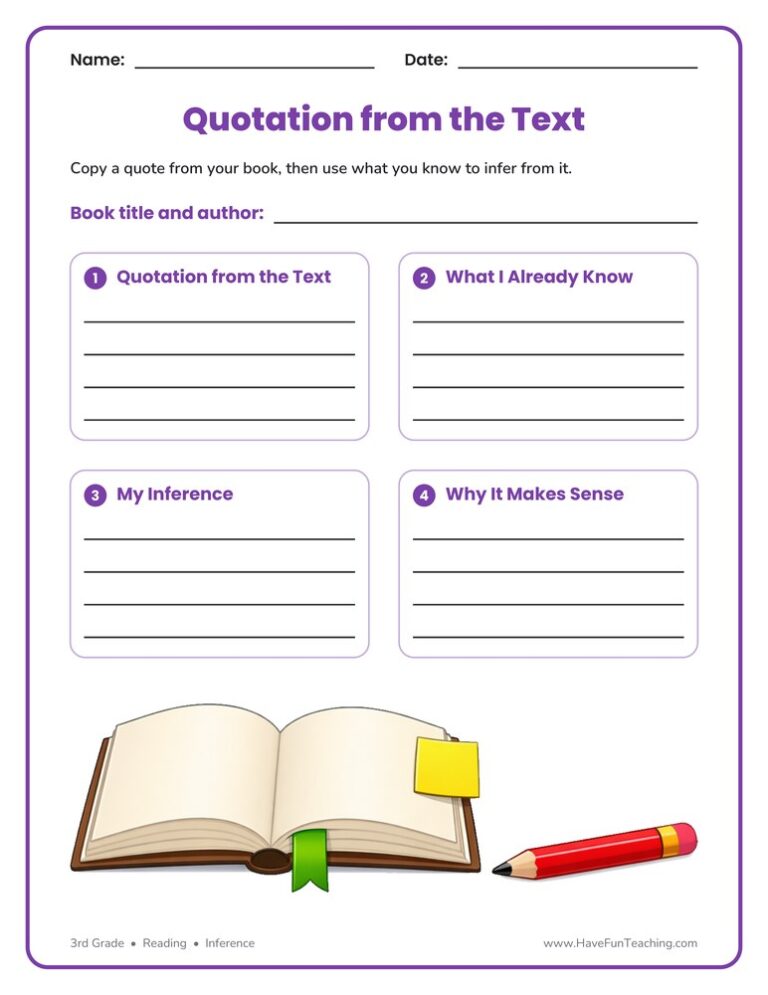
Use this Quotation from the Text Graphic Organizer Worksheet to help 3rd graders copy a quote from any book, connect it to what they know, and write a strong inference with a reason.

Using Inference Chains Activity, students refer to details in a text when explaining what the text says explicitly and when drawing inferences. This is perfect for making inferences and drawing conclusions.
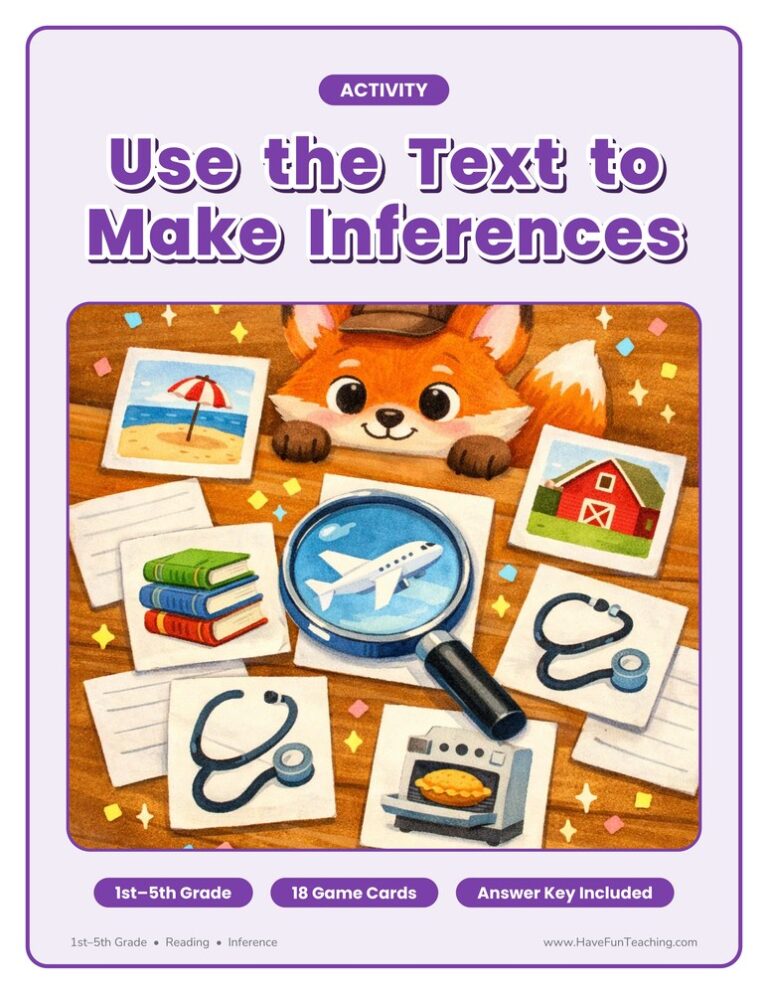
In this use the text to make inferences activity, 1st to 5th grade students read short clue stories, infer the place, and name the text clues. Answer key included.

This inferences chart worksheet gives 3rd grade readers four short stories to solve with clues and background knowledge in a simple chart. An answer key is included, so practice turns into confident reading.
Using Making Inferences Pictures Activity, students look at pictures and make inferences based on what they see to match descriptions. This is perfect for making inferences and drawing conclusions.

This making inferences activity has 1st to 3rd grade students match picture clue cards to what happened and record the clues they used. Answer key included.
This hurricanes reading comprehension activity has 3rd to 5th grade students read a passage, match vocabulary cards and answer text-based questions. An answer key is included.
Reviews
There are no reviews yet