

Amphibian Classification Worksheet
This amphibian classification worksheet asks 2nd graders to decide which animals are amphibians by checking their traits, then finish four sentences from a word bank. Answer key included for quick, no-prep science practice.
$6.97
Want this one free?
Tell us where to send it and it’s yours — no card, no catch.
One free resource per teacher. We’ll also send free teaching ideas each week — unsubscribe anytime.
Free teacher account · no credit card
Membership
Get every game, song, & printable
- Every game, on any device
- 10,000+ printables
- Assign online with HFT Classroom
Then $39.97/year · cancel anytime · See plans
- Instant digital download
- Printable PDF + answer key
- Made by real teachers
Teacher / Family membership
Teaching is easier with every resource
One membership for your whole year: 10,000+ worksheets, games, songs and videos for Preschool–6th, for your classroom or homeschool.
- Unlimited printables & downloads
- Every game, on any device
- Assign online with HFT Classroom
- Cancel anytime
Teacher / Family membership · 3 days free
Yearly
Monthly would be $119.64 a year
$3.33/month
Billed $39.97 once a year
You save $79.67 every year
Start My 3 Free Days$0 today · cancel anytime
Monthly
$9.97/month
Flexible, month to month
Yearly is just $3.33/mo. Switch and save $79.67
Start My 3 Free Days$0 today · cancel anytime
About this resource
Description
Learning to sort animals into groups is one of the first real science skills a second grader practices, and amphibians are the perfect place to start. This amphibian classification worksheet teaches children the four traits that put an animal in the amphibian group: cold blood, moist skin, an egg laid in water, and a body that breathes with gills when it is young and with lungs once it is grown. When a child can name those traits, classifying stops being guesswork and becomes evidence — the child looks at an animal, checks it against the traits, and decides. That is exactly the kind of reasoning a second-grade science assessment asks for.
This 2nd grade animals worksheet opens with a short definition box written on grade level, so every child begins with the same facts in front of them. Part A shows four painted animals — a painted turtle, a green frog, a spotted salamander, and a ladybug — and asks the child to fill in the Yes or No bubble for each one. Part B is a four-sentence word-bank activity using lungs, eggs, moist, and gills, so the child has to return to the definition box and reread it to place every word correctly. Read the box aloud together first, then let children work on their own; the full page takes about ten minutes.
What’s Included
- 1 print-ready PDF worksheet
- Answer key
- 4 fill-in-the-bubble animal classification items and 4 word-bank sentence completions
Three things make this amphibian classification worksheet work. First, it gives the child a written reference to reason from, so a wrong answer is a rereading problem rather than a memory failure, and the fix stays in the child’s own hands. Second, the animal set is chosen to make the edges of the group visible: a turtle and a ladybug are both easy to mistake for amphibians until the traits are applied, while the frog and the salamander look nothing alike and yet belong together. Third, the two parts test the same knowledge in two different formats, picture recognition and written recall, which is how a new idea moves from something a child recognizes into something a child understands.
Take the skill off the page next. Hunt for amphibians on a walk near a pond or a damp garden bed, and talk about why moist skin keeps amphibians close to water. In spring, keep a jar of pond water and watch tadpoles grow legs and lose their gills, which turns the definition box into something the child has actually seen. Play a fast sorting game with animal picture cards and two hoops on the floor labeled amphibian and not an amphibian, and ask the child to name the trait that decided each card. At home, share a nonfiction picture book about frogs, toads, newts, and salamanders, and let the child point out every trait from the worksheet as it turns up.
Related Resources
What teachers say
Reviews
You must be logged in to post a review.
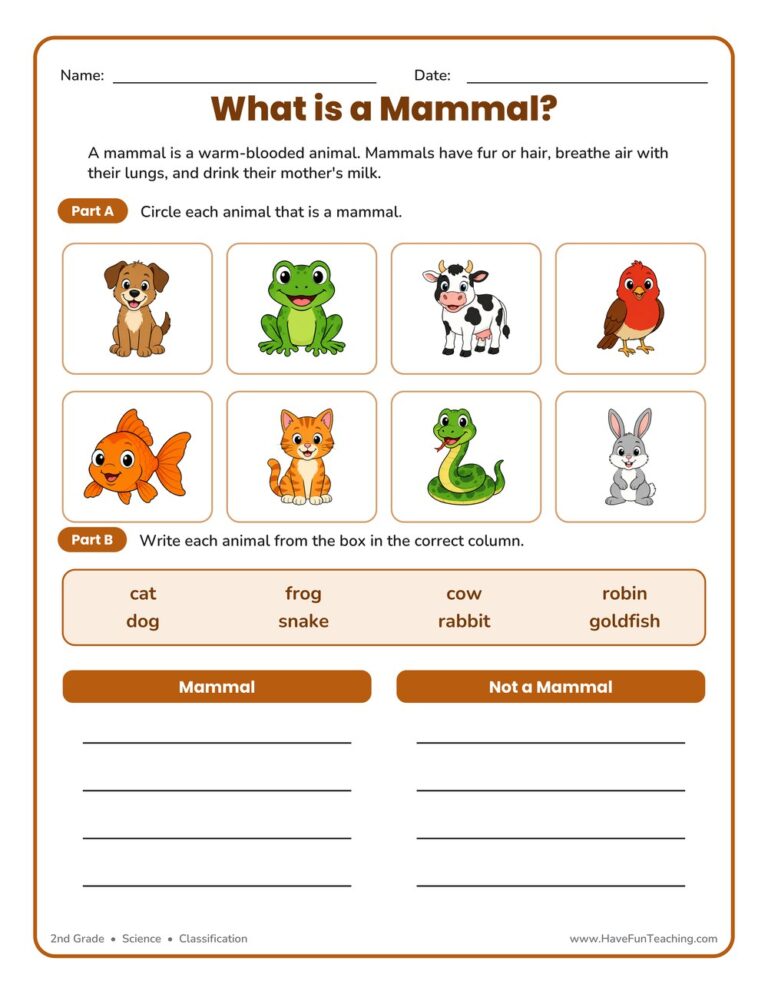
This mammal classification worksheet helps 2nd graders spot mammals and sort animals into mammal and not-a-mammal groups. It includes a complete answer key, making it perfect for no-prep science practice at home or in the classroom.

The Life Cycle of a Butterfly Worksheet has 2nd graders label the egg, larva, pupa, and adult stages and put them in the correct order. Answer key included for quick, hands-on life science practice.

This matching animal habitats worksheet has 2nd Grade students connect five animals to the ocean, pond, desert, forest, and grassland, then finish three sentences. An answer key is included for fast, no-prep science practice.

Using this Animal Song (Animated Music Video), your students learn about different types of animals and their sounds by watching this fun, catchy video.

This animal classification worksheet lets 2nd graders sort twelve animals into mammals, birds, fish, and reptiles using a picture-clued word box. An answer key is included — great for no-prep science practice at home or in class.

This Basic Fish Parts Worksheet asks 1st graders to label six numbered parts on a big, friendly fish using a word box. An answer key is included, so science practice takes no prep at all.
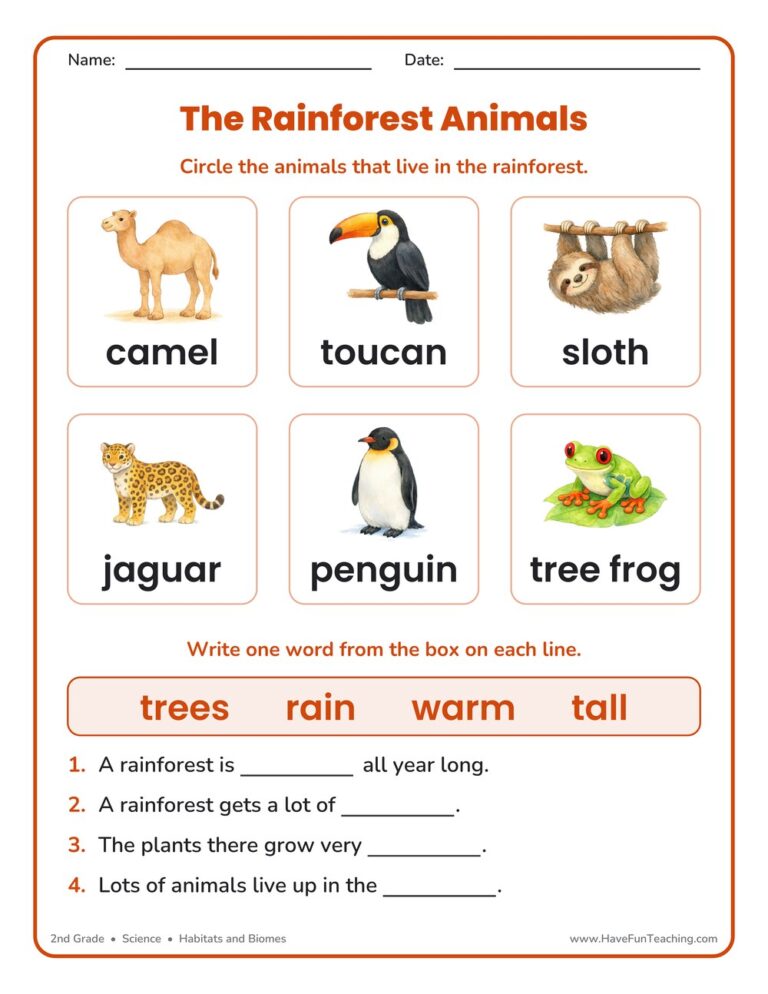
This rainforest animals worksheet asks 2nd Grade students to circle four rainforest animals and finish sentences about their habitat. Answer key included, so habitat practice takes only minutes to assign and check.
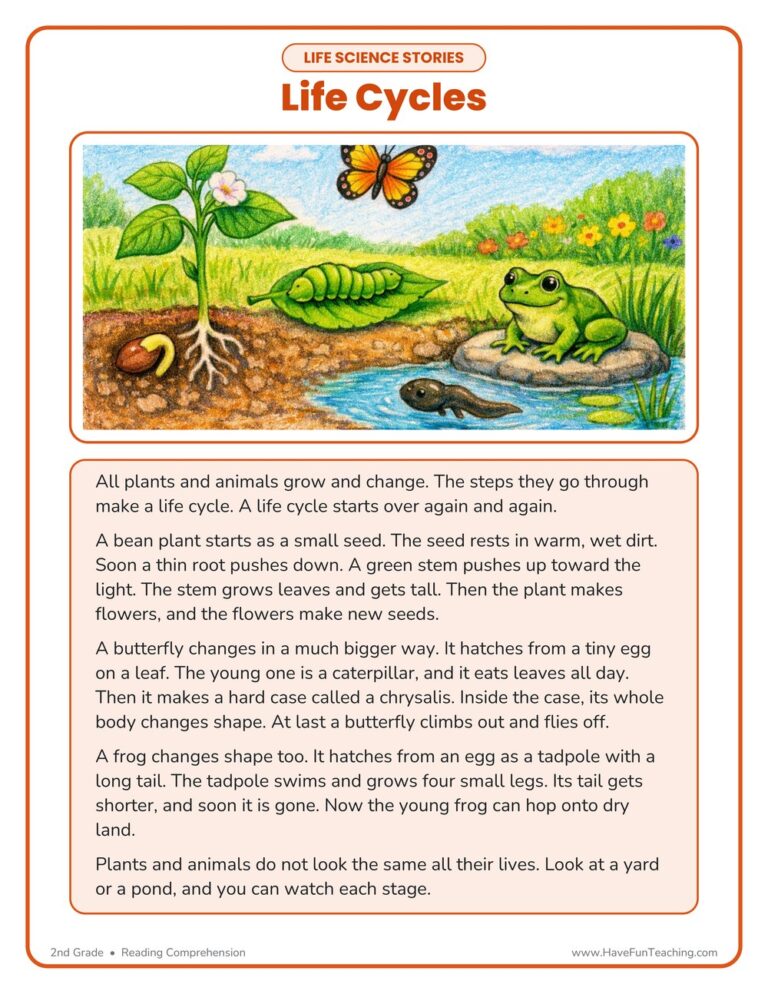
This Life Cycles Life Science Reading Comprehension Worksheet gives 2nd Grade readers a non-fiction story about seeds, caterpillars, and tadpoles, plus bubble, word-bank, and writing questions. Answer key included for fast, no-prep practice.
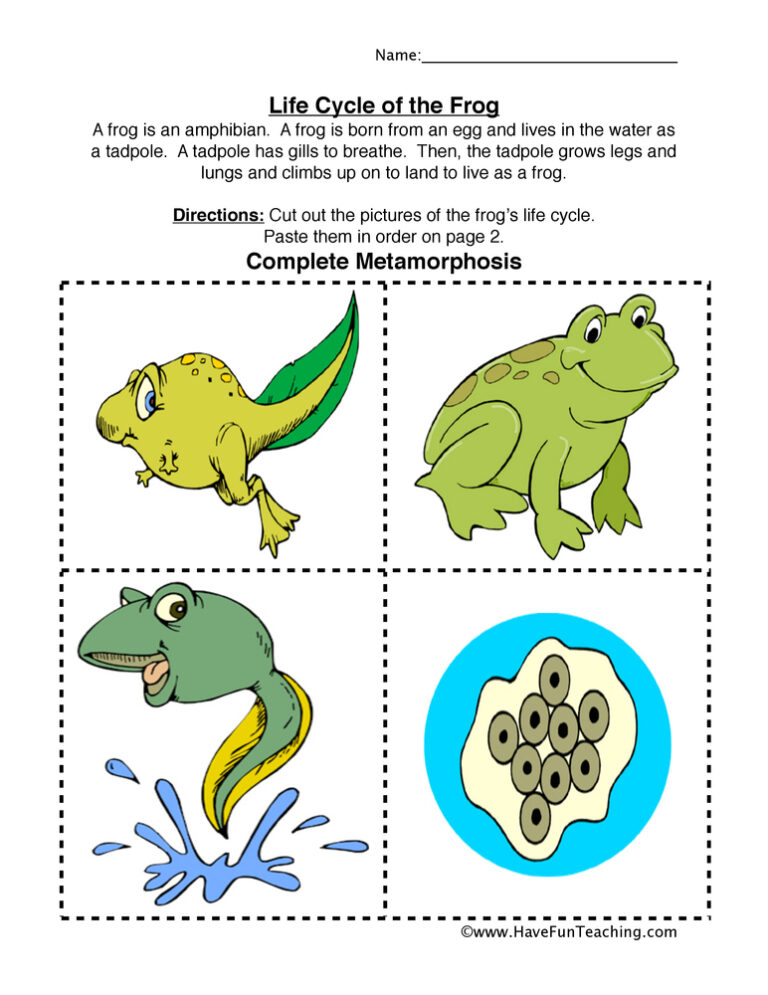
This Frog Life Cycle Worksheet has second graders order and name the four stages of a frog's life: egg, tadpole, froglet, and frog. An answer key is included, so grading takes seconds.
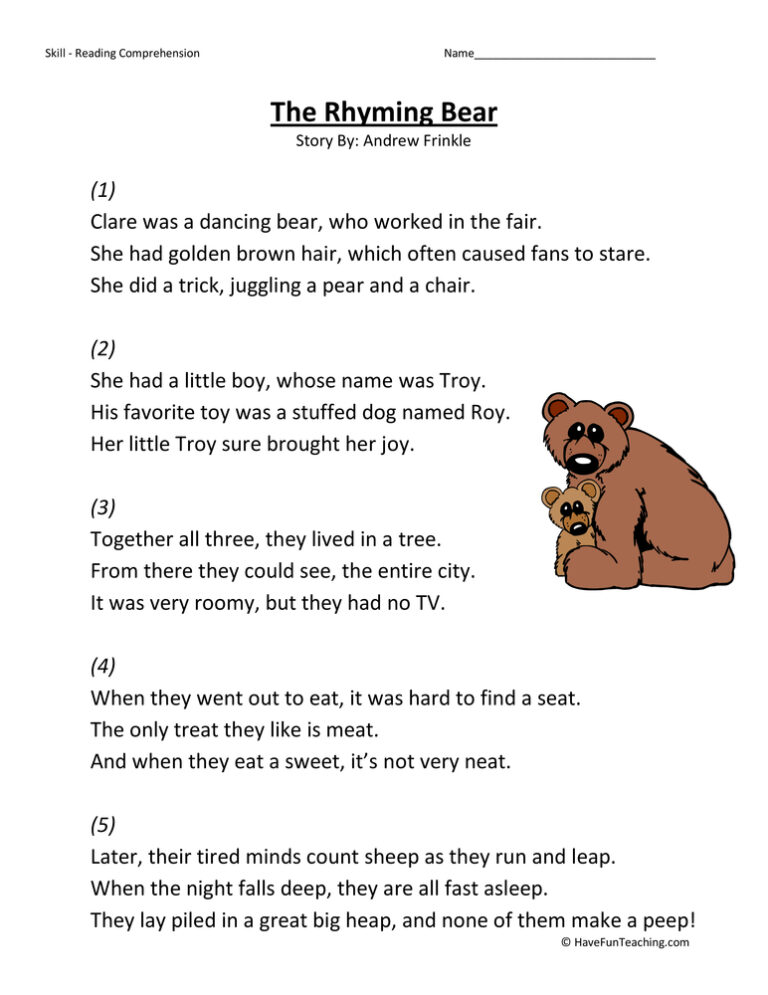
This Rhyming Bear Reading Comprehension Worksheet gives 2nd grade readers an original five-stanza poem plus four multiple-choice questions and a written response. An answer key is included, so students build reading stamina and teachers grade in seconds.
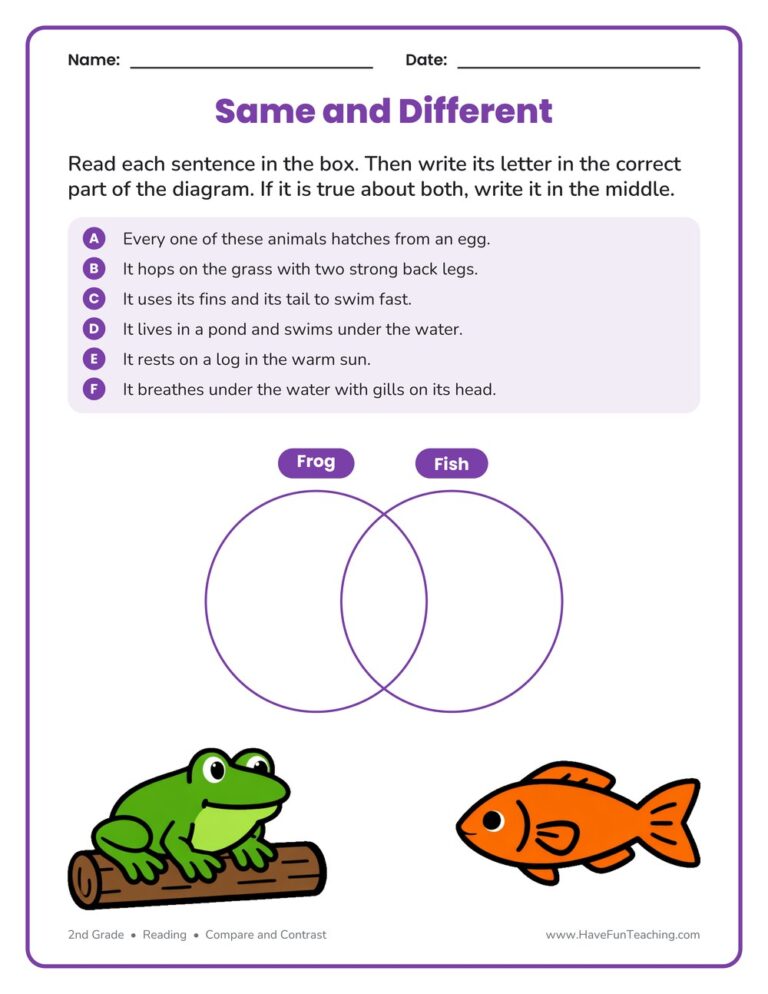
This Comparing Animals Venn Diagram Worksheet has 2nd graders sort six true statements about a frog and a fish into a labeled Venn diagram. An answer key is included for quick, no-prep checking.

An animals bar graph worksheet for 2nd grade: students color one box per animal to build a four-category bar graph, then compare and add using it. Answer key included, so checking data work takes seconds.




Reviews
There are no reviews yet