

Pollution Worksheet
This pollution worksheet helps 3rd graders name air, land, and water pollution, match each cause with its effect, and explain one way people can help. Answer key included for no-prep science practice at school or home.
$6.97
Or free with a membership — get this and 10,000+ resources. See plans
Teaching is easier with a membership
Unlimited printables, games & videos for PreK–6th — for your classroom or homeschool. Cancel anytime.
Start your 3-day free trialNo commitment · Cancel anytime · Instant access to 10,000+ resources
About this resource
Description
Pollution happens when harmful things are added to the air, the land, or the water around us. Third graders are ready to notice it in the world they already know — gray smoke drifting from a chimney, litter left behind in a park, a plastic bottle floating down a stream — and to explain what it does to plants, animals, and people. This pollution worksheet gives students a clear, kid-friendly way to name the three kinds of pollution and to think about what causes each one.
This 3rd grade environments worksheet moves students from looking to thinking. In Part A, they study four full-color scenes and write whether each one shows air, land, or water pollution. In Part B, they draw lines to match five causes with the effect each one produces, including one cause that produces a good result. In Part C, they choose one kind of pollution, explain how it harms living things, and describe one way people can help stop it. Use it to open a unit on caring for the environment, as independent practice after a lesson, or as a quick review before a science quiz.
What’s Included
- 1 print-ready PDF worksheet
- Answer key
- 3 activities: 4 illustrated picture-labeling items, a 5-pair cause-and-effect match, and a written-response question
There are three reasons this pollution worksheet helps children learn the skill. First, the illustrations do the teaching — a student who cannot yet define land pollution can still see it, and the picture gives the new vocabulary something to hold onto. Second, the cause-and-effect matching pushes past naming and into reasoning, so students connect an action to the result it produces instead of memorizing a list. Third, the closing written response asks for both an explanation and a solution, which turns a science fact into something a child can actually do something about.
Teachers and parents can keep the topic going in simple, hands-on ways. Take a five-minute litter walk around the playground and tally what you find, then sort the items into what can be recycled and what cannot. Set out three labeled bins and let students practice sorting classroom paper, cans, and food scraps. Ask children to design a poster inviting their family to help keep one favorite place clean. Fill a clear jar with water and add a little soil, a scrap of foil, and a bit of paper to see how quickly clean water stops looking clean, then talk about who lives in a stream and what they need.
Related Resources
What teachers say
Reviews
You must be logged in to post a review.
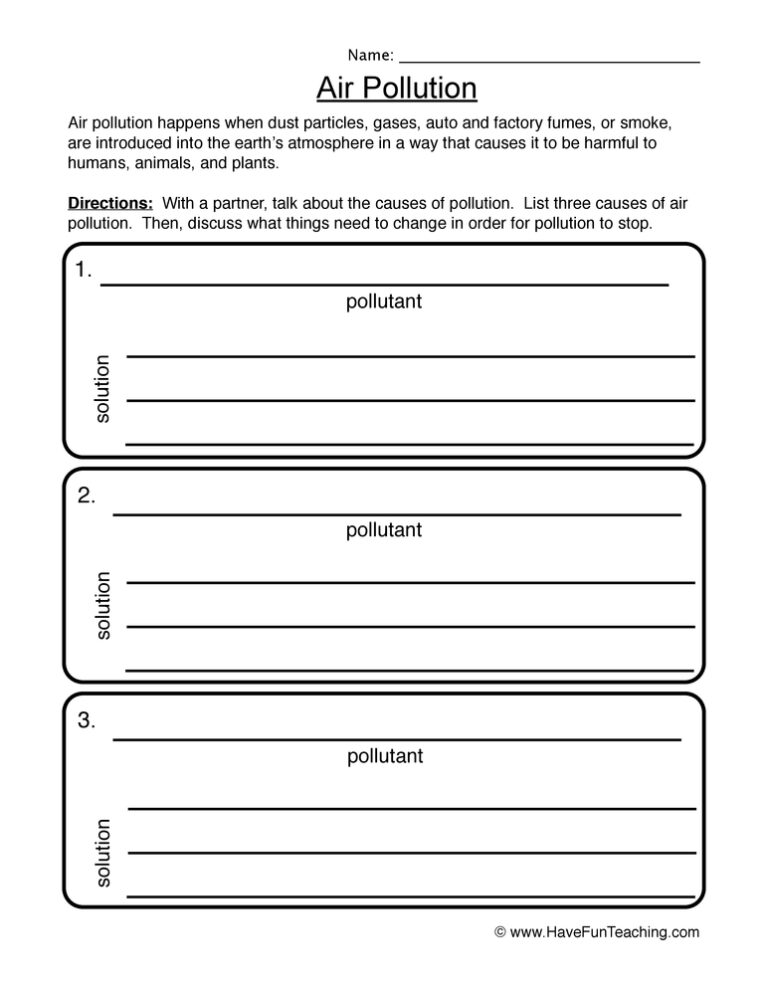
This Air Pollution Worksheet will help teach your kids about what air pollution is and how it can be harmful for people and the environment.

Using this Animal Habitats Matching Worksheet, student draw lines to match five animals pictures to their best living environment.
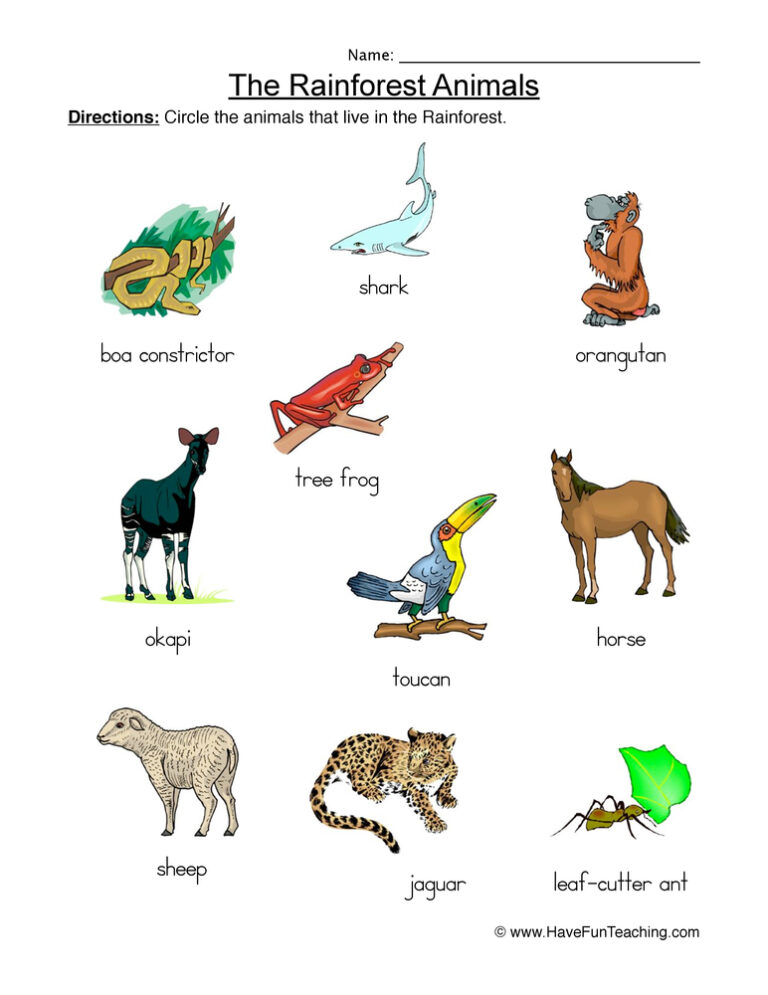
Using Rainforest Animals Worksheet , students circle the rainforest animals to build their rainforest vocabulary.
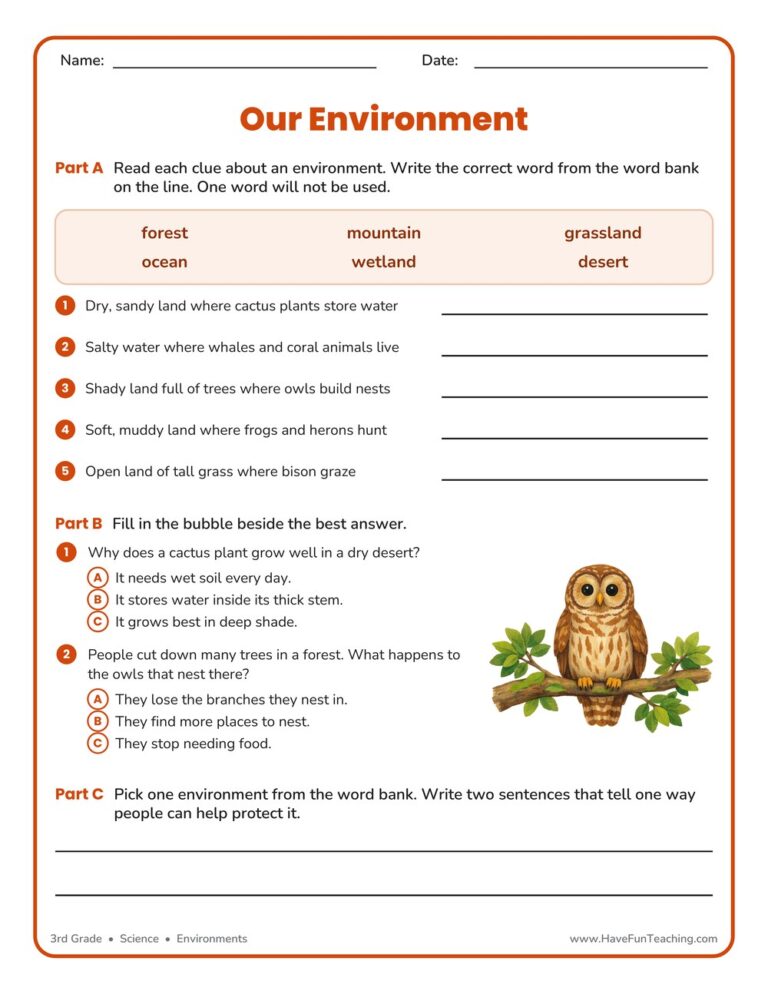
This Our Environment Worksheet asks 3rd graders to name five environments, answer two habitat questions, and write about protecting nature. An answer key is included for fast, no-prep science practice.
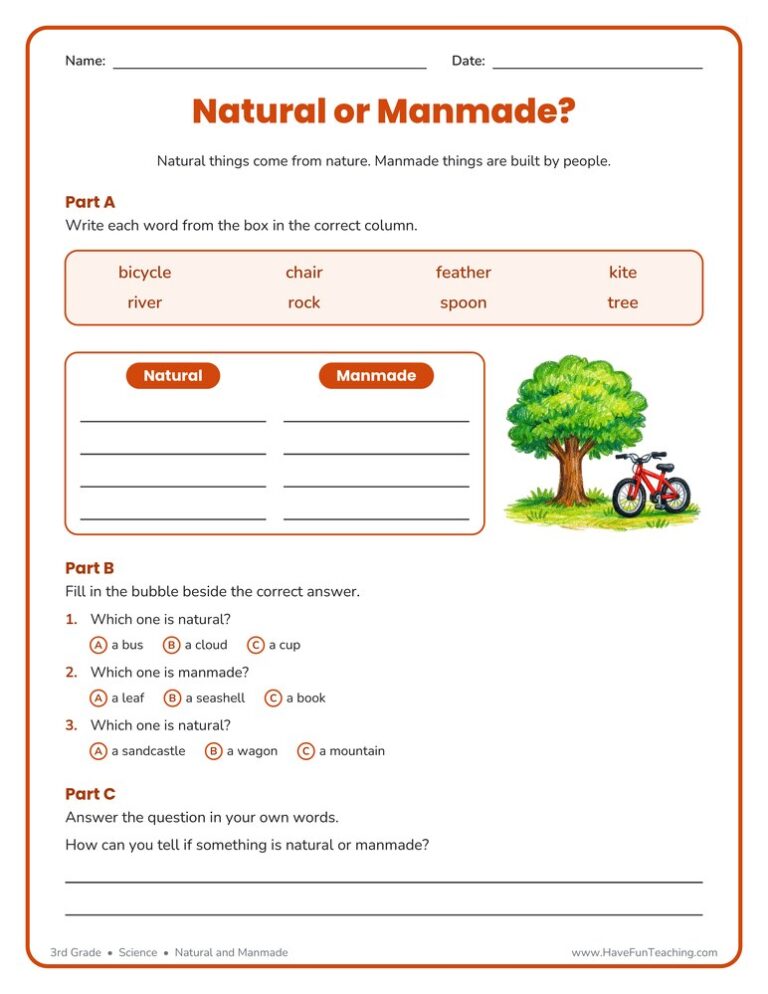
The Natural Man-Made Sort Worksheet has students sort eight everyday objects into natural and manmade columns, then explain the difference. Built for 3rd Grade with an answer key included.
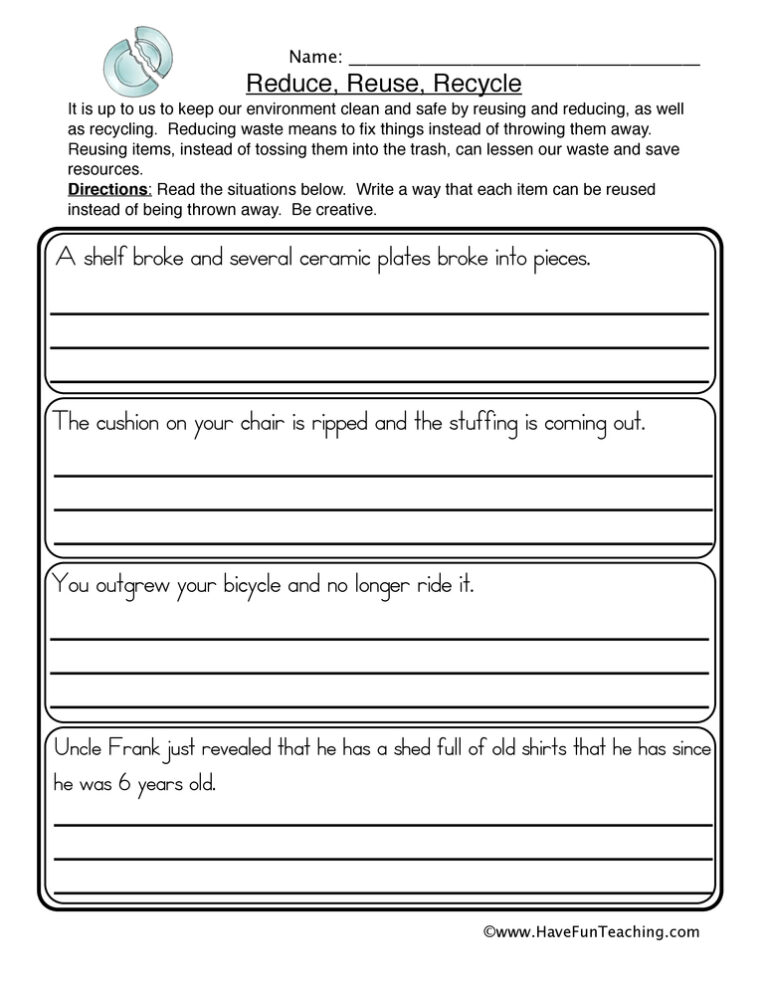
Using Reduce, Reuse, Recycle Scenarios Worksheet, students read the situations below and then, write a way that each item can be reused instead of being thrown away.
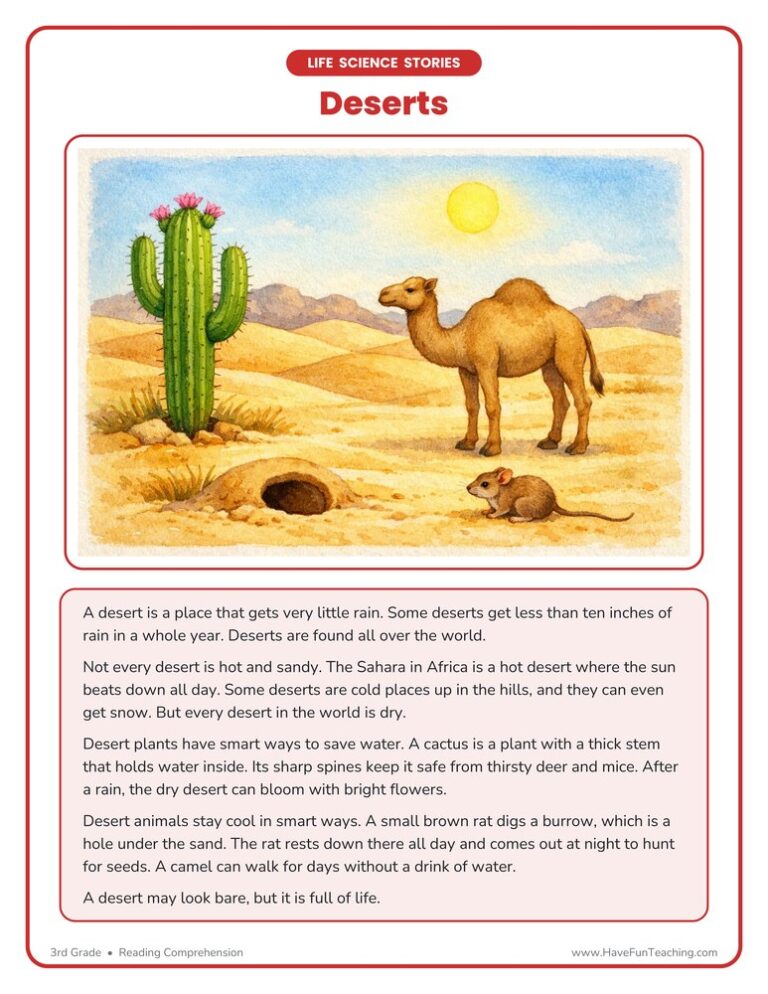
This Deserts Life Science Reading Comprehension Worksheet gives 3rd Grade readers a short nonfiction passage about hot and cold deserts, with comprehension questions and an answer key included, so science reading practice takes minutes to prep.
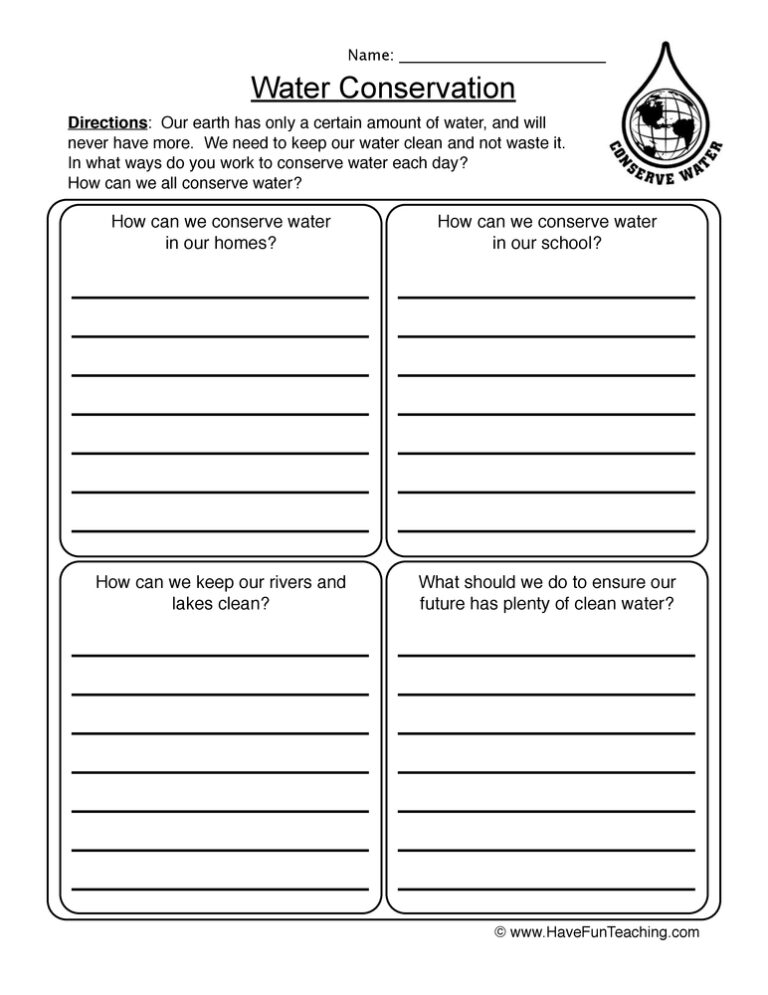
Using thisWater Conservation Worksheet, students explain how they can converse water at home, school, and take care of the public water.
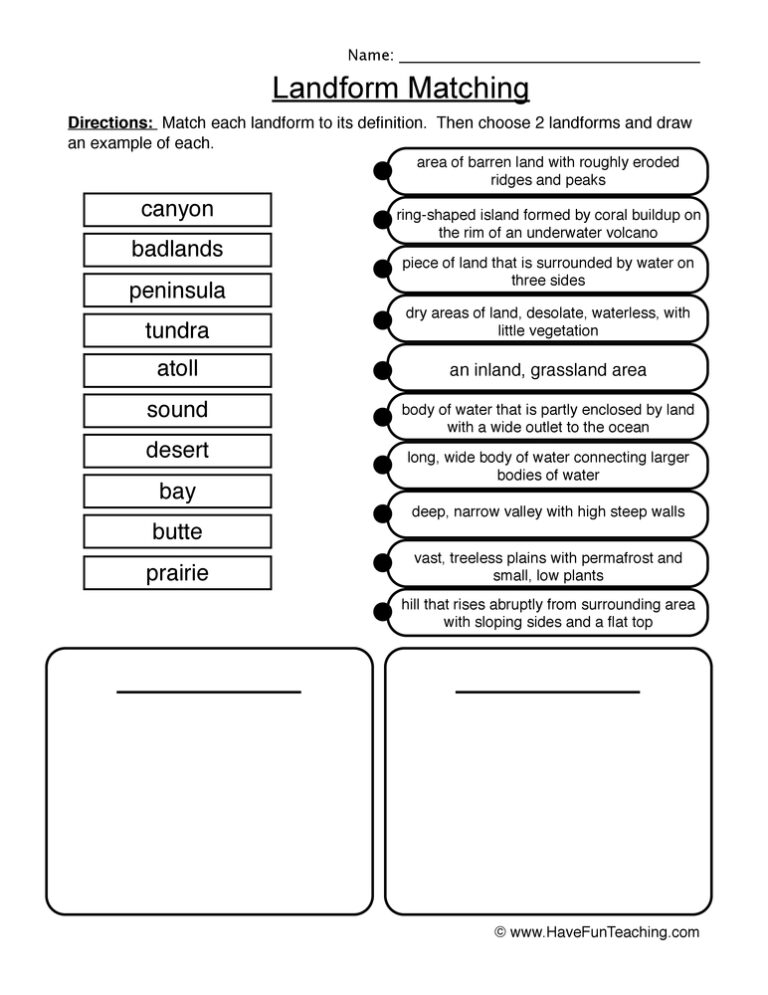
Using Landform Definition Matching Worksheet, studentsmatch each landform to its definition.

Using this Water Pollution Worksheet, students list three causes ofwater pollution and discuss what things need to change in order for pollution to stop.

Using Natural Resources Writing Worksheet, students write about renewable and nonrenewable resources in order to learn more about conservation.

Using this Environmental Health Worksheet, students research the four types of pollution that affect the earth.
Reviews
There are no reviews yet