

Air Pollution Worksheet
This Air Pollution Worksheet asks 3rd graders to mark six everyday actions D for dirty air or C for cleaner air, then explain one cause and plan one fix. Answer key included.
$6.97
Want this one free?
Tell us where to send it and it’s yours — no card, no catch.
One free resource per teacher. We’ll also send free teaching ideas each week — unsubscribe anytime.
Free teacher account · no credit card
Membership
Get every game, song, & printable
- Every game, on any device
- 6,500+ resources
- Assign online with HFT Classroom
Then $39.97/year · cancel anytime · See plans
- Instant digital download
- Printable PDF + answer key
- Made by real teachers
Teacher / Family membership
Teaching is easier with every resource
One membership for your whole year: 6,500+ worksheets, games, songs and videos for Preschool–6th, for your classroom or homeschool.
- Unlimited printables & downloads
- Every game, on any device
- Assign online with HFT Classroom
- Cancel anytime
Teacher / Family membership · 3 days free
Yearly
Monthly would be $119.64 a year
$3.33/month
Billed $39.97 once a year
You save $79.67 every year
Start My 3 Free Days$0 today · cancel anytime
Monthly
$9.97/month
Flexible, month to month
Yearly is just $3.33/mo. Switch and save $79.67
Start My 3 Free Days$0 today · cancel anytime
About this resource
Description
Air is easy to forget about, because a child cannot see it. Science makes it visible by looking at what goes into it: exhaust from an engine left running, smoke from a burning pile of leaves, tiny bits of ash that drift from a pipe. This Air Pollution Worksheet gives third graders six ordinary scenes from a street and a schoolyard and asks the one question that matters for each of them, which is whether it puts something into the air or keeps the air clear.
The page works in two steps. First, students read six short actions and write D in the box for dirty air or C for cleaner air. Every action is decided by a single physical fact rather than by opinion, so each one has exactly one defensible answer: an engine that is running adds exhaust, an engine that is switched off adds nothing, burning adds smoke and ash, and leaves take gases in and give clean air back. Then the sheet turns to writing. Two questions ask students to pick one action that dirties the air and explain why, and to name one thing their own class could do to keep the air clean. Those answers vary, so the key shows a sample for each. Used as a science warm-up, a station, or homework, this 3rd grade environments worksheet takes about fifteen minutes and shows clearly who can explain the reason and not just sort the pictures.
What’s Included
- 1 print-ready PDF worksheet
- 6 everyday actions to mark D for dirty air or C for cleaner air
- 2 written response questions with two full writing lines each
- A complete answer key, with a sample answer shown for each written question
Three things make this worksheet do real work. First, it keeps the science concrete: every item names something a child has actually watched happen, so the idea of air quality attaches to a memory instead of a definition. Second, it pairs sorting with explaining, which is where third grade sits in the standards, and the explanation is what shows whether the sorting was understood. Third, the closing question is local and practical, asking what this class could do this week, so the lesson ends on something students can act on rather than something to worry about.
Teachers and parents can keep the thinking going in a few simple ways. Stand outside the school at pickup time and count how many engines are running, then talk about what those engines are adding to the air everyone is breathing. Tape a white index card to a windowsill for a week and look at what has settled on it. Plant a seedling in a pot by the window and track its leaves, connecting growth to the clean air the plant gives back. Each of these takes a few minutes and makes the ideas in this Air Pollution Worksheet something students can see for themselves.
Related Resources
What teachers say
Reviews
Write a review, earn store credit
Get 25¢ in credit for every approved review of a resource you’ve downloaded, played or purchased — up to 15 a month. Credit applies automatically to your membership payments, so your reviews can help pay for your membership.
Honest reviews only — any star rating earns the same. Program rules
Log in to write a review and earn store credit.
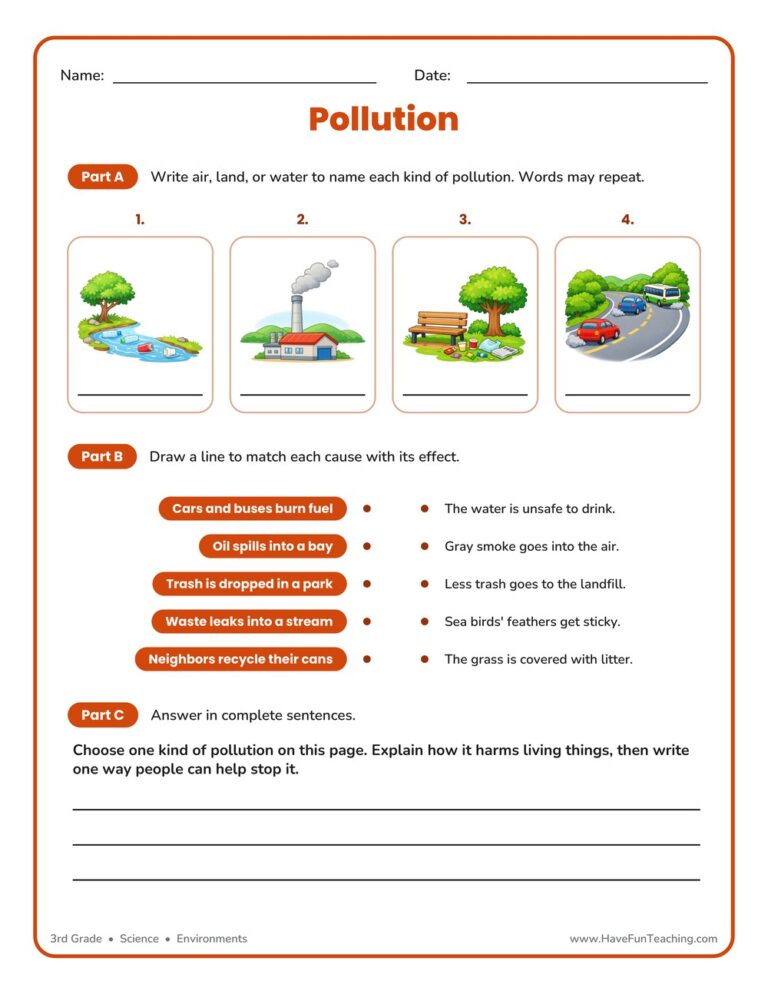
This pollution worksheet helps 3rd graders name air, land, and water pollution, match each cause with its effect, and explain one way people can help. Answer key included for no-prep science practice at school or home.

This Water Pollution Worksheet has 3rd Grade students sort pictures, finish sentences from a word box, and write about one way to keep rivers clean. Answer key included.

This matching habitats worksheet has 3rd graders link five animals to the habitats they live in, then explain two animal adaptations in writing. Answer key included for fast, no-prep science practice.

This animal habitats worksheet asks 3rd Grade students to match animals to their habitats, sort six animals into two environments, and explain one desert adaptation. An answer key is included for fast, no-prep science practice.
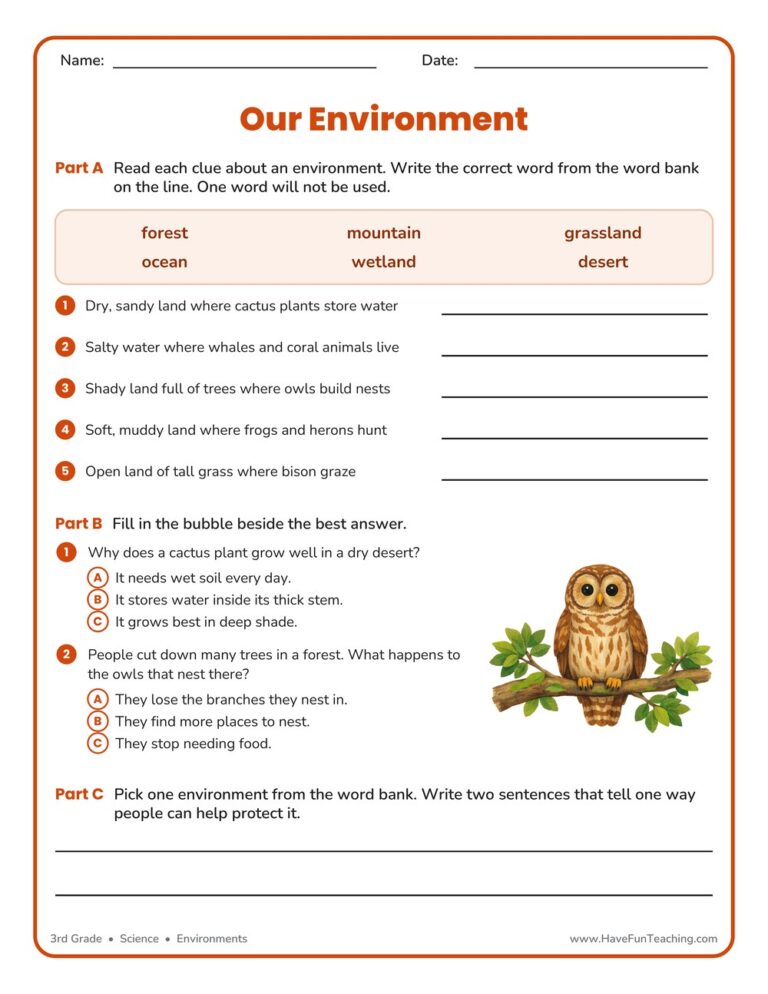
This Our Environment Worksheet asks 3rd graders to name five environments, answer two habitat questions, and write about protecting nature. An answer key is included for fast, no-prep science practice.
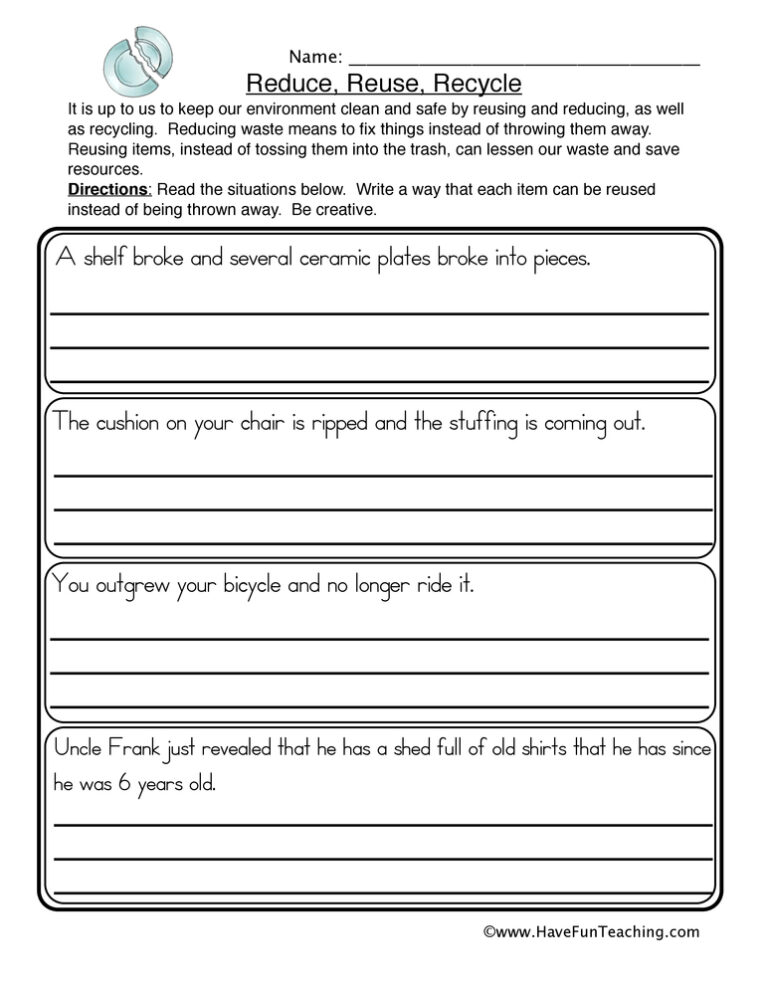
Read six real-life situations and decide whether each one shows reducing, reusing, or recycling on this reduce, reuse, recycle scenarios worksheet for 3rd grade. Answer key included, so Earth Day science practice takes no prep.

This water cycle experiment worksheet guides 3rd grade students through a simple bag model, then has them match evaporation, condensation, precipitation, and collection to what they see. An answer key is included.
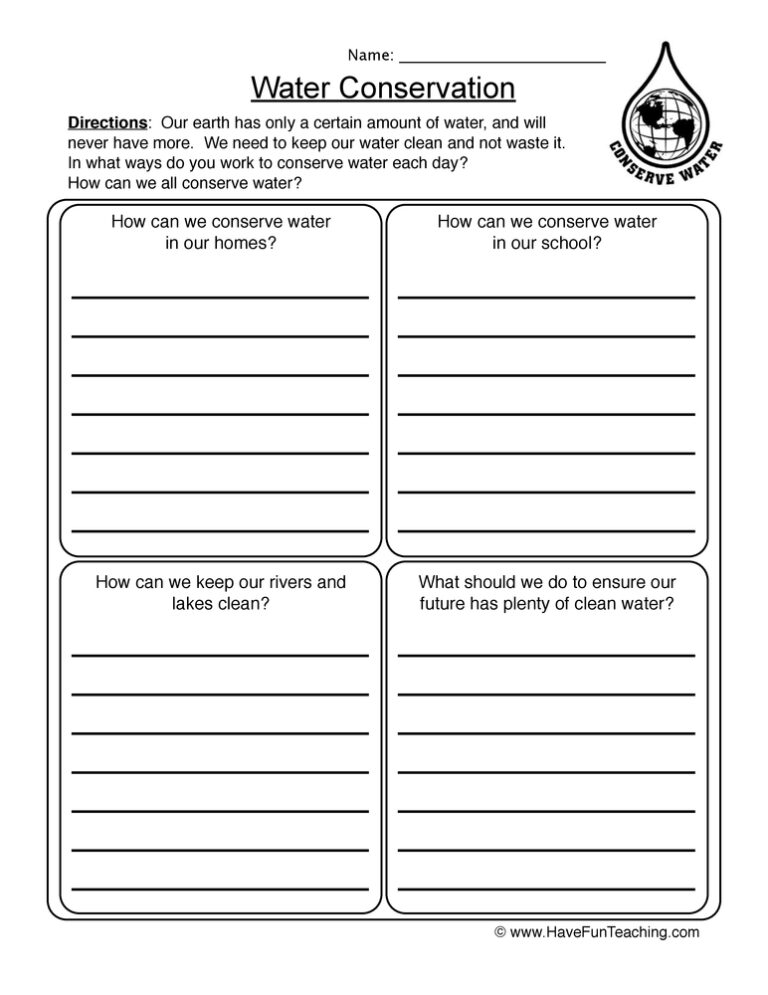
Students use this Water Conservation Worksheet to define key terms, sort water-saving habits, and solve a two-step drip problem. Built for 3rd Grade, with an answer key included for fast, no-prep science practice.

This desert true or false worksheet asks 3rd graders to judge eight statements about desert weather, plants and animals, then rewrite a false one correctly. Answer key included for fast, no-prep science practice.
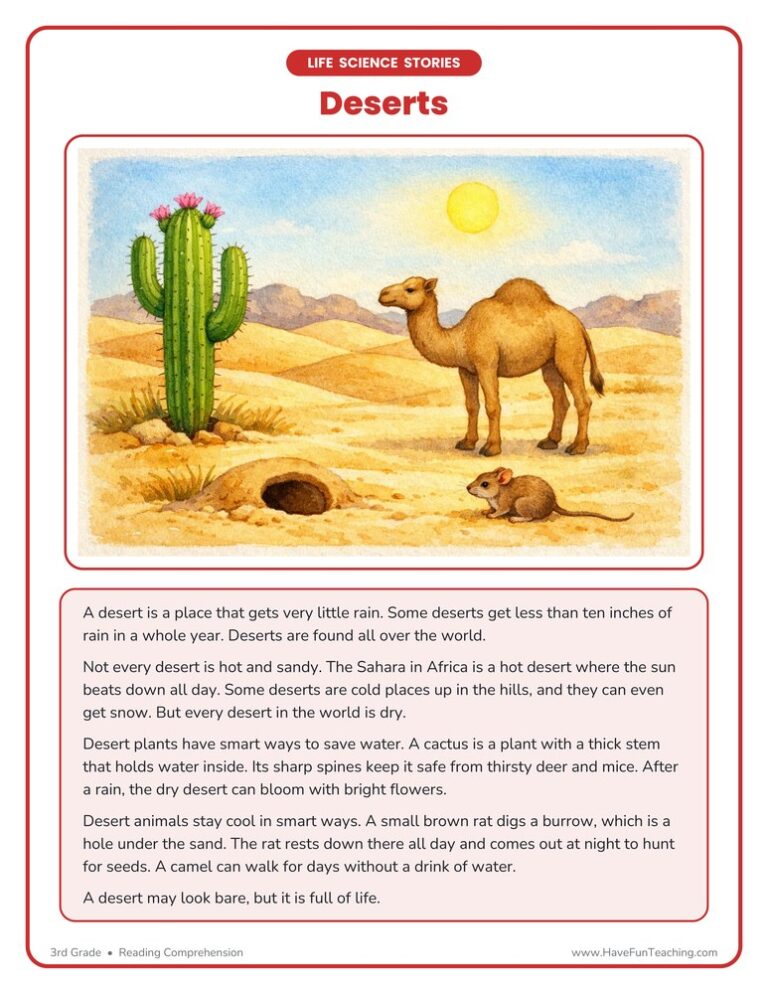
This Deserts Life Science Reading Comprehension Worksheet gives 3rd Grade readers a short nonfiction passage about hot and cold deserts, with comprehension questions and an answer key included, so science reading practice takes minutes to prep.

This habitats research worksheet helps 3rd grade students pick an animal, take notes on its habitat, draw it, and explain how that home helps the animal survive.

This desert plants worksheet asks 3rd graders to sort eight desert words into plants and animals, then find the plant and animal named in each sentence. An answer key is included for quick checking.




Reviews
There are no reviews yet