

Time to the Half Hour Worksheet
This time to the half hour worksheet asks 1st graders to read six analog clocks and draw the hands on two more. An answer key is included, so telling time practice is ready in one print.
$6.97
Or free with a membership — members pay $3.33/mo for all 10,000+ resources. See plans
Want this one free?
Tell us where to send it and it’s yours — no card, no catch.
One free resource per teacher. We’ll also send free teaching ideas each week — unsubscribe anytime.
Teaching is easier with a membership
Unlimited printables, games & videos for PreK–6th — for your classroom or homeschool. Cancel anytime.
Start your 3-day free trial$0 today · cancel anytime · Instant access to 10,000+ resources
About this resource
Description
Reading an analog clock is one of the first real-world math skills a first grader owns, and telling time to the half hour is where it starts to click. Once children know that the short hour hand names the hour and the long minute hand names the minutes, they can see the difference between 4:00 and 4:30 at a glance. This time to the half hour worksheet gives students steady, focused practice reading hour and half-hour times on a clock face, so the two hands stop looking alike and start telling a story. It also builds the vocabulary children need for the rest of the school day: o’clock, half past, hour hand, minute hand.
This 1st grade telling time worksheet is a two-part printable that moves students from reading a clock to setting one. In Part A, six large analog clocks each show a whole hour or a half hour, and students write the time on the lines below the clock. In Part B, two clocks are labeled with a familiar moment from the school day — Recess at 10:30 and Story Time at 8:00 — and students draw the hour hand and the minute hand themselves. Print one copy per student and use it for morning work, a math center, homework, or a quick check after a telling time lesson. The oversized clock faces, real minute ticks, and generous writing lines are sized for first-grade hands and eyes.
What’s Included
- 1 print-ready PDF worksheet
- Answer key
- 6 read-the-clock items and 2 draw-the-hands items (whole hours and half hours)
There are three reasons this resource helps children learn to tell time. First, it mixes o’clock and half-past times instead of grouping them, so students have to read the hands every single time rather than guess from a pattern. Second, the clocks are drawn to real clock geometry — the hour hand sits exactly halfway between two numbers at half past, which is the single clue children most often miss. Third, the draw-the-hands section flips the skill around: a student who can read a clock but cannot set one does not truly understand it yet. Working through this time to the half hour worksheet builds both directions of the skill in one sitting.
Teachers and parents can keep the practice going away from the page. Make a paper-plate clock with a brass fastener and two cardstock hands, then call out times for children to set. Post a daily schedule on the board with a small clock face beside each activity, and ask a student to read the next one aloud. Play “half past” hopscotch, where each square is an hour and landing on a line means half past. At home, ask children what time they eat dinner or start their bedtime story, and have them find the hour hand and the minute hand on a real wall clock. Short, frequent practice beats long sessions for this skill.
Related Resources
What teachers say
Reviews
You must be logged in to post a review.
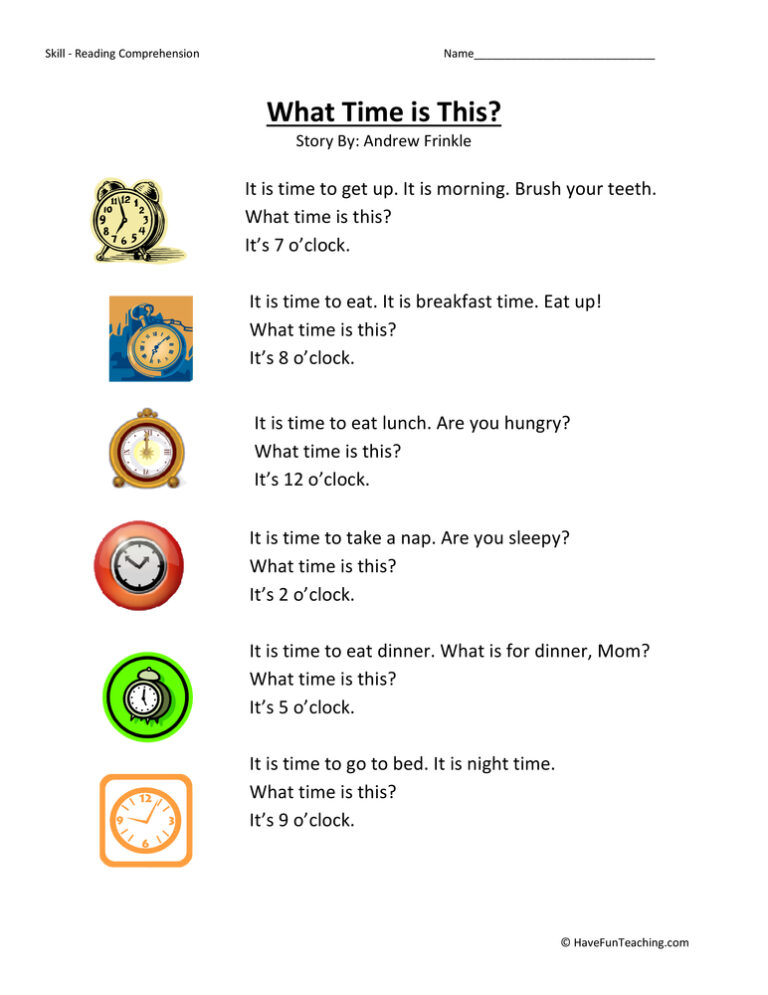
This What Time is This Reading Comprehension Worksheet gives 1st graders a short story about a boy's day and five questions about the o'clock times inside it. Answer key included for quick, no-prep practice.

A What Time Is It worksheet where 1st graders read six analog clocks and write the digital time to the hour and half hour. Includes a complete answer key — perfect for quick, no-prep telling time practice at home or school.
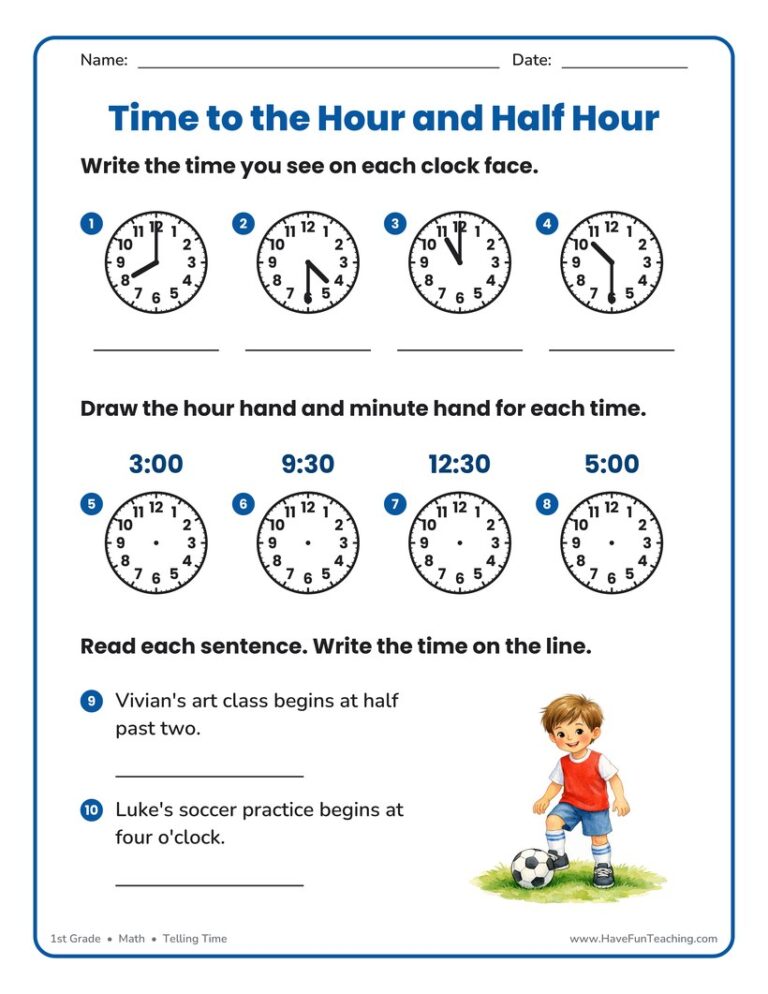
Students read four clock faces, draw the hands on four more, and turn time words into written time with this Hour Half Hour Time Worksheet. Built for 1st Grade, with an answer key included for fast, no-prep checking.
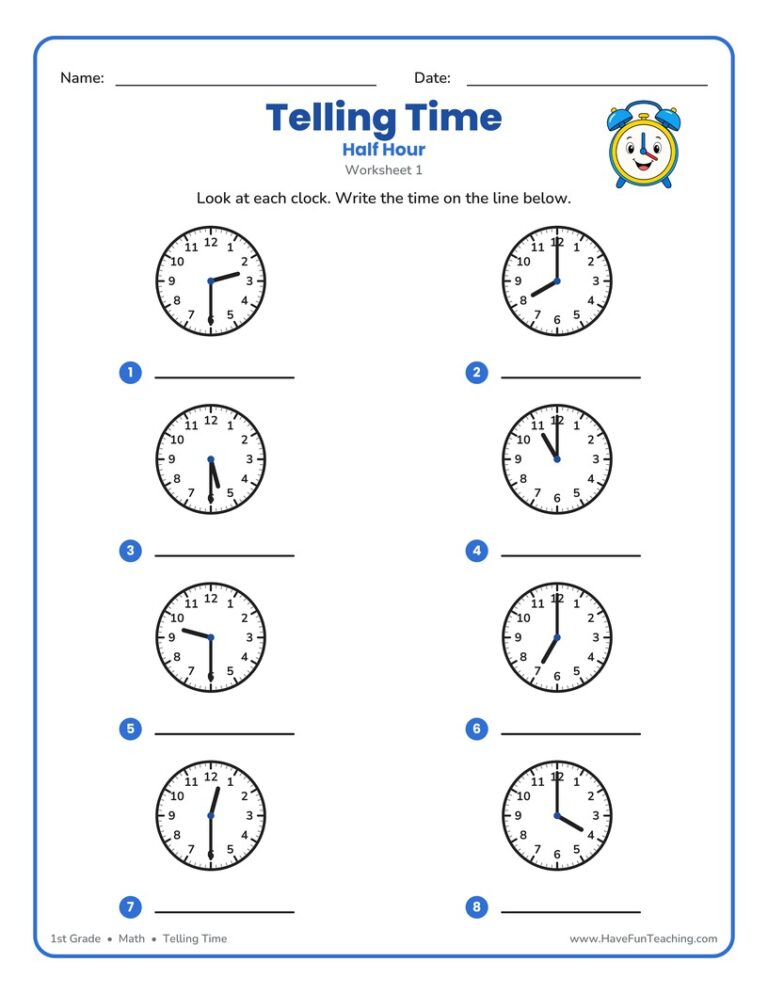
A Telling Time To The Half Hour Worksheet where first graders read eight analog clocks and write each time. Includes an answer key—perfect for quick, no-prep clock practice at home or school.

This time telling worksheet asks 1st grade students to write the time under six clocks set to the hour and half hour, then draw the hands on three more. An answer key is included.

Using these Time Flash Cards, students identifying the time which represents the picture provide in order toimprove their telling time skills.

This Telling Time Matching Worksheet has 1st Grade students match digital times to analog clocks and then draw the hands themselves. An answer key is included, so checking clock-reading practice takes seconds.

This time to the hour worksheet has 1st graders read six analog clocks and then draw the hands on two more. An answer key is included, so whole-hour practice is ready to hand out with no prep.

Using this Telling Time Activity, students practice telling time to the hour on an analog clock.

This time to the hour matching worksheet has 1st grade students match analog clocks to digital times and draw the hands themselves. An answer key is included, so practice is ready to print and go.

The Clock Worksheet has 1st graders fill in the missing numbers on a big clock face, then read three clocks and write each time. Answer key included, so the dial finally makes sense with zero prep.
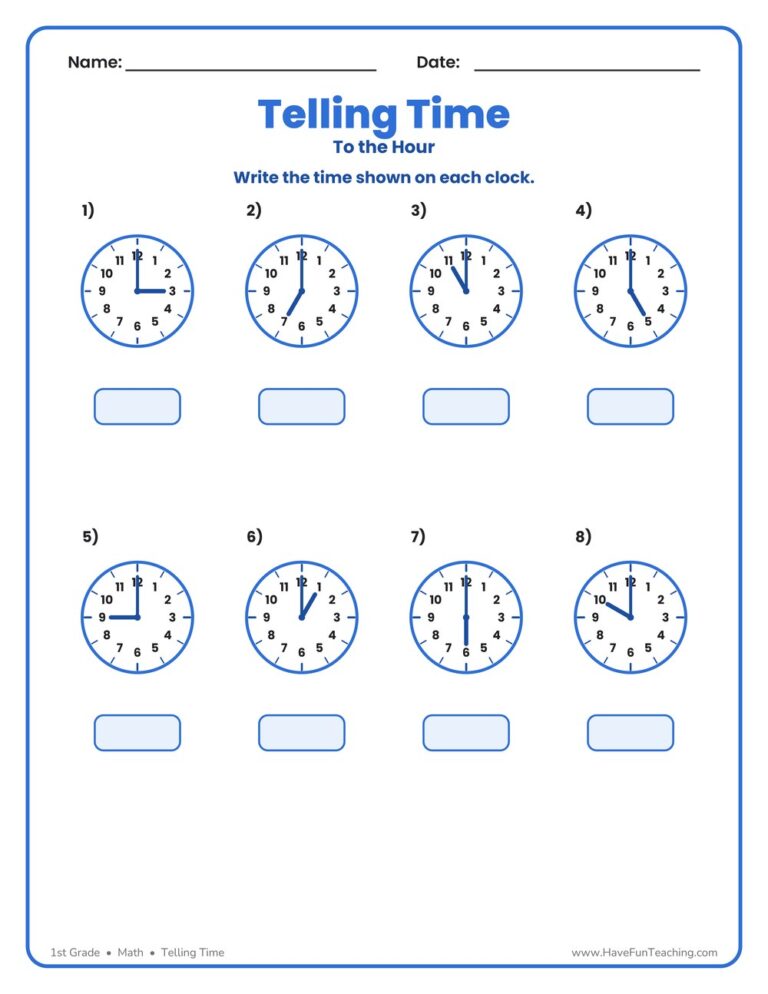
This Telling Time To The Hour Worksheet gives 1st graders eight analog clocks to read and write as digital times. Includes a complete answer key—perfect for quick, no-prep clock practice at home or school.




Reviews
There are no reviews yet