
Skip to content
Start My 3 Free Days $0 today · cancel anytime

1st Grade Subtraction Activities

21 1st grade subtraction activities. Teacher favorites: Finding 10 More 10 Less Activity and Subtraction as an Unknown Addend Activity. How teachers use these

1st Grade Subtraction Activities

21 1st grade subtraction activities. Teacher favorites: Finding 10 More 10 Less Activity and Subtraction as an Unknown Addend Activity. How teachers use these

Activity
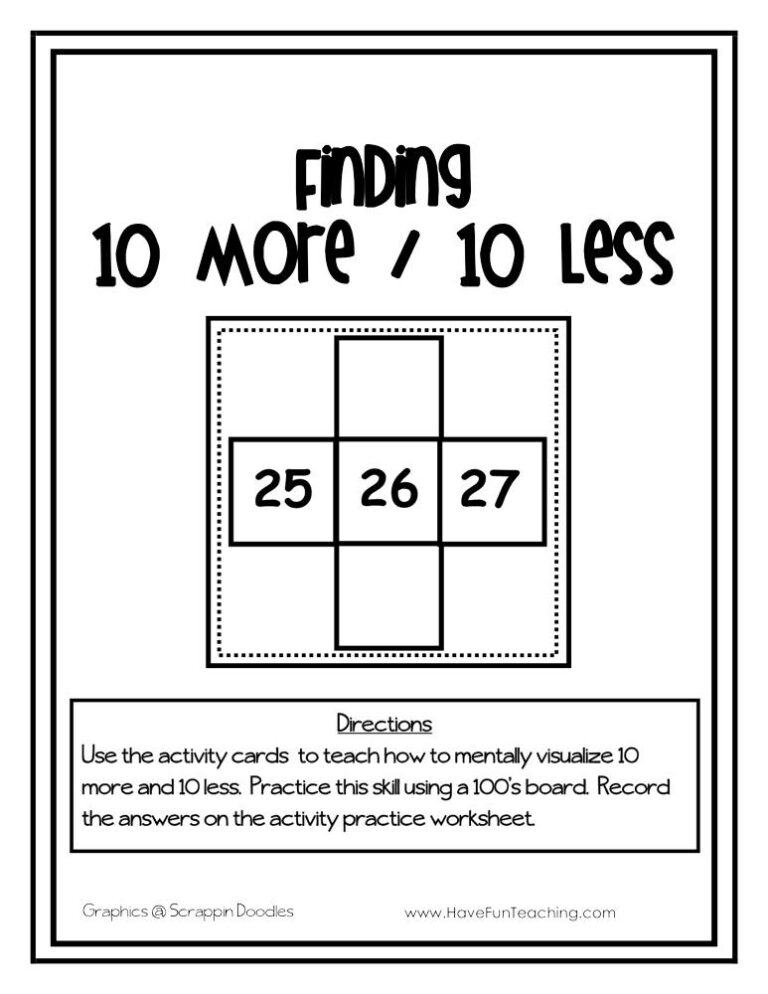
Activity1st GradeFinding 10 More 10 Less Activity

This finding 10 more 10 less activity helps 1st and 2nd grade children use a hundred chart to find 10 more and 10 less. Practice page and answer key included.

Activity
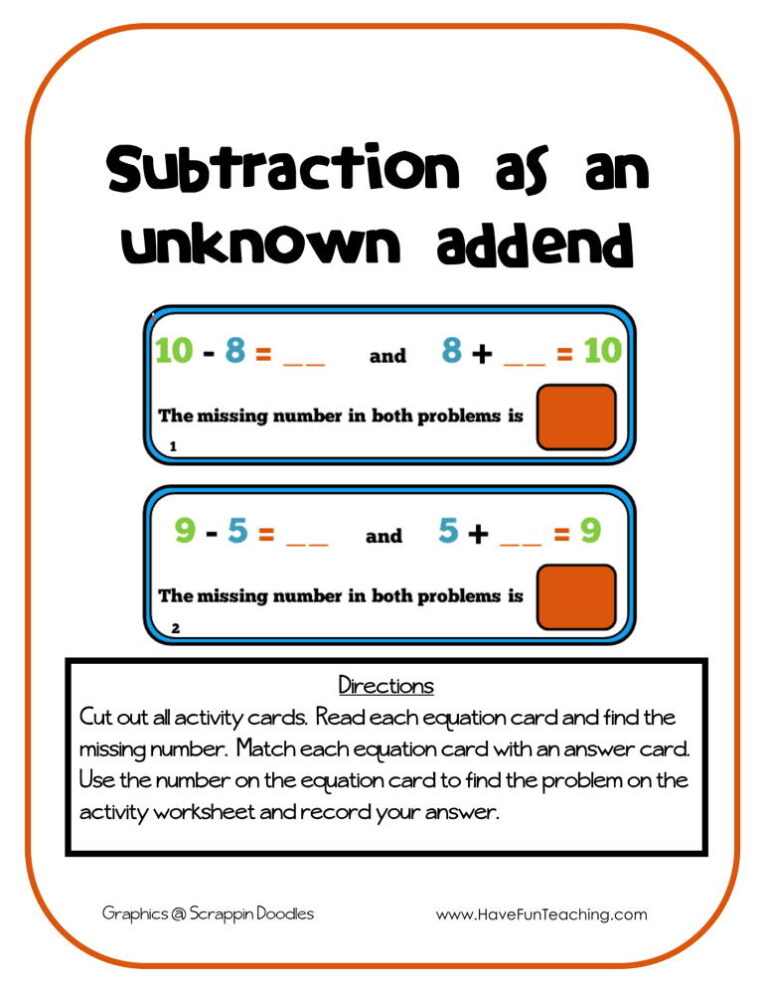
Activity1st GradeSubtraction as an Unknown Addend Activity

This subtraction as an unknown addend activity helps K through 2nd grade students solve subtraction within 20 by matching each fact to its addition fact card. Answer key included.

Activity
Activity1st GradeSubtracting 10 Using a Number Line Activity

This subtracting 10 using a number line activity helps 1st and 2nd grade students take away tens by hopping back on a number line. An answer key is included for easy checking.

Activity
Activity1st GradeAdding and Subtracting Unknown Numbers Activity

Find the missing number in equations within 20 with this adding and subtracting unknown numbers activity for 1st and 2nd grade: matching cards, a recording sheet and practice, answer key included.

Activity
Activity1st GradeDecomposing a Ten Frame Activity

This decomposing a ten frame activity helps kindergarten to 2nd grade students match ten frames to facts that make 10, with a practice page and answer key included.

Activity
Activity1st GradeMissing Number Subtraction Activity

This missing number subtraction activity gives 1st and 2nd grade students watermelon task cards that check themselves, plus a practice page. An answer key is included.

Activity
Activity1st GradeMissing Number Addition Activity

This missing number addition activity has children draw watermelon slices to find the unknown addend in 18 problems within 10. Made for kindergarten and 1st grade, with a practice page and answer key included.

Activity
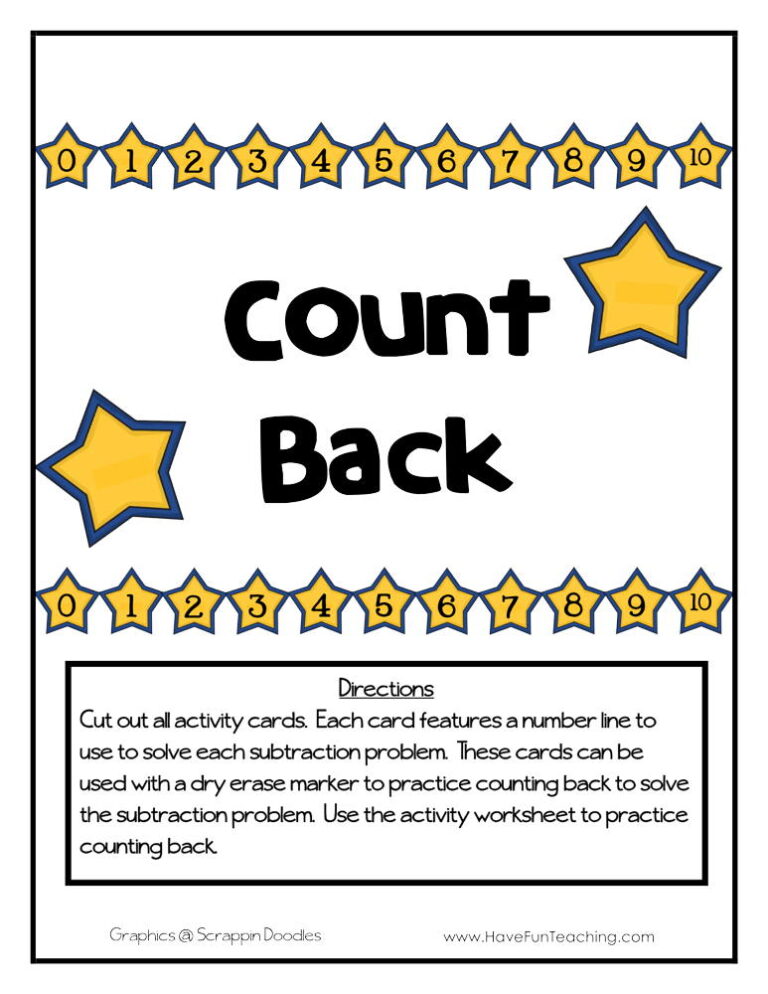
Activity1st GradeCount Back Activity

Using Count Back Activity, students count back from one number to another number to solve the subtraction equations.

Activity
Activity1st GradeMissing Number Addition and Subtraction Activity

Using Missing Number Addition and Subtraction Activity, students fill in the missing addends to complete the addition and subtraction number sentences.

Activity
Activity1st GradeSubtraction Within 5 Activity

This subtraction within 5 activity has kindergarten and 1st grade children solve peanut butter jar problems and match them to jelly jar answers. Answer key included.

Activity
Activity1st GradeLet's Workout Our Brain Add Subtract Within 20 Activity

This Let's Workout Our Brain Add Subtract Within 20 activity gives 1st-2nd grade students two mental math card games, a score sheet and a practice page, with an answer key included.

Activity
Activity1st GradeAdd and Subtract with Frogs Activity

This add and subtract with frogs activity has 1st and 2nd Grade students flip lily pad cards and spin to add or subtract within 20, with a record sheet, practice page and answer key included.

Activity
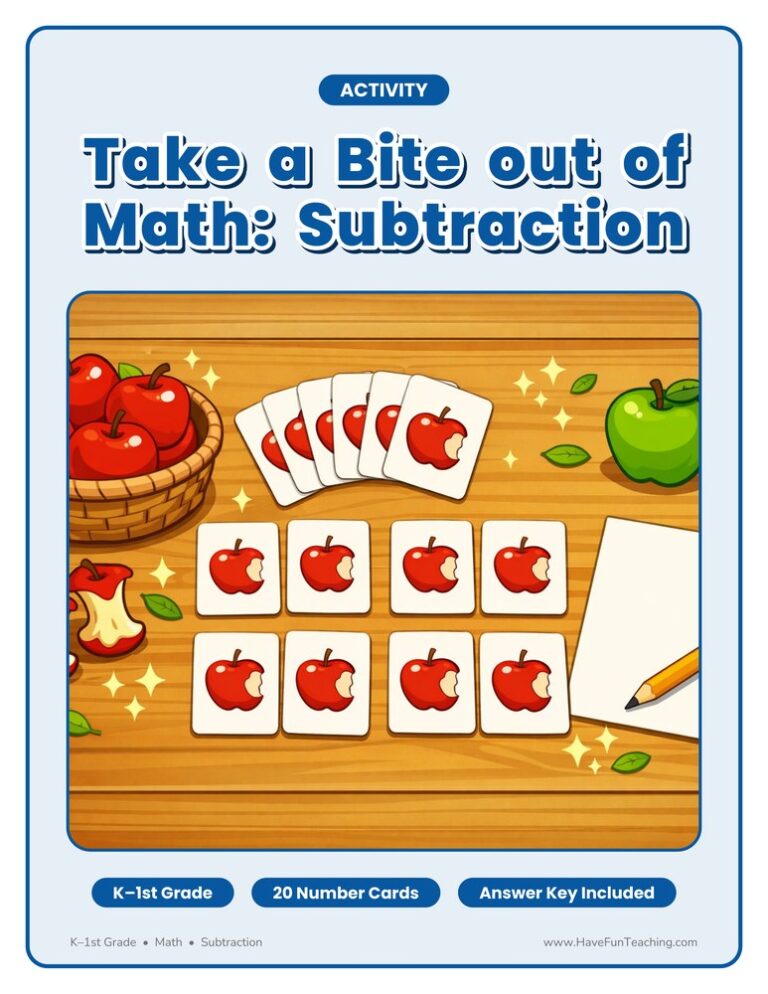
Activity1st GradeSingle Digit Subtraction Activity

This single digit subtraction activity has kindergarten and 1st grade students draw apple number cards, subtract, and record each difference. Answer key included.

Activity
Activity1st GradeSubtraction in the Garden Subtraction Activity

This subtraction in the garden subtraction activity lets kindergarten and 1st grade children plant, pick and count paper vegetables to solve take-away problems within 10. Answer key included.

Activity
Activity1st GradeAdding to Make 10 Activity

Using Adding to Make 10 Activity, students match addition equation cards with missing addend cards to show equations that make 10.

Activity
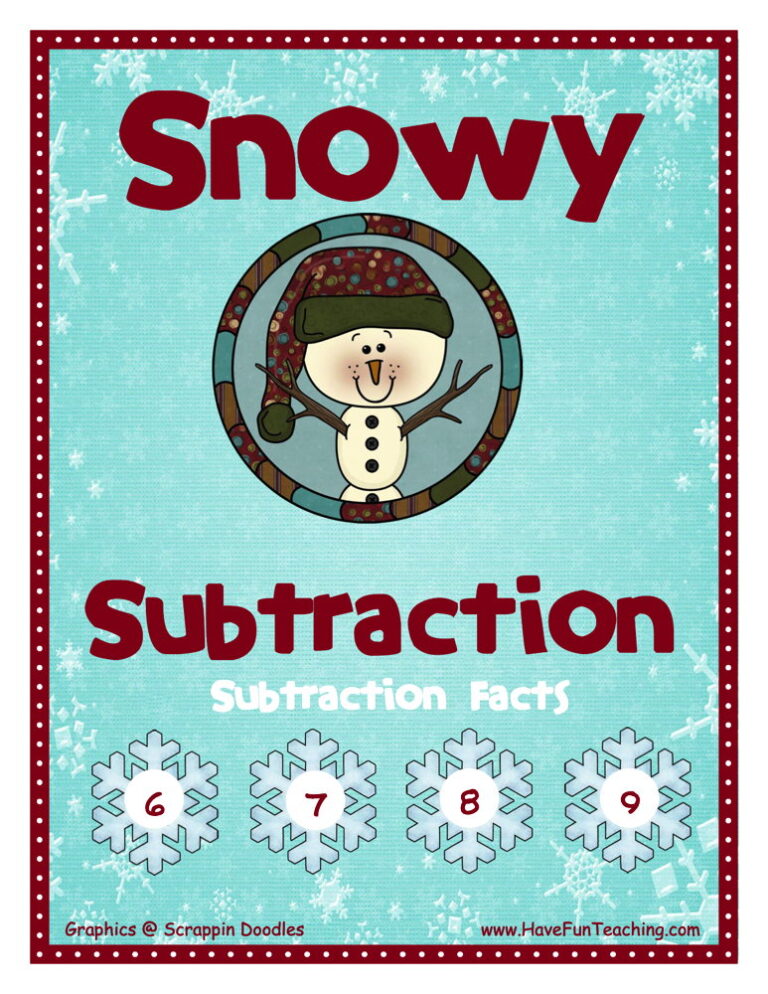
Activity1st GradeSubtraction With 6-7-8-9 Differences Activity

This subtraction with 6-7-8-9 differences activity is a snowy card sort for kindergarten and 1st grade students. Solve each fact, sort it under its snowflake, and check with the answer key included.

Activity
Activity1st GradePopcorn Mental Math Activity

In this Popcorn Mental Math Activity, students mentally add and subtract 10 or 100 to a given number 100–900.

Activity
Activity1st GradeLet's Go on a Trip Addition Subtraction Within 100 Activity

In this Let's Go on a Trip Addition Subtraction Within 100 Activity, students add and subtract within 1000, using concrete models or drawings and strategies.

Activity
Activity1st GradeSubtraction BINGO

Using Subtraction BINGO, students play BINGO to solve subtraction problems to 20 and build fact fluency.

Activity
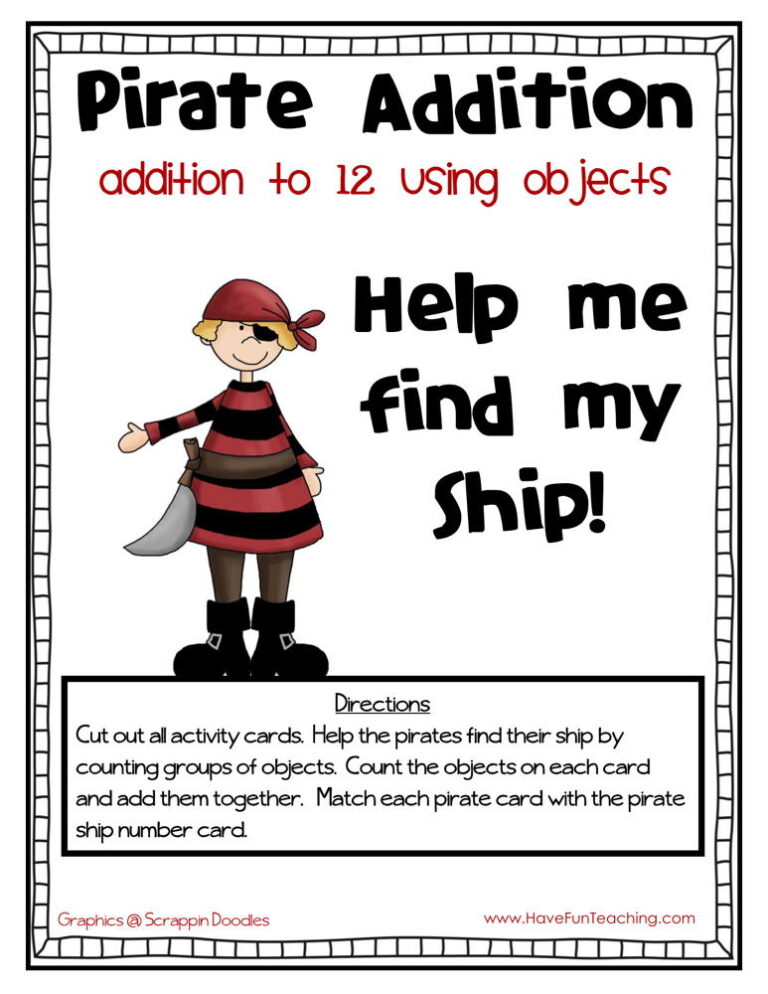
Activity1st GradePirate Addition to 12 Activity

Using Pirate Addition to 12 Activity, students match addition equation cards with sum cards to build addition fact fluency skills.

From our teachers' playbook

Take away, count back, think addition

What do 1st graders learn about subtraction?

First graders move from "take away" stories to real strategies. By the end of the year they subtract within 20, and they learn that subtraction can mean taking away or finding a difference: "Sam has 9 stickers and Ava has 6. How many more does Sam have?" They count back on a number line, make a ten, and use the facts they already know: 13 − 5 = ? becomes "5 plus what makes 13?" They also find 10 less than a two-digit number in their heads, like 47 − 10 = 37. The big click is seeing that addition and subtraction are partners, not strangers.

Our favorite ways to teach subtraction in 1st grade

These moves take kids from counting on fingers to thinking like mathematicians.

Act out the story first

Hand kids 12 counters and tell a story: "12 frogs on a log, 4 hop away." They push 4 frogs off and count what is left. Then they write the number sentence. Acting it out before writing it shows kids what the minus sign really means.

Why it works: kids understand an idea best when they touch it, then draw it, then write it, the order the U.S. Department of Education recommends for elementary math.

Counting Back to Subtract WorksheetTry it withCounting Back to Subtract WorksheetWorksheetsOpen it →

Hop back on the number line

Draw a big number line on the floor with tape and let a child stand on 15. Call "minus 3!" and they hop back three spaces. Then move to the paper number line. Seeing the jumps go backward makes "counting back" make sense.

Why it works: children learn more from words and pictures together than from words alone (Mayer, 2009).

Number Line Jump Backwards and Solve WorksheetTry it withNumber Line Jump Backwards and Solve WorksheetWorksheetsOpen it →

Think addition

When kids see 14 − 6, ask "6 plus what makes 14?" Have them explain their thinking to a partner. Talking it through helps them use the addition facts they already know, which is faster and more reliable than counting back by ones.

Why it works: using clear, consistent math words out loud is one of the U.S. Department of Education's recommendations for elementary math.

Adding to Solve Subtraction Problems WorksheetTry it withAdding to Solve Subtraction Problems WorksheetWorksheetsOpen it →

Questions parents and teachers ask about 1st grade subtraction

What subtraction should a 1st grader know?

First graders subtract within 20 and should know facts within 10 quickly. They also find 10 less than a two-digit number and solve one-step subtraction word problems.

How do I teach subtraction to a 1st grader?

Start with real objects and simple "take away" stories, then move to drawings and a number line. Once kids understand the idea, teach them to think addition: for 9 − 4, ask "4 plus what makes 9?"

Is it okay for my 1st grader to count on fingers?

Yes, fingers are a normal step! Over the year, help your child move to strategies like counting back from the bigger number, making ten, and using known facts so they rely on fingers less.

Why is subtraction harder than addition for kids?

Subtraction asks kids to count backward and think about a missing part, which is harder than counting forward. Linking each subtraction fact to its addition partner makes it much easier.

What is a fact family?

A fact family is a set of related facts using the same three numbers, like 3 + 5 = 8, 5 + 3 = 8, 8 − 5 = 3 and 8 − 3 = 5. Fact families show kids how addition and subtraction work together.



