Skip to content
Start My 3 Free Days $0 today · cancel anytime

Measurement Activities

20 measurement activities. Teacher favorites: Measuring with Cubes Activity and Garden Vegetables Measuring Activity. How teachers use these

Measurement Activities

20 measurement activities. Teacher favorites: Measuring with Cubes Activity and Garden Vegetables Measuring Activity. How teachers use these

Activity
Activity1st GradeMeasuring with Cubes Activity

Students line up paper cubes to find how long school objects are in this measuring with cubes activity for 1st to 3rd grade, with a practice page and answer key included.

Activity
Activity1st GradeGarden Vegetables Measuring Activity

This garden vegetables measuring activity has 1st and 2nd grade students measure true-size vegetable cards in inches and make a line plot. Answer key included.

Activity
Activity4th GradeMeasuring Monstrous Angles Activity

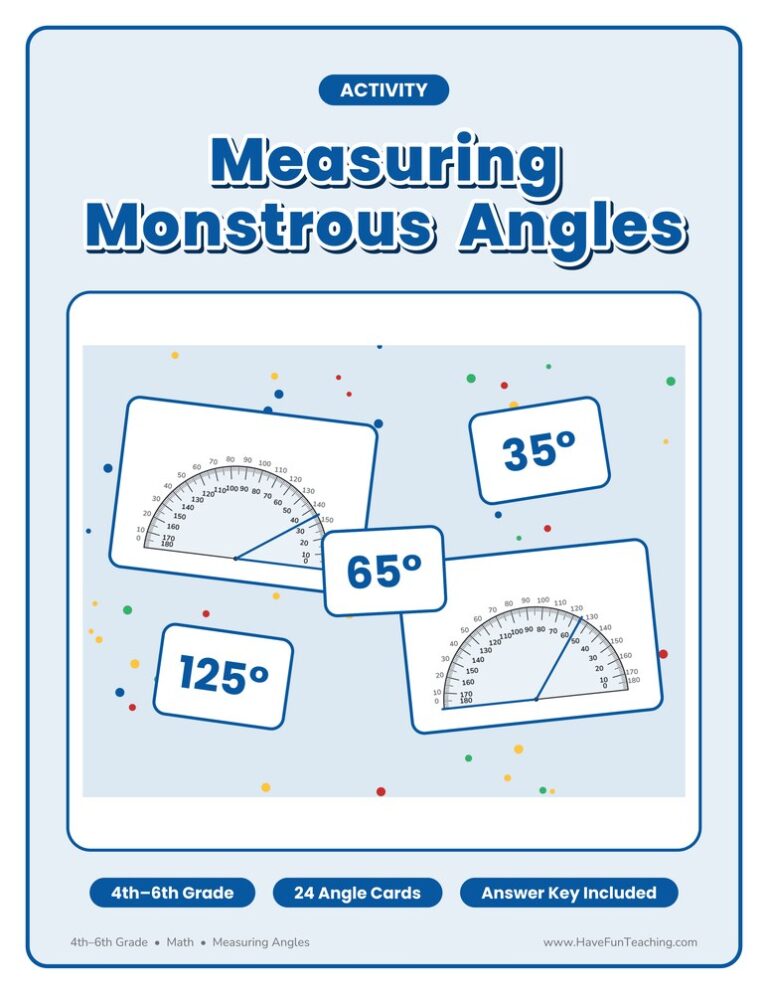
This measuring monstrous angles activity helps 4th to 6th grade students read a protractor and match angles to their measures. Answer key included for quick checking at a math center.

Activity
Activity1st GradeMeasurable Attributes Activity

This measurable attributes activity has 1st to 3rd grade children sort picture cards by weight and height on two mats, then compare objects and cube towers. Answer key included.

Activity
Activity2nd GradeEstimate and Measure Activity

Use this estimate and measure activity to help 2nd and 3rd grade students pick sensible lengths in inches, feet, centimeters and meters. Picture cards, true-size rulers and an answer key make practice easy.

Activity
Activity2nd GradeUnits of Measurement Inches Centimeters Activity

This units of measurement inches centimeters activity has 2nd-3rd grade students measure true-size objects with inch and centimeter rulers and compare the two numbers. An answer key is included.

Activity
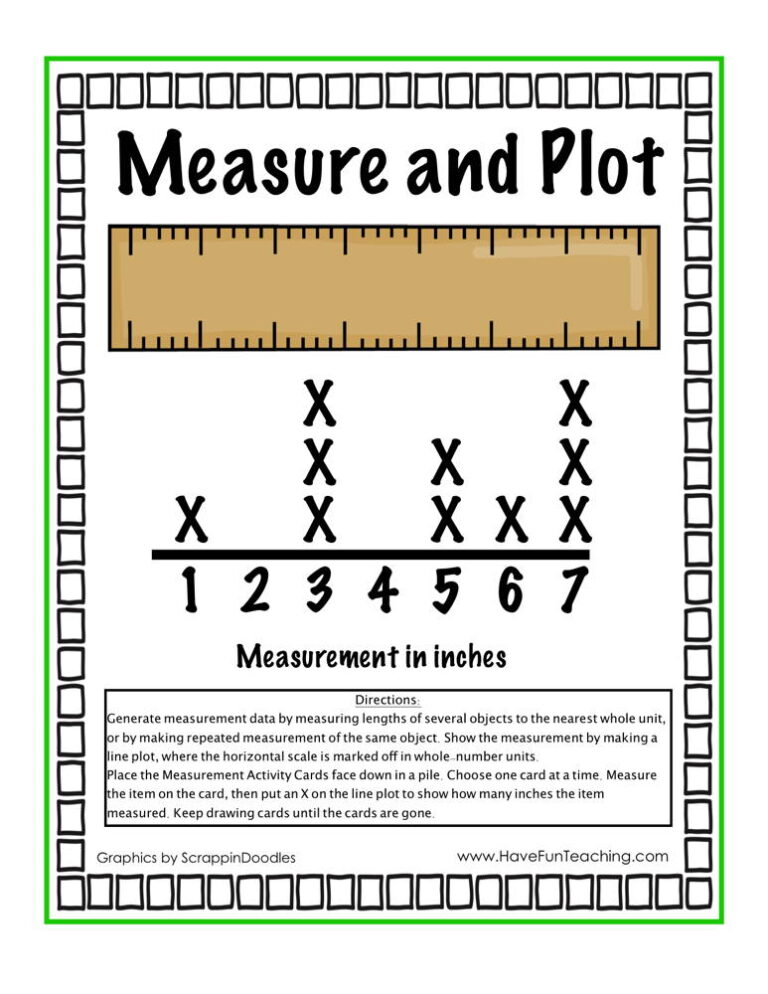
Activity3rd GradeMeasure and Plot Data Activity

In this measure and plot data activity, 3rd to 5th grade students measure true-size objects to the nearest quarter inch and build a line plot. Answer key included.

Activity
Activity2nd GradeIce Fishing Addition Subtraction Within 100 Activity

This ice fishing word problems activity gives 2nd and 3rd graders 12 task cards for adding and subtracting lengths within 100, with recording sheets. Answer key included for quick checking.

Activity
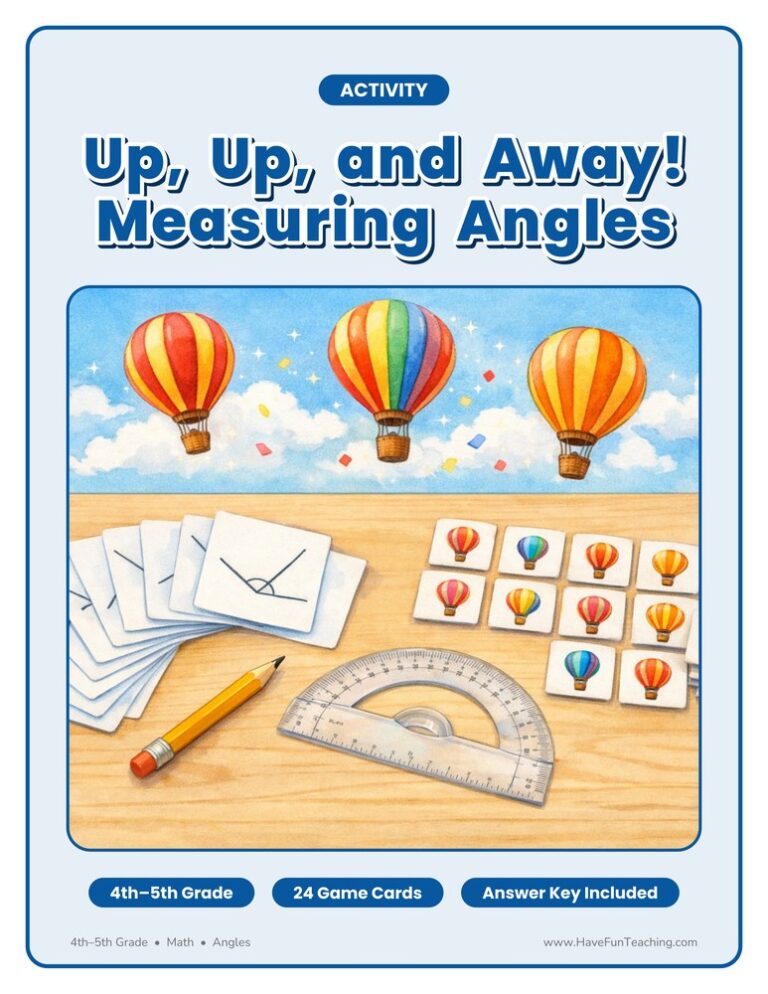
Activity4th GradeUp, Up, and Away! Measuring Angles Activity

This measuring angles activity has 4th and 5th grade students add or subtract angle parts to find missing angles and match them to balloon cards. Answer key included.

Activity
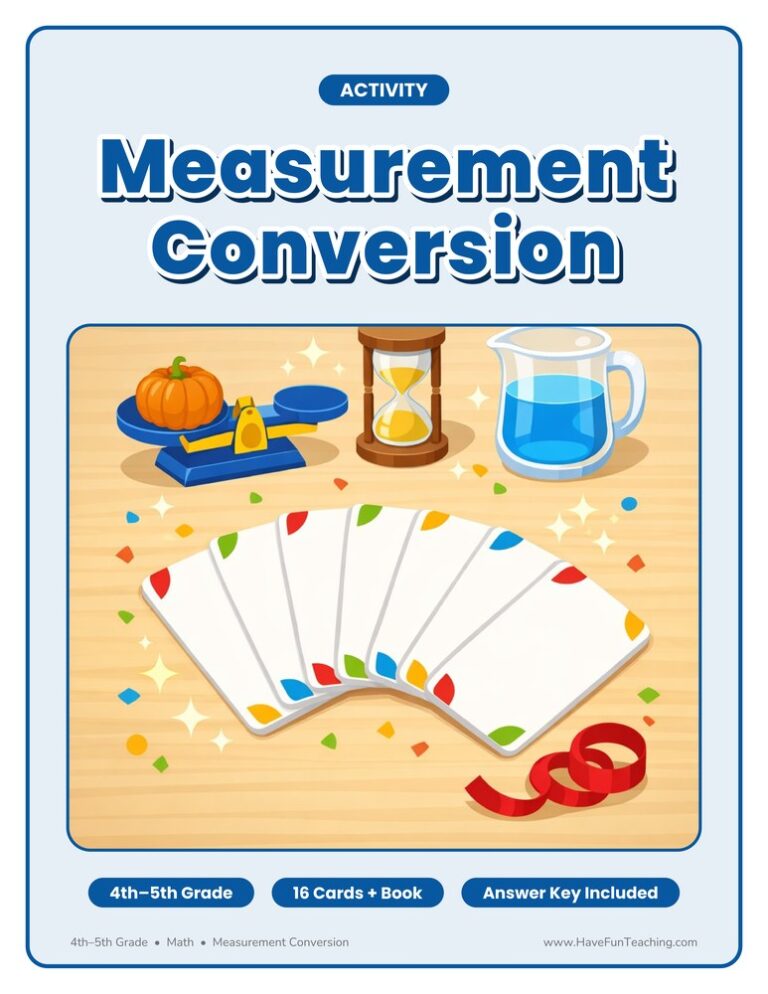
Activity4th GradeMeasurement Conversion Activity

This measurement conversion activity helps 4th-5th grade students change kilometers, kilograms, liters, hours and more into smaller units with cards, tables and a poster. Answer key included.

Activity
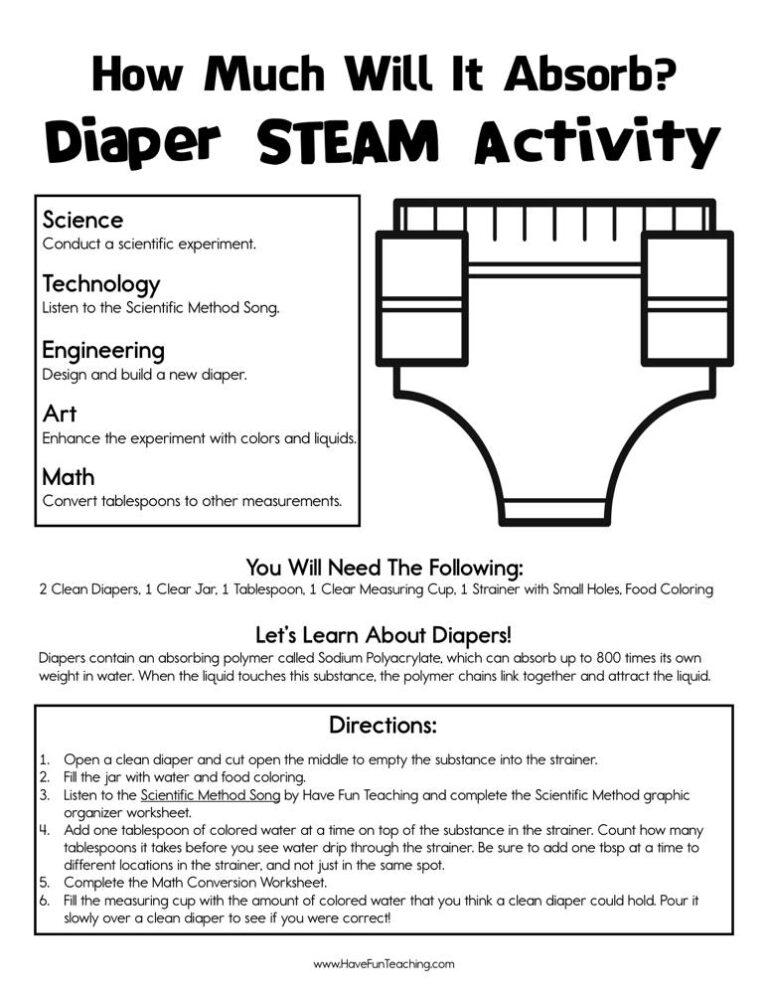
Activity4th GradeHow Much Will It Absorb Diaper STEAM Activity

Run the How Much Will It Absorb Diaper STEAM Activity as a real lab for 4th to 6th grade: test diaper gel, convert capacity units, and design a diaper, with an answer key included.

Activity
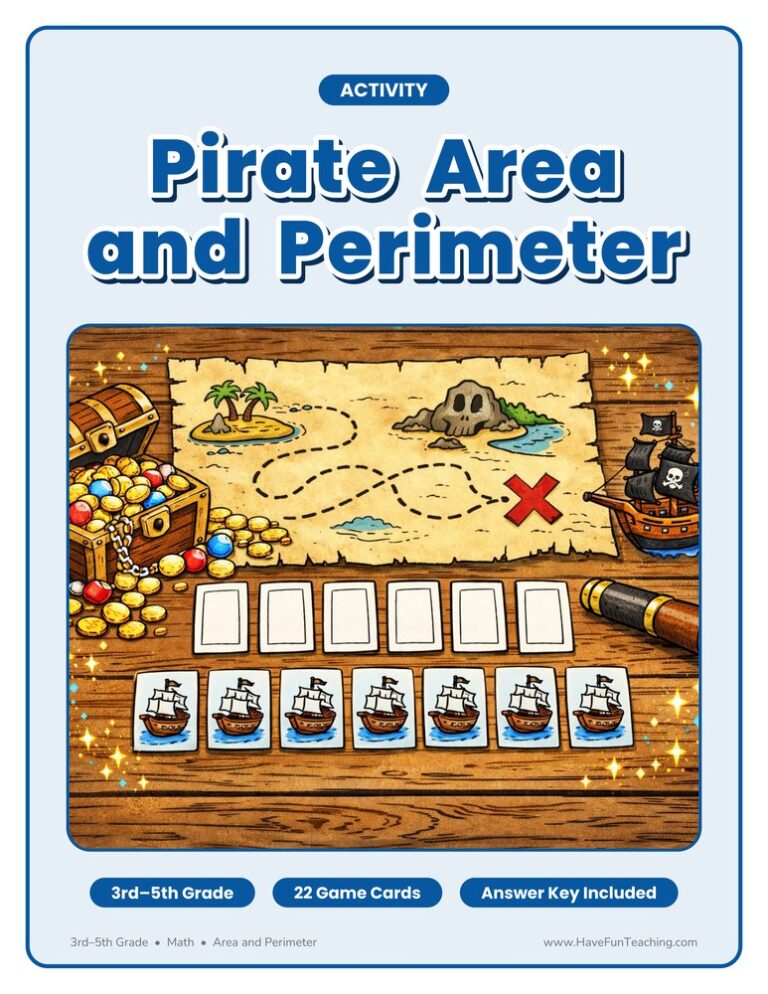
Activity3rd GradeArea and Perimeter Pirate Activity

This area and perimeter pirate activity has 3rd to 5th graders solve rectangle cards and match each pirate to the ship with the right answer and units. Answer key included.

Activity
Activity3rd GradeFinding the Perimeter Activity

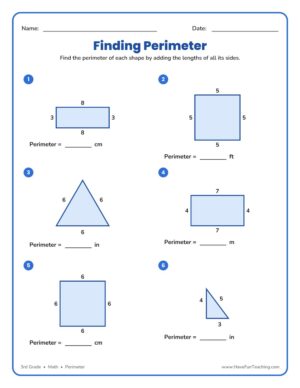
This finding the perimeter activity for 3rd and 4th grade has students find missing sides and match 12 shapes to their perimeters. Answer key included, so checking is quick.

Activity
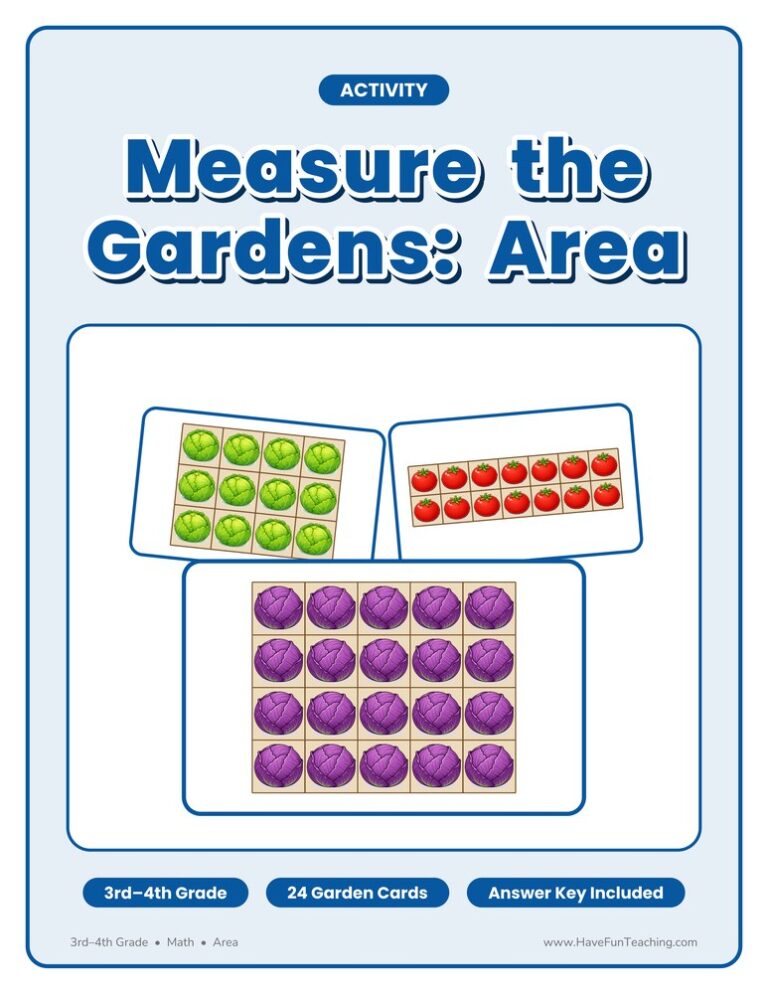
Activity3rd Grade3.MD.7 Common Core Activity

This 3.MD.7 common core activity has 3rd and 4th Grade students match vegetable gardens on square unit grids to number sentences and areas. Answer key included.

Activity
Activity3rd GradePlotting Measurements Activity

This plotting measurements activity has 3rd to 5th Grade students measure garden objects to the quarter inch and build a line plot, with practice and an answer key included.

Activity
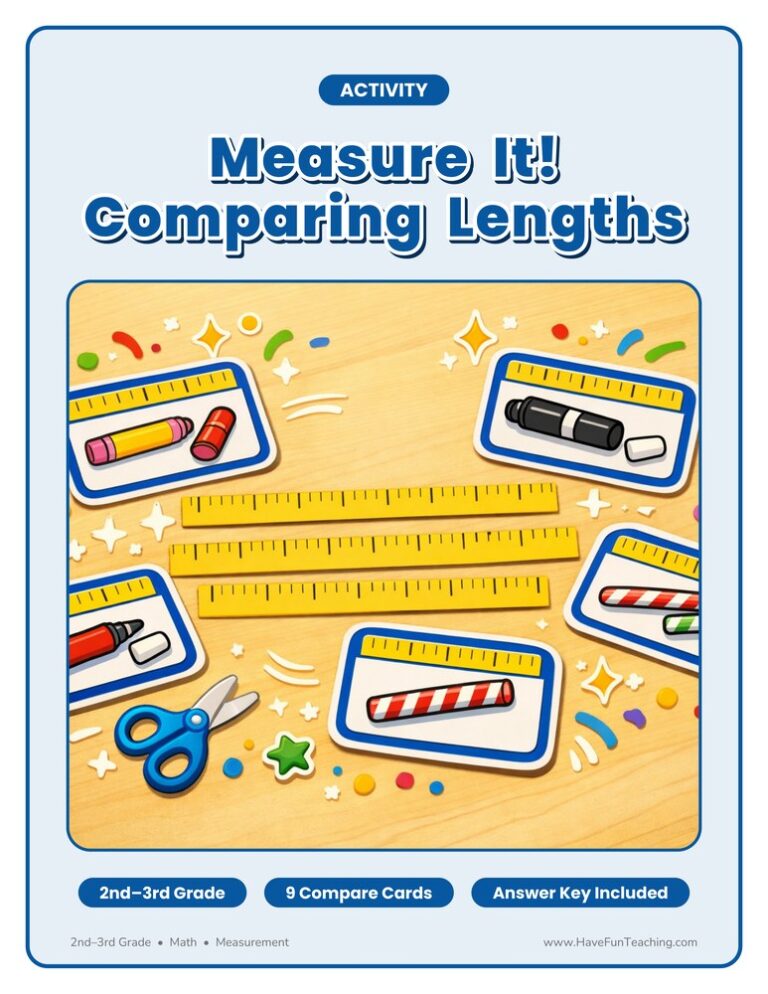
Activity2nd GradeMeasure it Comparing Lengths Activity

This measure it comparing lengths activity has 2nd and 3rd Grade students measure true-size objects in inches and find how much longer one is. Answer key included for easy checking.

Activity
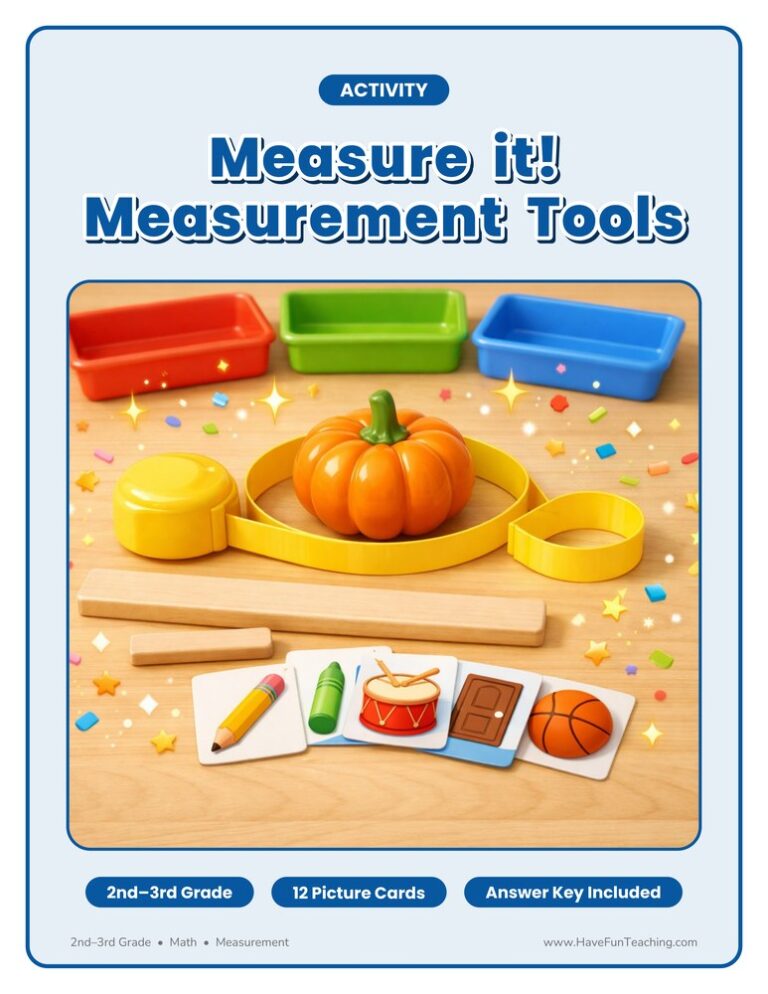
Activity2nd GradeMeasure it Measurement Tools Activity

This measure it measurement tools activity has 2nd-3rd grade students sort picture cards onto ruler, yardstick and measuring tape mats, with a practice page and answer key included for confident measuring.

Activity
ActivityKindergartenFind and Measure Activity

This find and measure activity has kindergarten and 1st grade students measure true-size school objects with printable paper clip strips and compare lengths. A practice page and answer key are included.

Activity
ActivityKindergartenLadybug Measuring Activity

In this ladybug measuring activity, K-1st grade children measure nine real-size objects with a ladybug strip and record each length. Practice page and answer key included.

Activity
Activity3rd GradeWater We Measuring Activity

This water we measuring activity helps 3rd and 4th Grade children choose grams, kilograms or liters by sorting picture cards on a unit mat, then practicing word problems. Answer key included.

From our teachers' playbook

How long? How heavy? How hot?

What do kids learn about measurement?

Measurement starts with comparing: kindergartners decide which pencil is longer or which bag is heavier. In 1st grade, kids measure with same-size objects like paper clips and learn that there can be no gaps or overlaps. By 2nd grade they use rulers in inches and centimeters, and in 3rd grade they tell time to the minute and measure liquid volume and mass. Older kids convert between units, like 1 m = 100 cm, and find perimeter and area. The click moment is when kids understand that a measurement is really a count of equal units laid end to end.

Our favorite ways to teach measurement

Kids learn to measure by measuring. These moves start with real objects and grow into rulers, scales and units.

Line it up, then compare

Give a group five classroom objects and ask them to line them up from shortest to longest. Watch whether they line up the starting ends. That one habit, a shared starting line, is the root of using a ruler correctly later.

Why it works: the U.S. Department of Education's guide for teaching elementary math recommends moving from hands-on objects to drawings to numbers.

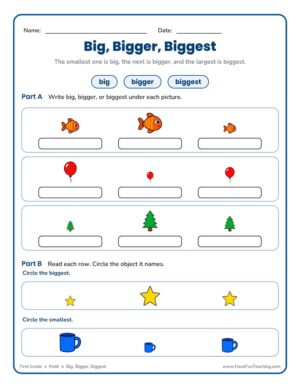
Using Length to Order Objects WorksheetTry it withUsing Length to Order Objects WorksheetWorksheetsOpen it →

Start at zero

Kids often start measuring at the 1 on a ruler, or at its very edge. Draw a big ruler on the board, circle the zero and show what happens when you start at 1: the pencil "shrinks" by an inch. Then let kids measure lines on a page and check each other.

Why it works: children learn more from words and pictures together than from words alone (Mayer, 2009).

Measuring Inches WorksheetTry it withMeasuring Inches WorksheetWorksheetsOpen it →

Measure a little every week

Measurement often gets one unit and then disappears. Bring it back once a week with a short page or a quick "measure three things" job. Small repeats keep units and rulers fresh all year.

Why it works: short practice spread over several days beats one long session, according to a large review of learning research (Dunlosky and colleagues, 2013).

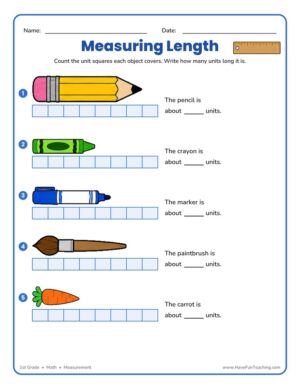
Measuring Length WorksheetTry it withMeasuring Length WorksheetWorksheetsOpen it →

Questions parents and teachers ask us

At what age do kids learn measurement?

Kids start comparing sizes in preschool and kindergarten. They measure with rulers around 2nd grade, then move on to time, mass, volume and unit conversions in 3rd through 5th grade.

How do I teach a child to use a ruler?

Show them to line up the object with the zero mark, not the edge of the ruler or the 1. Have them measure lines that are exactly whole inches first, then move to objects around the house.

What are nonstandard units of measurement?

They are everyday objects used as units, like paper clips, blocks or hand spans. Young kids measure with them first so they understand that measuring means counting equal units with no gaps.

How can we practice measurement at home?

Cook together and use measuring cups, weigh fruit at the store, or measure everyone's height on a door frame. Real measuring beats a worksheet every time, and the worksheet then makes more sense.