Skip to content
Start My 3 Free Days $0 today · cancel anytime

Insects Worksheets

33 insects worksheets. Teacher favorites: Life Cycle of a Butterfly Worksheet and Butterflies Reading Comprehension Worksheet. How teachers use these

Insects Worksheets

33 insects worksheets. Teacher favorites: Life Cycle of a Butterfly Worksheet and Butterflies Reading Comprehension Worksheet. How teachers use these

Worksheet
Worksheet2nd GradeLife Cycle of a Butterfly Worksheet

The Life Cycle of a Butterfly Worksheet has 2nd graders label the egg, larva, pupa, and adult stages and put them in the correct order. Answer key included for quick, hands-on life science practice.

Worksheet
Worksheet2nd GradeButterflies Reading Comprehension Worksheet

This butterflies reading comprehension worksheet gives 2nd graders a short non-fiction passage on the butterfly life cycle, four bubble questions, and one written response. Answer key included for fast, no-prep practice.

Worksheet
Worksheet3rd GradeInsects Worksheet

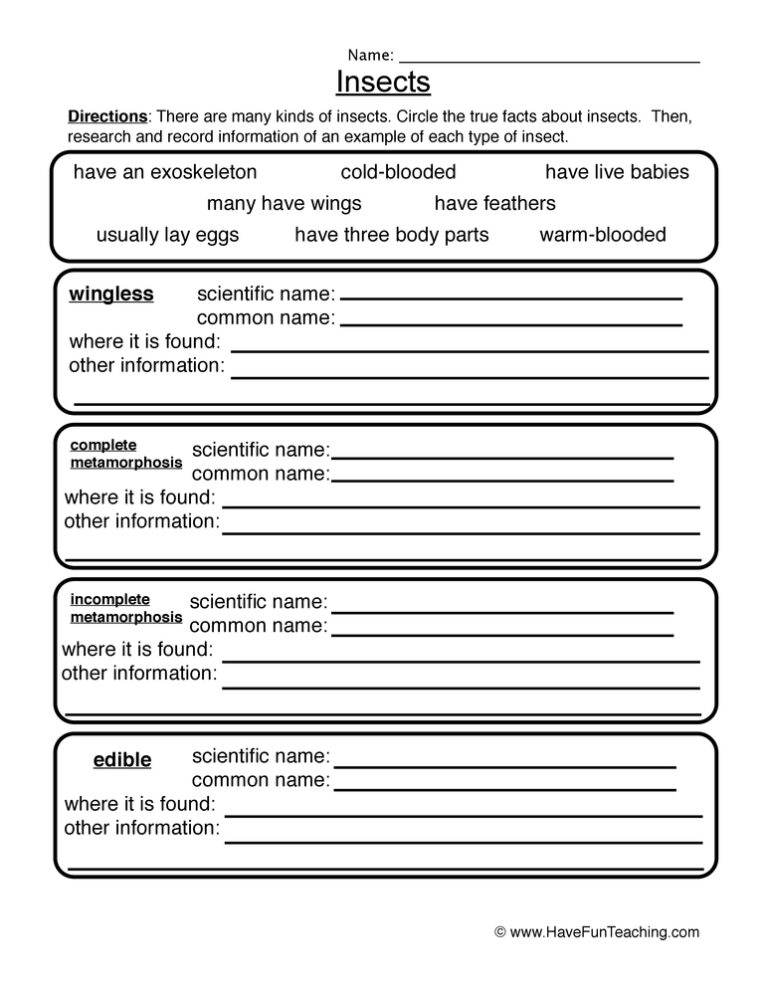
This insects worksheet helps 3rd grade students circle true insect facts, sort eight animals into insect groups, and explain why a spider is not an insect, with an answer key included for easy checking.

Worksheet
Worksheet5th GradeInsect Taxonomy Worksheet

This Insect Taxonomy Worksheet gives 5th Grade students a finished honey bee chart to classify a monarch butterfly beside it, plus four questions and an answer key, so taxonomy becomes reasoning instead of memorizing.

Worksheet
Worksheet1st GradeInsect Writing Paper

This insect writing paper worksheet gives 1st Grade students wide lined paper and a bug themed prompt, so every child has a real insect to describe and room to write about it.

Worksheet
Worksheet2nd GradeButterfly Writing Paper

This butterfly writing paper gives 2nd graders a friendly prompt, ten roomy writing rules and a bright paper-collage garden, so every child has a butterfly story to tell before the pencil moves.

Worksheet
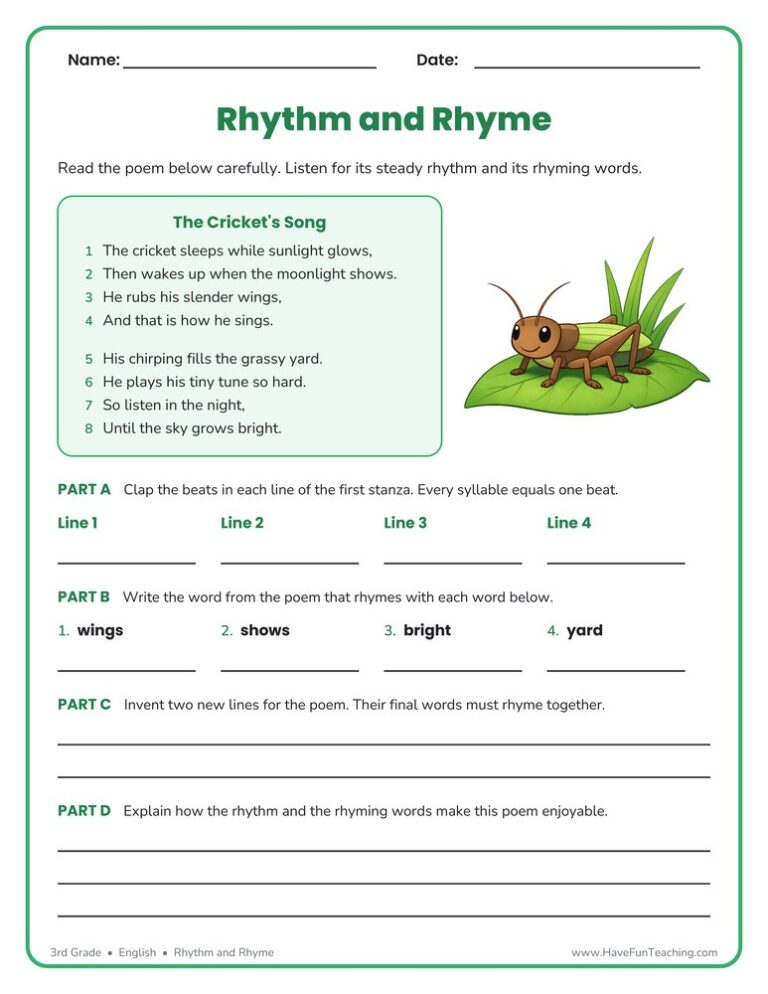
Worksheet3rd GradeRhythm and Rhyme Worksheet

This rhythm and rhyme worksheet gives 3rd grade students an original cricket poem, beat counting, rhyming pairs, and a write-your-own couplet. Answer key included, so poetry practice is ready to print.

Worksheet
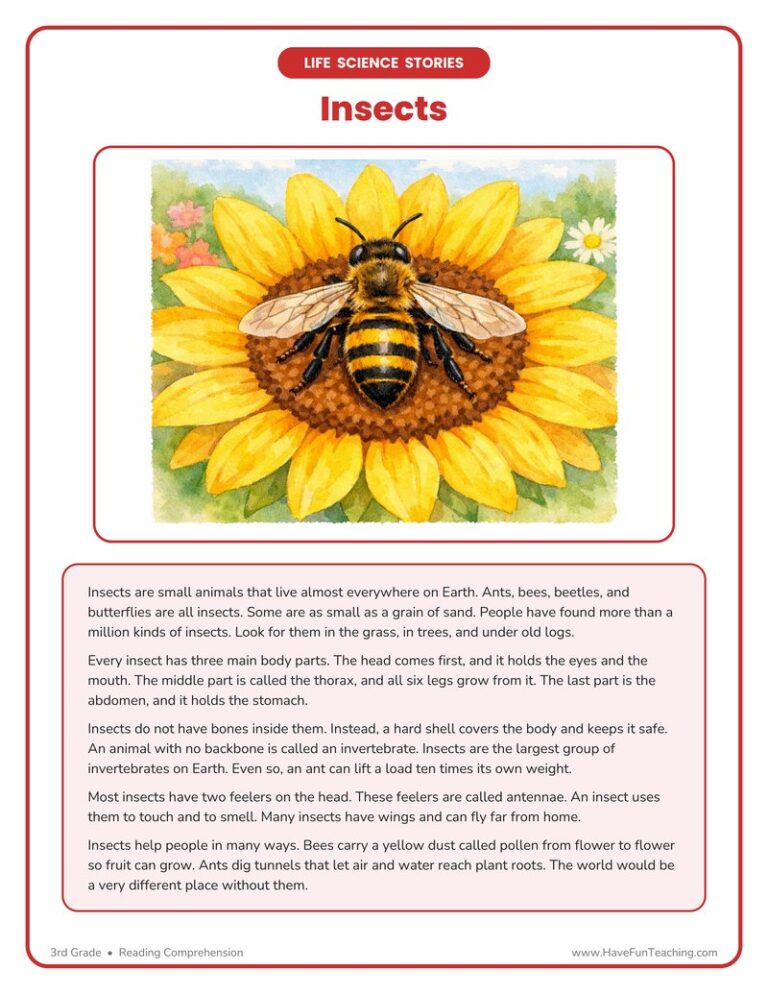
Worksheet3rd GradeInsects Life Science Reading Comprehension Worksheet

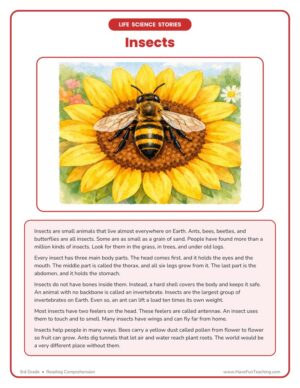
This insects life science reading comprehension worksheet gives 3rd Grade readers a non-fiction passage about insect body parts, plus multiple choice, word-bank, and written-response questions. Answer key included for fast, no-prep science reading practice.

Worksheet
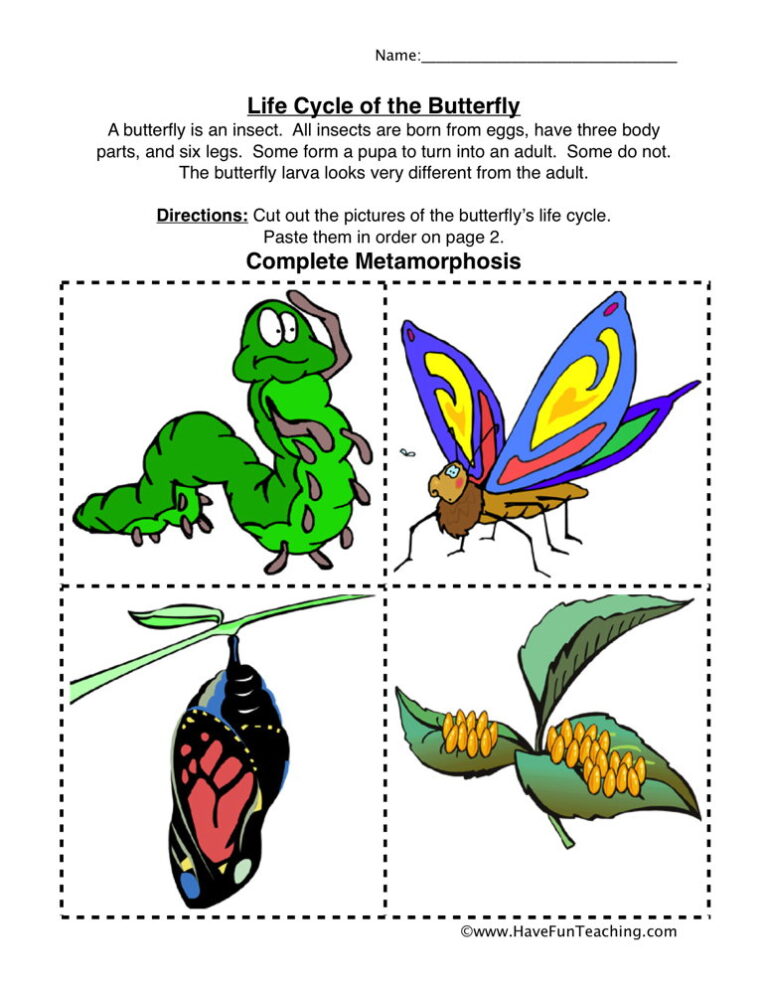
Worksheet2nd GradeButterfly Life Cycle Worksheet

The Butterfly Life Cycle Worksheet has 2nd grade students number four pictures in order and write the name of each stage on the line. An answer key is included.

Worksheet
WorksheetKindergartenCounting Bugs Worksheet

This counting bugs worksheet has kindergarten students count sets of ladybugs, bees, and butterflies, write how many, and fill in missing numbers to ten. Answer key included for quick, no-prep counting practice.

Worksheet
Worksheet3rd GradeReptiles, Amphibians, and Insects Worksheet

This reptiles, amphibians, and insects worksheet helps 3rd grade students sort four animals by their traits and explain their thinking in writing. Answer key included for quick, no-prep life science practice.

Worksheet
Worksheet2nd GradeSpider Web Reading Comprehension Worksheet

This Spider Web Reading Comprehension Worksheet helps 2nd grade students read a short story about a dewy web and the spider that built it, then use text details to answer questions. An answer key is included.

Worksheet
Worksheet2nd GradeInsect Life Cycles Worksheet

This Insect Life Cycles Worksheet has 2nd grade students put butterfly and grasshopper stages in order and name each stage. An answer key is included for easy checking.

Worksheet
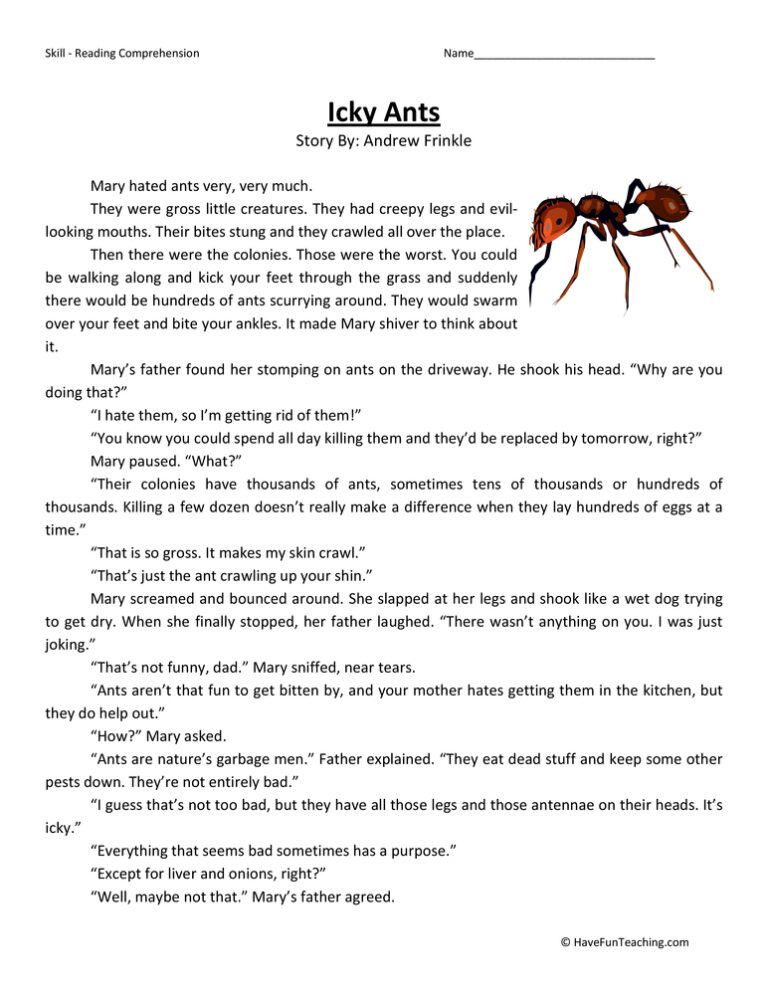
Worksheet3rd GradeIcky Ants Reading Comprehension Worksheet

This Icky Ants Reading Comprehension Worksheet gives 3rd Grade readers a short nonfiction text about the work an ant colony does underground, five questions, and an answer key, so students practice finding evidence in what they read.

Worksheet
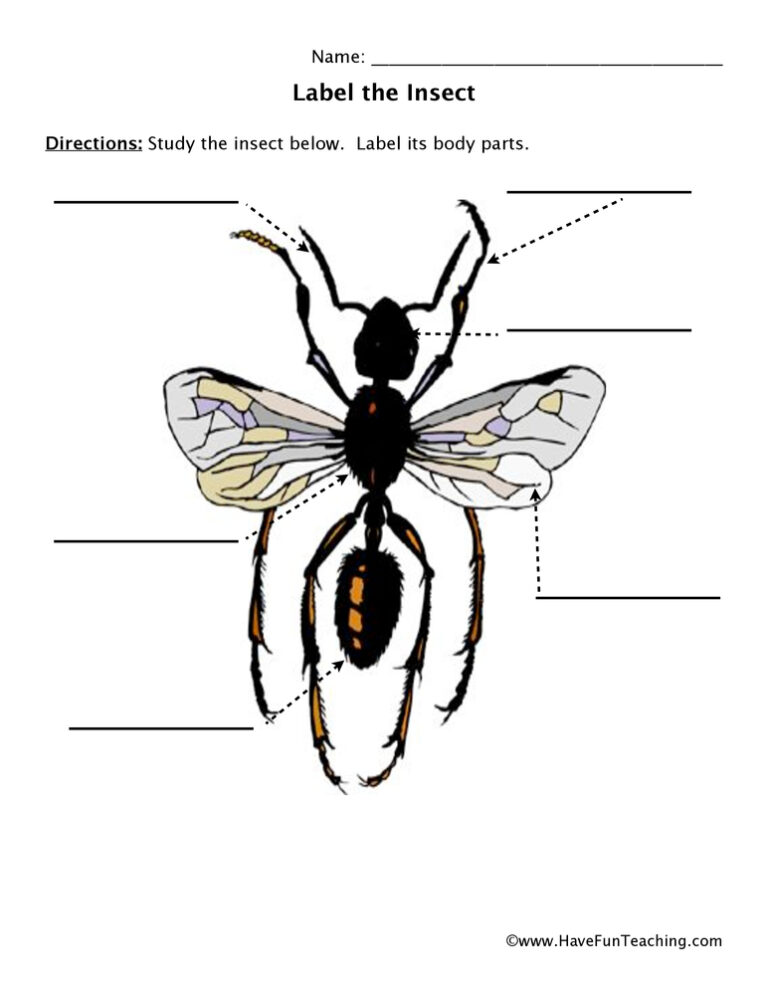
Worksheet2nd GradeWinged Bug Body Parts Worksheet

This winged bug body parts worksheet has 2nd grade students label the head, thorax, abdomen, wing, leg and antenna of an insect. An answer key is included for quick checking.

Worksheet
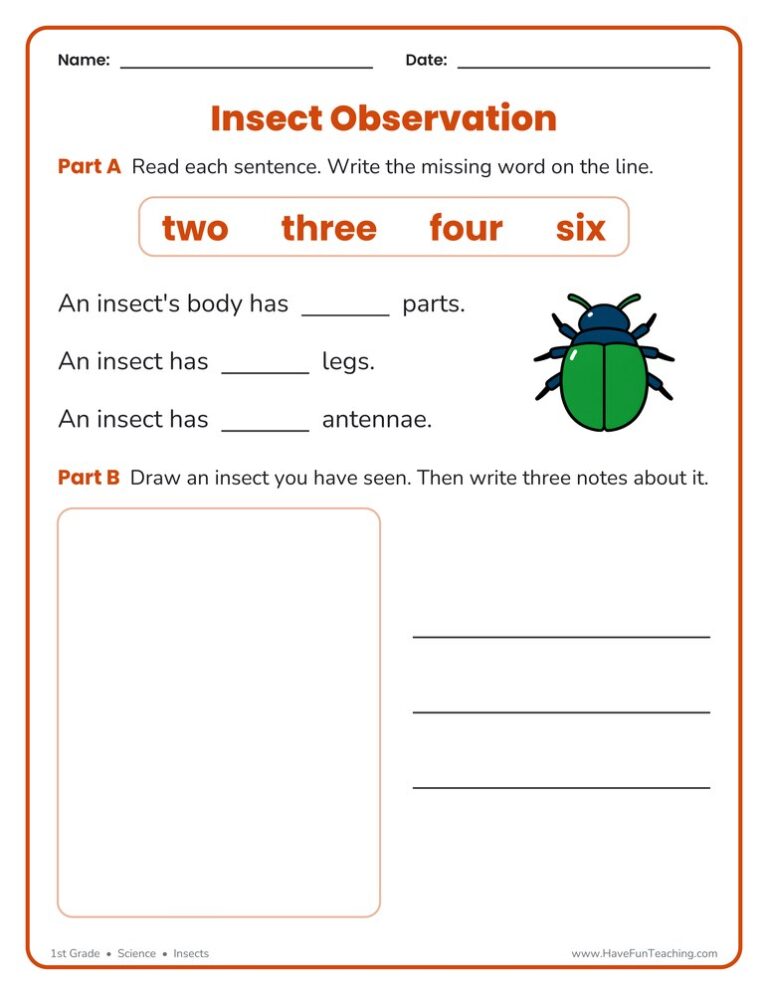
Worksheet1st GradeInsect Observation Worksheet

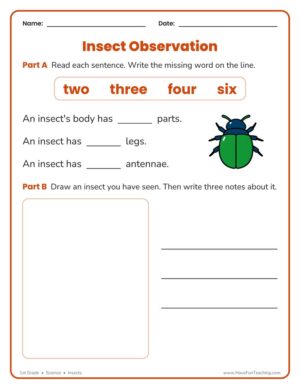
This Insect Observation Worksheet teaches 1st grade students that an insect has three body parts, six legs and two antennae, then gives them a box to draw the insect they found and three lines for notes.

Worksheet
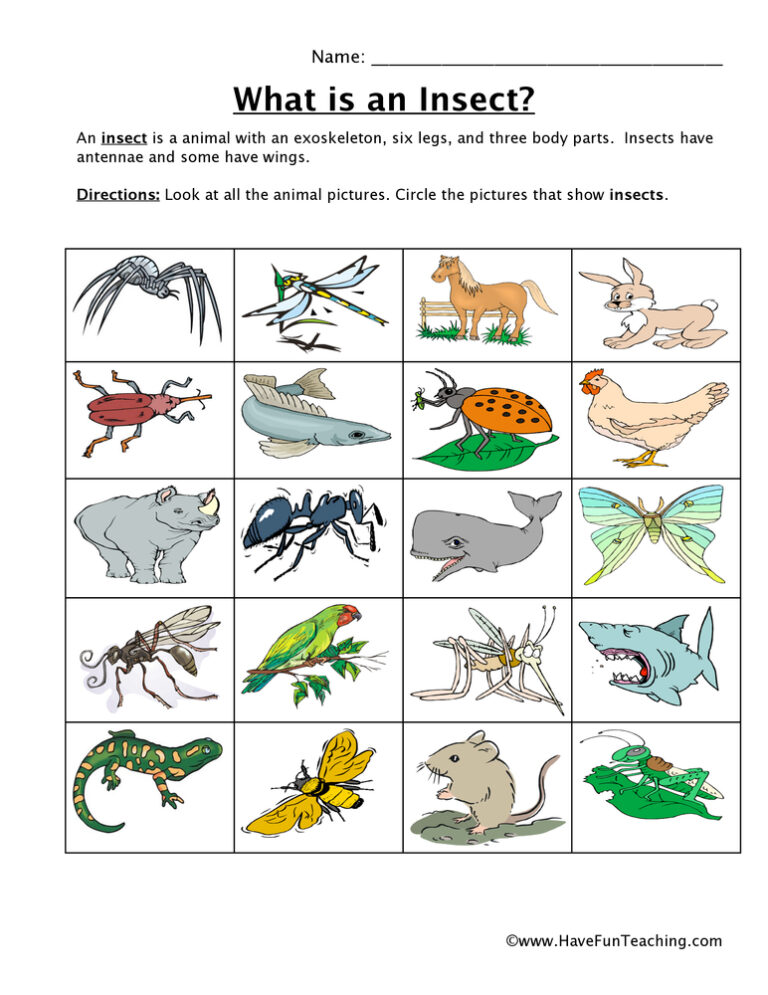
Worksheet2nd GradeInsect Classification Worksheet

A picture-sorting insect classification worksheet that has 2nd Grade students test six animals against one simple three-part rule. Includes an answer key, so it works as no-prep science practice at home or school.

Worksheet
Worksheet3rd GradeInsects ABC Order Worksheet

This Insects ABC Order Worksheet asks 3rd Grade students to put ten insect words in alphabetical order and name the letter that decided each pair. An answer key is included.

Worksheet
Worksheet1st GradeWorm Poem Reading Comprehension Worksheet

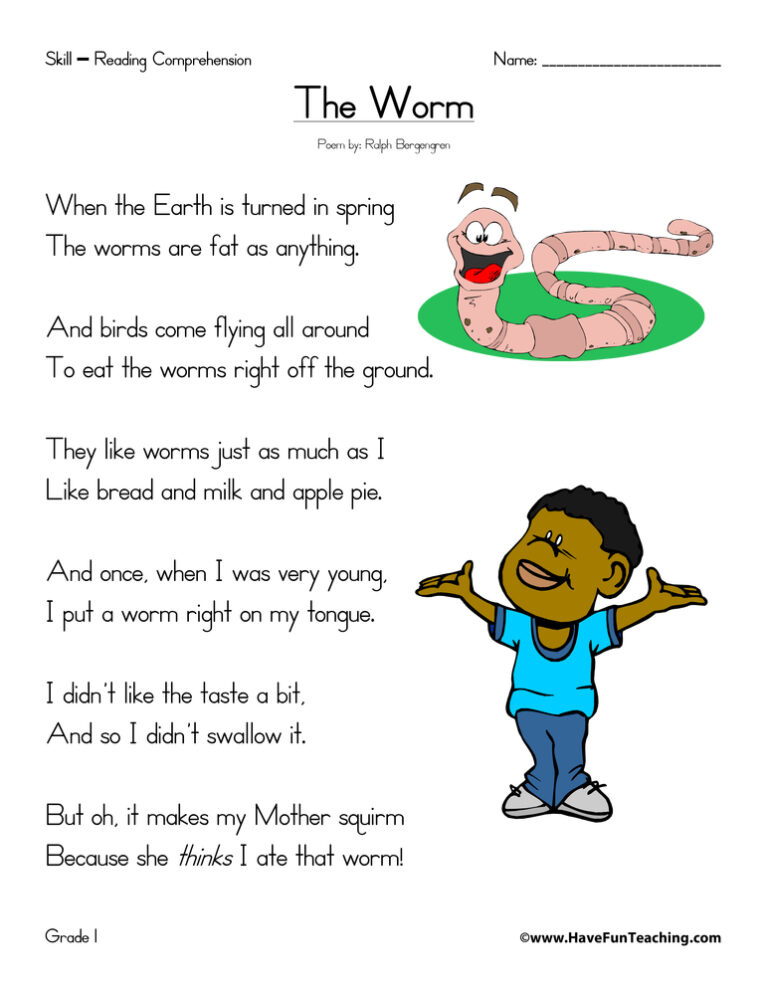
This Worm Poem Reading Comprehension Worksheet pairs an original rhyming poem about an earthworm with five bubble-in questions for 1st grade. An answer key is included, so young readers get quick, confident practice reading closely.

Worksheet
Worksheet2nd GradeCreate Your Own Insect Worksheet

This Create Your Own Insect Worksheet has 2nd graders match six insect body parts to their descriptions, then draw and label an insect of their own. Answer key included for fast, no-prep life science practice.

From our teachers' playbook

Six legs and a whole lot of wow

What do kids learn about insects?

Kids learn that every insect has three body parts (head, thorax, abdomen), six legs and usually two antennae. That's why spiders, with eight legs and two body parts, aren't insects! They study life cycles, like a butterfly's change from egg to caterpillar to chrysalis to adult. Older kids classify insects, compare them with other animals and learn why insects matter: pollinating flowers, recycling dead plants and feeding other animals. The click is when a child counts legs on a bug outside and says, "Insect!"

Our favorite ways to teach insects

Kids are natural bug lovers. These moves turn curiosity into real science.

Count the parts

Flash insect pictures and have kids count body parts and legs. Mix in a spider or a centipede and see who catches it. Quick picture checks build the habit of observing carefully.

Why it works: pairing a picture with each word gives kids two ways to remember it, a well-tested principle of how people learn (Mayer, 2009).

Insect Flash CardsTry it withInsect Flash CardsFlash CardsOpen it →

Invent an insect

Kids design their own insect with three body parts, six legs and antennae, then name it and describe where it lives and what it eats. If it's missing a part, it's not an insect! Creating one shows they truly understand the rules.

Why it works: kids understand an idea best when they touch it, then draw it, then write it, the order the U.S. Department of Education recommends for elementary math.

Create Your Own Insect WorksheetTry it withCreate Your Own Insect WorksheetWorksheetsOpen it →

Questions parents and teachers ask

What are the three body parts of an insect?

Head, thorax and abdomen. The legs and wings attach to the thorax, and the antennae are on the head.

Is a spider an insect?

No. Spiders have eight legs and two body parts, so they're arachnids. Insects have six legs and three body parts.

What is the life cycle of a butterfly?

Egg, larva (caterpillar), pupa (chrysalis) and adult butterfly. This kind of total change is called complete metamorphosis.

How can I teach kids about insects at home?

Go on a bug hunt with a magnifying glass, count legs and body parts, and draw what you find. Raising caterpillars or watching an ant hill are memorable too.