Skip to content
Start My 3 Free Days $0 today · cancel anytime

Life Skills Worksheets

30 life skills worksheets. Teacher favorites: Being a Good Citizen Worksheet and Good Citizenship Worksheet. How teachers use these

Life Skills Worksheets

30 life skills worksheets. Teacher favorites: Being a Good Citizen Worksheet and Good Citizenship Worksheet. How teachers use these

Worksheet
Worksheet2nd GradeBeing a Good Citizen Worksheet

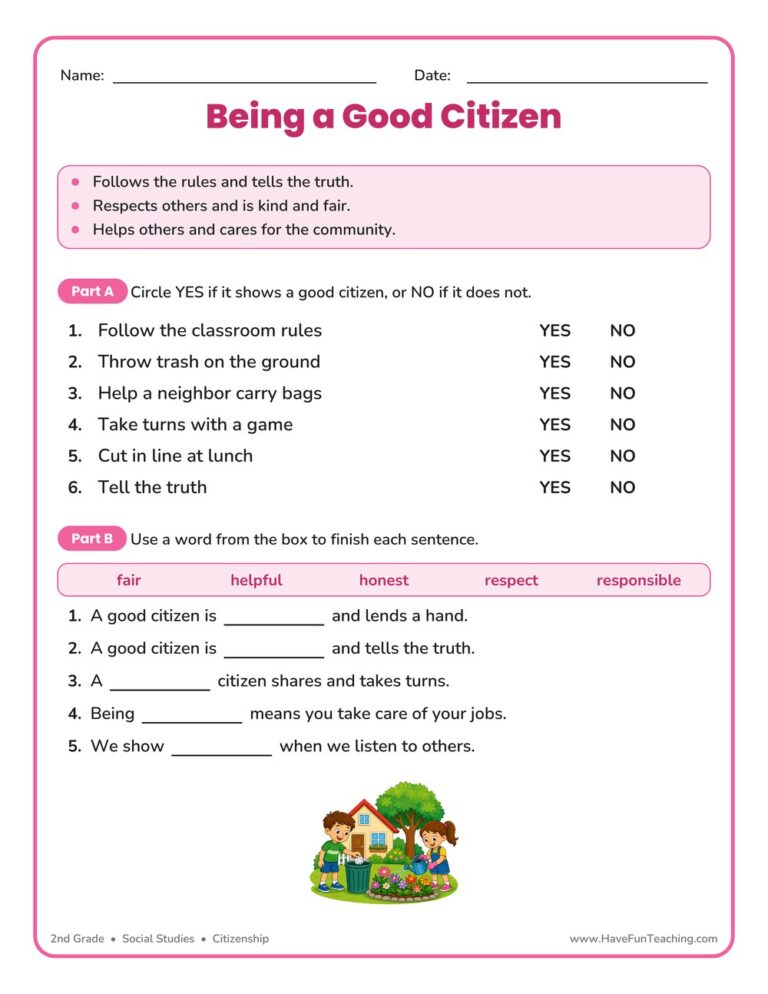
This being a good citizen worksheet helps 2nd graders spot good-citizen actions and build character words like honest, fair, and responsible. Includes an answer key for easy, no-prep social studies practice.

Worksheet
Worksheet2nd GradeGood Citizenship Worksheet

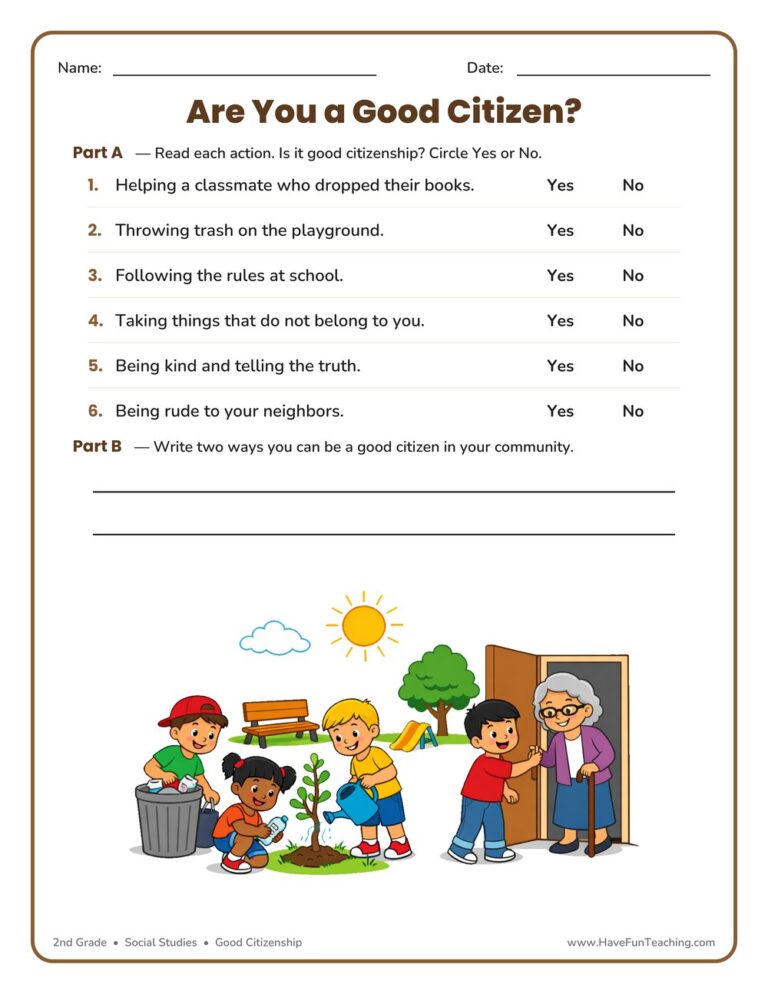
This good citizenship worksheet helps 2nd graders recognize responsible actions and write ways to help their community. An answer key is included for quick, no-prep character education practice.

Worksheet
Worksheet1st GradeKnow Your Safety Rules Worksheet

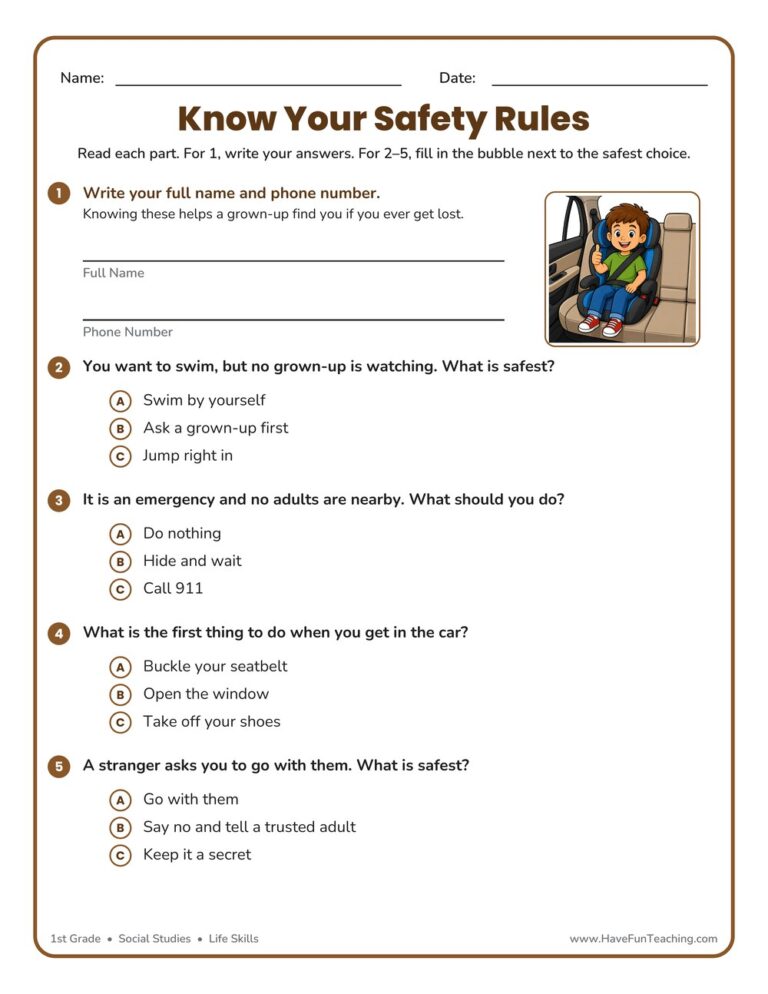
The Know Your Safety Rules Worksheet helps 1st graders make smart choices for swimming, emergencies, car rides, and strangers. Answer key included—a no-prep way to build real-life safety confidence.

Worksheet
Worksheet2nd GradeCollaboration Worksheet

Collaboration Worksheet asks 2nd grade students to mark six group-work sentences Y or N and match four group skills back to them, with an answer key, so cooperating becomes something they can name.

Worksheet
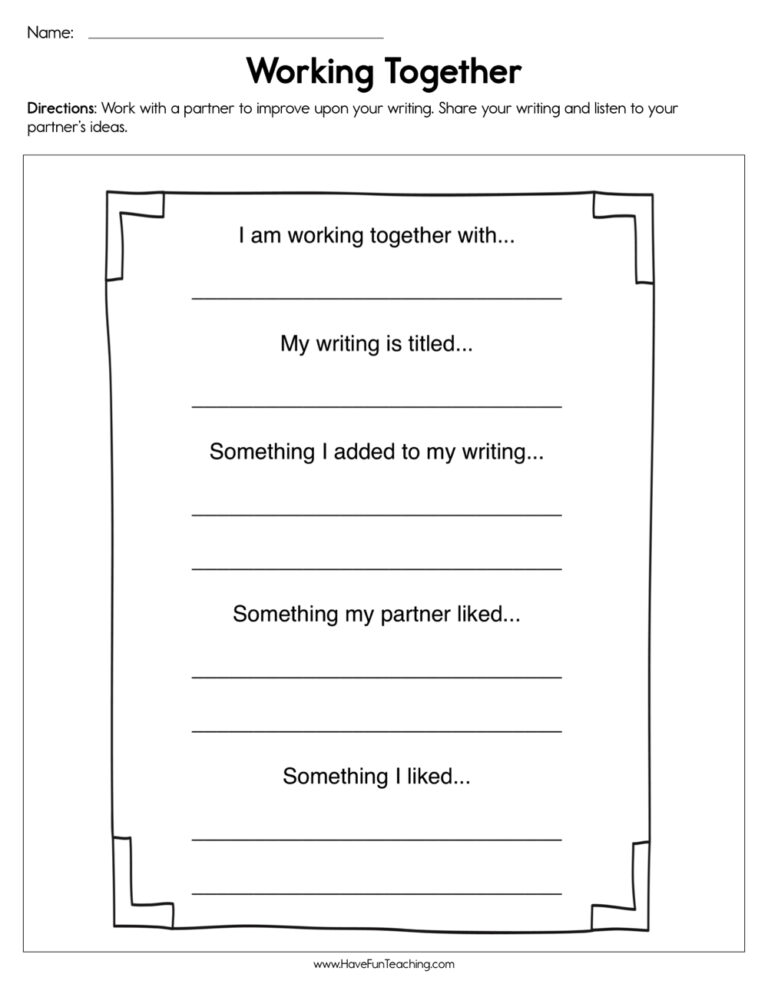
Worksheet1st GradeWorking Together Worksheet

This Working Together Worksheet gives 1st graders four partner-talk choices to make and one habit to write down. Answer key included, so teamwork practice takes no prep.

Worksheet
Worksheet3rd GradeCollaboration Discussion Worksheet

A 3rd Grade collaboration discussion worksheet that guides students through group talk with a six-rule checklist and note spaces for others' ideas, their own thinking, and what they learned.

Worksheet
Worksheet1st GradeFire Safety Worksheet

This fire safety worksheet has 1st Grade students match four safety pictures to their words, then trace and write 9 1 1. An answer key is included, so it is ready to print and go.

Worksheet
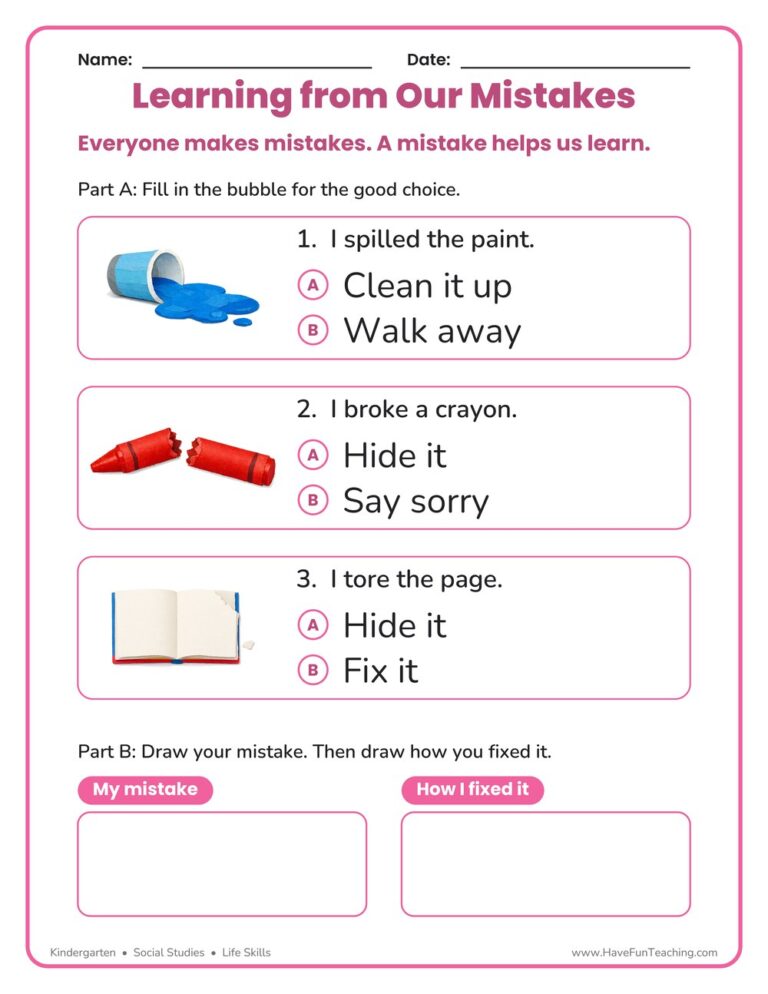
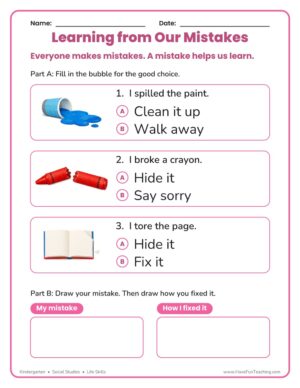
WorksheetKindergartenLearning from Our Mistakes Worksheet

A Learning from Our Mistakes Worksheet for Kindergarten, where children pick the good choice after a spill, a break, or a tear, then draw their own fix. Answer key included for easy, no-prep social skills practice.

Worksheet
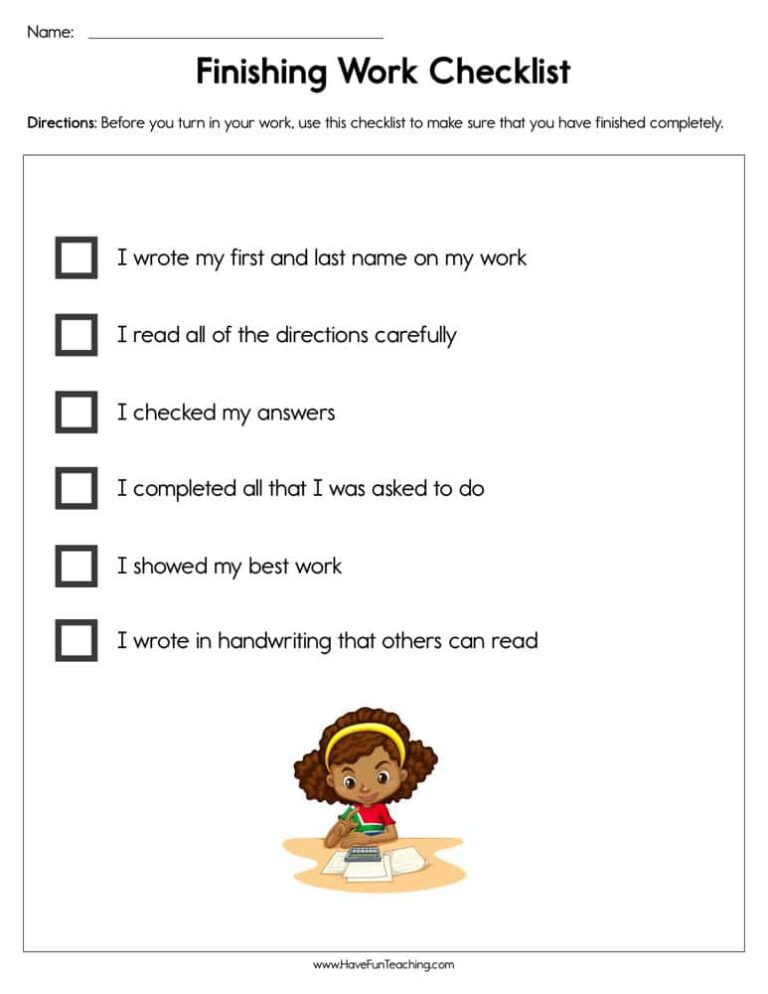
WorksheetKindergartenFinishes Work Checklist Worksheet

This Finishes Work Checklist Worksheet gives Kindergarten students six simple steps to check before they turn in a paper, so finishing carefully becomes a habit they own.

Worksheet
WorksheetKindergartenProblem Solving Reflection Worksheet

This Problem Solving Reflection Worksheet helps Kindergarten students choose good solutions to three everyday classroom problems and draw one they solved themselves. An answer key is included, so it is ready to print and teach.

Worksheet
Worksheet4th GradeGood Citizenship Examples Worksheet

This good citizenship examples worksheet has 4th graders sort helpful acts by place and judge four real-life choices, with an answer key included, so kids see citizenship at school, at home, and in town.

Worksheet
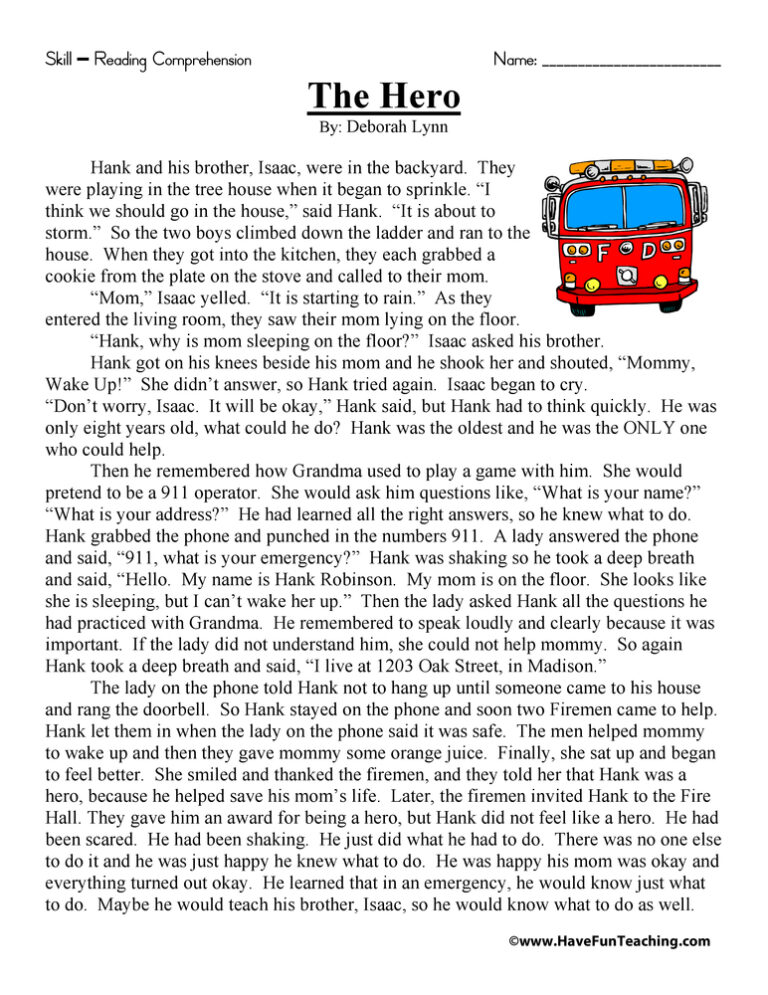
Worksheet2nd GradeThe Hero Reading Comprehension Worksheet

This The Hero Reading Comprehension Worksheet gives 2nd graders an original story about a girl who helps a lost puppy by asking a community helper, plus four questions and a written response. An answer key is included.

Worksheet
Worksheet1st GradeWriting Your Address Worksheet

This Writing Your Address Worksheet helps 1st graders write their street address, city, state, and ZIP code, then match each part of an address to its name. Answer key included for quick, no-prep practice.

Worksheet
Worksheet1st GradeMy Address Envelopes and Letters Worksheet

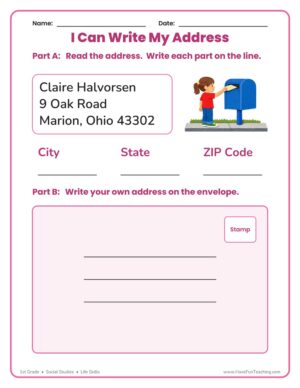
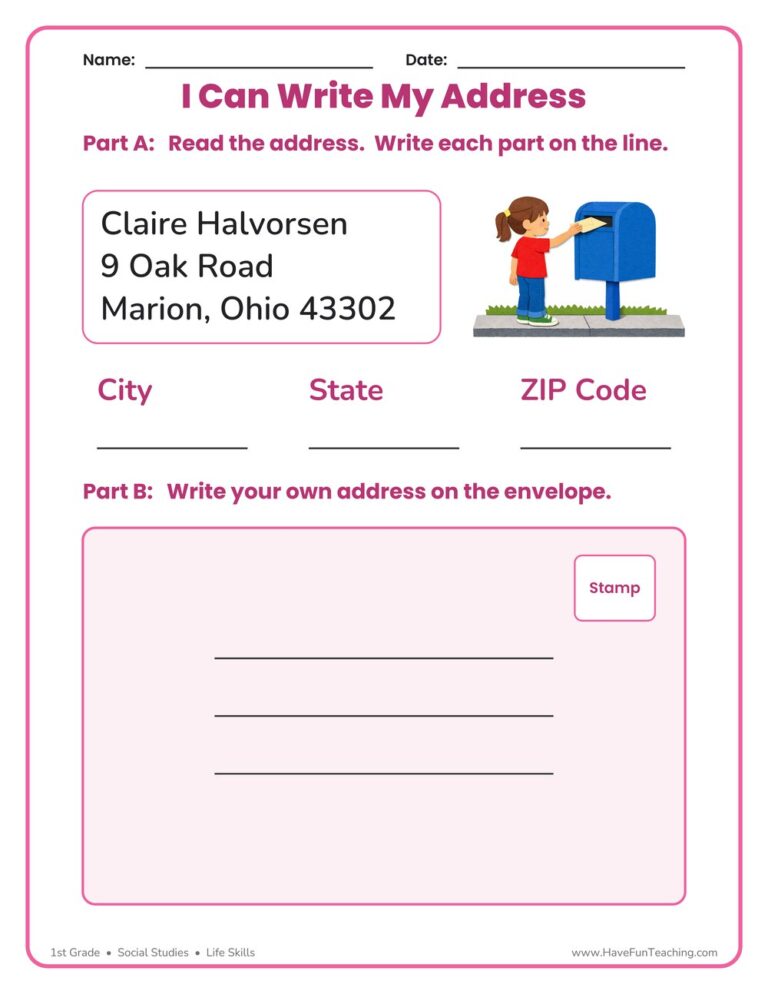
This My Address Envelopes and Letters Worksheet has first graders read a sample address, write the city, state, and ZIP code, then address their own envelope. Answer key included, with no prep beyond printing.

Worksheet
WorksheetKindergartenGetting Work Completed Chart Worksheet

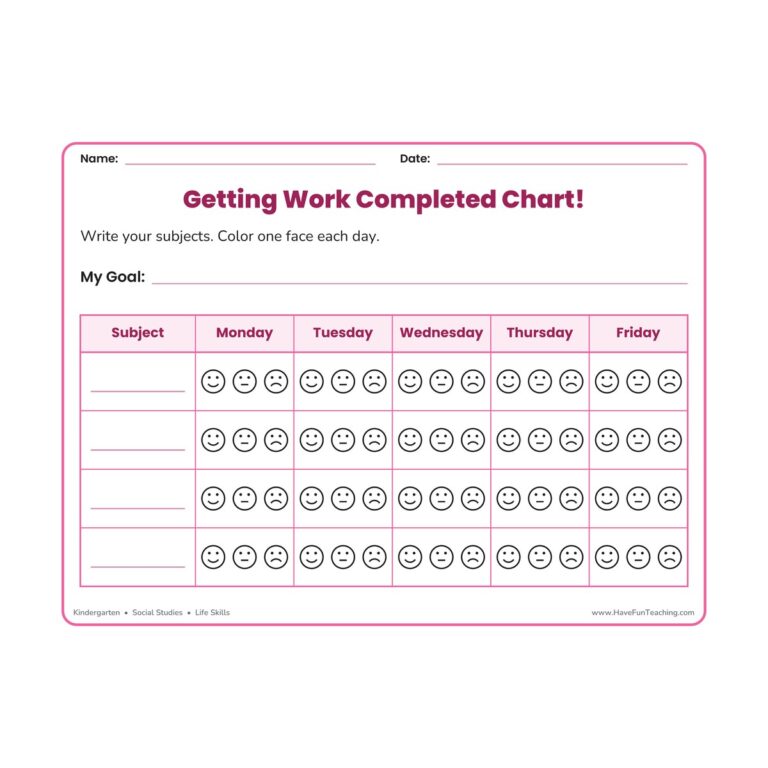
With the Getting Work Completed Chart Worksheet, Kindergarten students set a weekly goal and color a face for each subject every day, building the habit of finishing what they start.

Worksheet
WorksheetKindergartenHelpful vs Hurtful Problem Solving Worksheet

This helpful vs hurtful problem solving worksheet asks Kindergarten students to judge seven everyday phrases as kind or unkind. Answer key included, so kids leave with words they can actually use.

Worksheet
WorksheetKindergartenFinishing Work Problem Solution Worksheet

This Finishing Work Problem Solution Worksheet helps Kindergarten students name what stops them from finishing, then draw and write their own fix. A no-prep life skills page that builds independence and persistence.

Worksheet
Worksheet3rd GradeOpposite Ollie Reading Comprehension Worksheet

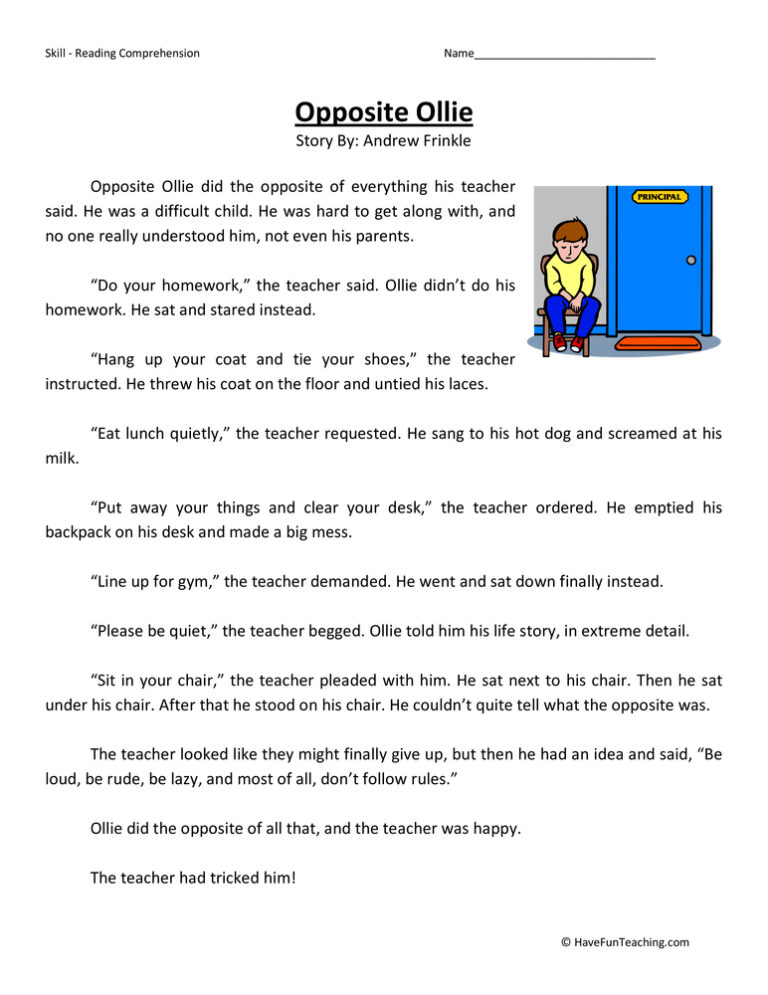
This Opposite Ollie Reading Comprehension Worksheet gives 3rd grade readers an original story plus six questions on cause, sequence, character and main idea. An answer key is included, so comprehension practice checks itself.

Worksheet
WorksheetKindergartenHow to Solve a Problem Worksheet

This How to Solve a Problem Worksheet asks kindergarten students to pick the kindest fix for three everyday classroom mix-ups, then draw a problem of their own. An answer key is included for quick checking.

Worksheet
WorksheetKindergartenBuilding a Tower with Blocks Worksheet

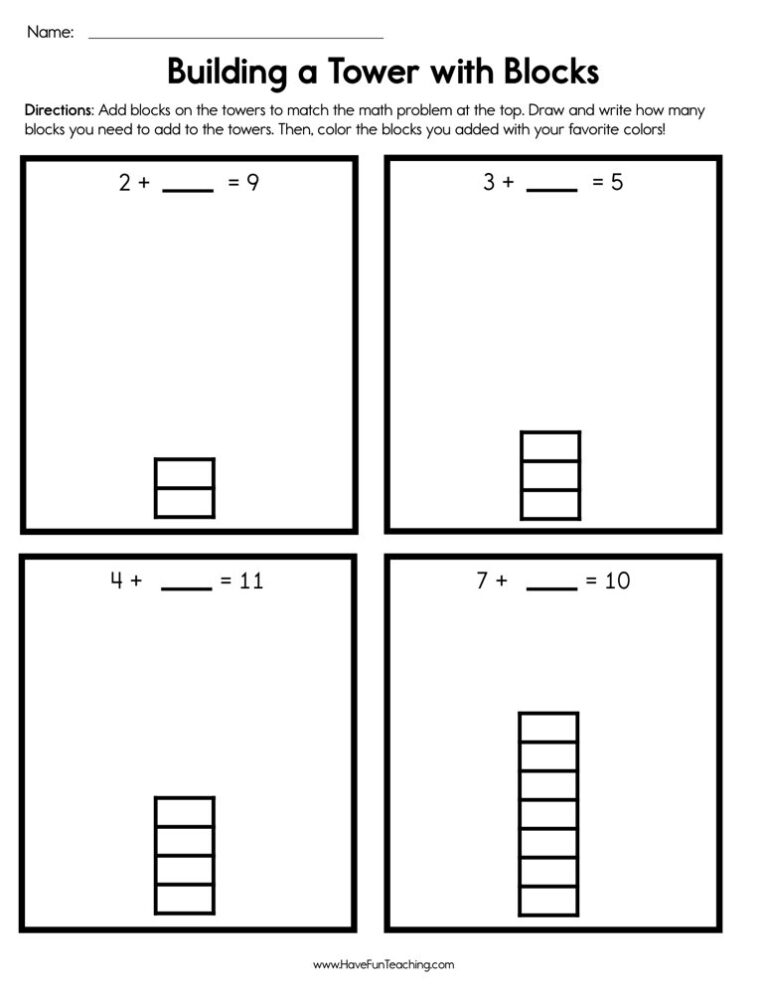
The Building a Tower with Blocks Worksheet gives Kindergarten students four block towers to finish, drawing and writing the missing addend in each number sentence. An answer key is included, so checking work takes seconds.

From our teachers' playbook

The lessons kids carry for life

What do kids learn about life skills?

Life skills are the everyday habits that help kids take care of themselves and get along with others. Young learners practice manners like please and thank you, wash their hands and brush their teeth, and learn safety rules for fire, streets and strangers. They learn to be good citizens, work together on a team, finish their work and solve problems calmly. Kids also learn to say their own address, and that mistakes are part of learning: "Oops! Let's try again." The click is when a child reminds a friend to wash up before snack, all on their own.

Our favorite ways to teach life skills

Life skills grow from routines, practice and lots of kind reminders.

A song for every routine

Play the Wash My Hands Song every time kids wash up. The song lasts long enough for a good scrub and turns a chore into a routine. Before long, kids sing it on their own at the sink.

Why it works: words set to a repeating melody are easier to recall than the same words spoken (Wallace, 1994).

Wash My Hands SongTry it withWash My Hands SongSongsOpen it →
Show the oops

Make a mistake on purpose, like spelling your own name wrong on the board, and model a calm fix: "Oops! I made a mistake. I can try again." Then use the learning from our mistakes page to talk about a time each child kept trying.

Why it works: handing over the work step by step, from teacher to student, is one of the most widely used teaching frameworks (Pearson and Gallagher, 1983).

Learning from Our Mistakes WorksheetTry it withLearning from Our Mistakes WorksheetWorksheetsOpen it →

Build it together

Give small groups blocks and one goal: build the tallest tower together. Afterward, kids reflect on the worksheet: Who had an idea? How did we share? Real teamwork gives kids something real to talk about.

Why it works: the U.S. Department of Education's guide for teaching elementary math recommends moving from hands-on objects to drawings to numbers.

Building a Tower with Blocks WorksheetTry it withBuilding a Tower with Blocks WorksheetWorksheetsOpen it →

Questions parents and teachers ask about life skills

What are life skills for kids?

Life skills are everyday abilities like manners, hygiene, safety, teamwork, problem solving and responsibility. They help kids take care of themselves and get along with others.

At what age should a child know their address?

Many kids can learn their address, or at least their street and town, around ages 4 to 6. Practicing with a song, an envelope or a quick daily quiz helps.

How do I teach good manners to young children?

Model them every day, praise kids when they use them, and role-play common situations like asking for help. Songs make words like please and thank you stick.

How can I teach kids to handle mistakes?

Show them how you handle your own mistakes calmly. Use phrases like "I can try again" and celebrate effort, not just getting it right.