Skip to content
Start My 3 Free Days $0 today · cancel anytime

Weight Resources

25 weight resources: 23 worksheets, 1 Common Core Lesson and 1 assessment. How teachers use these

Weight Resources

25 weight resources: 23 worksheets, 1 Common Core Lesson and 1 assessment. How teachers use these

Worksheet
Worksheet3rd GradeMass Volume Worksheet

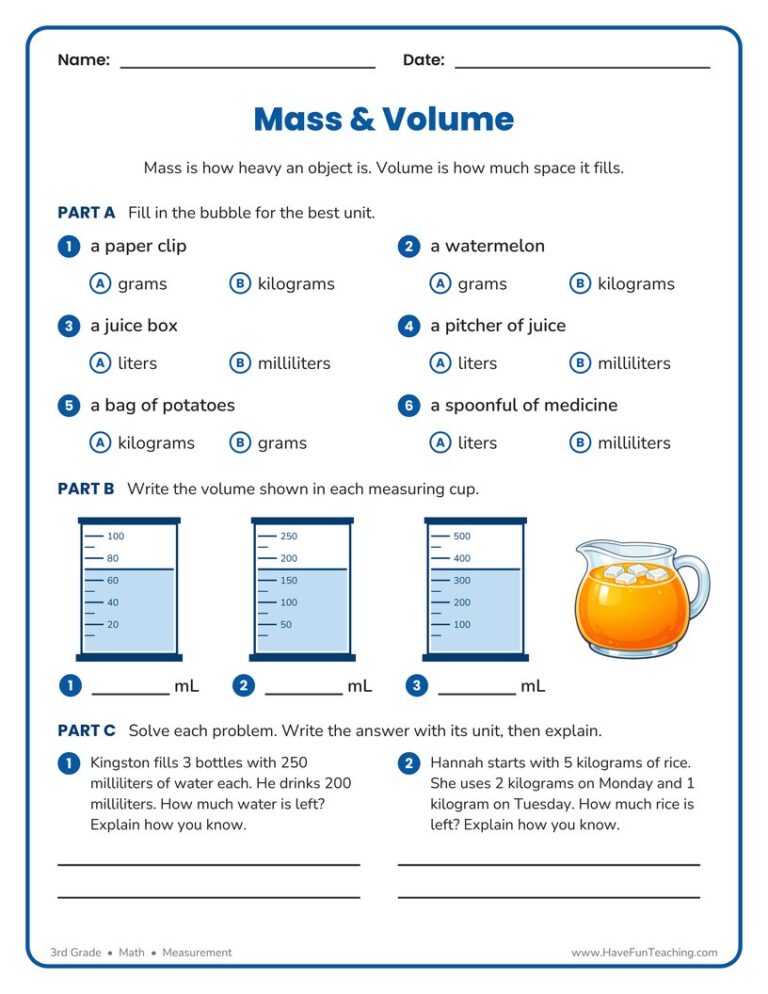
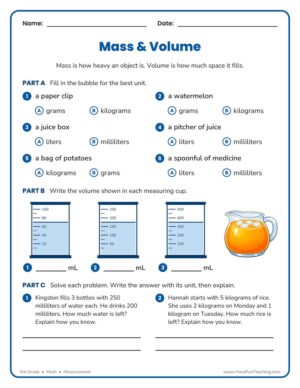
This mass volume worksheet gives 3rd grade students practice choosing metric units, reading measuring cups, and solving two-step word problems. An answer key is included, so checking work takes seconds.

Worksheet
Worksheet4th GradeMatch the Measurements Worksheet

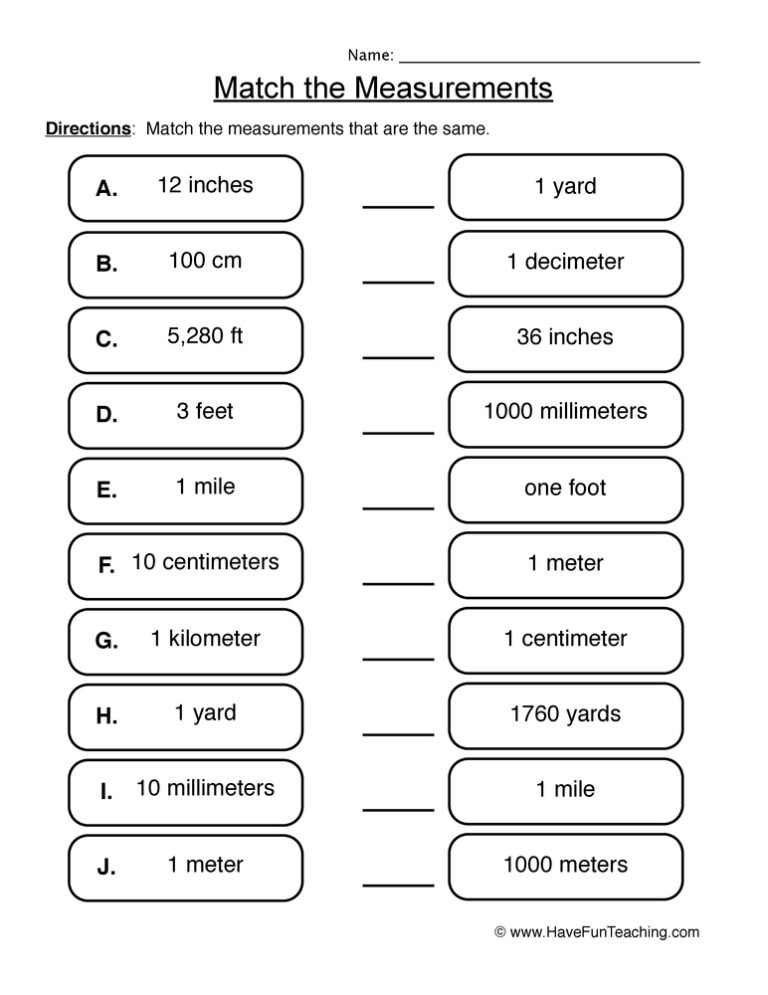
A Match the Measurements Worksheet where 4th graders pair equal metric amounts, finish six unit conversions, and explain a classmate's mistake in writing. An answer key is included, so a quick check takes seconds.

Worksheet
Worksheet4th GradeMass and Volume Worksheet

A fourth grade mass and volume worksheet where students fill in the bubble to choose the best unit of measure for weight and capacity. Includes an answer key — perfect for quick, no-prep measurement practice at home or school.

Worksheet
Worksheet1st GradeBalance Worksheet

This balance worksheet has 1st graders add the weights on level scales to find each missing number, plus a pumpkin word problem. An answer key is included, so addition practice is quick and easy.

Worksheet
Worksheet3rd GradeDensity and Volume in Metric Worksheet

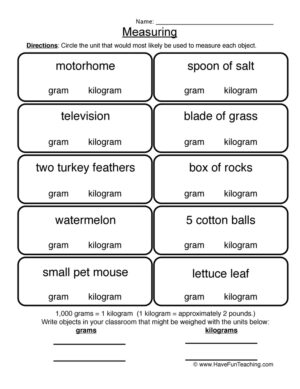
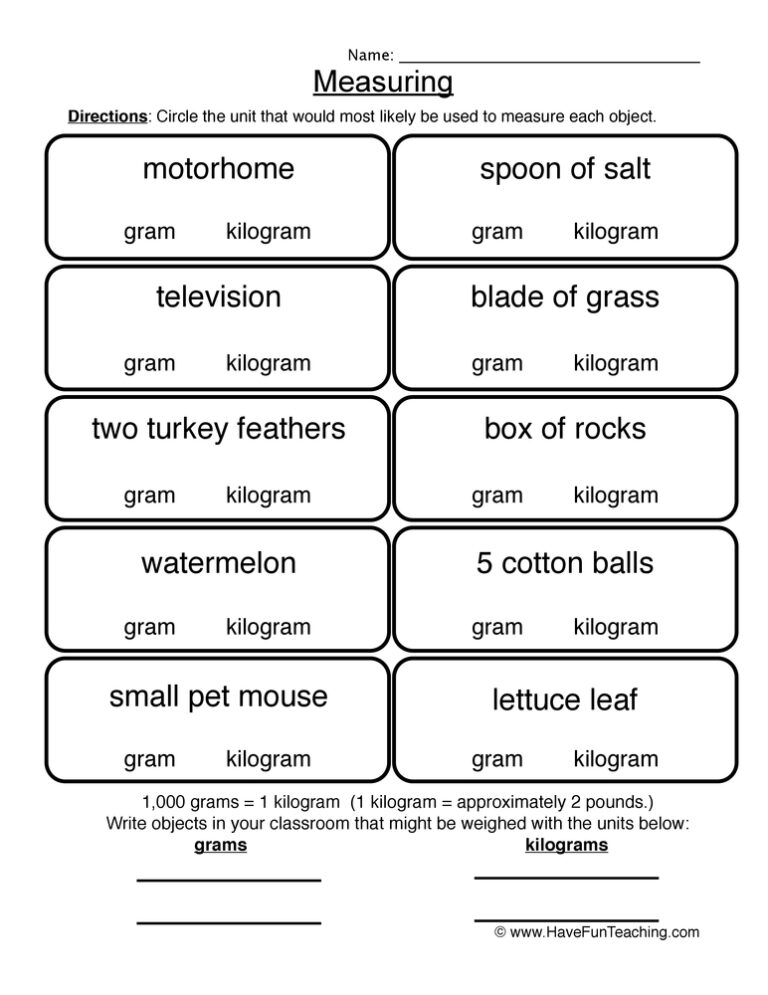
This Density and Volume in Metric Worksheet asks 3rd graders to choose the best metric unit—grams, kilograms, milliliters, or liters—for ten everyday objects. Answer key included for fast, no-prep measurement practice.

Worksheet
Worksheet3rd GradeGram Kilogram Worksheet

This gram kilogram worksheet gives 3rd graders practice choosing metric units, converting grams to kilograms, and explaining a comparison. Answer key included, so measurement practice is ready to print and go.

Worksheet
Worksheet3rd GradeWeight Worksheet

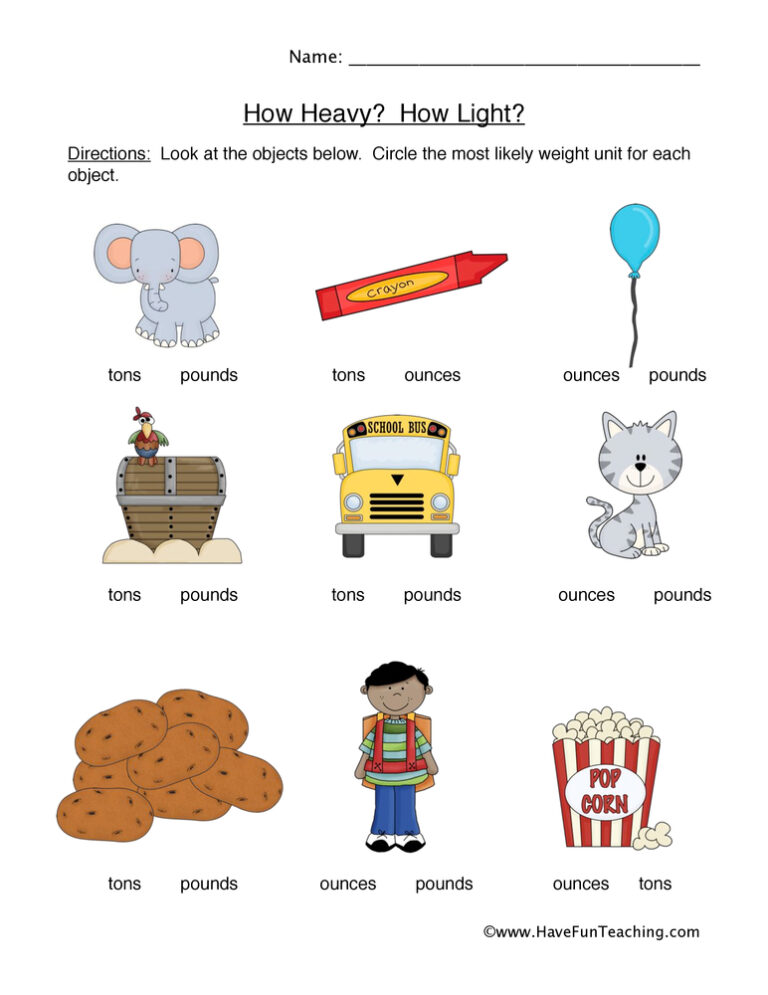
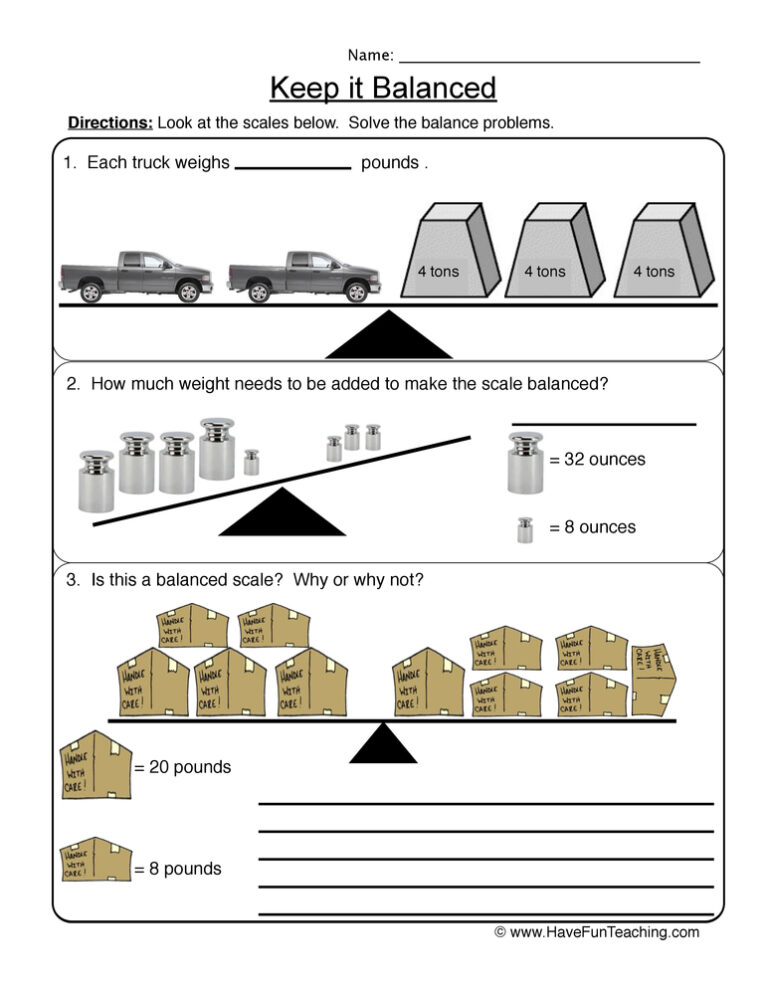
This weight worksheet gives 3rd graders practice choosing ounces, pounds, or tons for everyday objects and solving two multi-step weight problems. An answer key is included, so checking work takes seconds.

Worksheet
Worksheet3rd GradeWhat Weight? Worksheet

This What Weight? Worksheet gives 3rd grade students practice choosing ounces, pounds, or tons for everyday objects, with an answer key included so weight units finally make sense.

Worksheet
Worksheet3rd GradeBalanced Scale Worksheet

This Balanced Scale Worksheet has 3rd graders read four level balance scales in grams and kilograms to find each missing weight. An answer key is included, so weight practice takes no prep at all.

Worksheet
Worksheet3rd GradeUnits of Measurement Worksheet

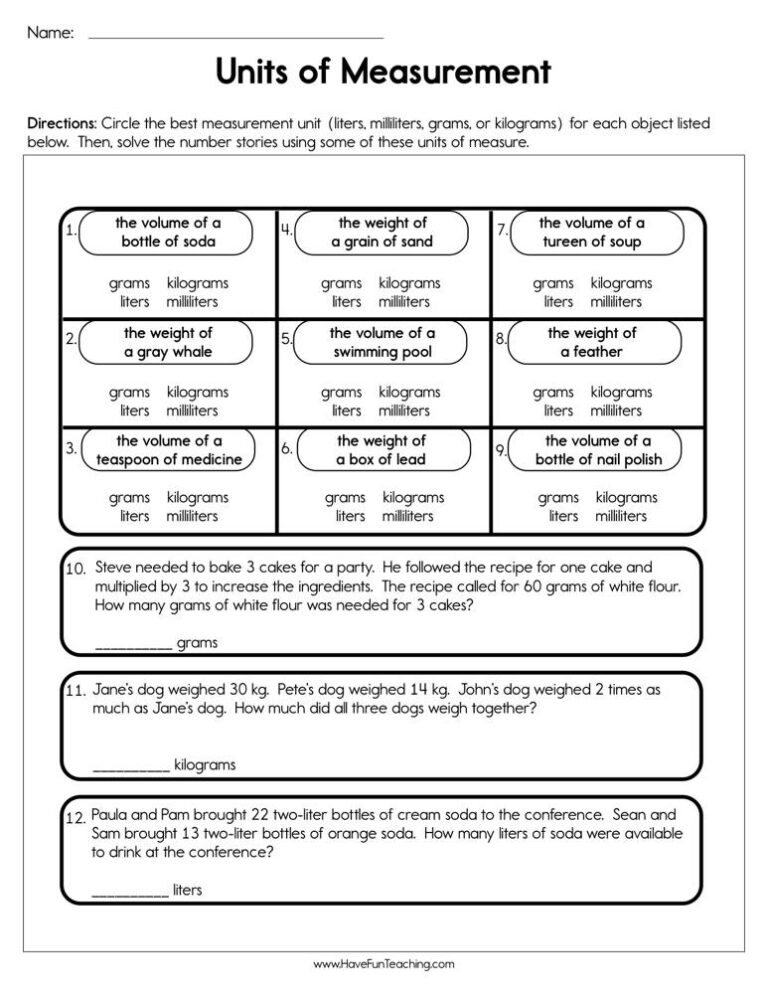
A units of measurement worksheet where 3rd graders choose grams, kilograms, milliliters, or liters for everyday objects, then solve two metric number stories. Answer key included for fast, no-prep practice.

Worksheet
Worksheet4th GradeMeasuring Metric Word Problems Worksheet

A measuring metric word problems worksheet where 4th graders solve five real-world grams, kilograms, milliliters and liters problems, including two that need a unit conversion first. Answer key included, so practice is quick and no-prep.

Worksheet
Worksheet2nd GradeWhat's the Weight? Worksheet

This weight estimation worksheet has second graders count unit cubes on balanced scales, find each object's real weight, and decide if an estimate was too high or too low. Includes an answer key.

Worksheet
WorksheetKindergartenUsing Measurement Words Worksheet

This using measurement words worksheet helps kindergarten students describe pictures as heavy or light, tall or short, long or short, and big or little. An answer key is included for quick, easy checking.

Worksheet
Worksheet1st GradeHeavy or Light Worksheet

The Heavy or Light Worksheet helps 1st graders sort objects as heavy or light and compare which one is heavier. An answer key is included, making it a quick, no-prep way to practice early weight and measurement skills.

Worksheet
WorksheetKindergartenMeasurement Worksheet

This measurement worksheet gives kindergarten students practice comparing objects by weight, height, and length. An answer key is included, so checking work is quick and easy.

Worksheet
Worksheet1st GradeMeasuring With Tools Worksheet

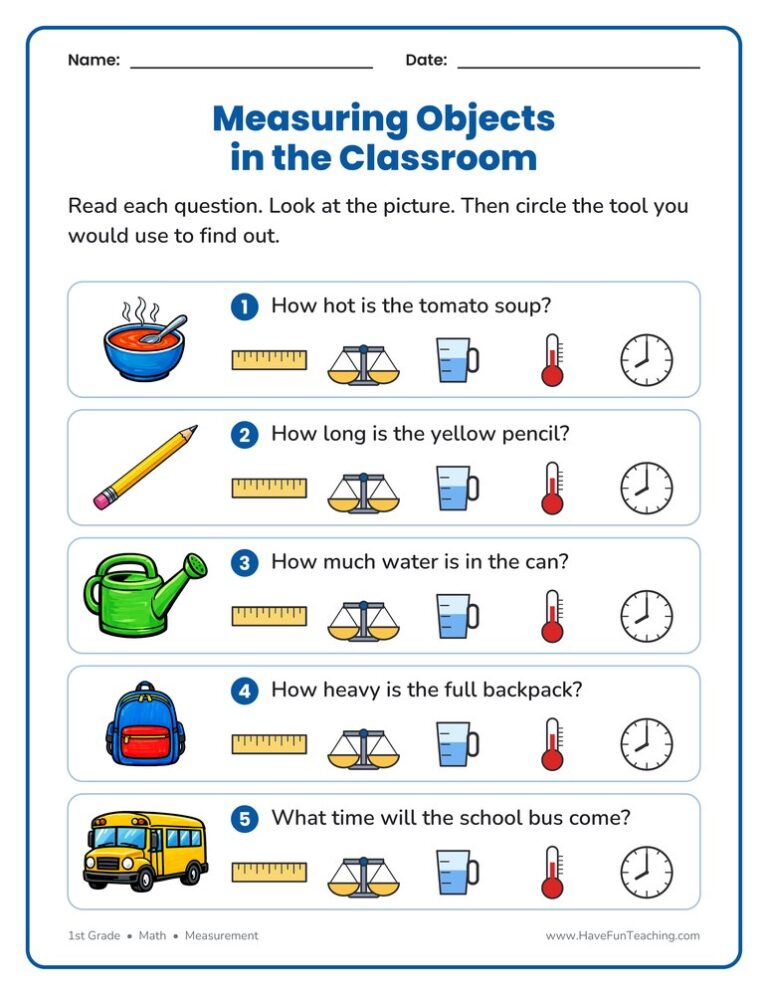
This measuring with tools worksheet asks 1st grade students to read five questions and circle the right tool for each one. An answer key is included, making measurement practice quick to check.

Worksheet
Worksheet5th GradeMetric Measurement Scenarios Worksheet

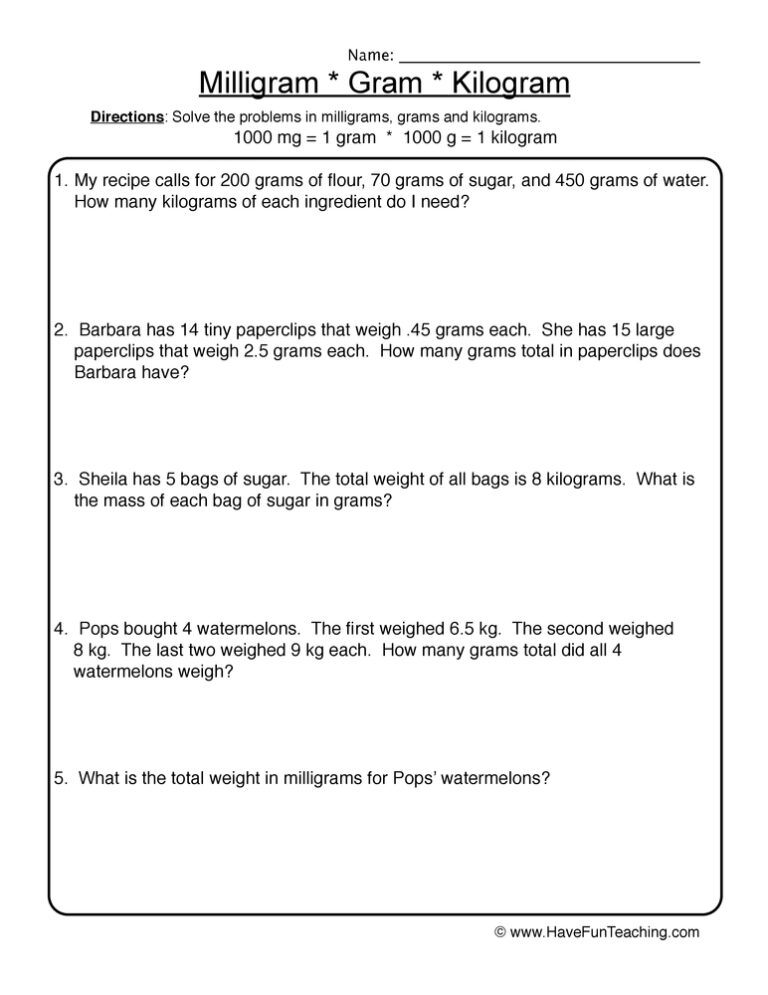
This metric measurement scenarios worksheet has 5th graders convert milligrams, grams and kilograms to solve four two-step word problems, with an answer key, building confidence with metric mass.

Worksheet
WorksheetKindergartenMeasurement Terms Worksheet

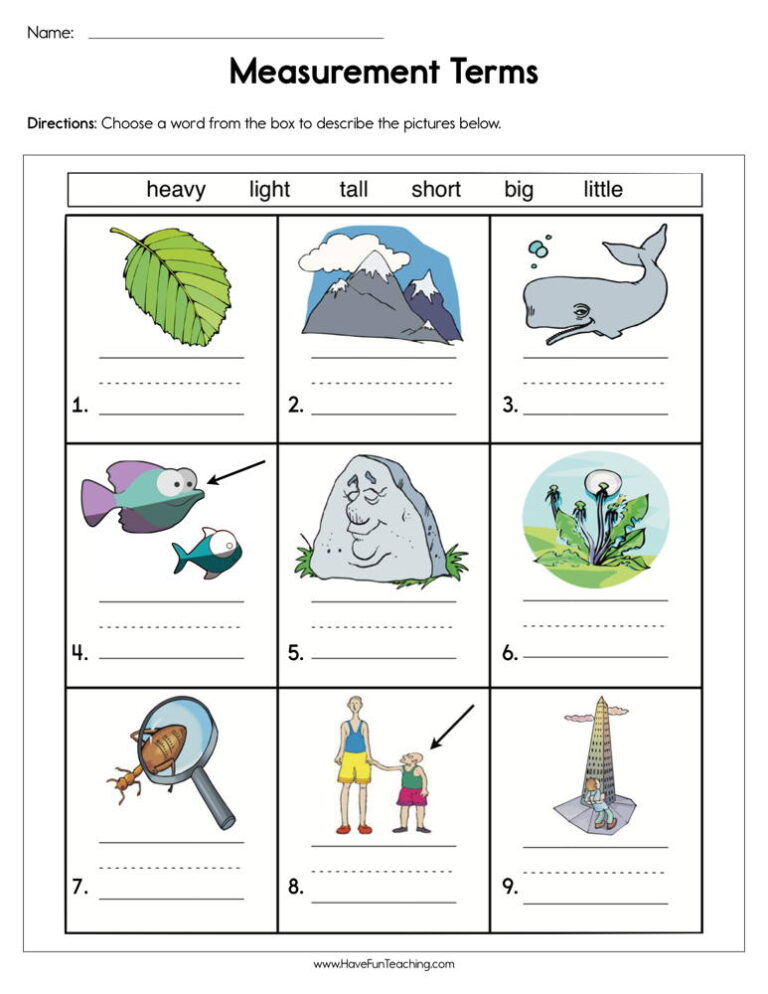
This measurement terms worksheet helps kindergarten students compare two objects and write heavy, light, tall, short or long, with an answer key for quick checking.

Worksheet
Worksheet4th GradeCalculating Measurement Worksheet

This calculating measurement worksheet gives 4th grade students four two-step word problems that change kilograms to grams. An answer key is included, so students can check every step and grow confident with metric mass.

Worksheet
Worksheet4th GradeOunces Pound Ton Worksheet

This Ounces Pound Ton Worksheet asks 4th graders to pick the best unit for six objects, finish four weight conversions, and solve two word problems. An answer key is included, so checking work takes seconds.

From our teachers' playbook

Numbers, patterns and lots of "I got it!"

What do kids learn in elementary math?

Math grows like a staircase. Little ones count, compare and add within 10. In 1st and 2nd grade, kids add and subtract within 100, learn place value and start regrouping: 47 + 28 = 75. Third grade brings multiplication, division and fractions, and 4th and 5th graders tackle long division, decimals and area. Every step stands on the one before it, so a strong foundation in counting and place value pays off for years.

Our favorite ways to make math click

These moves work from kindergarten counting to 5th grade decimals.

Blocks before digits

When kids are stuck on place value or regrouping, go back to base 10 blocks. Have them build 64, trade a ten for ten ones, and then take away 27. Once they see it with blocks, the written steps finally make sense.

Why it works: kids understand an idea best when they touch it, then draw it, then write it, the order the U.S. Department of Education recommends for elementary math.
Mass Volume WorksheetTry it withMass Volume WorksheetWorksheetsOpen it →

Explain your thinking

With every word problem, kids answer two questions: "What is the answer?" and "How do you know?" Have partners explain their strategy to each other. Saying it out loud catches mistakes and deepens understanding.

Why it works: when kids say the precise math words, their understanding gets sharper, a recommendation of the U.S. Department of Education's elementary math guide.

Match the Measurements WorksheetTry it withMatch the Measurements WorksheetWorksheetsOpen it →

Sing the counting

Play counting songs during transitions so kids count by 2s, 5s and 10s without thinking about it. Those patterns become the backbone of multiplication later.

Why it works: a catchy, repeating tune gives the brain a hook to hang words on, so sung text is remembered better (Wallace, 1994).

Mass and Volume WorksheetTry it withMass and Volume WorksheetWorksheetsOpen it →

Questions parents and teachers ask about math

What math should my child know by each grade?

Kindergarteners count and add within 10, 2nd graders add and subtract within 100 with regrouping, 3rd graders multiply and divide, and 5th graders work with decimals and fractions. Filter by grade to find resources for each level.

How can I help my child with math at home?

Use everyday moments: count snacks, measure while cooking, add up prices at the store. A quick math game after dinner keeps skills fresh.

Why does my child struggle with word problems?

Word problems mix reading with math. Have your child read it twice, draw a picture of what is happening, and say which operation fits before solving.

How do kids learn math facts?

Through short, frequent practice. Flash cards, songs and quick games a few minutes a day build fact fluency faster than long drills.

Keep exploring