Skip to content
Start My 3 Free Days $0 today · cancel anytime

Rocks Resources

19 rocks resources: 18 worksheets and 1 flash card. How teachers use these

Rocks Resources

19 rocks resources: 18 worksheets and 1 flash card. How teachers use these

Worksheet
Worksheet4th GradeRocks & Minerals Worksheet

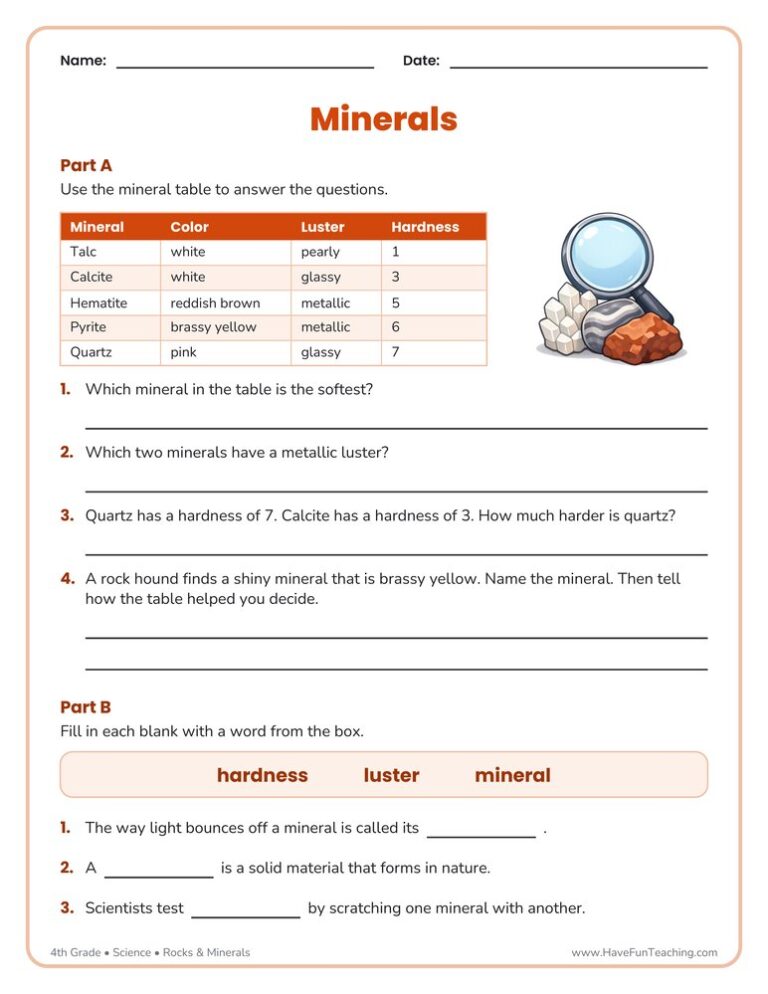
This Rocks & Minerals Worksheet gives 4th graders a real property table of talc, calcite, hematite, pyrite, and quartz to read and reason from. Answer key included, so mineral identification practice takes no prep at all.

Worksheet
Worksheet4th GradeFossils Fill in the Blank Worksheet

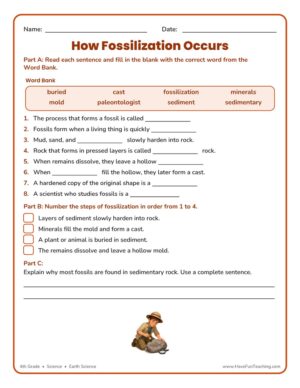
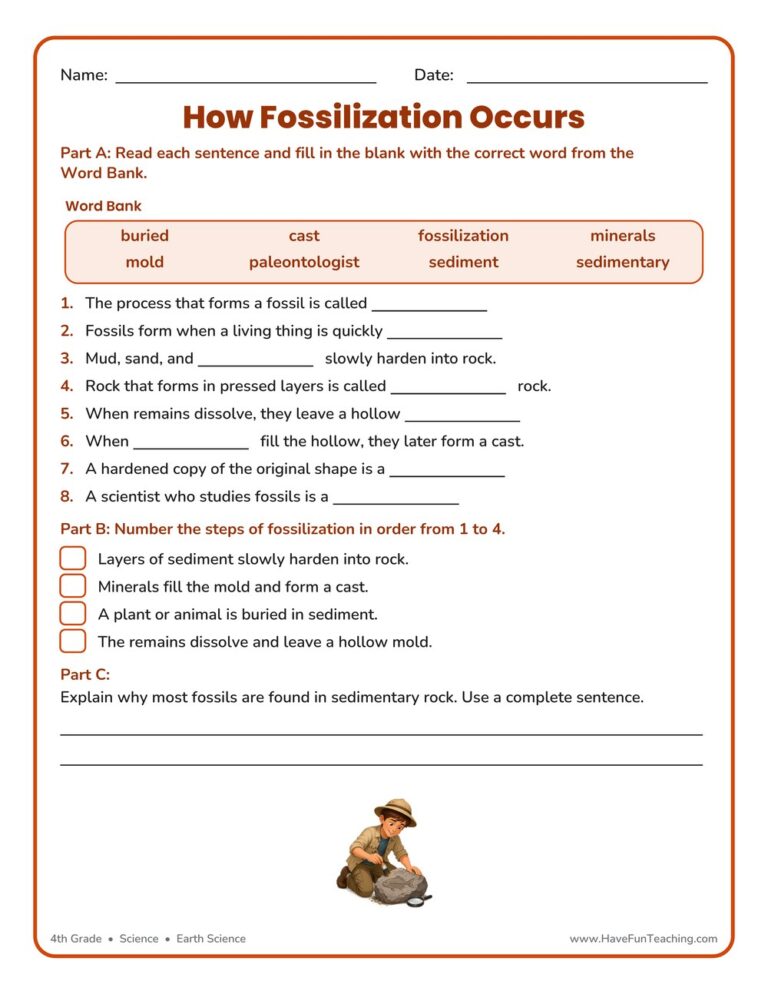
This Fossils Fill in the Blank Worksheet gives 4th grade students hands-on earth science practice with fossilization, sedimentary rock, and key vocabulary. Answer key included to make review quick and easy.

Worksheet
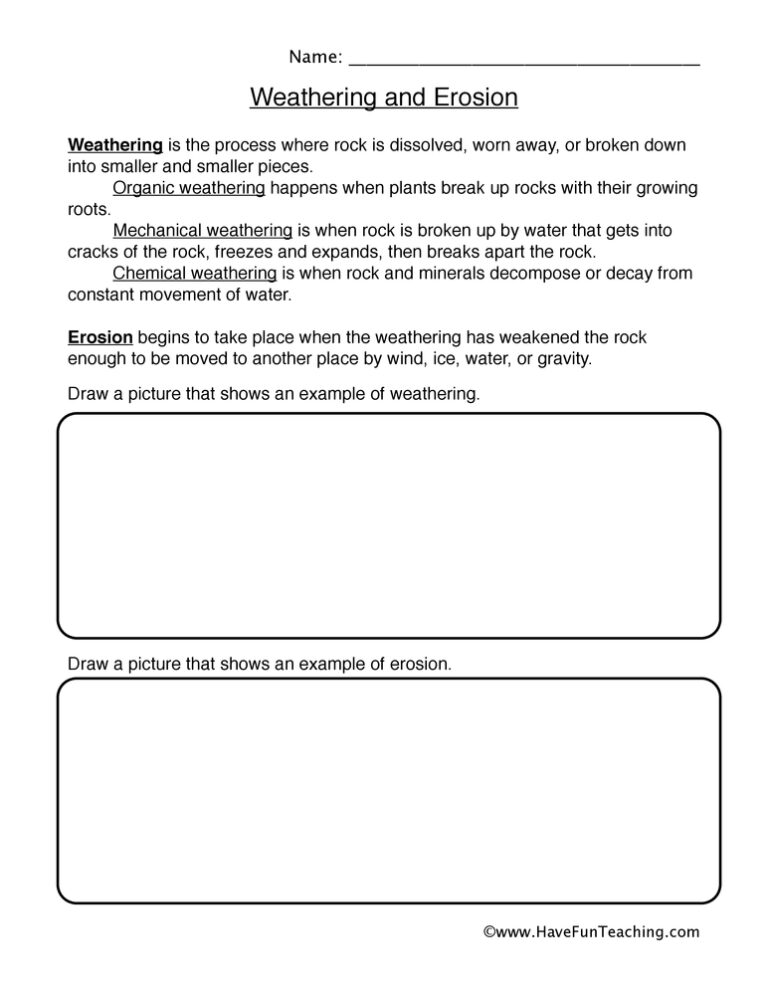
Worksheet4th GradeWeathering Worksheet

A weathering worksheet that helps 4th graders sort mechanical and chemical weathering, master key earth science vocabulary, and explain their thinking. Answer key included for fast, no-prep review.

Worksheet
Worksheet3rd GradeSoil Matching Worksheet

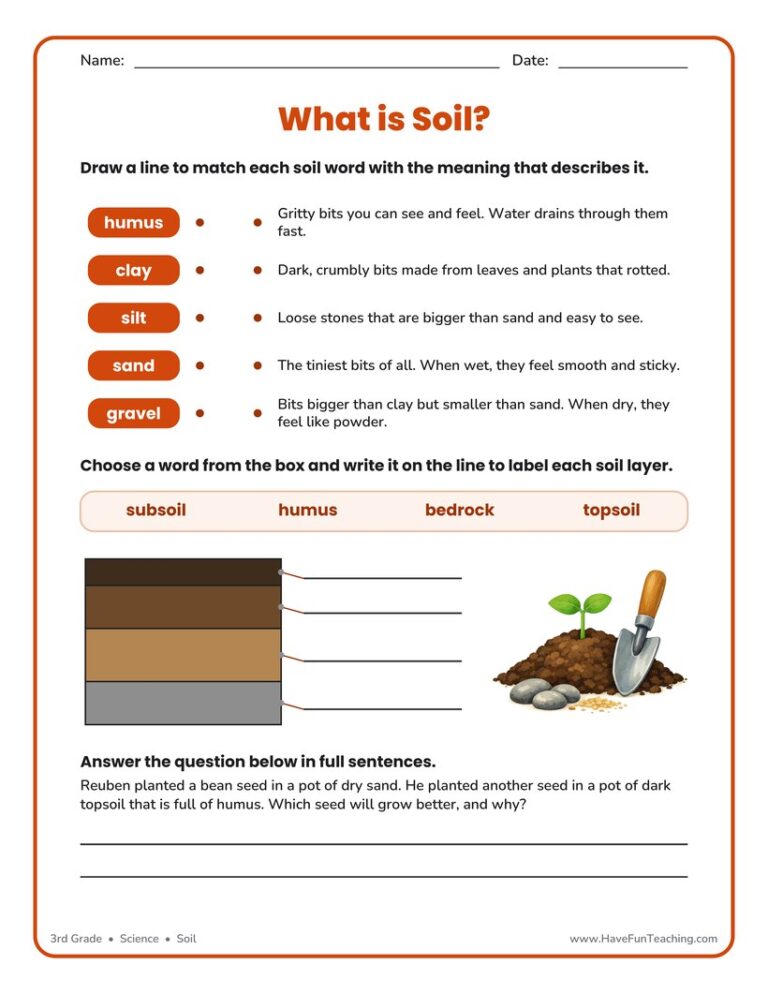
This Soil Matching Worksheet gives 3rd Grade students hands-on practice matching soil words to their meanings and labeling the four soil layers. An answer key is included, so checking work takes seconds.

Worksheet
Worksheet2nd GradeErosion Writing Worksheet

This erosion writing worksheet has 2nd grade students read a short fact box, answer four questions, and explain how plants slow erosion. An answer key is included for easy checking.

Worksheet
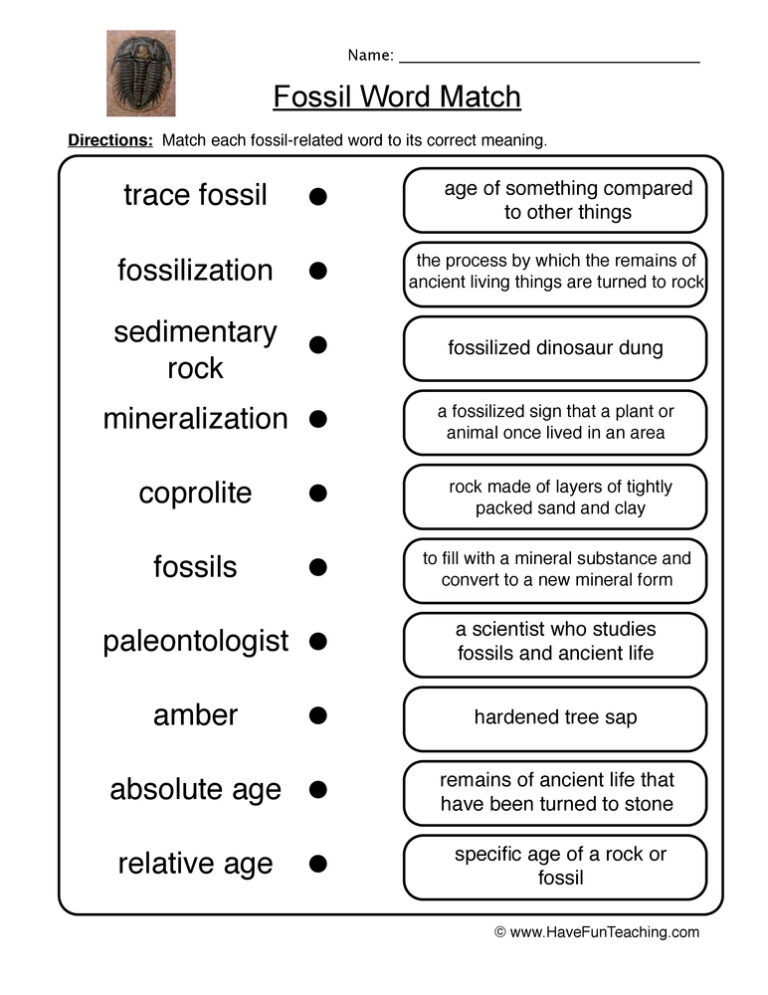
Worksheet3rd GradeFossil Definitions Worksheet

This fossil definitions worksheet gives 3rd grade students matching, fill-in-the-blank, and written-response practice with key fossil vocabulary. An answer key is included, so review is quick and confident.

Worksheet
Worksheet4th GradeThe Rock Cycle Worksheet

The Rock Cycle Worksheet lets 4th grade students label each change in a five-stage rock cycle diagram and explain how rocks form. An answer key is included for fast, easy checking.

Worksheet
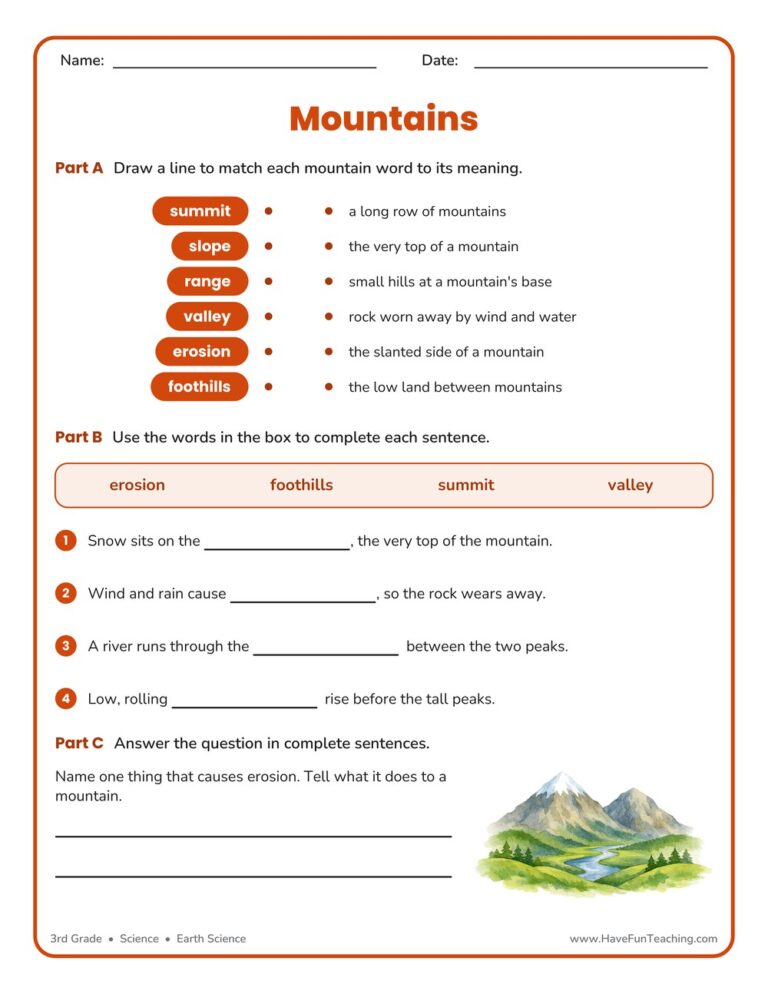
Worksheet3rd GradeMountains Worksheet

This Mountains Worksheet helps 3rd Grade students match six landform words, use them in sentences, and explain erosion in their own writing. Answer key included, so review takes seconds.

Worksheet
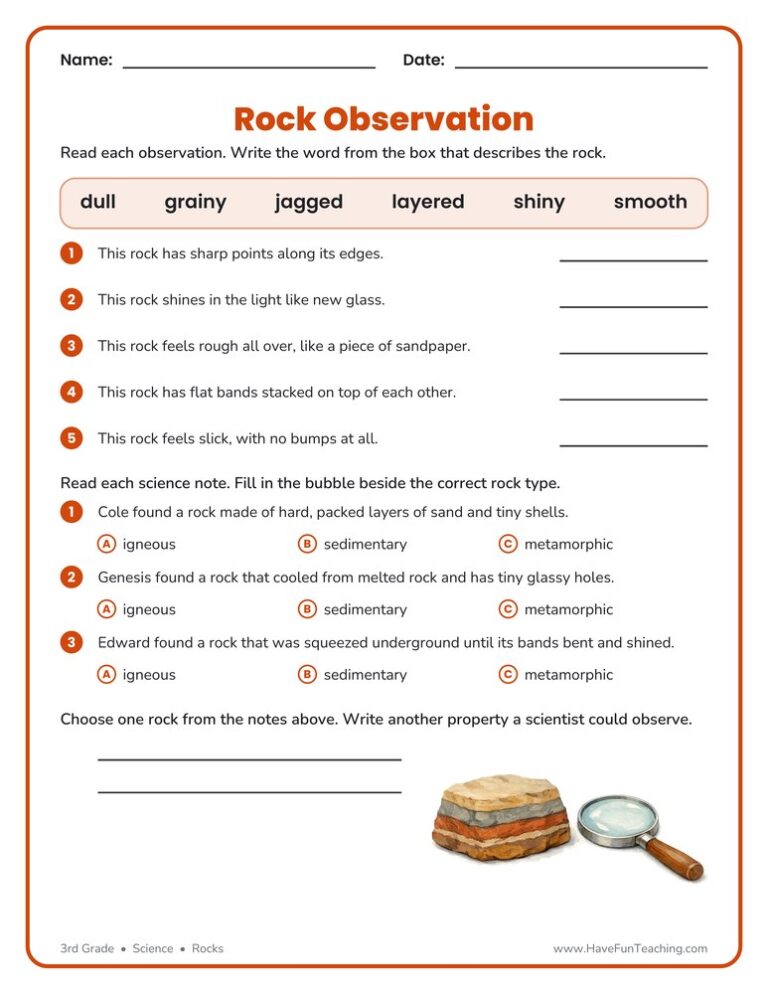
Worksheet3rd GradeRock Observation Worksheet

This Rock Observation Worksheet has 3rd grade students match describing words to five rock observations, name three rock types, and record one more property. An answer key is included, so it is ready to print.

Worksheet
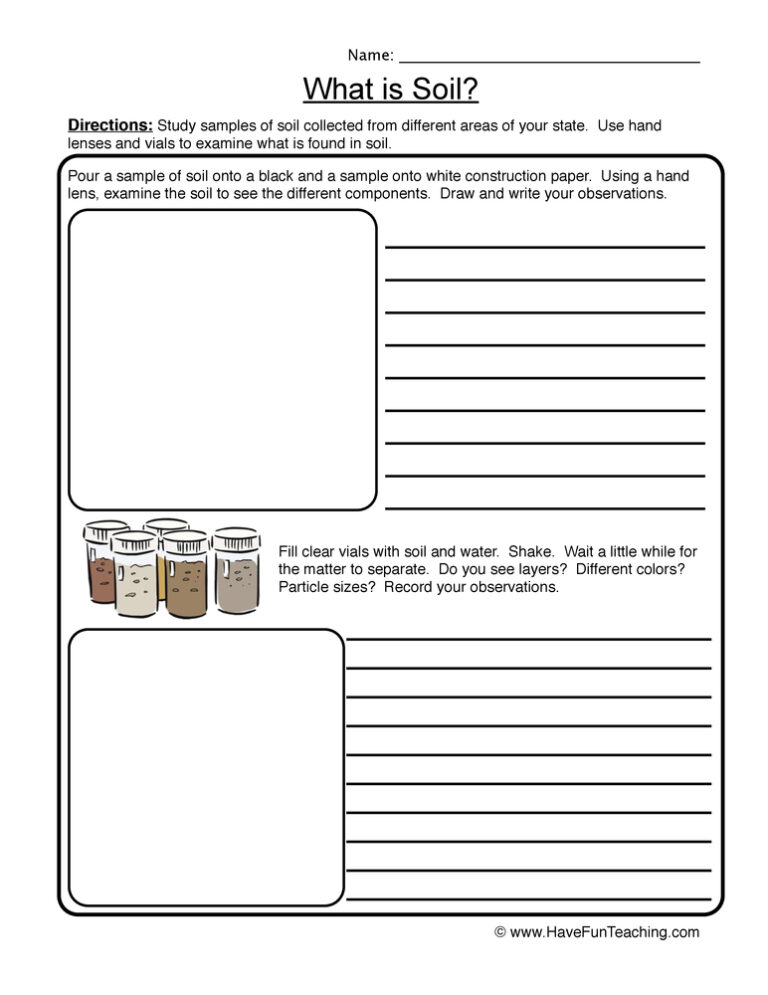
Worksheet3rd GradeWhat is Soil? Worksheet

This What is Soil? Worksheet asks 3rd grade students to name what soil is made of, identify its three layers from a reference box, and explain why humus matters, with an answer key.

Worksheet
Worksheet4th GradeErosion Drawing Worksheet

This erosion drawing worksheet asks 4th graders to label six examples as weathering or erosion, then draw and label their own picture of erosion at work. Answer key included.

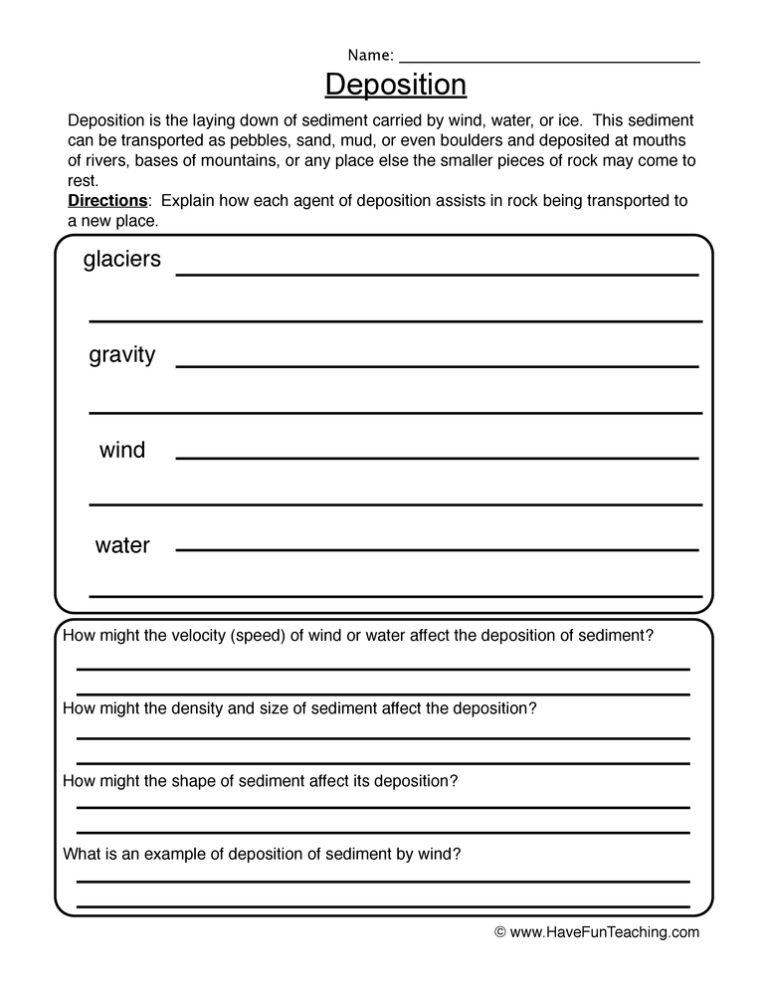
Worksheet
Worksheet4th GradeDeposition Worksheet

This deposition worksheet has 4th grade students name the agent that drops sediment in six sentences and explain why it settles. An answer key is included for quick, easy checking.

Worksheet
Worksheet4th GradeRocks Minerals Categorization Worksheet

This rocks minerals categorization worksheet gives 4th grade students a sorting chart and four compare-two-minerals clues, with an answer key included, so naming mineral properties becomes quick and confident.

Worksheet
Worksheet3rd GradeRhyme and Rhythm Worksheet

This rhyme and rhythm worksheet gives 3rd grade students a short granite poem to read aloud, count beats in, and mine for rhyming pairs. An answer key is included, so poetry practice takes minutes to check.

Flash Cards
Flash Cards2nd GradeRock Word Wall

These rock word wall flash cards give 2nd to 4th grade students 16 rock words with pictures and meanings, from boulder to lava. Answer key included.

Worksheet
Worksheet4th GradePhysical Processes Worksheet

This physical processes worksheet helps 4th grade students match erosion, weathering, deposition, earthquakes, and volcanoes to clues and explain fast and slow land changes, with an answer key to make checking quick.

Worksheet
Worksheet4th GradeRocks and Minerals Graphing Worksheet

This rocks and minerals graphing worksheet has 4th grade students total rock samples, draw a scaled bar graph, and solve word problems. An answer key is included for quick, easy checking.

Worksheet
Worksheet5th GradeLayers of the Earth Writing Worksheet

This layers of the Earth writing worksheet takes 5th graders on a pretend drill-submarine trip to the planet's center, naming each layer from clues and writing a travel log. Answer key included.

Worksheet
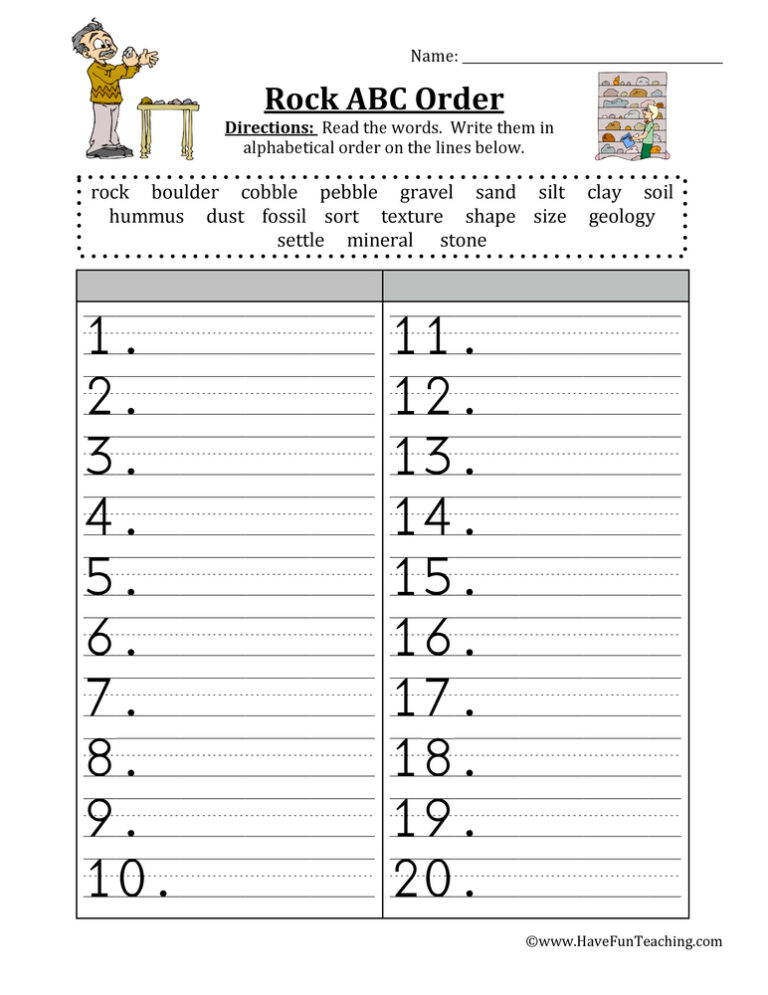
Worksheet3rd GradeRocks Alphabetical Order Worksheet

This rocks alphabetical order worksheet has 3rd grade students write rock words in ABC order and name the letter that decides each pair. An answer key is included for fast checking.

From our teachers' playbook

Every rock has a story to tell

What do kids learn about rocks?

Kids are natural rock collectors, so this unit starts with their pockets! Young learners observe and sort rocks by color, size, texture and shape. Older kids learn the three types of rocks: igneous (from cooled lava), sedimentary (from layers pressed together) and metamorphic (changed by heat and pressure). They learn that rocks are made of minerals and slowly change through the rock cycle, weathering and erosion. The click comes when kids look at a striped rock and realize those layers took thousands of years to form.

How we teach rocks

Rocks are free, everywhere and endlessly interesting. These moves make the most of that.

Observe like a geologist

Give each kid a rock and a magnifying glass. They record color, texture, weight and anything else they notice. Real observation turns a pebble into a science lesson.

Why it works: kids understand an idea best when they touch it, then draw it, then write it, the order the U.S. Department of Education recommends for elementary math.
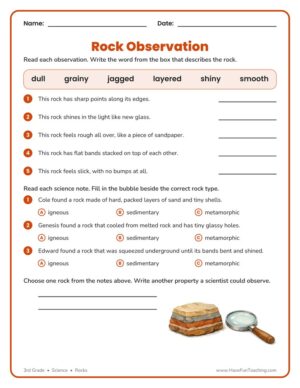
Rock Observation WorksheetTry it withRock Observation WorksheetWorksheetsOpen it →

Draw the rock cycle

Kids draw the rock cycle as a big circle with arrows showing how one type becomes another. Acting out each step, melting, cooling, pressing, makes it memorable.

Why it works: pairing a picture with each word gives kids two ways to remember it, a well-tested principle of how people learn (Mayer, 2009).

The Rock Cycle WorksheetTry it withThe Rock Cycle WorksheetWorksheetsOpen it →

Word wall review

Post rock words on the wall and do a quick daily review. Point to a word, kids explain it to a partner. Short, frequent quizzing helps tricky words like sedimentary stick.

Why it works: a big review of study methods ranked quick self-quizzing among the most powerful ways to remember (Dunlosky and colleagues, 2013).

Rock Word WallTry it withRock Word WallFlash CardsOpen it →

Rock questions from teachers and parents

What are the 3 types of rocks?

Igneous rocks form when melted rock cools. Sedimentary rocks form when layers of sand, mud and shells are pressed together. Metamorphic rocks form when heat and pressure change other rocks.

What is the difference between rocks and minerals?

Minerals are the building blocks of rocks. A rock is usually made of two or more minerals mixed together, like granite, which contains quartz and feldspar.

What grade learns about rocks?

Younger kids sort and describe rocks in kindergarten through 2nd grade. The three types of rocks, the rock cycle and minerals are usually taught in 3rd through 5th grade.

How can I teach rocks at home?

Go on a rock hunt! Collect rocks on a walk, wash them, and sort them by color, texture or size. Use a magnifying glass to look closer and talk about how they might have formed.

Keep exploring