

Desert True or False Worksheet
This desert true or false worksheet asks 3rd graders to judge eight statements about desert weather, plants and animals, then rewrite a false one correctly. Answer key included for fast, no-prep science practice.
$6.97
Or free with a membership — members pay $3.33/mo for all 10,000+ resources. See plans
Want this one free?
Tell us where to send it and it’s yours — no card, no catch.
One free resource per teacher. We’ll also send free teaching ideas each week — unsubscribe anytime.
Teaching is easier with a membership
Unlimited printables, games & videos for PreK–6th — for your classroom or homeschool. Cancel anytime.
Start your 3-day free trial$0 today · cancel anytime · Instant access to 10,000+ resources
About this resource
Description
A desert is any place that gets very little rain, and that one fact shapes everything that lives there. Learning about deserts means sorting real facts from the pictures children already carry in their heads: endless sand, blazing heat all day and night, nothing alive for miles. This desert true or false worksheet puts eight of those claims side by side and asks students to decide which ones hold up. Judging a statement is a bigger job than recalling one, because the student has to hold the claim next to what they know about the biome and see whether the two agree.
This 3rd grade desert habitat worksheet is a single page of eight statements with True and False bubbles. Students read each sentence about desert rainfall, temperature, plants and animals and fill in one bubble, then finish by choosing a statement they marked False and rewriting it so it gives the correct fact. Use it to open a habitats unit and surface misconceptions before you teach, as a quick check partway through, or as a review the day before an assessment. The answer key makes it easy to score or to let partners check each other.
What’s Included
- 1 print-ready PDF worksheet
- Answer key
- 8 true-or-false statements about the desert biome plus 1 rewrite-the-fact response
The desert true or false worksheet helps students in three ways. First, it targets the misconceptions directly, so the sentences about sand, camels and cold deserts do the teaching instead of a list of facts to memorize. Second, the two-choice format keeps the reading load light, which lets students spend their thinking on the science rather than on decoding. Third, the rewrite task at the bottom turns a right-or-wrong answer into an explanation, and writing a corrected fact in their own words is what shows a teacher the idea actually landed.
Teachers and parents can build on the page in a few easy ways. Put a world map on the wall and find the Sahara, the Sonoran and the cold Gobi and Antarctic deserts, so students see that deserts are not all hot and sandy. Fill two jars with water, cover one, leave the other open in the sun and measure the difference the next day. Compare a cactus and a houseplant side by side and talk about the thick stem and waxy skin. Or have students write one new true statement and one new false statement and trade papers with a partner.
Related Resources
What teachers say
Reviews
You must be logged in to post a review.
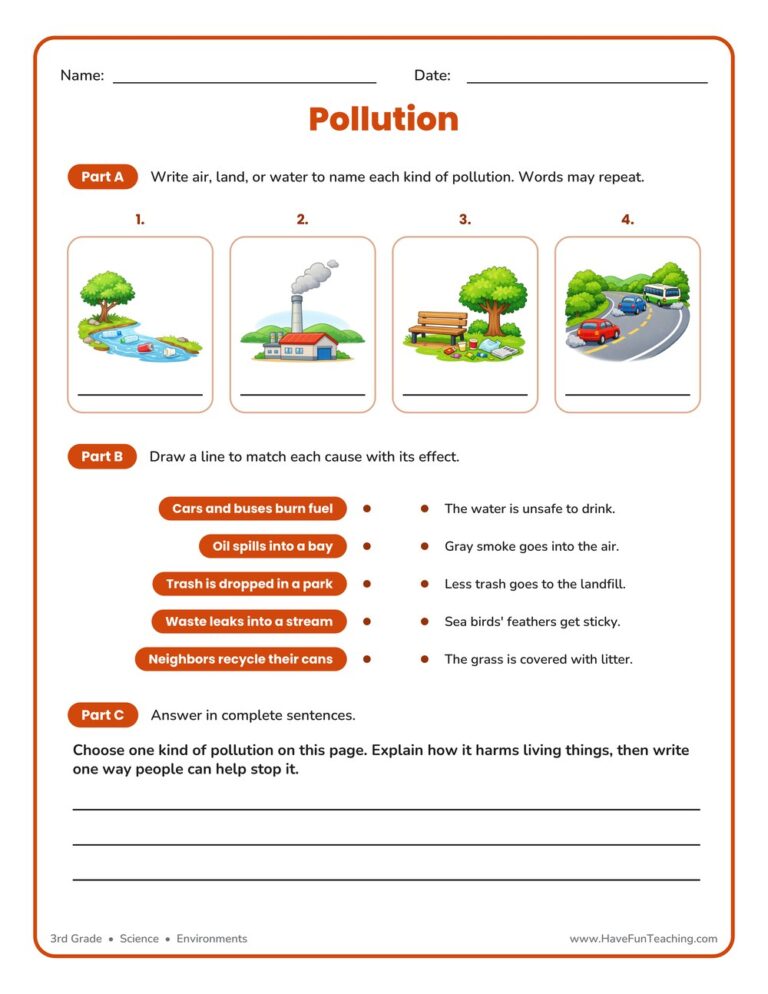
This pollution worksheet helps 3rd graders name air, land, and water pollution, match each cause with its effect, and explain one way people can help. Answer key included for no-prep science practice at school or home.
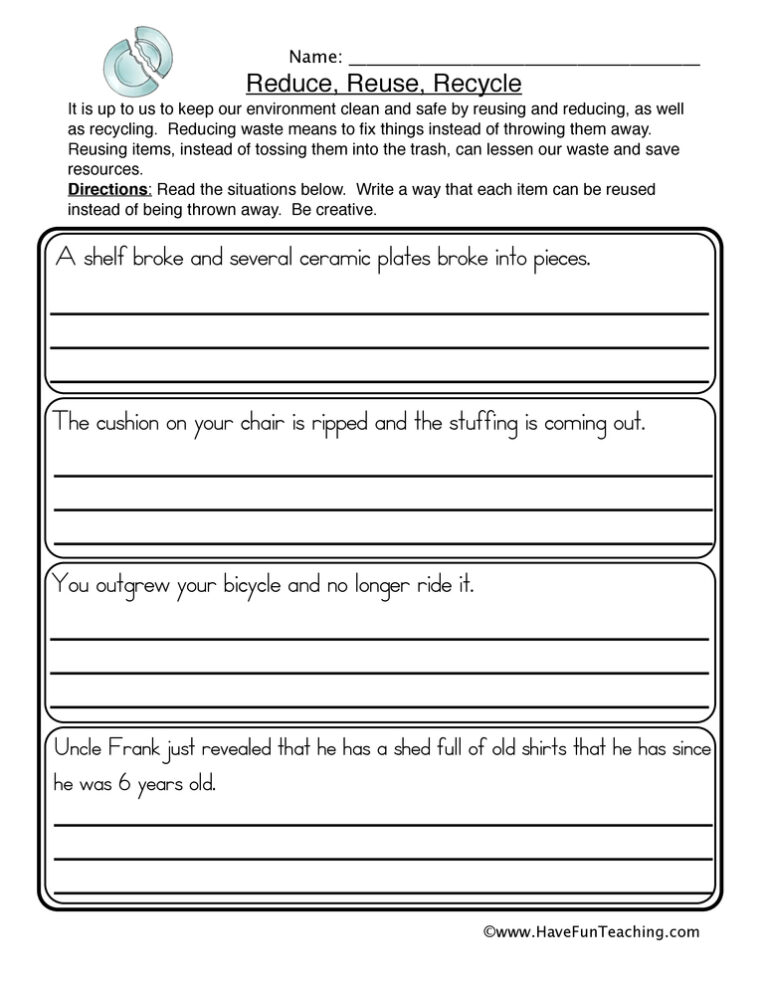
Read six real-life situations and decide whether each one shows reducing, reusing, or recycling on this reduce, reuse, recycle scenarios worksheet for 3rd grade. Answer key included, so Earth Day science practice takes no prep.

This matching habitats worksheet has 3rd graders link five animals to the habitats they live in, then explain two animal adaptations in writing. Answer key included for fast, no-prep science practice.
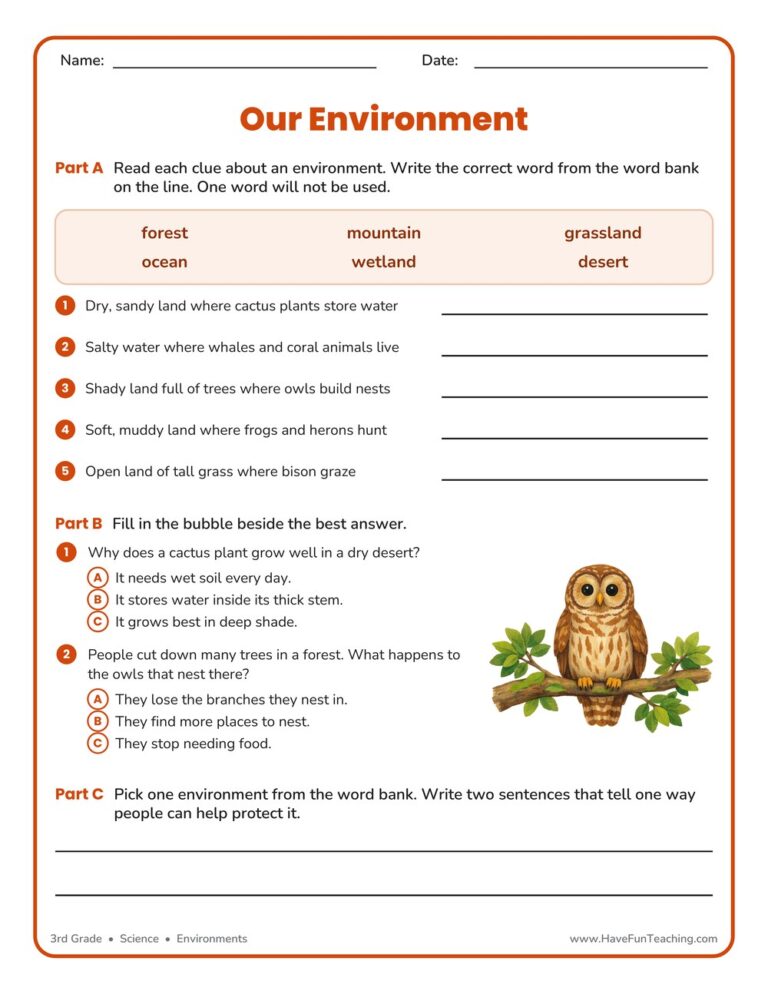
This Our Environment Worksheet asks 3rd graders to name five environments, answer two habitat questions, and write about protecting nature. An answer key is included for fast, no-prep science practice.
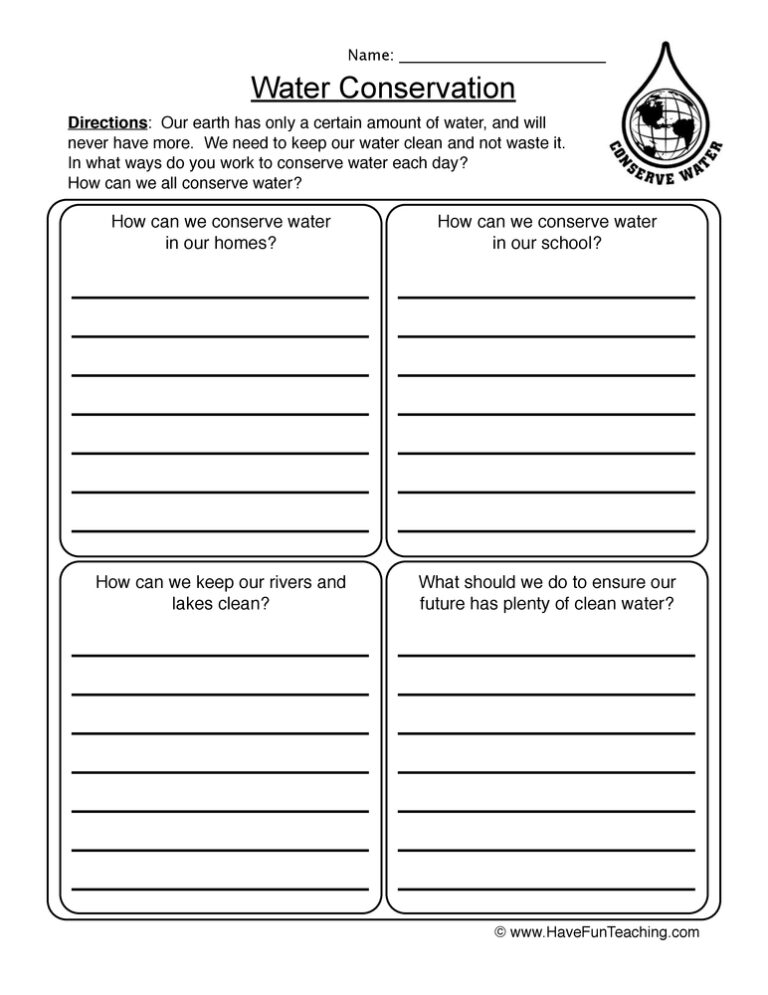
Students use this Water Conservation Worksheet to define key terms, sort water-saving habits, and solve a two-step drip problem. Built for 3rd Grade, with an answer key included for fast, no-prep science practice.
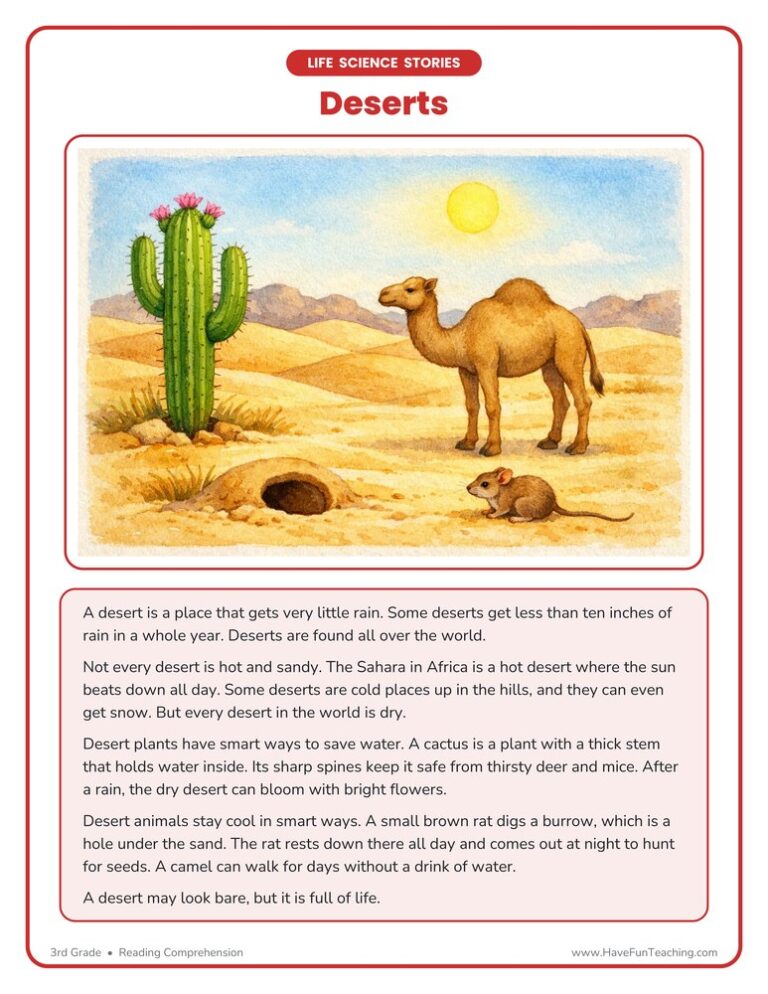
This Deserts Life Science Reading Comprehension Worksheet gives 3rd Grade readers a short nonfiction passage about hot and cold deserts, with comprehension questions and an answer key included, so science reading practice takes minutes to prep.

This animal habitats worksheet asks 3rd Grade students to match animals to their habitats, sort six animals into two environments, and explain one desert adaptation. An answer key is included for fast, no-prep science practice.
The Life Science Stories Reading Comprehension Digital Worksheet Collection has online digital worksheets for Google Classroom & online distance learning.
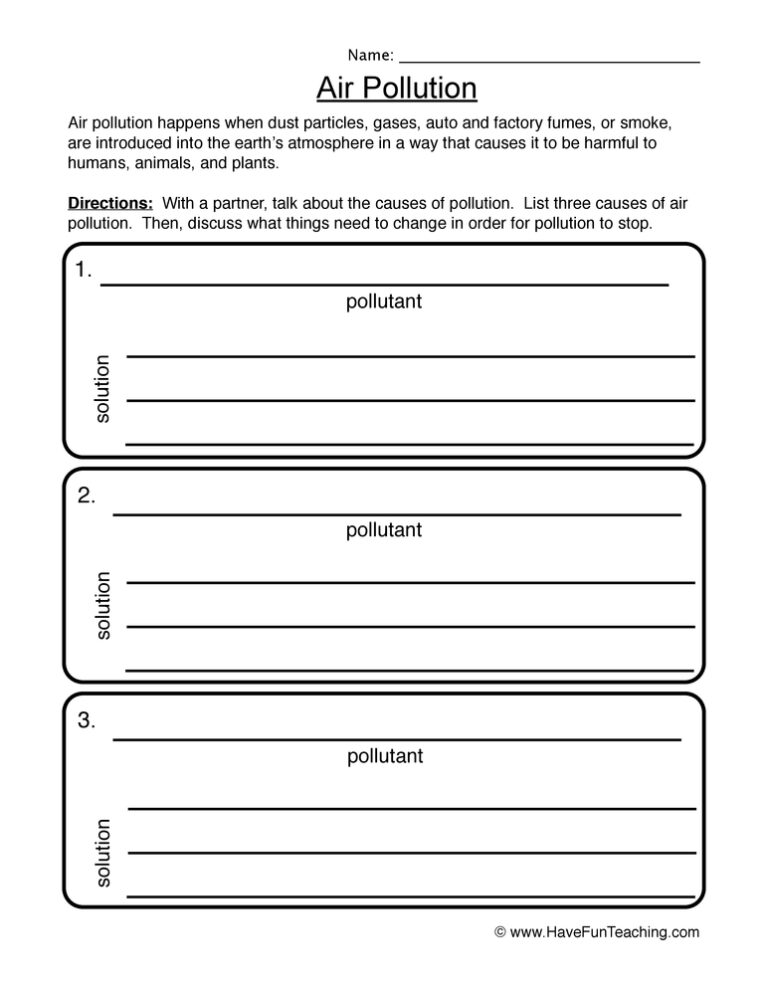
This Air Pollution Worksheet asks 3rd graders to mark six everyday actions D for dirty air or C for cleaner air, then explain one cause and plan one fix. Answer key included.

This Water Pollution Worksheet has 3rd Grade students sort pictures, finish sentences from a word box, and write about one way to keep rivers clean. Answer key included.
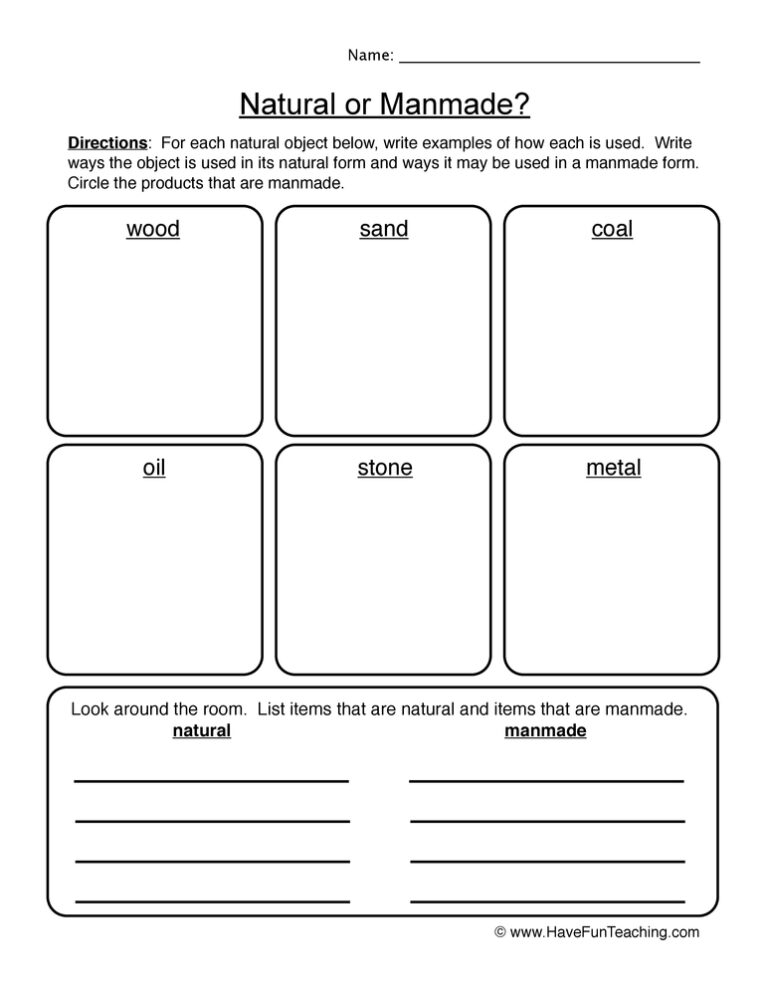
This natural man-made writing worksheet helps 3rd grade students sort everyday materials into natural and manmade groups, then find both kinds inside four short sentences. An answer key is included, so science practice is ready to print.
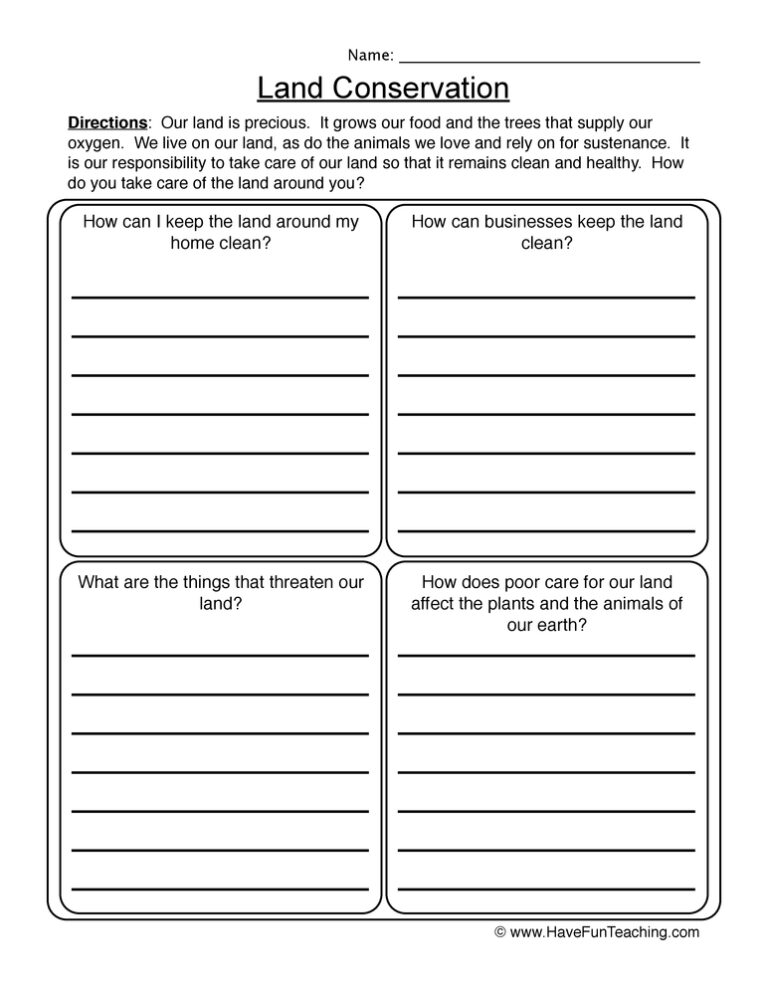
This land conservation worksheet helps 3rd graders learn earth science words, sort actions that protect or harm the land, and solve a clean-up word problem. An answer key is included for easy checking.
Reviews
There are no reviews yet