

Counting by Tens What Comes Next Worksheet
This counting by tens what comes next worksheet helps 1st graders count on and back by tens from any number. An answer key is included, making practice with ten more and ten less quick to check.
$6.97
Or free with a membership — members pay $3.33/mo for all 10,000+ resources. See plans
Want this one free?
Tell us where to send it and it’s yours — no card, no catch.
One free resource per teacher. We’ll also send free teaching ideas each week — unsubscribe anytime.
Teaching is easier with a membership
Unlimited printables, games & videos for PreK–6th — for your classroom or homeschool. Cancel anytime.
Start your 3-day free trial$0 today · cancel anytime · Instant access to 10,000+ resources
About this resource
Description
Counting by tens from any number is a big step for first graders. Most children learn to chant 10, 20, 30, but the real skill is starting at a number like 25 or 67 and finding the number that is ten more or ten less. This counting by tens what comes next worksheet gives students that practice in a clear, friendly layout, so they learn that only the tens digit changes when they add or take away ten.
The worksheet has two parts. In the first part, students count on by tens. Each row starts at a number that is not a decade, and children fill in the missing boxes to show what comes next. In the second part, students count back by tens, writing the number that comes ten before. Every answer goes into a printed box, so the page stays neat and easy to check. Use it as morning work, a math center, homework, or a quick check after a lesson on the hundred chart. This first grade counting by tens worksheet pairs well with base ten blocks, so children can add or remove a rod as they work.
What’s Included
- 1 print-ready PDF worksheet
- 4 count-on-by-tens rows and 3 count-back-by-tens rows
- 21 answer boxes with a full answer key
This counting by tens what comes next worksheet helps kids in three ways. First, it builds place value sense, because children see that 41, 51, 61 and 71 all end in the same ones digit. Second, it prepares them for mental math, since adding or taking away ten in their heads is a core first grade standard. Third, counting both forward and backward makes kids flexible with numbers instead of relying on one memorized chant.
Teachers and parents can extend the practice in fun ways. Point to any number on a hundred chart and ask what number is ten more or ten less. Play a hop game on a floor number path where each jump is worth ten. Use dimes to count on by tens from a handful of pennies. At home, ask your child to count back by tens from their house number or from the number of days left until a holiday.
Related Resources
What teachers say
Reviews
You must be logged in to post a review.
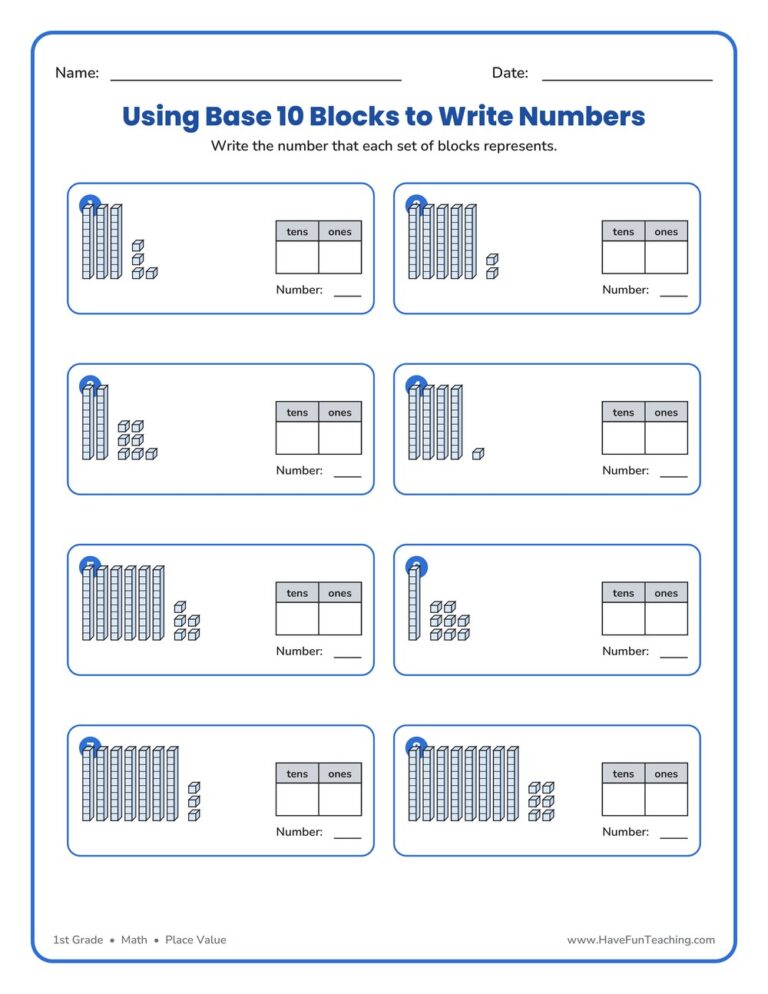
This Using Base 10 Blocks to Write Numbers Worksheet helps 1st graders count tens rods and ones cubes, then record each two-digit number in a place value chart. Includes an answer key for quick, no-prep practice.
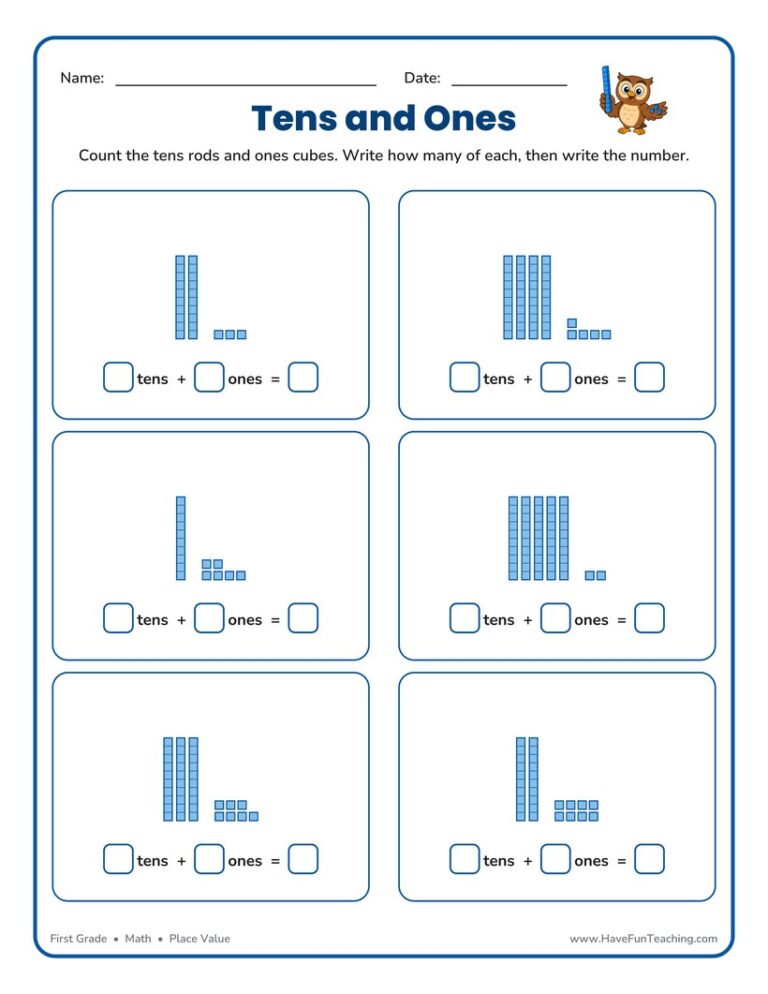
Count the tens and ones with this tens ones worksheet made for first grade. Students use base-ten blocks to write the tens, ones, and the two-digit number, and an answer key is included to make practice simple.
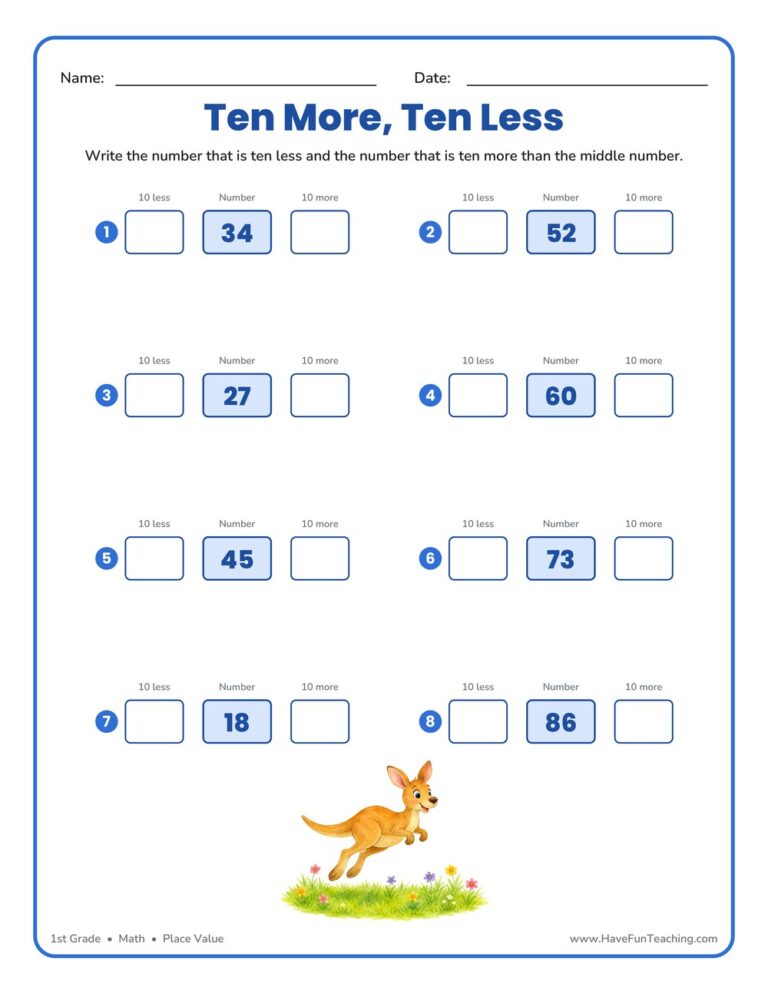
This Ten More Ten Less Worksheet gives 1st graders eight quick problems to find ten more and ten less than a two-digit number. Includes an answer key for fast, no-prep place value practice.

The Drawing Tens and Ones Worksheet gives first graders hands-on practice representing two-digit numbers as tens and ones on a place value mat. Includes a complete answer key for quick, no-prep place value practice.
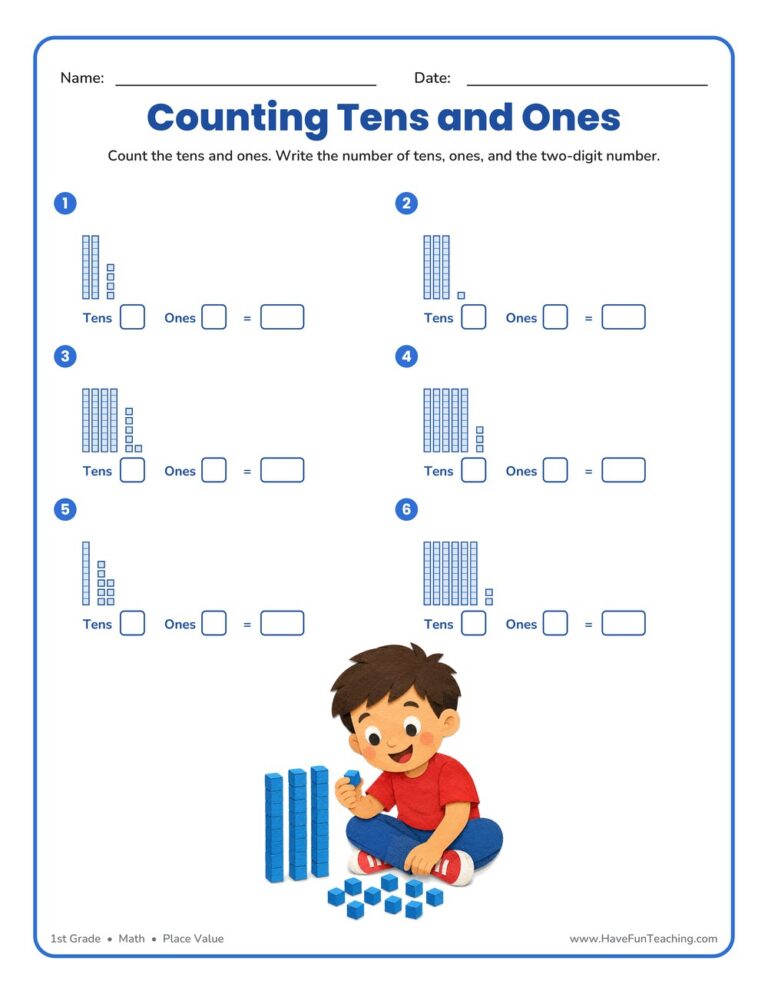
A first grade Counting Tens and Ones Worksheet where students count base ten blocks and write each two-digit number. Includes a complete answer key for easy, no-prep place value practice at home or school.
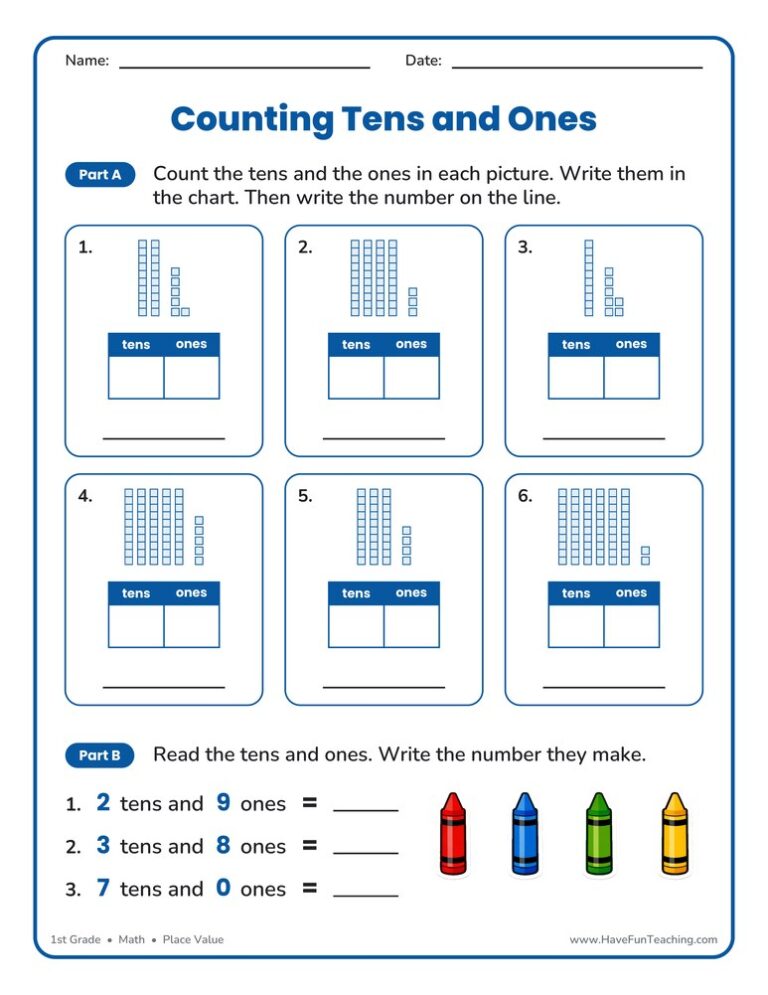
This count tens and ones worksheet gives 1st grade students base ten block pictures to count, chart, and write as numbers. An answer key is included, so place value practice is ready to print and go.
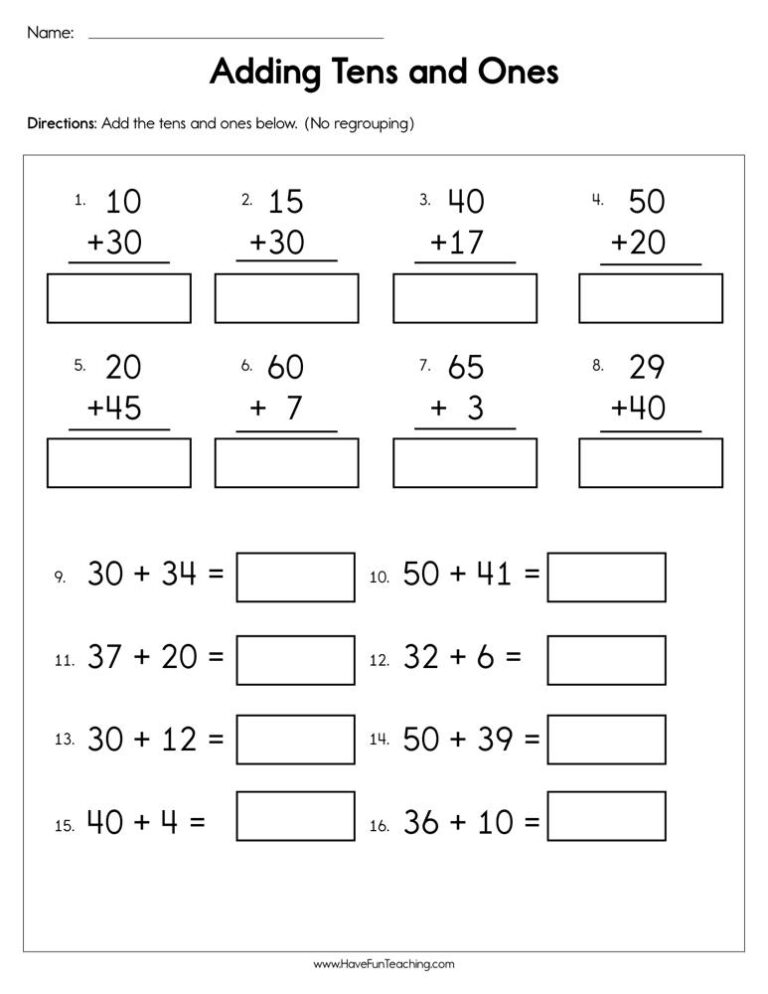
This adding tens and ones worksheet helps 1st graders build two-digit numbers with base ten blocks and column addition. Includes an answer key for quick, no-prep place value practice at home or school.
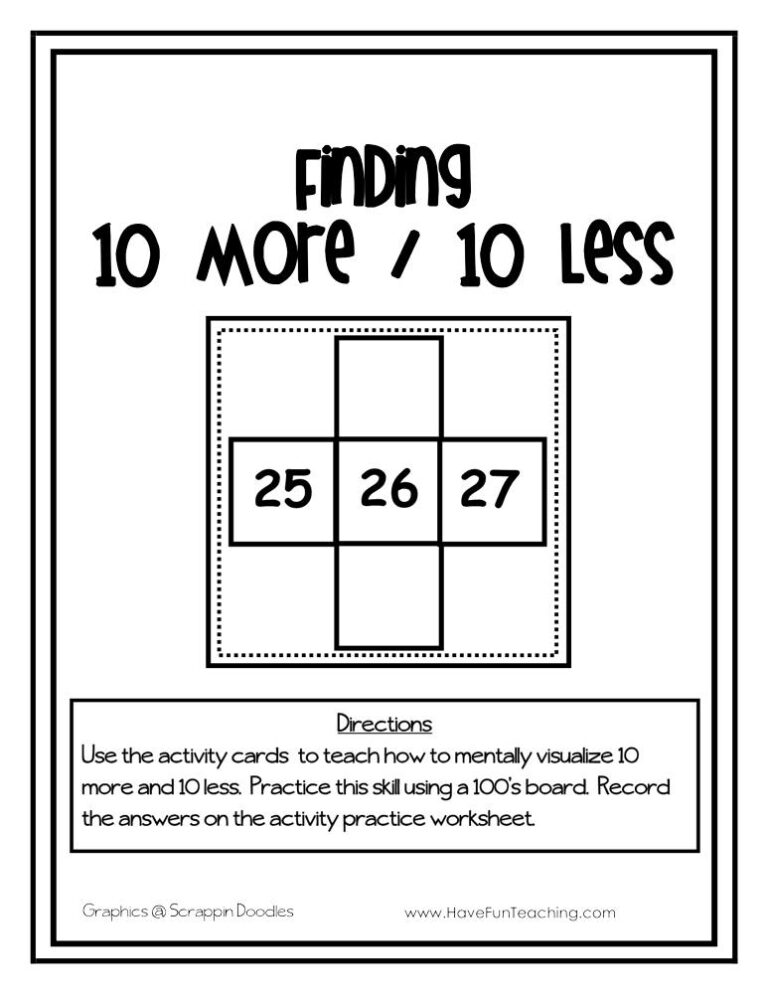
In this Finding 10 More 10 Less Activity, students practice finding 10 more and less than a given number to build skip counting and base ten skills.

This ten more and ten less worksheet gives 1st Grade students eight number-chart problems and two story problems for mental math with tens. An answer key is included, so checking work takes seconds.
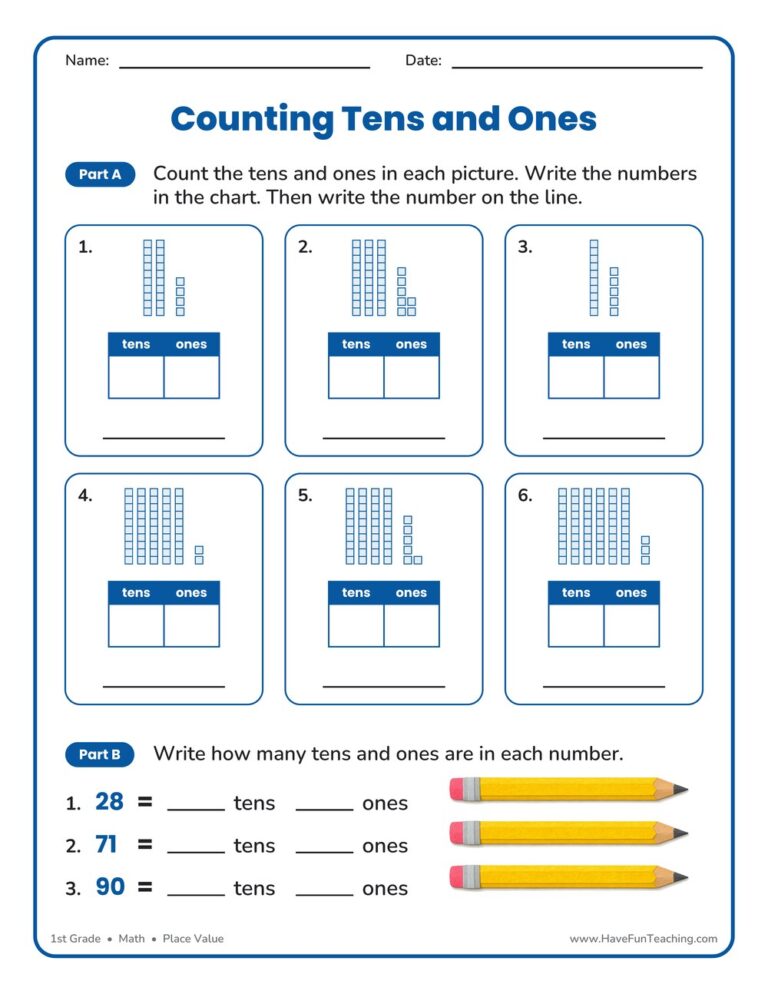
Count the tens and ones in six base-ten pictures, fill in the chart, and write the number. This Break it Apart Counting Tens Ones Worksheet builds 1st grade place value confidence, and an answer key is included.
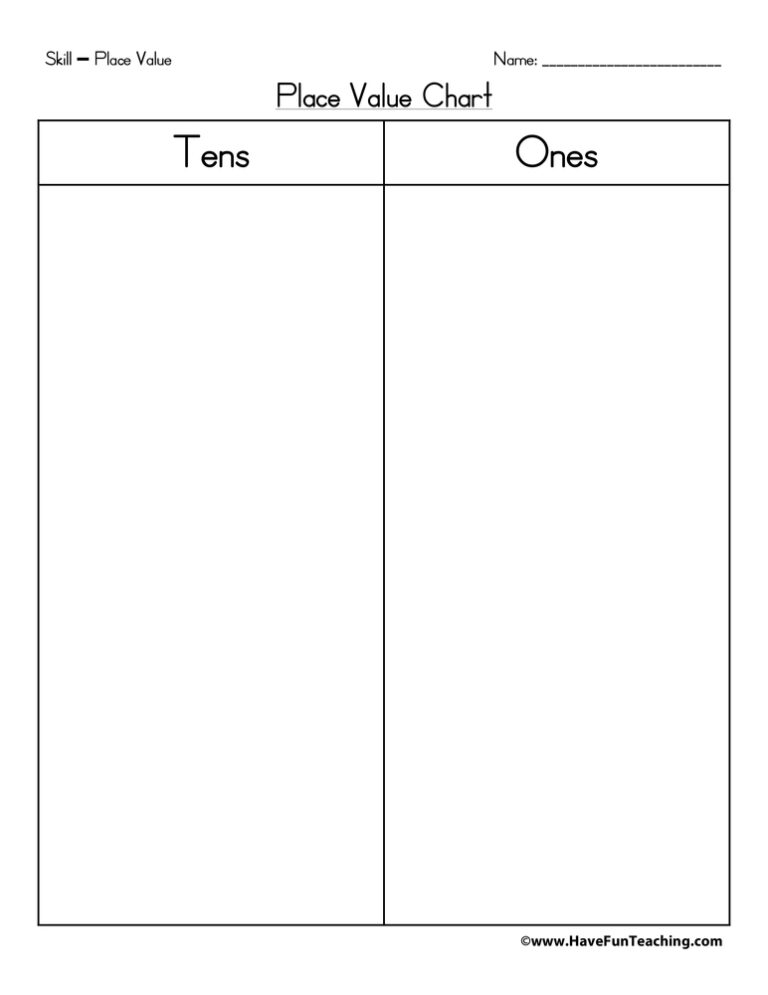
This place value chart worksheet helps 1st graders break two-digit numbers into tens and ones with base ten blocks, a fill-in chart, and a word problem. An answer key is included, so practice is quick to check.


Reviews
There are no reviews yet