

Beginning, Middle, and End Worksheet
A reusable Beginning, Middle, and End Worksheet that helps 1st graders retell any story in order across three clear sections. Perfect for building sequencing and summarizing skills with every book they read.
$6.97
Or free with a membership — members pay $3.33/mo for all 10,000+ resources. See plans
Want this one free?
Tell us where to send it and it’s yours — no card, no catch.
One free resource per teacher. We’ll also send free teaching ideas each week — unsubscribe anytime.
Teaching is easier with a membership
Unlimited printables, games & videos for PreK–6th — for your classroom or homeschool. Cancel anytime.
Start your 3-day free trial$0 today · cancel anytime · Instant access to 10,000+ resources
About this resource
Description
Retelling a story in order — what happens at the beginning, then the middle, and finally the end — is one of the very first comprehension skills young readers build. This Beginning, Middle, and End Worksheet gives children a clear, structured space to organize their thinking and put the events of a story in the right sequence.
This first grade graphic organizers worksheet works with any read-aloud or storybook. After listening to or reading a story, students write the title on the line at the top, then fill in the three labeled sections to describe what happened at the beginning, the middle, and the end. The open format means it can be used again and again with every new book, making it a flexible tool for the whole year.
What’s Included
- 1 print-ready PDF worksheet
- Three labeled sections: Beginning, Middle, and End
- A line to name the story being retold
There are three big reasons this Beginning, Middle, and End Worksheet helps kids learn. First, the three separate boxes make an abstract idea — story structure — visual and easy to grasp. Second, writing in order strengthens sequencing and summarizing at the same time. Third, the reusable layout builds independence, since children can complete it on their own with any book they read.
Teachers and parents can extend the lesson in many playful ways. Act out a familiar story and pause to ask what came first, next, and last. Use picture cards and have children put them in order before they write. Read a favorite bedtime book and take turns retelling each part aloud, or draw a quick three-panel comic of the story before filling in the organizer. These hands-on activities make sequencing feel like play.
Related Resources
What teachers say
Reviews
You must be logged in to post a review.
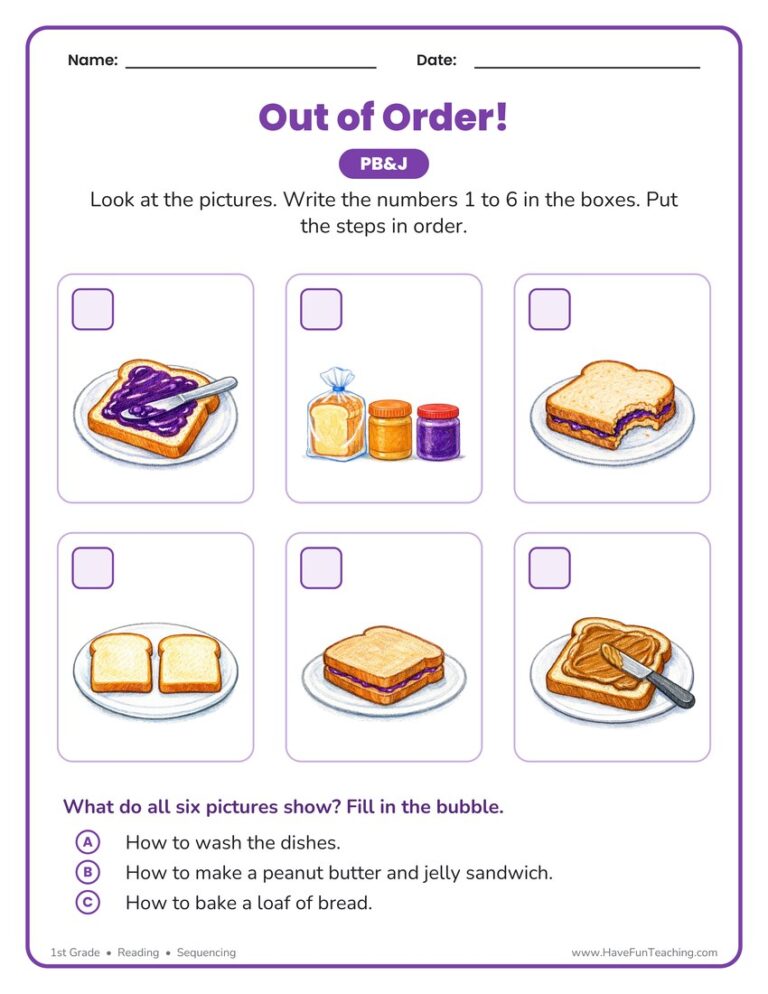
A picture-based Making A Sandwich Sequencing Worksheet that asks 1st graders to number six peanut butter and jelly steps in order, then name what the whole set shows. Answer key included for fast, no-prep retelling practice.
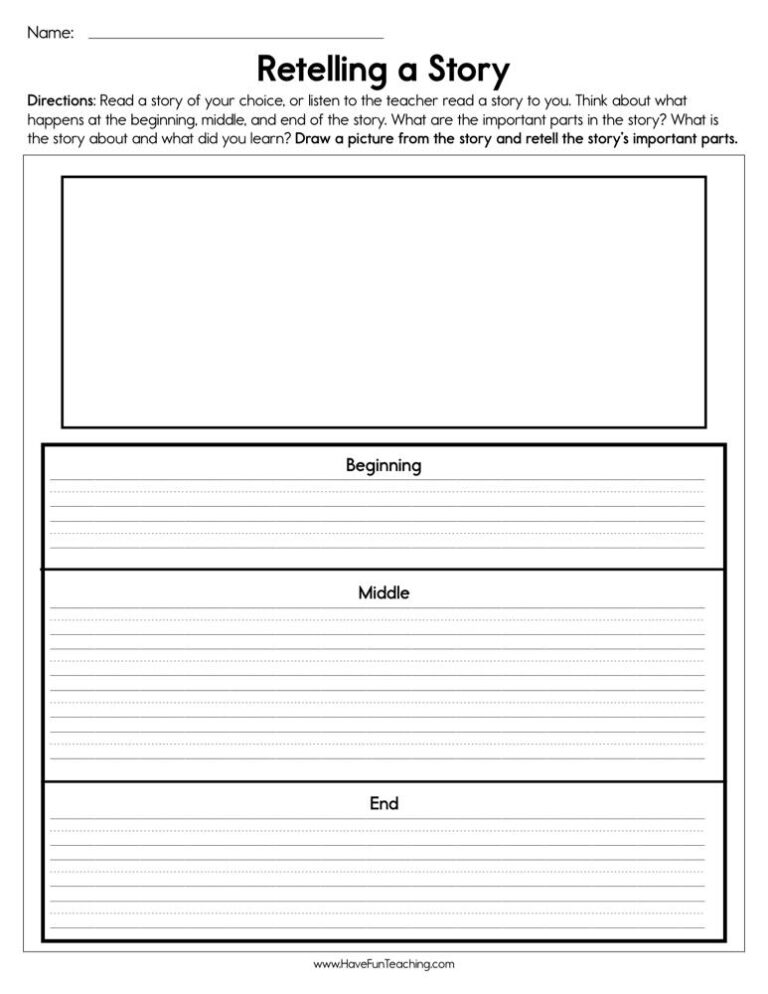
This Retelling a Story Worksheet gives 1st Grade readers a short story to sequence and retell in their own words, with a full answer key included, so comprehension practice is ready to print.
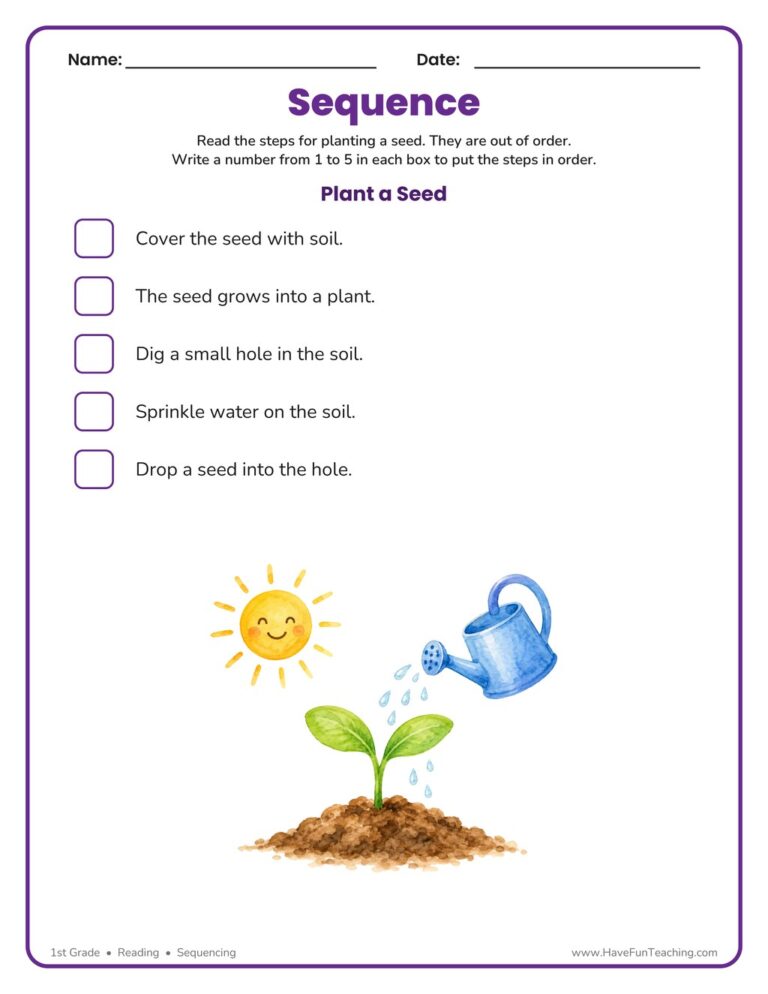
The Plant a Seed Sequence Worksheet helps 1st graders put five planting steps in order from first to last. Includes a complete answer key—perfect for quick, no-prep sequencing practice at home or school.
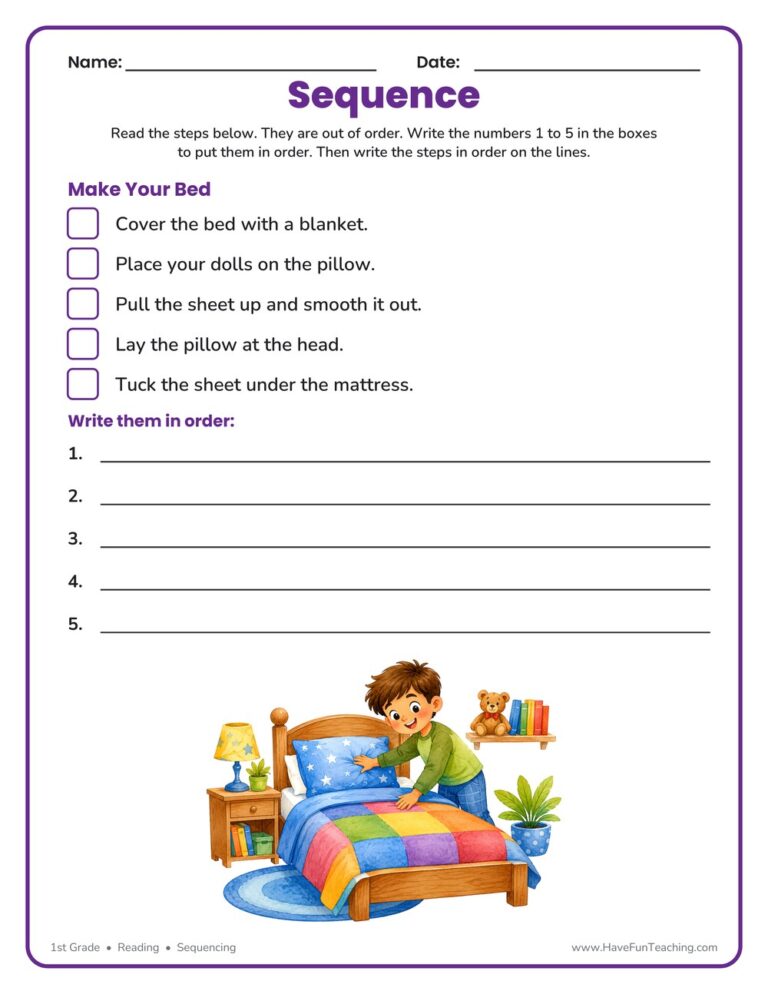
This Making a Bed Sequence Worksheet has 1st graders order five steps, number the boxes 1 to 5, and rewrite them in sequence. Answer key included — a fun, no-prep way to practice sequencing.

This brushing your teeth sequencing worksheet asks 1st graders to number four pictures and four sentences to rebuild a familiar routine. An answer key is included, so checking sequencing practice takes only a moment.

Using Sequence of Events Activity,students retell familiar stories, including key details with support and prompting.
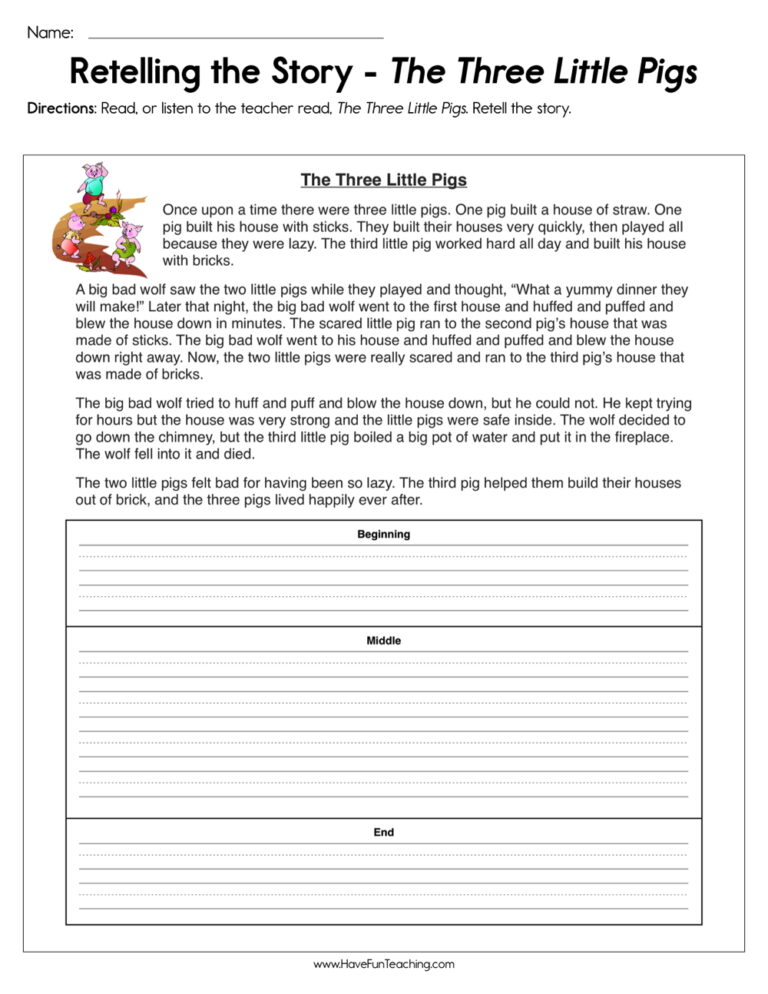
This Retelling the Story The Three Little Pigs Worksheet gives 1st graders a short story to read, four events to put in order, and Beginning, Middle, and End retell boxes. Answer key included for fast checking.

This making a bed sequencing worksheet gives 1st grade students five out-of-order steps to number 1 to 5, plus a summarizing question. An answer key is included, so ordering practice is ready in one print.


This Telling About the Story Worksheet gives 1st graders four boxes to retell any book they read - characters, setting, problem, and solution - turning every story into clear, confident writing practice.
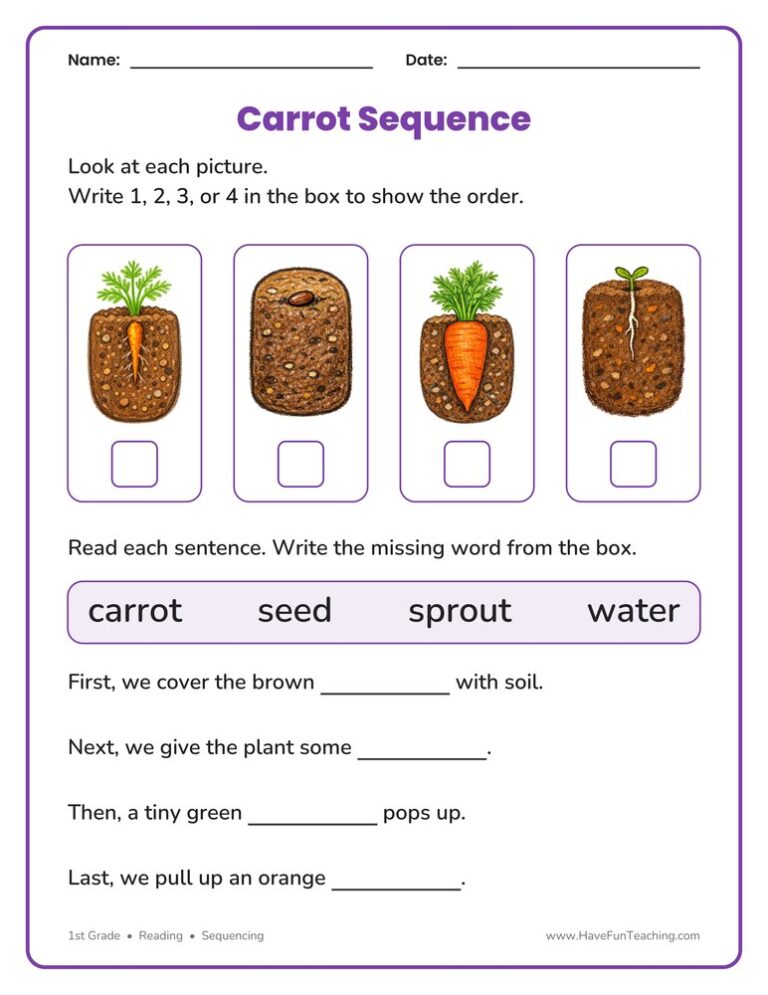
The Planting A Carrot Seed Sequencing Worksheet gives first grade students four carrot pictures to put in order and four sentences to finish from a word box. Answer key included, so it marks in seconds.
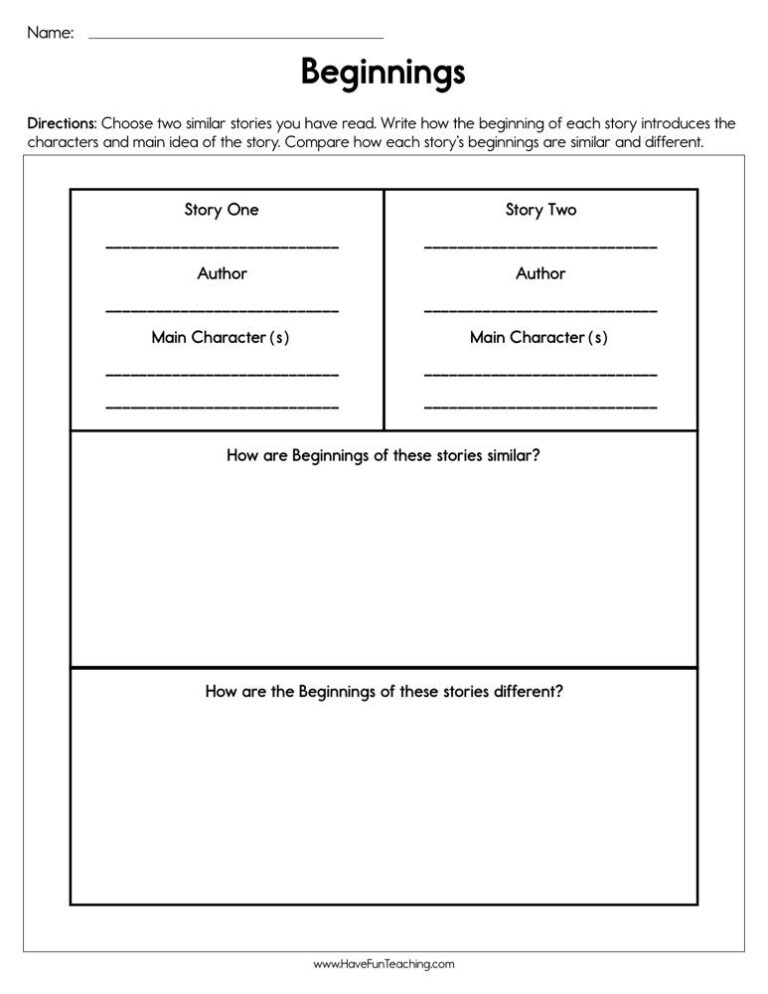
Using Beginnings Worksheet, students write how the beginning of each story introduces the characters and main idea of the story to compare the two similar stories read.
Reviews
There are no reviews yet