
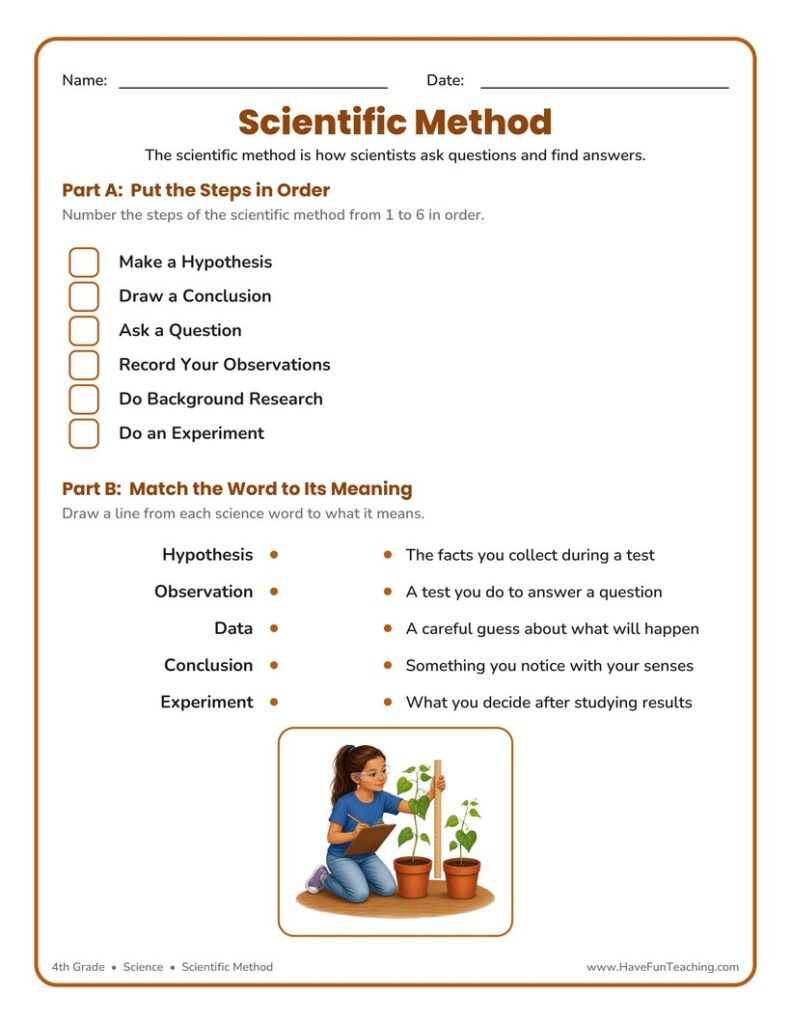
Scientific Method Worksheet
This Scientific Method Worksheet helps 4th graders order the six steps of an investigation, match key science words, and analyze a real bean-plant experiment. Answer key included — a no-prep way to build real science-thinking skills.
$6.97
Or free with a membership — members pay $3.33/mo for all 10,000+ resources. See plans
Want this one free?
Tell us where to send it and it’s yours — no card, no catch.
One free resource per teacher. We’ll also send free teaching ideas each week — unsubscribe anytime.
Teaching is easier with a membership
Unlimited printables, games & videos for PreK–6th — for your classroom or homeschool. Cancel anytime.
Start your 3-day free trial$0 today · cancel anytime · Instant access to 10,000+ resources
About this resource
Description
The scientific method is the step-by-step process that scientists use to ask questions, test ideas, and discover how the world works. This Scientific Method Worksheet introduces fourth graders to the six key steps — asking a question, doing research, making a hypothesis, running an experiment, recording observations, and drawing a conclusion — in a clear, kid-friendly way. Learning the scientific method helps students think like real scientists and gives them a dependable plan they can follow whenever they are curious about how or why something happens.
This printable 4th grade science worksheet keeps the focus on understanding and applying each step. Students begin by putting the six steps of the scientific method in the correct order and matching important science words — hypothesis, observation, data, conclusion, and experiment — to their meanings. Then they read about a real bean-plant experiment and answer questions that ask them to find the question, the hypothesis, and what was kept the same, read the data, and write a conclusion. Print the pages and let students work independently, in pairs, or as a warm-up before a hands-on lab.
What’s Included
- 1 print-ready PDF worksheet
- Answer key
- A step-ordering activity, a science vocabulary matching activity, and an apply-the-method experiment analysis
There are three big reasons this Scientific Method Worksheet helps students learn. First, ordering the steps builds a strong mental map of the whole process, so investigations feel organized instead of random. Second, matching the vocabulary to clear definitions locks in the science terms students will use all year long. Third, analyzing a real experiment and writing a conclusion pushes students to reason with evidence, and the included answer key makes it easy for kids to check their own thinking and build confidence as independent learners.
Teachers and parents can extend the lesson in lots of fun ways. Turn the six steps into a class chant or hand-motion game, or challenge students to plan a simple experiment at home — like which paper towel soaks up the most water — using each step in order. Keep a science journal where kids record their own questions, hypotheses, and observations. You can also pair the worksheet with a short science video or a hands-on nature walk to spark even more curiosity.
Related Resources
What teachers say
Reviews
You must be logged in to post a review.

This scientific observation worksheet gives 4th graders practice sorting observations from inferences, recording what they notice, and judging a science note. Answer key included for quick, no-prep science practice.
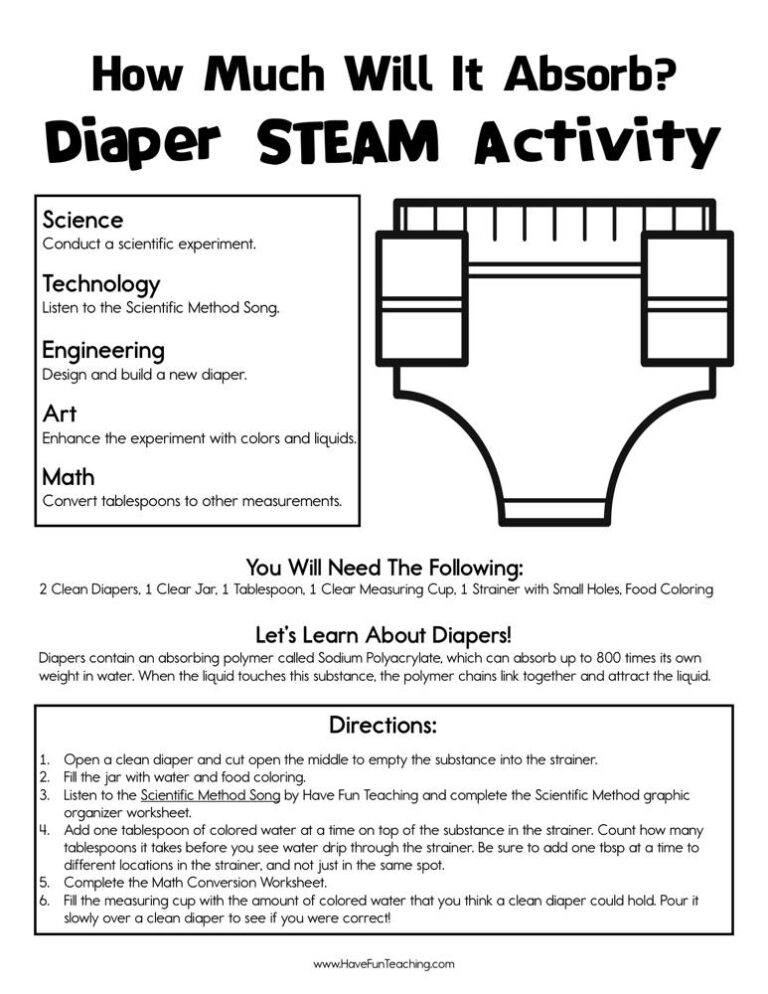
This How Much Will It Absorb? Diaper STEAM Activity includes all the learning components: Science, Technology, Engineering, Art, and Math.
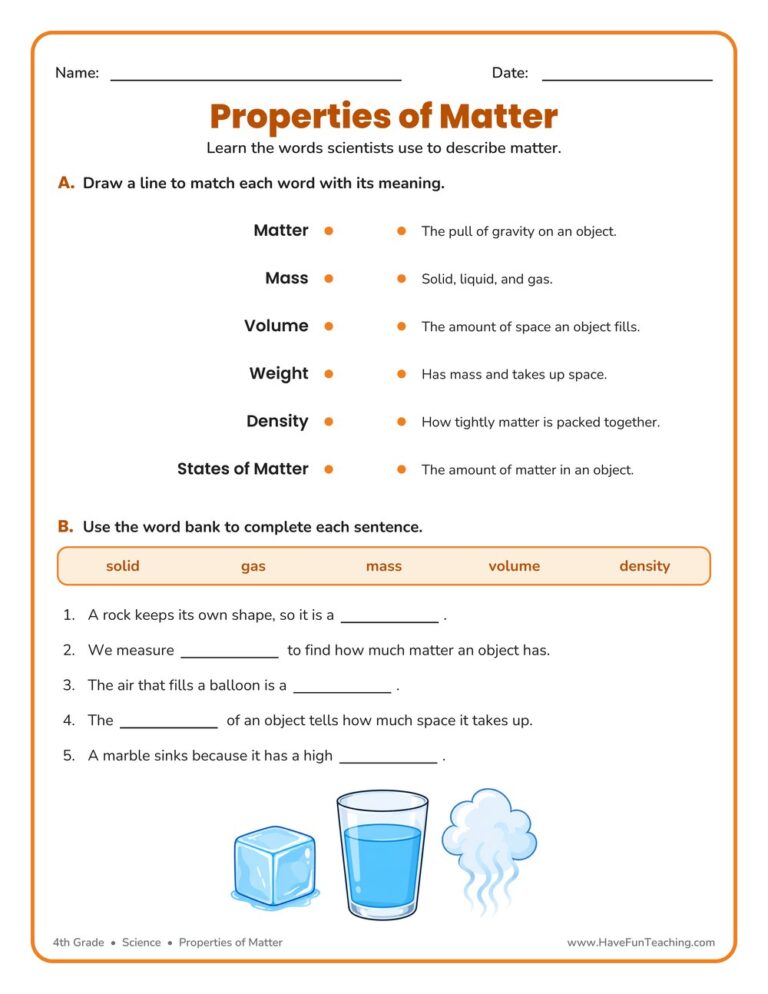
This Properties of Matter Definitions Worksheet helps 4th grade students match key science terms—matter, mass, volume, weight, and density—to their meanings and complete sentences about solids and gases. Answer key included for fast, no-prep science practice.
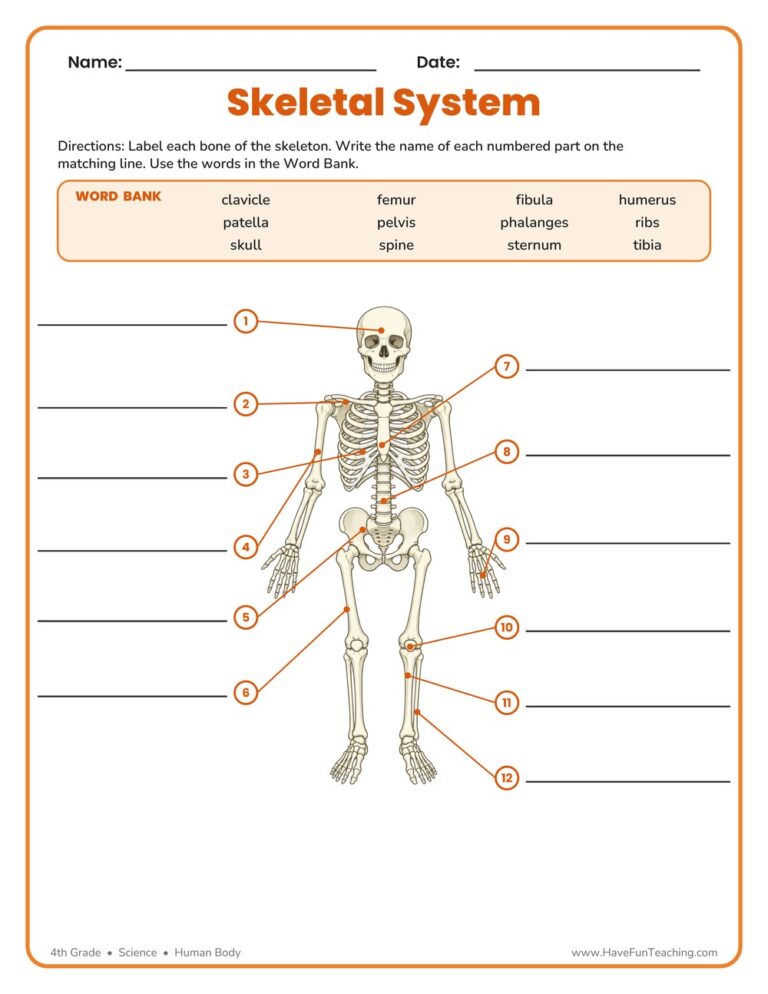
This Label Skeletal System Worksheet lets 4th grade students identify and name twelve major bones on a clear skeleton diagram using a word bank. An answer key is included for quick, no-prep human body practice.
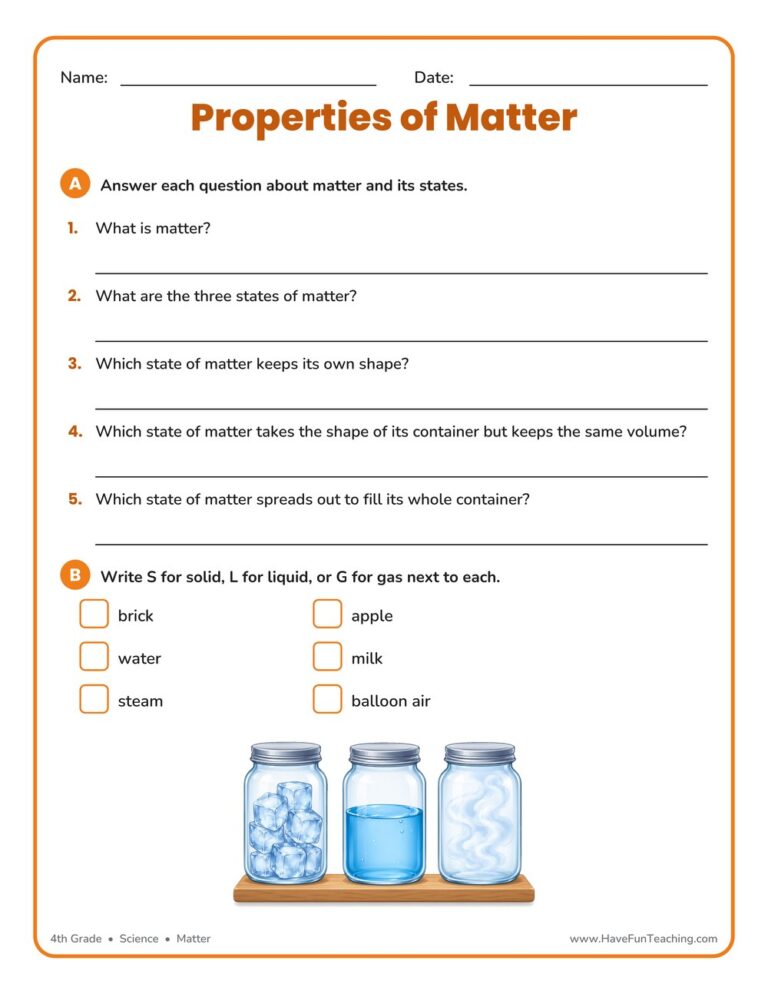
This 4th Grade Properties of Matter Review Worksheet has students answer key questions about matter and sort everyday objects as solid, liquid, or gas. Answer key included — an easy, no-prep way to review states of matter.
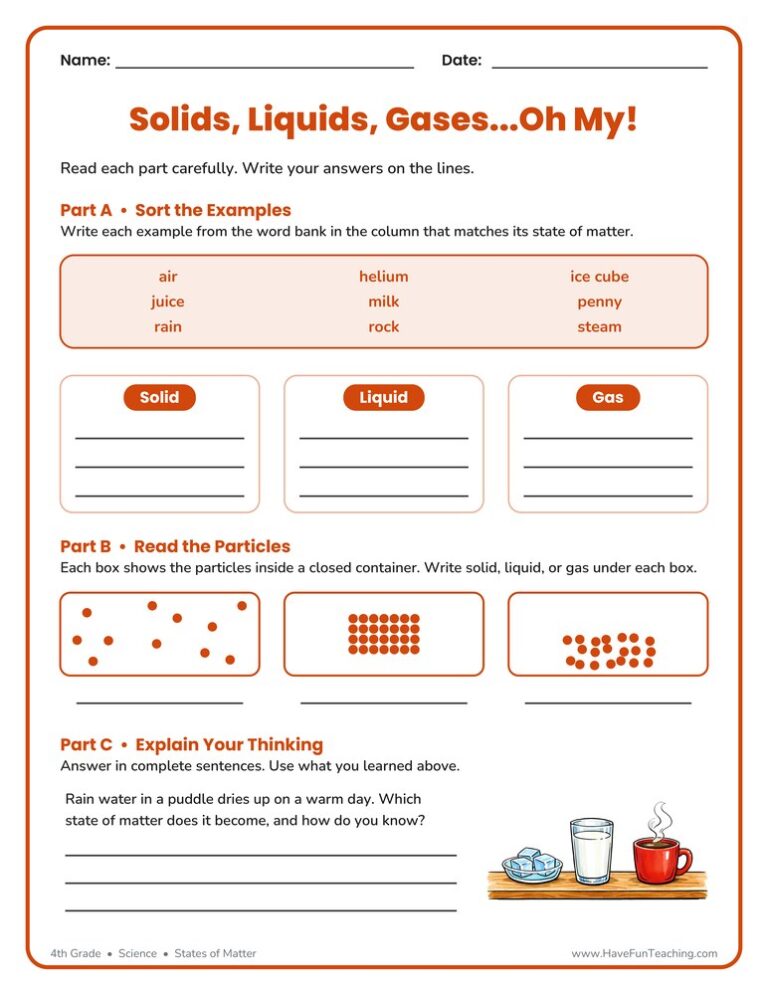
Sort nine everyday examples, label three particle diagrams, and explain a change of state with this states of matter examples worksheet for 4th grade. An answer key is included, so checking work takes seconds.

The Matter Song teaches all about matter and the states of matter. With this states of matter song, students learn about solid, liquid, and gas, as well as the phases of matter, properties of matter, physical changes, chemical changes, and so much more. Matter has mass and takes up space.…

While listening the Scientific Method Song (Animated Music Video), students learn about seven steps of the scientific method while listening to a catchy song.
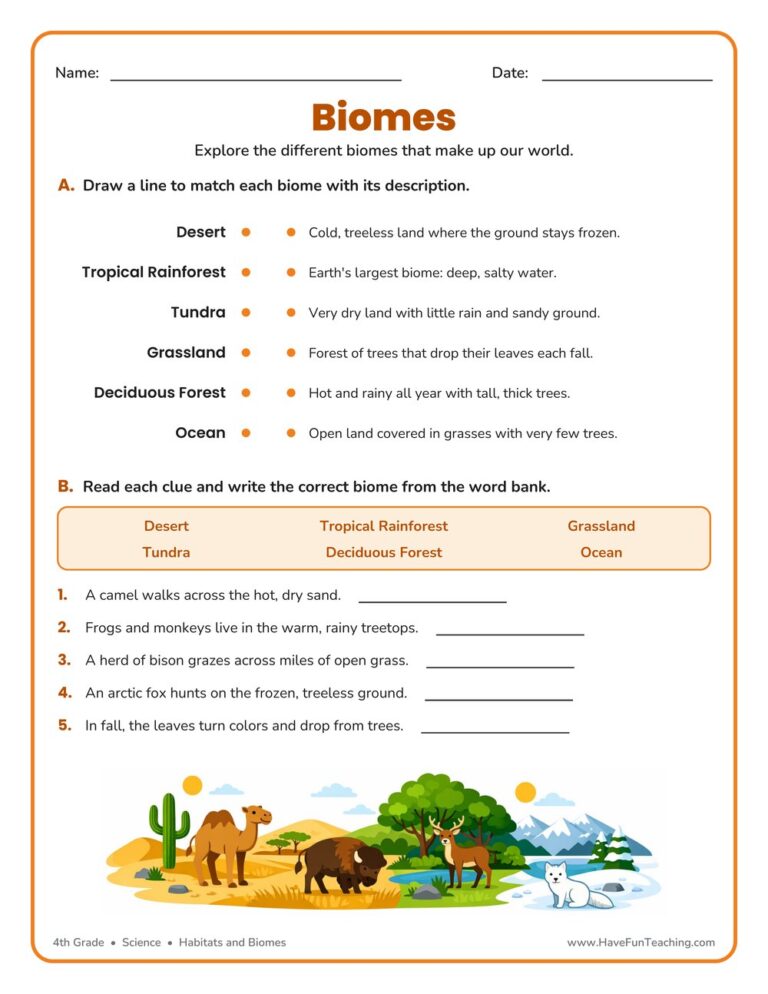
This Biomes Worksheet helps 4th grade students match major biomes to their climates and identify each one from real-world clues. Includes an answer key for fast, no-prep science practice at home or school.

A layers of the Earth definition worksheet for 4th grade where students match each layer to its description and label a cross-section diagram. Answer key included for quick, no-prep earth science practice.

This Muscular System Research Worksheet has 4th graders name the three muscle types, sort voluntary and involuntary actions, and explain their thinking. Answer key included, so checking work takes seconds.
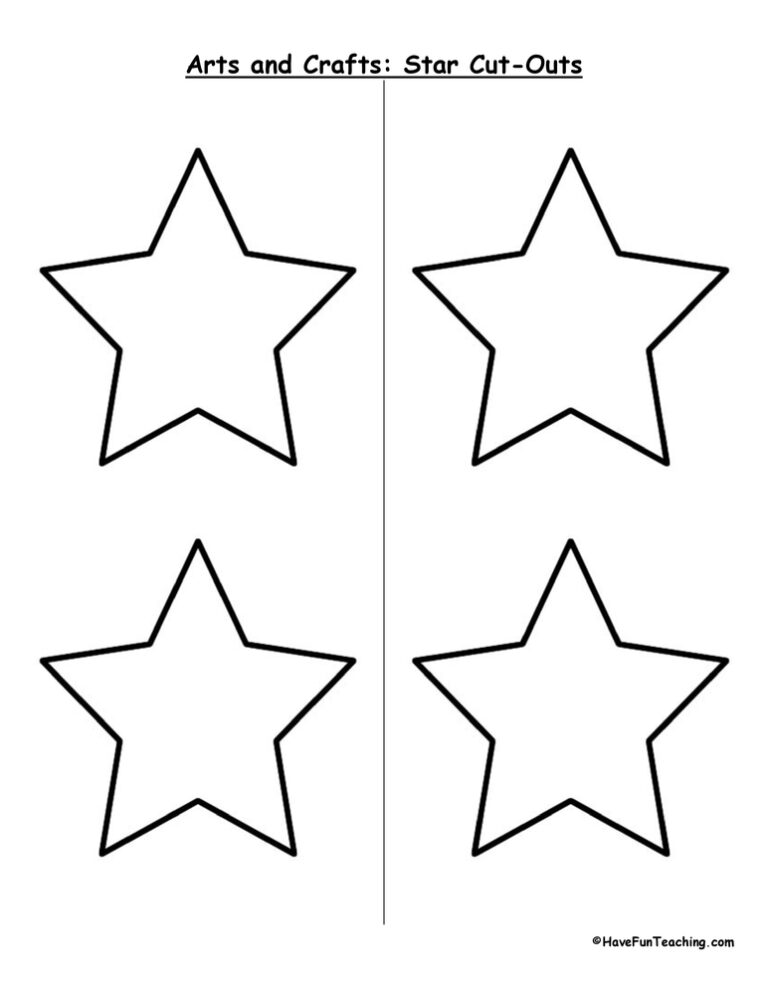
These Star Cut Outs will quickly give you templates for classroom decoration or student activities.

Reviews
There are no reviews yet