

Sound Pitch Worksheet
This Sound Pitch Worksheet helps 3rd grade students use sound waves and real instruments to tell whether a vibration makes a high or low pitch. An answer key is included, so science practice takes minutes to set up.
$6.97
Or free with a membership — members pay $3.33/mo for all 10,000+ resources. See plans
Want this one free?
Tell us where to send it and it’s yours — no card, no catch.
One free resource per teacher. We’ll also send free teaching ideas each week — unsubscribe anytime.
Teaching is easier with a membership
Unlimited printables, games & videos for PreK–6th — for your classroom or homeschool. Cancel anytime.
Start your 3-day free trial$0 today · cancel anytime · Instant access to 10,000+ resources
About this resource
Description
This Sound Pitch Worksheet helps students understand what makes one sound higher or lower than another. Pitch is one of the first properties of sound that third graders are asked to describe, and it is easiest to learn when a child can connect what they hear to something they can see. This sound pitch worksheet builds that connection by pairing a diagram of two sound waves with real instruments a child already knows, so the idea of a fast vibration and a slow vibration becomes concrete instead of abstract.
The worksheet opens with a short reference box titled How Pitch Works. It explains that sound begins when something vibrates, and it shows two coded sound waves drawn at the same height: one slow wave labeled low pitch and one fast wave labeled high pitch. Students then read four descriptions of instrument strings and bars and write high or low on the line for each one. A final written question asks them to explain one way a player can raise the pitch of a guitar string using the word vibrate, which turns recognition into reasoning. Print it, hand it out, and let students keep the reference box in front of them as they work. An answer key is included on the last page.
What’s Included
- A one-page printable worksheet with a How Pitch Works reference box
- Two coded sound-wave diagrams contrasting slow and fast vibrations
- Four apply-the-rule items using a bass, a violin, a guitar, and a xylophone
- One written response question that asks students to explain their thinking
- A complete answer key
Three Reasons This Helps Kids
- It shows the cause, not just the label. Students see that pitch comes from how fast something vibrates, so they can predict a pitch instead of memorizing one.
- It uses instruments children can picture. A long bass string and a short violin string give the rule something to hold onto.
- It ends with an explanation. Writing the reason in their own words is what moves a student from noticing a pattern to understanding it.
Ideas for Teachers and Parents
Bring in a rubber band and stretch it between two fingers. Pluck it loose, then pull it tighter and pluck again, and ask students which sound was higher. Do the same with a long band and a short one. A ruler held over the edge of a desk works just as well: slide it out farther for a low buzz and pull it back in for a high one. After the worksheet, have partners test a real instrument or a set of water glasses filled to different levels and record what they hear. This 3rd grade energy worksheet also pairs well with a lesson on volume, so students learn that loudness and pitch are two different properties of the same sound.
Related Resources
What teachers say
Reviews
You must be logged in to post a review.
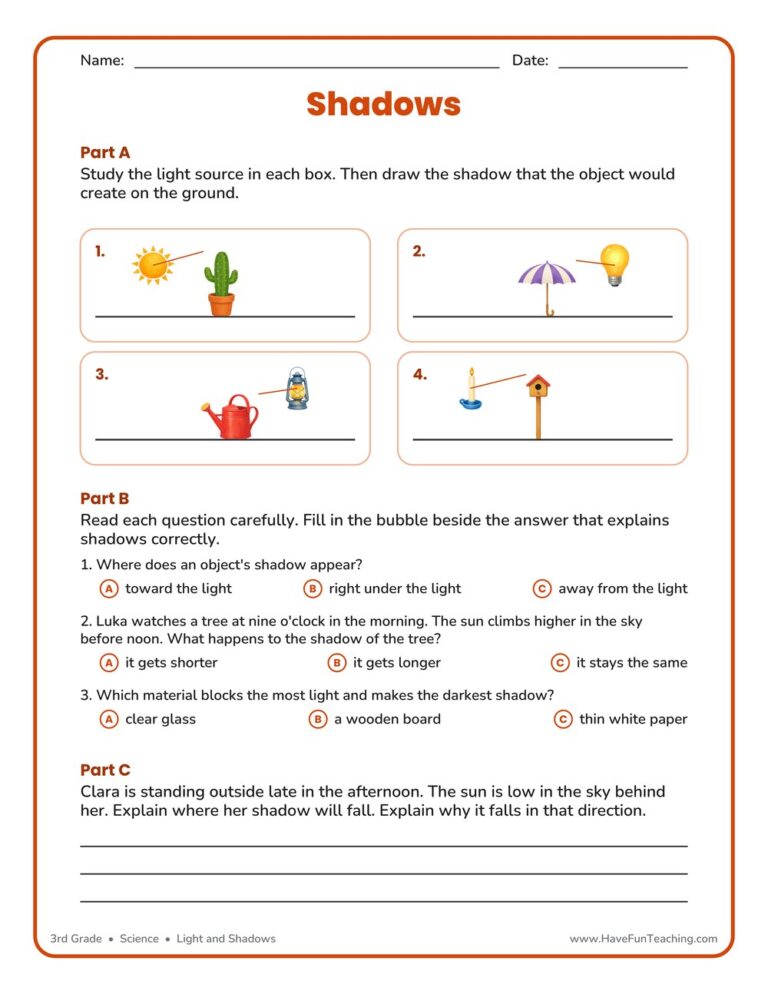
A shadows drawing worksheet where 3rd graders study four light sources, draw the shadow each object casts, and explain why it falls where it does. Answer key included for quick, no-prep science practice.
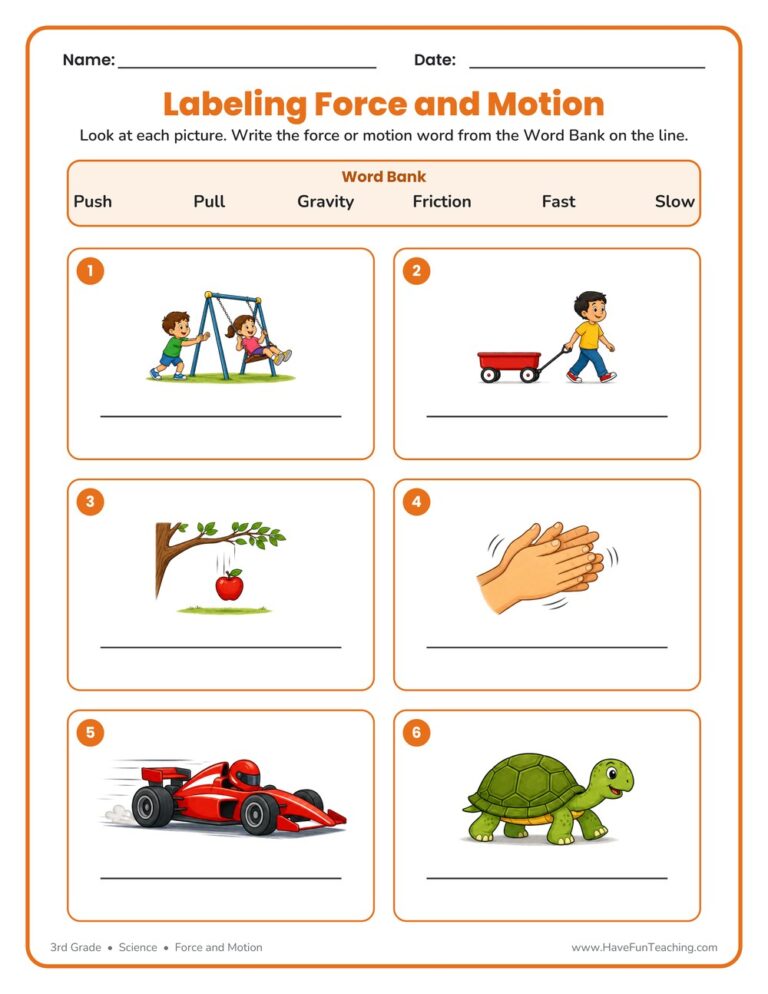
The Labeling Force and Motion Worksheet has 3rd graders label six pictures with push, pull, gravity, friction, fast, and slow from a word bank. Includes an answer key for easy, no-prep science practice.
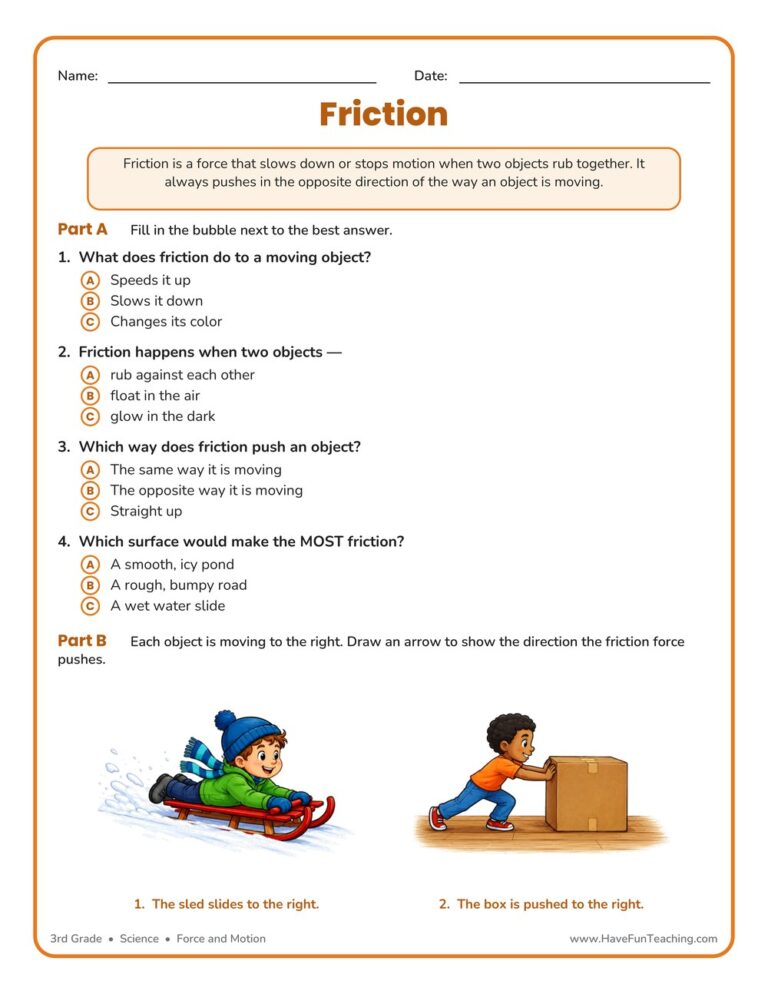
This drawing friction worksheet lets 3rd graders explore force and motion by answering questions and drawing arrows to show which way friction pushes. Answer key included for quick, no-prep science practice.
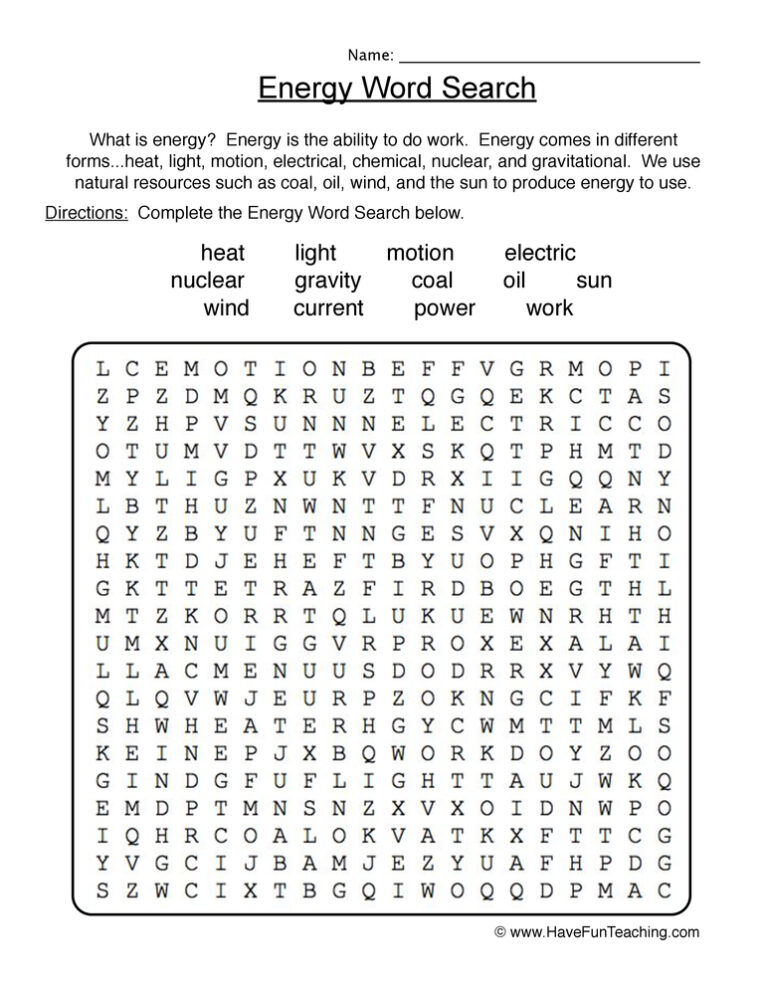
A ten-word Energy Wordsearch Worksheet that helps 3rd graders name the forms and sources of energy, then use one in a sentence of their own. Answer key included for fast, no-prep science review.
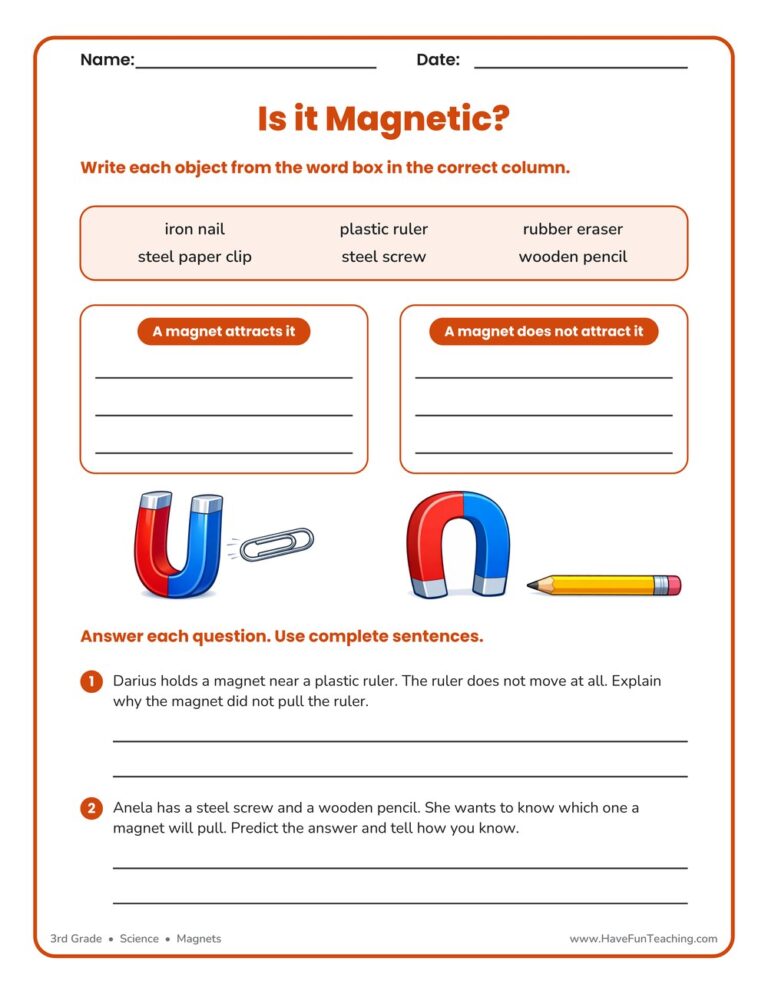
This Is it Magnetic Worksheet has 3rd Grade students sort six classroom objects by the material they are made of, then explain two predictions in writing. Answer key included, so checking work takes seconds.
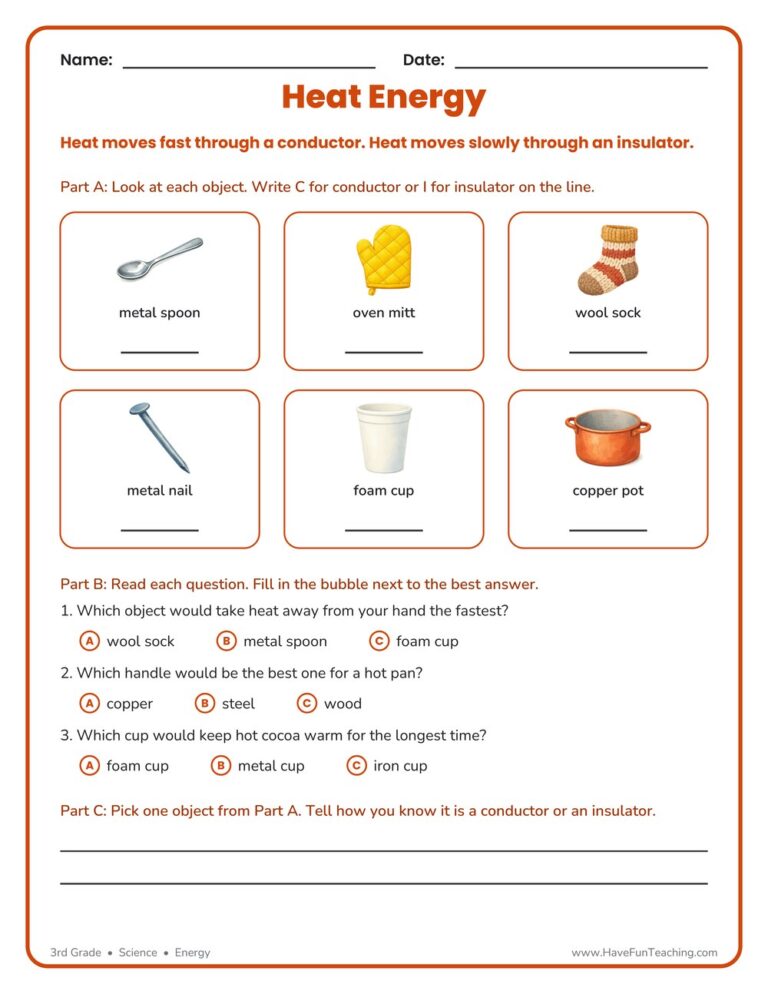
This Conductors and Insulators Heat Energy Worksheet helps 3rd grade students sort everyday objects, answer applied questions, and explain their thinking. Answer key included, so checking work takes seconds.

This friction drawing worksheet sends 3rd graders hunting for four real places where surfaces rub together. They sketch each one and write about it, turning an abstract force into something they can point to.

This Drawing Heat Energy Worksheet gives 3rd Grade students four picture cards for tracing where heat energy comes from and where it goes, plus an answer key, so heat transfer practice is ready to print.
This shadows movement worksheet asks 3rd graders to sort eight light positions into longer and shorter shadows, then name what the light and the shadow did. Answer key included for no-prep science practice.

This magnetism experiment worksheet has 3rd graders sort eight objects by material, decide whether magnet poles attract or repel, and explain why steel is pulled and plastic is not. Answer key included for fast, no-prep science practice.

Using Drawing Light Objects Worksheet,students draw objects that give off light to show their understanding energy.

These Light Bulb Cut Outs quickly give you templates that can be easily cut and applied for classroom decoration or student activities about electricity.
Reviews
There are no reviews yet