

Short O Words Beginning and Ending Sounds Worksheet
The Short O Words Beginning and Ending Sounds Worksheet gives kindergarten students six short o picture cards. The vowel is printed for them, so they write only the first and the last letter. Answer key included.
$6.97
Or free with a membership — members pay $3.33/mo for all 10,000+ resources. See plans
Want this one free?
Tell us where to send it and it’s yours — no card, no catch.
One free resource per teacher. We’ll also send free teaching ideas each week — unsubscribe anytime.
Teaching is easier with a membership
Unlimited printables, games & videos for PreK–6th — for your classroom or homeschool. Cancel anytime.
Start your 3-day free trial$0 today · cancel anytime · Instant access to 10,000+ resources
About this resource
Description
The Short O Words Beginning and Ending Sounds Worksheet gives kindergarten students the two listening jobs that sit at either end of a word: hear the sound the word starts with, and hear the sound it finishes with. Six picture cards each show one short o word, with the letter o already printed in the middle of the card. The child says the picture name out loud, then writes the first letter on the rule to the left of the o and the last letter on the rule to the right of it. Handing the child the vowel is deliberate. It takes away the part of a CVC word a five year old is least sure of, so every bit of attention lands on the two consonants, which is where beginning and ending sound work belongs at this age.
The six words are box, log, mop, pot, fox and top. Each picture was drawn so that a kindergartner names it exactly one way, and no two cards begin with the same letter, so a child who knows one sound cannot coast through the sheet. Two pairs share an ending sound, mop with top and box with fox, and the letters p and t each turn up once at the front of a word and once at the end, which quietly shows a child that the same letter does its job wherever it sits. The writing rules are drawn at kindergarten size with room for a full sized letter, and the answer key on page two shows all twelve letters filled in. The Short O Words Beginning and Ending Sounds Worksheet prints on two pages.
What’s Included
- Six short o picture cards, one clearly named object on each
- A printed o between two writing rules on every card, so the child writes only the first and last sound
- Twelve letters to write in all, sized for kindergarten handwriting
- A full answer key on page two
Why This Helps Kids
- It puts the whole task on the consonants. The vowel is given, so the child is never guessing at the middle sound while trying to hear the outside ones.
- Finishing a card means spelling a word. Once both letters are written the child is looking at a word they can read, which is the bridge from letter sounds to reading.
- It is said before it is written. The directions ask for the picture name out loud first, and saying a word slowly is what makes its edges hearable.
Ideas for Teachers and Parents
- Do the box card together, stretching the word out slowly so the child hears three separate parts before writing anything.
- For a child who is still shaky, cover the right hand rule and do all six beginning sounds first, then go back through the sheet for the endings.
- Ask what the mouth is doing at the start of mop and at the end of it. Naming the movement helps a child who cannot yet hear the difference.
- This kindergarten beginning sounds worksheet also works as a fast check before a small group lesson, since the answer key makes it quick to mark.
- Finish by having the child read all six words back to you, which turns a writing task into a reading task.
Related Resources
What teachers say
Reviews
You must be logged in to post a review.
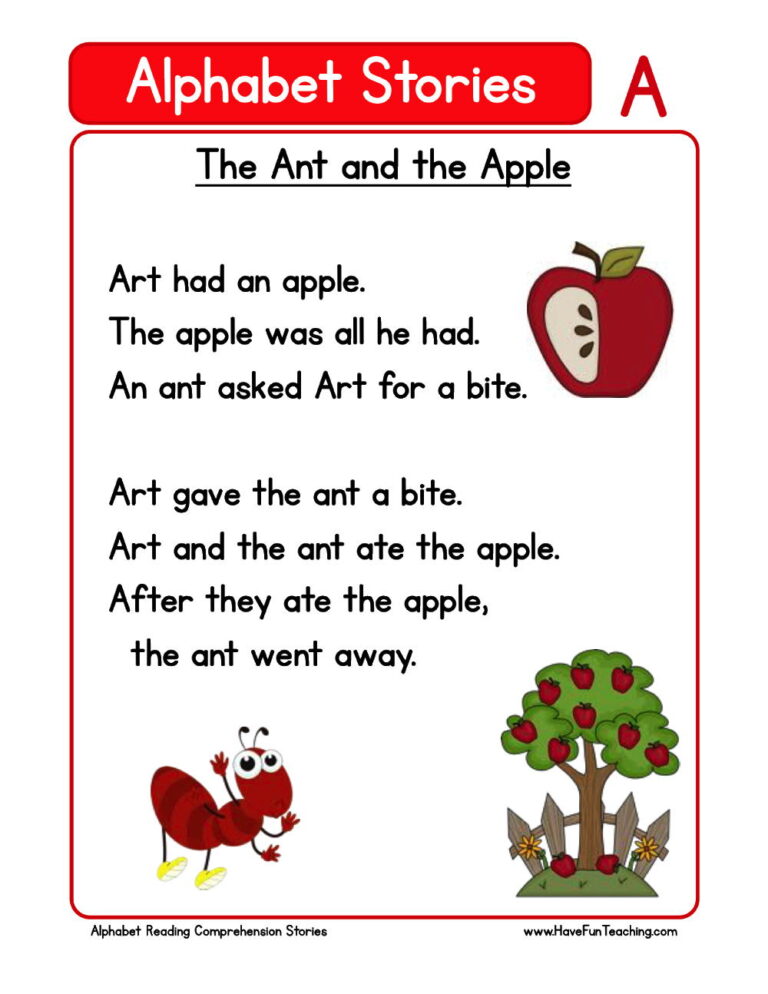
This free Alphabet Stories Letter A Reading Comprehension Worksheet pairs a short letter A story with fill-in-the-bubble questions for kindergarten readers. Includes an answer key — a fun, no-prep way to practice phonics and comprehension.

This CVC Word Sounds Worksheet has Kindergarten readers say six pictures and fill in the bubble beside the CVC word with the matching sounds. Answer key included for quick, no-prep phonics practice.
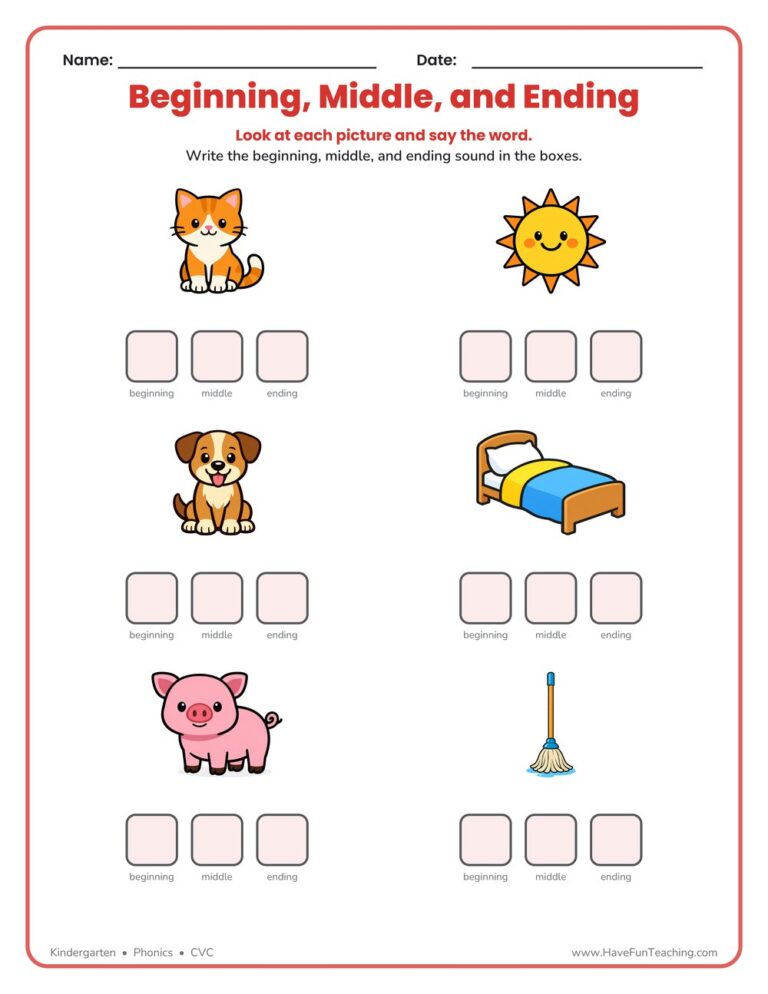
This Beginning, Middle, and Ending Sounds Worksheet helps kindergarten learners break six CVC picture words into their beginning, middle, and ending sounds. Answer key included—great no-prep phonics practice.

A picture-clue Spelling CVC Words Worksheet that helps kindergarten students hear and write the beginning, middle, and ending sounds in simple three-letter words. Answer key included for quick, no-prep phonics practice.
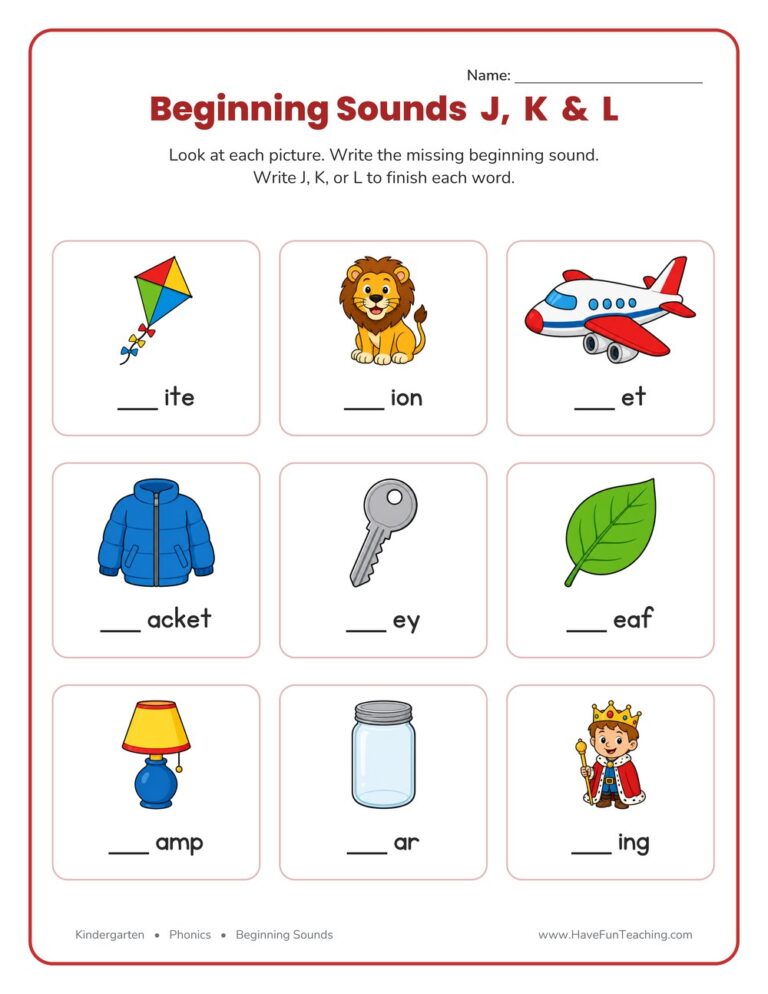
The Beginning Sounds J K L Worksheet lets Kindergarten students look at nine pictures and write the missing first letter — J, K, or L — to finish each word. Includes an answer key for quick, no-prep phonics practice.
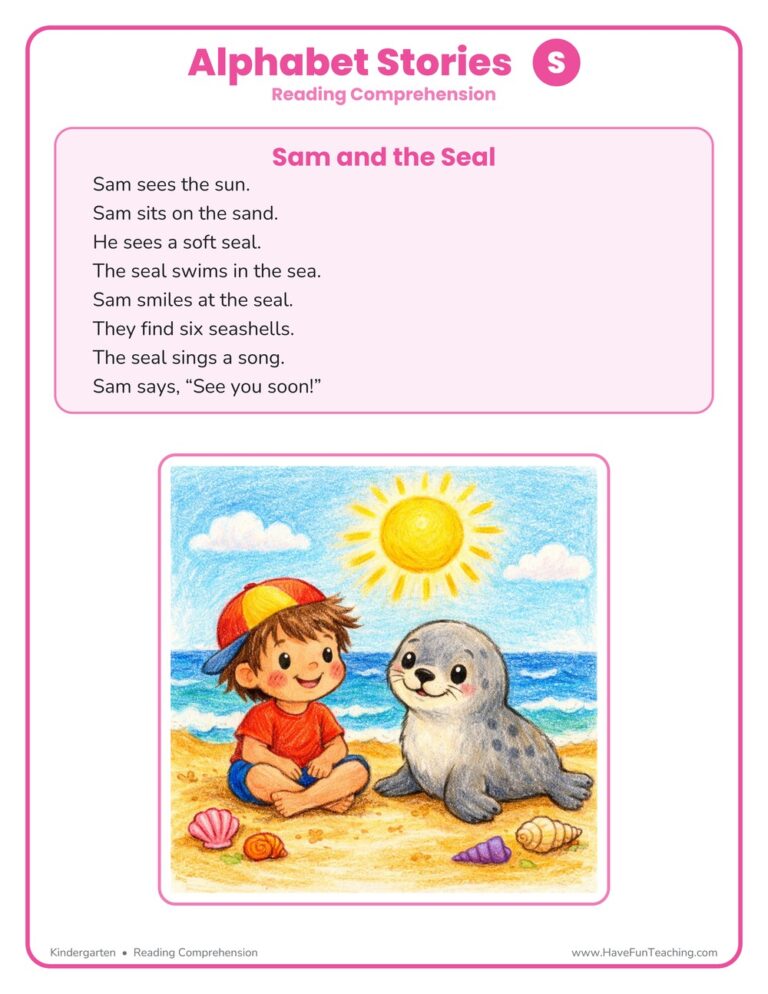
The Alphabet Stories Letter S Reading Comprehension Worksheet gives Kindergarten readers a fun beach story full of the /s/ sound plus five comprehension questions. Answer key included for quick, no-prep Letter S practice.
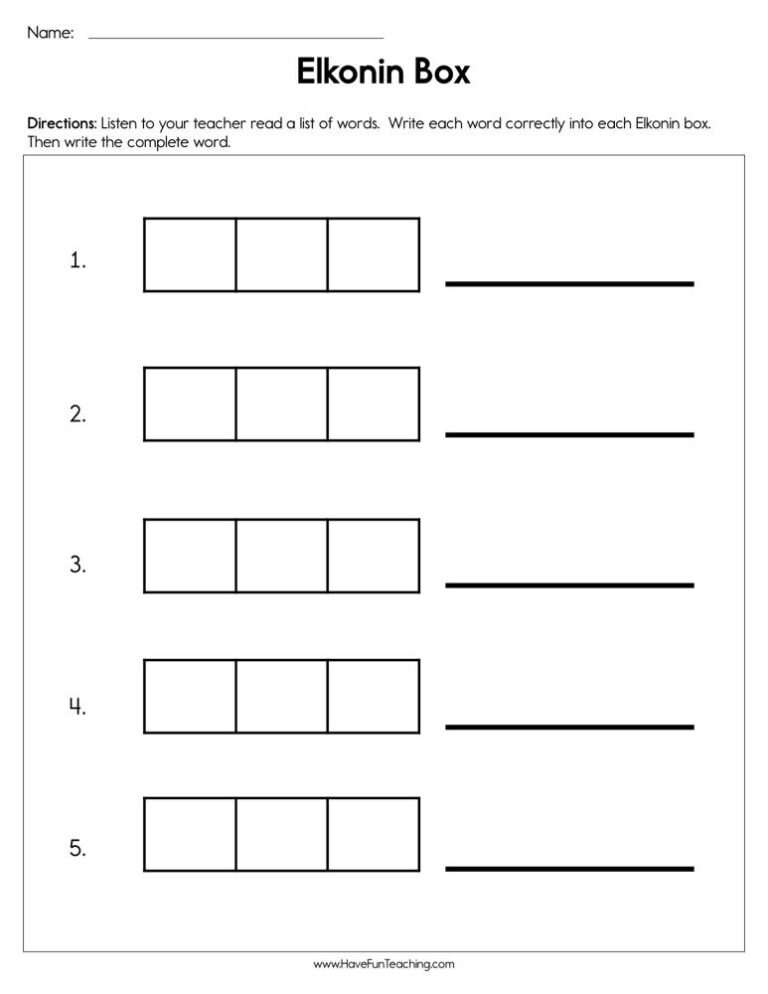
This Elkonin Box Worksheet gives Kindergarten students seven picture prompts and three-cell sound boxes for segmenting CVC words into beginning, middle, and ending sounds. Answer key included, so practice takes no prep.

The Alphabet Stories Letter D Reading Comprehension Worksheet gives kindergarten readers a short Letter D story with five questions and an answer key, building early reading confidence one letter sound at a time.

A picture-based Beginning Sounds B, C, D Worksheet for Kindergarten: say each picture, write the letter you hear first, then trace and write B b, C c, and D d. Answer key included for quick, no-prep phonics practice.
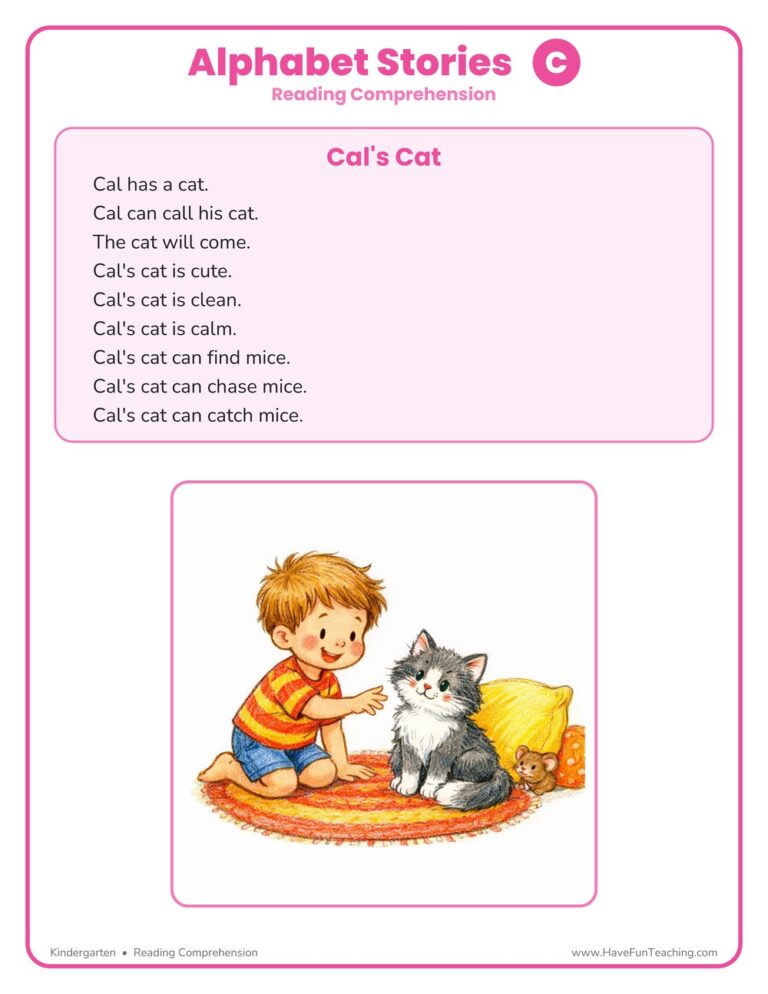
The Alphabet Stories Letter C Reading Comprehension Worksheet lets Kindergarten readers enjoy the short story “Cal’s Cat” and answer five picture-supported questions. Answer key included — a no-prep way to build early reading and phonics skills.
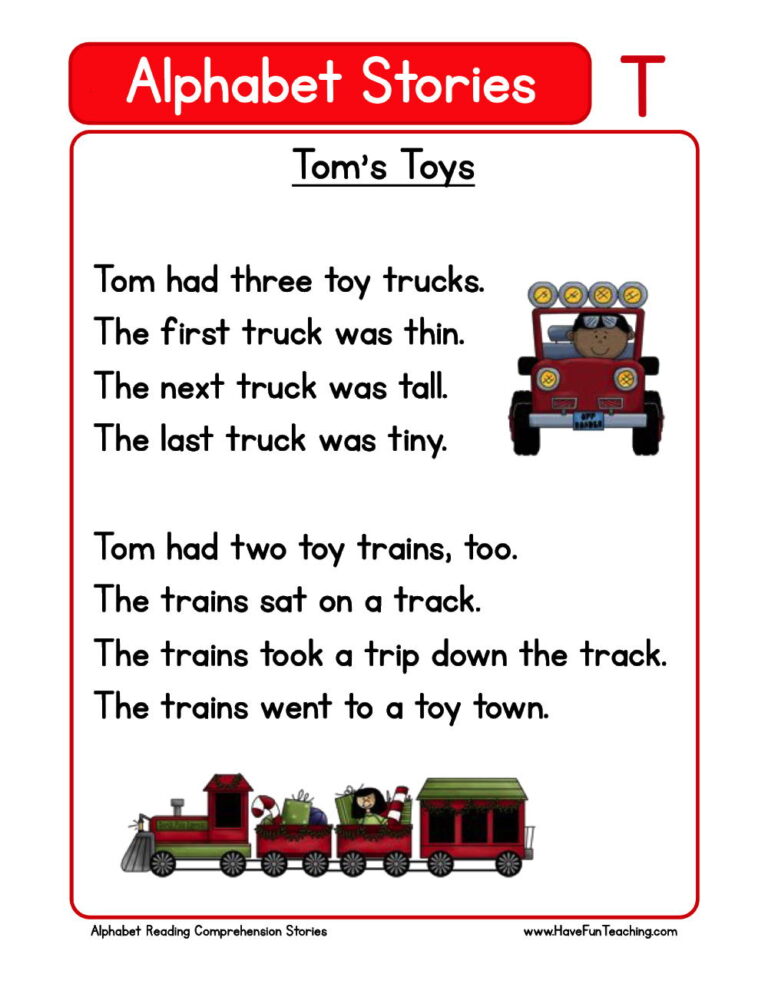
The Alphabet Stories Letter T Reading Comprehension Worksheet gives kindergarten readers a short, decodable story about Tom's toys with five fill-in-the-bubble questions. Answer key included — a no-prep way to practice the letter T and early comprehension.

This Beginning Sounds F, G, H, J Worksheet asks Kindergarten students to name twelve pictures and write the letter each one starts with. Answer key included, so a quick sound check takes seconds.
Reviews
There are no reviews yet