
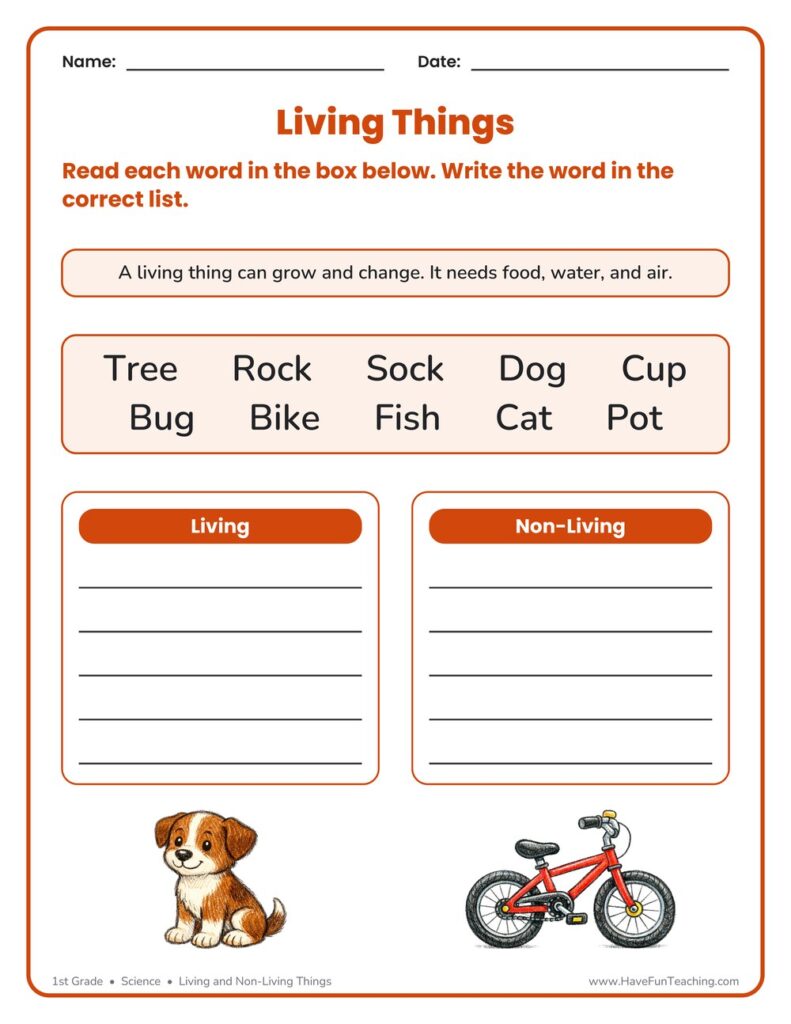
Sorting Characteristics Living Things Worksheet
This sorting characteristics living things worksheet asks 1st graders to read ten words and write each one under Living or Non-Living. An answer key is included, so science practice takes no prep at all.
$6.97
Or free with a membership — members pay $3.33/mo for all 10,000+ resources. See plans
Want this one free?
Tell us where to send it and it’s yours — no card, no catch.
One free resource per teacher. We’ll also send free teaching ideas each week — unsubscribe anytime.
Teaching is easier with a membership
Unlimited printables, games & videos for PreK–6th — for your classroom or homeschool. Cancel anytime.
Start your 3-day free trial$0 today · cancel anytime · Instant access to 10,000+ resources
About this resource
Description
Telling living things from non-living things is one of the very first ideas a young scientist meets, and it is the idea this sorting characteristics living things worksheet is built around. A living thing grows and changes over time, and it needs food, water, and air to stay alive. A non-living thing does none of those things. It never grows, it never eats, and it never needs a drink of water. Once a child can name those characteristics out loud, sorting the world around them into two groups stops feeling like guesswork and starts feeling like science.
This first grade life science worksheet gives students a printed word box holding ten familiar nouns and two labeled lists to fill in. Children read each word, decide whether the thing it names grows and needs food, water, and air, and then write the word on a line under Living or Non-Living. Because the words are written rather than circled, the page doubles as handwriting practice and as a quick check of whether a student can defend the sort. A reminder strip at the top of the page states the three characteristics, so the sheet can be worked independently at a center, in a small group, or as morning work.
What’s Included
- 1 print-ready PDF worksheet
- Answer key
- 10 words to read and sort into 2 labeled lists
There are three reasons this sorting characteristics living things worksheet helps children learn the skill. First, it forces a decision rather than a recognition: the child must copy the word into a column, which means committing to an answer and being able to say why. Second, the ten nouns are ordinary classroom and playground objects, so the categories transfer straight to the world outside the page instead of staying stuck to a picture set. Third, the printed reminder about growing, food, water, and air gives students the exact vocabulary teachers want to hear during a science discussion, so the sheet builds language at the same time it builds the concept.
Teachers and parents can stretch the same skill in a dozen easy ways. Take a two-minute walk around the classroom or the backyard and have children call out one living thing and one non-living thing for every room or corner. Sort a shoebox of small objects into two hoops on the floor before anyone picks up a pencil. Ask a tricky question on purpose, such as whether a wooden chair or a fallen leaf belongs in the living column, and let students argue it out using the three characteristics as evidence. Finish by having each child draw one living thing and one non-living thing they saw on the way to school and label both.
Related Resources
What teachers say
Reviews
You must be logged in to post a review.
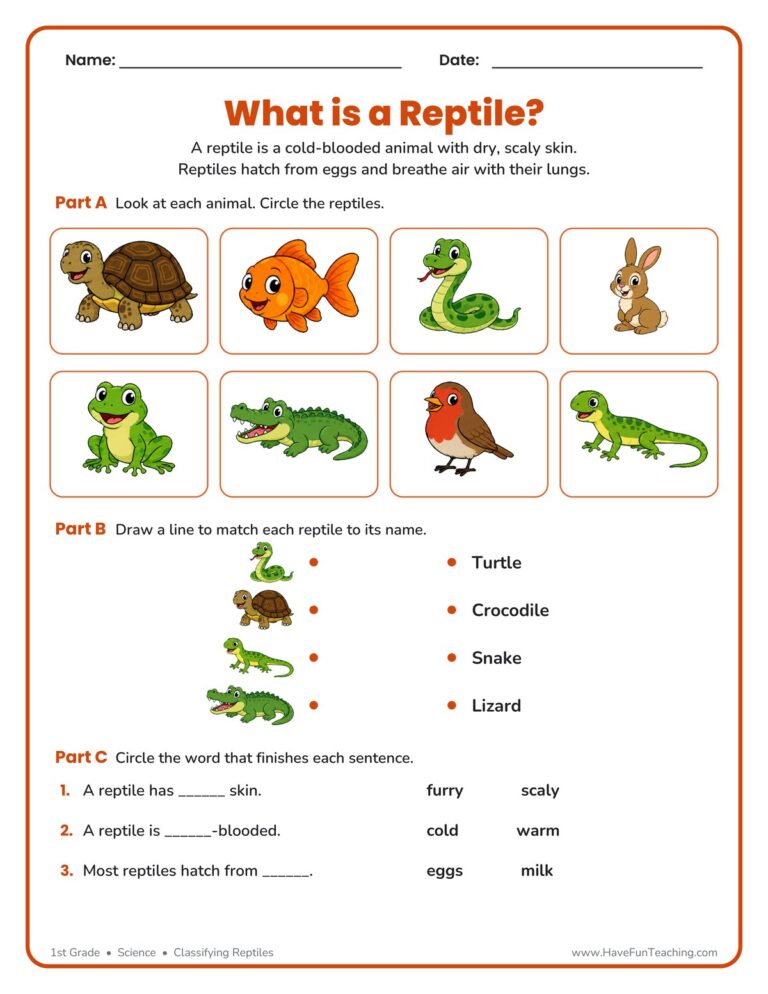
This reptile classification worksheet helps 1st graders sort animals by circling reptiles, matching them to their names, and completing simple reptile facts. Includes a complete answer key for fast, no-prep life science practice.
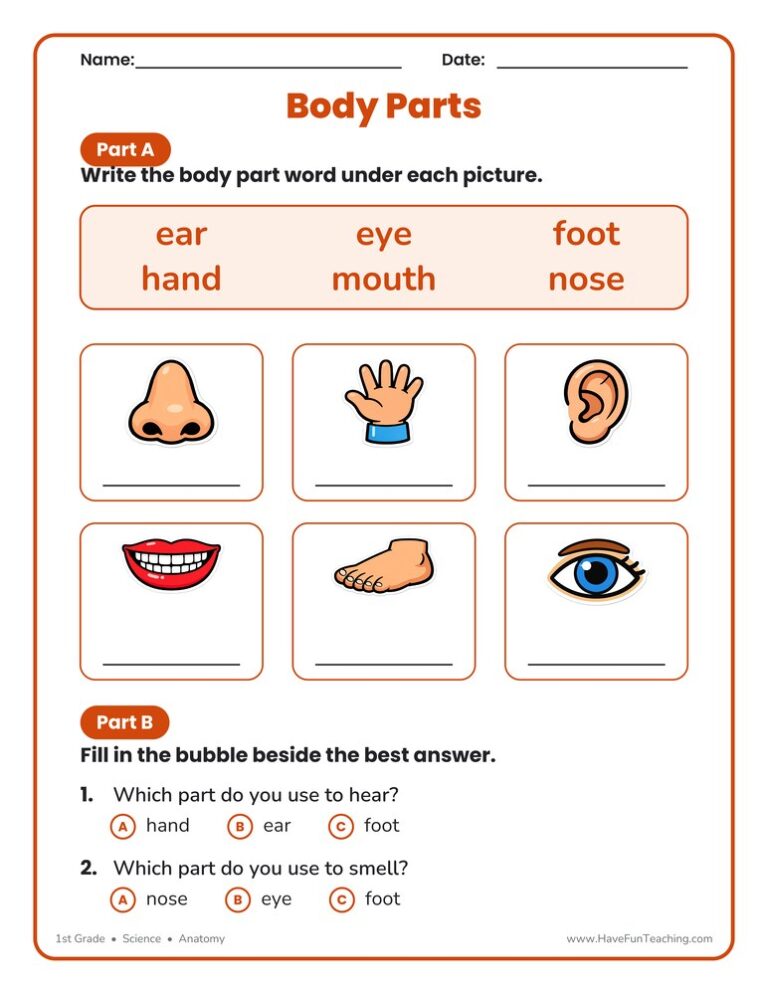
This Body Parts Worksheet helps 1st Grade students name the nose, hand, ear, mouth, foot, and eye with a picture word bank, then show what each part does. Answer key included.
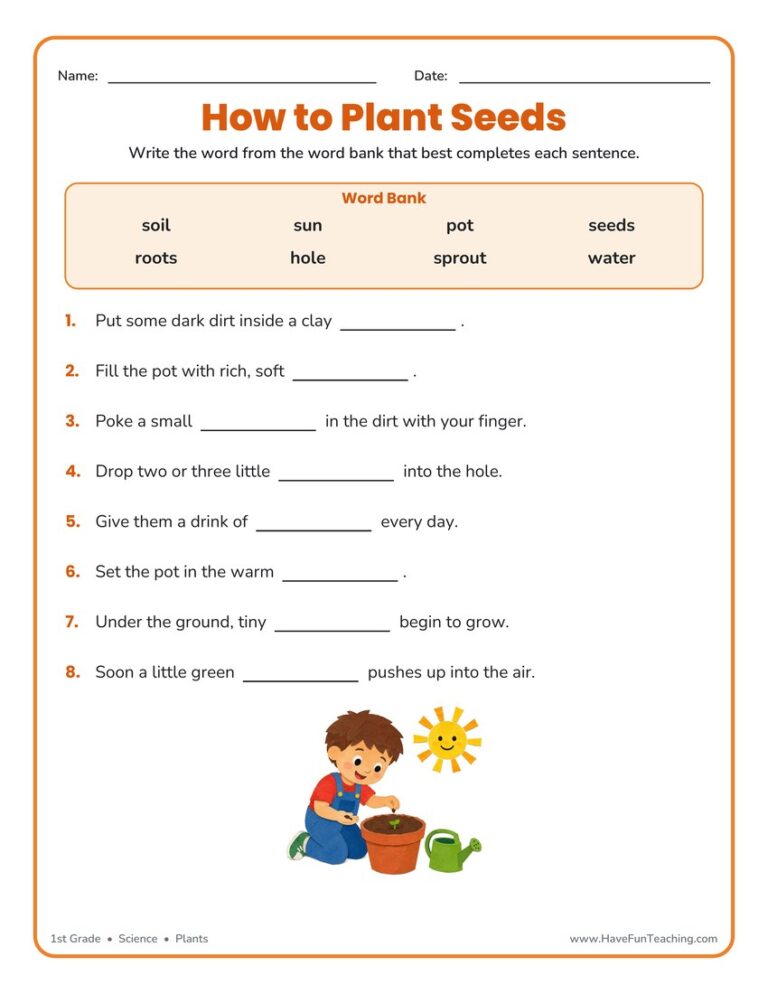
This Seeds Plants Fill in the Blanks Worksheet lets 1st graders use a word bank to complete eight sentences about how to plant a seed and help it grow. An answer key is included for quick, no-prep science practice.
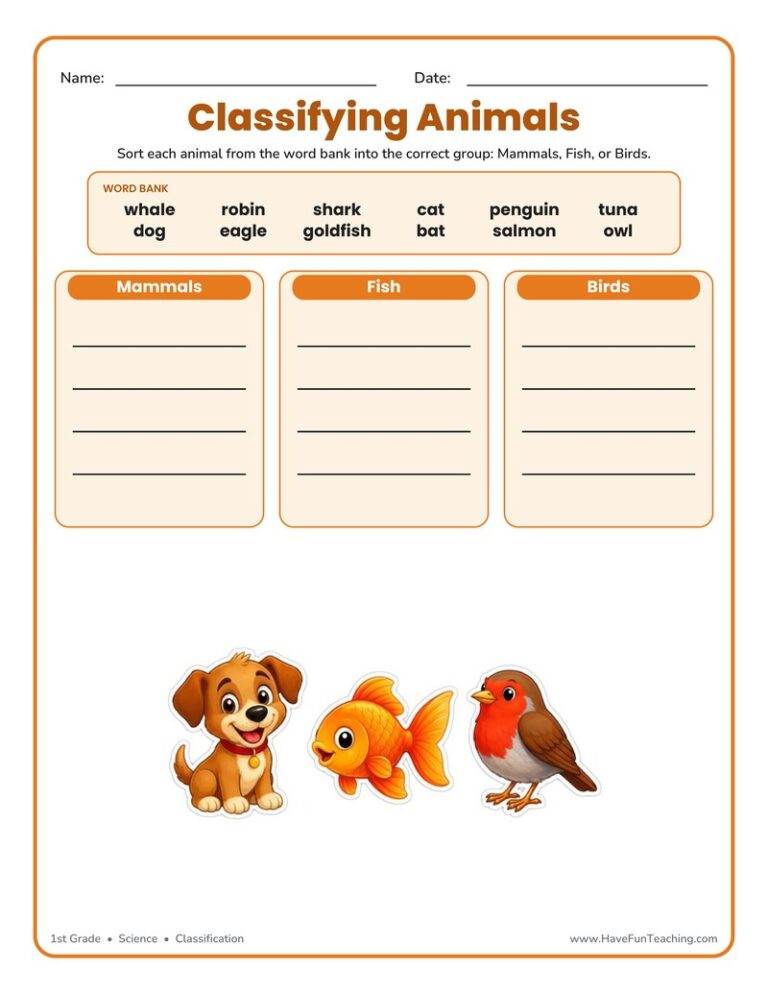
A 1st grade Mammals, Fish, or Birds Classifying Animals Worksheet where students sort a word bank of animals into three groups. Includes a complete answer key for quick, no-prep science practice.
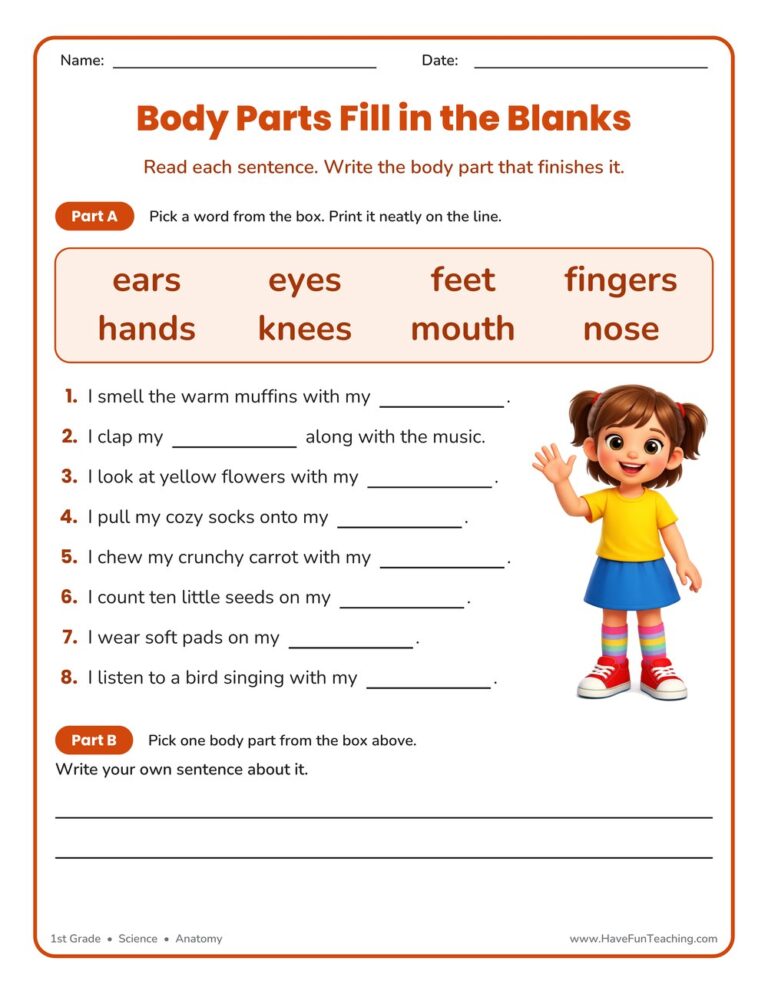
Students use a word box to complete eight sentences with the body parts fill in the blanks worksheet, then write one of their own. Built for 1st Grade with an answer key included, it makes naming body parts simple.

Use this Importance of Farming Worksheet to help 1st Grade students sort six farm foods into plants and animals and decide what farms really give people. Answer key included for fast, no-prep science practice.
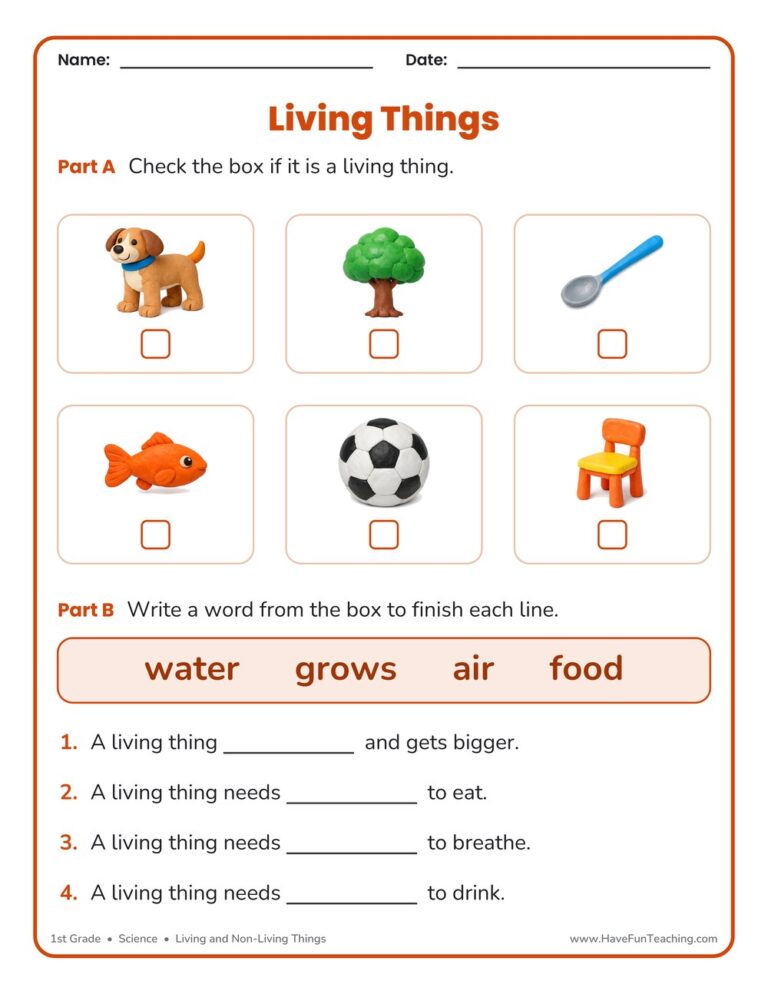
This Describing Characteristics Living Things Worksheet asks first graders to check off six pictures and finish four sentences about what living things need. Answer key included for fast, no-prep science practice.

This Plant Parts We Eat Worksheet helps 1st graders match eight foods to the plant part we eat, using a helpful word box. Includes an answer key for easy, no-prep plant science practice.

Students label nine friendly animal pictures using a nine-word bank in this animal names worksheet. Built for 1st Grade science, with an answer key included so checking work takes seconds.

This Ocean Animal Habitat Worksheet has 1st graders circle the animals that live in the sea, then write the three names on wide handwriting lines. Answer key included for quick, no-prep science practice.
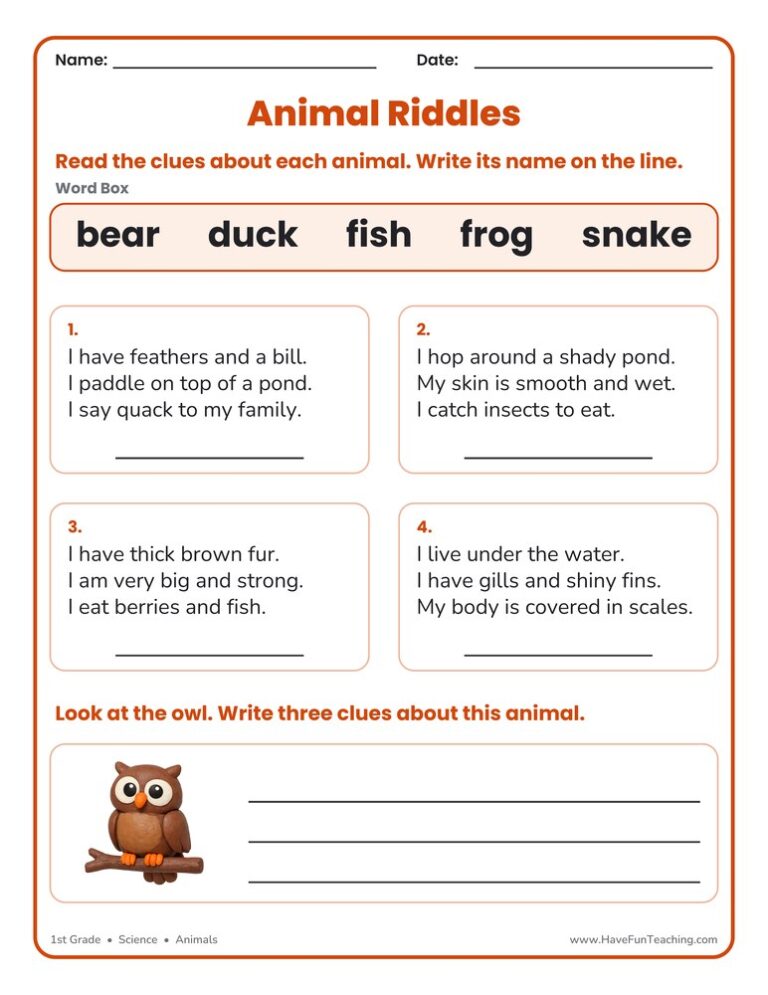
This animal riddles worksheet has first graders read three clues about an animal, choose its name from a word box, and then write their own clues about an owl. Answer key included for quick, no-prep science practice.

This animal habitats matching worksheet has first graders match five animals to their homes, then write the animal that lives in each pictured habitat. Answer key included.
Reviews
There are no reviews yet