

Vocabulary to Include in Your Story Worksheet
The Vocabulary to Include in Your Story Worksheet helps 3rd grade writers plan strong words, explain what each one means, and use two of them in the opening of their own story.
$6.97
Or free with a membership — members pay $3.33/mo for all 10,000+ resources. See plans
Want this one free?
Tell us where to send it and it’s yours — no card, no catch.
One free resource per teacher. We’ll also send free teaching ideas each week — unsubscribe anytime.
Teaching is easier with a membership
Unlimited printables, games & videos for PreK–6th — for your classroom or homeschool. Cancel anytime.
Start your 3-day free trial$0 today · cancel anytime · Instant access to 10,000+ resources
About this resource
Description
Choosing precise, interesting words is one of the biggest jumps a 3rd grade writer makes, and the Vocabulary to Include in Your Story Worksheet turns that jump into a plan. Instead of reaching for tired words like big, said, and walked, students collect stronger words first, explain what each one means, and then use them on purpose. This 3rd grade vocabulary worksheet builds the habit of thinking about word choice before the first sentence of a story is ever written.
The Vocabulary to Include in Your Story Worksheet is a one page planning sheet with three short parts. In Part A, students trade three plain words for stronger ones, which shows them immediately how much a single word changes a picture in the reader’s mind. In Part B, they plan four words they want to use in their own story and write what each word means, so the vocabulary is genuinely theirs rather than borrowed from a list. In Part C, they write the beginning of their story and work two of their planned words into it. Because every response is the student’s own writing, the sheet fits a writing station, a morning warm up, or the first day of a longer narrative unit.
What’s Included
- One page printable PDF vocabulary planning worksheet for 3rd grade writers
- Part A: three plain words to replace with stronger, more interesting words
- Part B: four planning cards for a story word and what that word means
- Part C: five writing lines for a story beginning that uses two planned words
- Name and date line, clear directions, and a clean print friendly layout
Three reasons this sheet helps kids. First, it separates planning from drafting, so a student is not trying to invent vivid language and hold a plot in mind at the same time. Second, writing what each word means is a quick comprehension check that stops students from dropping in an impressive word they cannot actually use. Third, Part C forces transfer: the words do not sit on a list, they show up in real sentences, which is exactly what state writing rubrics reward.
Teachers and parents can extend the sheet easily. Keep the finished pages in a writing folder and let students pull words from earlier sheets when they draft. Build a class word wall from the strongest choices, or read two versions of the same sentence aloud and let the class vote on which word paints the clearer picture. At home, collect strong words while reading a favorite chapter book together and plan a short story with them the next day.
Related Resources
What teachers say
Reviews
You must be logged in to post a review.
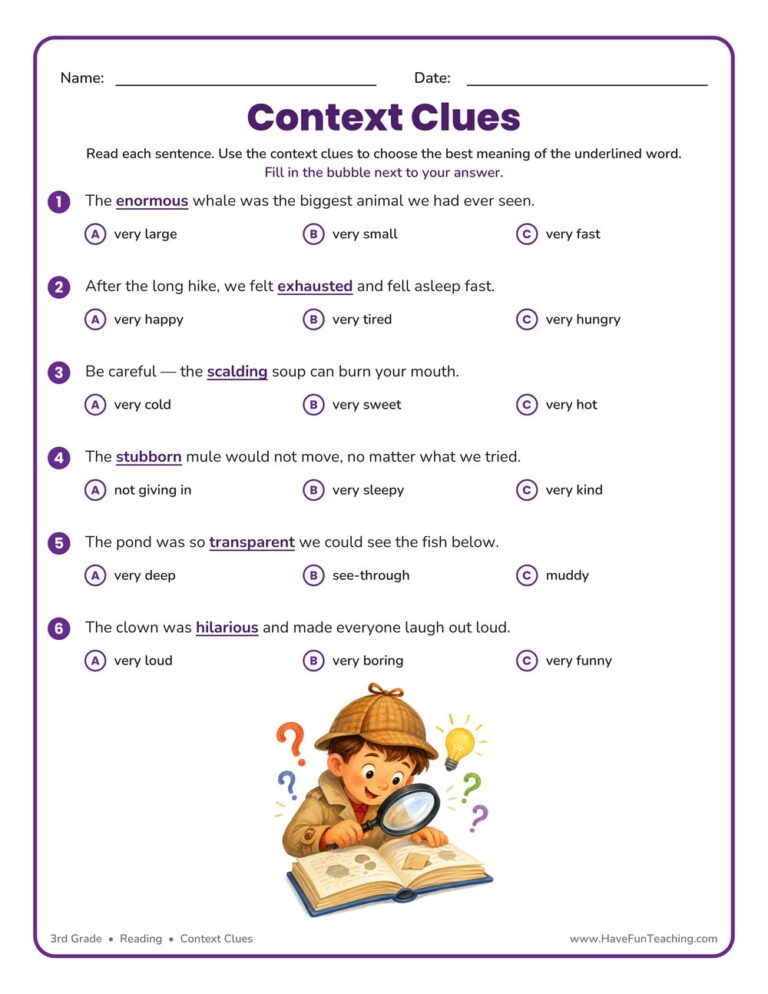
A 3rd grade Context Clues Worksheet with six multiple-choice sentences where students use the surrounding words to find the meaning of each underlined word. Answer key included for fast, no-prep vocabulary practice.
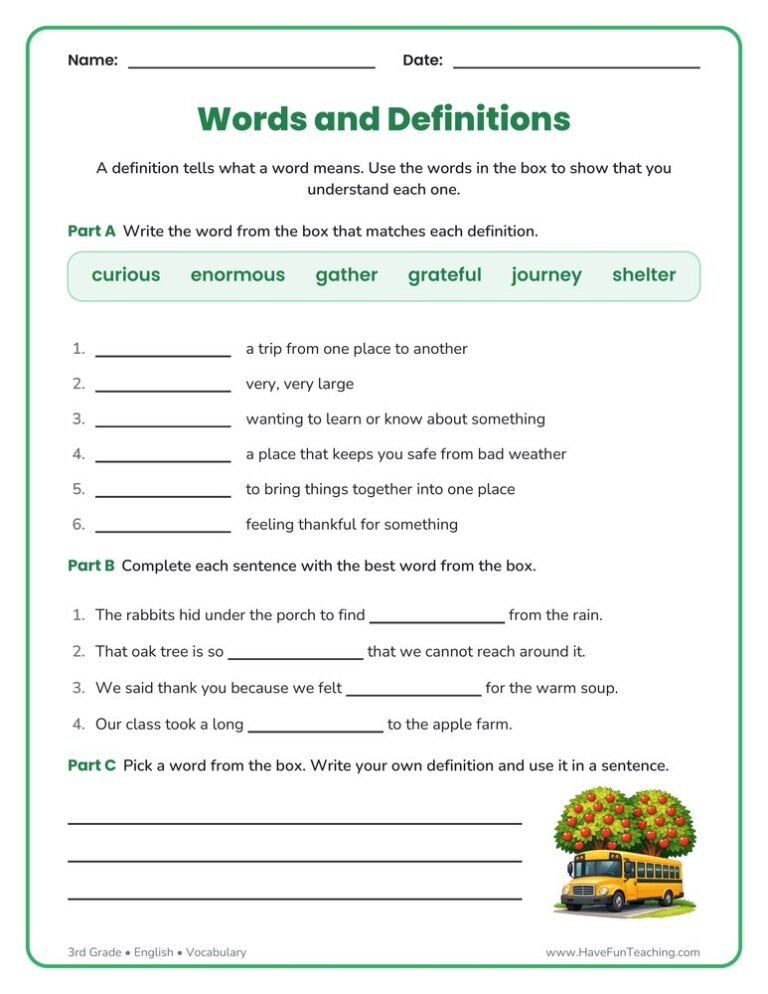
This Word and Definition Worksheet gives 3rd graders six vocabulary words to match with their meanings, use in real sentences, and define in their own words. An answer key is included, so checking takes seconds.
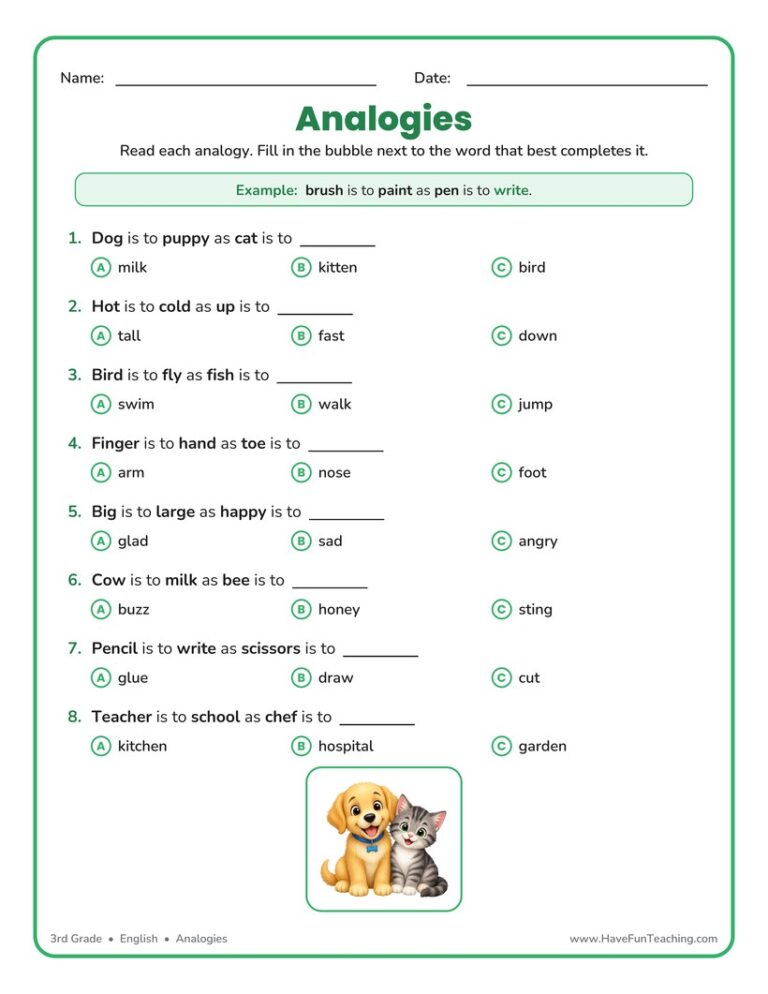
This Analogies Multiple Choice Worksheet helps 3rd graders complete word analogies by choosing the answer that matches each relationship. Includes a complete answer key—a fun, no-prep way to build vocabulary and reasoning skills.
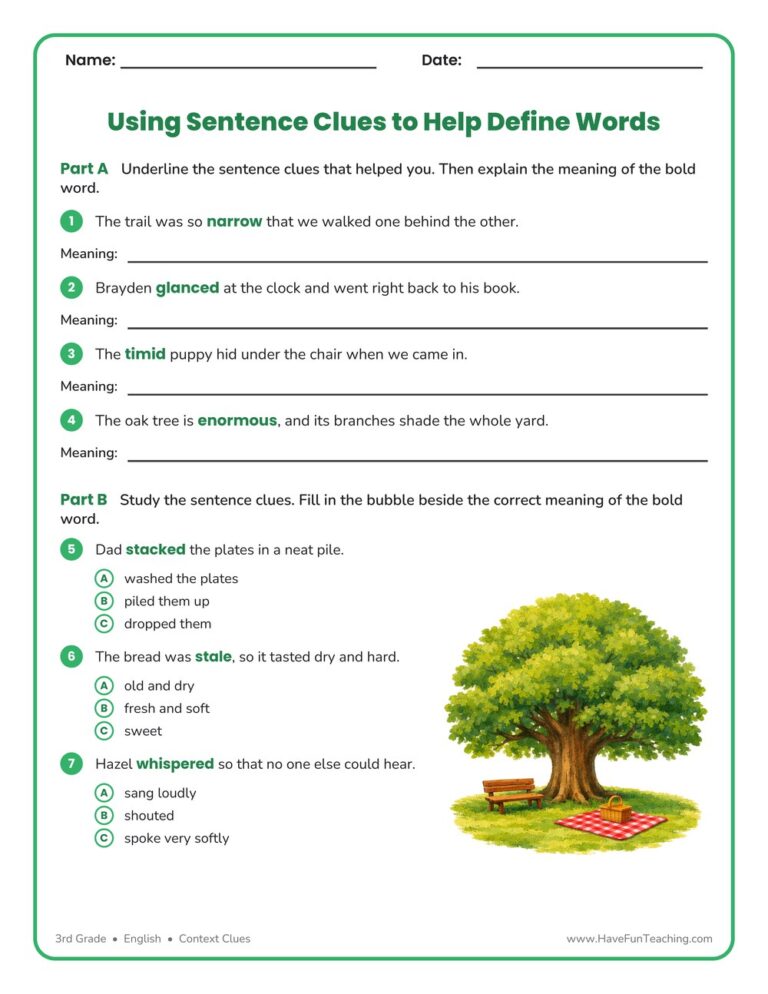
This using sentence clues to help define words worksheet gives 3rd graders seven sentences to unlock by underlining the clues and writing each bold word's meaning. Answer key included, so vocabulary practice is ready in one print.

The Locating Nonfiction Text Features Worksheet asks 3rd Grade readers to name six features cut from one nonfiction page about honey bees, then explain one choice. Answer key included for fast, confident nonfiction reading.
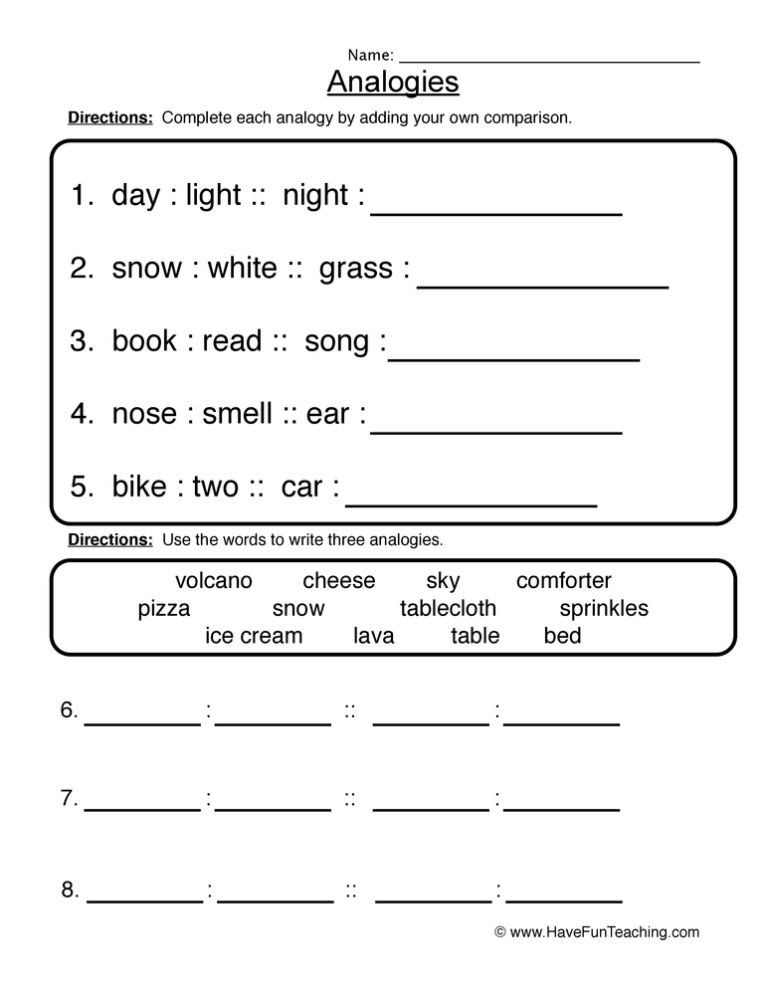
A Completing Analogies Worksheet for 3rd grade, with word bank, multiple choice, and write-and-explain practice in naming word relationships. Answer key included, so students build vocabulary and reasoning with no prep.

A Good Alphabetical Order Worksheet gives 3rd Grade students ten synonyms for good to sort, four between-the-words puzzles, and an explanation task. Answer key included, so students can check their own thinking.

The Dictionary Skills Alphabetical Order Worksheet gives 3rd Grade students three sets of same-letter words to put in order, plus an answer key, so they learn to read past the first letter with confidence.

Students circle ten hidden words and match each to its partner in this Synonyms Word Search Worksheet built for 3rd Grade. An answer key is included, so vocabulary practice needs no prep and checks itself in seconds.
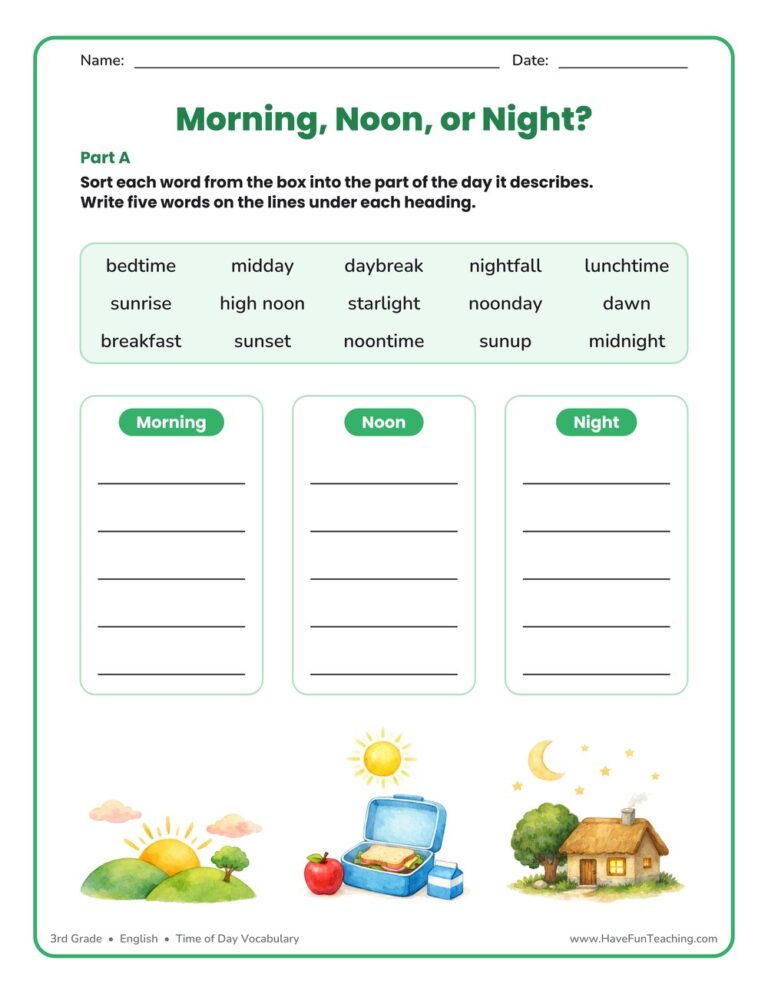
The Morning, Noon, or Night Sort Worksheet helps 3rd Grade students sort fifteen time-of-day words, read a.m. and p.m. clocks, and explain their thinking in writing. An answer key is included.

This synonym match worksheet gives 3rd grade students matching, sentence, and writing practice with common synonym pairs, and an answer key is included so every page can be checked in seconds.

This Verb Adjective or Preposition Worksheet has 3rd graders choose the word each sentence needs, then name its part of speech. Answer key included, so grammar practice is ready in one print.




Reviews
There are no reviews yet