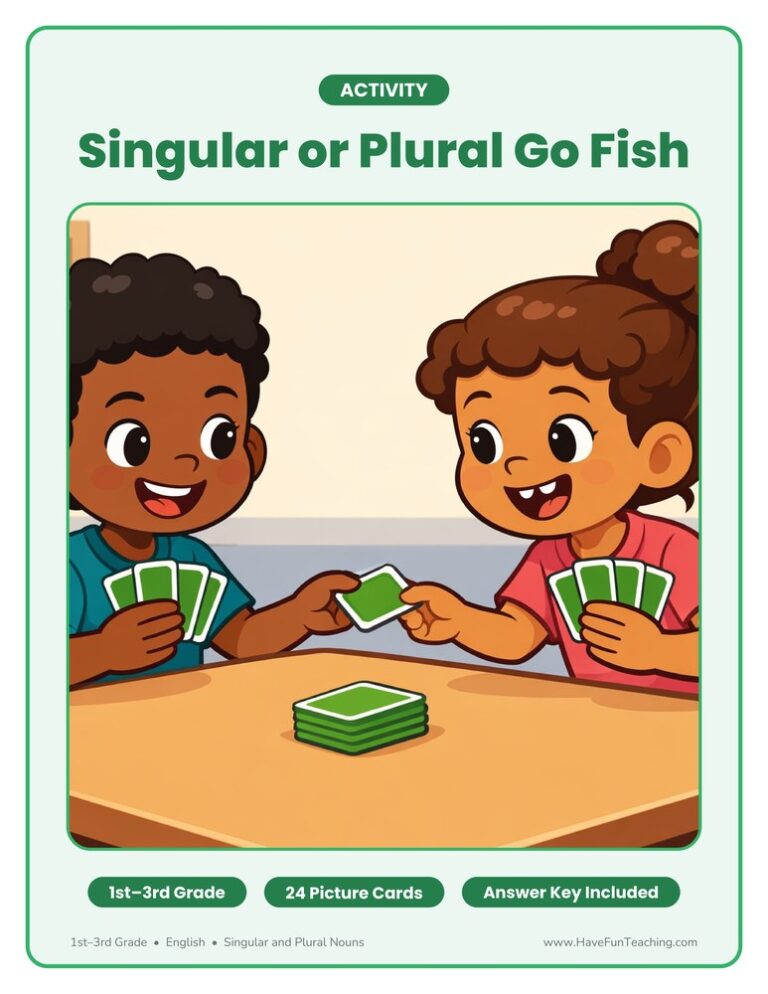
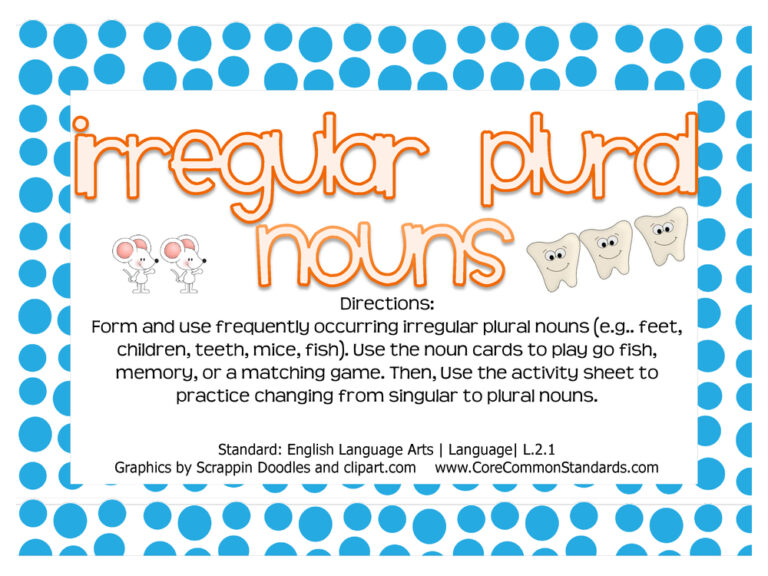
Play this singular plural noun go fish activity with 1st through 3rd grade students to match one and more than one with -s and -es. Answer key included.
In this position words activity, preschool to 1st grade children match butterfly pictures to above, below, next to, in front of, and behind. Answer key included.
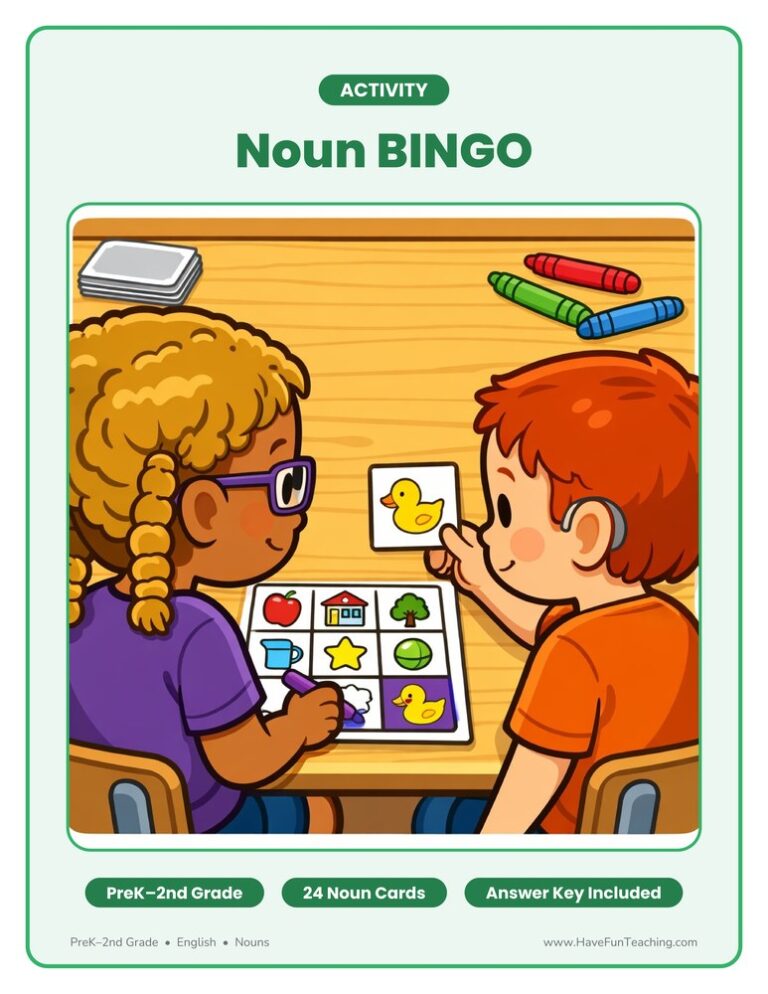
This noun bingo activity has 24 picture cards and 4 boards for Preschool to 2nd Grade, plus a practice page with an answer key included, so kids learn nouns while they play.
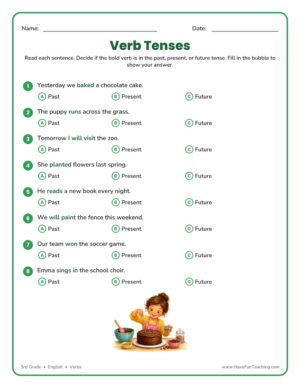
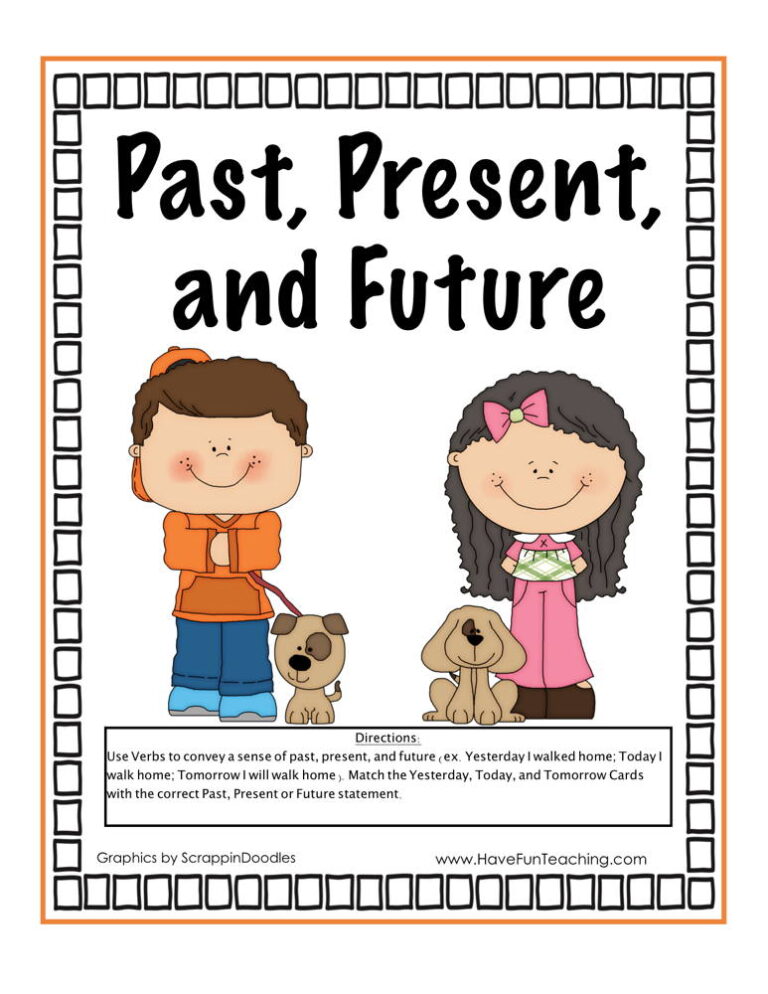
This past present future tense activity lets 1st to 4th grade students sort twelve verb cards by tense and write verbs in the right form. Answer key included for easy checking.
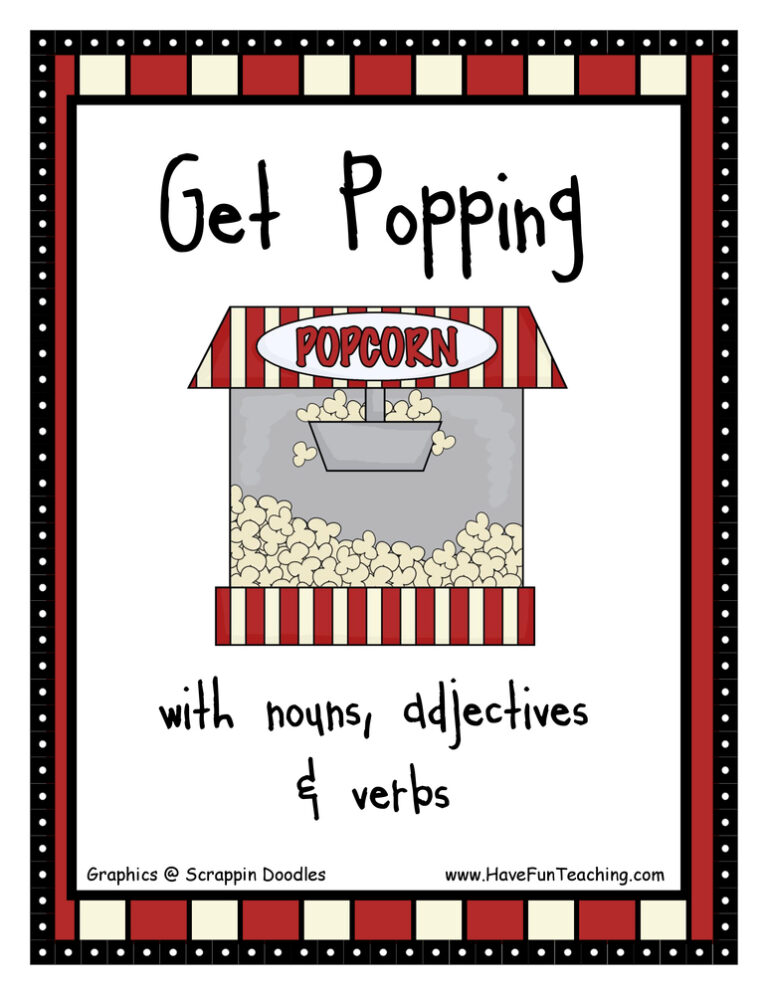
A noun, adjective, and verb activity for 1st to 3rd grade: sort 24 popcorn word cards into three buckets, then practice in sentences. Answer key included for easy checking.
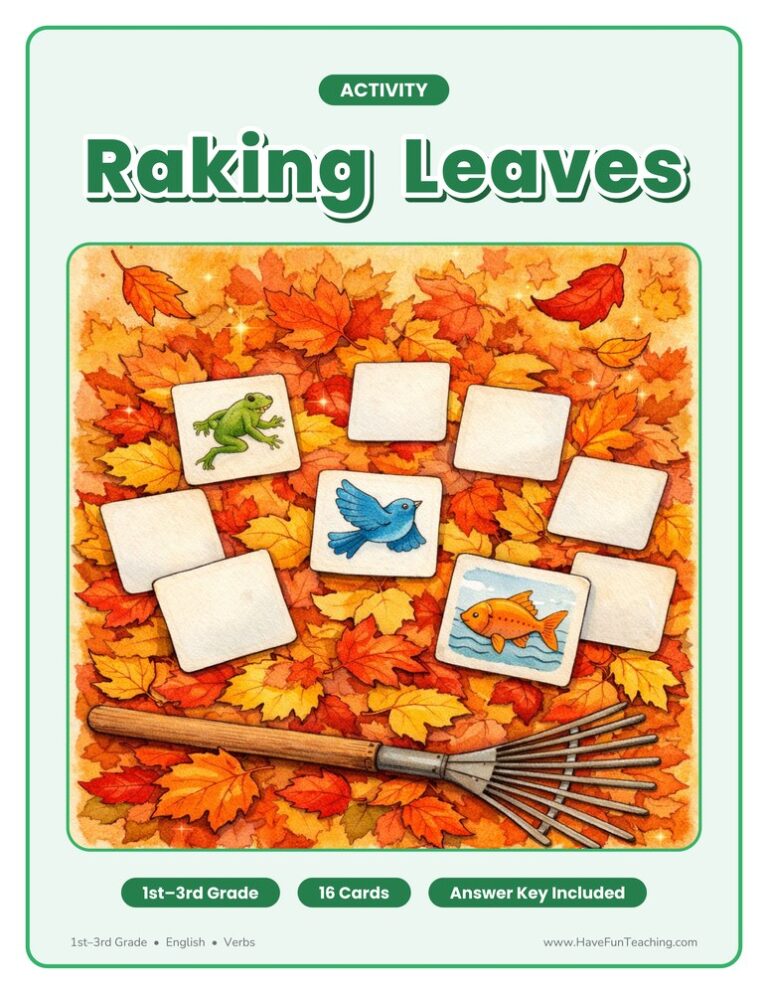
This raking leaves verbs activity has 1st to 3rd grade children match fall action pictures to verbs in a memory game, then complete sentences. Answer key included.
Using Earth Day Contractions Activity, students match two word phrase cards (I cannot) to contractions cards (I can't) in order to use contractions in their writing.
This common and proper nouns activity has 1st to 3rd grade students sort snowflake word cards on a winter mat, with a practice page and answer key included for easy checking.
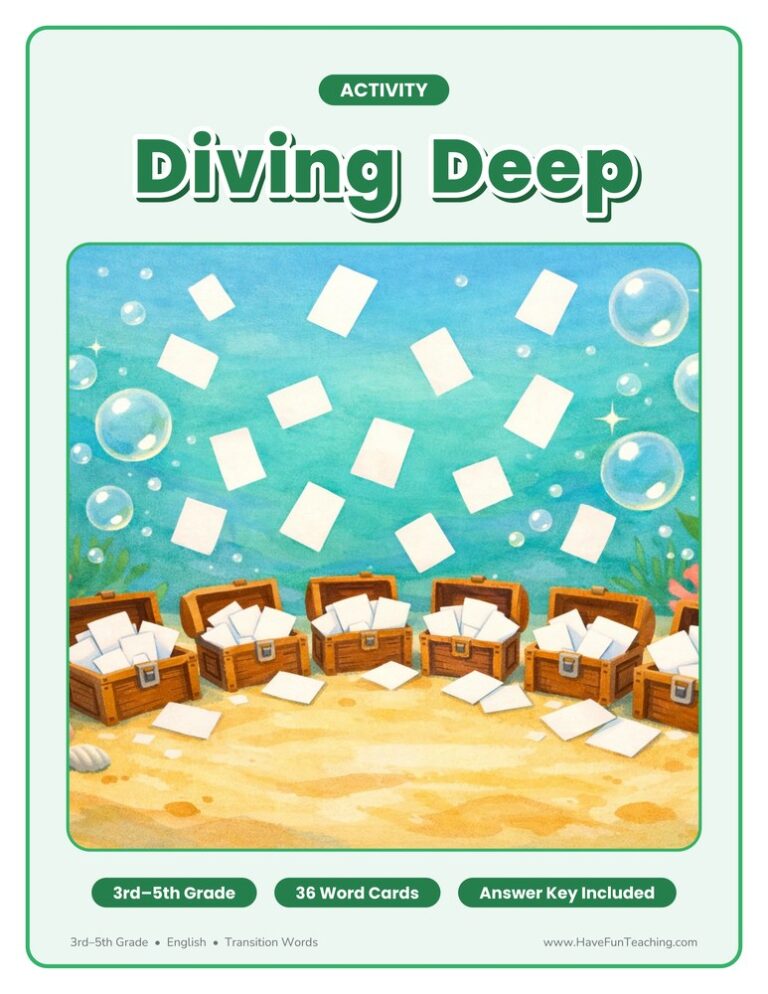
This diving deep sorting words activity for 3rd to 5th grade has students sort 36 transition word cards by the job each word does. Answer key included.
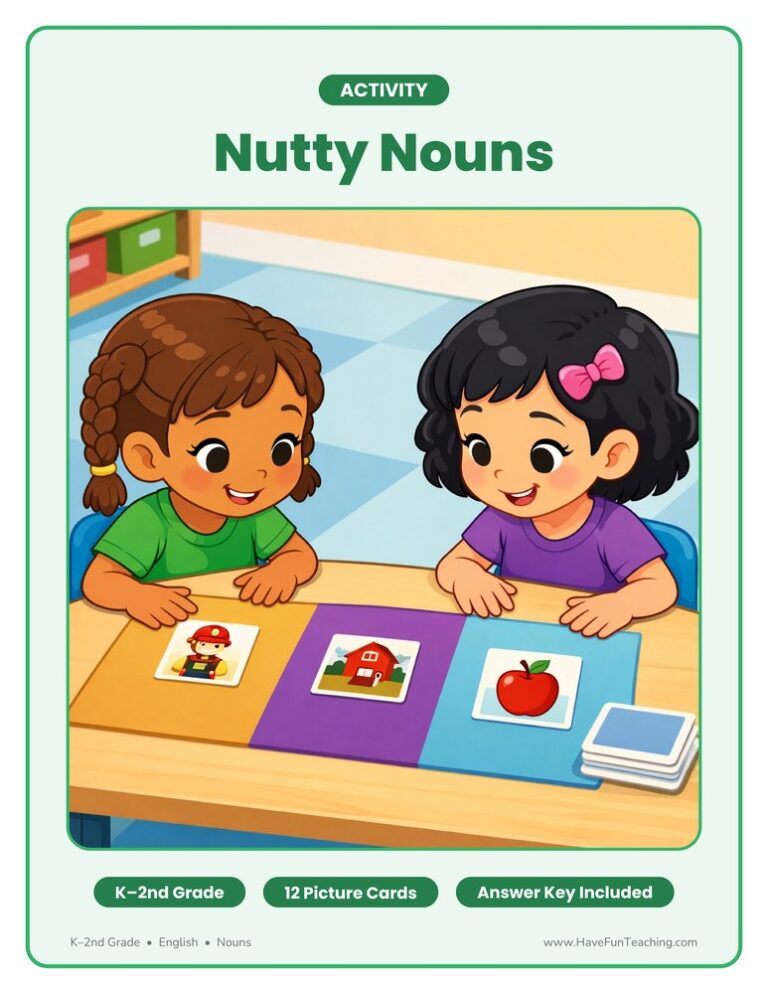
This nutty nouns activity lets Kindergarten to 2nd grade students sort picture cards into person, place and thing, then practice with a word-box sort. Answer key included.
This using simple verbs past present future activity has 1st to 3rd graders sort 24 verb cards by tense and write verbs in all three tenses. Answer key included.
Build real sentences with this sentence structure activity for Kindergarten to 2nd Grade: 24 picture-coded word cards, a recording sheet and a practice page, with an answer key included.
Every word in a sentence has a job, and the parts of speech are the names for those jobs. Kids start in kindergarten and 1st grade with nouns (people, places and things) and verbs (action words), then add adjectives that describe. By 2nd and 3rd grade they use pronouns, adverbs, prepositions and conjunctions, plus irregular plurals and verb tenses. The big idea: The happy dog ran quickly. Adjective, noun, verb, adverb! Once kids can name each job, their writing gets more detailed and their grammar gets cleaner.
Our favorite ways to teach parts of speech
Parts of speech stick when kids use them, not just label them. These are the moves we lean on.
Sort the jobs
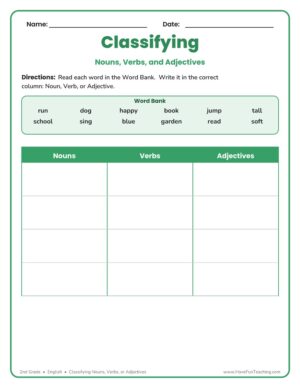
Give kids a mixed list of nouns, verbs and adjectives and have them sort each word by its job. Then trick them: use run as a noun (a fun run) and as a verb. The mix teaches that a word's job depends on how it's used.
Why it works: shuffled practice teaches kids to choose the right strategy, not just repeat one, and it improved test scores in research (Rohrer and Taylor, 2007).
Write one sentence on the board and change its tense out loud: "Today I walk, yesterday I walked, tomorrow I will walk." Point out the clue words. Then let kids rewrite a sentence of their own three ways.
Why it works: handing over the work step by step, from teacher to student, is one of the most widely used teaching frameworks (Pearson and Gallagher, 1983).
Prepositions are easiest to learn with your body. Play a quick round where kids put a pencil on, under, beside or behind a book, then follow up with the game. A few minutes a day and those little words make sense.
Why it works: pulling an answer out of memory makes it stick far better than rereading it, one of the strongest findings in learning research (Dunlosky and colleagues, 2013).
The eight parts of speech are nouns, pronouns, verbs, adjectives, adverbs, prepositions, conjunctions and interjections. Elementary kids learn them a few at a time, starting with nouns and verbs.
What parts of speech should a 2nd grader know?
Second graders work with nouns, verbs, adjectives and adverbs, along with irregular plurals, past-tense verbs and pronouns. They use these to write and expand complete sentences.
How do I explain a noun to a child?
A noun is a person, place, thing or animal. Point around the room and name nouns together: teacher, classroom, book, fish. If you can touch it or picture it, it's probably a noun.
What's the difference between an adjective and an adverb?
An adjective describes a noun, like the tall tree. An adverb describes a verb, telling how, when or where, like she ran quickly. Many adverbs end in -ly, which is a handy clue.
Are these parts of speech worksheets printable?
Yes! Every worksheet here prints as a PDF, and many come with matching activities, songs, videos and games.
Written by the Have Fun Teaching team of elementary teachers and homeschoolers. Research: Rohrer, D., & Taylor, K. (2007). The shuffling of mathematics problems improves learning. Instructional Science, 35(6). Pearson, P. D., & Gallagher, M. C. (1983). The instruction of reading comprehension. Contemporary Educational Psychology, 8(3). Dunlosky, J., Rawson, K. A., Marsh, E. J., Nathan, M. J., & Willingham, D. T. (2013). Improving Students' Learning With Effective Learning Techniques. Psychological Science in the Public Interest, 14(1).
3 days free
2:39Ready to print!
Printables · Songs · Games
Loved by 2 million teachers & families
Where learning feels like play.
Printables, songs and games for every subject, Preschool through 6th. Ready to teach today, and kids beg for more.
$0due today
then $39.97$35.97for your first year, and $39.97 a year after that.








 Try it withClassifying Nouns, Verbs, or Adjectives WorksheetWorksheetsOpen it →