Skip to content
Start My 3 Free Days $0 today · cancel anytime

Punctuation Activities

10 punctuation activities. Teacher favorites: Proofreading Capitalization and Punctuation Activity and Cool Cat Sentences Activity. How teachers use these

Punctuation Activities

10 punctuation activities. Teacher favorites: Proofreading Capitalization and Punctuation Activity and Cool Cat Sentences Activity. How teachers use these

Activity
Activity2nd GradeProofreading Capitalization and Punctuation Activity

This proofreading capitalization and punctuation activity gives 2nd to 5th grade students 16 self-checking detective cards for fixing sentences. A practice page and answer key are included.

Activity
ActivityKindergartenCool Cat Sentences Activity

This cool cat sentences activity has K-2nd Grade children sort telling, asking and exciting sentence cards by their end marks. Answer key included, so practicing punctuation feels like a game.

Activity
Activity1st GradePunctuation Pow Activity

The Punctuation Pow Activity is a 1st and 2nd grade board game where children choose a period, question mark, or exclamation point for each sentence. Answer key included.

Activity
Activity1st GradeWriting the Date Activity

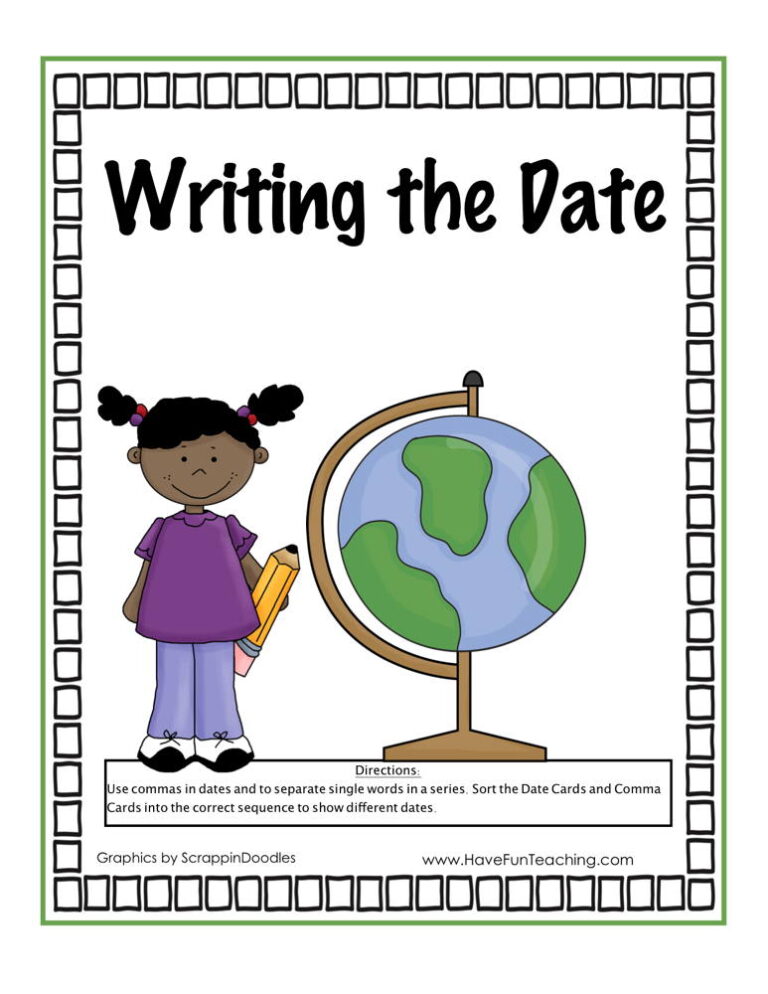
This writing the date activity lets 1st to 3rd graders build dates with month, day, year, and comma cards, then write them correctly. Answer key included for easy checking.

Activity
Activity1st GradeSlap Shot Hockey Telling Sentences Activity

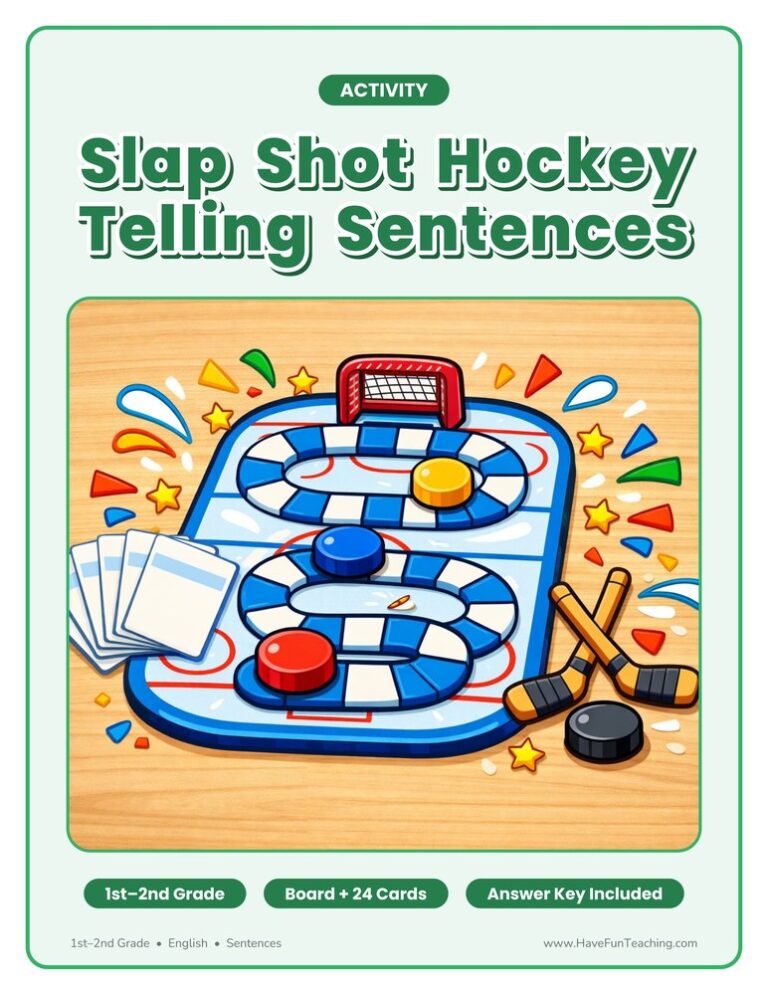
This slap shot hockey telling sentences activity for 1st and 2nd Grade has kids race pucks on a rink board by sorting telling and asking sentences. Answer key included.

Activity
ActivityKindergartenPunctuation Sandwich Activity

This punctuation sandwich activity has Kindergarten and 1st Grade students match sentence bread cards to period, question mark and exclamation point jelly cards, with an answer key included.

Activity
Activity1st GradeWhose Is It Apostrophe Activity

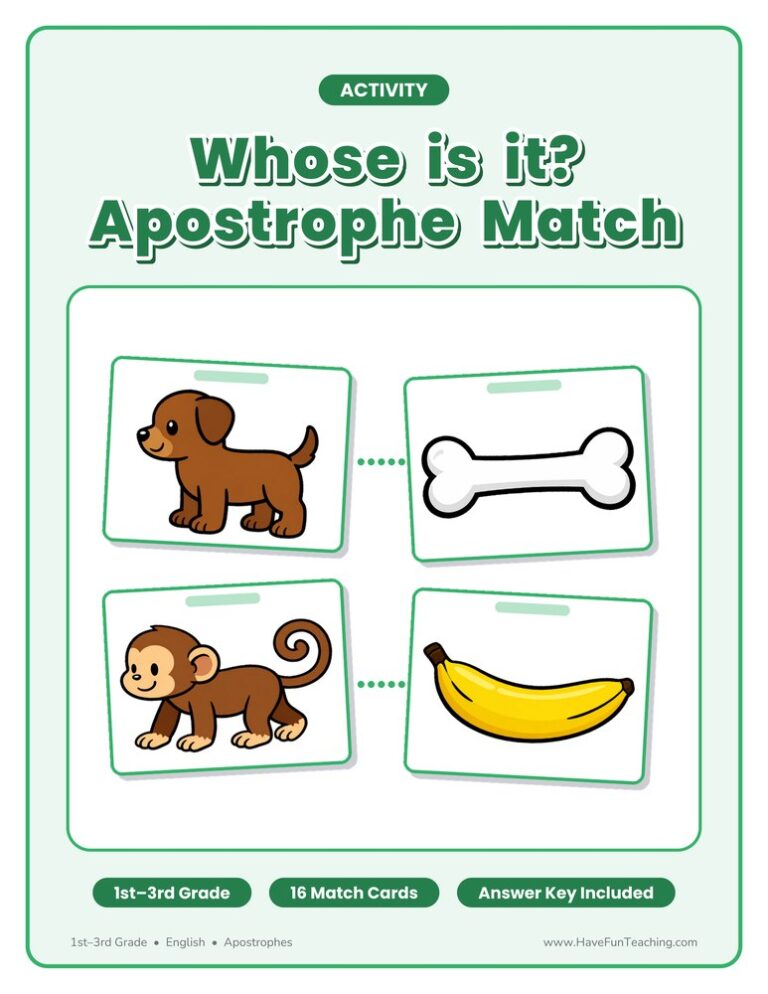
This whose is it apostrophe activity has 1st to 3rd Grade students match animals with the things they own and write each pair with an apostrophe, with a recording sheet, practice page and answer key included.

Activity
Activity2nd GradeSay What Quotation Station Activity

This say what quotation station activity has 2nd to 4th Grade students match animal speech bubbles to speakers and write each sentence with quotation marks. Answer key included.

Activity
Activity1st GradePick the Punctuation Activity

This pick the punctuation activity has 1st to 3rd Grade students sort sentence cards by period, question mark or exclamation point. Includes a sort mat, recording sheet, practice page and answer key.

Activity
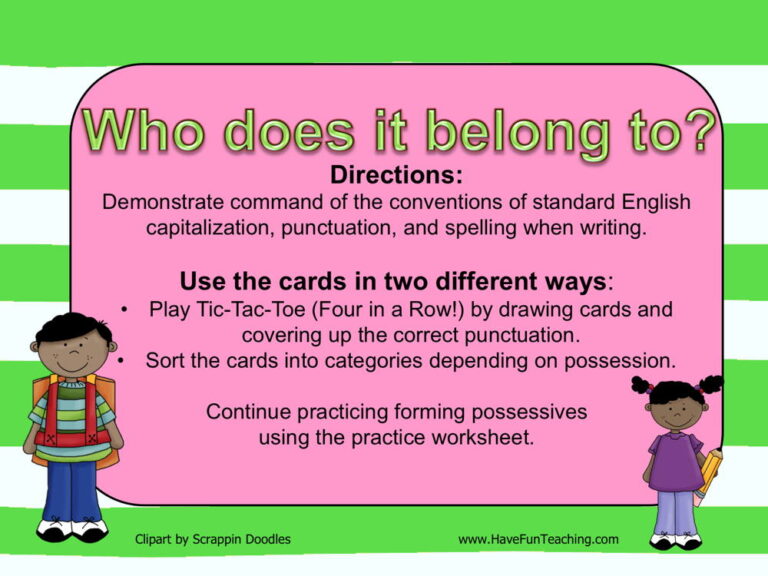
Activity1st GradeWho Does It Belong To Activity

Using this Who Does It Belong To Activity, students show possession of objects using correctly with apostrophes.

From our teachers' playbook

Periods, commas and the power of pause

What do kids learn about punctuation?

Punctuation tells readers how to read a sentence. Kindergarten and 1st grade start with end marks: a period for telling, a question mark for asking and an exclamation point for excitement. In 2nd grade, kids add commas in lists and dates and apostrophes in contractions and possessives. Third and 4th graders use quotation marks in dialogue: "Let's go!" said Max. The click is when kids hear the difference: "Let's eat, Grandma!" is very different from "Let's eat Grandma!"

Our favorite ways to teach punctuation

Punctuation clicks when kids hear it, see it and fix it.

Read it with feeling

Read the same sentence three ways: with a period, a question mark and an exclamation point. Exaggerate your voice for each one. Then have kids try the How To Say It page and read their answers aloud with matching voices.

Why it works: showing first, practicing together, then letting kids try alone is the "gradual release" model teachers have relied on for decades (Pearson and Gallagher, 1983).

How To Say It Punctuation WorksheetTry it withHow To Say It Punctuation WorksheetWorksheetsOpen it →

Build silly sentences

Kids build sentences from word cards in the Cool Cat Sentences activity, then add the end mark that fits. Ask "Is it telling, asking or shouting?" Building and punctuating their own sentences makes the choice real.

Why it works: going from real objects to pictures to symbols is a core recommendation of the U.S. Department of Education's elementary math guide.

Cool Cat Sentences ActivityTry it withCool Cat Sentences ActivityActivitiesOpen it →

Mixed punctuation check

Once kids know several marks, use the punctuation review page as a quick check. Mixed practice shows whether kids can choose the right mark, not just use the one from today's lesson.

Why it works: pulling an answer out of memory makes it stick far better than rereading it, one of the strongest findings in learning research (Dunlosky and colleagues, 2013).

Punctuation Review WorksheetTry it withPunctuation Review WorksheetWorksheetsOpen it →

Questions parents and teachers ask about punctuation

What punctuation do kids learn first?

Kids start with the period, question mark and exclamation point in kindergarten and 1st grade. Commas and apostrophes come next, usually in 2nd grade.

When do kids learn quotation marks?

Most kids learn quotation marks in 3rd grade when they start writing dialogue. They keep practicing them through 4th and 5th grade.

How do I teach commas in a series?

Start with lists kids care about, like favorite snacks. Show that a comma goes between each item, and read the list aloud to hear the pauses.

How can I help my child use punctuation in writing?

Have your child read their writing aloud. Where they pause or their voice changes, they probably need punctuation. Reading aloud catches lots of missing marks.