
Skip to content
Start My 3 Free Days $0 today · cancel anytime

1st Grade Vocabulary Resources

96 1st grade vocabulary resources: 35 worksheets, 30 flash cards, 24 activities and more. How teachers use these

1st Grade Vocabulary Resources

96 1st grade vocabulary resources: 35 worksheets, 30 flash cards, 24 activities and more. How teachers use these

Worksheet
Worksheet1st GradeUsing Picture Clues Worksheet

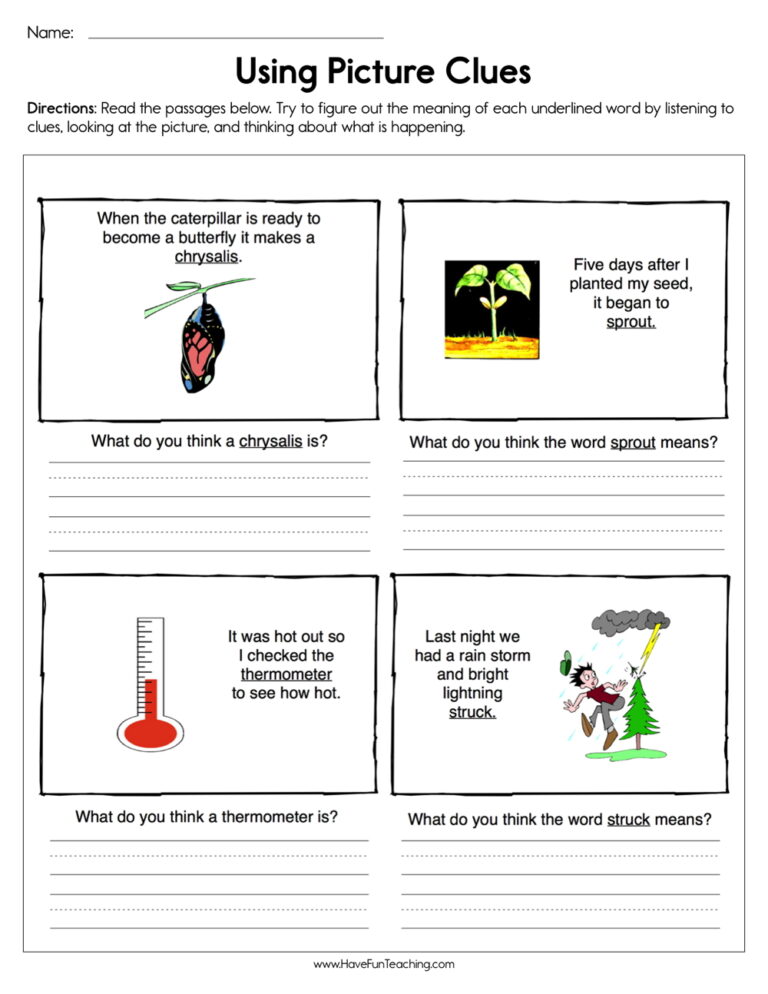
This Using Picture Clues Worksheet gives first graders four illustrated sentences and asks them to figure out what each bold word means. An answer key is included, so it is ready for quick, no-prep reading practice.

Worksheet
Worksheet1st GradeIdentifying Action Words Worksheet

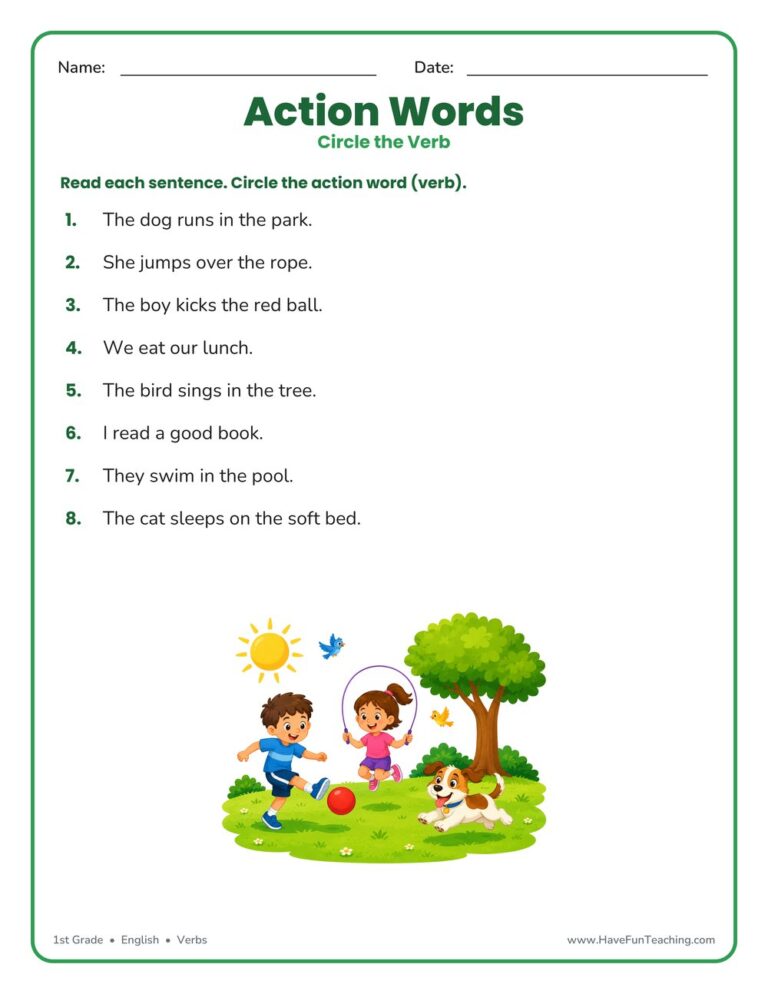
The Identifying Action Words Worksheet has 1st graders circle the verb in eight simple sentences. Includes an answer key — a fun, no-prep way to practice action words and early grammar.

Worksheet
Worksheet1st GradeContext Clues Identifying Word Meaning Worksheet

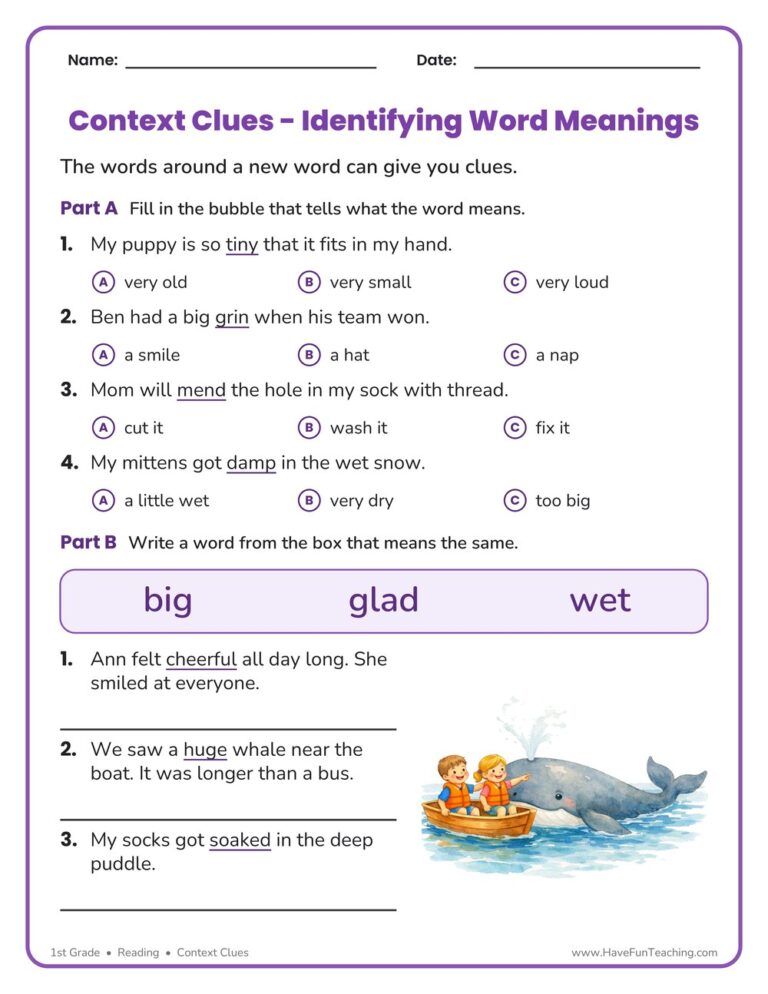
This context clues identifying word meaning worksheet has 1st Grade readers use the words around an underlined word to choose or write its meaning. An answer key is included, so checking work takes seconds.

Worksheet
Worksheet1st GradeHomophones Worksheet

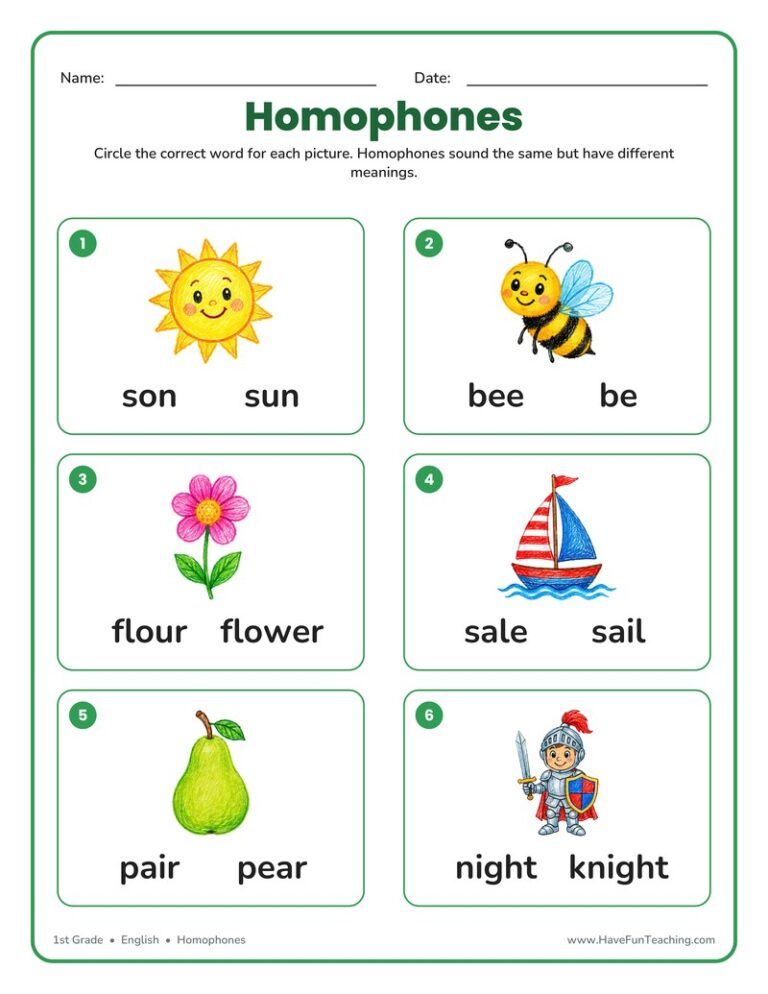
This first grade Homophones worksheet has students circle the correct homophone that matches each picture, from sun and son to flower and flour. A complete answer key is included for quick, no-prep vocabulary practice.

Worksheet
Worksheet1st GradeCategorizing Objects Worksheet

This Categorizing Objects Worksheet helps 1st graders read nine words and sort them into groups like animals, food, and colors. Includes a complete answer key for quick, no-prep classification practice.

Video
Video1st GradeLetter C Song (Animated Music Video)

The Letter C Song will help teach the Letter C Sound, Uppercase and Lowercase Letter C, Vocabulary words with the C sound, Letter C handwriting practice.

Video
Video1st GradeLetter B Song (Animated Music Video)

The Letter B Song teaches the Letter B sound, uppercase and lowercase letter b, vocabulary words that start with b, and letter B handwriting practice.

Worksheet
Worksheet1st GradeMatching Opposites Worksheet

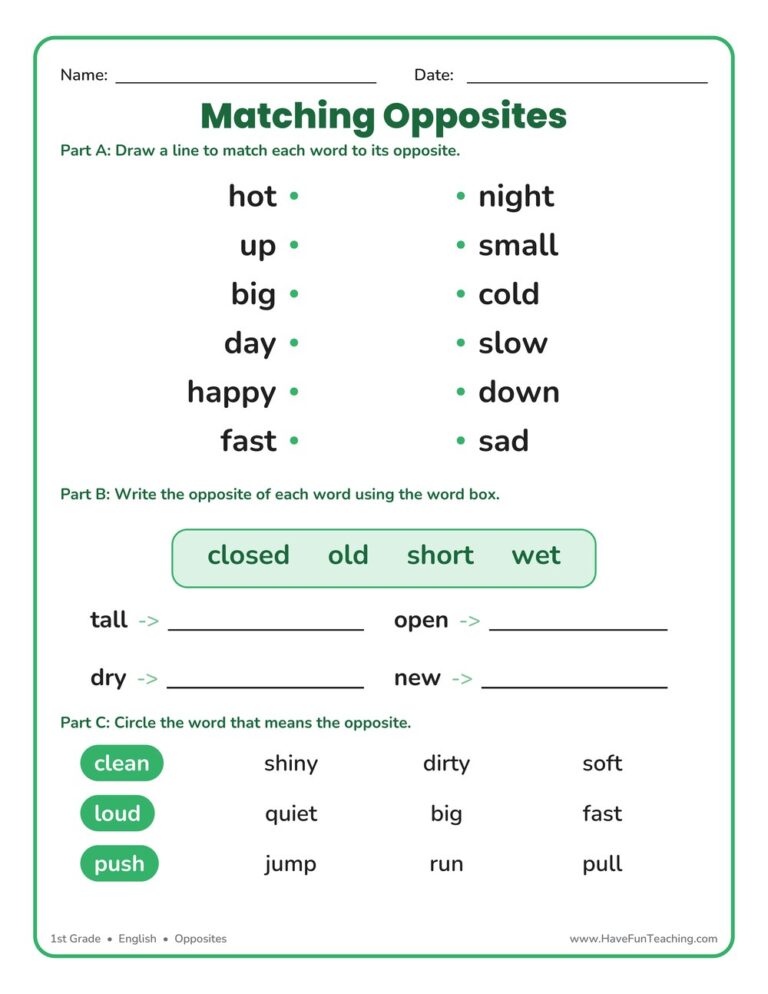
This Matching Opposites Worksheet gives 1st grade students fun practice matching, writing, and choosing opposite words. An answer key is included to build early vocabulary and word skills with confidence.

Flash Cards
Flash Cards1st GradeColors Word Wall

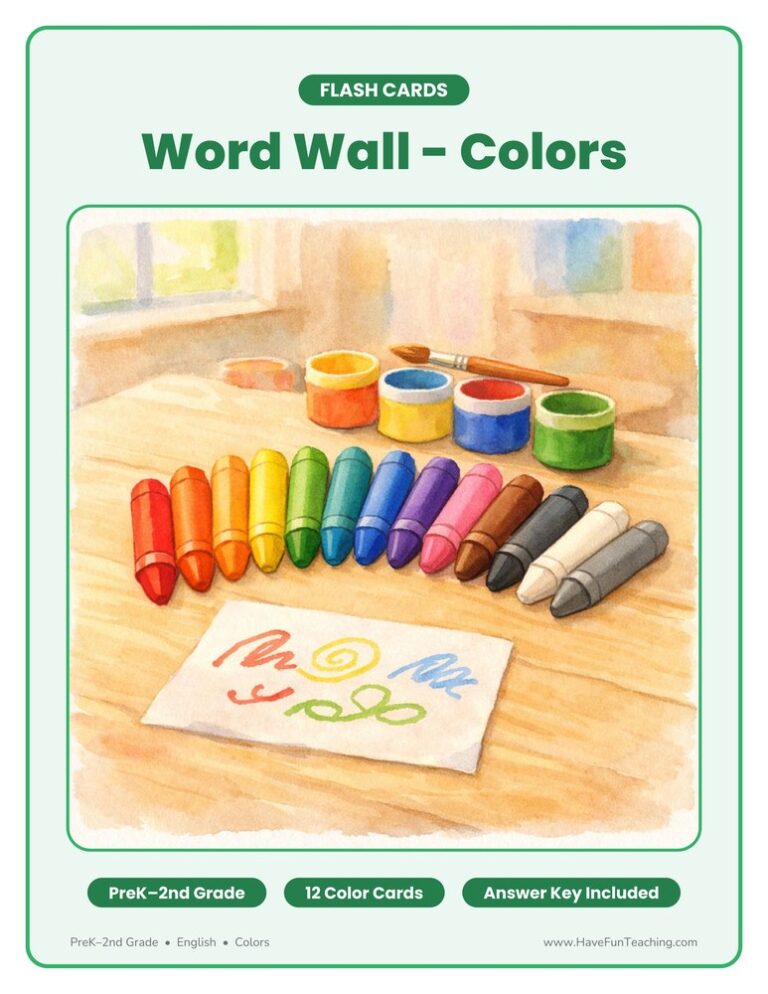
These colors word wall flash cards pair eleven color words with bright color spots for Preschool to 2nd Grade, with a practice page and answer key included to build confident early readers.

Flash Cards
Flash Cards1st GradeSchool Subjects Word Wall

These school subjects word wall flash cards pair a picture with each subject name for Preschool through 2nd Grade readers. Answer key included for the practice page.

Activity
Activity1st GradeRhyming Words Matching Activity

This rhyming words matching activity lets PreK to 1st grade children match picture cards that rhyme, like cat and hat. A practice page and answer key included.

Flash Cards
Flash Cards1st GradeNumbers Word Wall

Post these numbers word wall flash cards to help PreK through 2nd grade students read number words from zero to one trillion, with ten-frame and base-ten pictures. Answer key included.

Flash Cards
Flash Cards1st GradePrefix Flash Cards

These prefix flash cards help kindergarten to 4th grade students learn 24 common prefixes, their meanings and an example word for each. Fold-over cards, a practice page and an answer key are included.

Worksheet
Worksheet1st GradeUsing Text or Pictures to Find Information Worksheet

This Using Text or Pictures to Find Information Worksheet asks 2nd graders to decide whether each fact came from the words or the picture. An answer key is included, so nonfiction practice takes no prep.

Worksheet
Worksheet1st GradeUsing Pictures as Context Clues Worksheet

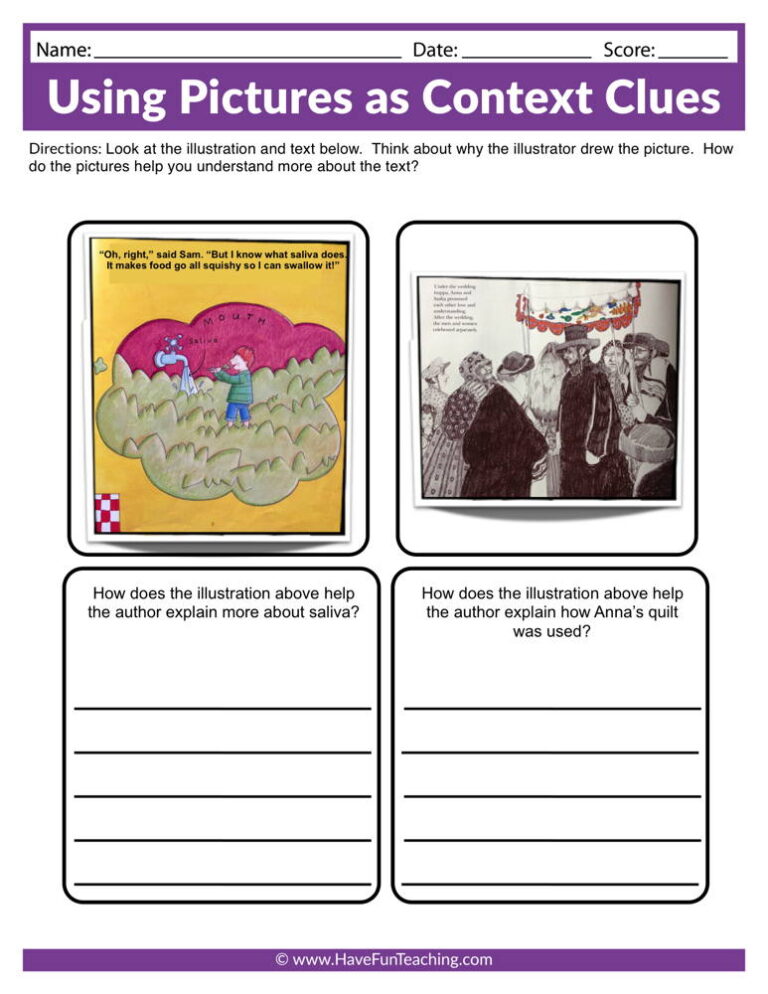
This Using Pictures as Context Clues Worksheet helps 1st Grade readers use an illustration and the words around a new word to find its meaning, with five questions and an answer key included.

Flash Cards
Flash Cards1st GradeShapes Word Wall

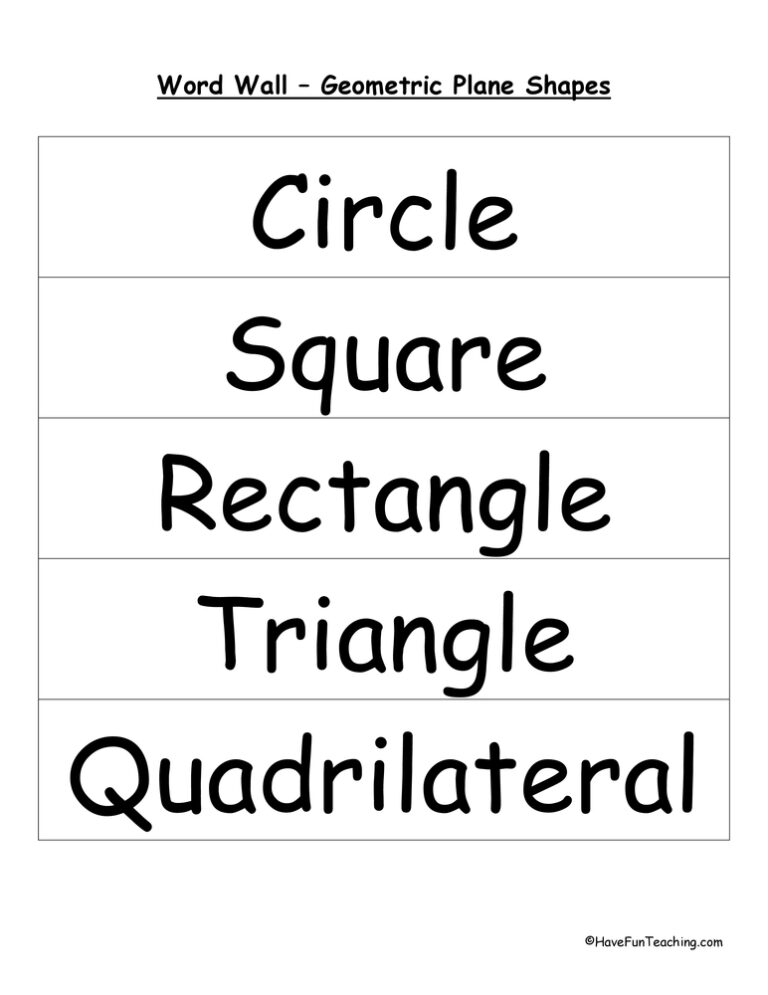
These shapes word wall flash cards give PreK to 2nd grade children eleven flat shapes with bold names, plus a count-the-sides practice page and answer key included.

Flash Cards
Flash Cards1st Grade3D Shapes Word Wall

These 3D shapes word wall flash cards help preschool to 2nd grade students name six solid figures, with word wall cards, fold-over flash cards and a practice page. Answer key included.

Worksheet
Worksheet1st GradeLabel Food Names Worksheet

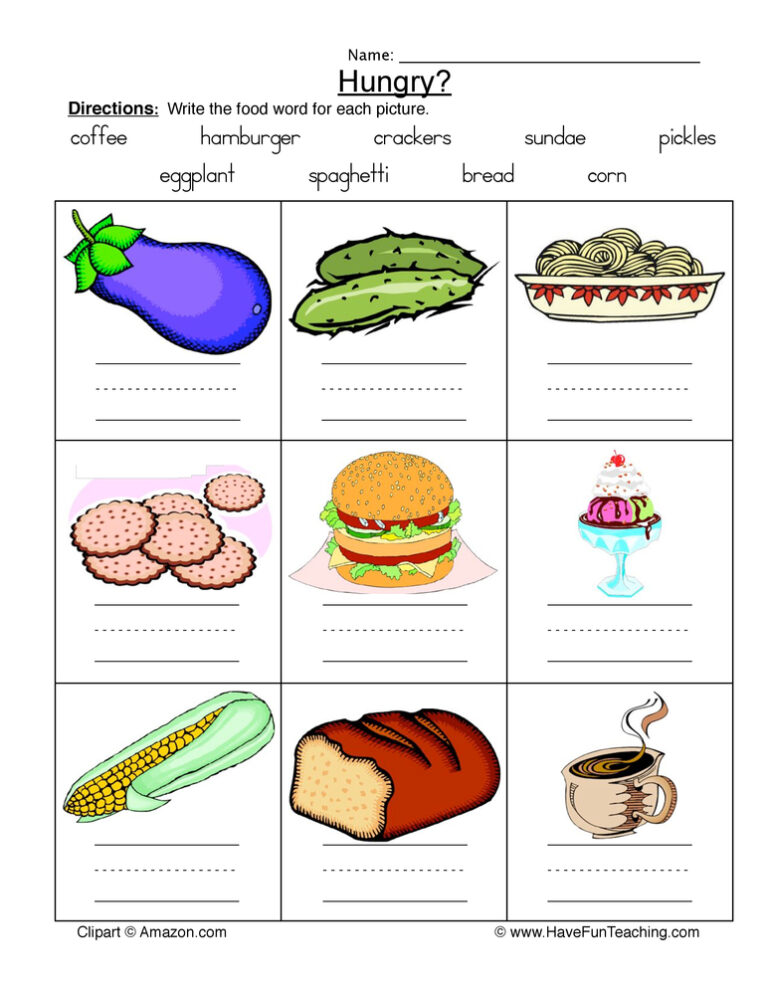
This Label Food Names Worksheet asks 1st graders to study nine food pictures and write each name using the word box. An answer key is included, so checking work takes only seconds.

Worksheet
Worksheet1st GradeTransportation Names Worksheet

This Transportation Names Worksheet gives 1st grade students nine vehicle pictures, a nine-word box and a writing line in every card, with an answer key, so picture-to-word vocabulary practice is ready to hand out.

Flash Cards
Flash Cards1st GradeConsonant Blends Flash Cards

These consonant blends flash cards give kindergarten to 3rd grade readers 18 picture cards for l, r and s blends. Fold, cut and practice; a worksheet and answer key are included.

From our teachers' playbook

New words, new worlds!

What do 1st graders learn about vocabulary?

First graders are word collectors! They learn to figure out new words using picture clues and the sentence around them. They sort words into groups, like animals or foods, and find opposites like hot and cold. They also notice word parts: adding -ing or -ed changes a word, so jump → jumping → jumped. Shades of meaning come in too, like knowing that "giant" is bigger than "big." The click moment is when kids stop skipping a hard word and start hunting for clues.

Our favorite ways to grow vocabulary

Vocabulary grows through talk, reading and play. These moves help kids own new words.

Look for picture clues

Cover a word in a picture book and ask, "What could it be? Look at the picture!" Then reveal it. Kids learn that pictures are clues, not just decoration.

Why it works: pairing a picture with each word gives kids two ways to remember it, a well-tested principle of how people learn (Mayer, 2009).

Using Picture Clues WorksheetTry it withUsing Picture Clues WorksheetWorksheetsOpen it →

Be a word detective

Read a sentence with a tricky word and think aloud: "I don't know 'enormous,' but the elephant is enormous and it's huge... so it means really big!" Kids then try the next one. Showing the thinking is what teaches the skill.

Why it works: showing first, practicing together, then letting kids try alone is the "gradual release" model teachers have relied on for decades (Pearson and Gallagher, 1983).

Context Clues Identifying Word Meaning WorksheetTry it withContext Clues Identifying Word Meaning WorksheetWorksheetsOpen it →

Sort real things

Put a pile of toys and objects on the rug and have kids sort them into groups: fruits, animals, vehicles. Then they name each group. Sorting builds category words that help kids understand what they read.

Why it works: the U.S. Department of Education's guide for teaching elementary math recommends moving from hands-on objects to drawings to numbers.

Categorizing Objects WorksheetTry it withCategorizing Objects WorksheetWorksheetsOpen it →

Questions parents and teachers ask us

How many words should a 1st grader know?

There's no exact number, but 1st graders grow their vocabulary quickly through talking and reading. Focus on lots of reading aloud and conversation, rather than memorizing lists.

How do I teach vocabulary to 1st graders?

Read aloud often, talk about new words, and use pictures and real objects. Have kids use new words in their own sentences right away.

What are context clues for 1st grade?

Context clues are hints in the pictures or nearby words that help kids figure out a new word. First graders learn to look at the picture and reread the sentence for clues.

How can I build my child's vocabulary at home?

Talk a lot, read every day, and use interesting words in conversation. Ask questions like "What else could we call that?" to stretch their thinking.



