

Using Describe Characters and Setting Activity, students explain how specific aspects of a text's illustrations contribute to what is conveyed by the words in a story.

Using How Does The Character Respond Activity, students describe how characters in a story respond to major events and challenges.
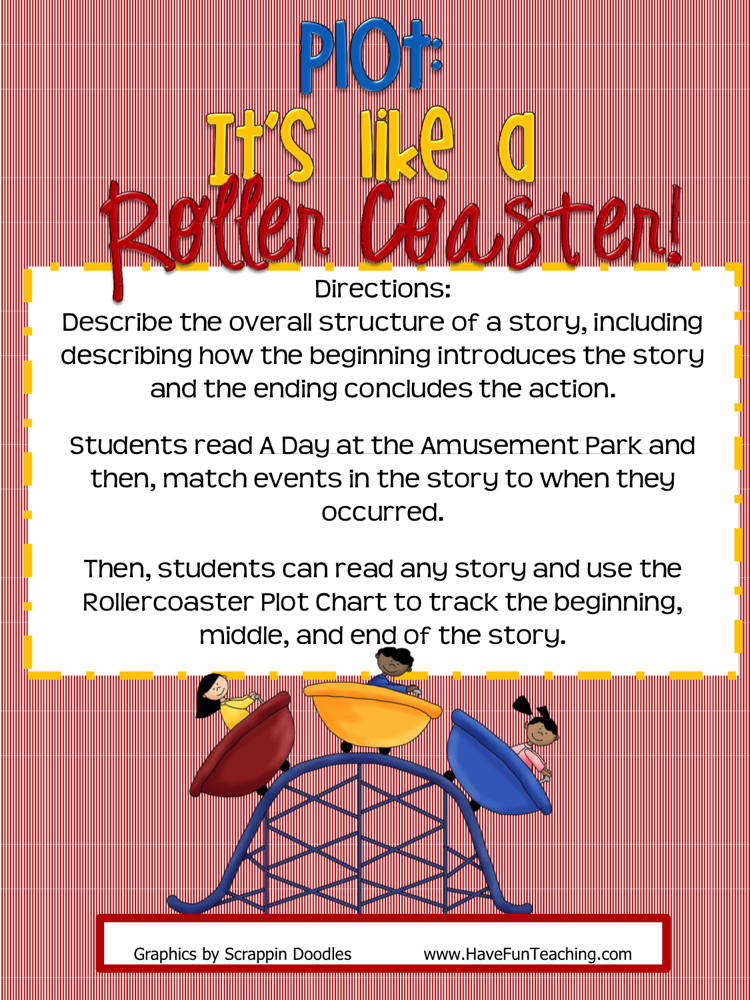
Using Beginning Middle End Plot Activity, students describe the overall structure of a story, including describing how the beginning introduces the story and the ending concludes the action.
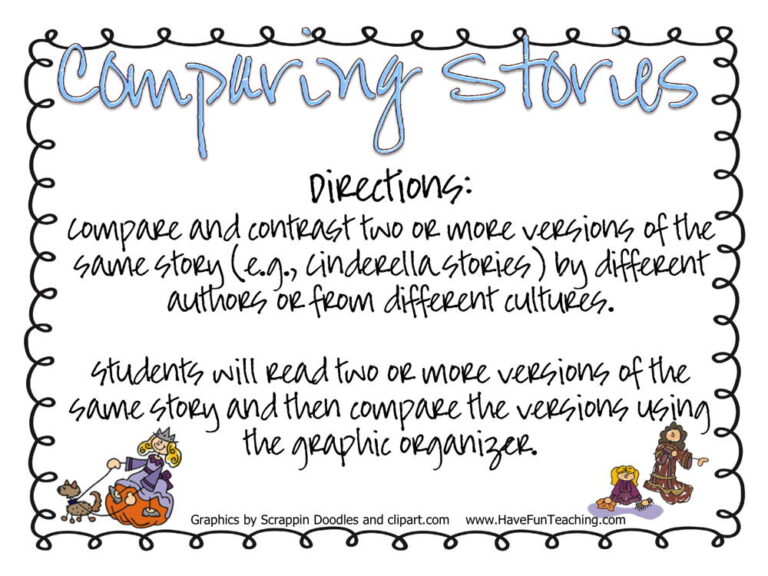
Using Comparing Two Stories Activity, students compare and contrast two or more versions of the same story by different authors or from different cultures.

Using this Complete Sentences with Subject and Predicate Activity, students match subjects and predicates to create sentences with complete ideas.
Using Key Details in a Text Activity, students ask and answer questions as who, what, where, when, why, and how to demonstrate understanding of key details in a text.
Using Key Details in a Text Activity, students ask and answer questions as who, what, where, when, why, and how to demonstrate understanding of key details in a text.

Using Main Idea and Details Activity,students identify the main topic and retell key details of a text with support and prompting.

Using Fairy Tales and Fables Puzzle, students practice problem solving and logic skills to put together this fifteen piece puzzle.
Using this Monster Munch-O Sight Word BINGO, studentsplay BINGO to increase their sight word fluency.
This Use the Text to Make Inferences Activity can be a great way to help them explore how to infer based on the text and what they already know. This is perfect for making inferences and drawing conclusions.
Using I Have Who Has Text Features Activity, students use text features and search tools to locate information relevant to a given topic efficiently.

Using How Words Work Poetry Activity, students describe how words &phrases supply rhythm and meaning in a story, poem, or song.
Using Let's Give Some Support Activity, students describe how reasons support specific points the author makes in a text.
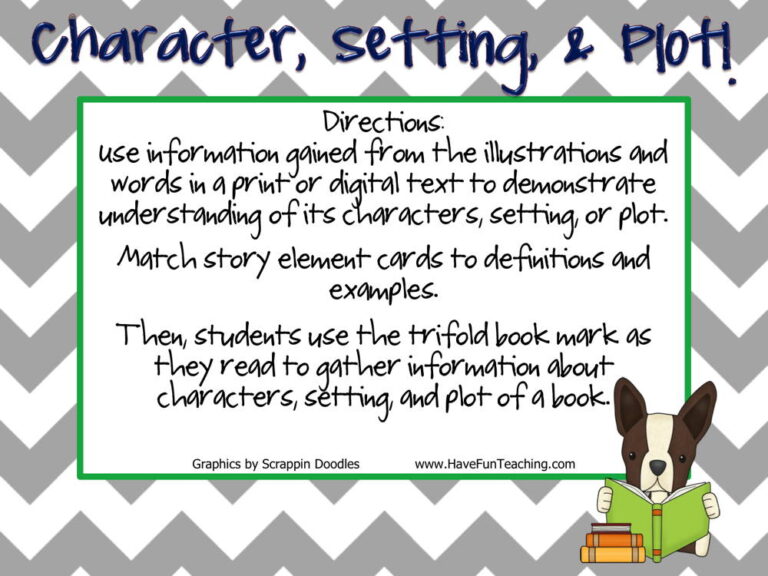
Using Character Setting Plot Activity, studentsfind examples of story elements as they read to build their reading comprehension.

Using Retell the Story Activity,students read “Floppy Ears” aloud to students and then use the question chart to assess students ability to retell the story.

Using Unknown Words and Phrases Activity, students read independently or with a partner to collect unknown words and phrases to build their vocabulary and reading comprehension.
Using this Cause and Effect Sequencing Activity, students explain the reasons why the situations were caused.
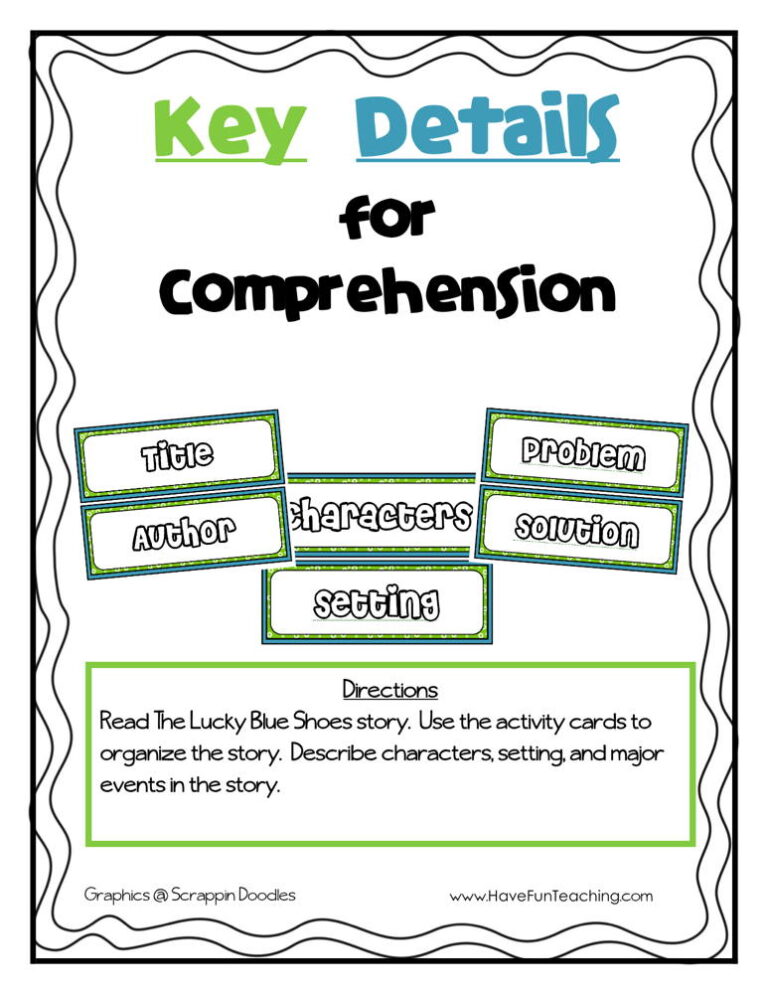
Using Key Details for Comprehension Activity, students read The Lucky Blue Shoes to describe the characters, setting, and major events in the story.
Using Main Idea and Details Reading Activity,students read any book and respond to the questions to gain a better understanding of the main idea.



