
Skip to content
Start My 3 Free Days $0 today · cancel anytime

4th Grade Parts of Speech Resources

31 4th grade parts of speech resources: 13 worksheets, 7 flash cards, 7 songs and more. How teachers use these

4th Grade Parts of Speech Resources

31 4th grade parts of speech resources: 13 worksheets, 7 flash cards, 7 songs and more. How teachers use these

Micro Lesson
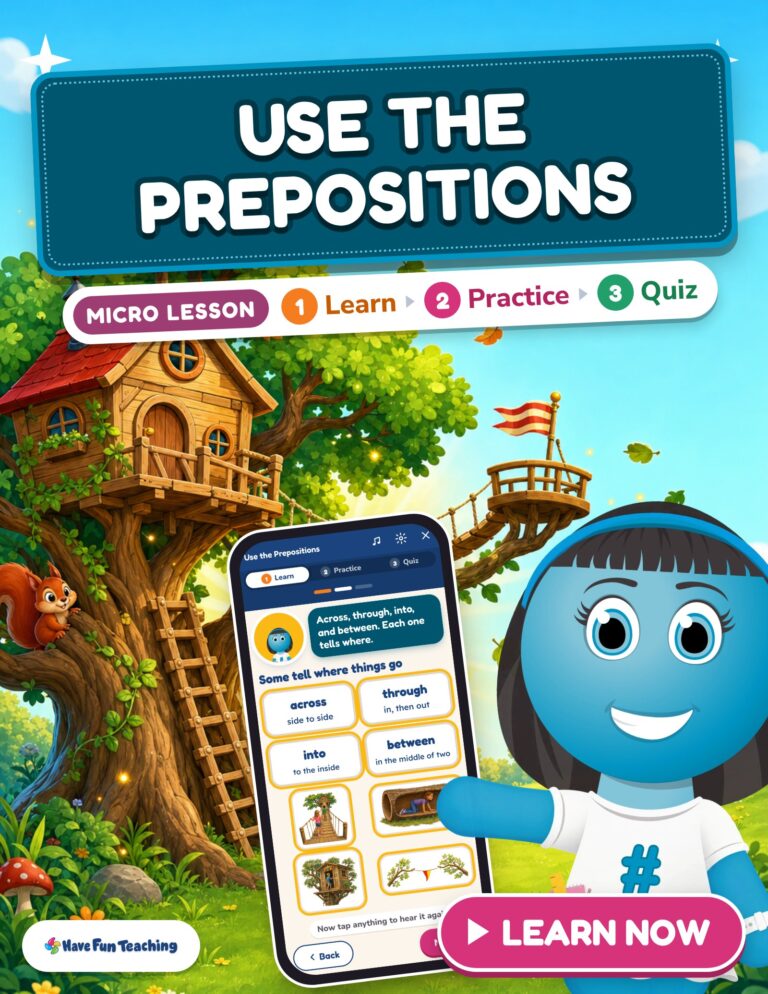
Micro Lesson4th GradeUse the Prepositions Micro Lesson

Penny teaches kids what a preposition is and how to pick the one that tells where, one step at a time. Kids practice with friendly hints, then show what they know in a 5-question quiz. Quiz scores go to HFT Classroom automatically.

Worksheet
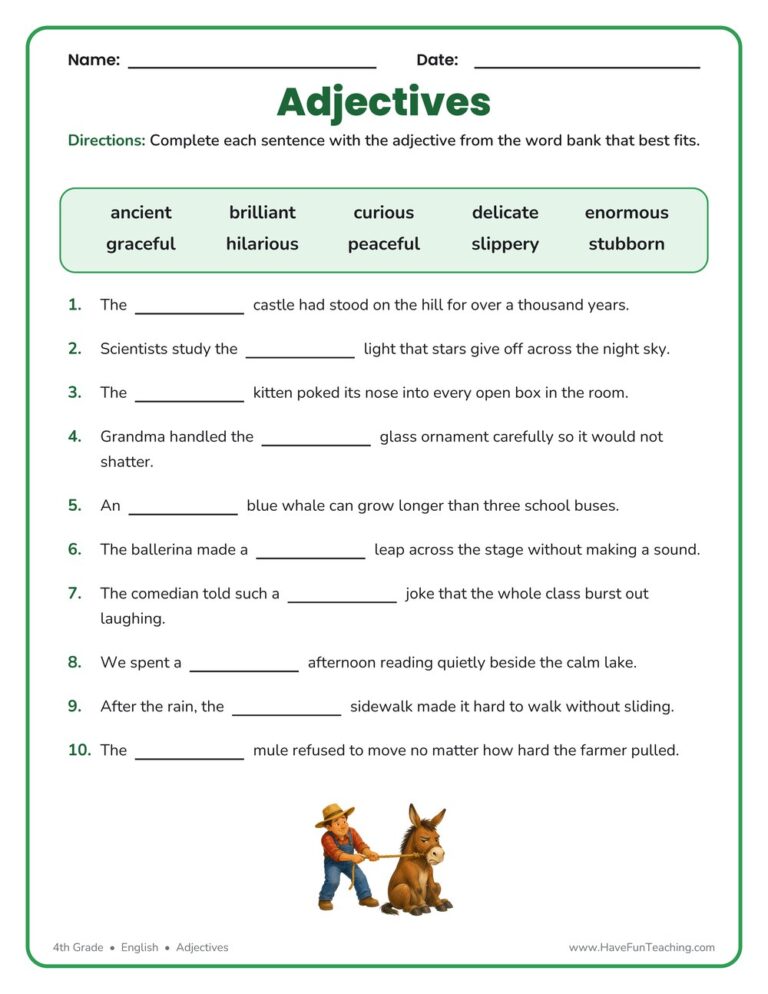
Worksheet4th GradeAdjectives Fill in the Blanks Worksheet

This Adjectives Fill in the Blanks Worksheet gives 4th graders ten sentences and a word bank of vivid describing words to complete, with an answer key included — perfect for building descriptive vocabulary and no-prep grammar practice.

Flash Cards
Flash Cards4th GradeContractions Flash Cards

These contractions flash cards help kindergarten to 4th grade students see how two words join to make a contraction, with 24 fold-over cards and a practice page. Answer key included.

Flash Cards
Flash Cards4th GradeAdjective Flash Cards

These adjective flash cards help kindergarten through 4th grade children describe 18 bright pictures with fold-over word cards and model sentences. A practice page and answer key are included.

Video
Video4th GradeNoun Song (Lyric Music Video)

Using the Noun Song (Lyric Music Video), students will be able to define, give examples and use adjectives in their own writing using the catchy and memorable lyrics.

Worksheet
Worksheet4th GradeComparative & Superlative Adverbs Worksheet

This Comparative & Superlative Adverbs Worksheet asks 4th graders to write the correct -er, -est, more, or most form of each adverb. Includes an answer key for quick, no-prep grammar practice.

Flash Cards
Flash Cards4th GradePrefix Flash Cards

These prefix flash cards help kindergarten to 4th grade students learn 24 common prefixes, their meanings and an example word for each. Fold-over cards, a practice page and an answer key are included.

Worksheet
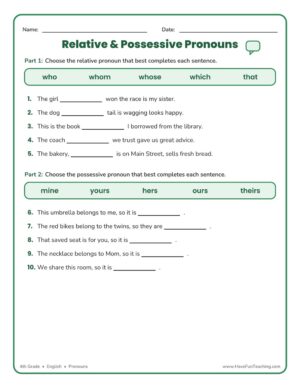
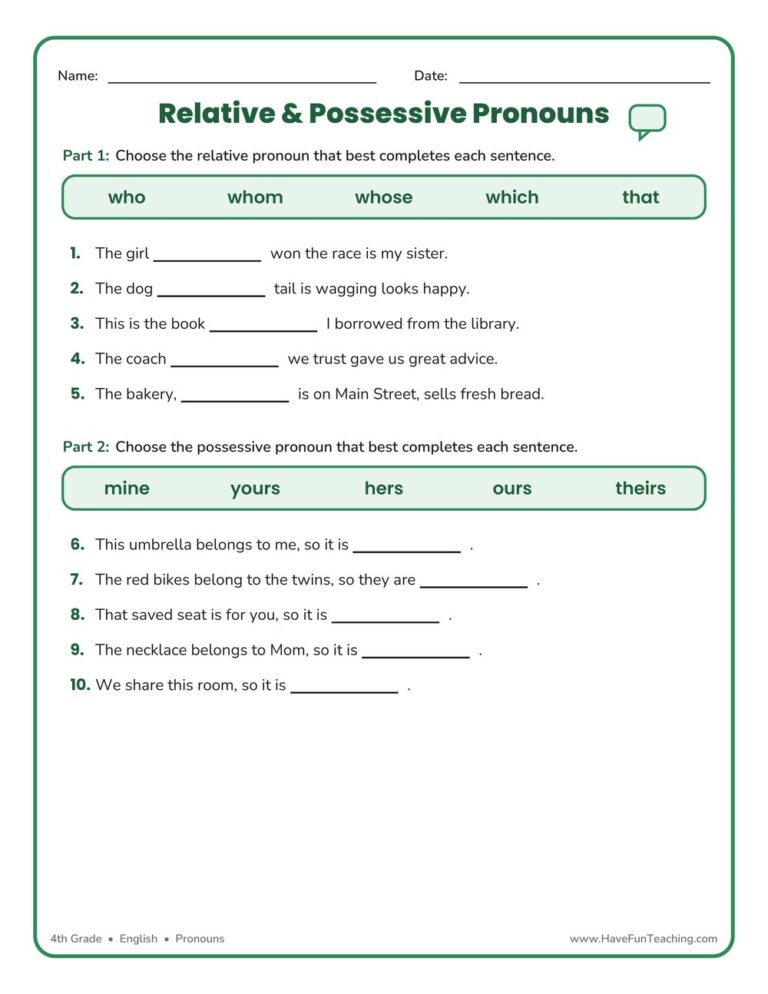
Worksheet4th GradeRelative and Possessive Pronouns Worksheet

A fourth grade relative and possessive pronouns worksheet with two word banks and ten fill-in-the-blank sentences. Includes a complete answer key for quick, no-prep grammar practice at home or school.

Worksheet
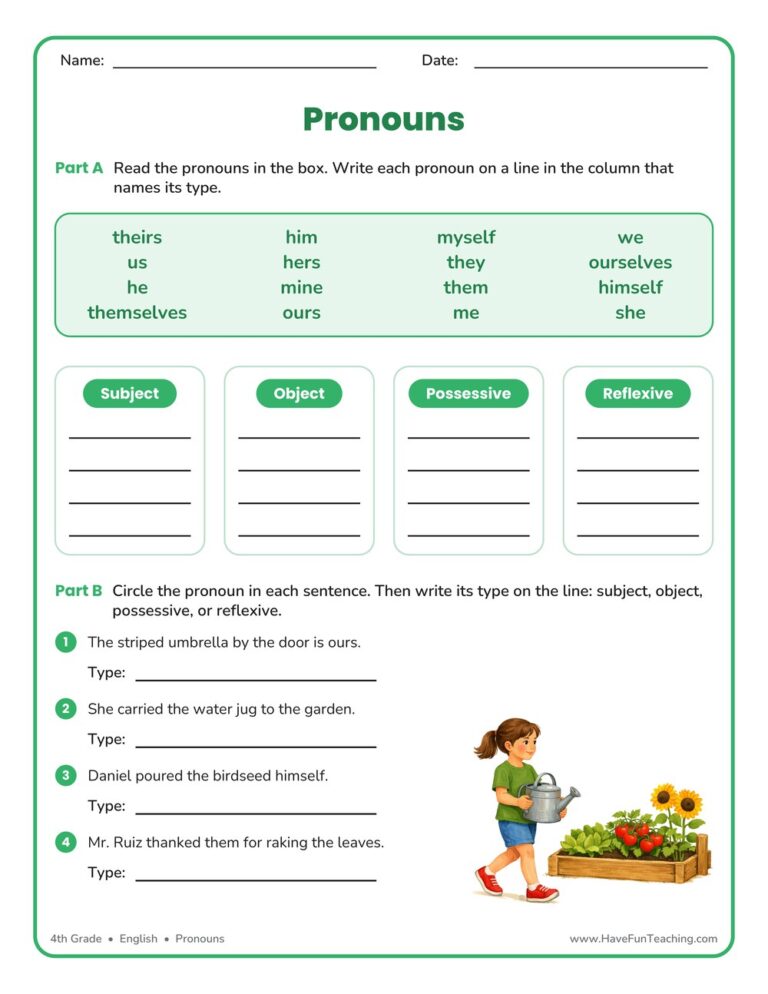
Worksheet4th GradePronouns Sorting Worksheet

This pronouns sorting worksheet has 4th grade students sort sixteen pronouns into subject, object, possessive, and reflexive columns, then find pronouns in sentences. Answer key included.

Video
Video4th GradeVerb Rap Song (MP3)

Using the Verb Rap Song (MP3), students will be able to define, give examples and use verbs in their own writing using the catchy and memorable lyrics.

Flash Cards
Flash Cards4th GradeSuffix Flash Cards

Students learn 24 common suffixes, their meanings and example words with these suffix flash cards for kindergarten to 4th grade. Fold-over cards, a practice page and an answer key are included.

Flash Cards
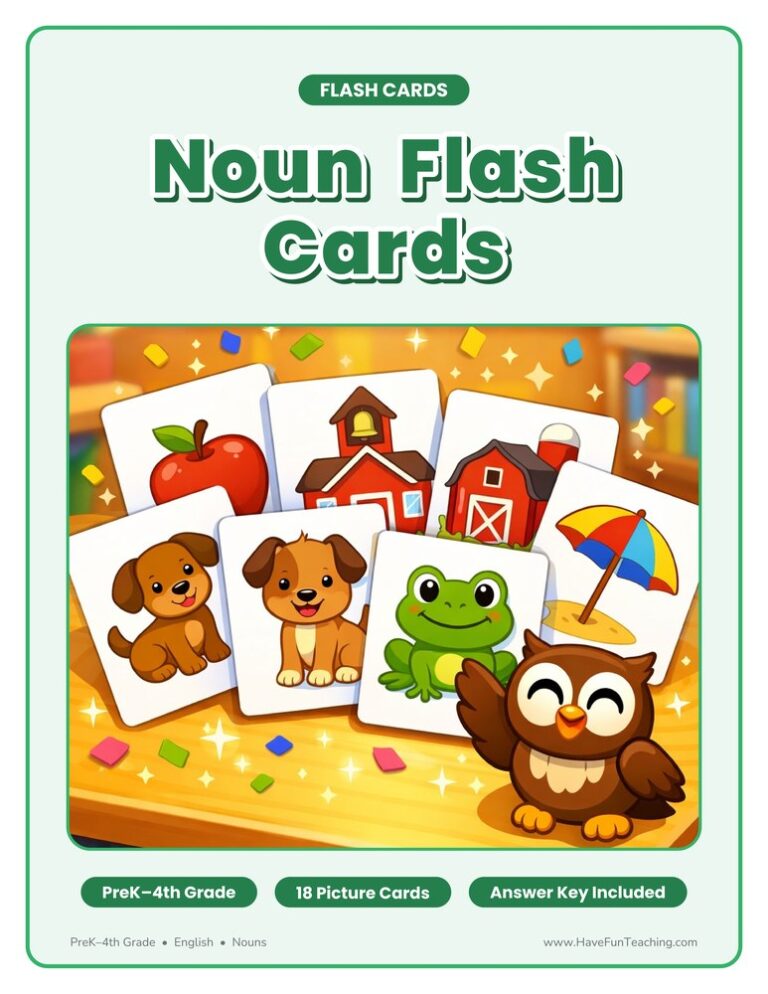
Flash Cards4th GradeNoun Flash Cards

These noun flash cards for preschool to 4th grade pair 18 bright pictures with their nouns so children learn people, places, animals, and things. Answer key included.

Worksheet
Worksheet4th GradeConjunction Worksheet

This conjunction worksheet gives 4th Grade students eight sentences to build and take apart, practicing the comma that goes before and, but, or and so, with an answer key included for fast checking.

Worksheet
Worksheet4th GradeAdjectives Describe Worksheet

This Adjectives Describe Worksheet has 3rd graders choose the describing word that completes each sentence, then name the noun it tells about. An answer key is included, so adjective practice needs no prep.

Worksheet
Worksheet4th GradeDescribe it Using Adverbs Worksheet

This Describe it Using Adverbs Worksheet gives 3rd graders nine sentences that practice adverbs telling how, when, and where. An answer key is included, so grammar practice takes minutes to assign and score.

Video
Video4th GradeVerb Rap Song (Original Music Video)

Using the Verb Rap Song (Original Music Video), students will be able to define, give examples and use verbs in their own writing using the catchy and memorable lyrics.

Activity
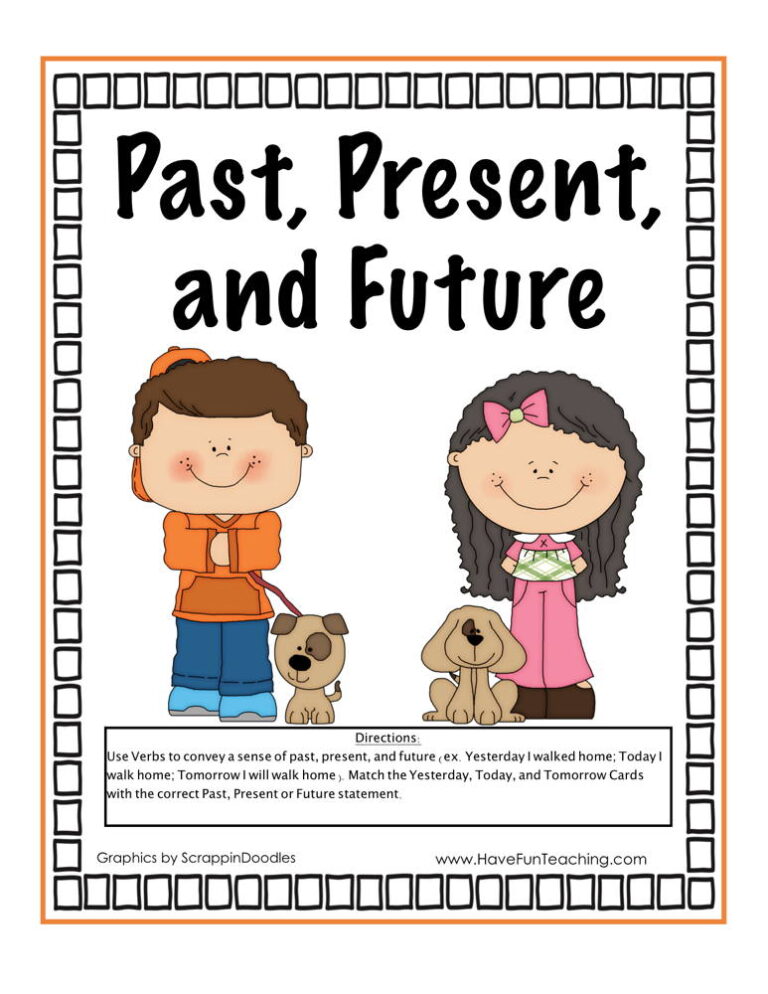
Activity4th GradePast Present Future Tense Activity

This past present future tense activity lets 1st to 4th grade students sort twelve verb cards by tense and write verbs in the right form. Answer key included for easy checking.

Worksheet
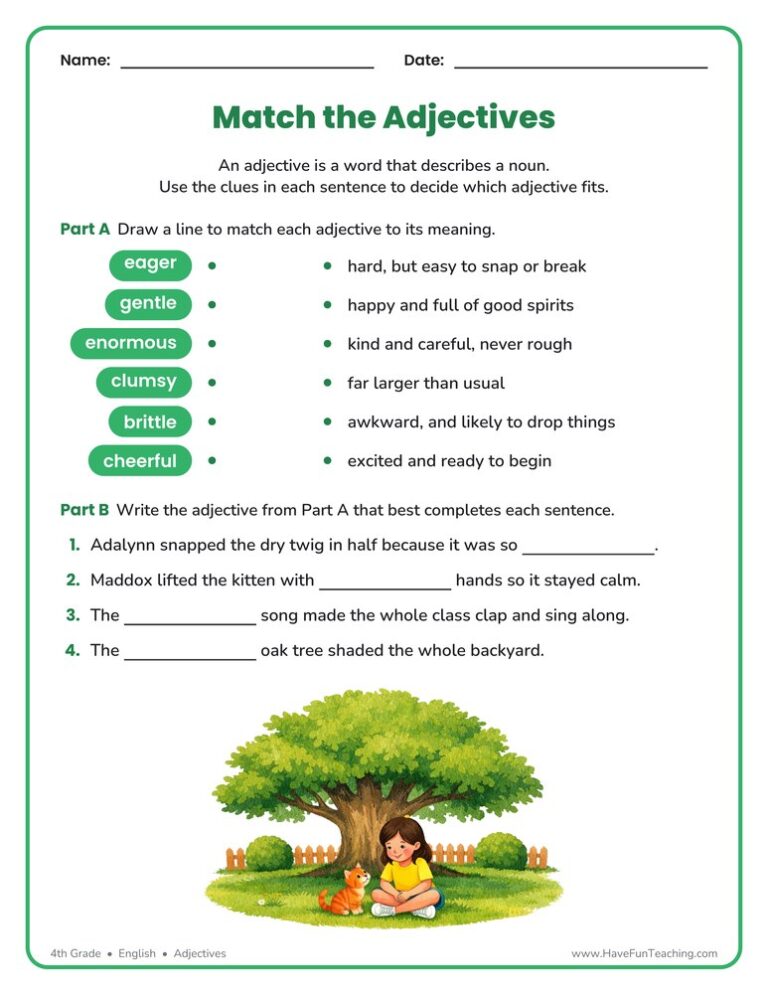
Worksheet4th GradeMatching Adjectives Worksheet

This matching adjectives worksheet asks 4th graders to pair six describing words with their meanings, then use context clues to complete four sentences. An answer key is included, so vocabulary practice takes no prep at all.

Video
Video4th GradeAdjective Song (MP3)

Using the Adjective Song (MP3), students will be able to define, give examples and use adjectives in their own writing using the catchy and memorable lyrics.

Bundle
Bundle4th GradeSongs for Kids (MP3 Album)

Songs for Kids Download by Have Fun Teaching has 18 fun and educational songs for kids.

From our teachers' playbook

Every word has a job to do!

What do 4th graders learn about parts of speech?

By 4th grade, kids know their nouns, verbs and adjectives, so now they learn the finer tools. They use relative pronouns like who, whose, which and that to join ideas: "The girl who won the race is my sister." They put adjectives in a natural order, like a small red plastic cup, not "a plastic red small cup." They use progressive verbs like "was running" and helping verbs like can, may and must. The click comes when kids notice their sentences sound more grown-up!

Our favorite ways to teach parts of speech

Fourth graders learn grammar best when they use it in their own writing. These moves make that happen.

Rap the verbs

Play a verb rap and have kids act out each action word. Then challenge them to add a helping verb, like "is running" or "will jump." Music makes grammar feel like a game instead of a rule list.

Why it works: a catchy, repeating tune gives the brain a hook to hang words on, so sung text is remembered better (Wallace, 1994).

Verb Rap Song (Original Music Video)Try it withVerb Rap Song (Original Music Video)SongsOpen it →

Adjective order lineup

Hand out adjective cards like "big," "old" and "wooden" and have kids line up in the right order before a noun card. The class reads it aloud to check if it sounds right. Kids discover the order by ear.

Why it works: a big review of study methods ranked quick self-quizzing among the most powerful ways to remember (Dunlosky and colleagues, 2013).

Adjective Flash CardsTry it withAdjective Flash CardsFlash CardsOpen it →

Combine with who and which

Give kids two short sentences: "I have a dog. The dog loves bones." Have them join them with a relative pronoun: "I have a dog that loves bones." Building sentences shows why relative pronouns matter.

Why it works: the U.S. Department of Education's guide for teaching elementary math recommends moving from hands-on objects to drawings to numbers.

Relative and Possessive Pronouns WorksheetTry it withRelative and Possessive Pronouns WorksheetWorksheetsOpen it →

Questions teachers and parents ask

What parts of speech should a 4th grader know?

Fourth graders should know nouns, pronouns, verbs, adjectives, adverbs, prepositions, conjunctions and interjections. They also learn relative pronouns, progressive verb tenses and how to order adjectives.

What are relative pronouns?

Relative pronouns like who, whose, whom, which and that connect extra information to a noun. In "The book that I read was funny," the word "that" links the details to "book."

How do you teach parts of speech in a fun way?

Use songs, games and silly sentences. Have kids act out verbs, describe objects with adjectives, and build crazy sentences by picking word cards from each part of speech.

How can I practice parts of speech at home?

Play "word detective" while reading: find a noun, verb and adjective on each page. Or make silly fill-in-the-blank stories and ask for a part of speech for each blank.