Skip to content
Start My 3 Free Days $0 today · cancel anytime

Kindergarten Math Worksheets

183 kindergarten math worksheets, covering counting, numbers, colors, plus 21 more topics. How teachers use these

Kindergarten Math Worksheets

183 kindergarten math worksheets, covering counting, numbers, colors, plus 21 more topics. How teachers use these

Worksheet
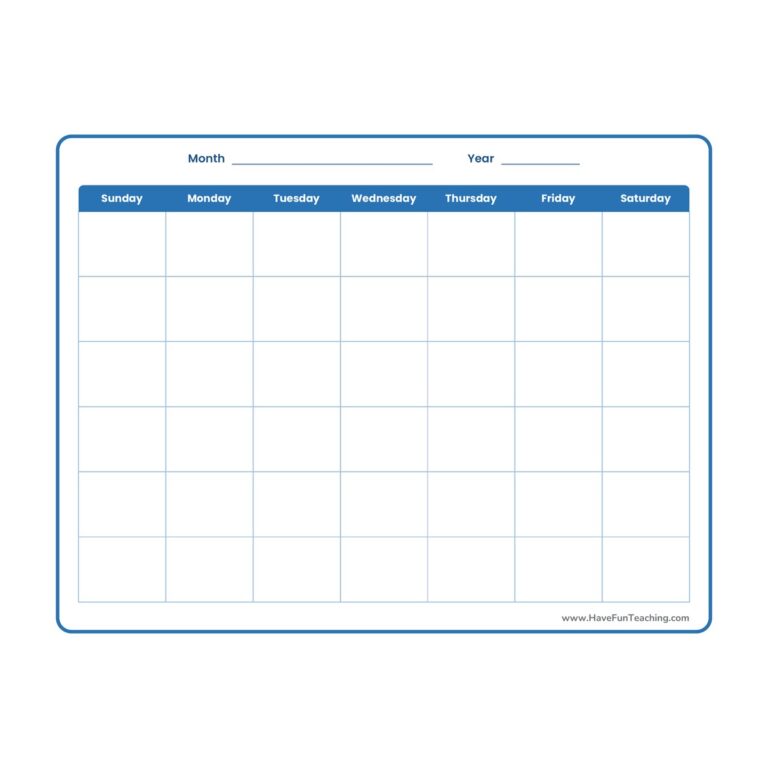
WorksheetKindergartenBlank Calendar

A printable, ready-to-use blank calendar with a landscape monthly grid and labeled day columns. Great for Kindergarten through 5th grade classrooms to map out lessons, holidays, and daily routines—just add the month and the dates.

Worksheet
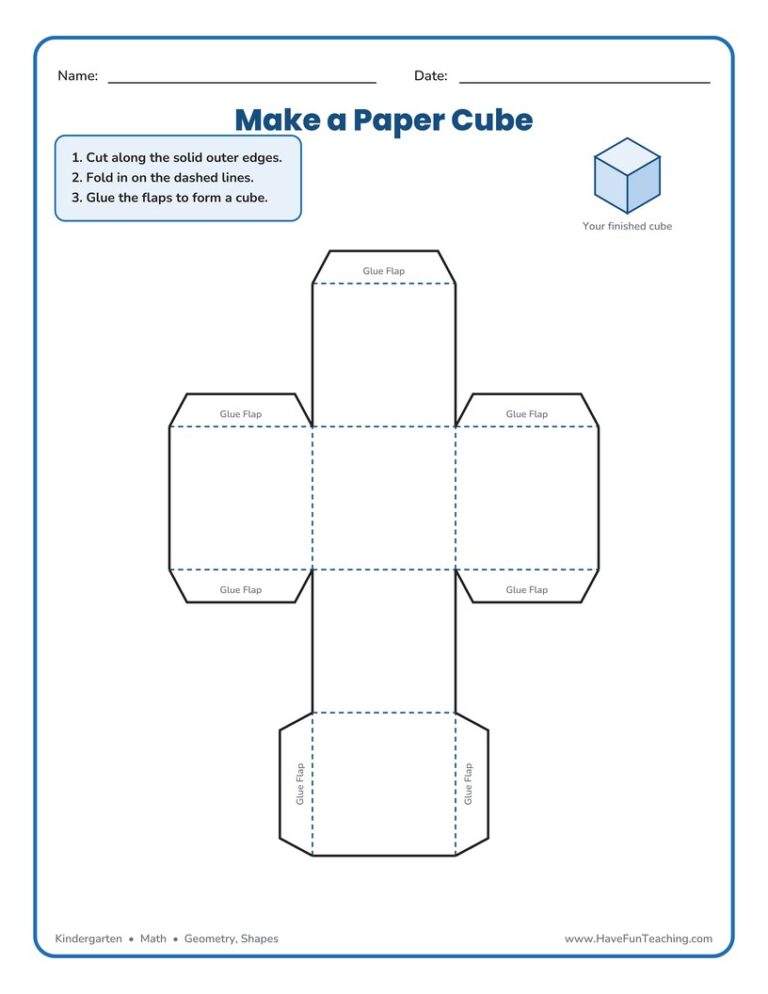
WorksheetKindergartenPaper Cube Template

A hands-on paper cube template worksheet for Kindergarten geometry. Students cut, fold, and glue a printable cube net into a real 3D cube — a fun, no-prep way to explore solid shapes and build fine motor skills.

Worksheet
WorksheetKindergartenGrouping into Categories Worksheet

This Grouping into Categories Worksheet asks kindergarten students to sort eight pictures into fruit, animals, plants, and shapes by writing each one's category number. Includes an answer key for fast, no-prep classification practice.

Worksheet
WorksheetKindergartenSorting Objects Worksheet

This Sorting Objects Worksheet has kindergarten students sort twelve pictures into animals, plants, vehicles, and people, then count each group. Includes an answer key — a no-prep way to build classification and early counting skills.

Worksheet
WorksheetKindergartenAdding Within 5 Worksheet

This Adding Within 5 Worksheet gives kindergarten students eight quick addition problems with sums to 5, plus an answer key included, to build confident math fact fluency.

Worksheet
WorksheetKindergartenAdding Facts to 5 Worksheet

This Adding Facts to 5 Worksheet gives Kindergarten students picture addition, quick equations, and one apple-picking word problem to solve. An answer key is included, so checking every sum takes seconds.

Worksheet
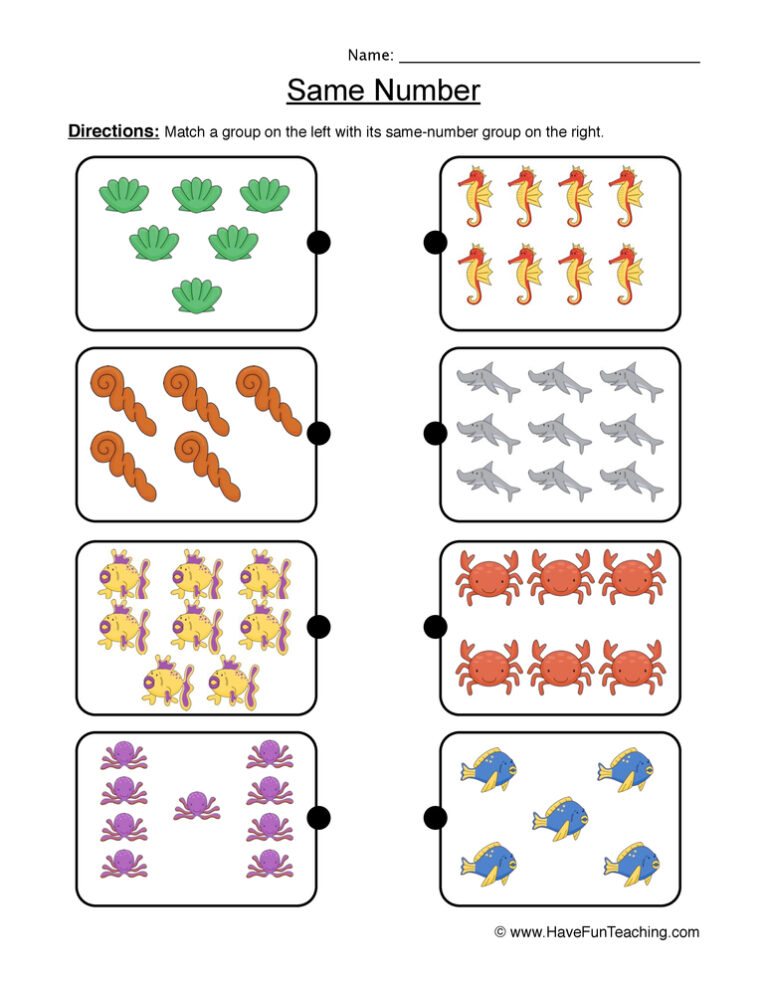
WorksheetKindergartenSame Number Picture Representations Worksheet

This same number picture representations worksheet has Kindergarten students count ten picture groups and match the pairs that hold the same amount. Answer key included, so counting practice is ready to print and check in seconds.

Worksheet
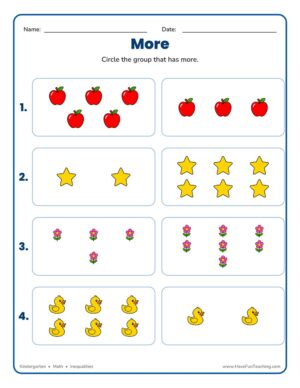
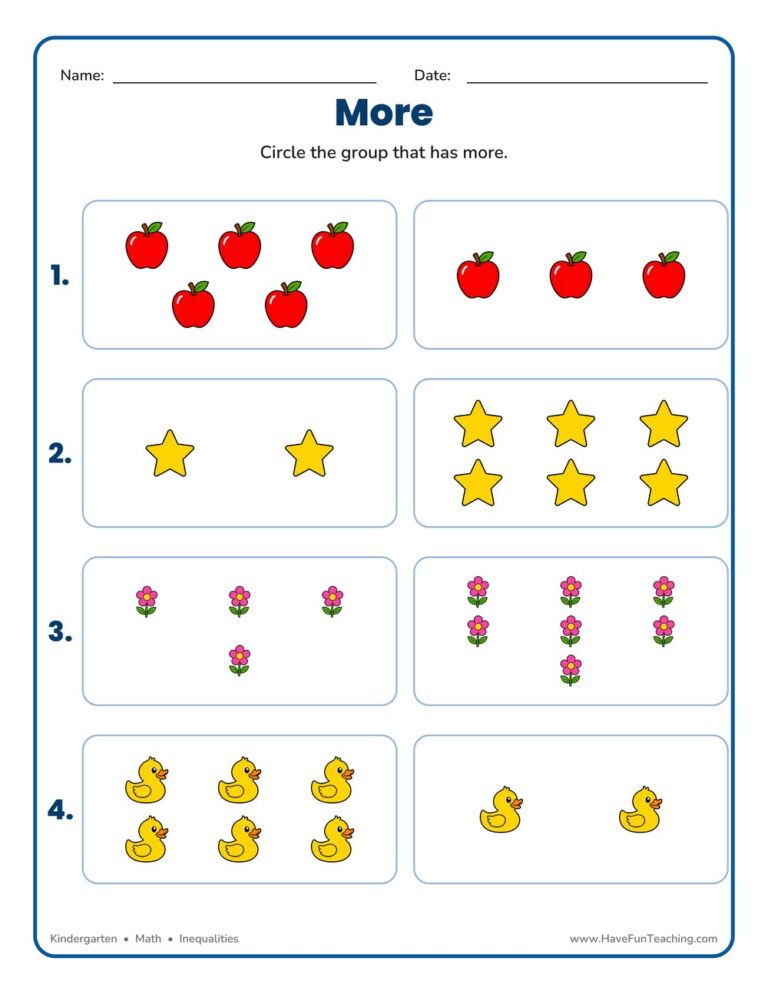
WorksheetKindergartenCircling Groups with More Worksheet

This Circling Groups with More Worksheet lets kindergarten students count two picture groups and circle the one with more. Includes an answer key — a fun, no-prep way to build early number sense.

Worksheet
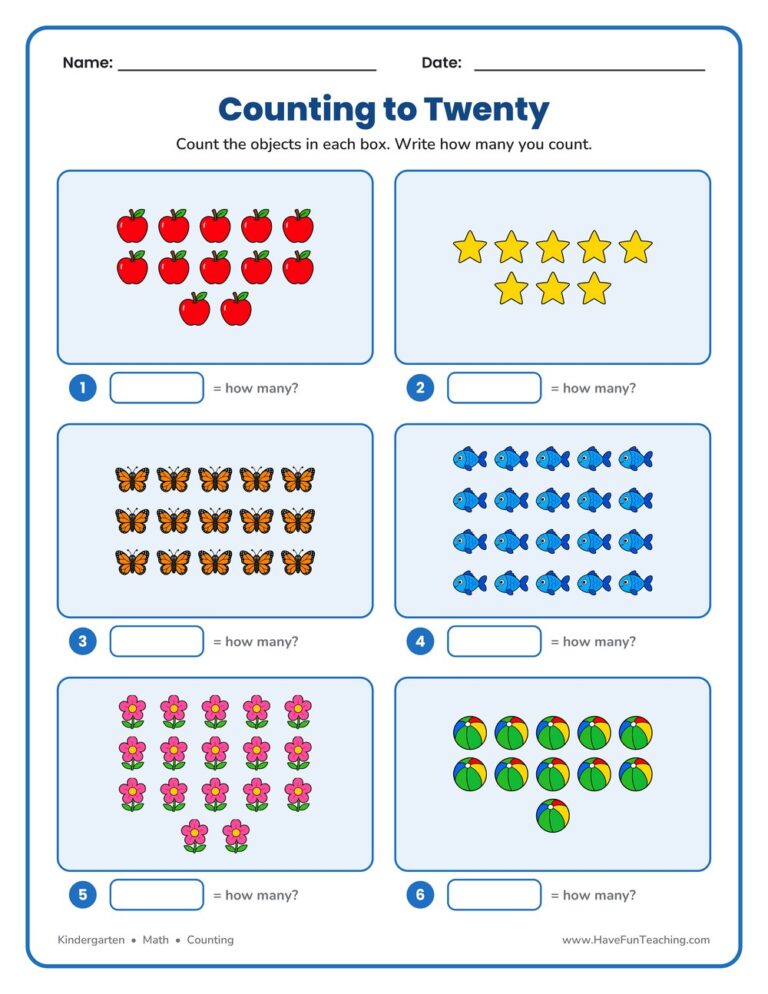
WorksheetKindergartenCount to 20 Objects Worksheet

The Count to 20 Objects Worksheet lets kindergarten students count sets of fun pictures up to twenty and write how many. Includes a complete answer key for a colorful, no-prep way to build counting confidence.

Worksheet
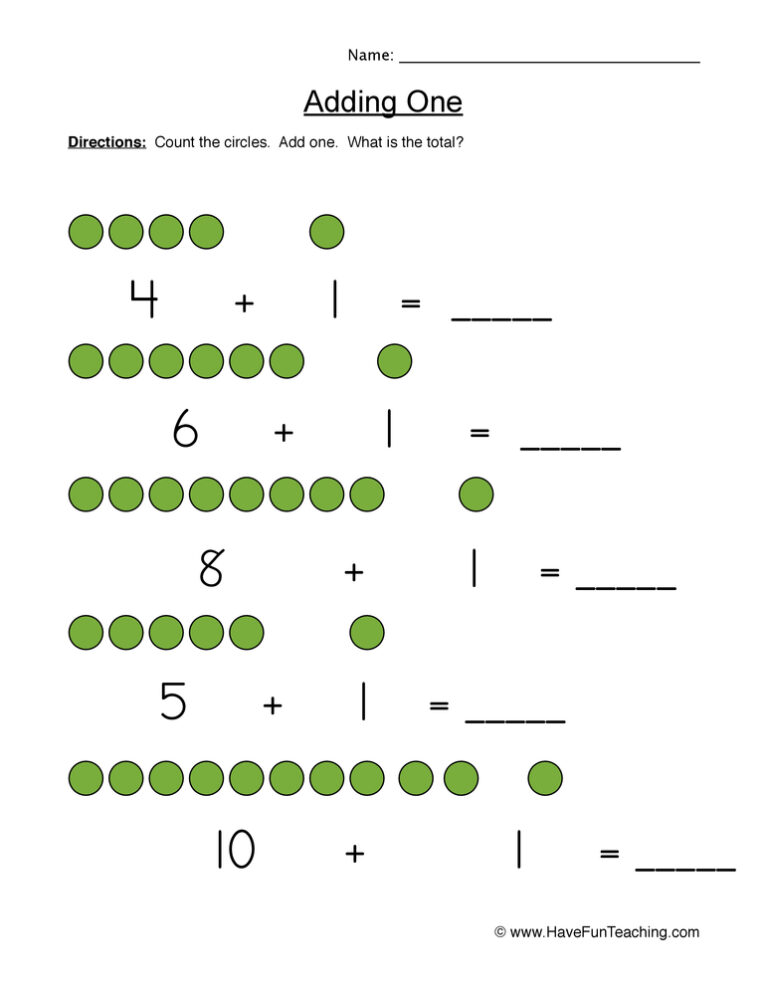
WorksheetKindergartenAdding One Using Pictures Worksheet

This Adding One Using Pictures Worksheet gives Kindergarten students six picture problems and four number sentences for adding one, with an answer key, so counting on becomes something they can see.

Worksheet
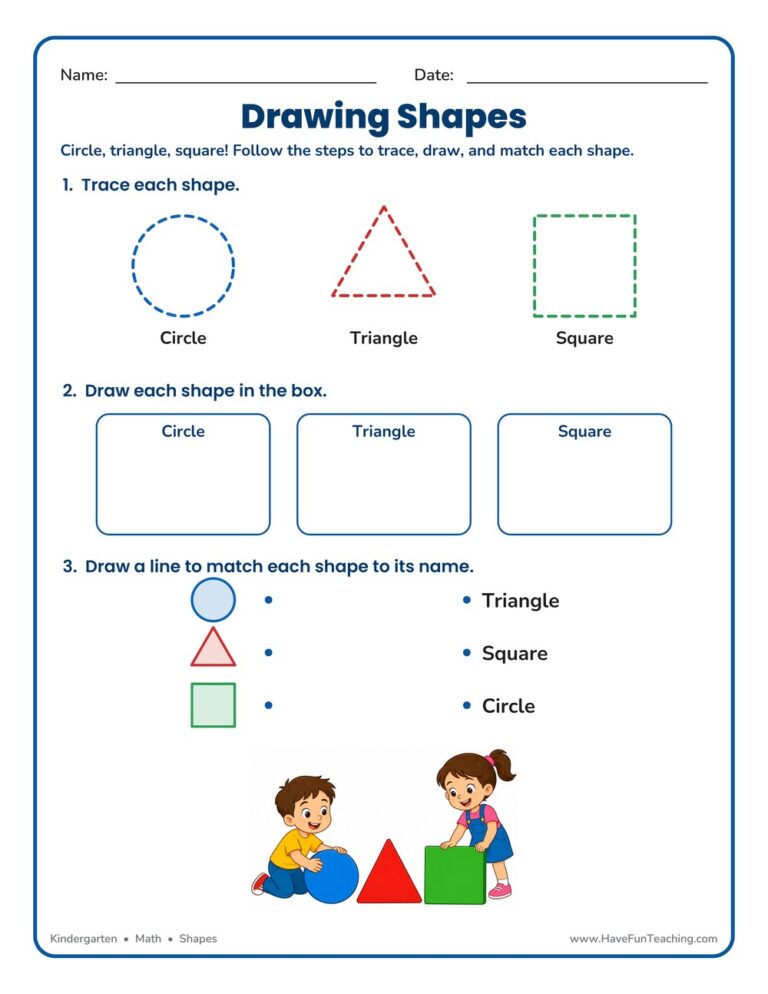
WorksheetKindergartenDrawing Circle, Triangle, Square Shapes Worksheet

A Kindergarten drawing circle, triangle, square shapes worksheet where children trace, draw, and match a circle, triangle, and square. Includes an answer key — a simple, no-prep way to build early shape skills.

Worksheet
WorksheetKindergartenToy Counting 1-5 Worksheet

This toy counting 1-5 worksheet gives kindergarten students practice counting groups of toys, writing the numeral, and filling in missing numbers. An answer key is included.

Worksheet
WorksheetKindergartenSubtracting Using Pictures Assessment Worksheet

Use the Subtracting Using Pictures Assessment Worksheet to check that your Kindergarten learners can take away within 10 using picture models. An answer key is included, so checking work takes seconds.

Worksheet
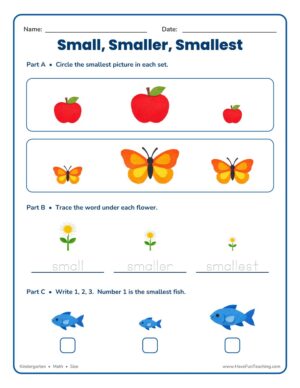
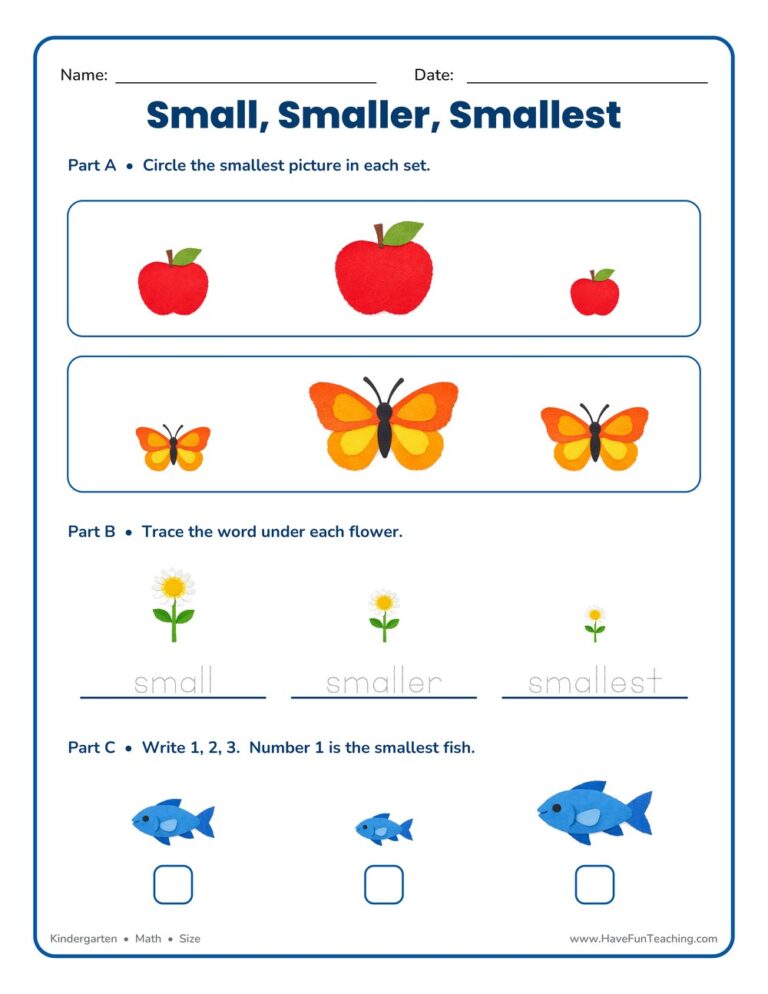
WorksheetKindergartenSmall Smaller Smallest Worksheet

This Small Smaller Smallest Worksheet helps Kindergarten students compare three objects, trace the size words, and order pictures from smallest to largest. Answer key included, so size practice is ready in minutes.

Worksheet
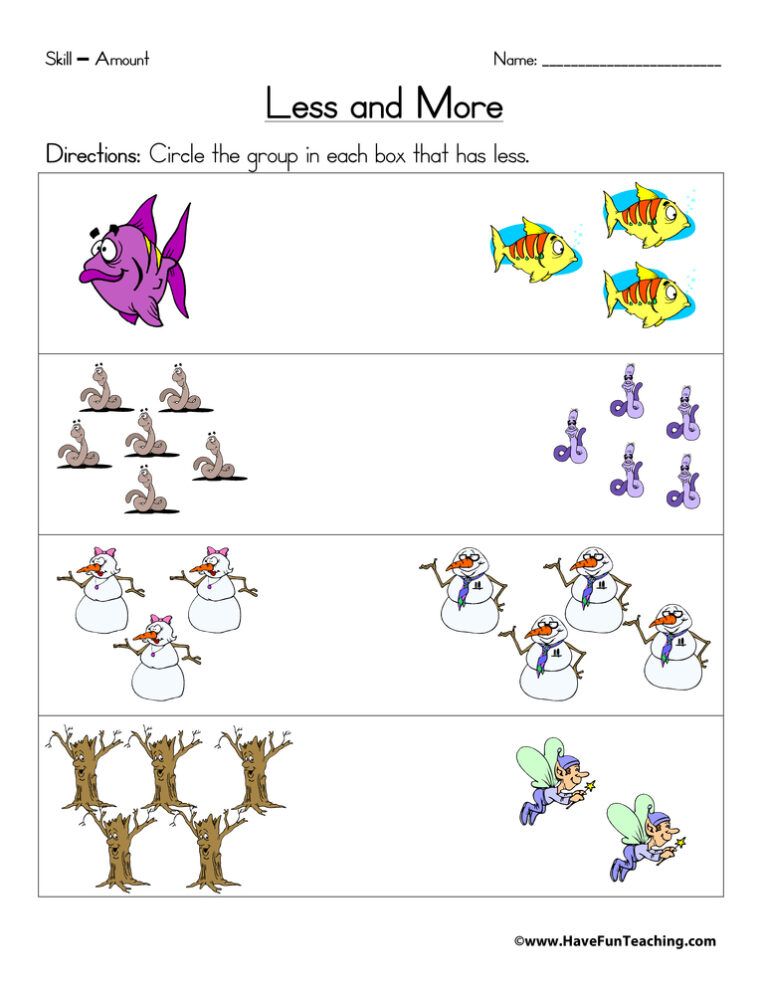
WorksheetKindergartenLess and More Worksheet

This Less and More Worksheet asks Kindergarten students to count two picture groups and circle the side with less, then the side with more, and it comes with an answer key.

Worksheet
WorksheetKindergartenJoining Groups to Add Worksheets

These Joining Groups to Add Worksheets give Kindergarten students four picture problems to count, join, and total within 10. An answer key is included, so first addition practice is quick to check.

Worksheet
WorksheetKindergartenLabeling Ordinal Numbers Worksheet

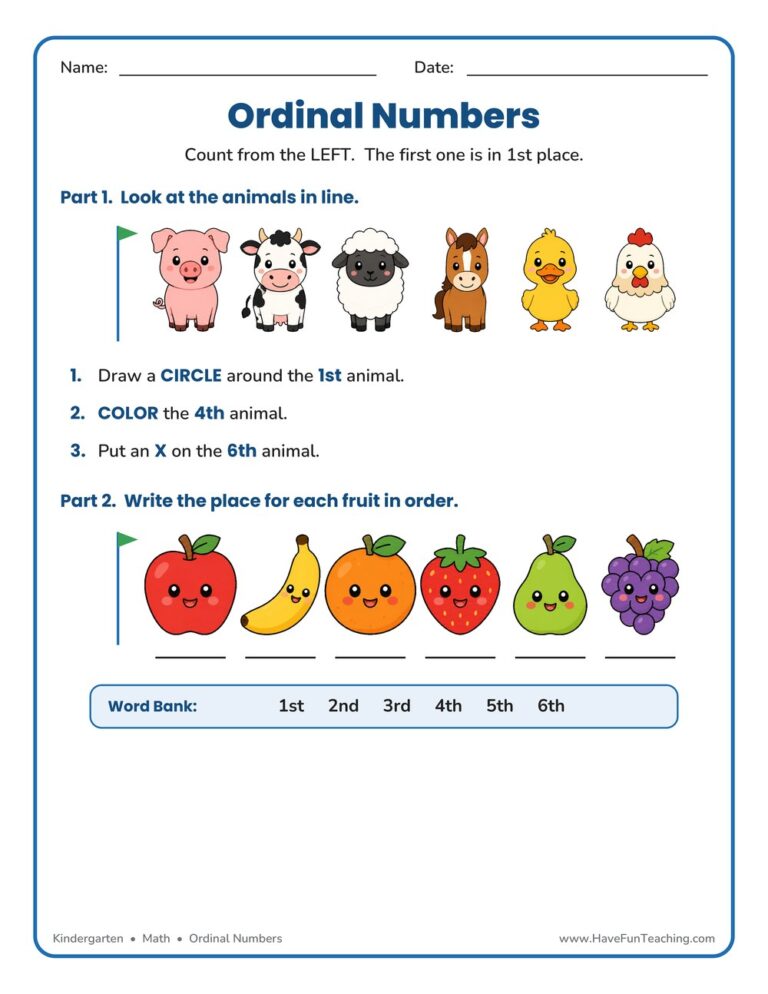
A picture-based labeling ordinal numbers worksheet that helps kindergarten students count from the left and name positions from first to sixth using farm animals and fruit. Answer key included for quick, no-prep math practice.

Worksheet
WorksheetKindergartenSorting Shapes Worksheet

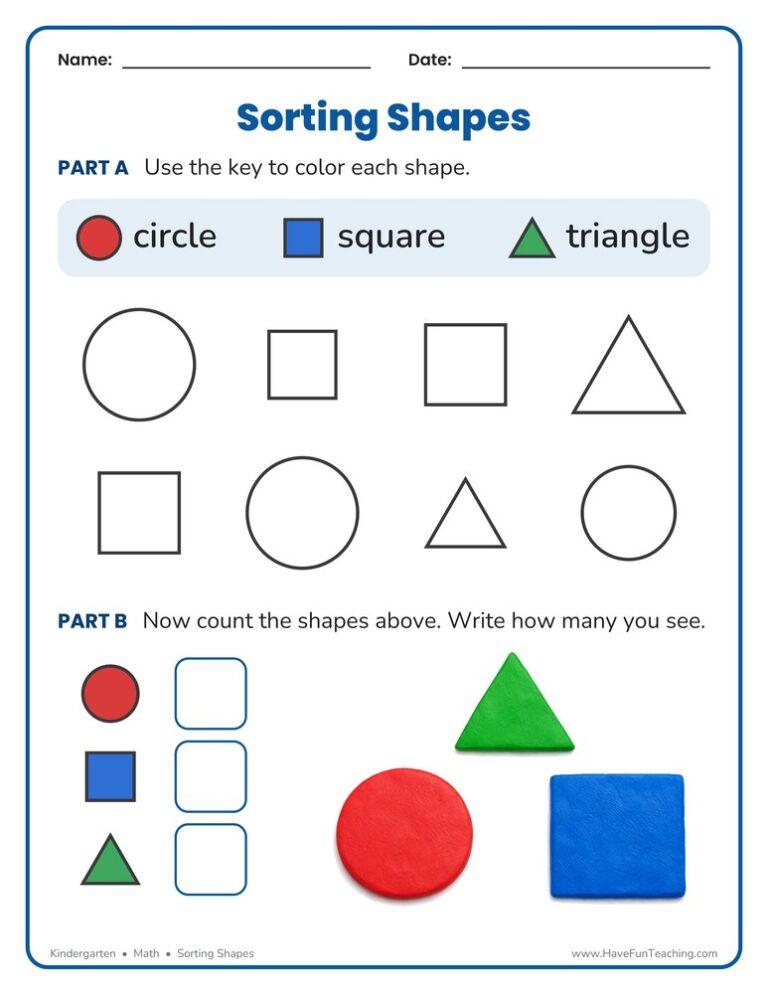
This Sorting Shapes Worksheet gives Kindergarten students eight shapes to color by category and three groups to count, using a simple red, blue and green key. An answer key is included, so shape practice is ready to print and go.

Worksheet
WorksheetKindergartenCounting to 100 Assessment Worksheet

This Counting to 100 Assessment Worksheet asks kindergarten students to fill in the missing numbers on a hundreds chart, all the way to 100. Includes an answer key for quick, no-prep number check-ins.

Worksheet
WorksheetKindergartenTaking Away to Subtract Worksheet

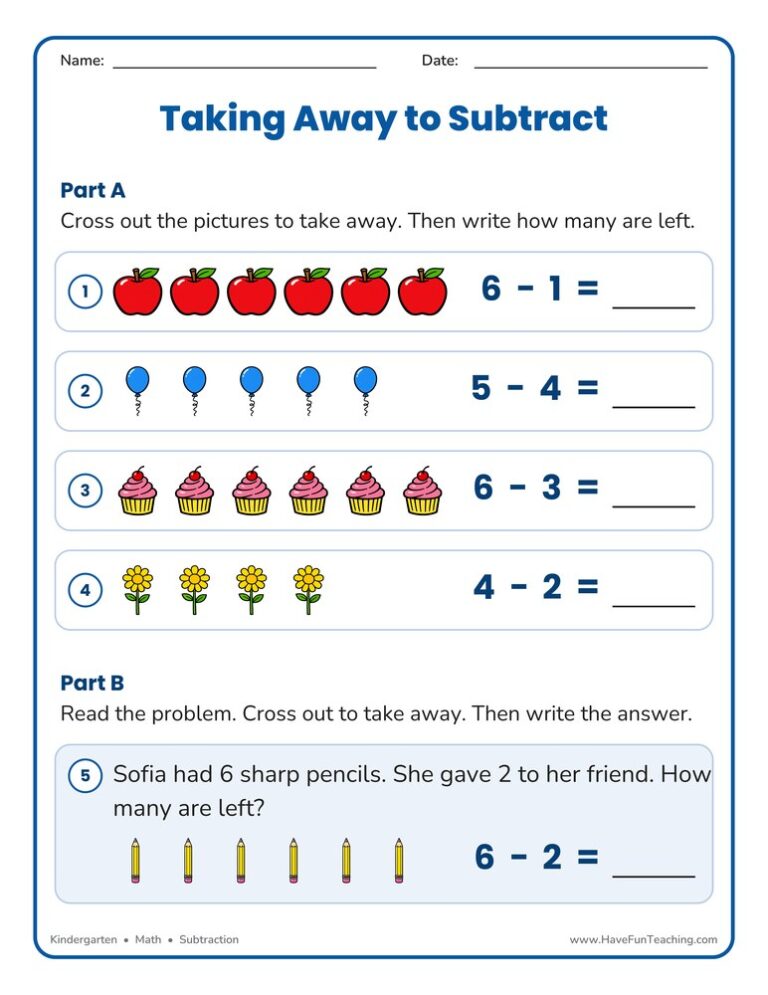
This Taking Away to Subtract Worksheet gives kindergarten students four cross-out picture problems and one word problem, with an answer key included, so subtraction within six feels concrete and easy to check.

From our teachers' playbook

Counting, shapes and so much sorting

What do kindergarteners learn in math?

Kindergarten math builds the foundation for everything that comes next. Kids count to 100 by ones and tens, count groups of objects up to 20 and write numbers from 0 to 20. They compare groups to tell which has more or fewer, and they add and subtract within 10 using objects and fingers. They name flat and solid shapes like circles, triangles, cubes and cones, and they compare things by size: small, smaller, smallest. They also sort objects into groups and count each group. The click comes when a child glances at five dots and just knows it is five without counting!

Our favorite ways to teach kindergarten math

Kindergarten math should be hands-on, playful and full of talk. These moves do all three.

Flash the dots

Flash a dot card for two seconds and ask, "How many?" Kids shout the number without counting. Quick looks at dot patterns, called subitizing, build number sense faster than counting one by one.

Why it works: children learn more from words and pictures together than from words alone (Mayer, 2009).

Subitize 1 to 10 Flash CardsTry it withSubitize 1 to 10 Flash CardsFlash CardsOpen it →

Sing the shapes

Play a shapes song and have kids draw each shape in the air as they hear it. Then go on a shape hunt around the room. Singing gives kids the names, and hunting shows them shapes are everywhere.

Why it works: a catchy, repeating tune gives the brain a hook to hang words on, so sung text is remembered better (Wallace, 1994).

Shapes SongTry it withShapes SongSongsOpen it →

Sort and count

Dump a bin of buttons or toys and let kids sort them any way they like: color, size or shape. Then count each group and ask which has more. Sorting is a math skill all by itself, and it leads naturally into counting and comparing.

Why it works: kids understand an idea best when they touch it, then draw it, then write it, the order the U.S. Department of Education recommends for elementary math.

Sorting Objects WorksheetTry it withSorting Objects WorksheetWorksheetsOpen it →

What's on this page

Teacher favorites right now: Blank Calendar, Paper Cube Template and Grouping into Categories Worksheet.

Questions parents and teachers ask about kindergarten math

What math should a kindergartener know?

By the end of kindergarten, kids should count to 100 by ones and tens, count objects to 20, write numbers 0 to 20, add and subtract within 10, compare numbers and name basic shapes.

How can I help my kindergartener with math at home?

Count everything: stairs, snacks, toys in the bath. Ask "Which pile has more?" and play simple board games with dice. Everyday math talk builds strong number sense.

What is subitizing?

Subitizing is seeing a small group and knowing how many without counting, like the dots on a die. It is an important early math skill that helps kids add and subtract later.

Should kindergarteners memorize math facts?

Not yet. Kindergarteners should add and subtract within 5 quickly, but the focus is understanding. Most fact practice comes in 1st and 2nd grade.