Skip to content
Start My 3 Free Days $0 today · cancel anytime

Subtraction Activities

28 subtraction activities. Teacher favorites: Finding 10 More 10 Less Activity and Subtraction as an Unknown Addend Activity. How teachers use these

Subtraction Activities

28 subtraction activities. Teacher favorites: Finding 10 More 10 Less Activity and Subtraction as an Unknown Addend Activity. How teachers use these

Activity
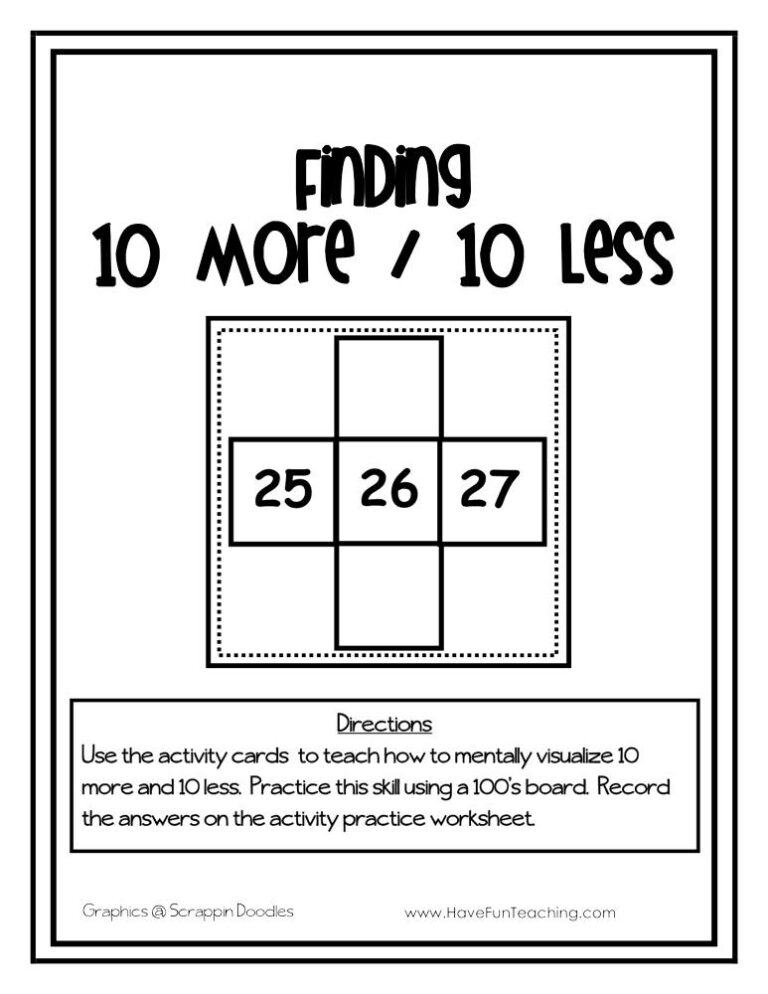
Activity1st GradeFinding 10 More 10 Less Activity

This finding 10 more 10 less activity helps 1st and 2nd grade children use a hundred chart to find 10 more and 10 less. Practice page and answer key included.

Activity
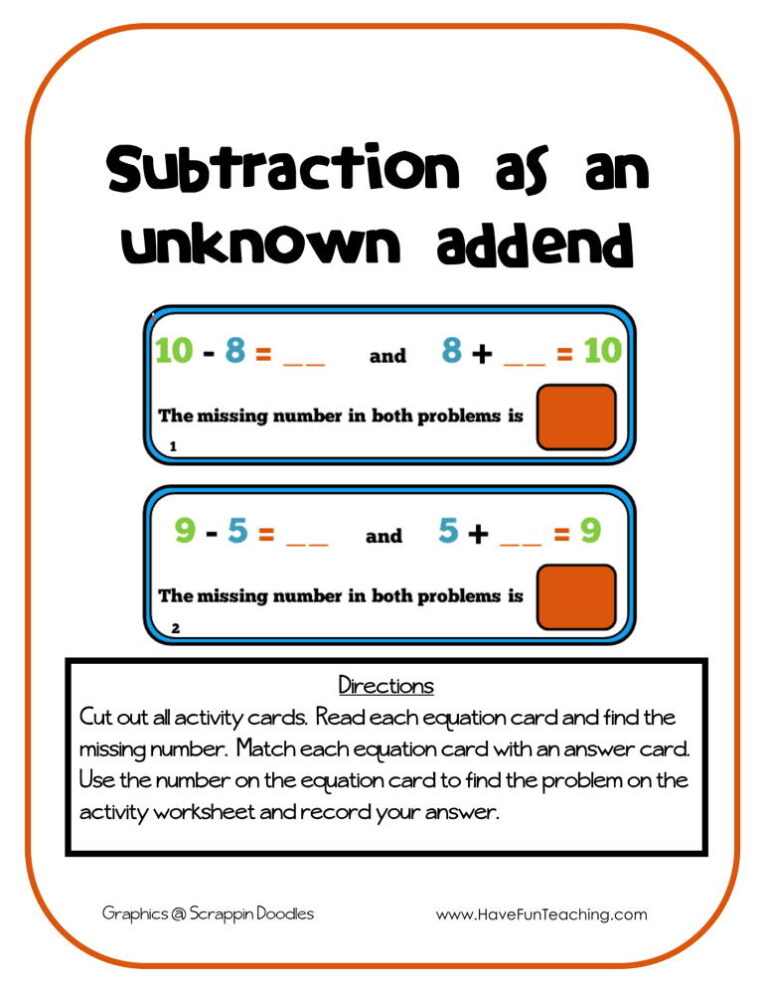
ActivityKindergartenSubtraction as an Unknown Addend Activity

This subtraction as an unknown addend activity helps K through 2nd grade students solve subtraction within 20 by matching each fact to its addition fact card. Answer key included.

Activity
Activity1st GradeSubtracting 10 Using a Number Line Activity

This subtracting 10 using a number line activity helps 1st and 2nd grade students take away tens by hopping back on a number line. An answer key is included for easy checking.

Activity
Activity1st GradeAdding and Subtracting Unknown Numbers Activity

Find the missing number in equations within 20 with this adding and subtracting unknown numbers activity for 1st and 2nd grade: matching cards, a recording sheet and practice, answer key included.

Activity
Activity2nd GradeAdding and Subtracting to 1000 Activity

Children solve three-digit addition and subtraction problems with regrouping and fit each problem to its answer in 12 self-checking puzzles. For 2nd and 3rd grade; work sheet, practice page and answer key included.

Activity
ActivityKindergartenDecomposing a Ten Frame Activity

This decomposing a ten frame activity helps kindergarten to 2nd grade students match ten frames to facts that make 10, with a practice page and answer key included.

Activity
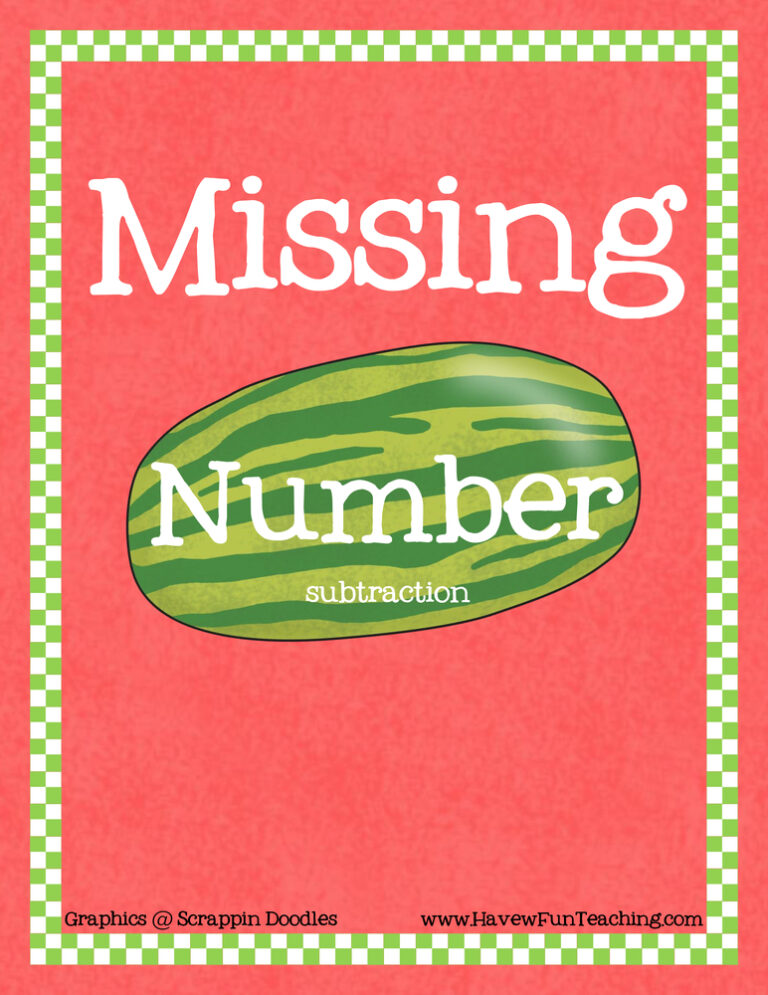
Activity1st GradeMissing Number Subtraction Activity

This missing number subtraction activity gives 1st and 2nd grade students watermelon task cards that check themselves, plus a practice page. An answer key is included.

Activity
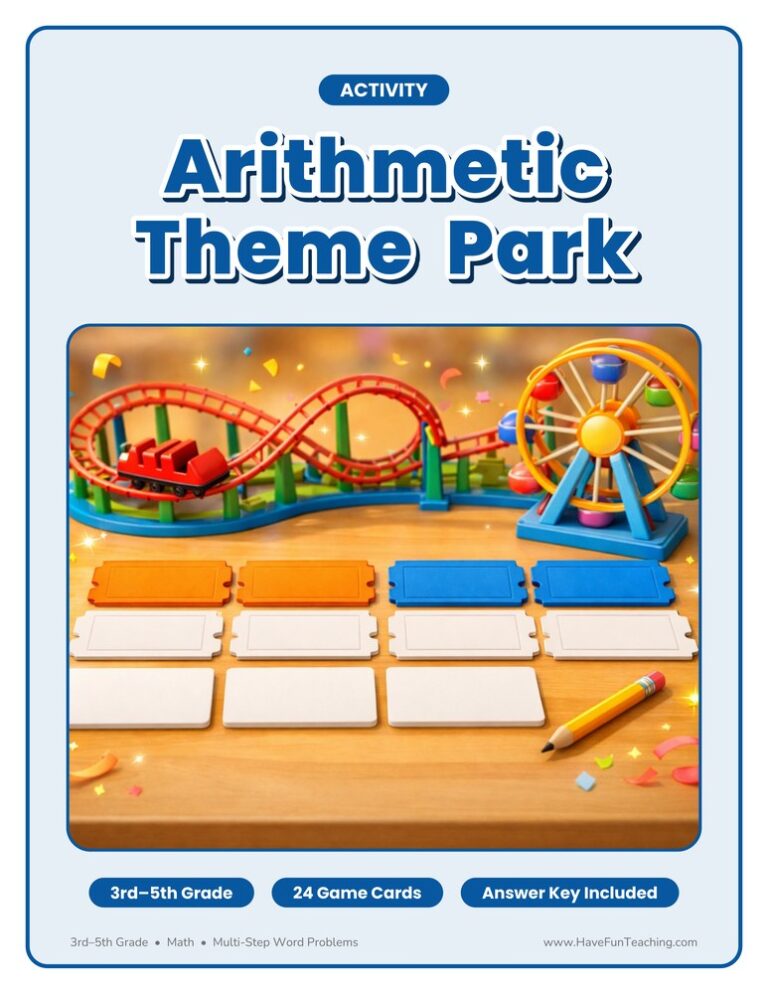
Activity3rd GradeArithmetic Theme Park Multi-Step Word Problems Activity

This arithmetic theme park multi-step word problems activity has 3rd to 5th graders solve ticket problems and match each answer to a ride. Answer key included.

Activity
ActivityKindergartenMissing Number Addition Activity

This missing number addition activity has children draw watermelon slices to find the unknown addend in 18 problems within 10. Made for kindergarten and 1st grade, with a practice page and answer key included.

Activity
Activity2nd GradeIce Fishing Addition Subtraction Within 100 Activity

This ice fishing word problems activity gives 2nd and 3rd graders 12 task cards for adding and subtracting lengths within 100, with recording sheets. Answer key included for quick checking.

Activity
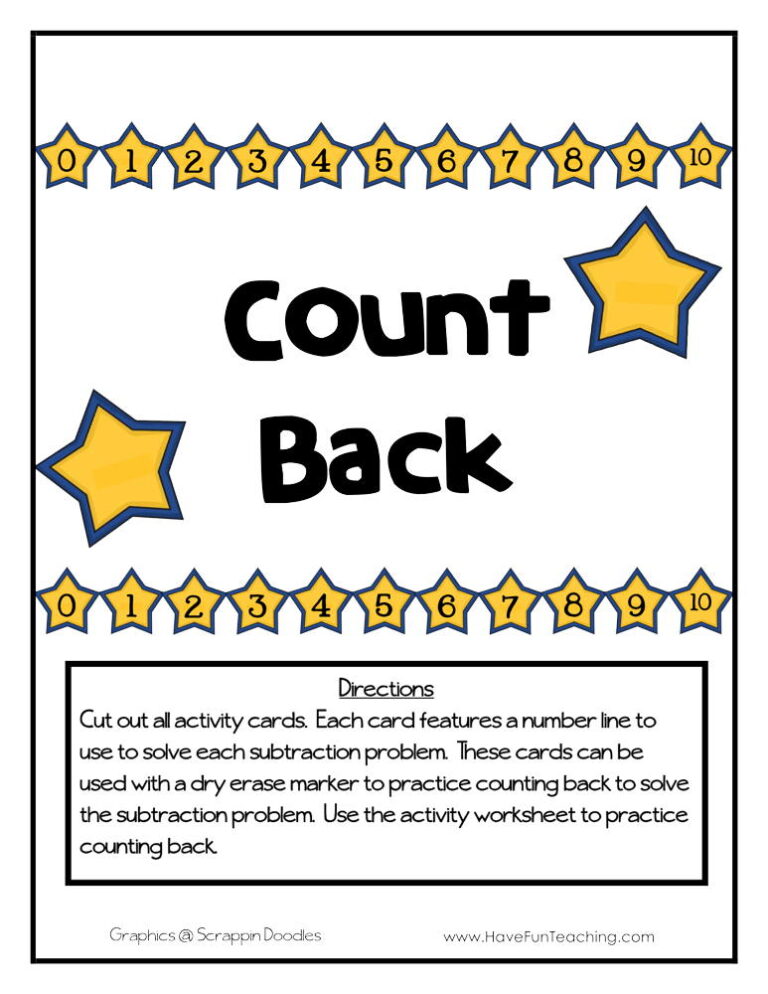
ActivityKindergartenCount Back Activity

Using Count Back Activity, students count back from one number to another number to solve the subtraction equations.

Activity
ActivityKindergartenMissing Number Addition and Subtraction Activity

Using Missing Number Addition and Subtraction Activity, students fill in the missing addends to complete the addition and subtraction number sentences.

Activity
ActivityKindergartenSubtraction Within 5 Activity

This subtraction within 5 activity has kindergarten and 1st grade children solve peanut butter jar problems and match them to jelly jar answers. Answer key included.

Activity
Activity1st GradeLet's Workout Our Brain Add Subtract Within 20 Activity

This Let's Workout Our Brain Add Subtract Within 20 activity gives 1st-2nd grade students two mental math card games, a score sheet and a practice page, with an answer key included.

Activity
Activity1st GradeAdd and Subtract with Frogs Activity

This add and subtract with frogs activity has 1st and 2nd Grade students flip lily pad cards and spin to add or subtract within 20, with a record sheet, practice page and answer key included.

Activity
ActivityKindergartenSingle Digit Subtraction Activity

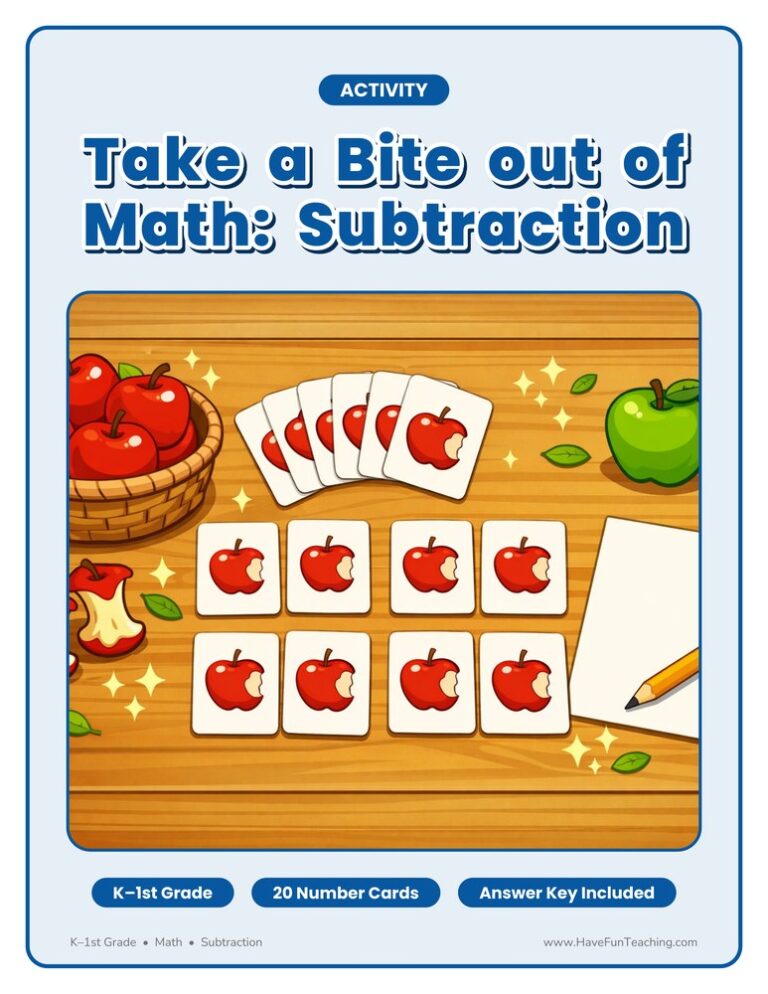
This single digit subtraction activity has kindergarten and 1st grade students draw apple number cards, subtract, and record each difference. Answer key included.

Activity
ActivityKindergartenSubtraction in the Garden Subtraction Activity

This subtraction in the garden subtraction activity lets kindergarten and 1st grade children plant, pick and count paper vegetables to solve take-away problems within 10. Answer key included.

Activity
Activity3rd GradeMovie Math Add and Subtract Multi-Digit Numbers Activity

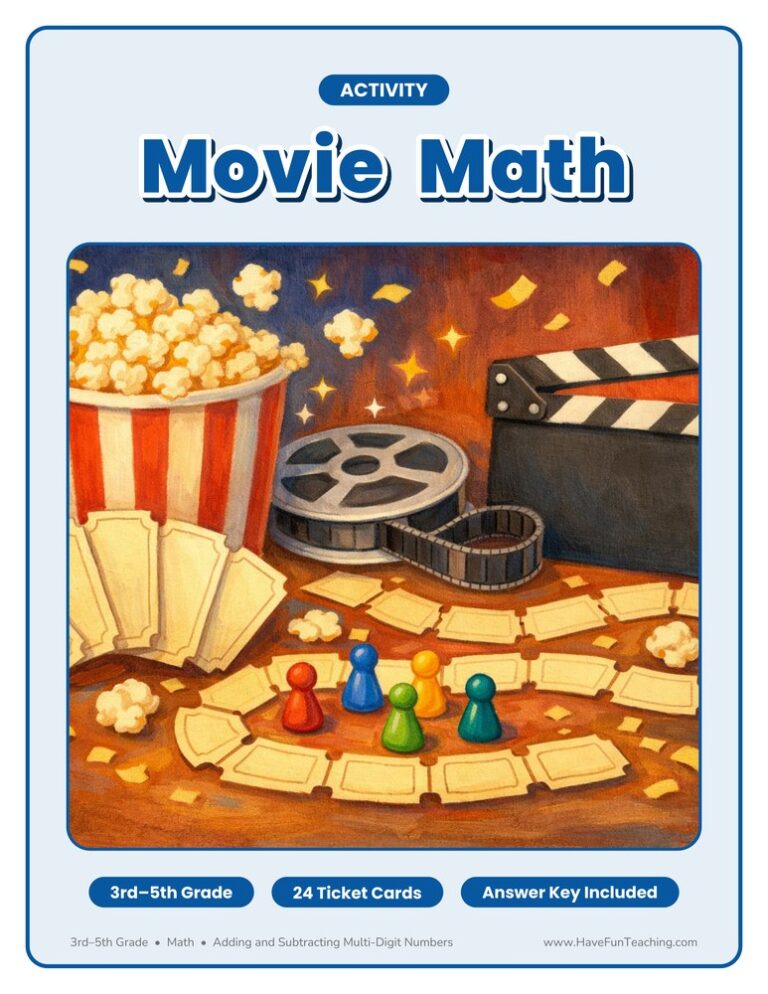
This movie math add and subtract multi-digit numbers activity is a popcorn board game for 3rd to 5th grade with 24 ticket cards that all need regrouping. A practice page and answer key are included.

Activity
Activity4th GradeMaking Inferences Math Operations Activity

This making inferences math operations activity helps 4th and 5th grade students use clue words to choose the right operation and solve word problems. An answer key is included for quick checking.

Activity
ActivityKindergartenAdding to Make 10 Activity

Using Adding to Make 10 Activity, students match addition equation cards with missing addend cards to show equations that make 10.

From our teachers' playbook

Take away, count back, figure it out

What do kids learn about subtraction?

Subtraction grows a lot across elementary school. Kindergartners take away objects and count what's left. First and second graders count back, use fact families, and subtract within 20 and then 100. By third and fourth grade they regroup across hundreds and thousands, and fifth graders subtract decimals. The big idea underneath all of it: subtraction can mean taking away or finding the difference. When kids see that 13 − 9 is the same as "how far from 9 to 13?", the hard facts get easy.

How we teach subtraction so it makes sense

Subtraction trips kids up more than addition does. These three moves turn "I don't get it" into "Oh, I just count up!"

Count back on a number line

Tape a big number line on the floor. For 12 − 4, a child stands on 12 and hops back 4 while the class counts "11, 10, 9, 8." Then they do the same hops with a finger on a paper number line. Moving their body makes "back" and "less" feel real.

Why it works: going from real objects to pictures to symbols is a core recommendation of the U.S. Department of Education's elementary math guide.

Counting Back to Subtract WorksheetTry it withCounting Back to Subtract WorksheetWorksheetsOpen it →

Think addition, solve subtraction

Ask "What number plus 9 makes 13?" and let kids talk about how they figured it out. Some count up, some use 10 as a stop. Sharing those strategies out loud shows every kid there's more than one way, and fact families stop feeling like magic.

Why it works: when kids say the precise math words, their understanding gets sharper, a recommendation of the U.S. Department of Education's elementary math guide.

Finding the Missing Number WorksheetTry it withFinding the Missing Number WorksheetWorksheetsOpen it →

Mix regrouping and no regrouping

When every problem on a page needs regrouping, kids regroup on autopilot. Mix them up so students have to look first and decide: "Do I need to borrow here?" That one question prevents most regrouping mistakes.

Why it works: shuffled practice teaches kids to choose the right strategy, not just repeat one, and it improved test scores in research (Rohrer and Taylor, 2007).

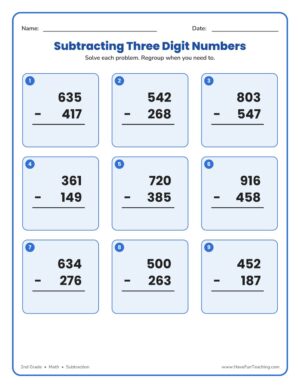
Triple Digit Subtraction Regrouping WorksheetTry it withTriple Digit Subtraction Regrouping WorksheetWorksheetsOpen it →

Subtraction questions from teachers and parents

What is the easiest way to teach subtraction?

Start with real objects and taking away. Then move to counting back on a number line, and finally to fact families that connect subtraction to addition. Kids who can think "9 + ? = 13" solve 13 − 9 fast.

What grade do kids learn subtraction with regrouping?

Most kids learn two-digit regrouping in 2nd grade and three-digit regrouping in 2nd and 3rd grade. Four-digit regrouping usually comes in 4th grade.

Why does my child struggle with regrouping?

Usually it's place value. If a child doesn't see that one ten equals ten ones, borrowing feels like a random trick. Practice trading a ten rod for ten cubes with base ten blocks.

What's the difference between take away and finding the difference?

Take away starts with one group and removes some. Finding the difference compares two groups to see how far apart they are. Both are subtraction, and kids need practice with each.