Skip to content
Start My 3 Free Days $0 today · cancel anytime

Prompts Worksheets

95 prompts worksheets. Teacher favorites: You Write the Story Helping Picture Worksheet and Writing Graphic Organizer Worksheet. How teachers use these

Prompts Worksheets

95 prompts worksheets. Teacher favorites: You Write the Story Helping Picture Worksheet and Writing Graphic Organizer Worksheet. How teachers use these

Worksheet
Worksheet2nd GradeYou Write the Story Helping Picture Worksheet

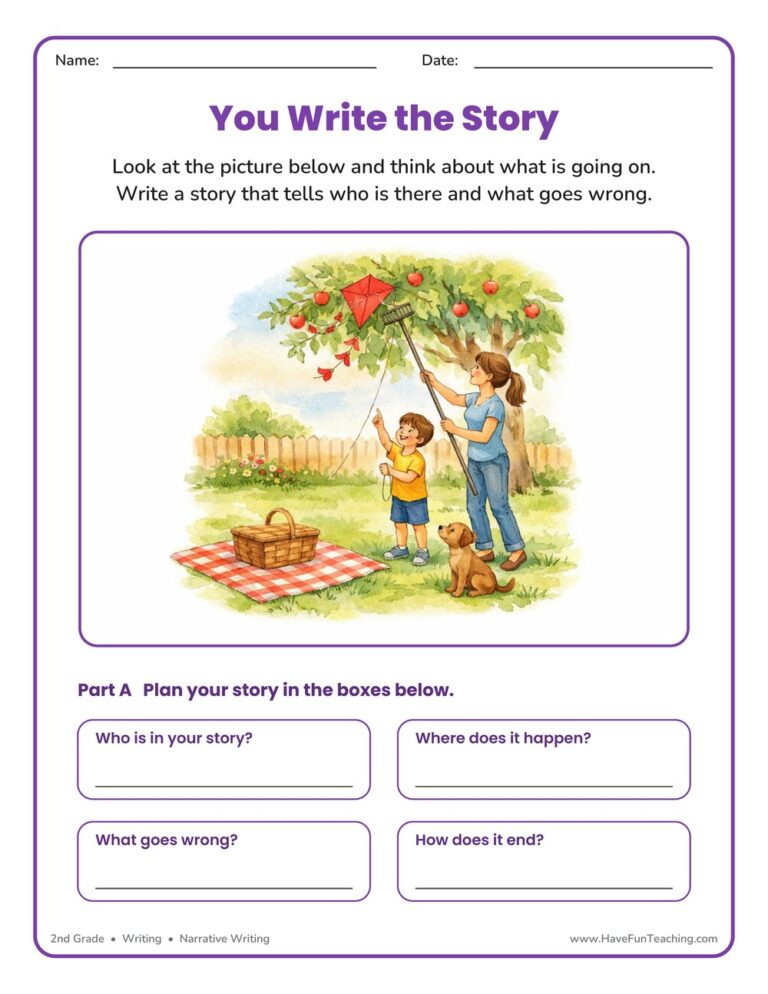
The You Write the Story Helping Picture Worksheet gives 2nd Grade writers a detailed picture, a four-box story planner, and guided beginning, middle, and end lines so every child can draft an original narrative with confidence.

Worksheet
Worksheet2nd GradeWriting Graphic Organizer Worksheet

This Writing Graphic Organizer Worksheet helps 2nd graders plan informative writing by choosing a topic, listing three facts, and adding a closing sentence. A simple, no-prep planning page for confident, organized young writers.

Worksheet
Worksheet2nd GradeYou Write the Story Kids Picture Worksheet

A You Write the Story Kids Picture Worksheet that gives 2nd graders a kite-stuck-in-a-tree picture prompt and eight wide lines to write their own narrative, naming the characters and telling what happens next.

Worksheet
Worksheet3rd GradeOctober Daily Journal Prompts

This October Daily Journal Prompts worksheet gives 3rd grade students sixteen seasonal writing starters, one for each writing day of the month, to build daily writing fluency and confidence.

Worksheet
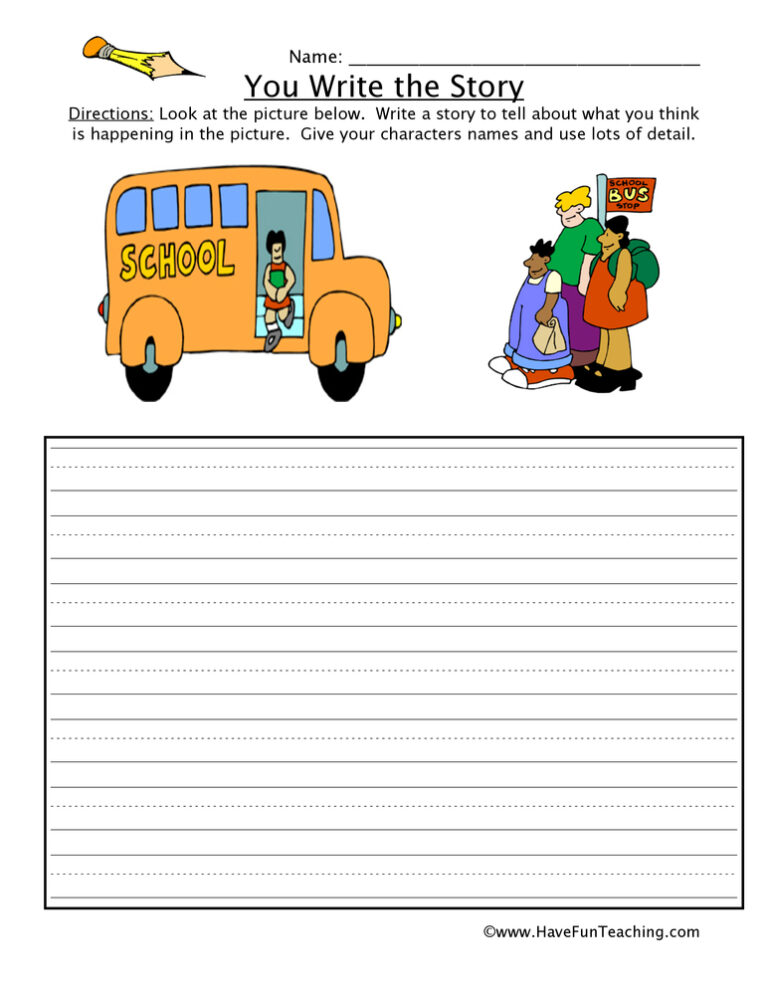
Worksheet2nd GradeYou Write the Story School Picture Worksheet

Turn one picture into a story with this you write the story school picture worksheet. 2nd graders name the characters at the bus stop and write what happens next on eight ruled lines.

Worksheet
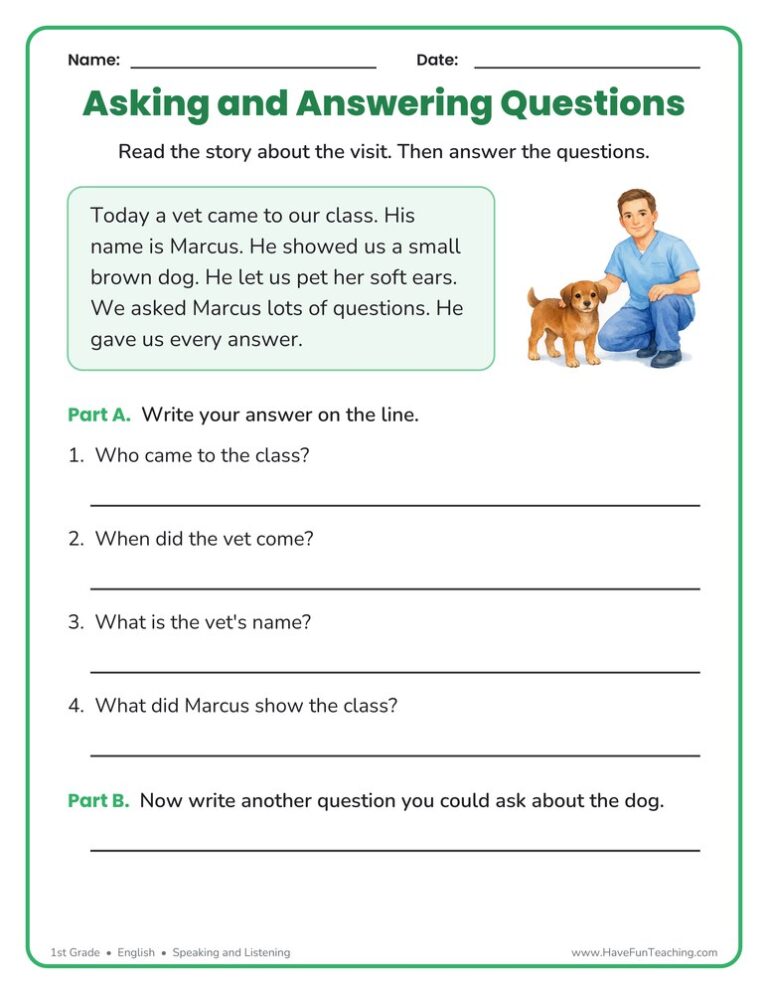
Worksheet1st GradeAsking and Answering Questions Worksheet

This Asking and Answering Questions Worksheet gives 1st Grade students a short story, four text-based questions, and room to write a question of their own. Answer key included, so checking work takes seconds.

Worksheet
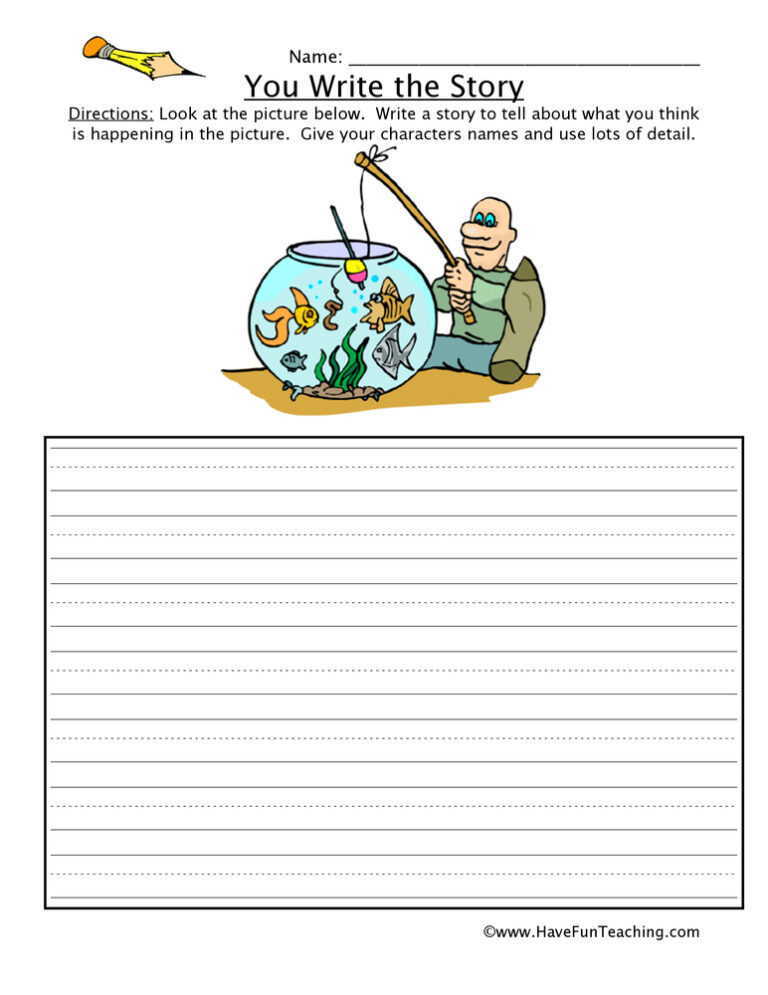
Worksheet2nd GradeYou Write the Story Fishing Picture Worksheet

This you write the story fishing picture worksheet gives 2nd Grade students a lakeside scene and eight writing lines, so every child names the characters and tells the story their own way.

Worksheet
Worksheet2nd GradeMy Experience Worksheet

This My Experience Worksheet helps 2nd grade students find the adjective that describes each word in a short farm story, then write about a day of their own. An answer key is included.

Worksheet
Worksheet3rd GradeNovember Daily Journal Prompts

This November Daily Journal Prompts worksheet gives 3rd grade students sixteen thankful, seasonal writing starters to choose from, building a steady daily writing habit and confidence.

Worksheet
Worksheet3rd GradeWriting Formal vs. Informal Letters Worksheet

This Writing Formal vs. Informal Letters Worksheet gives 3rd Grade students practice labeling letter lines, swapping casual phrases for formal ones, and matching a letter to its reader. An answer key is included.

Worksheet
Worksheet1st GradeWriting about Animals Worksheet

Writing about Animals Worksheet helps 1st graders pick an animal they love and write what it looks like, what it eats, and where it lives on clear, roomy lines that build confident sentence writing.

Worksheet
Worksheet1st GradeSharing Experiences Worksheet

This Sharing Experiences Worksheet gives 1st Grade students a simple page for planning a true story: the topic, what happened first and next, and describing words that help a reader picture the day.

Worksheet
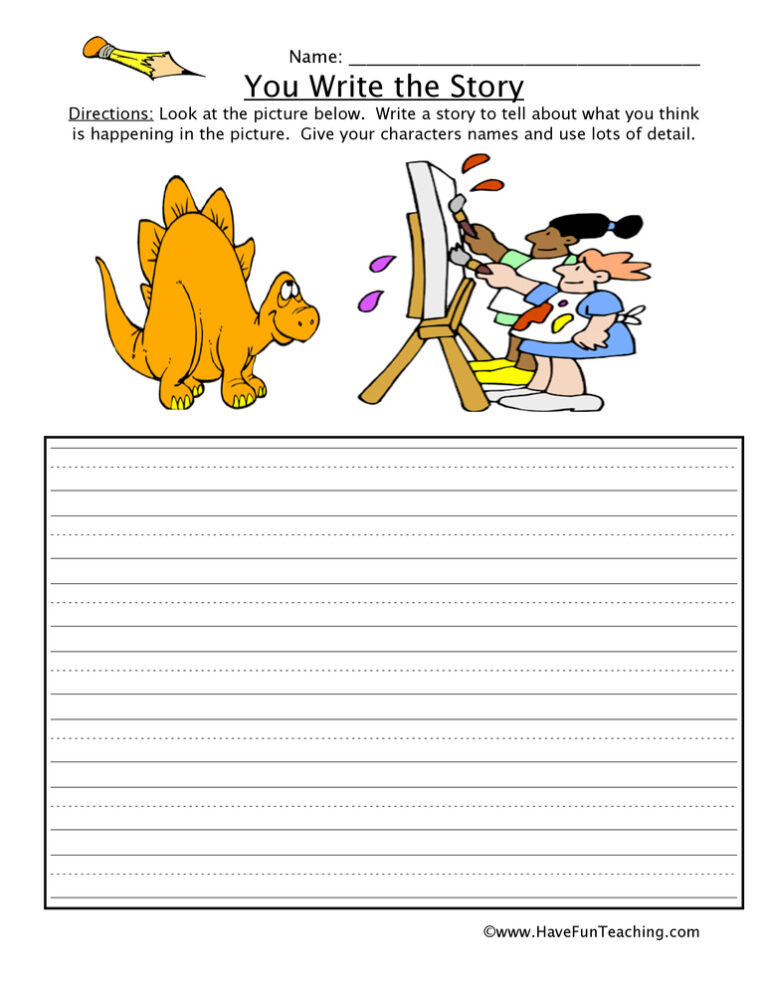
Worksheet2nd GradeYou Write the Story Artist Picture Worksheet

This you write the story artist picture worksheet gives 2nd grade students a colourful picture prompt and eight writing lines, so every child has a story to tell before the pencil even moves.

Worksheet
Worksheet1st GradeAnimal Facts Worksheet

Our animal facts worksheet teaches 1st graders to spot the name, facts, and ending in a frog piece, then write their own. Includes an answer key and builds strong informative writers.

Worksheet
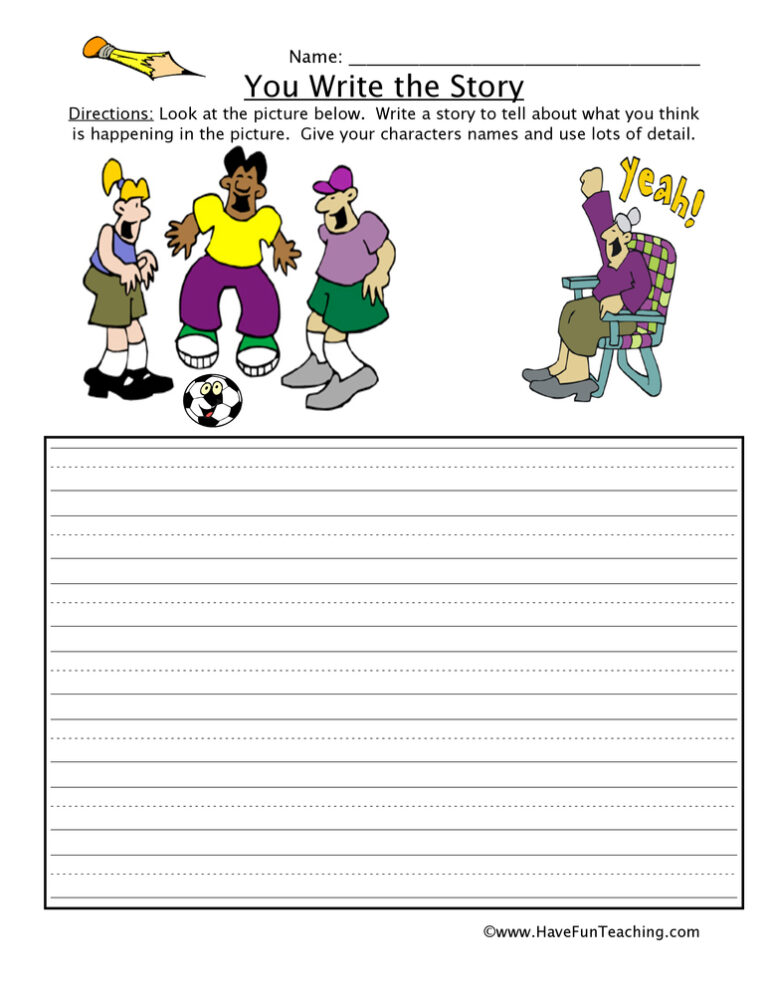
Worksheet2nd GradeYou Write the Story Soccer Picture Worksheet

Kick off story time with this you write the story soccer picture worksheet. 2nd graders name the two soccer players, then write what happens after the big kick on eight lines.

Worksheet
Worksheet1st GradeWriting about a Character Worksheet

This writing about a character worksheet asks 1st Grade students to draw a favorite book character and then write two things about them, turning any story they read into real writing practice.

Worksheet
Worksheet1st GradeWhat Would a Soldier Say? Worksheet

This What Would a Soldier Say? Worksheet gives 1st Grade students three writing prompts about a soldier they want to thank, with room to write in their own words on Memorial Day.

Worksheet
Worksheet2nd GradeExperience Narrative Worksheet

This experience narrative worksheet guides 2nd graders to plan a true story about where they were, who was there, what they did, and how they felt, then write it with describing words.

Worksheet
Worksheet3rd GradeDescribing Emotions Worksheet

This describing emotions worksheet has 3rd graders pick the feeling word each sentence supports, then swap a plain word for a stronger one. Answer key included for quick, no-prep word-choice practice.

Worksheet
Worksheet2nd GradeDescribing People and Places Worksheet

This Describing People and Places Worksheet gives 2nd graders four picture sentences to finish from a word box and four more sentences where they find the adjective. Answer key included for quick grammar practice.

From our teachers' playbook

No more "I don't know what to write!"

What do kids learn from writing prompts?

A good prompt gets kids past the blank page and into the fun part. Young writers draw a picture and add a sentence or two about it. As they grow, prompts push them into all three big kinds of writing: telling a story (narrative), explaining something (informative), and sharing an opinion with reasons. Kids learn to stay on topic, add details, and give their writing a beginning, middle and end. The click comes when a reluctant writer looks at a funny picture prompt and can't stop writing.

How we make writing prompts work

The prompt is just the spark. These moves turn it into real writing that kids are proud of.

Start with a picture

Show a picture with something happening, like a kid with a giant fish. Ask: "What happened right before this? What happens next?" Picture prompts give reluctant writers an instant story to tell.

Why it works: children learn more from words and pictures together than from words alone (Mayer, 2009).
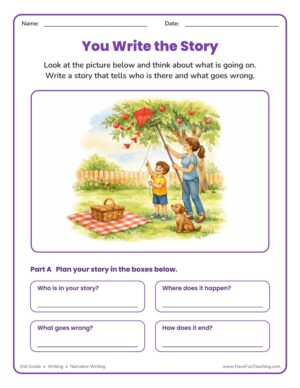
You Write the Story Helping Picture WorksheetTry it withYou Write the Story Helping Picture WorksheetWorksheetsOpen it →

Plan before you write

Give kids two minutes to fill a quick organizer: beginning, middle, end, or opinion and three reasons. A short plan keeps writing on track and stops the "and then... and then..." ramble.

Why it works: going from real objects to pictures to symbols is a core recommendation of the U.S. Department of Education's elementary math guide.

Writing Graphic Organizer WorksheetTry it withWriting Graphic Organizer WorksheetWorksheetsOpen it →

Journal every day

Five minutes of daily journal writing builds stamina better than one long writing day. Use a monthly prompt list so kids always have something to write about.

Why it works: spreading practice out over days is one of the two most effective study methods in a major research review (Dunlosky and colleagues, 2013).

October Daily Journal PromptsTry it withOctober Daily Journal PromptsWorksheetsOpen it →

Writing prompt questions

What are good writing prompts for kids?

Good prompts connect to kids' lives and imagination: "Write about the best day you ever had," "What would you do if you were invisible?" or "Should kids have homework? Why?" Picture prompts are great for younger writers.

How do I help a child who says they don't know what to write?

Talk it out first. Ask questions about the prompt and let them tell you the story out loud. Then have them write what they just said. Drawing first also helps.

How long should kids write each day?

Kindergarten and 1st graders can start with 5 to 10 minutes. Older kids can build up to 20 to 30 minutes. Daily practice matters more than long sessions.

What are the three types of writing kids learn?

Narrative writing tells a story, informative writing explains or teaches, and opinion writing shares what you think with reasons. Prompts can practice all three.