Skip to content
Start My 3 Free Days $0 today · cancel anytime

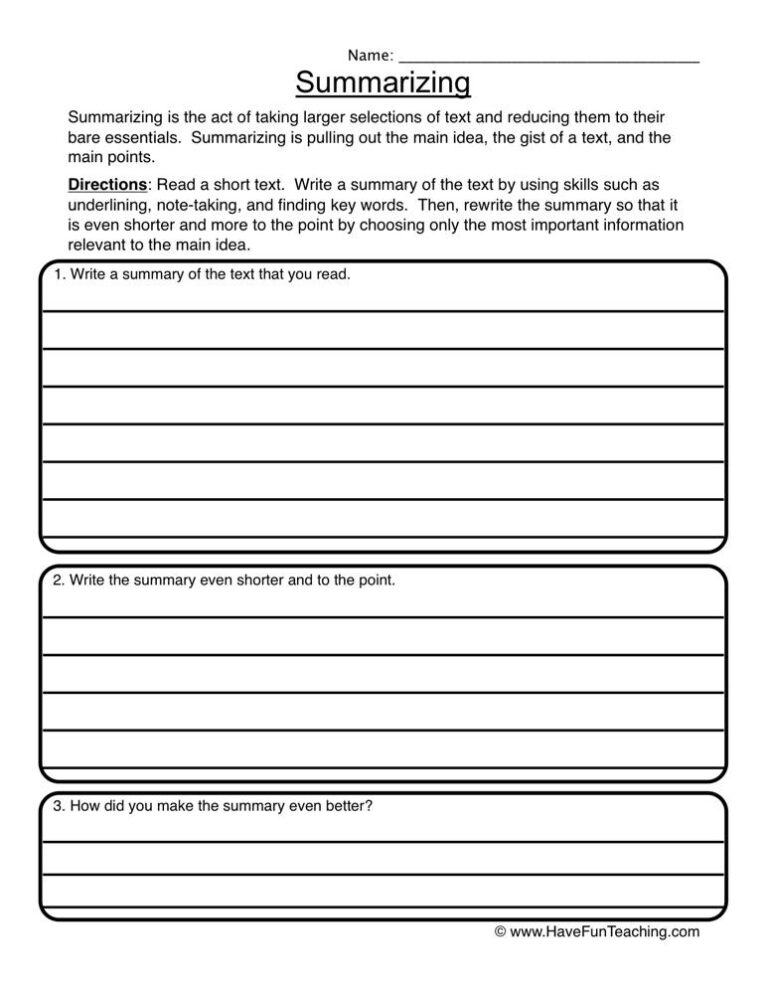
Summarizing Graphic Organizers

13 summarizing graphic organizers. Teacher favorites: Summarizing Worksheet and Informational Text Note-Taking Worksheet. How teachers use these

Find the perfect resource in seconds

Summarizing Graphic Organizers

13 summarizing graphic organizers. Teacher favorites: Summarizing Worksheet and Informational Text Note-Taking Worksheet. How teachers use these

Graphic Organizer
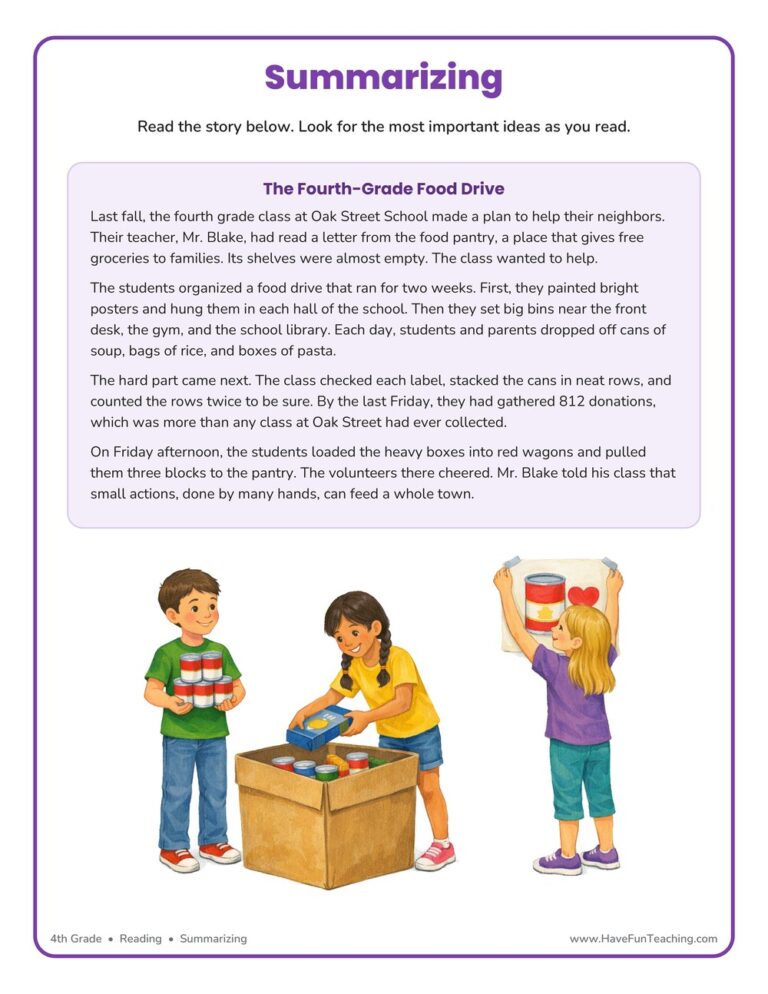
Graphic Organizer4th GradeSummarizing Worksheet

This Summarizing Worksheet asks 4th graders to read an original story, map it on a who, what, where, when, and how organizer, then write a short summary. Answer key included for fast, no-prep practice.

Graphic Organizer
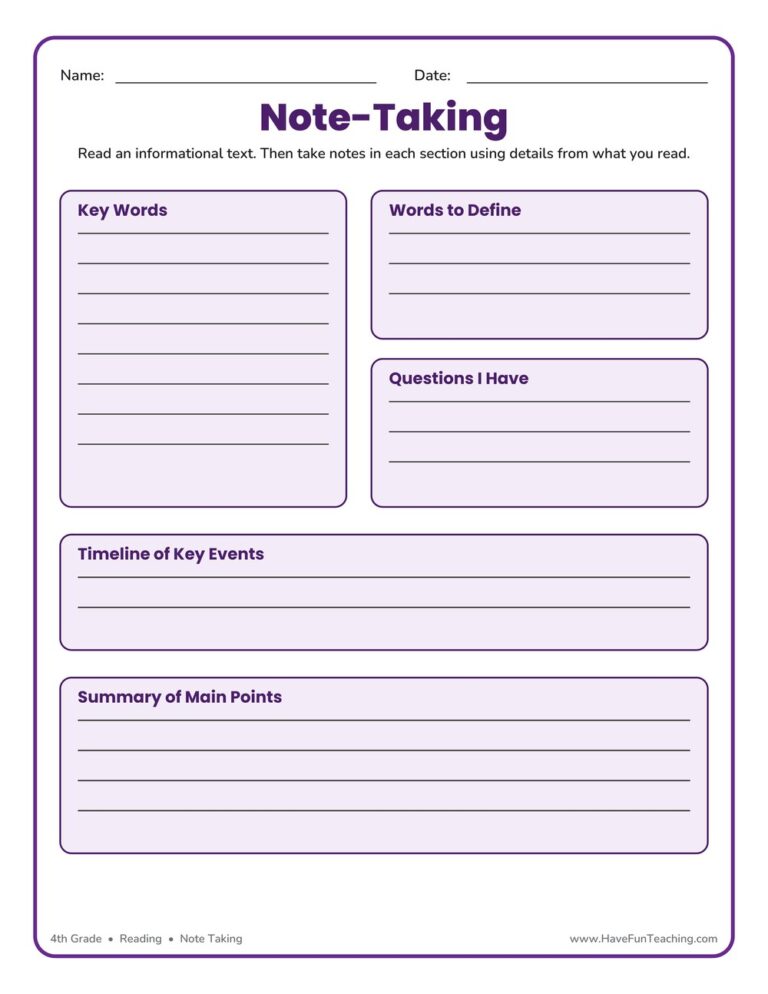
Graphic Organizer4th GradeInformational Text Note-Taking Worksheet

This Informational Text Note-Taking Worksheet gives 4th grade readers a five-section graphic organizer for recording key words, vocabulary, questions, a timeline, and a summary from any nonfiction text — a no-prep tool for building stronger comprehension.

Graphic Organizer
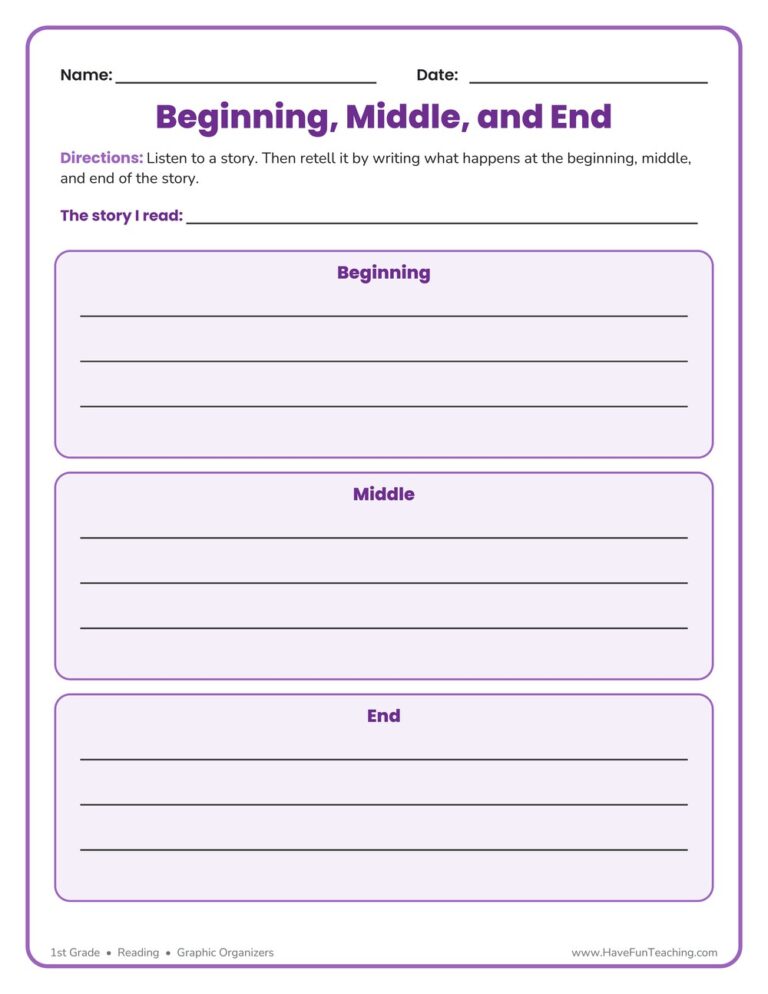
Graphic Organizer1st GradeBeginning, Middle, and End Worksheet

A reusable Beginning, Middle, and End Worksheet that helps 1st graders retell any story in order across three clear sections. Perfect for building sequencing and summarizing skills with every book they read.

Graphic Organizer
Graphic Organizer5th GradeMain Idea Worksheet

This Main Idea Worksheet helps 5th graders find two main ideas in any nonfiction text, back each one with key details, and write a clear summary of what they read.

Graphic Organizer
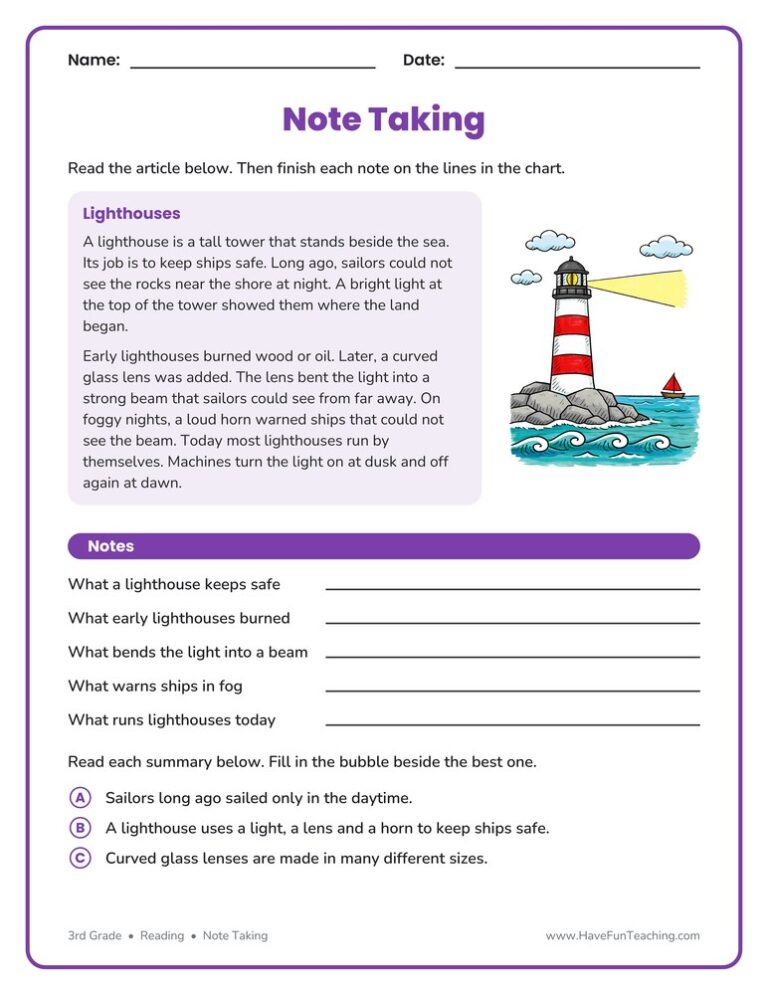
Graphic Organizer3rd GradeNote Taking Worksheet

This note taking worksheet has 3rd Grade students read a short article about lighthouses, finish five notes in a chart, and choose the best summary. An answer key is included.

Graphic Organizer
Graphic Organizer3rd GradeStory Map Worksheet

This story map worksheet lets 3rd grade students record the characters, setting, problem, main events, and solution of any story they read, building stronger comprehension and retelling skills.

Graphic Organizer
Graphic Organizer3rd GradeBeginning, Middle, End Worksheet

A Beginning, Middle, End Worksheet that helps 3rd graders retell one short story in three parts and write a clear summary of each. Includes a complete answer key for quick, no-prep reading practice.

Graphic Organizer
Graphic Organizer4th GradeMain Idea Graphic Organizer

This Main Idea Graphic Organizer helps 4th graders record the main idea of any nonfiction text, add four supporting details, and write a short summary that builds strong reading skills.

Graphic Organizer
Graphic Organizer4th GradeSummarizing Organizer Worksheet

This summarizing organizer worksheet walks 4th grade students from the main idea to three key details to a short summary in their own words, using any story or article they choose.

Graphic Organizer
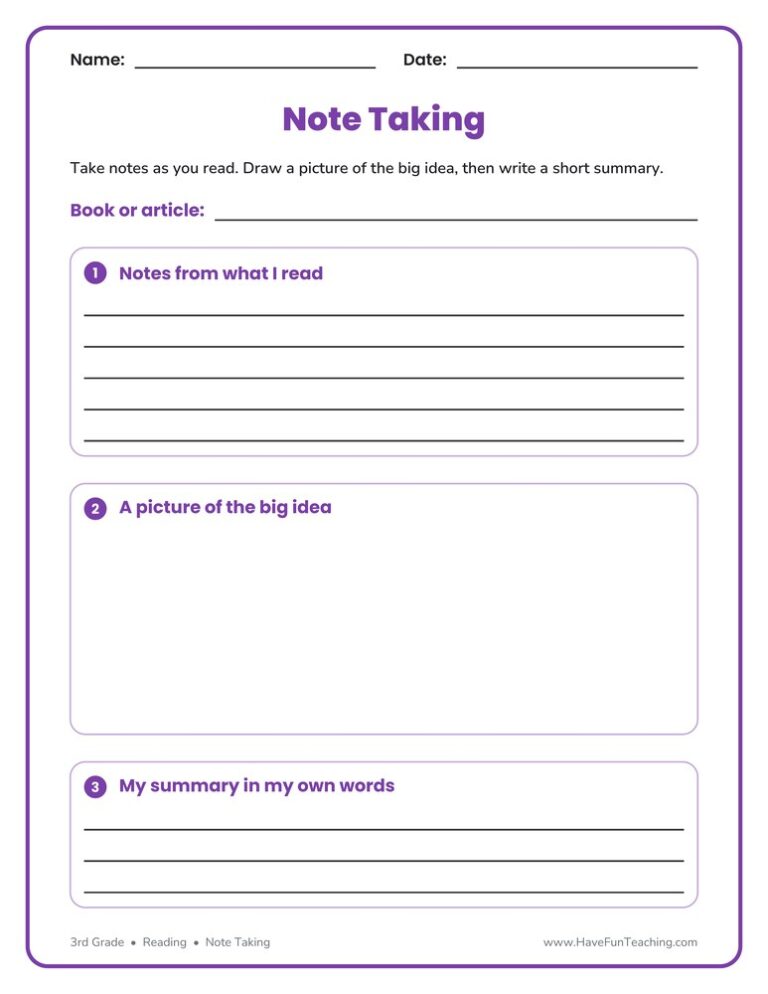
Graphic Organizer3rd GradeNote Taking and Summarizing Graphic Organizer

This Note Taking and Summarizing Graphic Organizer Worksheet gives 3rd Grade students one page for notes, a drawing of the big idea, and a short summary of any book or article they read.

Graphic Organizer
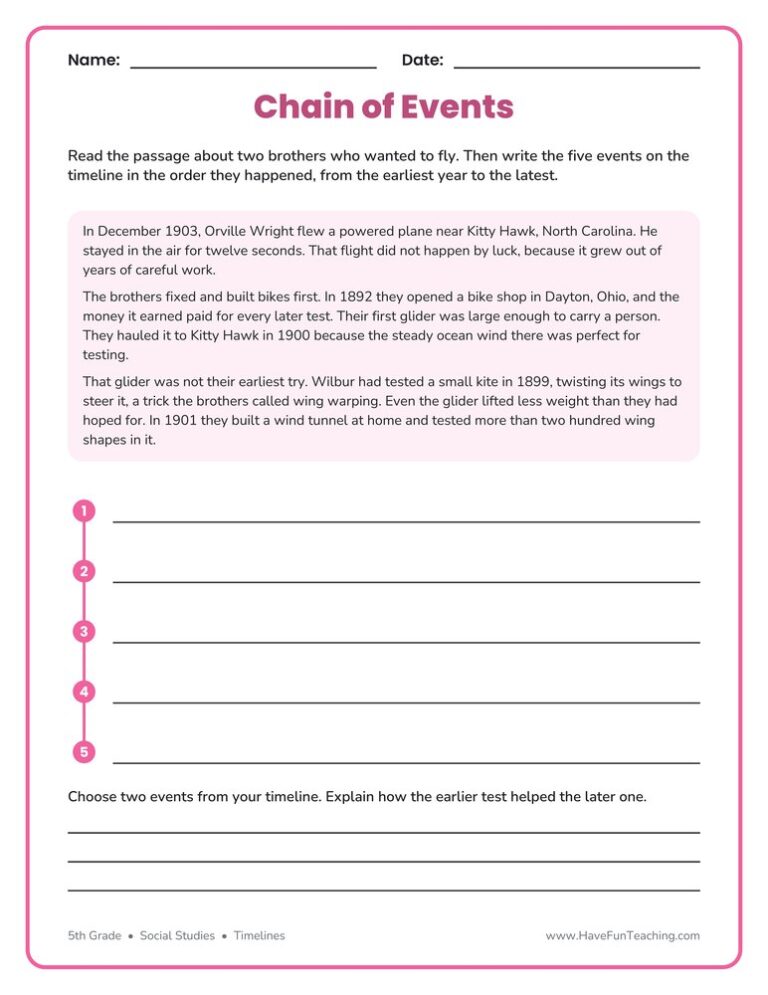
Graphic Organizer5th GradeHistory Vertical Timeline of Events Graphic Organizer

This History Vertical Timeline of Events Graphic Organizer Worksheet has 5th graders read a short Wright brothers passage and order five dated events on a vertical timeline. Answer key included.

Graphic Organizer
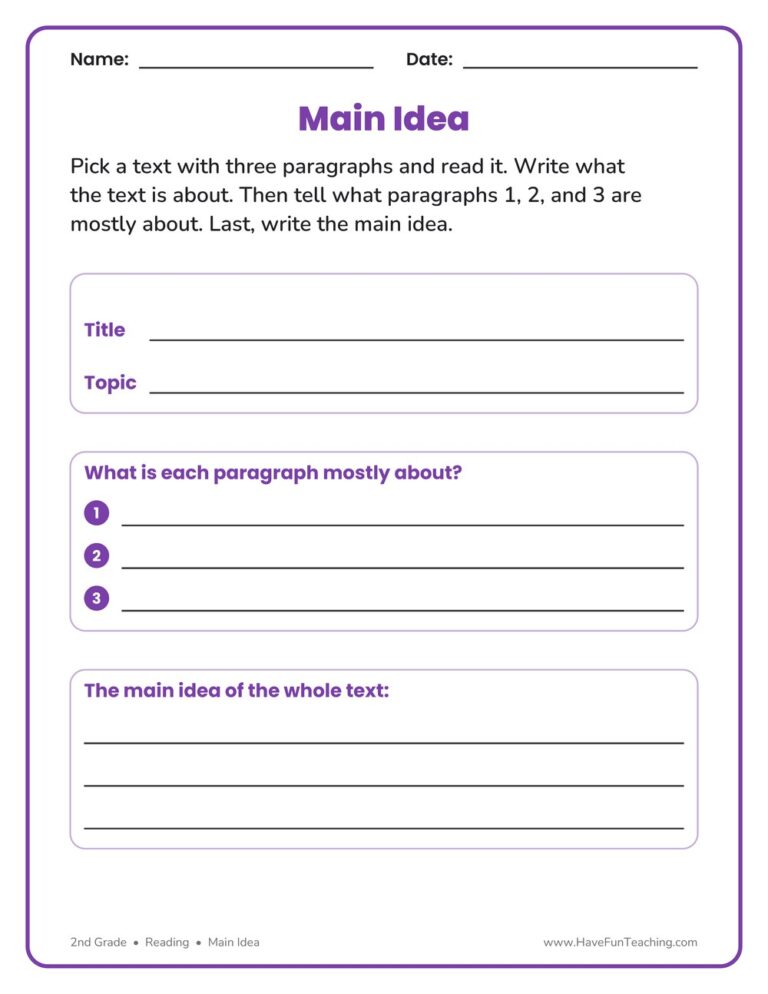
Graphic Organizer2nd GradeMain Idea Graphic Organizer Worksheet

This main idea graphic organizer worksheet helps 2nd grade readers note what each of three paragraphs is about, then write the main idea of the whole text, building strong summarizing skills.

Graphic Organizer
Graphic Organizer3rd GradeInsect Beginning, Middle, End Worksheet

Use this insect beginning, middle, end worksheet to help 3rd graders summarize a short bug hotel story in three parts. An answer key is included, so checking work is quick and easy.

From our teachers' playbook

Say a lot in just a little

What do kids learn about summarizing?

Summarizing means telling the most important parts of a text in your own words, and leaving the rest out. Young readers start by retelling a story in order: beginning, middle and end. As they grow, they learn that a summary is shorter than a retell. They name the character, the problem and how it gets solved, or the main idea and two or three key details in nonfiction. The hardest part is deciding what not to include, and the "aha" comes when kids realize a great summary is short on purpose.

Moves that turn retellers into summarizers

Kids love to tell you every single detail. These moves help them find the important ones.

Somebody, Wanted, But, So, Then

Give kids a five-box organizer and fill it in for a story everyone knows, like The Lion and the Mouse. Read the boxes together as one sentence and you have a summary. After a few stories, kids can do it on their own with almost any fiction text.

Why it works: children learn more from words and pictures together than from words alone (Mayer, 2009).
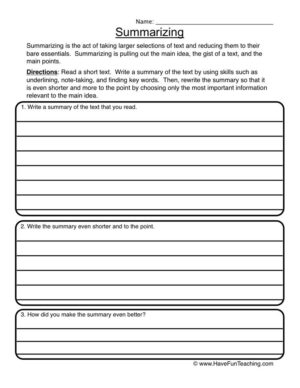
Summarizing Organizer WorksheetTry it withSummarizing Organizer WorksheetGraphic OrganizersOpen it →
Think aloud while you cross out

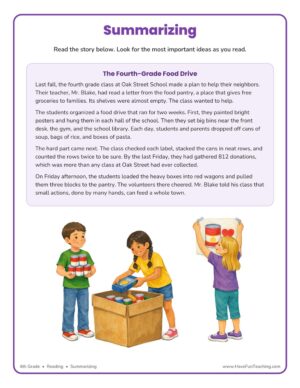
Put a short paragraph on the board and summarize it in front of the class. Say why you are crossing out each detail: "This is interesting, but the story still makes sense without it." Kids need to hear that decision being made before they can make it themselves.

Why it works: handing over the work step by step, from teacher to student, is one of the most widely used teaching frameworks (Pearson and Gallagher, 1983).

Summarizing WorksheetTry it withSummarizing WorksheetGraphic OrganizersOpen it →
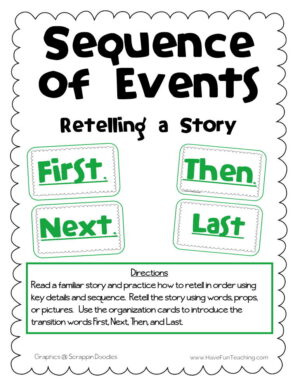
Retell first, then shrink it

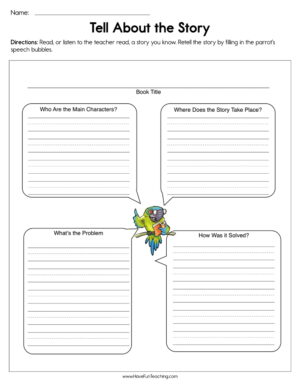
Have kids retell a story using beginning, middle and end boxes. Then give them a challenge: say the whole thing in 20 words or fewer. Shrinking a retell is the bridge from retelling to real summarizing.

Why it works: going from real objects to pictures to symbols is a core recommendation of the U.S. Department of Education's elementary math guide.

Beginning, Middle, and End WorksheetTry it withBeginning, Middle, and End WorksheetGraphic OrganizersOpen it →
Summarizing questions from teachers and parents

What is the difference between retelling and summarizing?

A retell tells everything that happened, in order. A summary tells only the most important parts, in fewer words. Kids usually learn to retell first, then learn to summarize around 2nd and 3rd grade.

What is the Somebody Wanted But So Then strategy?

It is a simple frame for summarizing fiction. Somebody is the main character, Wanted is their goal, But is the problem, So is how they try to fix it, and Then is how it ends.

How do you summarize nonfiction?

Find the main idea first, then pick two or three details that support it. A main idea graphic organizer helps kids keep the big idea separate from the small facts.

How long should a summary be?

For elementary students, a few sentences is usually right. A good rule is that a summary should be much shorter than the text, and every sentence should matter.

How can I help my child summarize at home?

After reading a bedtime story, ask "What happened in just three sentences?" or have them retell a movie in under a minute. Quick, playful practice builds the habit.