Skip to content
Start My 3 Free Days $0 today · cancel anytime

2nd Grade English Activities

150 2nd grade English activities, covering speaking and listening, parts of speech, vocabulary, plus 25 more topics. How teachers use these

2nd Grade English Activities

150 2nd grade English activities, covering speaking and listening, parts of speech, vocabulary, plus 25 more topics. How teachers use these

Activity
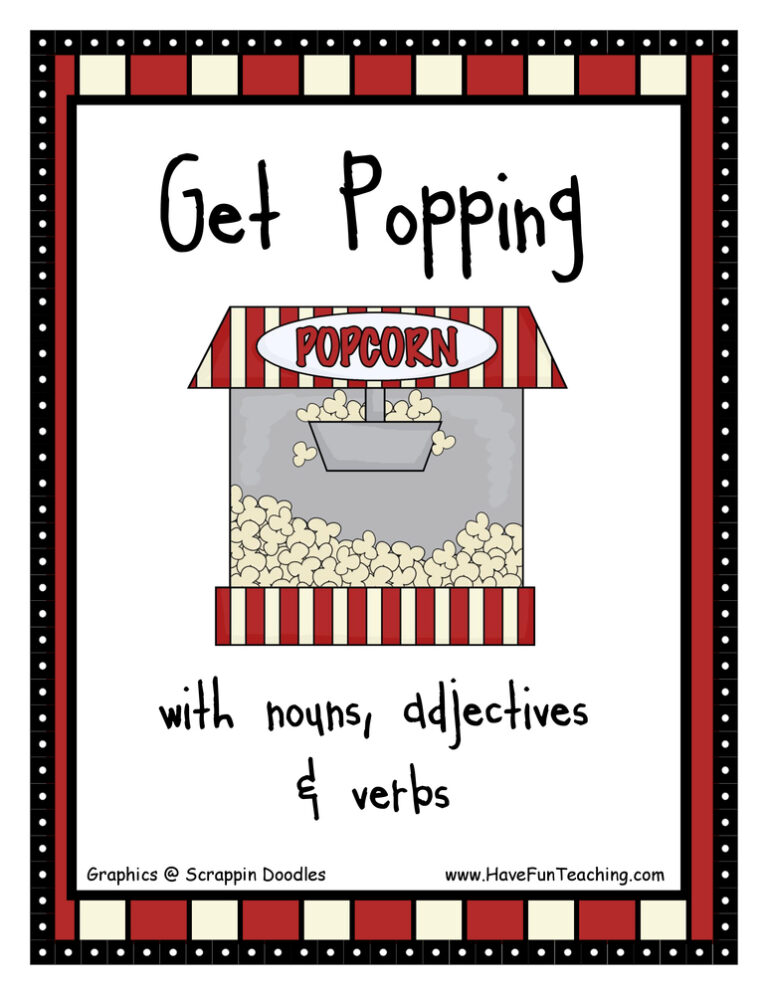
Activity2nd GradeNoun, Adjective, and Verb Activity

A noun, adjective, and verb activity for 1st to 3rd grade: sort 24 popcorn word cards into three buckets, then practice in sentences. Answer key included for easy checking.

Activity
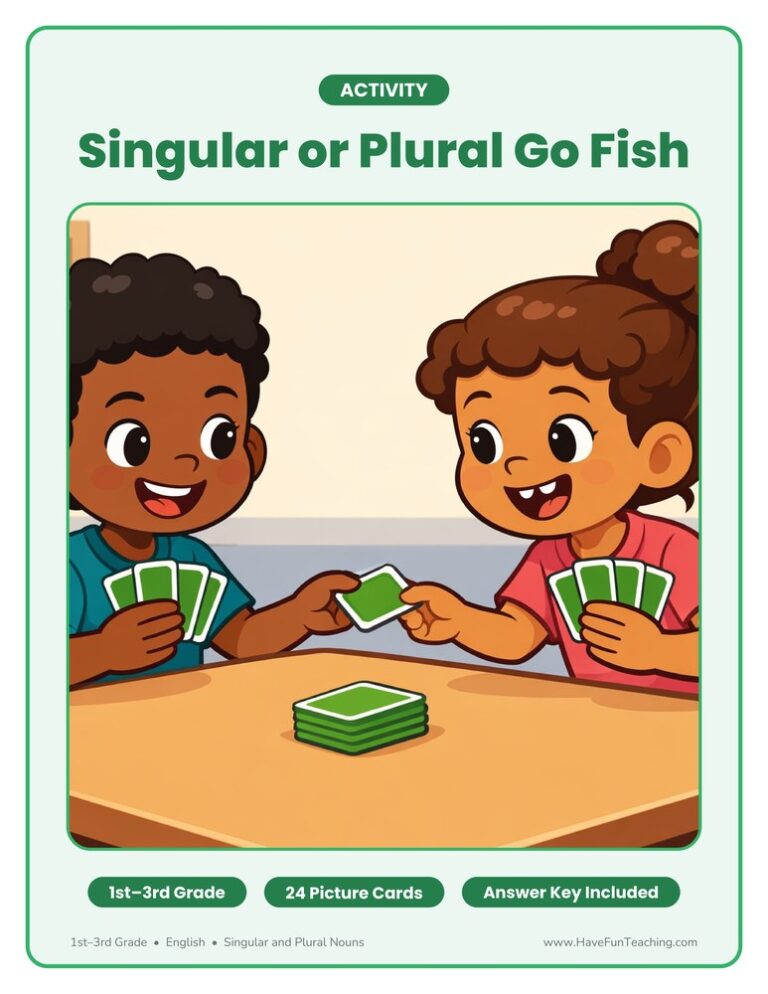
Activity2nd GradeSingular Plural Noun Go Fish Activity

Play this singular plural noun go fish activity with 1st through 3rd grade students to match one and more than one with -s and -es. Answer key included.

Activity
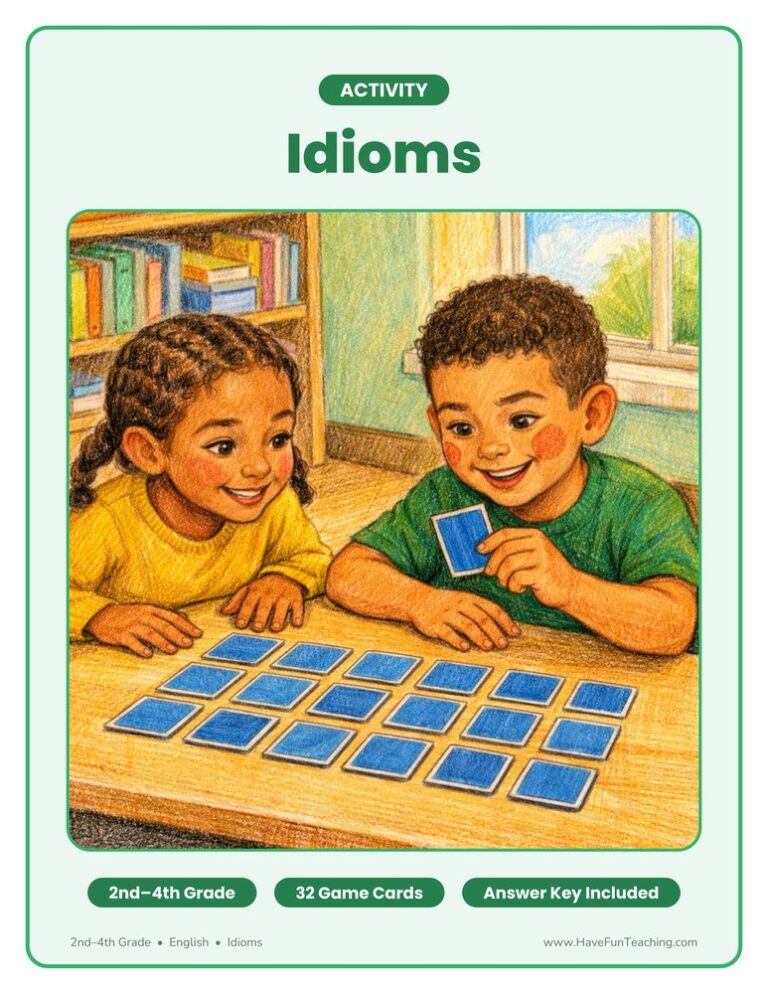
Activity2nd GradeIdioms Figurative Language Activity

This idioms figurative language activity lets 2nd to 4th grade students match idioms to their real meanings in a fun card game, then draw and explain them. Answer key included.

Activity
Activity2nd GradeDescribing Nouns Adjective Activity

This describing nouns adjective activity has 1st and 2nd Grade partners describe picture cards with adjectives and play a guessing game. Answer key included.

Activity
Activity2nd GradePopcorn Blends Activity

In this popcorn blends activity, K-2nd Grade children spin a blend, sort 12 picture cards into popcorn boxes and fill in a practice page, with an answer key included for quick checking.

Activity
Activity2nd GradeDescribing Words Activity

This describing words activity has 1st and 2nd Grade students match 8 picture cards with 16 adjective cards, with a recording sheet, practice page and answer key included.

Activity
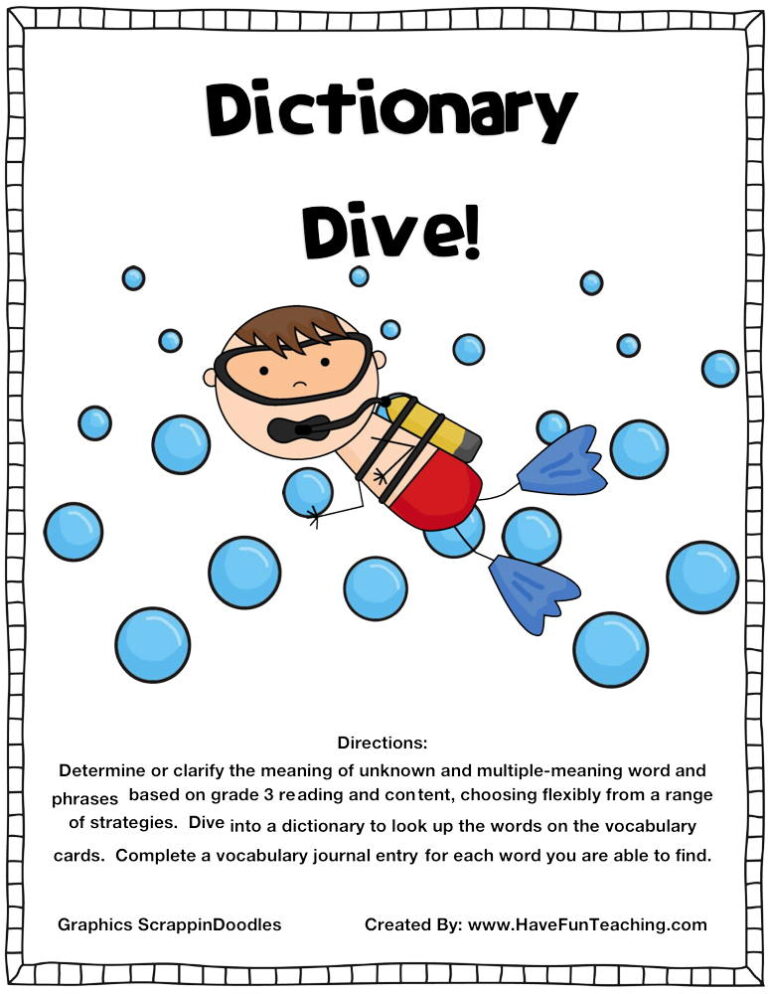
Activity2nd GradeDictionary Dive Activity

This dictionary dive activity helps 2nd to 4th grade students look up multiple-meaning words and use context clues to pick the right meaning. A printed dictionary page and an answer key are included.

Activity
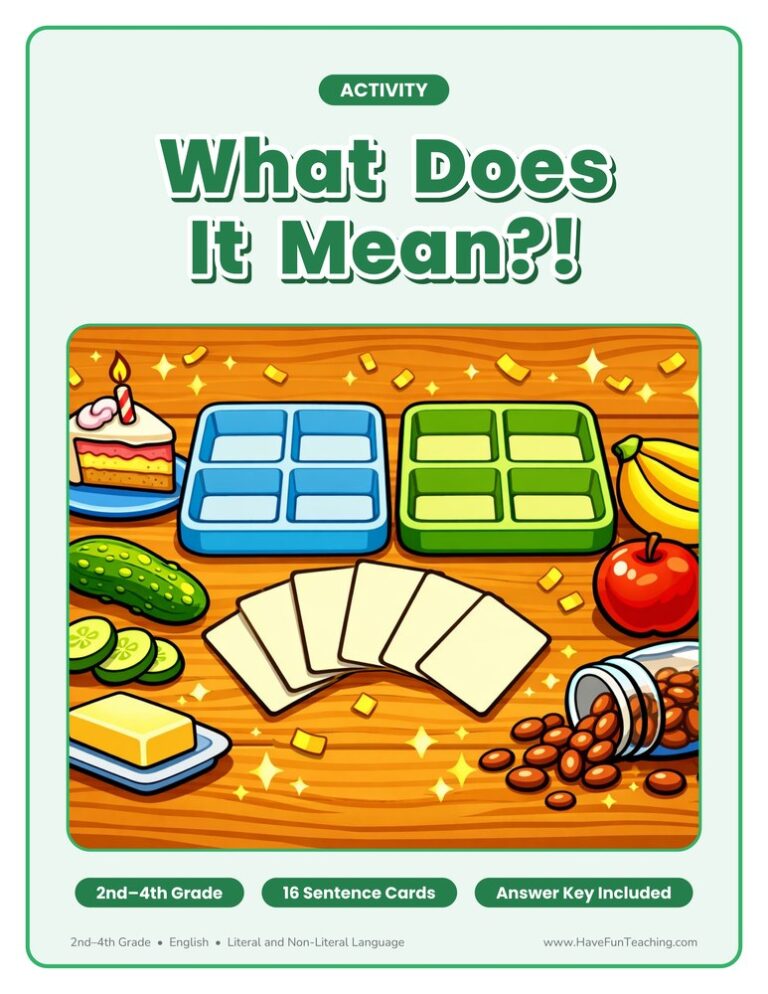
Activity2nd GradeWhat Does it Mean Literal Non-Literal Language Activity

This what does it mean literal non-literal language activity has 2nd to 4th grade students sort 16 food sentence cards and explain idioms. A practice page and answer key are included.

Activity
Activity2nd GradePlurals Activity

This plurals activity is a bee memory game where children match words that end in y to their ies plurals. Made for 2nd and 3rd grade, with a practice page and answer key included.

Activity
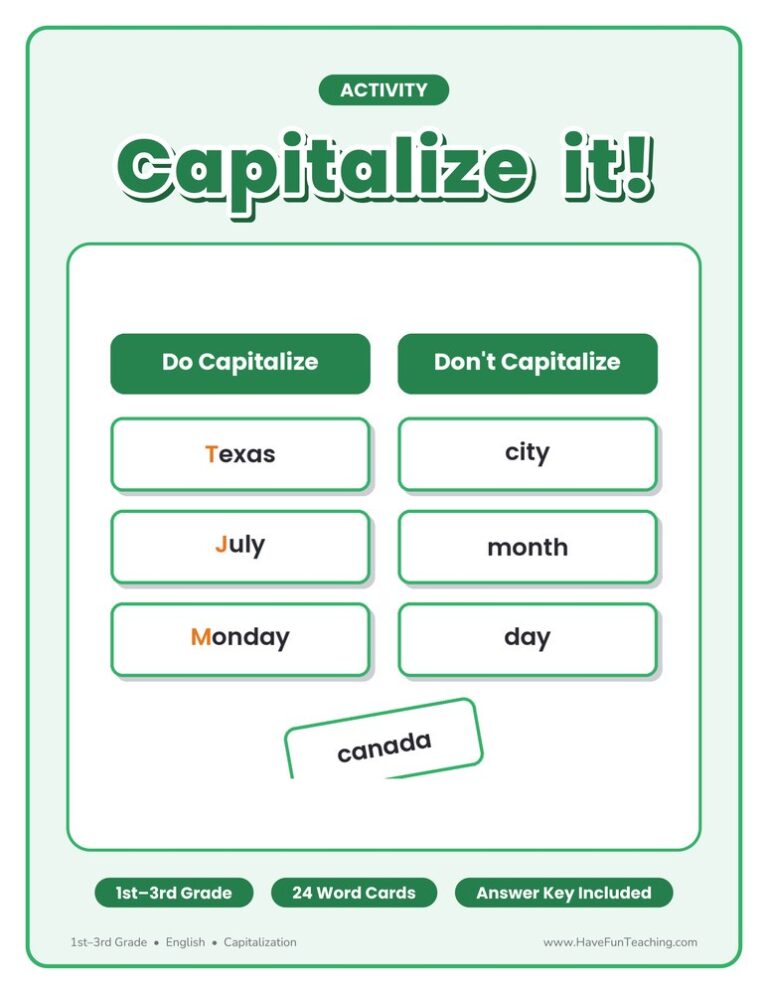
Activity2nd GradeCapitalize It Activity

This capitalize it activity for 1st to 3rd grade has children sort 24 lowercase word cards into proper and common nouns, with a practice page and answer key included to sharpen capitalization.

Activity
Activity2nd GradeSnowman Contractions Activity

Play this snowman contractions activity as a memory game: 1st to 3rd grade students match two-word Mitten Cards to Snowman contraction cards and record each pair. Answer key included.

Activity
Activity2nd GradePrefixes and Suffixes Sorting Activity

This prefixes and suffixes sorting activity has 2nd and 3rd Grade readers sort 24 word cards by prefix or suffix, with a recording sheet, practice page and answer key included.

Activity
Activity2nd GradePast Present Future Tense Activity

This past present future tense activity lets 1st to 4th grade students sort twelve verb cards by tense and write verbs in the right form. Answer key included for easy checking.

Activity
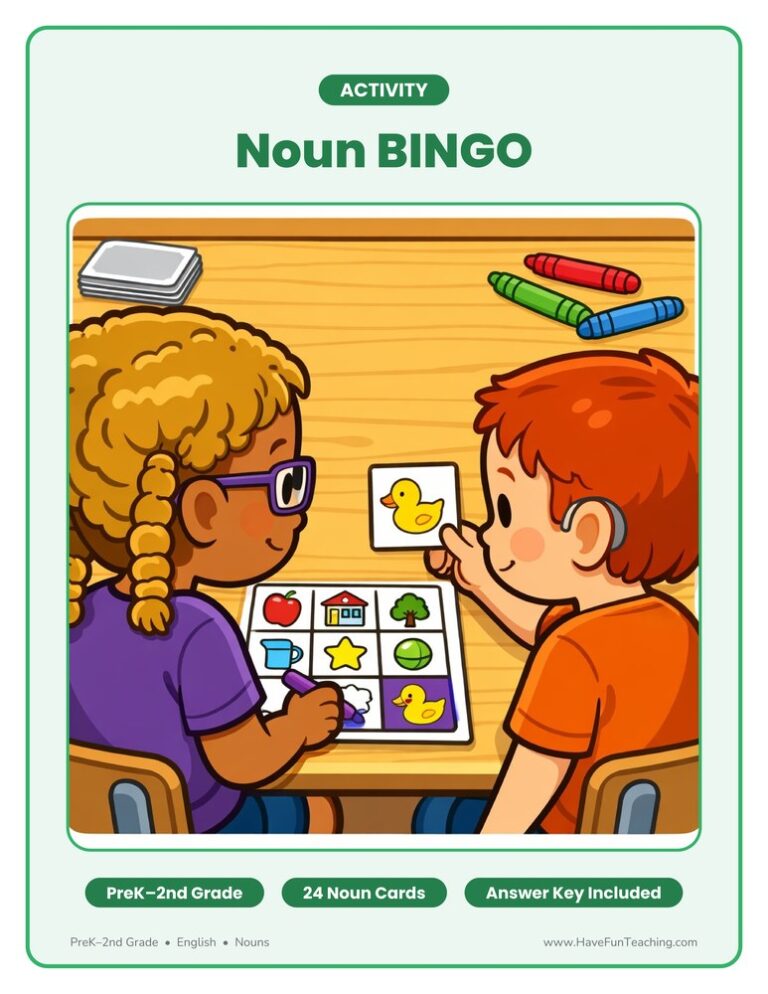
Activity2nd GradeNoun BINGO

This noun bingo activity has 24 picture cards and 4 boards for Preschool to 2nd Grade, plus a practice page with an answer key included, so kids learn nouns while they play.

Activity
Activity2nd GradeBlends, Digraphs, and Trigraphs Activity

Using the Blends, Digraphs, and Trigraphs Activity, students create lists of words that have beginning and ending blends, digraphs, or trigraphs.

Activity
Activity2nd GradeLet's Talk Classroom Speaking Activity

This Let's Talk classroom speaking activity gives kindergarten through 3rd grade students role cards, topic cards and a self-check for small group talks. A practice page and answer key are included.

Activity
Activity2nd GradeCool Cat Sentences Activity

This cool cat sentences activity has K-2nd Grade children sort telling, asking and exciting sentence cards by their end marks. Answer key included, so practicing punctuation feels like a game.

Activity
Activity2nd GradeProofreading Capitalization and Punctuation Activity

This proofreading capitalization and punctuation activity gives 2nd to 5th grade students 16 self-checking detective cards for fixing sentences. A practice page and answer key are included.

Activity
Activity2nd GradeSecond Grade Sight Words Bingo

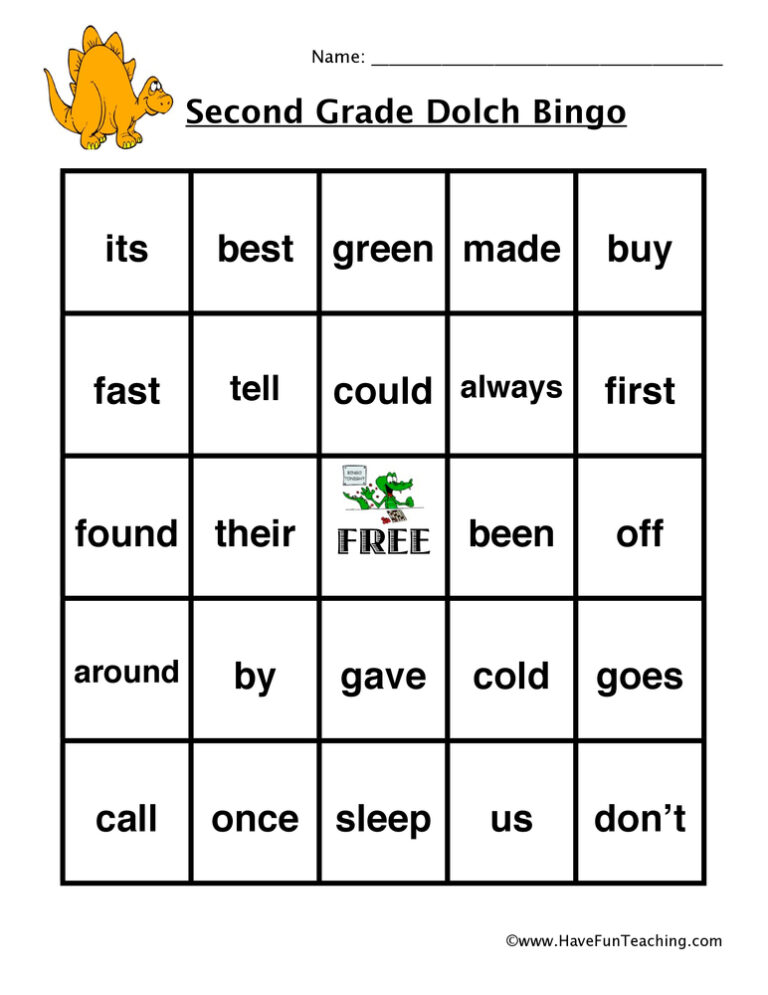
This second grade sight words bingo worksheet turns Dolch word practice into a whole-class game. Print a board for each 2nd grade student, call the words, and watch sight reading get faster and a lot more fun.

Activity
Activity2nd GradeHard and Soft C and G Activity

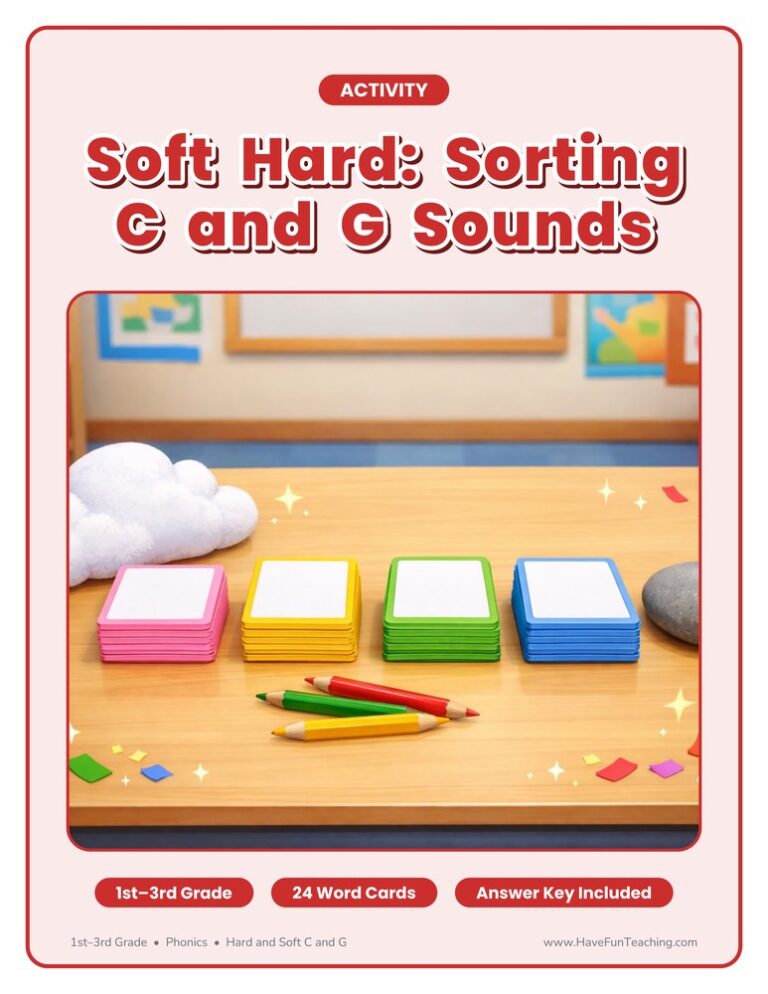
This hard and soft c and g activity helps 1st to 3rd grade students sort words by the sound of c or g using a simple rule. A sound sort sheet, practice page and answer key are included.

From our teachers' playbook

Where sentences start to sparkle

What do 2nd graders learn in English?

Second grade is the year kids start thinking about how their sentences work, not just what they say. They learn the jobs words do: nouns name, verbs act, adjectives describe. They make plurals, including the tricky irregular ones like mouse → mice and child → children, swap in pronouns, and add prefixes like un- and re- to change a word's meaning. Editing becomes a real habit: capital letters, end marks, commas in dates and lists. The click is when a 2nd grader spots a missing capital in their own writing before you do!

Our favorite ways to teach 2nd grade English

Grammar sticks when kids use it in real sentences. These are the moves we lean on all year.

Fix it out loud

Write a sentence with three mistakes on the board and fix it together, thinking out loud: "Hmm, does a sentence start with a little letter?" Then hand kids a sentence to fix with a partner. Watching you catch mistakes teaches them what to look for.

Why it works: handing over the work step by step, from teacher to student, is one of the most widely used teaching frameworks (Pearson and Gallagher, 1983).

Editing Sentences WorksheetTry it withEditing Sentences WorksheetWorksheetsOpen it →
Sort the words

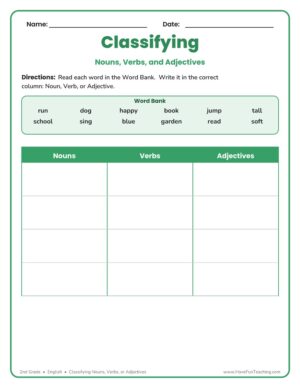
Give pairs a stack of word cards and three mats: noun, verb, adjective. They sort, then build a silly sentence using one word from each pile. Moving words around makes the parts of speech feel concrete.

Why it works: the U.S. Department of Education's guide for teaching elementary math recommends moving from hands-on objects to drawings to numbers.

Classifying Nouns, Verbs, or Adjectives WorksheetTry it withClassifying Nouns, Verbs, or Adjectives WorksheetWorksheetsOpen it →

The daily two-minute edit

Start every morning with one sentence to correct: one capitalization fix, one punctuation fix. It takes two minutes, and by spring kids are catching errors on their own. Mix in plurals and pronouns as you teach them.

Why it works: spreading practice out over days is one of the two most effective study methods in a major research review (Dunlosky and colleagues, 2013).

Correcting Punctuation WorksheetTry it withCorrecting Punctuation WorksheetWorksheetsOpen it →

2nd grade English: your questions

What grammar should a 2nd grader know?

By the end of 2nd grade most kids can identify nouns, verbs and adjectives, form regular and common irregular plurals, use pronouns, and capitalize names and holidays. They also use commas in dates and greetings and end sentences with the right punctuation.

How do I help my 2nd grader with sentence writing?

Ask them to read their sentence out loud. Their ear will often catch a missing word or a run-on. Then check three things together: capital at the start, end mark at the end, and does it make sense.

What are irregular plural nouns in 2nd grade?

They're plurals that don't just add -s or -es, like children, feet, teeth, mice and geese. Kids learn them by hearing and using them, so short daily practice works better than a list to memorize.

How much should a 2nd grader be writing?

Most 2nd graders write several connected sentences on one topic, building toward a short paragraph. Writing a little every day matters more than length.