Skip to content
Start My 3 Free Days $0 today · cancel anytime

2nd Grade Plot Resources

14 2nd grade plot resources: 9 worksheets, 4 activities and 2 Common Core Lessons. How teachers use these

2nd Grade Plot Resources

14 2nd grade plot resources: 9 worksheets, 4 activities and 2 Common Core Lessons. How teachers use these

Worksheet
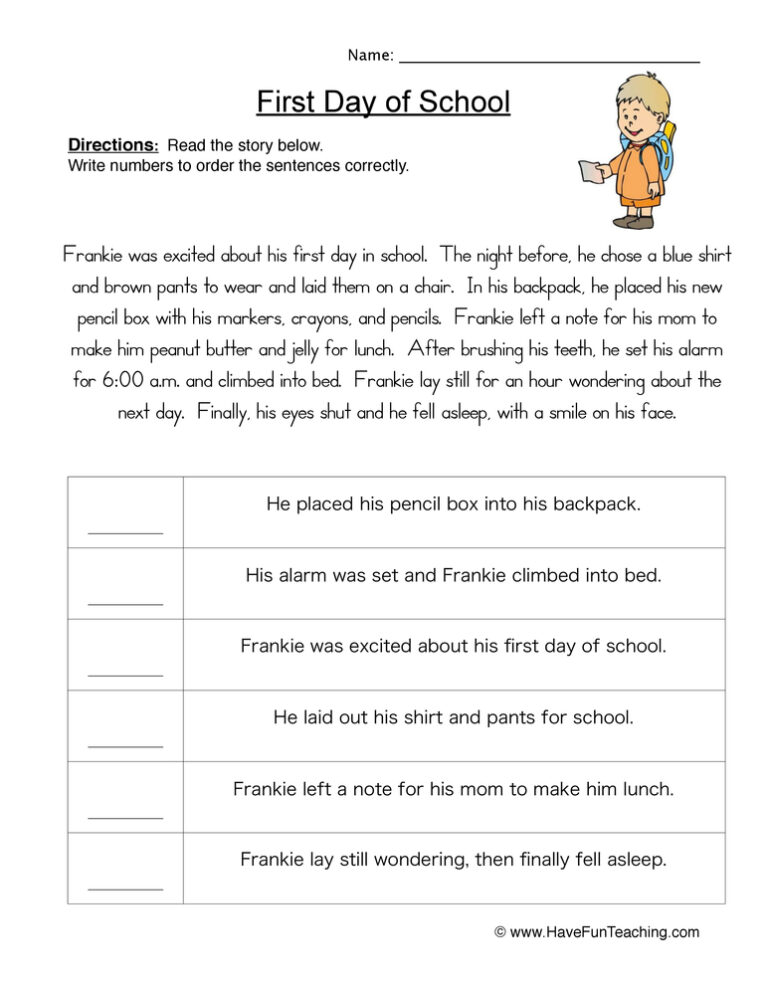
Worksheet2nd GradeStory Plot Order of Events Worksheet

Second graders read a short story about a first day of school, then number six events in order on this story plot order of events worksheet. Answer key included for quick, no-prep sequencing practice.

Worksheet
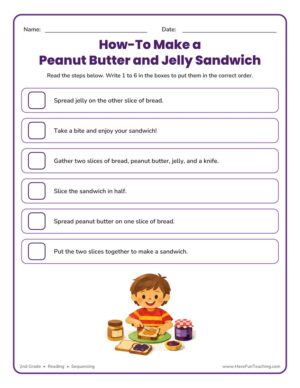
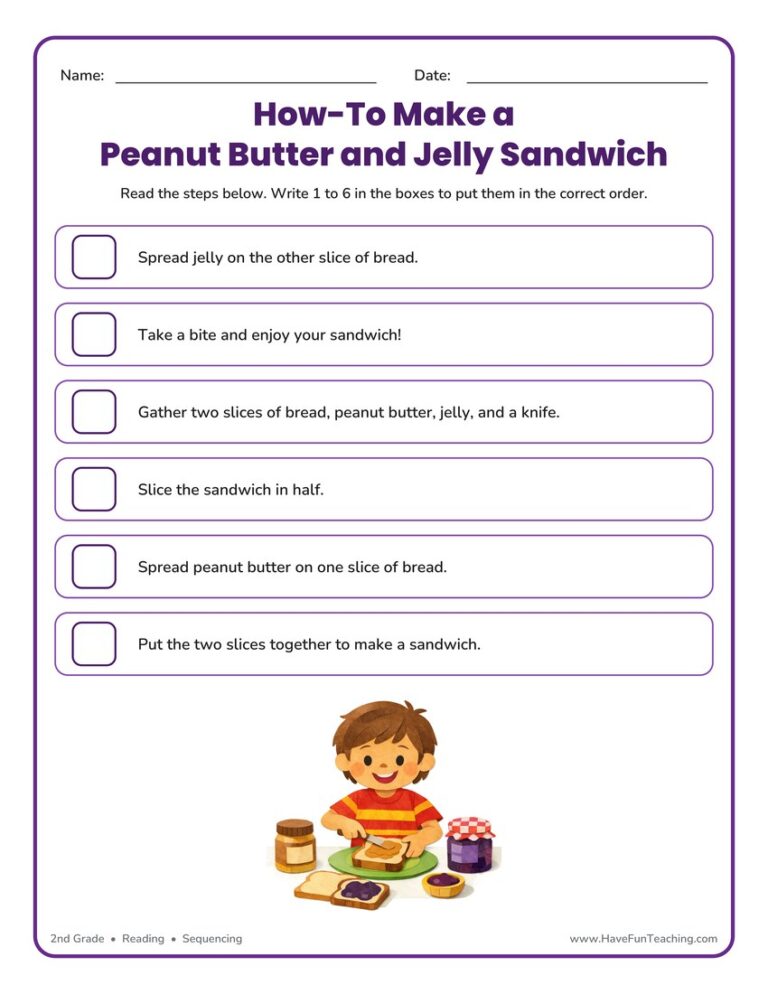
Worksheet2nd GradeHow to Peanut Butter Jelly Sandwich Sequence Worksheet

The How to Peanut Butter Jelly Sandwich Sequence Worksheet has 2nd graders number six mixed-up steps in the correct order. Includes an answer key — a fun, no-prep way to practice sequencing and reading comprehension.

Worksheet
Worksheet2nd GradeCharacters and Story Plots Worksheet

This characters and story plots worksheet gives 2nd Grade readers a short story, then asks them to name the characters and tell the beginning, problem and ending. An answer key is included, so retelling a book gets easier.

Worksheet
Worksheet2nd GradeSequencing Brainstorming Worksheet

This sequencing brainstorming worksheet has 2nd graders number five story events in order, then plan the steps of their own activity. An answer key is included, so checking takes just seconds.

Worksheet
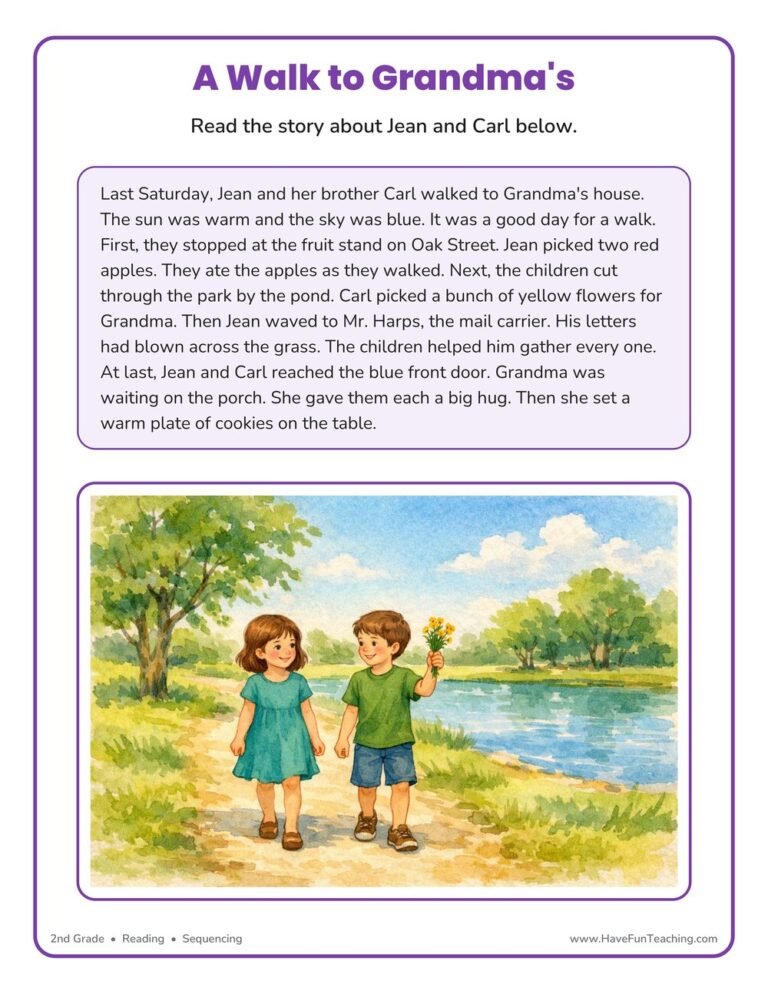
Worksheet2nd GradeStory Events Order of Events Worksheet

Students read a short story about a walk to Grandma’s house, then use this Story Events Order of Events Worksheet to number six events in order. Built for 2nd Grade with an answer key included — sequencing practice ready in one print.

Activity
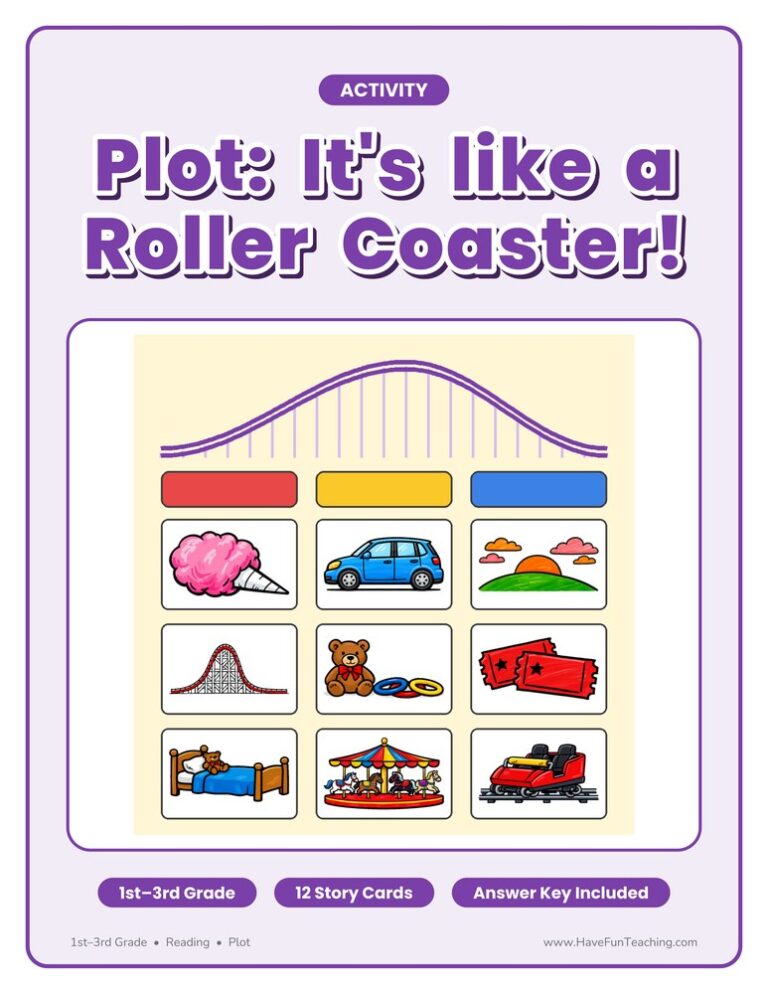
Activity2nd GradeBeginning Middle End Plot Activity

Kids sort story cards with this beginning middle end plot activity for 1st to 3rd grade, then retell the story on a roller coaster plot chart. An answer key is included for easy checking.

Worksheet
Worksheet2nd GradeProblems and Solutions Worksheet

This problems and solutions worksheet gives 2nd Grade readers a short story and five questions about the problem and how it gets solved. An answer key is included, so students can practice finding plot evidence on their own.

Worksheet
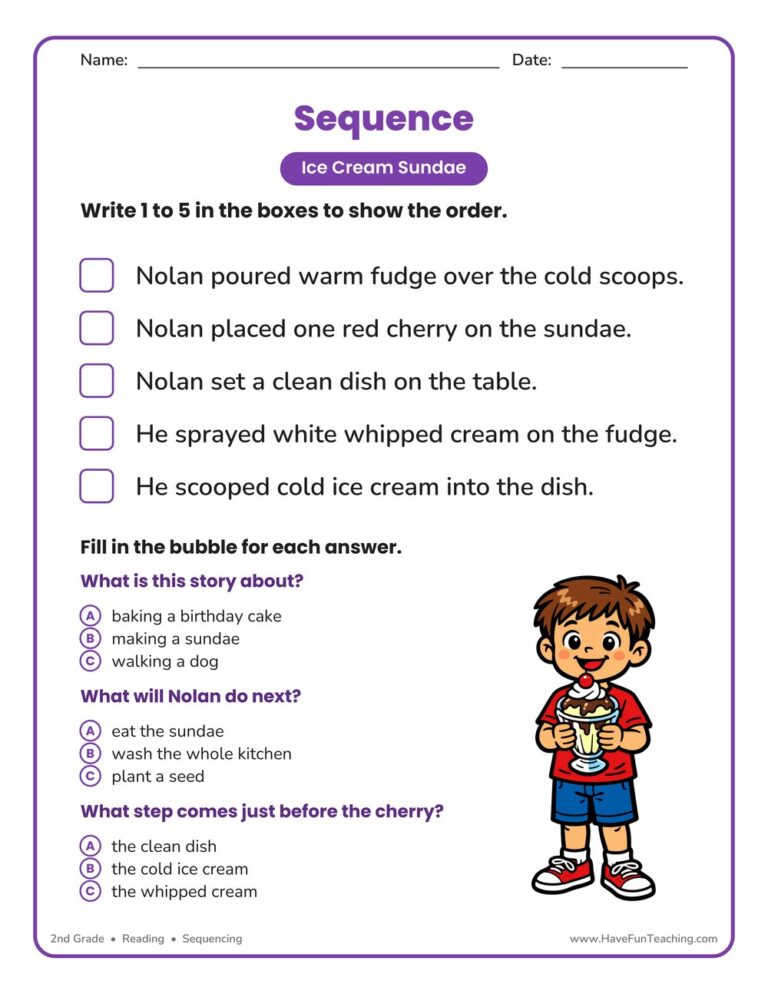
Worksheet2nd GradeIce Cream Sundae Sequence Worksheet

Use this ice cream sundae sequence worksheet to help 2nd graders read five mixed-up story steps and number them in order. An answer key is included, so checking work takes only seconds.

Activity
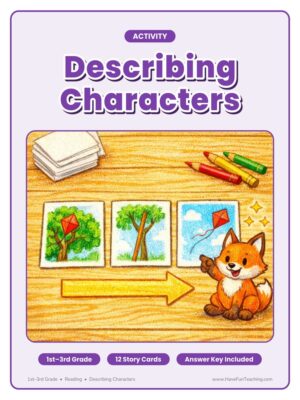
Activity2nd GradeDescribing Characters Beginning Middle and End Activity

In this describing characters beginning middle and end activity, 1st to 3rd Grade students order story cards and name feelings. Answer key included.

Activity
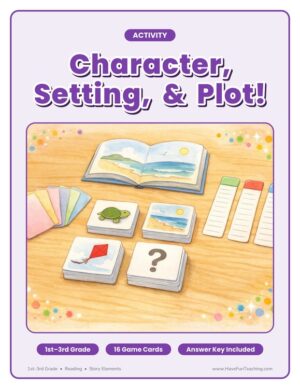
Activity2nd GradeCharacter Setting Plot Activity

This character setting plot activity has 1st to 3rd graders read a short story, sort story cards by element, and order the plot. Answer key included for quick checking.

Worksheet
Worksheet2nd GradeBeginnings and Endings Worksheet

This beginnings and endings worksheet helps 2nd graders read a short story, find what the beginning and ending do, and explain the lesson. An answer key is included.

Activity
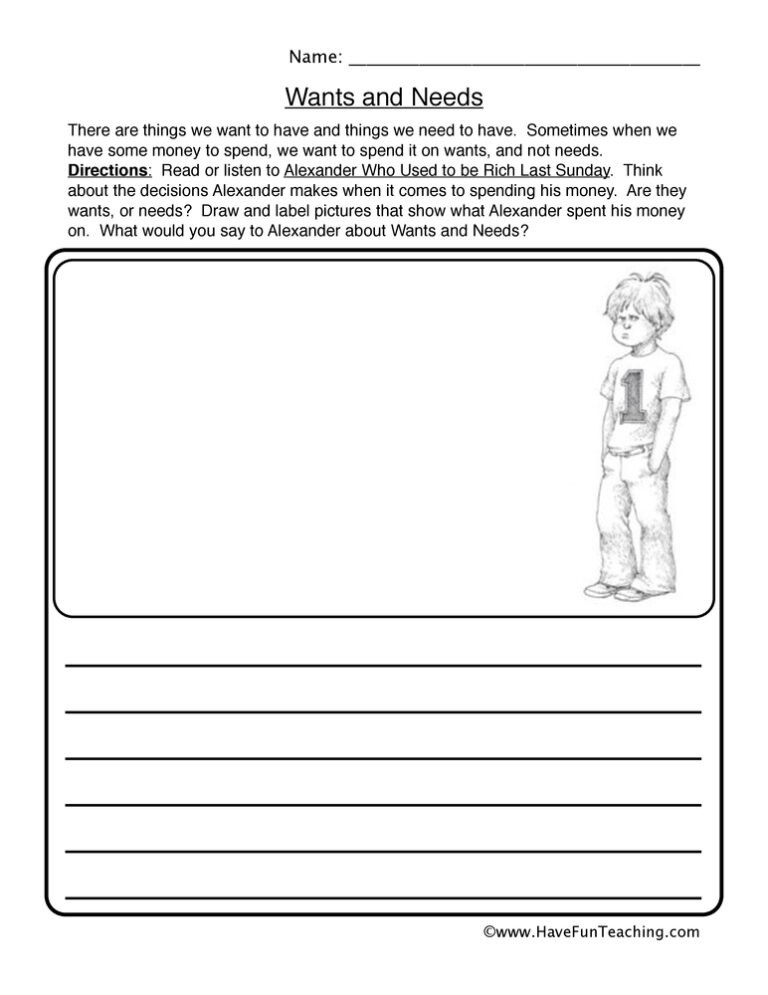
Activity2nd GradeWants Needs Reading Response Worksheet

Using this Wants Needs Reading Response Worksheet, students readAlexander Who Used to be Rich Last Sunday to build their understanding of wants and needs.

Common Core Lesson
Common Core Lesson2nd GradeRL.2.1 Second Grade Common Core Lesson

Using this RL.2.1 Second Grade Common Core Lesson, students answer questions aboutkey details in a fiction text.

Common Core Lesson
Common Core Lesson2nd GradeRL.2.3 Second Grade Common Core Lesson

Using RL.2.3 Second Grade Common Core Lesson, students describe how characters in a story respond to major events and challenges.

From our teachers' playbook

Beginning, middle, end, and the big problem

What do 2nd graders learn about plot?

Second graders learn that plot is what happens in a story, in order. Every story has a beginning that meets the characters and setting, a middle where a problem shows up and things get tricky, and an end where the problem gets solved. Kids retell stories using words like first, next, then and finally, and describe how characters respond to big events. The click moment is when a child stops retelling every tiny detail and says, "The problem was... and they fixed it by..."

Our favorite ways to teach plot

Plot gets easier when kids see the shape of a story. These moves draw it out.

Retell it in four steps

After a read-aloud, model a retell with four fingers: first, next, then, finally. Keep each step to one sentence. Kids practice with a partner, then put story events in order on paper. Short retells force kids to pick the big events.

Why it works: showing first, practicing together, then letting kids try alone is the "gradual release" model teachers have relied on for decades (Pearson and Gallagher, 1983).

Story Plot Order of Events WorksheetTry it withStory Plot Order of Events WorksheetWorksheetsOpen it →
Fold a beginning-middle-end book

Kids fold paper into three panels and draw and write what happened in each part of a story. Hanging them in a row makes plot look like a path. It's great for finding which part held the problem.

Why it works: kids understand an idea best when they touch it, then draw it, then write it, the order the U.S. Department of Education recommends for elementary math.

Beginning Middle End Plot ActivityTry it withBeginning Middle End Plot ActivityActivitiesOpen it →

Problem and solution check

After any story, ask two quick questions: "What was the problem? How was it solved?" A short page with a few stories shows who can find the heart of the plot. Those two questions unlock almost every story.

Why it works: pulling an answer out of memory makes it stick far better than rereading it, one of the strongest findings in learning research (Dunlosky and colleagues, 2013).

Problems and Solutions WorksheetTry it withProblems and Solutions WorksheetWorksheetsOpen it →

Plot questions parents and teachers ask

What is plot in 2nd grade?

Plot is the series of events in a story. Second graders learn that stories have a beginning, middle and end, with a problem in the middle that gets solved by the end.

How do you explain plot to a 7-year-old?

Tell them plot is "what happens" in a story. Ask: Who is in it? What problem do they have? How do they fix it? Those three questions are the whole plot.

What is the difference between plot and sequence?

Sequence is the order of events. Plot is the bigger story shape: the events, the problem and how it's solved. Sequencing is a skill kids use to understand the plot.

How can I practice plot at home?

After reading or watching a movie, ask your child to retell it in three or four sentences using first, next, then and finally. Ask what the problem was and how it got solved.