Skip to content
Start My 3 Free Days $0 today · cancel anytime

Energy Resources

28 energy resources: 25 worksheets and 4 activities. How teachers use these

Energy Resources

28 energy resources: 25 worksheets and 4 activities. How teachers use these

Worksheet
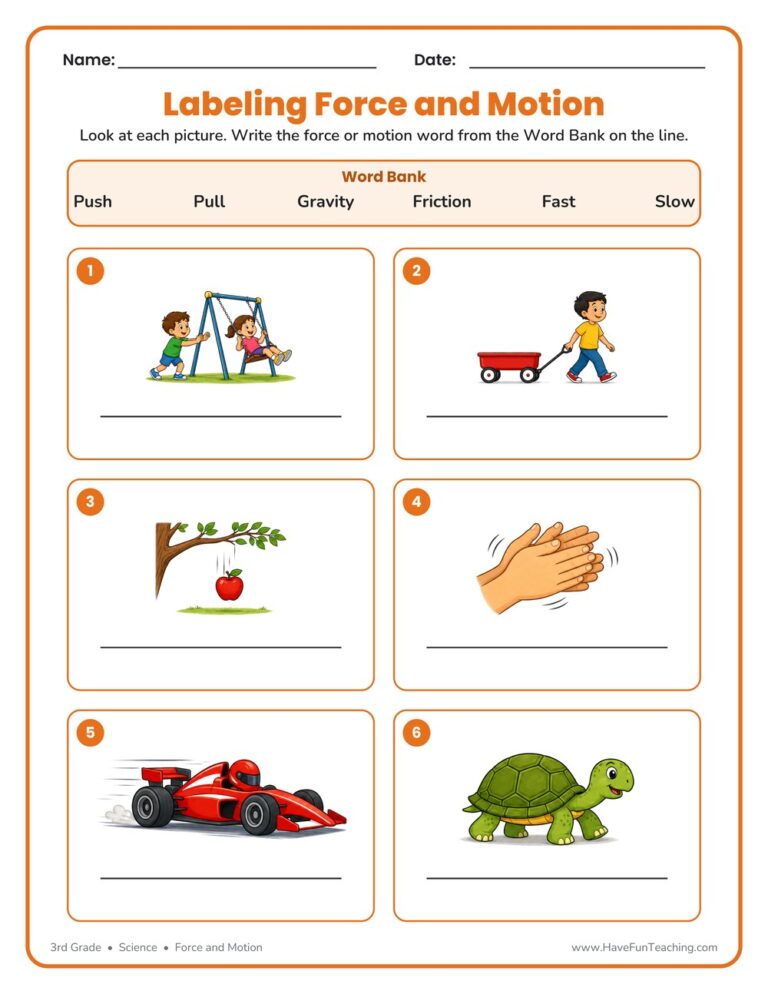
Worksheet3rd GradeLabeling Force and Motion Worksheet

The Labeling Force and Motion Worksheet has 3rd graders label six pictures with push, pull, gravity, friction, fast, and slow from a word bank. Includes an answer key for easy, no-prep science practice.

Worksheet
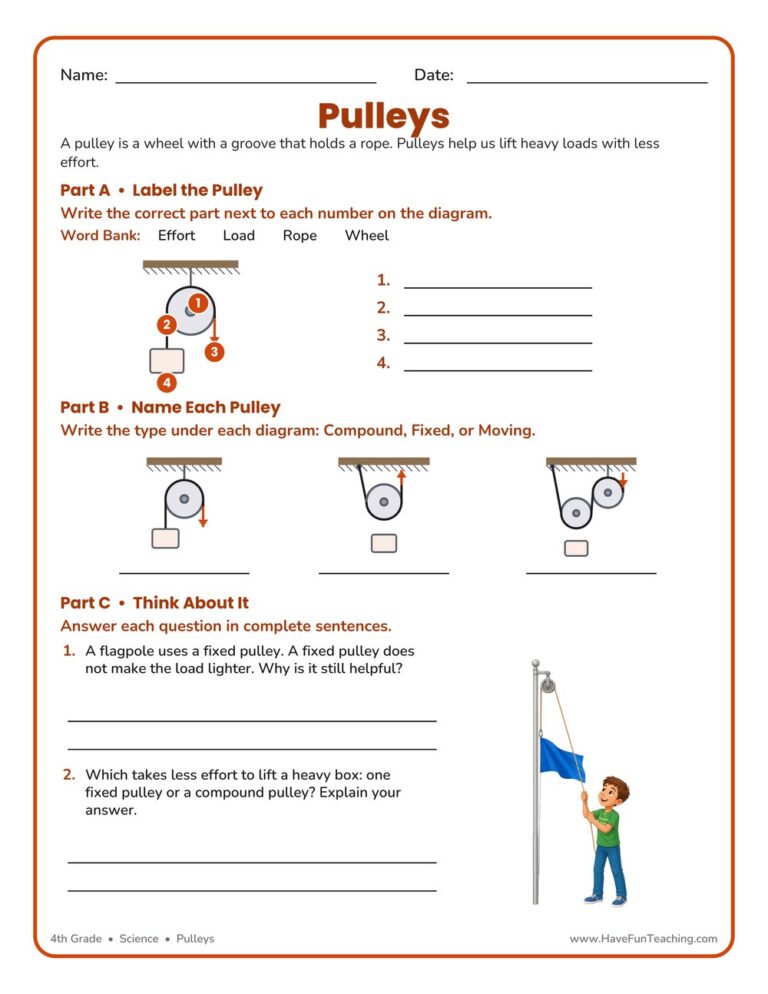
Worksheet4th GradePulleys Worksheet

This Pulleys Worksheet helps 4th graders label a pulley, compare fixed, moving, and compound pulleys, and explain how pulleys lift heavy loads. Includes an answer key — a no-prep way to practice simple machines science.

Worksheet
Worksheet4th GradeCircuits Worksheet

This Circuits Worksheet helps 4th Grade students label the battery, bulb, switch, and wire, decide whether a circuit is open or closed, and explain how current flows. Answer key included, so checking work is quick.

Worksheet
Worksheet4th GradeElectricity Worksheet

This Electricity Worksheet pairs a short reading passage with vocabulary and explanation questions that show 4th graders how current, circuits, conductors, and insulators work. Answer key included for fast, no-prep science practice.

Worksheet
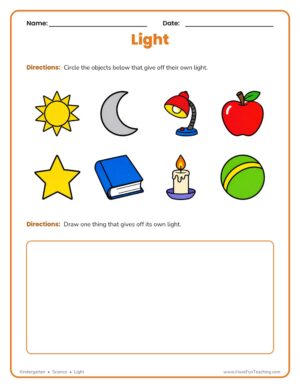
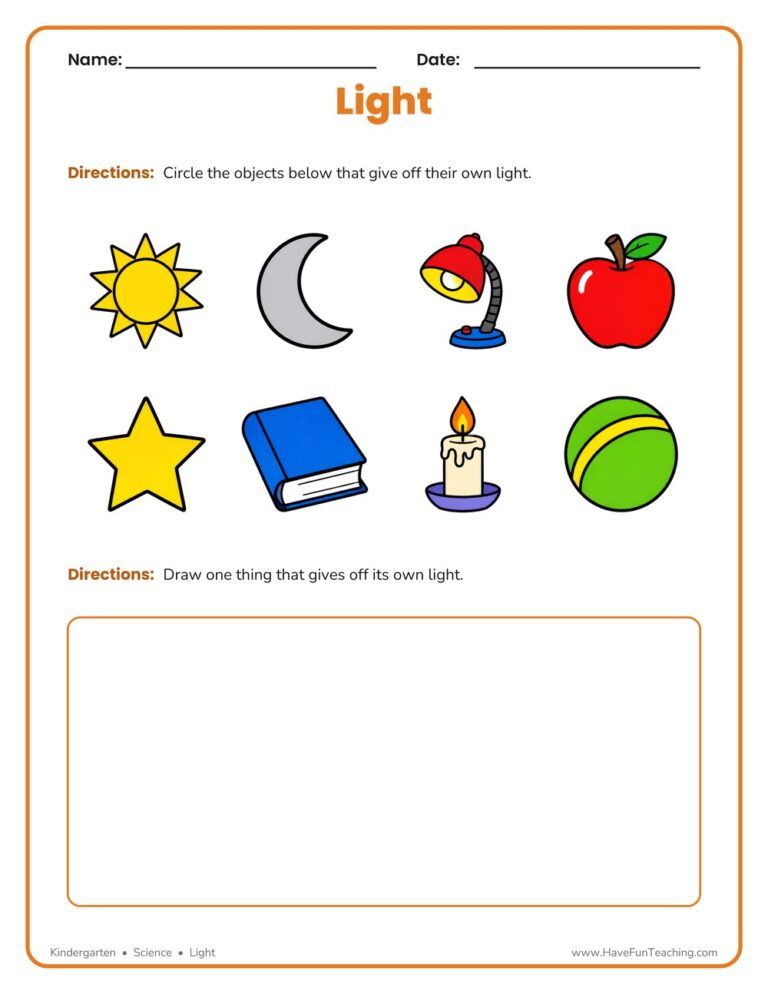
WorksheetKindergartenObjects that Give off Light Worksheet

This Objects that Give off Light Worksheet asks kindergarten students to circle the sun, lamp, star, and candle, then draw their own light source. Includes a complete answer key for quick, no-prep science practice.

Worksheet
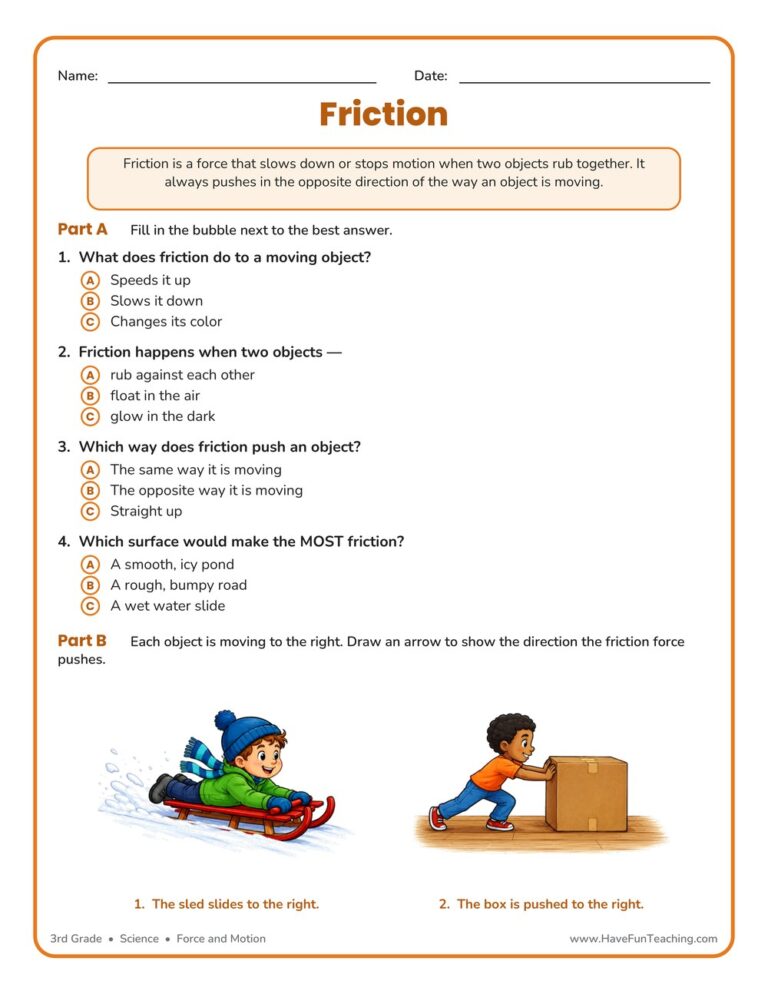
Worksheet3rd GradeDrawing Friction Worksheet

This drawing friction worksheet lets 3rd graders explore force and motion by answering questions and drawing arrows to show which way friction pushes. Answer key included for quick, no-prep science practice.

Activity
Activity4th GradeLight Bulb Cut Outs

This light bulb cut outs worksheet gives 4th grade students four bulbs to fill with electricity facts, color and cut out, making a bright science bulletin board that celebrates what the whole class has learned.

Worksheet
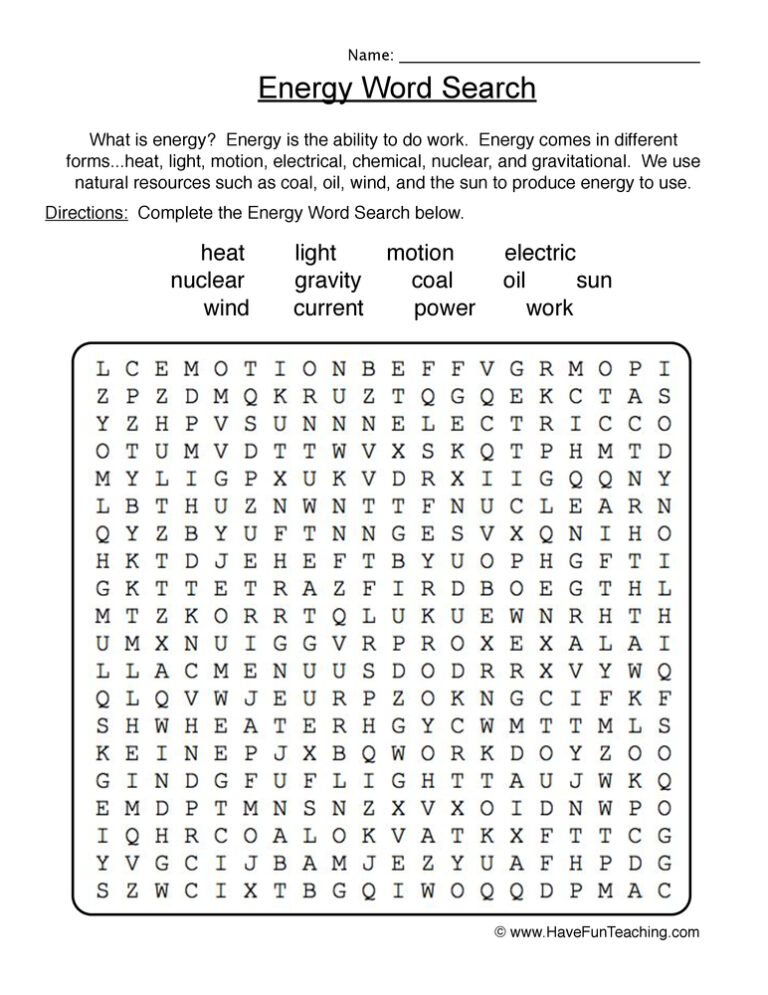
Worksheet3rd GradeEnergy Wordsearch Worksheet

A ten-word Energy Wordsearch Worksheet that helps 3rd graders name the forms and sources of energy, then use one in a sentence of their own. Answer key included for fast, no-prep science review.

Worksheet
Worksheet4th GradeSimple Machines Match Worksheet

This Simple Machines Match Worksheet gives 4th Grade students six machines to pair with the jobs they do, plus everyday examples to name. An answer key is included, so checking work takes seconds.

Worksheet
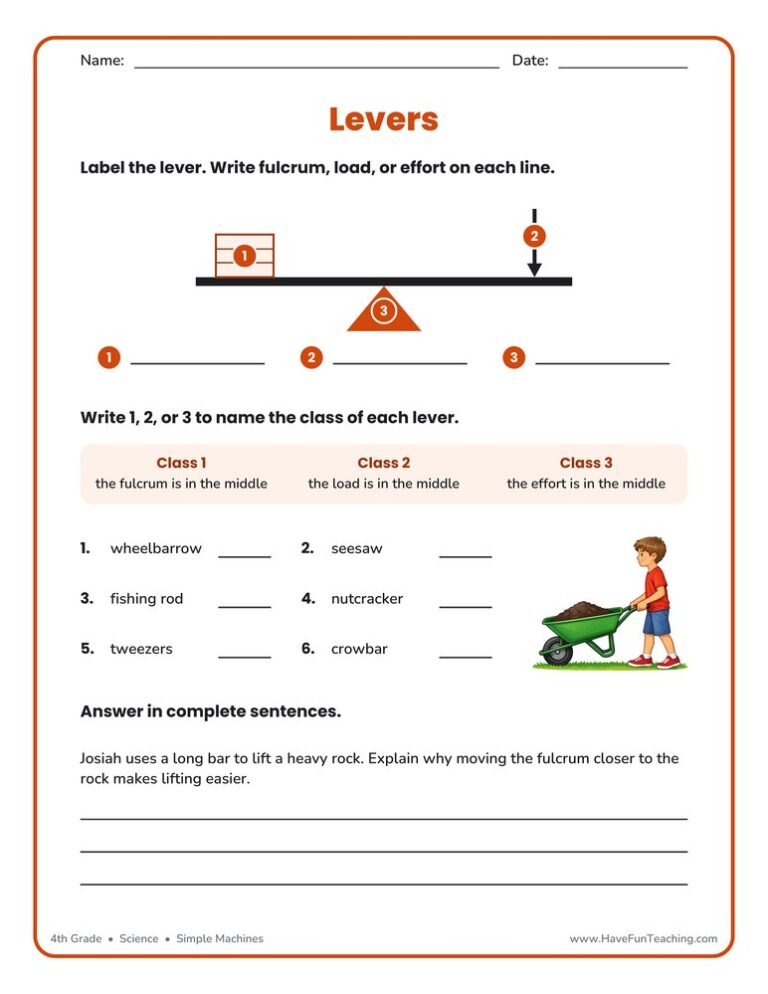
Worksheet4th GradeLevers Worksheet

This Levers Worksheet helps 4th grade students label the fulcrum, load, and effort, then name the class of six everyday tools. An answer key is included, so practice checks fast.

Worksheet
Worksheet4th GradeWhat Made That Sound? Worksheet

The What Made That Sound Worksheet asks 4th graders to read four one-second sound waves and decide whether each note is loud or soft, high or low. Answer key included for fast, confident checking.

Worksheet
Worksheet4th GradeMagnetic Earth Worksheet

This Magnetic Earth Worksheet gives 4th Grade students four magnet words and six real-life clues to match, plus an answer key, so magnetism vocabulary sticks long after the lesson ends.

Worksheet
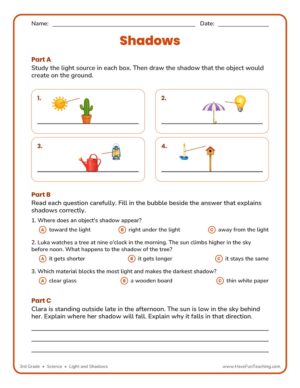
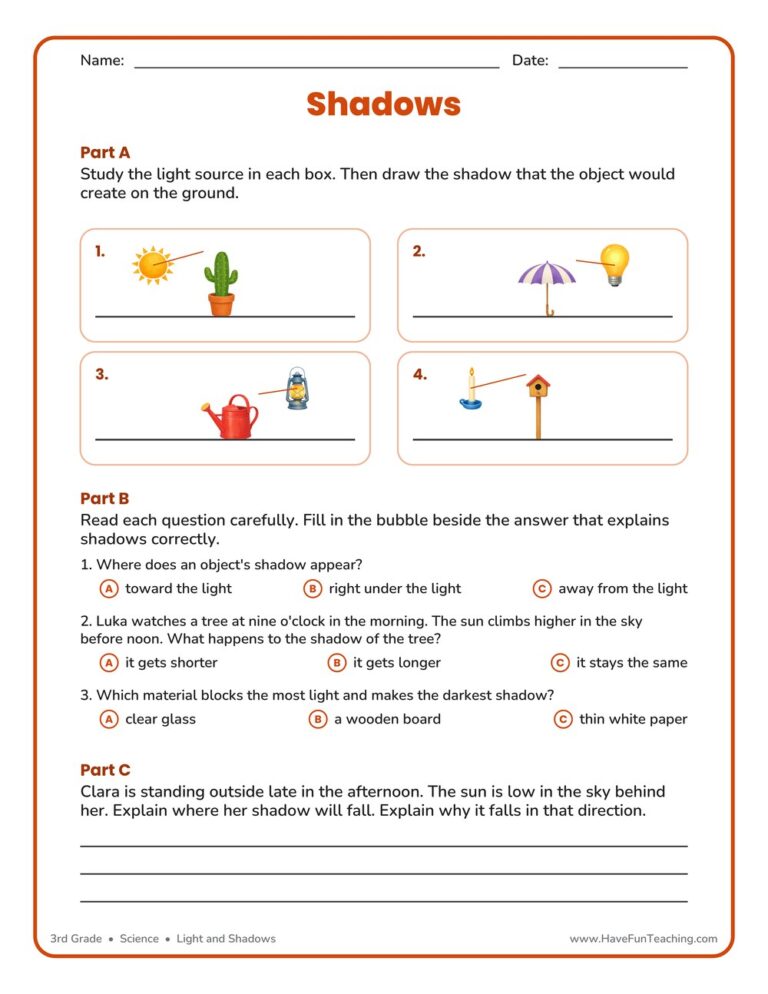
Worksheet3rd GradeShadows Drawing Worksheet

A shadows drawing worksheet where 3rd graders study four light sources, draw the shadow each object casts, and explain why it falls where it does. Answer key included for quick, no-prep science practice.

Worksheet
Worksheet3rd GradeDrawing Heat Energy Worksheet

This Drawing Heat Energy Worksheet gives 3rd Grade students four picture cards for tracing where heat energy comes from and where it goes, plus an answer key, so heat transfer practice is ready to print.

Worksheet
Worksheet3rd GradeSound Pitch Worksheet

This Sound Pitch Worksheet helps 3rd grade students use sound waves and real instruments to tell whether a vibration makes a high or low pitch. An answer key is included, so science practice takes minutes to set up.

Worksheet
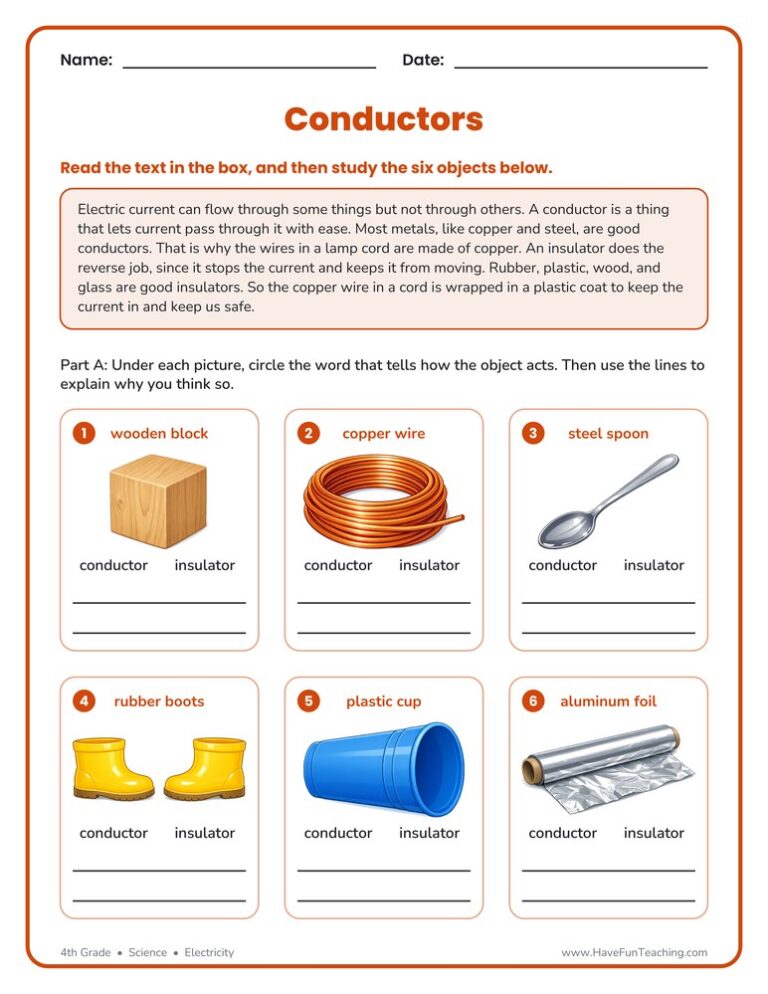
Worksheet4th GradeConductors Worksheet

This conductors worksheet has 4th graders read a short passage, sort six objects as conductors or insulators, and explain each choice. An answer key is included for easy checking.

Worksheet
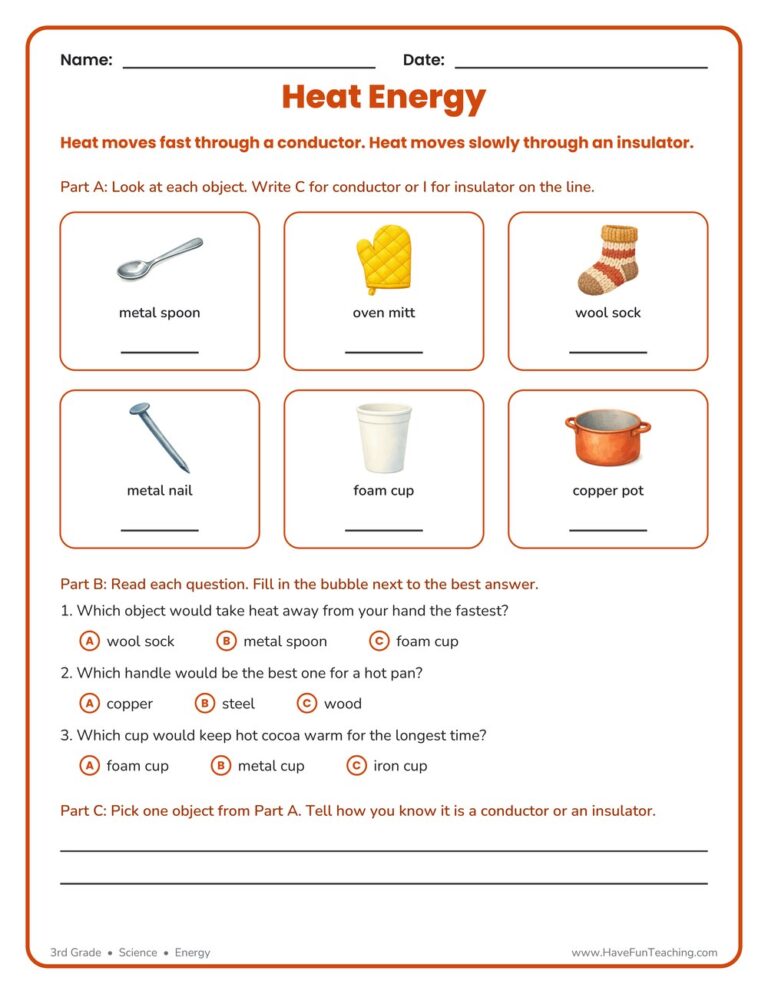
Worksheet3rd GradeConductors and Insulators Heat Energy Worksheet

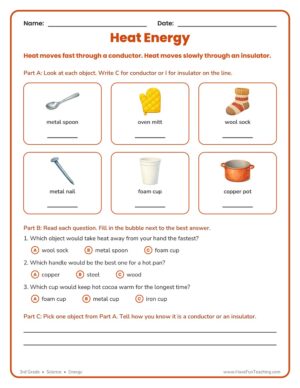
This Conductors and Insulators Heat Energy Worksheet helps 3rd grade students sort everyday objects, answer applied questions, and explain their thinking. Answer key included, so checking work takes seconds.

Worksheet
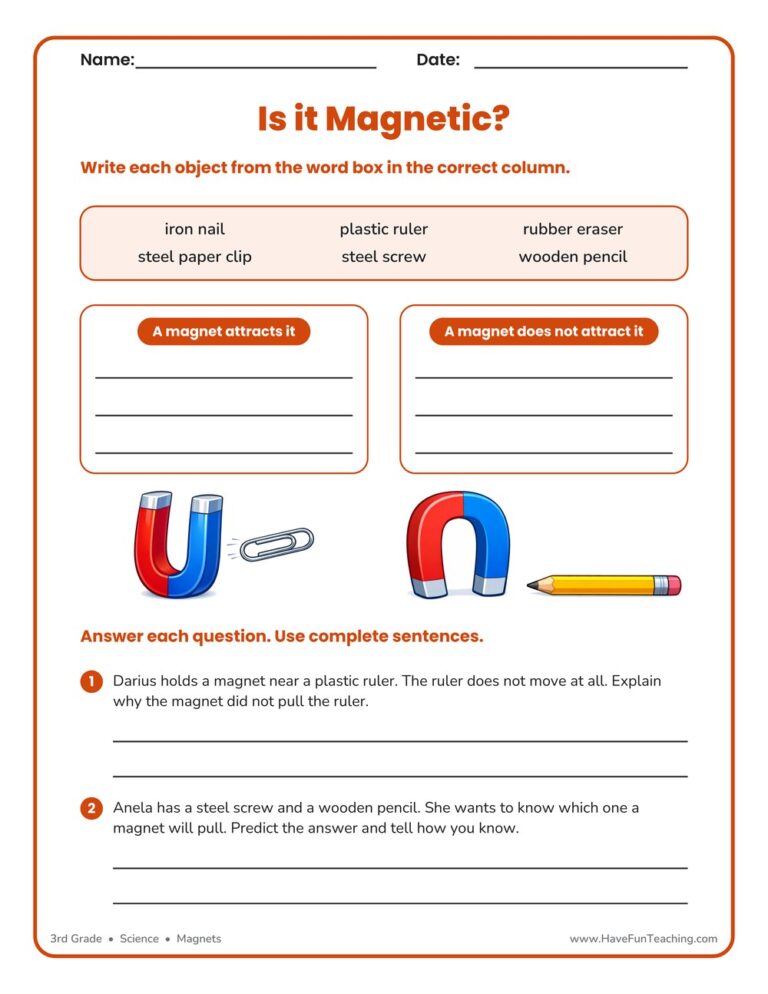
Worksheet3rd GradeIs it Magnetic Worksheet

This Is it Magnetic Worksheet has 3rd Grade students sort six classroom objects by the material they are made of, then explain two predictions in writing. Answer key included, so checking work takes seconds.

Worksheet
Worksheet3rd GradeFriction Worksheet - Draw

This friction drawing worksheet sends 3rd graders hunting for four real places where surfaces rub together. They sketch each one and write about it, turning an abstract force into something they can point to.

Activity
Activity2nd GradeMotion Activity

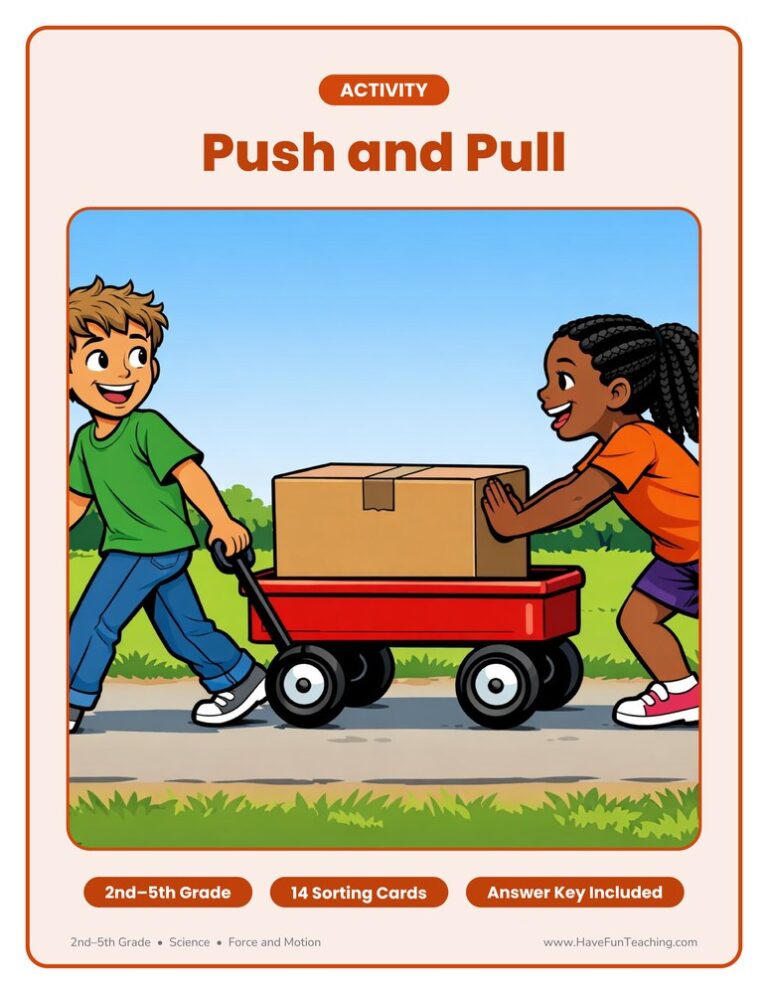
This motion activity helps 2nd to 5th grade students sort everyday actions into pushes and pulls, with 14 sorting cards, a practice page, and an answer key included.

From our teachers' playbook

Light it, heat it, hear it, power it!

What do kids learn about energy?

Energy is what makes things move, light up, warm up and make sound. In elementary school, kids explore its forms: light that makes shadows, heat that travels through some materials better than others, sound made by vibrations, and electricity flowing through a circuit. They learn that conductors let energy pass and insulators slow it down, and that energy can change form, like a flashlight turning electricity into light. The click moment comes when a child connects a wire, the bulb lights up, and they shout, "I made a circuit!"

Our favorite ways to make energy stick

Energy is invisible, so kids need to see what it does. These moves make it real.

Build a simple circuit

Give small groups a battery, wire and bulb and ask them to make it light. When it works, they draw the circuit and label each part. Then ask what happens if the loop breaks. Hands-on success makes the drawing meaningful.

Why it works: kids understand an idea best when they touch it, then draw it, then write it, the order the U.S. Department of Education recommends for elementary math.

Circuits WorksheetTry it withCircuits WorksheetWorksheetsOpen it →
Draw where heat goes

Place a metal spoon and a wooden spoon in warm water and let kids feel the handles after a minute. Then they draw arrows to show heat moving. Pictures of invisible energy help kids explain what they felt.

Why it works: pairing a picture with each word gives kids two ways to remember it, a well-tested principle of how people learn (Mayer, 2009).

Conductors and Insulators Heat Energy WorksheetTry it withConductors and Insulators Heat Energy WorksheetWorksheetsOpen it →

Mix the energy types

Once kids know each form, give a page that mixes light, heat, sound and electricity examples. They label each one and explain their choice. Mixed practice makes them think about evidence, not just repeat a list.

Why it works: shuffled practice teaches kids to choose the right strategy, not just repeat one, and it improved test scores in research (Rohrer and Taylor, 2007).

Electricity WorksheetTry it withElectricity WorksheetWorksheetsOpen it →

Questions teachers and parents ask

What is energy for kids?

Energy is the ability to make things happen, like moving, heating, lighting up or making sound. Forms kids learn about include light, heat, sound, electrical and motion energy.

What grade do kids learn about energy?

Kids explore light and sound in the early grades, then study heat, electricity, circuits and how energy changes form in upper elementary, usually around 4th grade.

What are conductors and insulators?

Conductors, like metal, let heat or electricity move through them easily. Insulators, like wood, plastic and rubber, slow it down.

What's an easy energy experiment at home?

Rub your hands together fast and feel them warm up, or set a metal and a plastic spoon in warm water and compare which handle gets warm first.

Keep exploring