Skip to content
Start My 3 Free Days $0 today · cancel anytime

Consonants Worksheets

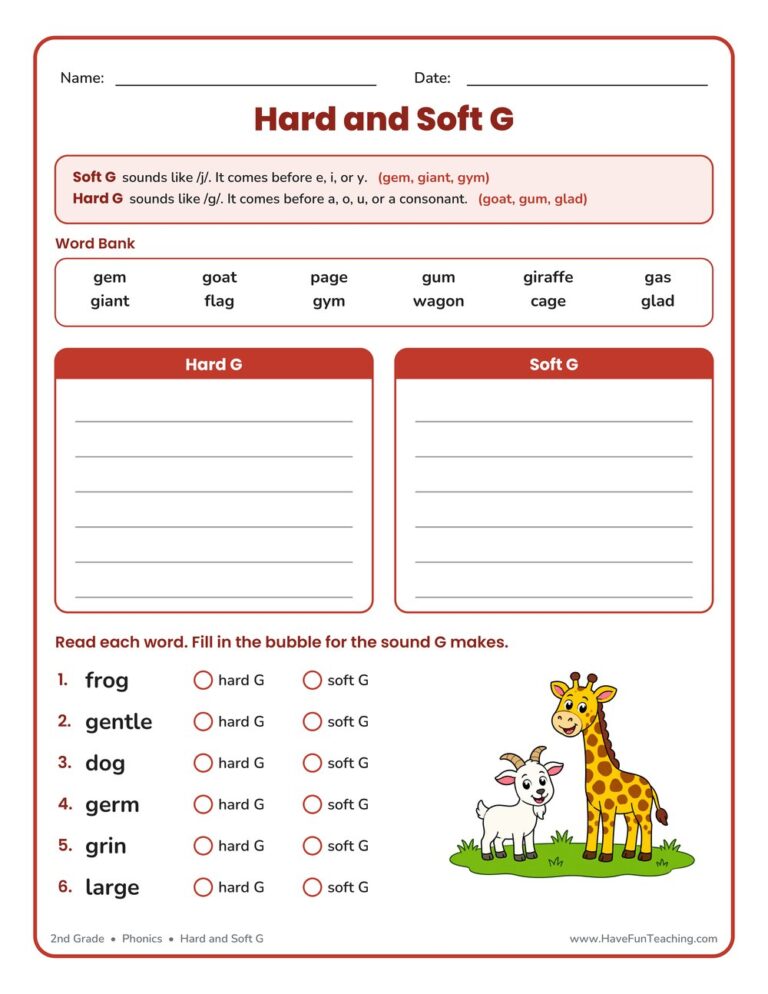
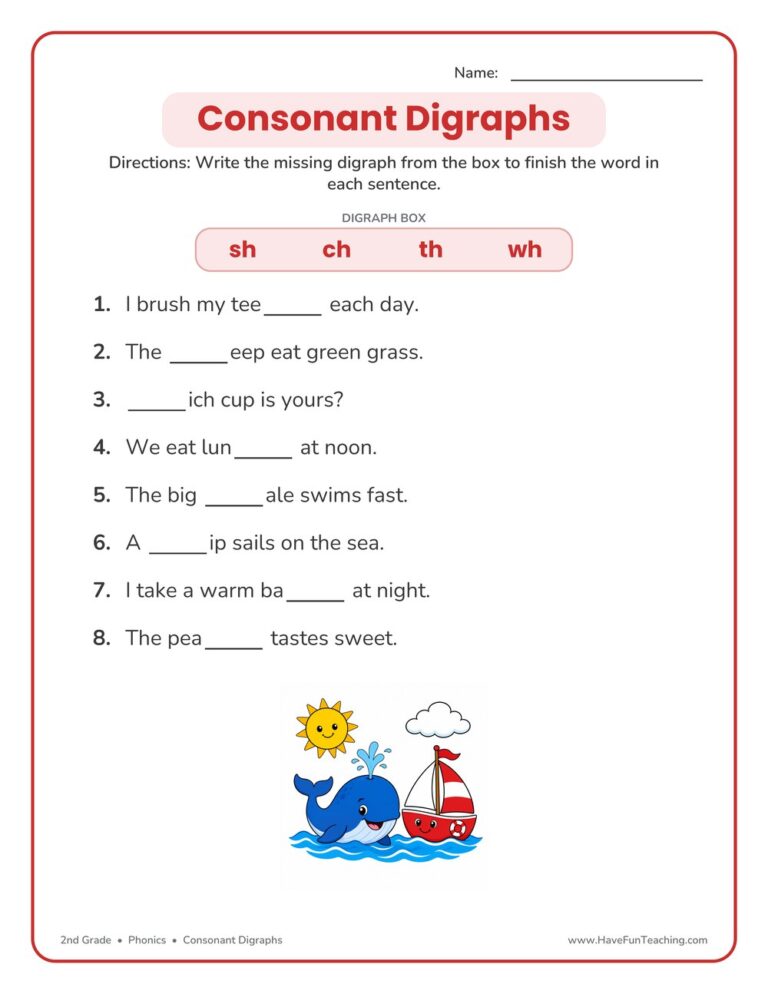
137 consonants worksheets. Teacher favorites: Hard G and Soft G Worksheet and Consonant Digraphs Worksheet. How teachers use these

Consonants Worksheets

137 consonants worksheets. Teacher favorites: Hard G and Soft G Worksheet and Consonant Digraphs Worksheet. How teachers use these

Worksheet
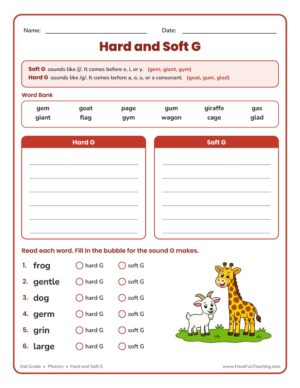
Worksheet2nd GradeHard G and Soft G Worksheet

This Hard and Soft G Worksheet helps 2nd graders sort words by the hard g and soft g sound and mark which sound the letter g makes. Includes an answer key for quick, no-prep phonics practice.

Worksheet
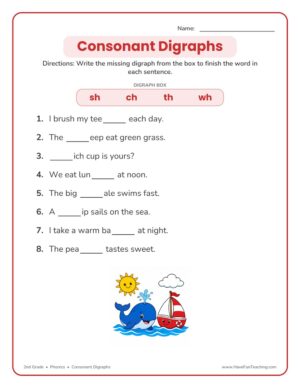
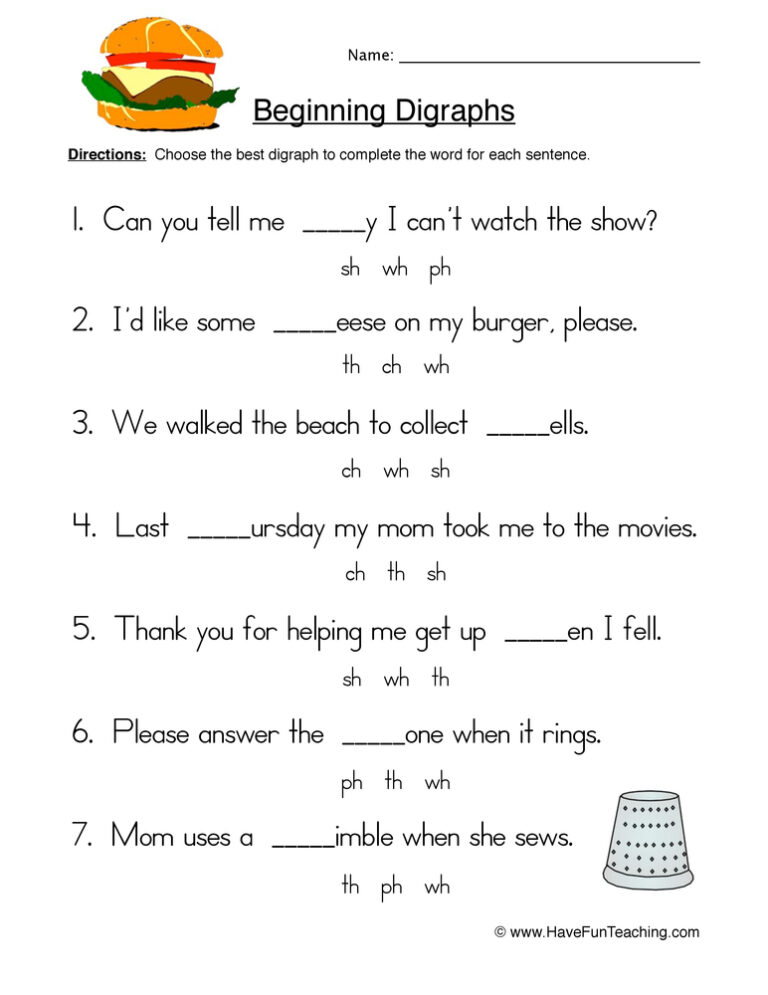
Worksheet2nd GradeConsonant Digraphs Worksheet

This consonant digraphs worksheet gives 2nd graders hands-on practice spelling sh, ch, th, and wh words in fun sentences. An answer key is included, making it perfect for quick, no-prep phonics practice at home or school.

Worksheet
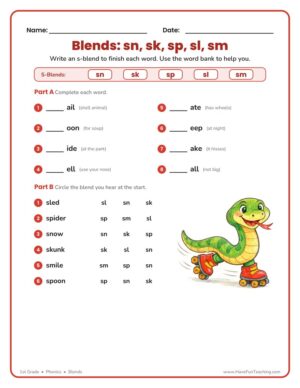
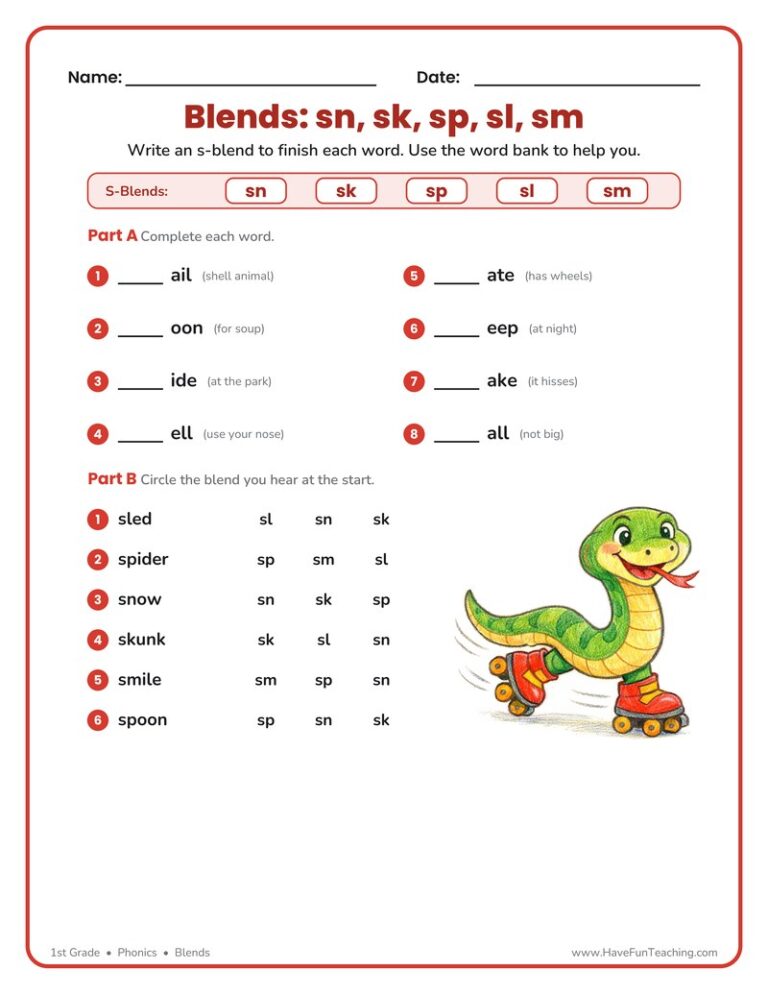
Worksheet1st GradeS Blends Worksheet

This S Blends Worksheet helps first graders spell and hear the beginning blends sn, sk, sp, sl, and sm by completing real words. Includes a complete answer key, perfect for no-prep phonics practice at home or school.

Worksheet
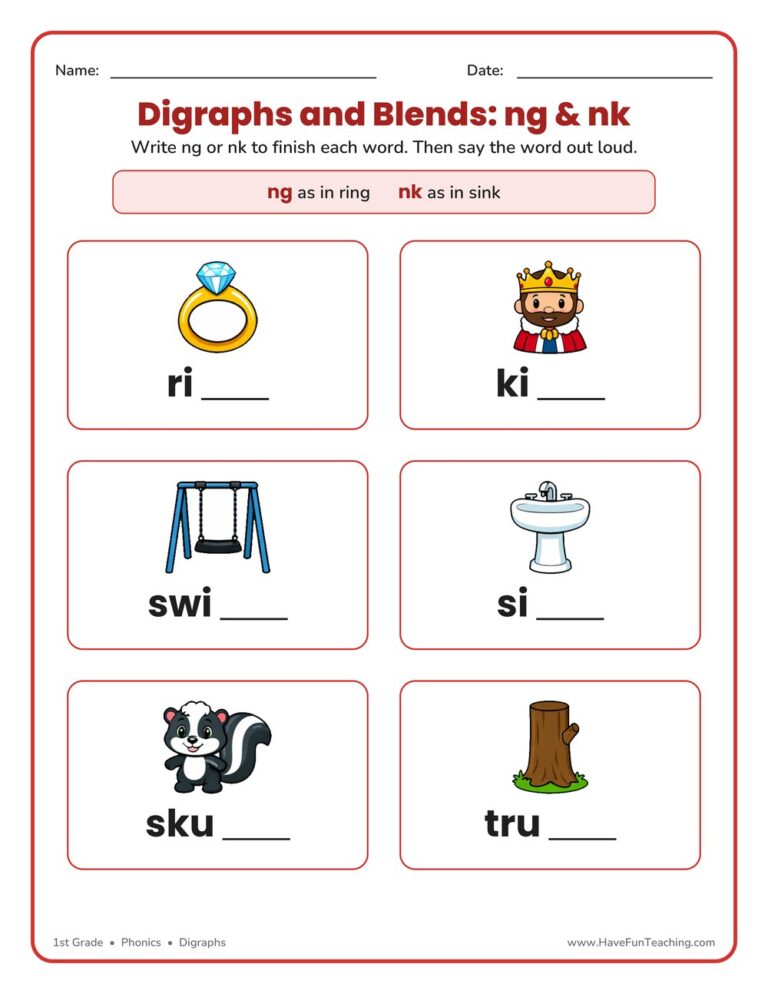
Worksheet1st GradeNG and NK Digraph Worksheet

This ng and nk digraph worksheet gives 1st graders picture-clue practice writing the ending sounds in words like ring and skunk. An answer key is included for quick, no-prep phonics practice.

Worksheet
Worksheet1st GradeBeginning Digraphs Fill in the Blank Worksheet

This beginning digraphs fill in the blank worksheet has 1st graders write ch, sh, th or wh to finish words in sentences and under pictures. Answer key included, so it grades itself in seconds.

Worksheet
Worksheet1st GradeNG/NK Digraph Worksheet

This NG/NK digraph worksheet asks 1st graders to sort six words by their ending sound and then build four more. Answer key included for fast, no-prep phonics practice.

Worksheet
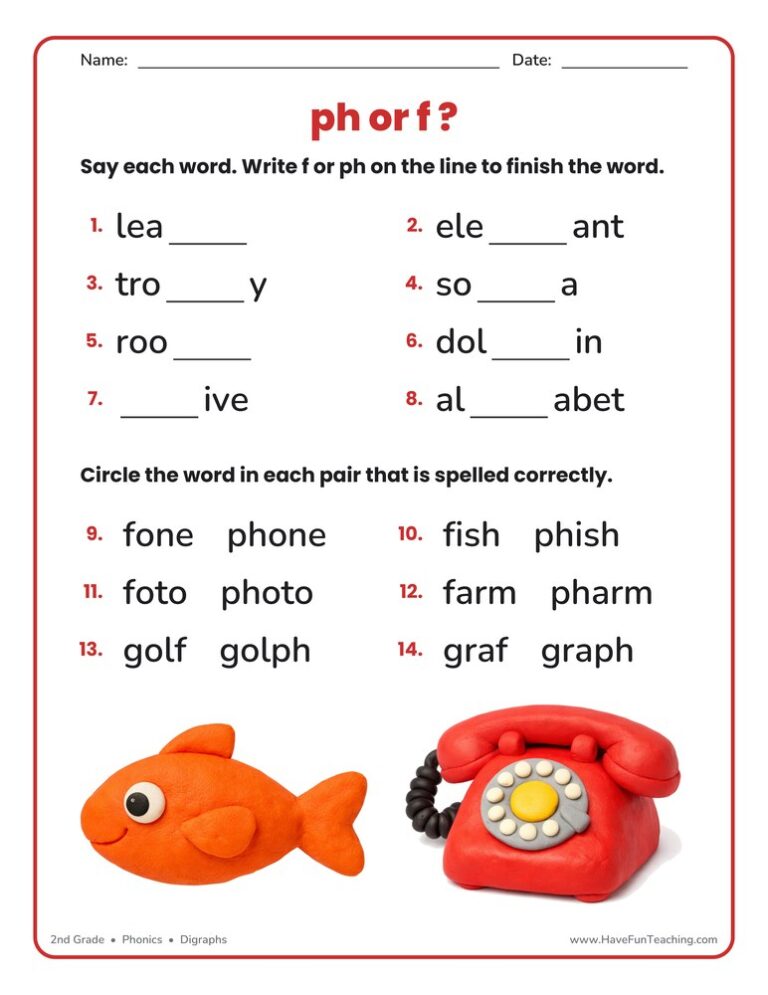
Worksheet2nd GradeF or PH Worksheet

The F or PH Worksheet gives 2nd graders hands-on practice choosing between the f and ph spellings of the /f/ sound. Answer key included, so students can check their own work and build confident spelling habits.

Worksheet
Worksheet1st GradeW or WH Worksheet

A w or wh worksheet that helps 1st graders decide which spelling makes the /w/ sound, with six picture clues and six picture-free words. Answer key included for fast, confident phonics practice.

Worksheet
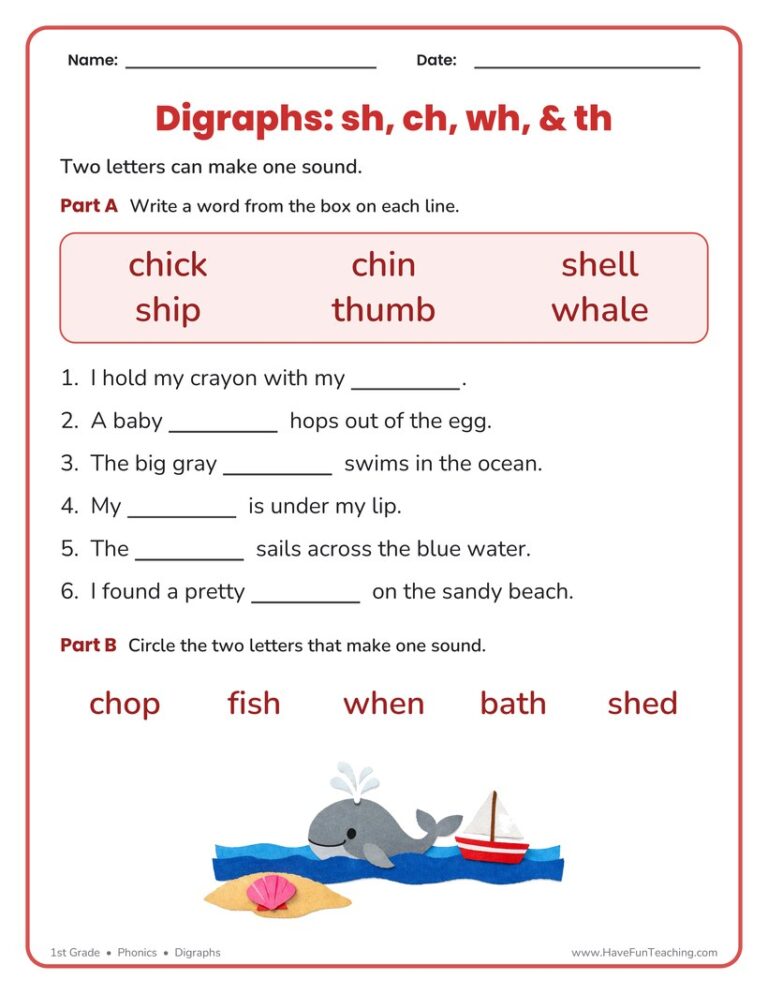
Worksheet1st GradeH Digraphs Fill in the Blank Worksheet

This H Digraphs Fill in the Blank Worksheet gives 1st graders six sentences to complete with sh, ch, wh, and th words, plus a circle-the-digraph section. Answer key included for fast, no-prep phonics practice.

Worksheet
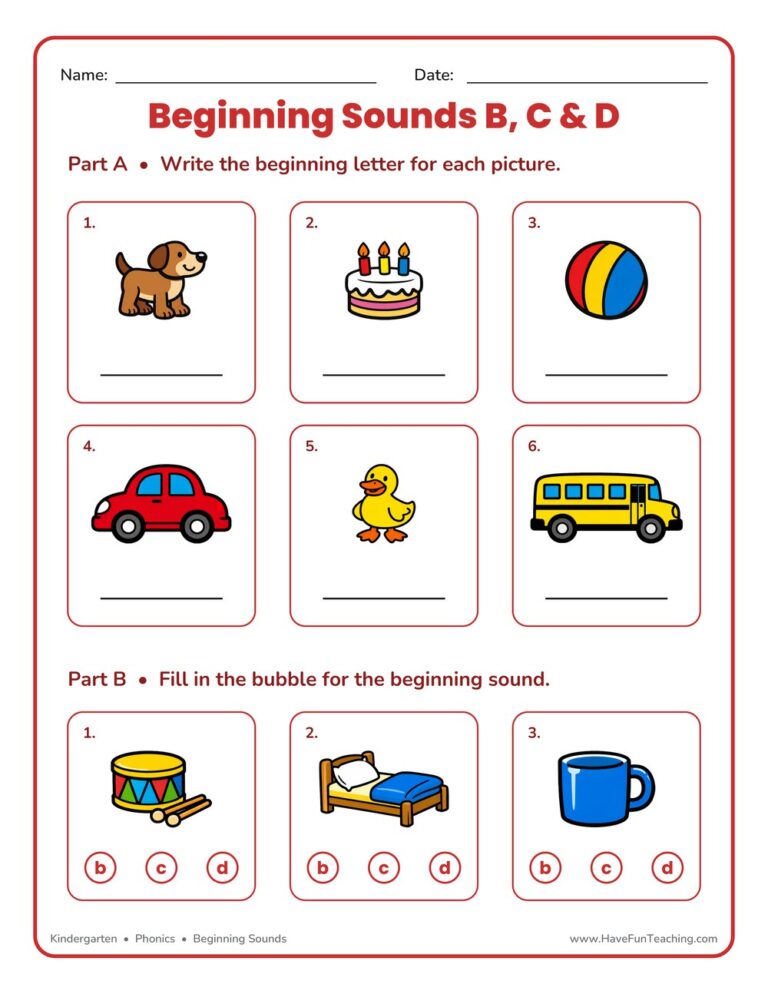
WorksheetKindergartenBeginning Sounds B C D Pictures Worksheet

The Beginning Sounds B C D Pictures Worksheet helps Kindergarten students name the first sound in six familiar pictures and write the matching letter. Answer key included, so checking work takes seconds.

Worksheet
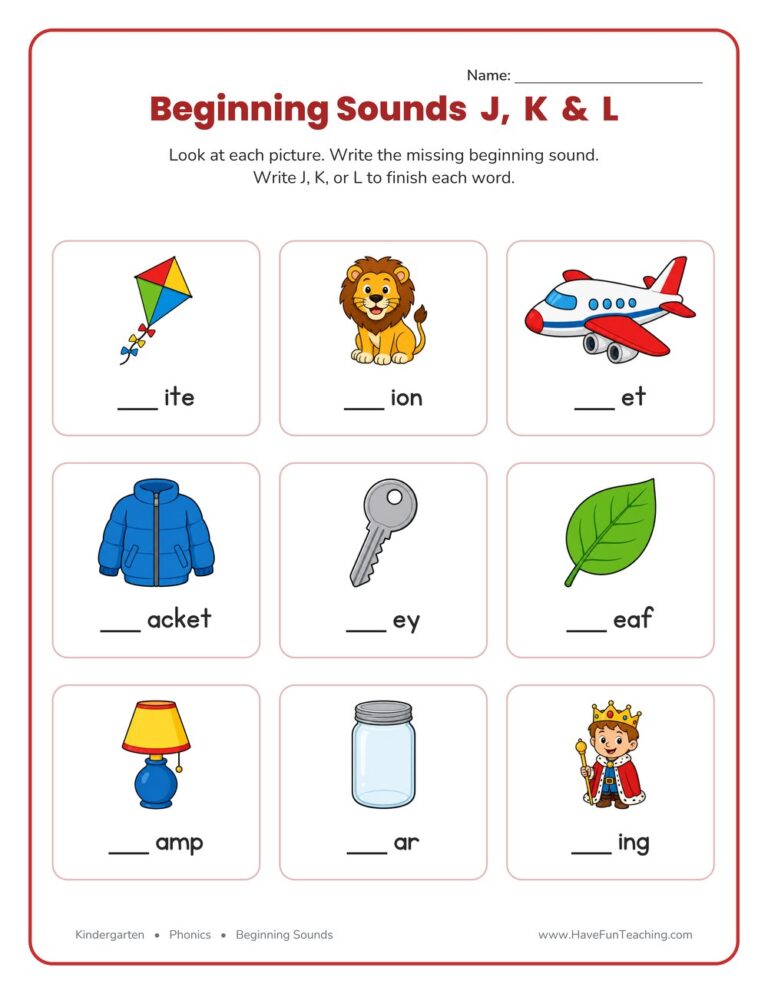
WorksheetKindergartenBeginning Sounds J K L Worksheet - Pictures

The Beginning Sounds J K L Worksheet lets Kindergarten students look at nine pictures and write the missing first letter — J, K, or L — to finish each word. Includes an answer key for quick, no-prep phonics practice.

Worksheet
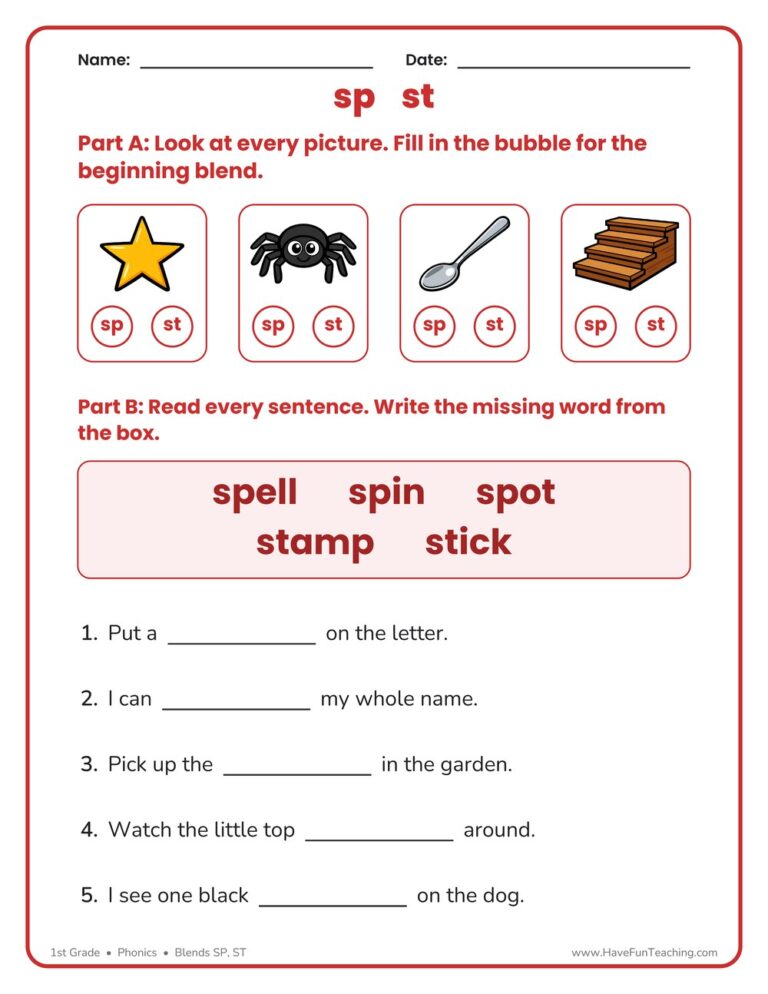
Worksheet1st GradeBlends SP, ST Worksheet

Practice the Blends SP, ST Worksheet with picture bubbles and word-box sentences made for 1st Grade readers. An answer key is included, so beginning blends turn into quick, confident reading.

Worksheet
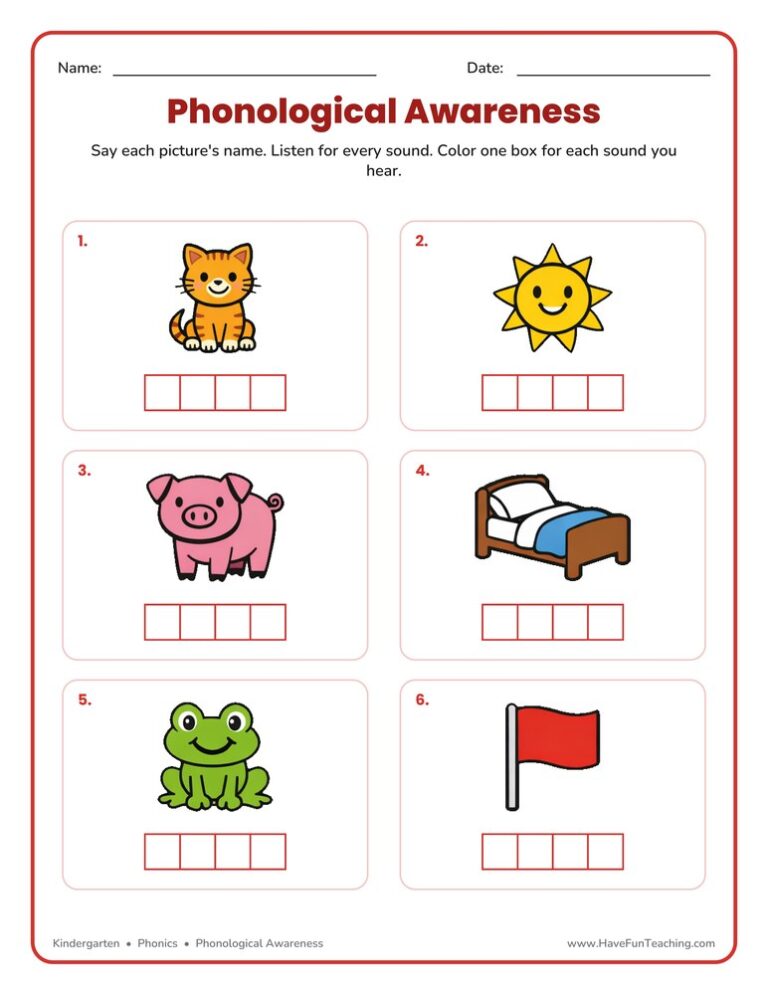
WorksheetKindergartenPhonological Awareness Worksheet

This phonological awareness worksheet helps Kindergarten students listen for each sound in a word and color one box per sound they hear. Includes a complete answer key for easy, no-prep practice of early phonics and phoneme skills.

Worksheet
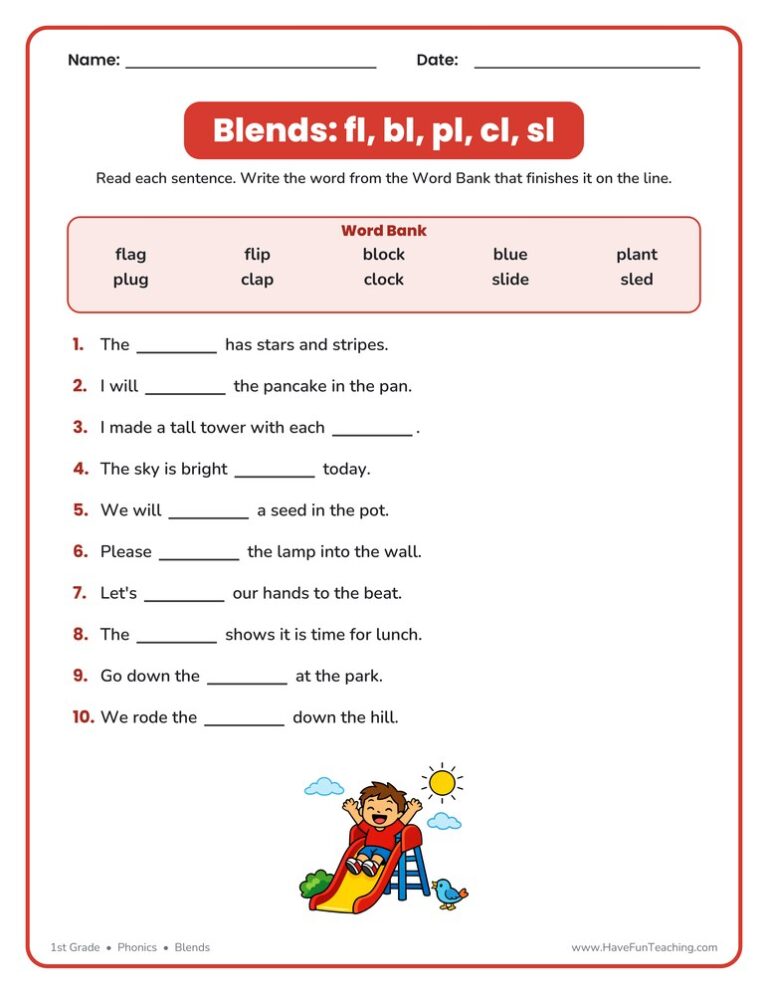
Worksheet1st GradeL Blends Fill in the Blank Worksheet

The L Blends Fill in the Blank Worksheet gives 1st graders ten sentences and a word bank to practice fl, bl, pl, cl, and sl blends. Answer key included for quick, no-prep phonics practice at home or school.

Worksheet
Worksheet1st GradeR Blends Worksheet

This R Blends Worksheet gives 1st graders two quick activities — three word-bank sentences and a br, gr, tr word sort — covering the blends br, fr, gr, pr, and tr. Answer key included for fast checking.

Worksheet
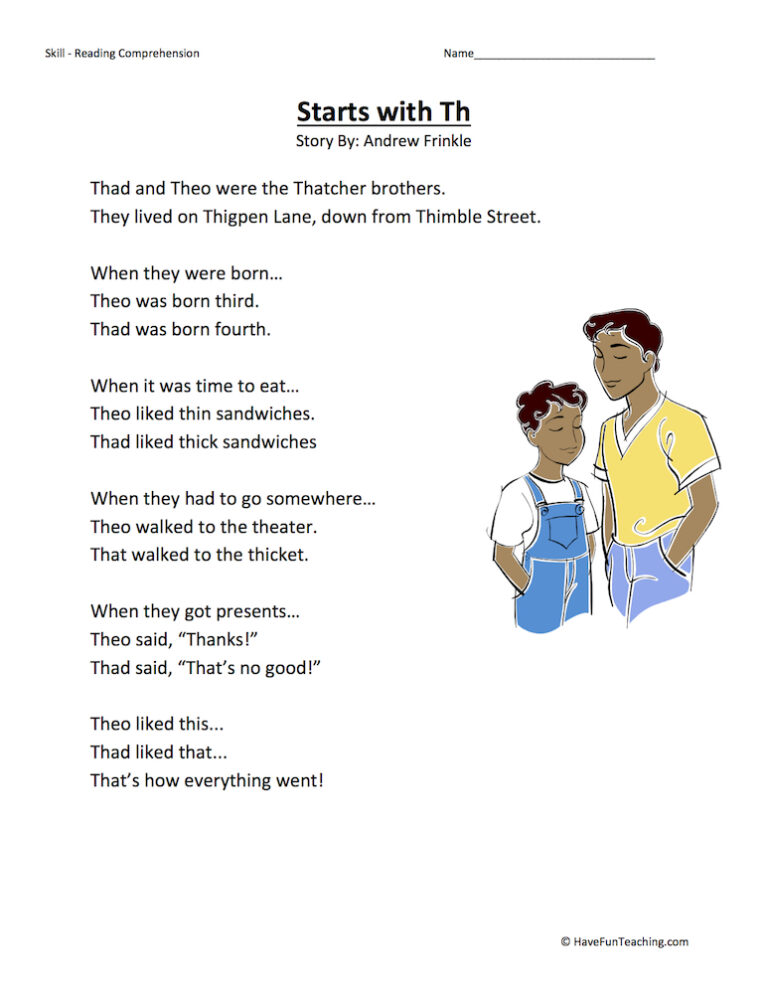
Worksheet2nd GradeStarts With TH Reading Comprehension Worksheet

A second grade Starts with Th reading comprehension worksheet where kids read a fun Th-digraph story about two brothers, then answer questions. Includes an answer key — perfect for no-prep phonics and reading practice.

Worksheet
WorksheetKindergartenBeginning Sounds F, G, H, J Worksheet

This Beginning Sounds F, G, H, J Worksheet asks Kindergarten students to name twelve pictures and write the letter each one starts with. Answer key included, so a quick sound check takes seconds.

Worksheet
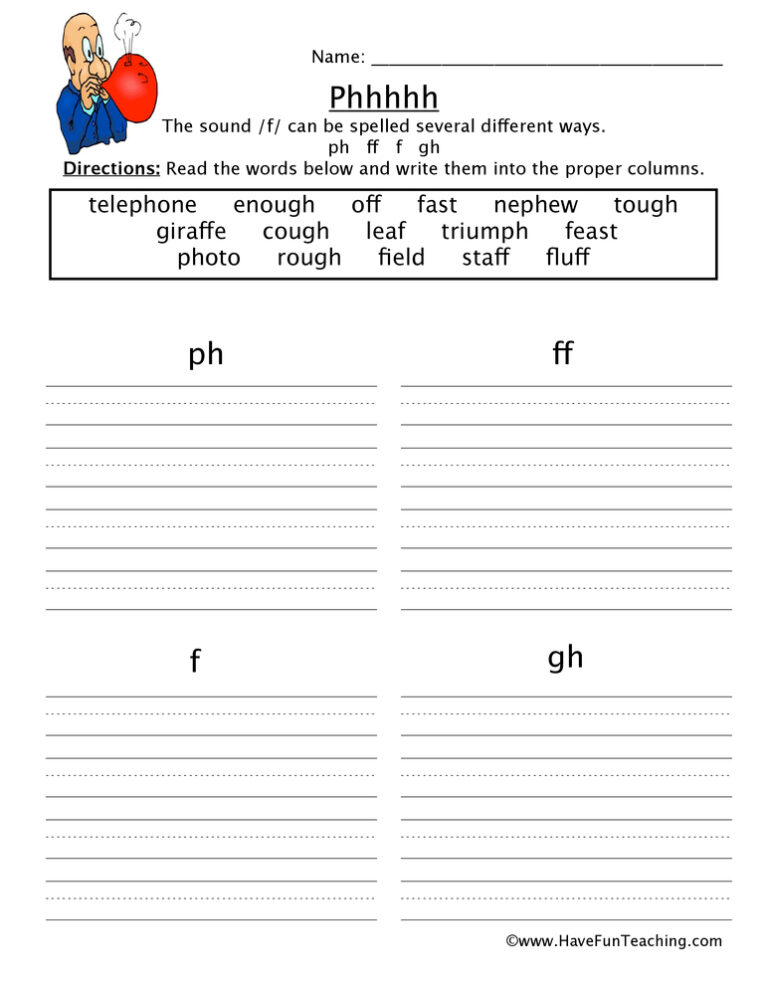
Worksheet2nd GradePH FF F GH Worksheet

This PH FF F GH worksheet asks 2nd graders to sort sixteen words by the letters that spell the /f/ sound. An answer key is included for fast, no-prep phonics practice at home or in class.

Worksheet
Worksheet1st GradeBlends BL, BR Worksheet

This Blends BL BR Worksheet has 1st graders write the missing blend under six pictures, then spell two whole words. An answer key is included for quick, no-prep phonics practice.

Worksheet
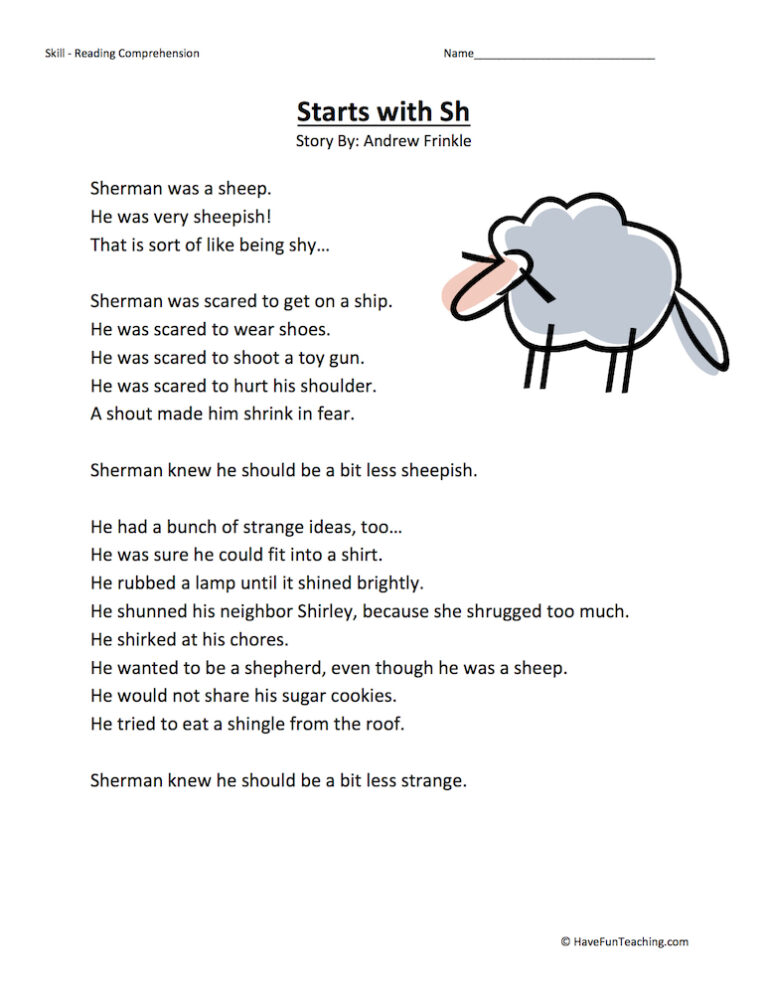
Worksheet1st GradeStarts With SH Reading Comprehension Worksheet

This Starts With SH Reading Comprehension Worksheet gives 1st graders a short beach story full of sh words plus five bubble-in questions. An answer key is included, so phonics practice and reading comprehension happen in one no-prep activity.

From our teachers' playbook

B, C, D and all their friends

What do kids learn about consonants?

Consonants are the 21 letters that are not vowels, and they do most of the work at the start and end of words. Kids begin by matching each consonant to its sound and hearing it at the beginning of a word: b, b, ball. Next come blends, where two sounds stay separate but slide together (st, fl, gr), and digraphs, where two letters make one new sound (sh, ch, th, wh, ph). Later they meet the tricky ones, like hard and soft c and g in cat and city. Once consonants are automatic, kids can sound out almost any short word.

How we teach consonants so they stick

Consonant sounds should be quick and crisp. These moves keep them clear and keep kids practicing.

Clip the sound short

Model each sound without an extra "uh" on the end: say /b/, not "buh". That tiny habit makes blending so much easier later, because b-a-t blends into "bat" instead of "buh-a-tuh". Have kids hold a hand under their chin and feel the sound stop fast.

Why it works: teaching letter sounds directly and in order is one of the best-supported findings in reading research (National Reading Panel, 2000).
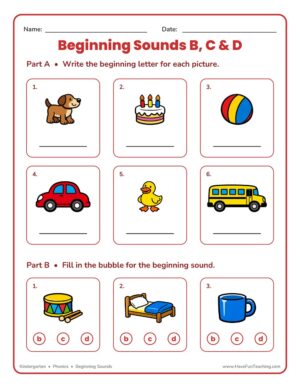
Beginning Sounds B C D Pictures WorksheetTry it withBeginning Sounds B C D Pictures WorksheetWorksheetsOpen it →

Sing the letter sounds

Start the day with an alphabet song or lesson that says the letter name, the sound and a picture word. Kids join in on the sounds after a few days. Music gives shy readers a safe way to practice out loud.

Why it works: a catchy, repeating tune gives the brain a hook to hang words on, so sung text is remembered better (Wallace, 1994).

Alphabet Micro LessonTry it withAlphabet Micro LessonVideosOpen it →

Two letters, one sound

When you reach digraphs, write sh on one hand and ch on the other. Call a word and kids point to the hand that matches the first sound. Quick, silly and moving, which is exactly how digraphs stop getting mixed up.

Why it works: in a well-known study, a few short sessions of a simple number board game measurably boosted young children's number skills (Ramani and Siegler, 2008).

Consonant Digraphs WorksheetTry it withConsonant Digraphs WorksheetWorksheetsOpen it →

Consonant questions from parents and teachers

How many consonants are in the alphabet?

There are 21 consonants in English: every letter except a, e, i, o and u. The letter y can act as a consonant (yes) or a vowel (gym, my).

What is the difference between a blend and a digraph?

In a blend, you still hear both sounds, as in st or fl. In a digraph, two letters make one brand new sound, as in sh, ch or th.

In what order should I teach consonants?

Many teachers start with high-use letters like s, m, t, p, n and c so kids can build real words right away. Blends and digraphs usually come after kids can read short vowel words like cat and sit.

When does the soft c and soft g rule come up?

Usually in 1st or 2nd grade. When c or g comes before e, i or y, it usually makes its soft sound, like in city and giant.