

Beginning Sounds G, T, B Worksheet
The Beginning Sounds G, T, B Worksheet asks Kindergarten students to say each picture and write g, t, or b to finish the word. Answer key included, so first-sound practice takes no prep at all.
$6.97
Or free with a membership — members pay $3.33/mo for all 10,000+ resources. See plans
Want this one free?
Tell us where to send it and it’s yours — no card, no catch.
One free resource per teacher. We’ll also send free teaching ideas each week — unsubscribe anytime.
Teaching is easier with a membership
Unlimited printables, games & videos for PreK–6th — for your classroom or homeschool. Cancel anytime.
Start your 3-day free trial$0 today · cancel anytime · Instant access to 10,000+ resources
About this resource
Description
Listening for the first sound in a word is where reading begins. This Beginning Sounds G, T, B Worksheet gives kindergarten students focused practice with three consonants that look and sound very different from one another, so the sound each letter spells is easy to hear and easy to remember. Children look at a picture, say its name out loud, stretch the very first sound they hear, and then choose the letter that spells it. That single move — hear the sound, name the letter — is the foundation of decoding, and this page walks a child through it nine times.
This kindergarten beginning sounds worksheet is built as nine picture cards. Each card shows a bright clay-style illustration with the rest of the word already printed beside a writing blank, so the child only has to supply the missing first letter: g, t, or b. Use it as a small-group warm-up, a literacy-center task, or a quick check after teaching the letters G, T and B. Read the directions together, model the first card out loud, and then let students work their way down the page on their own.
What’s Included
- 1 print-ready PDF worksheet
- Answer key
- 9 picture-and-letter activities
Three things make this Beginning Sounds G, T, B Worksheet work in a kindergarten classroom. First, the word ending is already printed, so a child who is not yet writing whole words can still finish a real word and feel successful. Second, the pictures are ordinary, nameable objects — a bed, a box, a tent, a bus — so no reading is needed to get started and the task stays a pure listening task. Third, the three answers are mixed down the page instead of grouped by letter, which means students have to listen to every picture rather than settle into a pattern. Generous writing lines give little hands the room they need to form each letter carefully.
Away from the page, keep the sound hunt going. Walk around the classroom or the kitchen and collect objects that start with /g/, /t/ and /b/, then sort them into three piles and say each name aloud. Play “I spy something that starts with /b/” in the car. Let your child paint the three letters, stamp them, or roll them out of play dough while saying the sound each one makes. Singing an alphabet song right before the worksheet primes the ear, and reading a favorite picture book afterward lets children spot the same letters doing the same job in real print.
Related Resources
What teachers say
Reviews
You must be logged in to post a review.
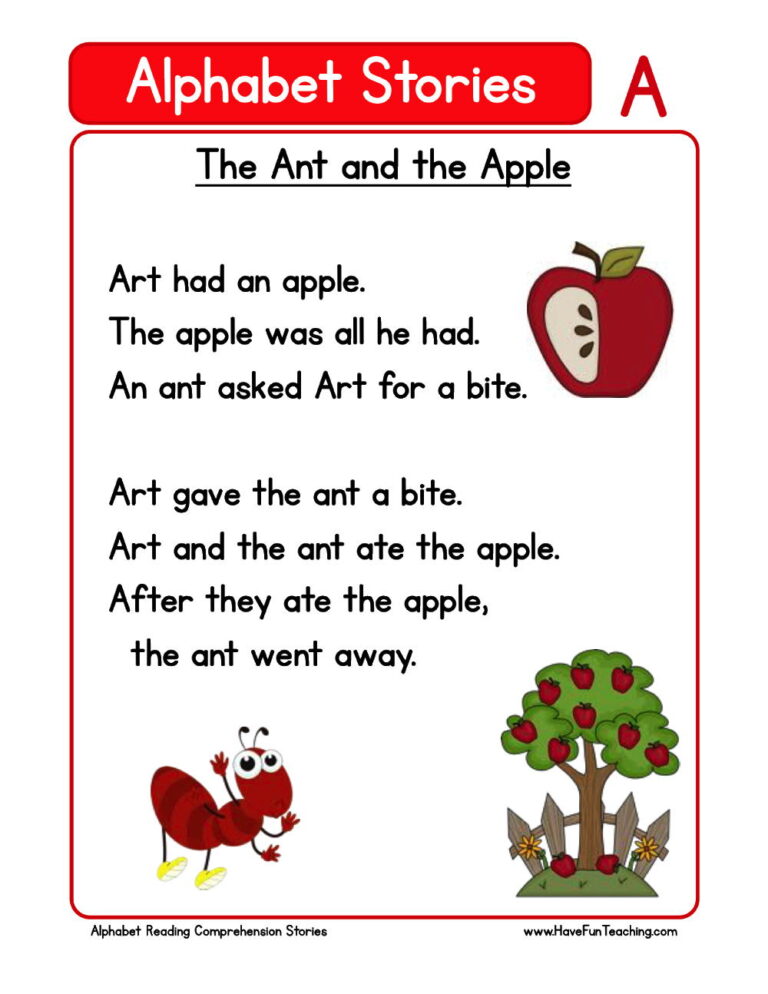
This free Alphabet Stories Letter A Reading Comprehension Worksheet pairs a short letter A story with fill-in-the-bubble questions for kindergarten readers. Includes an answer key — a fun, no-prep way to practice phonics and comprehension.

This CVC Word Sounds Worksheet has Kindergarten readers say six pictures and fill in the bubble beside the CVC word with the matching sounds. Answer key included for quick, no-prep phonics practice.
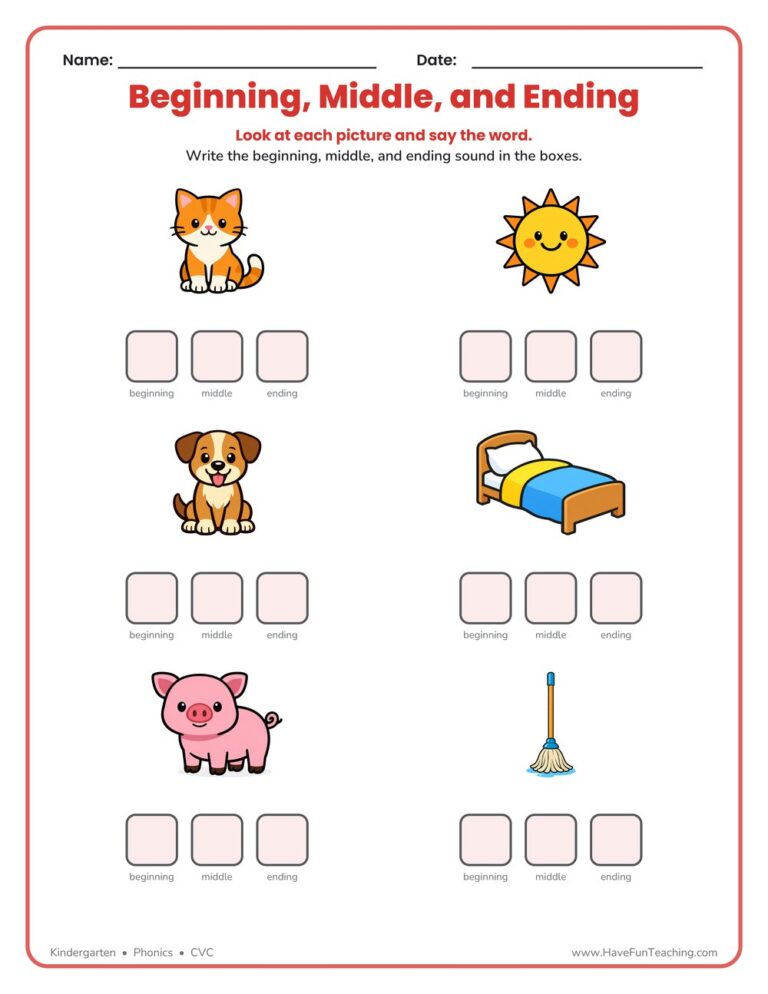
This Beginning, Middle, and Ending Sounds Worksheet helps kindergarten learners break six CVC picture words into their beginning, middle, and ending sounds. Answer key included—great no-prep phonics practice.

A picture-clue Spelling CVC Words Worksheet that helps kindergarten students hear and write the beginning, middle, and ending sounds in simple three-letter words. Answer key included for quick, no-prep phonics practice.
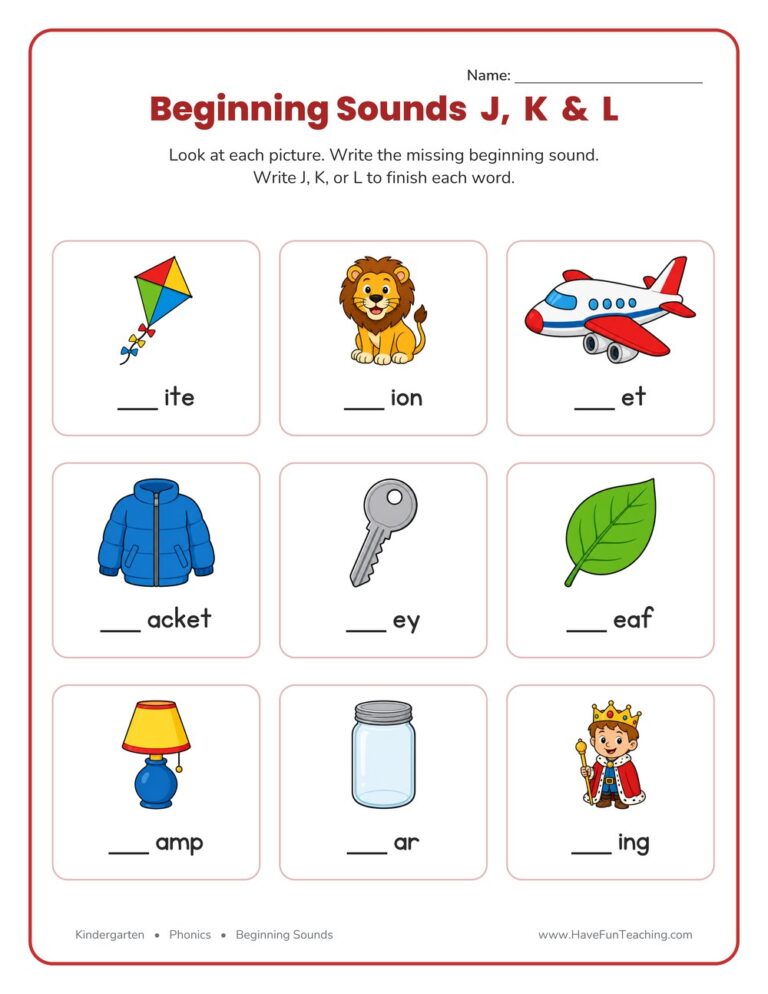
The Beginning Sounds J K L Worksheet lets Kindergarten students look at nine pictures and write the missing first letter — J, K, or L — to finish each word. Includes an answer key for quick, no-prep phonics practice.
This Elkonin Box Worksheet gives Kindergarten students seven picture prompts and three-cell sound boxes for segmenting CVC words into beginning, middle, and ending sounds. Answer key included, so practice takes no prep.
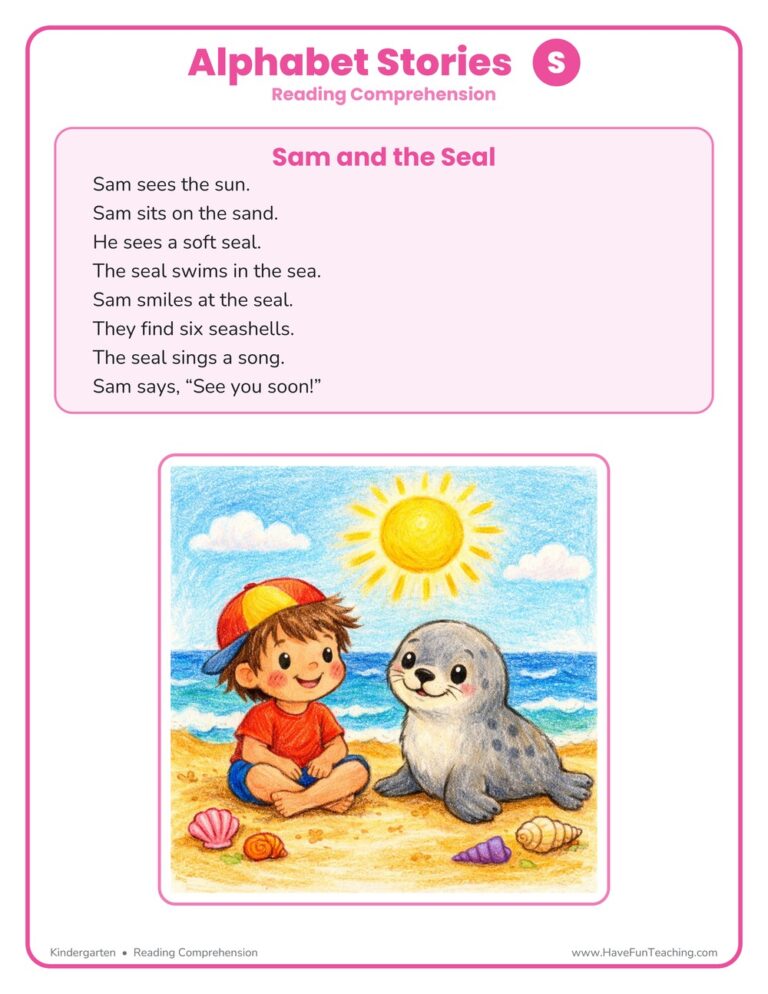
The Alphabet Stories Letter S Reading Comprehension Worksheet gives Kindergarten readers a fun beach story full of the /s/ sound plus five comprehension questions. Answer key included for quick, no-prep Letter S practice.

A picture-based Beginning Sounds B, C, D Worksheet for Kindergarten: say each picture, write the letter you hear first, then trace and write B b, C c, and D d. Answer key included for quick, no-prep phonics practice.
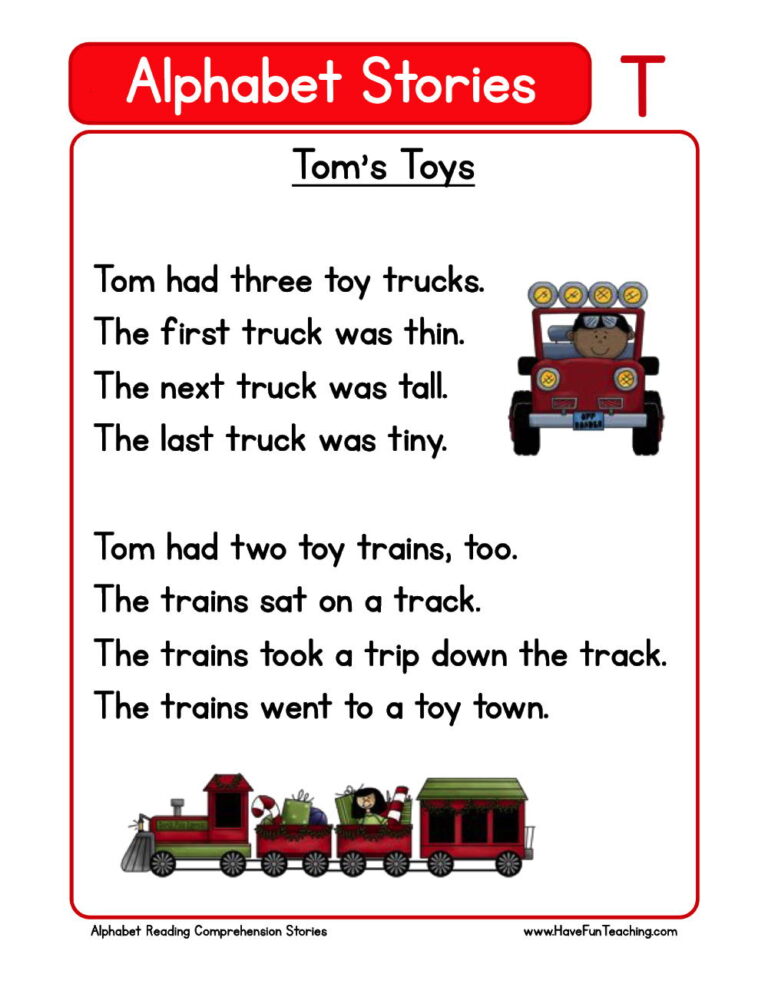
The Alphabet Stories Letter T Reading Comprehension Worksheet gives kindergarten readers a short, decodable story about Tom's toys with five fill-in-the-bubble questions. Answer key included — a no-prep way to practice the letter T and early comprehension.

The Alphabet Stories Letter D Reading Comprehension Worksheet gives kindergarten readers a short Letter D story with five questions and an answer key, building early reading confidence one letter sound at a time.
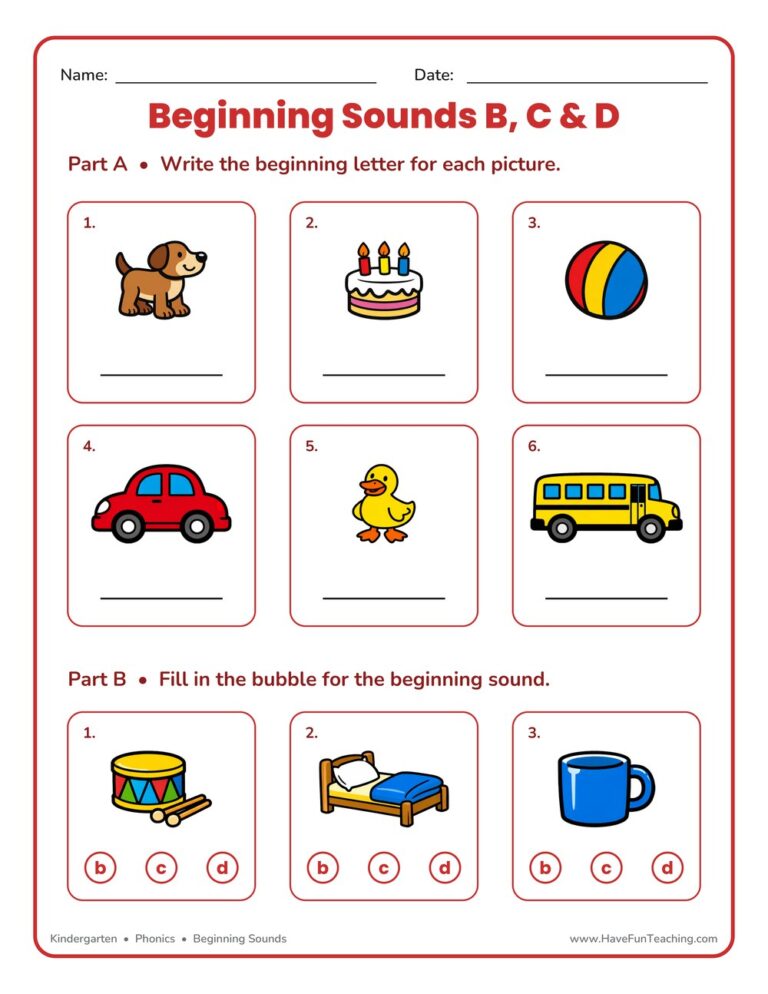
The Beginning Sounds B C D Pictures Worksheet helps Kindergarten students name the first sound in six familiar pictures and write the matching letter. Answer key included, so checking work takes seconds.

This Beginning Sounds F, G, H, J Worksheet asks Kindergarten students to name twelve pictures and write the letter each one starts with. Answer key included, so a quick sound check takes seconds.




Reviews
There are no reviews yet