
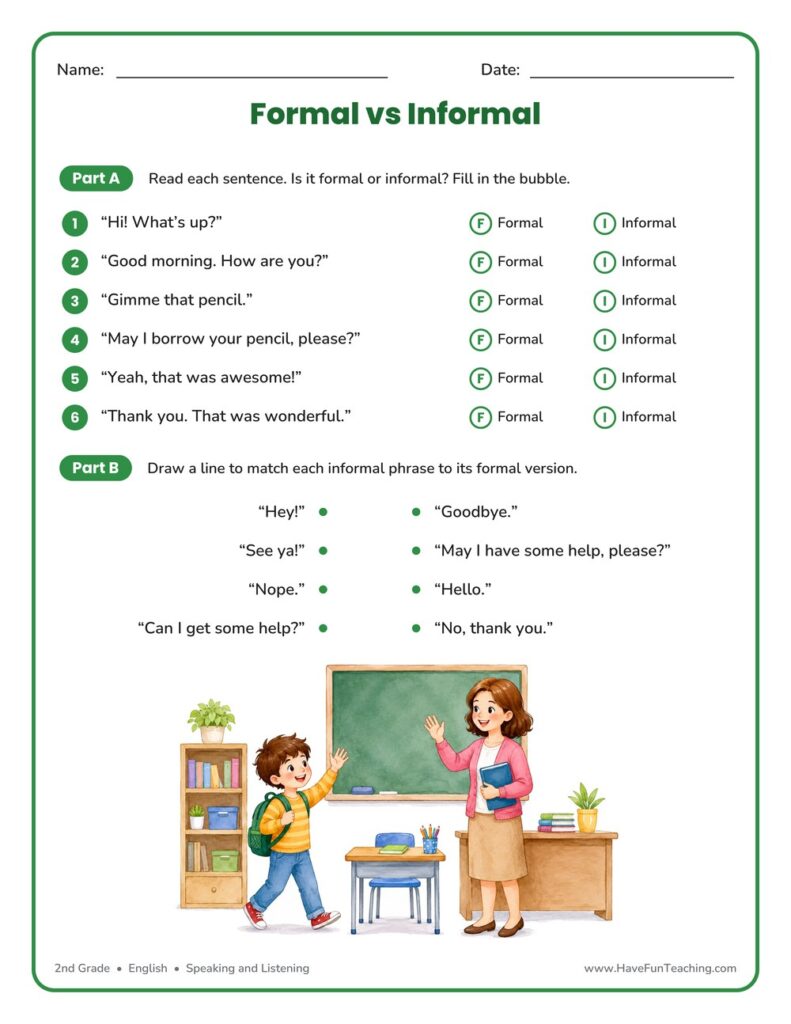
Formal vs Informal Worksheet
The Formal vs Informal Worksheet helps 2nd graders tell polite, formal language from relaxed, informal language through a sorting activity and a matching activity. Complete answer key included—a quick, no-prep speaking and listening practice.
$6.97
Or free with a membership — members pay $3.33/mo for all 10,000+ resources. See plans
Want this one free?
Tell us where to send it and it’s yours — no card, no catch.
One free resource per teacher. We’ll also send free teaching ideas each week — unsubscribe anytime.
Teaching is easier with a membership
Unlimited printables, games & videos for PreK–6th — for your classroom or homeschool. Cancel anytime.
Start your 3-day free trial$0 today · cancel anytime · Instant access to 10,000+ resources
About this resource
Description
Knowing when to use polite, proper words and when relaxed, everyday words are okay is an important speaking and listening skill. This Formal vs Informal Worksheet helps second graders notice the difference between formal language—the kind we use with teachers, new people, and in careful writing—and informal language, the kind we use with friends and family. Learning to switch between the two helps children communicate clearly and respectfully in any situation.
This formal and informal language worksheet gives students two friendly activities. In Part A, they read six short sentences and fill in the bubble to show whether each one is formal or informal. In Part B, they draw a line to match each casual phrase to its more polite, formal version. Read the directions together, model one example out loud, and let students say each phrase both ways so they can hear how the tone changes.
What’s Included
- 1 print-ready PDF worksheet
- Answer key
- 2 activities: a formal vs informal sorting exercise and a phrase-matching activity
This Formal vs Informal Worksheet supports learning in three ways. First, the fill-in-the-bubble format keeps the task simple so young students can focus on the language, not the layout. Second, matching casual phrases to polite ones shows children that the same idea can be said in different ways depending on who is listening. Third, the familiar classroom examples connect the skill to everyday moments, making it easy for kids to practice at school and at home.
Teachers and parents can extend this skill in playful ways. Role-play greeting a friend and then greeting a principal, and talk about what changes. Practice polite phrases at dinner or during pretend phone calls. Read a favorite storybook and point out when a character speaks formally or informally. You can even make a two-column chart at home where children add new formal and informal phrases they notice throughout the week.
Related Resources
What teachers say
Reviews
You must be logged in to post a review.

This key ideas and details worksheet asks 2nd graders to read a short passage about rain, bubble in the main idea, and write two supporting details. Answer key included for quick, no-prep reading practice.

A Speaking in Complete Sentences Worksheet that helps 2nd graders tell a whole sentence from a fragment, find the naming part, and say and write one about a picture. Answer key included for confident sentence practice.
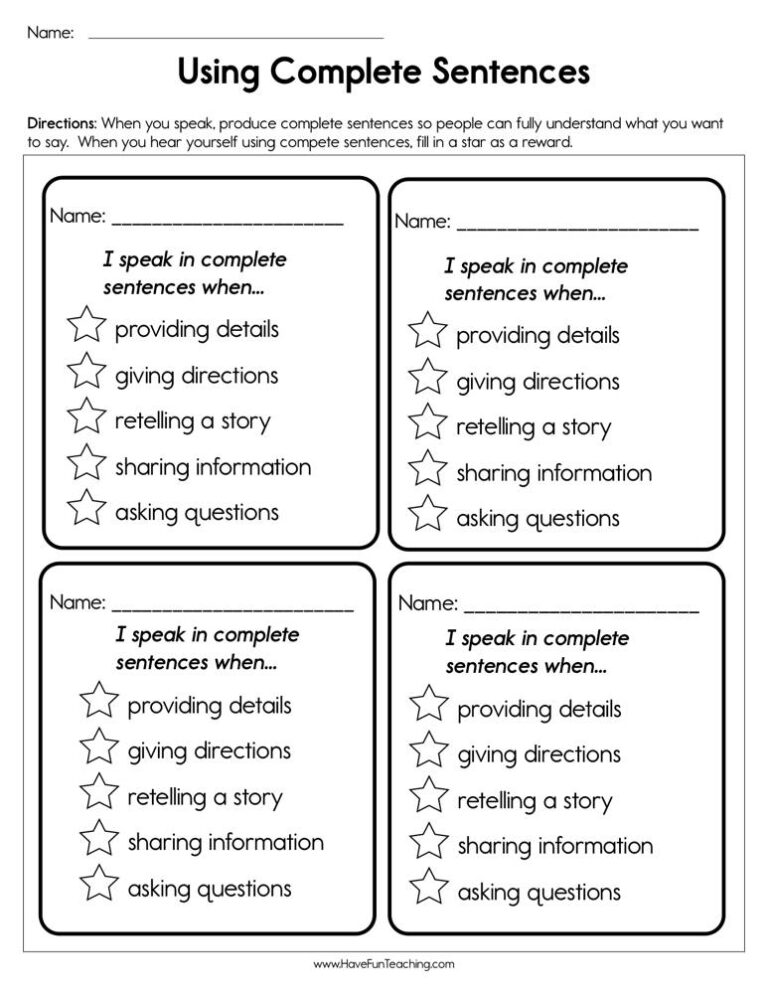
This Using Complete Sentences Worksheet helps 2nd graders find the subject and the predicate, match the two halves, and write a complete sentence of their own. Answer key included for fast, no-prep grammar practice.

Collaboration Worksheet asks 2nd grade students to mark six group-work sentences Y or N and match four group skills back to them, with an answer key, so cooperating becomes something they can name.

This small group checklist worksheet lets 2nd grade students check off six discussion rules they followed and finish one sentence about what they learned from their group that day.

Using Feeling Words Activity, students read Amy Goes to First Grade to find words and phrases that describe Amy's feelings on the first day of school.
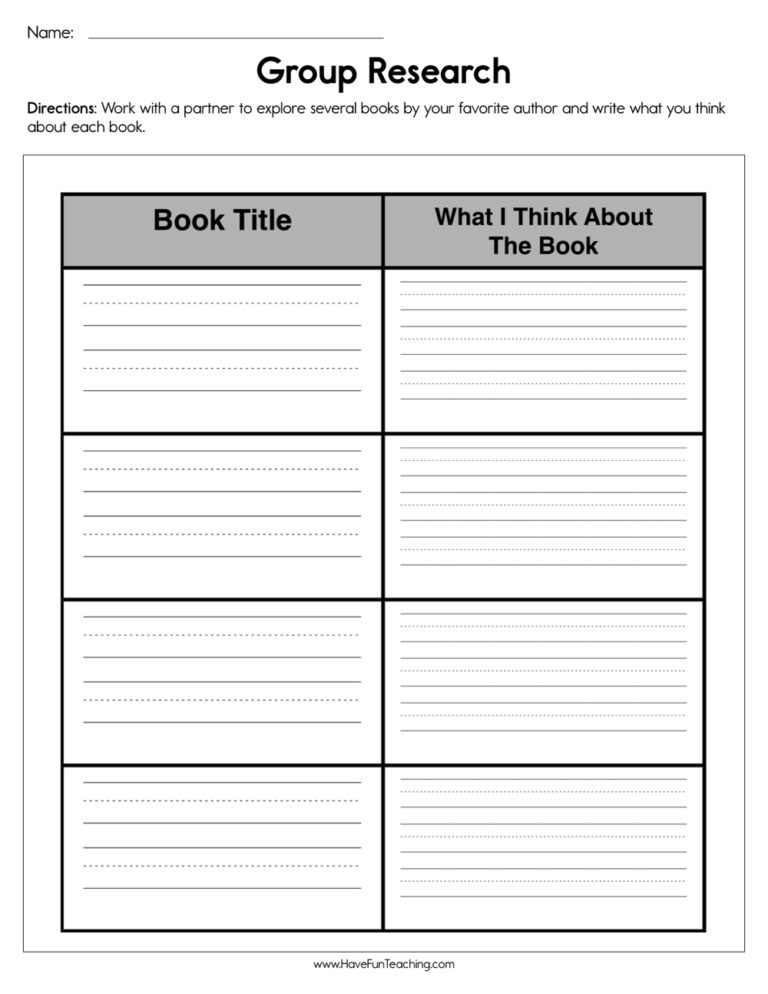
Using the Group Research Worksheet, students read with a partner to explore several books by your favorite author and write what you thinkabout each book.
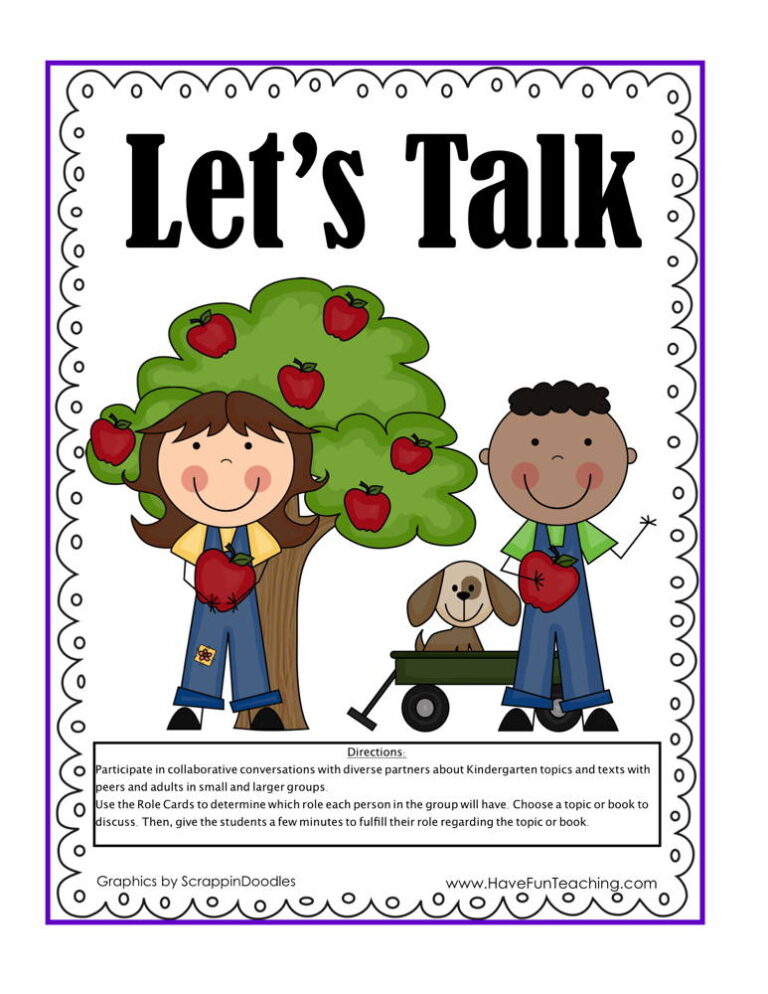
Using this Let's Talk Classroom Speaking Activity, students participate in collaborative conversations with diverse partners about topics and texts with peers and adults in small and larger groups.

The Partnered Research Project Worksheet helps 2nd Grade students order the research steps, pick the best source, and plan a project with a partner. An answer key is included, so checking work takes seconds.

Using this Describing Nouns Adjective Activity, students describe familiar people, places, things, and events.
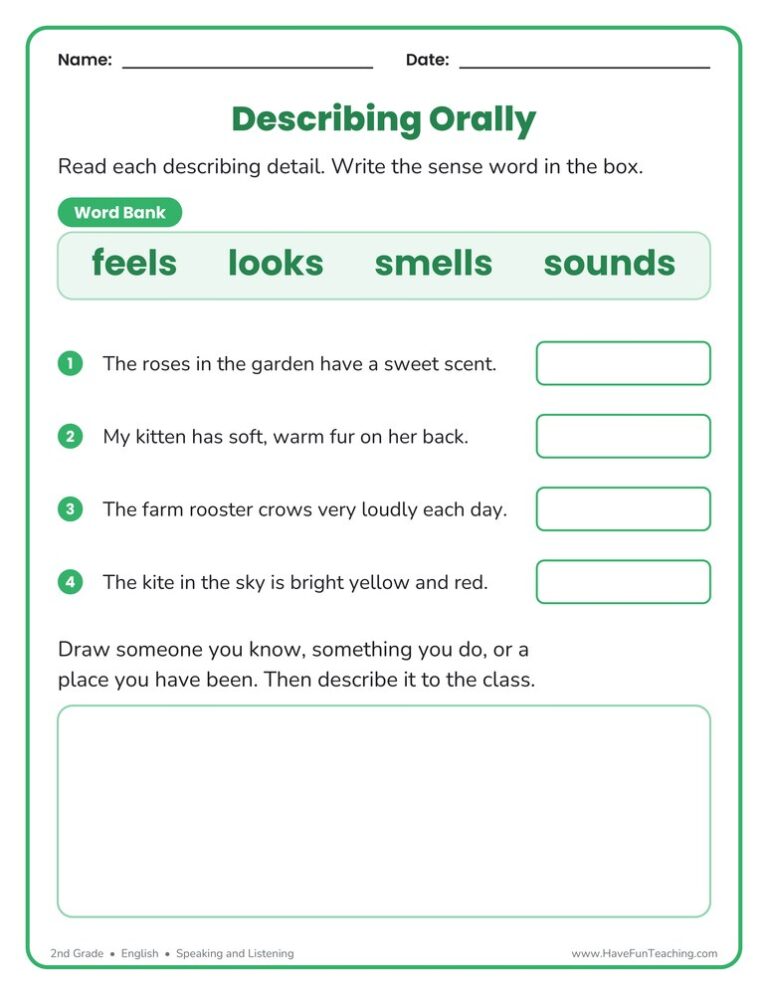
This describing orally worksheet helps 2nd grade students match details to the senses, then draw and describe a picture to the class. Includes an answer key to make checking quick.
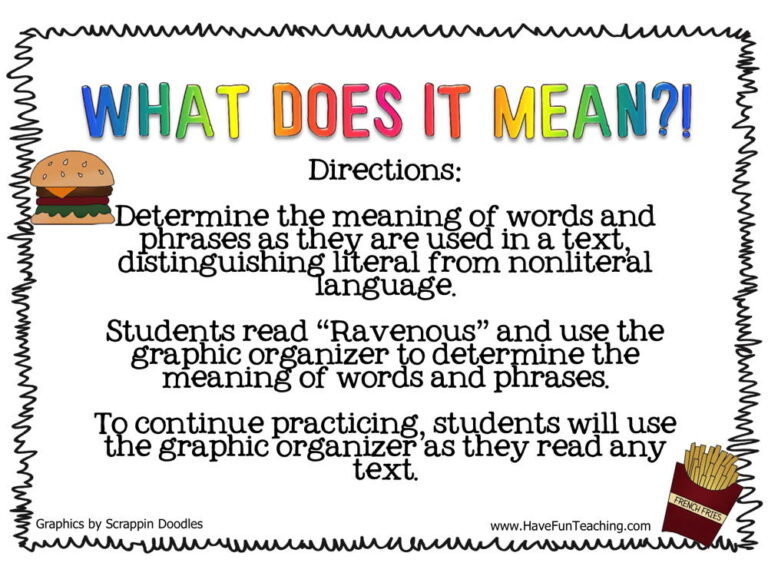
Using this What Does it Mean Literal Non-Literal Language Activity, students determine the meaning of words and phrases as they are used in a text, distinguishing literal from non-literal language.
Reviews
There are no reviews yet