
Skip to content
Start My 3 Free Days $0 today · cancel anytime

2nd Grade Speaking and Listening Worksheets

13 2nd grade speaking and listening worksheets. Teacher favorites: Key Ideas and Details Worksheet and Collaboration Worksheet. How teachers use these

2nd Grade Speaking and Listening Worksheets

13 2nd grade speaking and listening worksheets. Teacher favorites: Key Ideas and Details Worksheet and Collaboration Worksheet. How teachers use these

Worksheet
Worksheet2nd GradeKey Ideas and Details Worksheet

This key ideas and details worksheet asks 2nd graders to read a short passage about rain, bubble in the main idea, and write two supporting details. Answer key included for quick, no-prep reading practice.

Worksheet
Worksheet2nd GradeCollaboration Worksheet

Collaboration Worksheet asks 2nd grade students to mark six group-work sentences Y or N and match four group skills back to them, with an answer key, so cooperating becomes something they can name.

Worksheet
Worksheet2nd GradeSmall Group Checklist Worksheet

This small group checklist worksheet lets 2nd grade students check off six discussion rules they followed and finish one sentence about what they learned from their group that day.

Worksheet
Worksheet2nd GradeSpeaking in Complete Sentences Worksheet

A Speaking in Complete Sentences Worksheet that helps 2nd graders tell a whole sentence from a fragment, find the naming part, and say and write one about a picture. Answer key included for confident sentence practice.

Worksheet
Worksheet2nd GradeFormal vs Informal Worksheet

The Formal vs Informal Worksheet helps 2nd graders tell polite, formal language from relaxed, informal language through a sorting activity and a matching activity. Complete answer key included—a quick, no-prep speaking and listening practice.

Worksheet
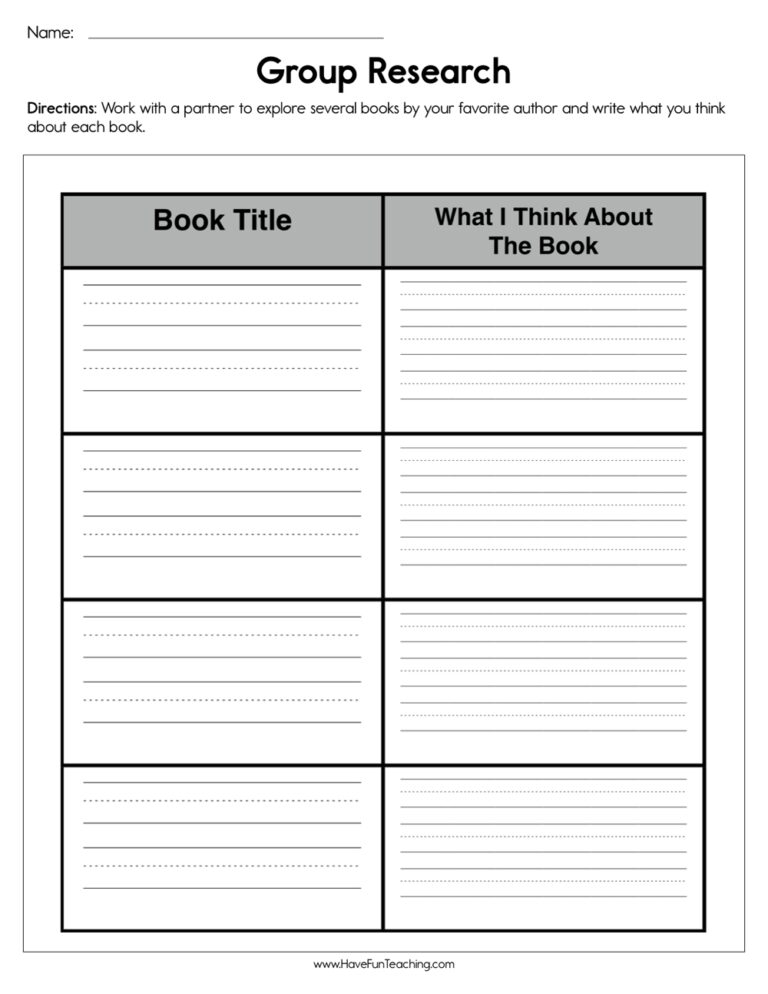
Worksheet2nd GradeGroup Research Worksheet

The Group Research Worksheet lets 2nd grade partners read books by one author, list each title, and write what they think, building reading response and teamwork skills.

Worksheet
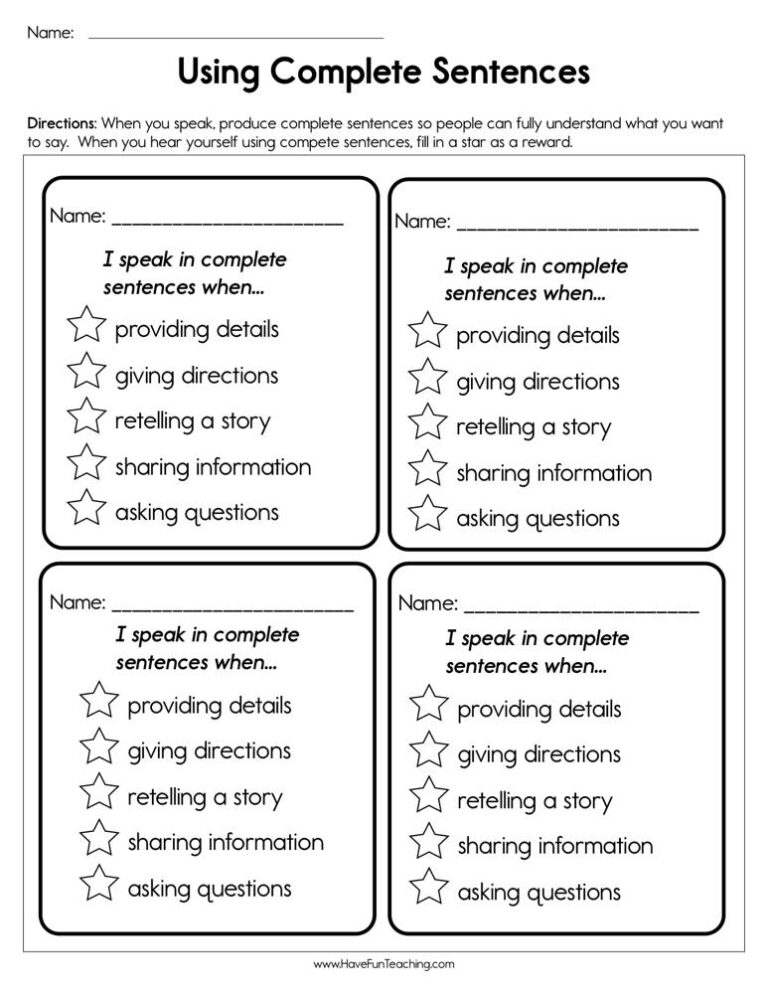
Worksheet2nd GradeUsing Complete Sentences Worksheet

This Using Complete Sentences Worksheet helps 2nd graders find the subject and the predicate, match the two halves, and write a complete sentence of their own. Answer key included for fast, no-prep grammar practice.

Worksheet
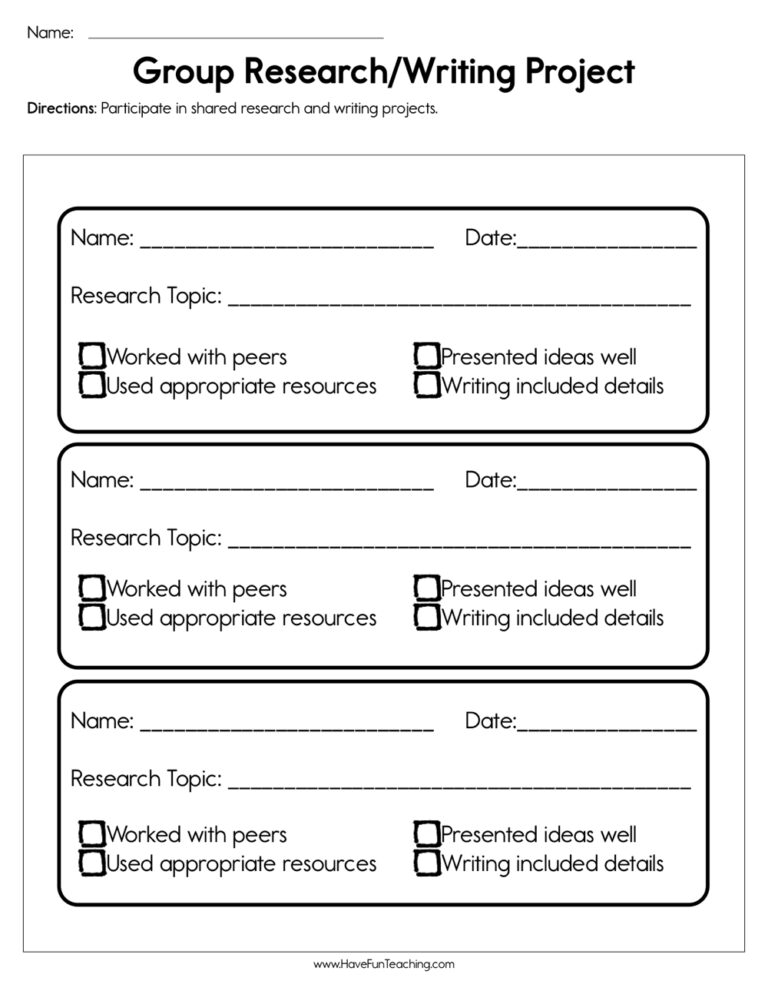
Worksheet2nd GradeGroup Research Writing Project Worksheet

This group research writing project worksheet helps 2nd grade students sort research jobs from writing jobs and choose the best way to work with a group. An answer key is included, so practice is quick to check.

Worksheet
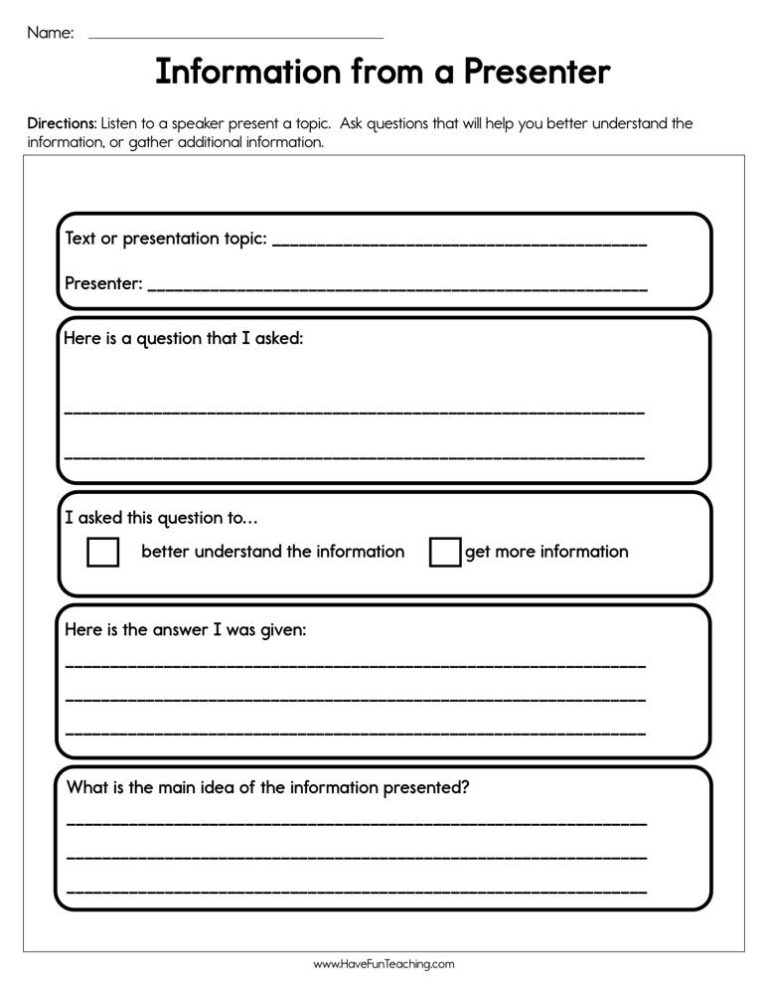
Worksheet2nd GradeInformation From a Presenter Worksheet

This information from a presenter worksheet helps 2nd Grade students record a question they asked a speaker, why they asked it, the answer they got, and the main idea they learned.

Worksheet
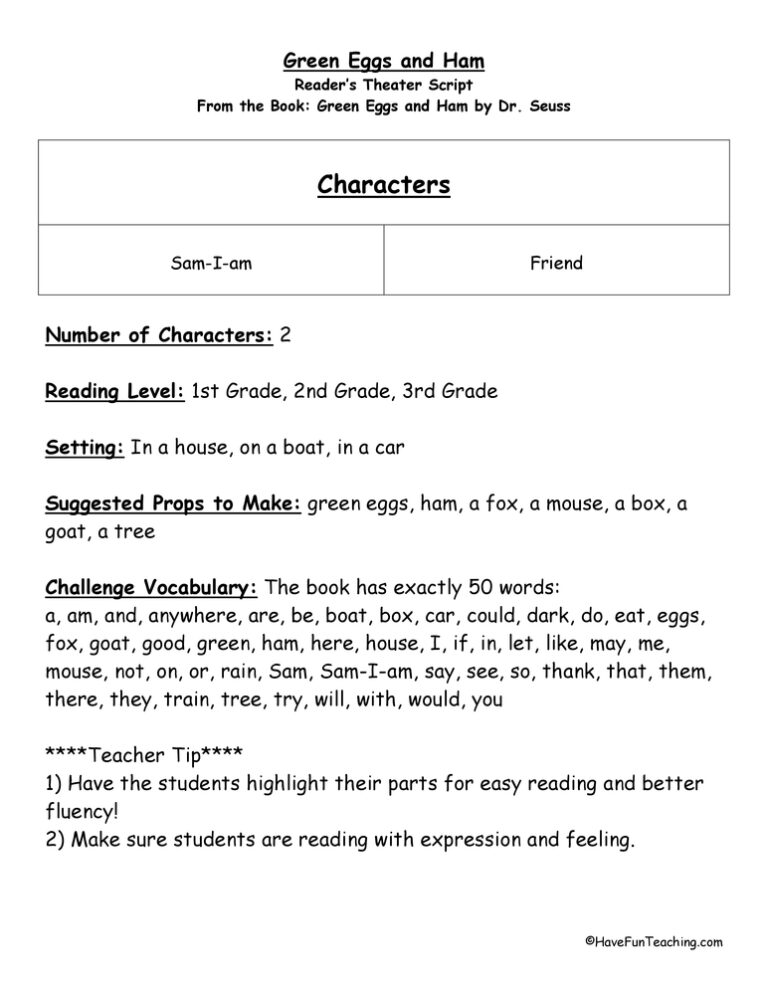
Worksheet2nd GradeGreen Eggs and Ham Reader's Theater

Using Green Eggs and Ham Reader's Theater, students act out different parts in the story Green Eggs and Hall to learn more about Dr. Seuss.

Worksheet
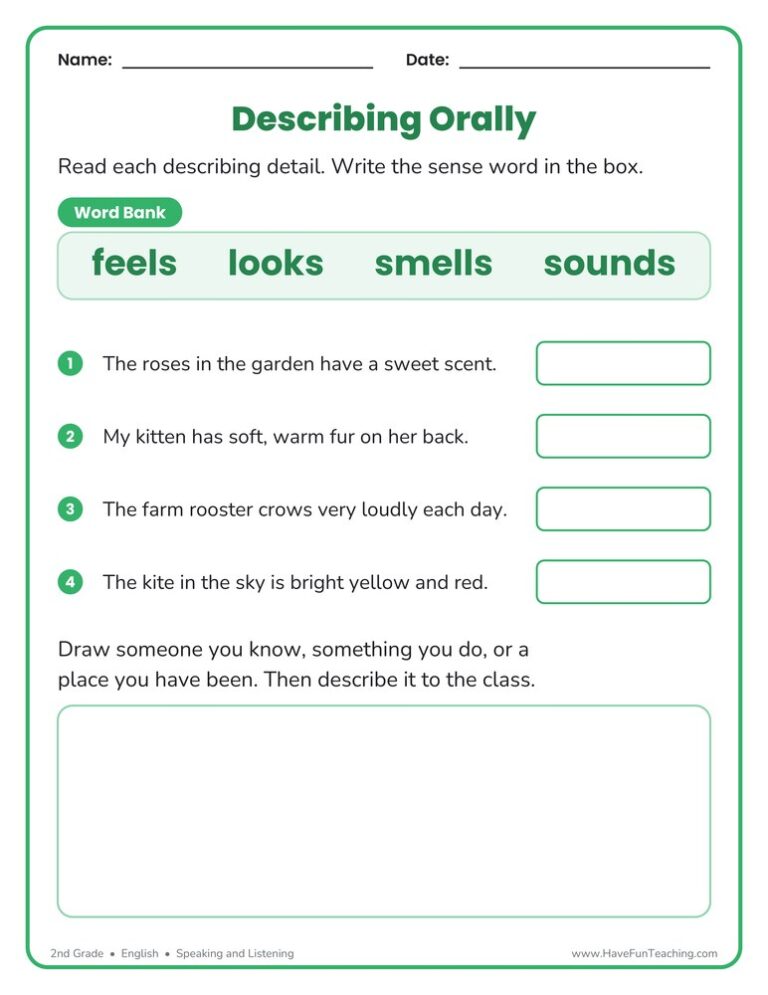
Worksheet2nd GradeDescribing Orally Worksheet

This describing orally worksheet helps 2nd grade students match details to the senses, then draw and describe a picture to the class. Includes an answer key to make checking quick.

Worksheet
Worksheet2nd GradePartnered Research Project Worksheet

The Partnered Research Project Worksheet helps 2nd Grade students order the research steps, pick the best source, and plan a project with a partner. An answer key is included, so checking work takes seconds.

Worksheet
Worksheet2nd GradeRecording a Story or Poem Worksheet

This recording a story or poem worksheet asks 2nd graders to read eight sentences and decide which ones are good habits for making a recording. An answer key is included for quick checking.

From our teachers' playbook

Big voices, good ears, great talks.

What do 2nd graders learn about speaking and listening?

In 2nd grade, kids learn that a good conversation has rules. They take turns, listen without interrupting, and build on what a friend just said: "I agree with Maya because..." They ask questions to clear up confusion, retell the key ideas from a read-aloud or a speaker, and tell a story with details in the right order. They also start speaking in complete sentences and notice that we talk one way on the playground and another way when presenting to the class. The click moment is when a child stops waiting for their turn and starts actually responding to someone else.

Our favorite ways to grow speakers and listeners

Kids get better at talking by talking, as long as the talk has a little structure. These moves give it that.

Show the full sentence

Before a discussion, model the difference: "Dog." versus "My favorite animal is a dog because it is loyal." Post two or three sentence starters on the board and have kids practice them with a partner first. Then praise every full sentence you hear during the real talk.

Why it works: showing first, practicing together, then letting kids try alone is the "gradual release" model teachers have relied on for decades (Pearson and Gallagher, 1983).

Speaking in Complete Sentences WorksheetTry it withSpeaking in Complete Sentences WorksheetWorksheetsOpen it →

Talk turns with a talking piece

Pass a beanbag around a small group. Only the person holding it speaks, and before passing it they name the next speaker. It makes turn-taking visible, and quiet kids get a guaranteed turn.

Why it works: in a well-known study, a few short sessions of a simple number board game measurably boosted young children's number skills (Ramani and Siegler, 2008).

Let's Talk Classroom Speaking ActivityTry it withLet's Talk Classroom Speaking ActivityActivitiesOpen it →

A conversation a day

Pick one discussion prompt each morning and give partners three minutes to talk. Rotate partners each week. Small daily talks build the habit far better than one big speaking project at the end of a unit.

Why it works: spreading practice out over days is one of the two most effective study methods in a major research review (Dunlosky and colleagues, 2013).

Classroom Conversations ActivityTry it withClassroom Conversations ActivityActivitiesOpen it →

Questions parents and teachers ask us

What are speaking and listening skills in 2nd grade?

They are the skills kids use in conversations and presentations: taking turns, listening carefully, asking and answering questions, retelling what they heard, and speaking clearly in complete sentences.

How can I help my shy child speak up in class?

Practice at home with low-stakes talk, like having them tell you three things about their day with details. Rehearsing a sentence starter like "I think... because..." gives them something ready to say when the class discusses.

How do I teach active listening to 2nd graders?

Make listening something kids can see. Ask them to look at the speaker, wait until the speaker finishes, and then repeat or add to what was said. A quick "Can you tell me what Sam just said?" keeps everyone tuned in.

What is formal and informal language for kids?

Informal language is how we talk with friends and family. Formal language is the more careful way we speak to a teacher, a visitor or the whole class. Second graders practice switching between the two.



