Skip to content
Start My 3 Free Days $0 today · cancel anytime

1st Grade Living and Non-Living Things Resources

21 1st grade living and non-living things resources: 11 worksheets, 9 activities and 1 workbook. How teachers use these

1st Grade Living and Non-Living Things Resources

21 1st grade living and non-living things resources: 11 worksheets, 9 activities and 1 workbook. How teachers use these

Worksheet
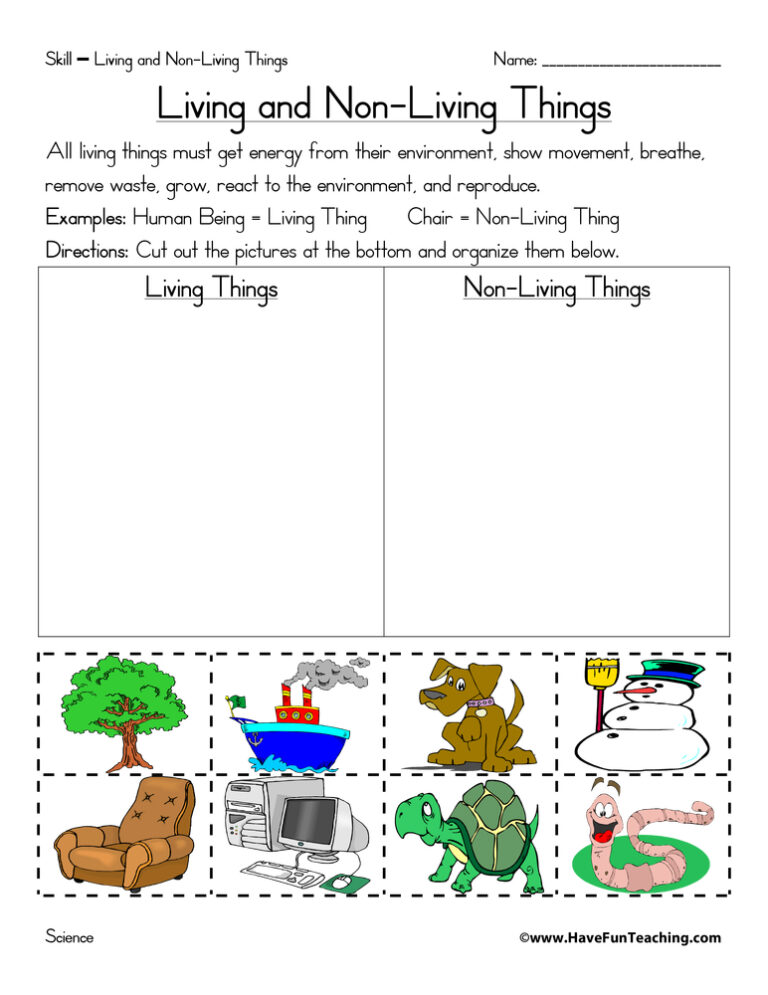
Worksheet1st GradeLiving and Non-Living Things Sort Worksheet

A living and non-living things sort worksheet where 1st graders label six pictures with L or N and sort four words into two groups. Answer key included for fast, no-prep life science practice.

Worksheet
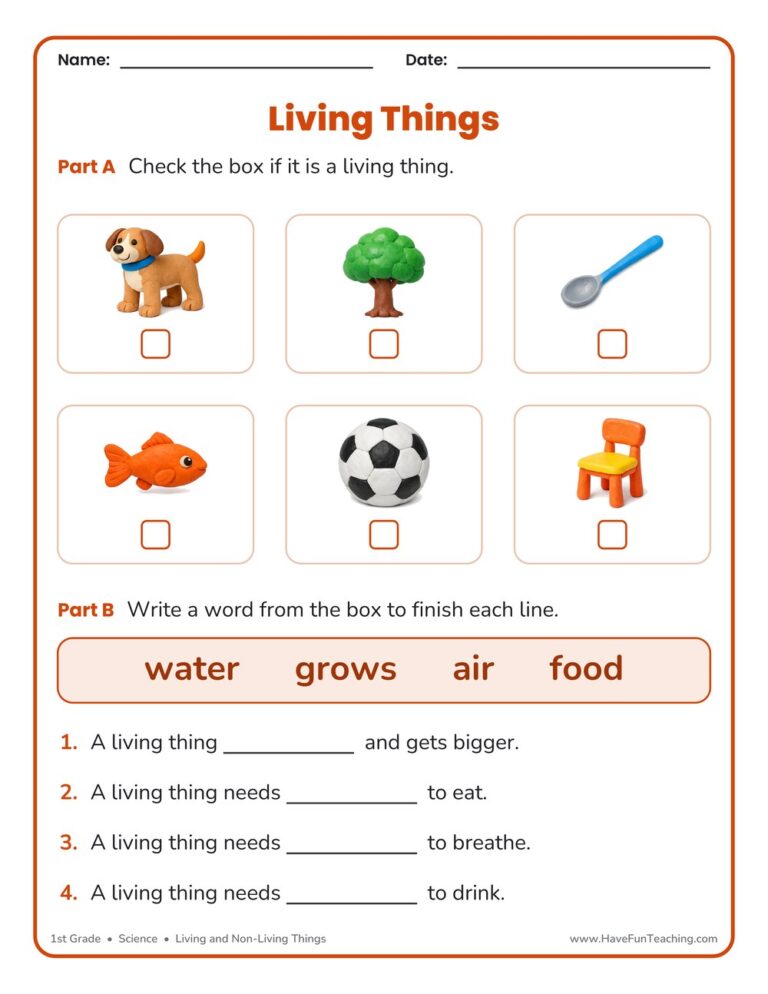
Worksheet1st GradeDescribing Characteristics Living Things Worksheet

This Describing Characteristics Living Things Worksheet asks first graders to check off six pictures and finish four sentences about what living things need. Answer key included for fast, no-prep science practice.

Worksheet
Worksheet1st GradeBasic Fish Parts Worksheet

This Basic Fish Parts Worksheet asks 1st graders to label six numbered parts on a big, friendly fish using a word box. An answer key is included, so science practice takes no prep at all.

Worksheet
Worksheet1st GradePlant Parts We Eat Worksheet

This Plant Parts We Eat Worksheet helps 1st graders match eight foods to the plant part we eat, using a helpful word box. Includes an answer key for easy, no-prep plant science practice.

Activity
Activity1st GradeFrog Facts Activity

This frog facts activity has children sort 12 fact cards onto TRUE and FALSE lily pads. Made for Kindergarten to 3rd Grade, with a practice page and answer key included.

Activity
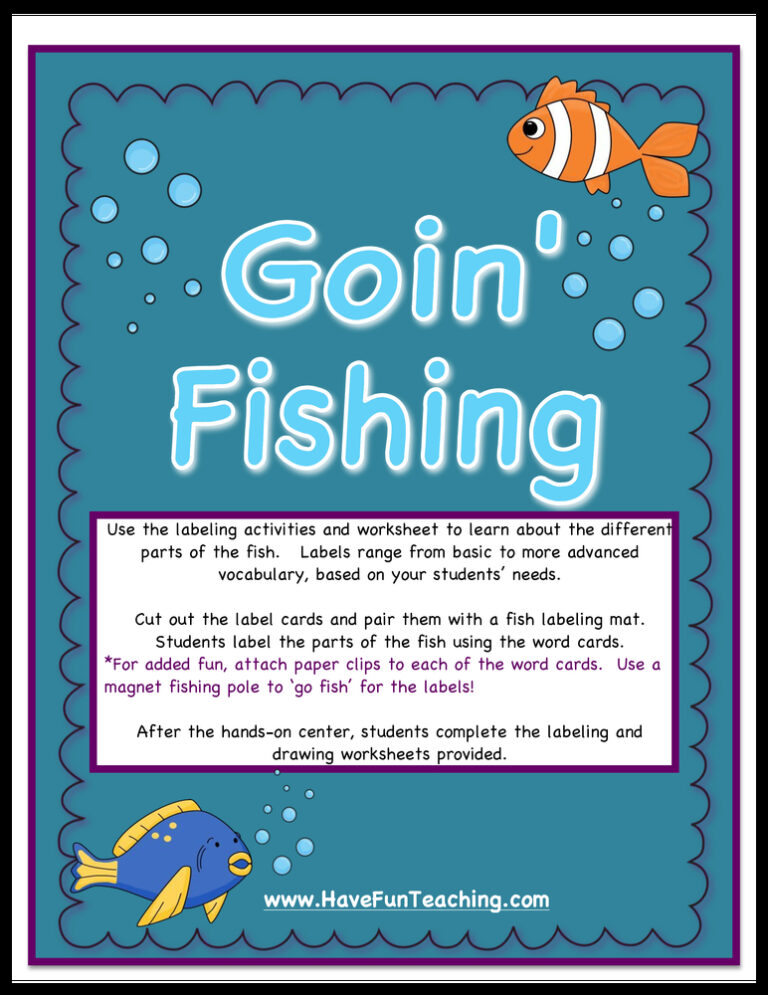
Activity1st GradeFish Parts Activity

This fish parts activity has kindergarten and 1st grade children catch picture cards and label the eye, mouth, gills, fin, scales and tail, with an answer key included for quick checking.

Worksheet
Worksheet1st GradeIs it a Living Thing Worksheet

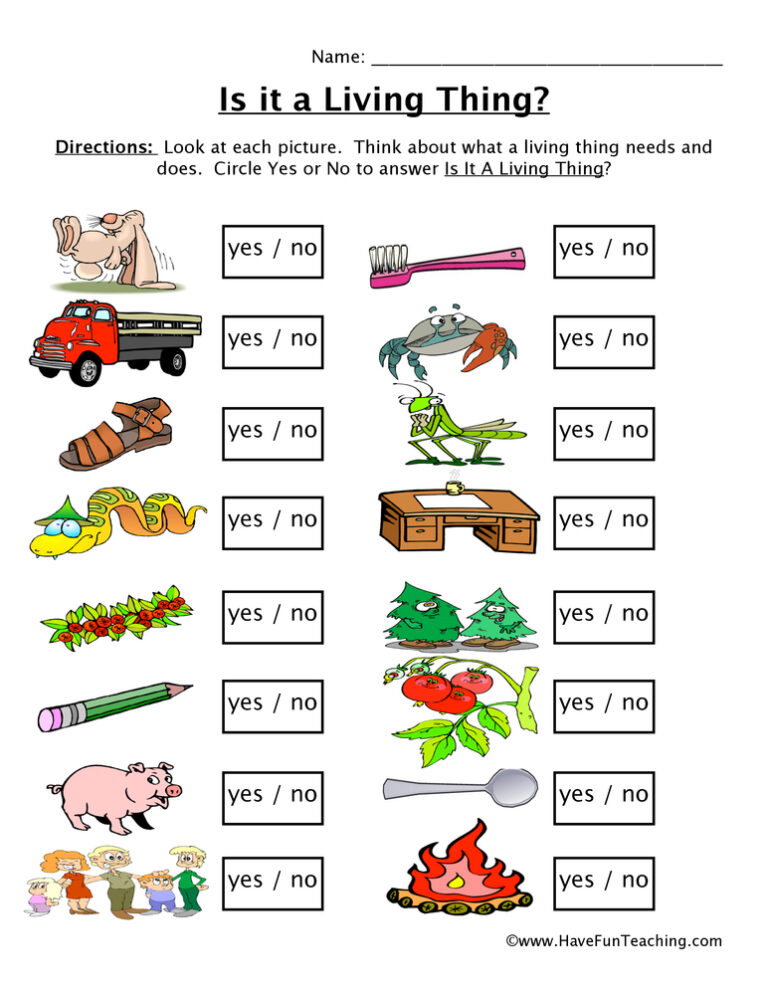
The Is it a Living Thing Worksheet asks 1st grade students to sort six pictures into living and not living and write each answer, with a word box for support and an answer key included.

Worksheet
Worksheet1st GradeCategorizing Living and Non-Living Things Worksheet

A categorizing living and non-living things worksheet where 1st graders sort six words into two columns and bubble in living or nonliving for four pictures. Answer key included for fast, no-prep science practice.

Worksheet
Worksheet1st GradeWriting the Names of Living Things Worksheet

Our writing the names of living things worksheet has 1st graders read a word box and write the name of six plants and animals, with an answer key, building science words and neat handwriting.

Activity
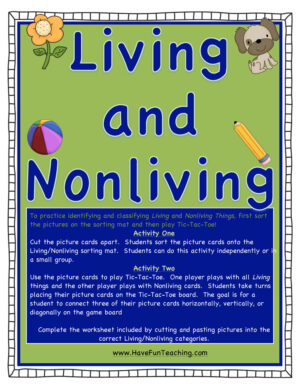
Activity1st GradeLiving and Nonliving Activity

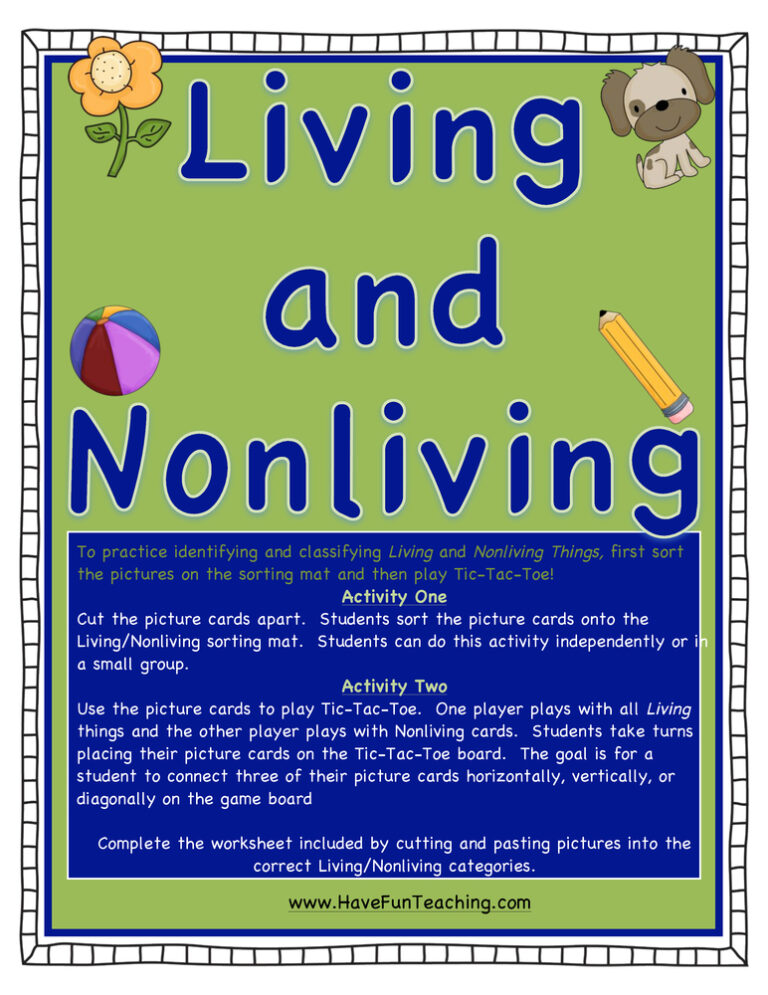
This living and nonliving activity gives kindergarten to 2nd grade students 12 picture cards and a sorting mat to classify things that are alive. A practice page and answer key are included.

Worksheet
Worksheet1st GradeLiving and Non-Living Things Scavenger Hunt Worksheet

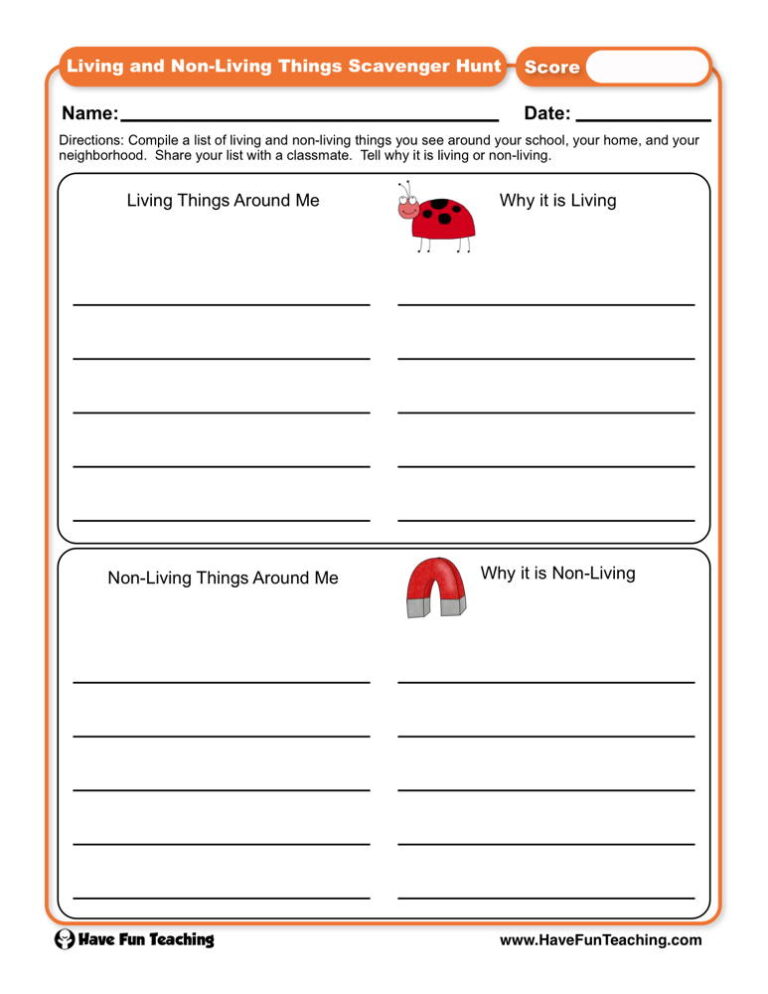
This living and non-living things scavenger hunt worksheet helps 1st grade students sort six pictures into a chart and draw real finds. An answer key is included, making science practice quick and fun.

Worksheet
Worksheet1st GradeSorting Characteristics Living Things Worksheet

This sorting characteristics living things worksheet asks 1st graders to read ten words and write each one under Living or Non-Living. An answer key is included, so science practice takes no prep at all.

Activity
Activity1st GradeWhat Does a Plant Need Activity

This what does a plant need activity has kindergarten and 1st grade children sing, sort picture cards and write about sunlight, water, air and soil. Answer key included.

Activity
Activity1st GradeLand or Water Activity

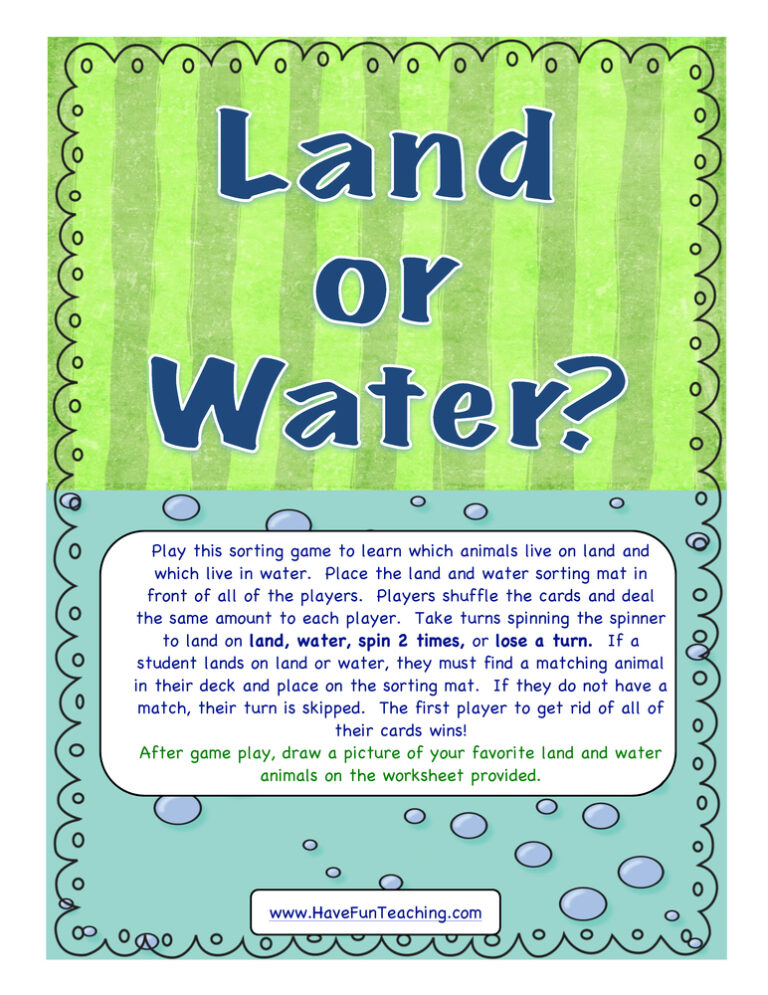
This land or water activity is a K-2nd grade animal sorting card game with a spinner and sorting mat. Children classify animals by where they live, and an answer key is included.

Worksheet
Worksheet1st GradeLiving and Non-Living Things ABC Order Worksheet

This living and non-living things ABC order worksheet has 1st grade students sort twelve words into two columns and write each list in alphabetical order. An answer key is included for quick, easy checking.

Activity
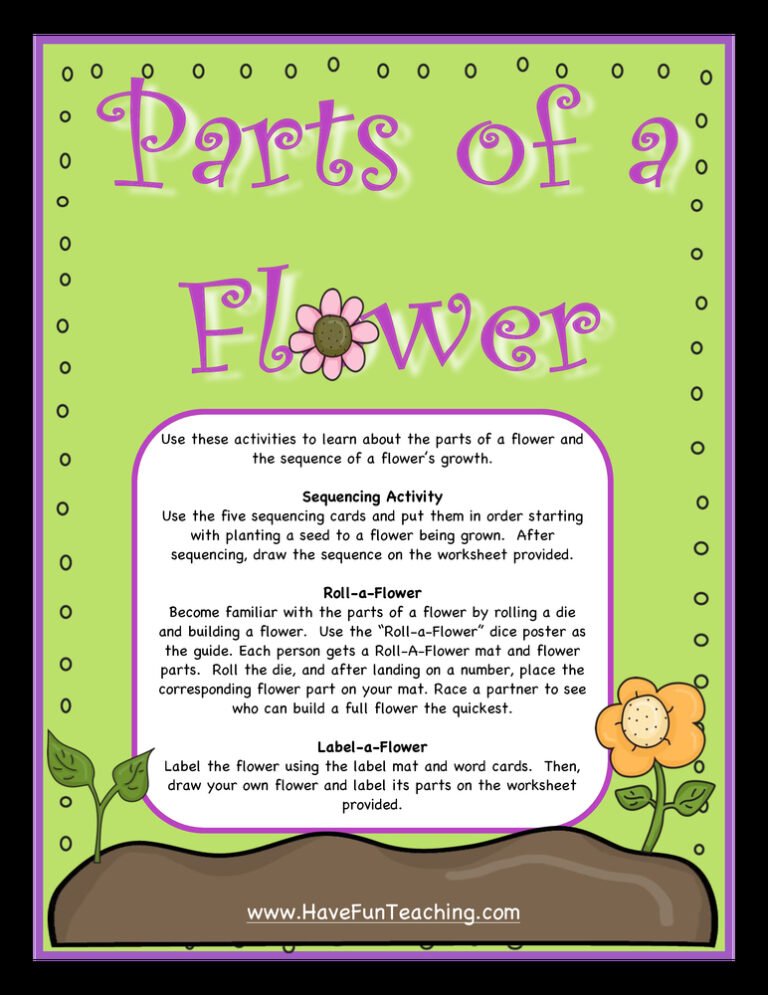
Activity1st GradeParts of a Flower Activity

Explore this parts of a flower activity with kindergarten to 2nd grade students. Kids order life cycle cards, spin and color flower parts, and an answer key is included.

Activity
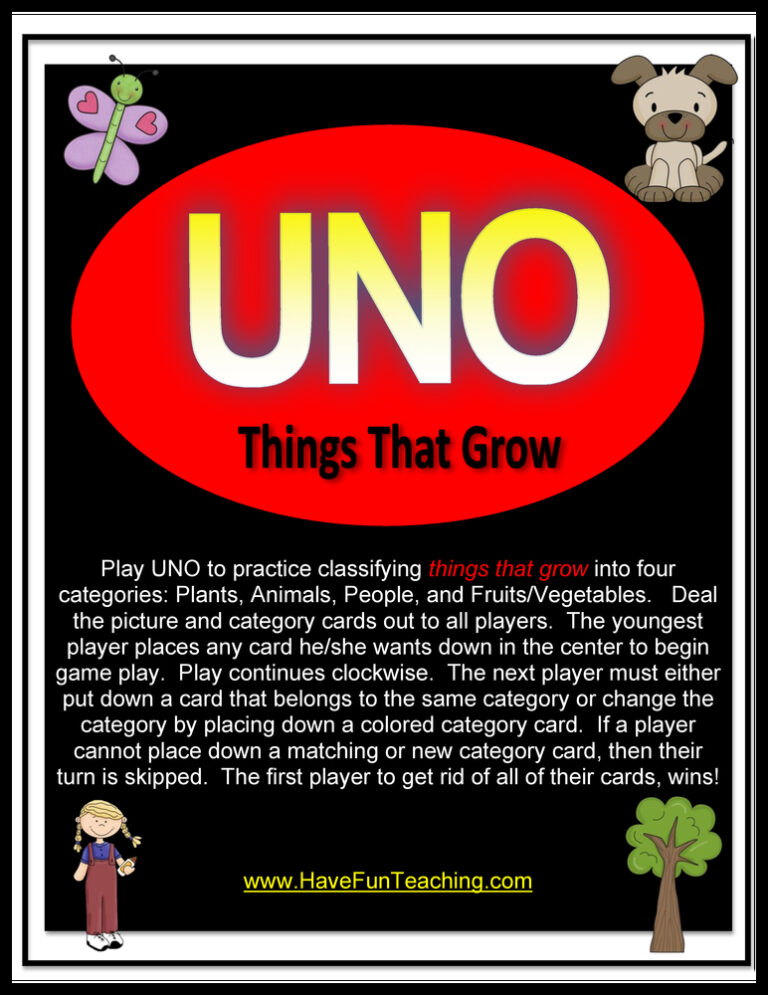
Activity1st GradeThings That Grow Activity

Using Things That Grow Activity, students play UNO to practice classifying things that grow into four categories.

Activity
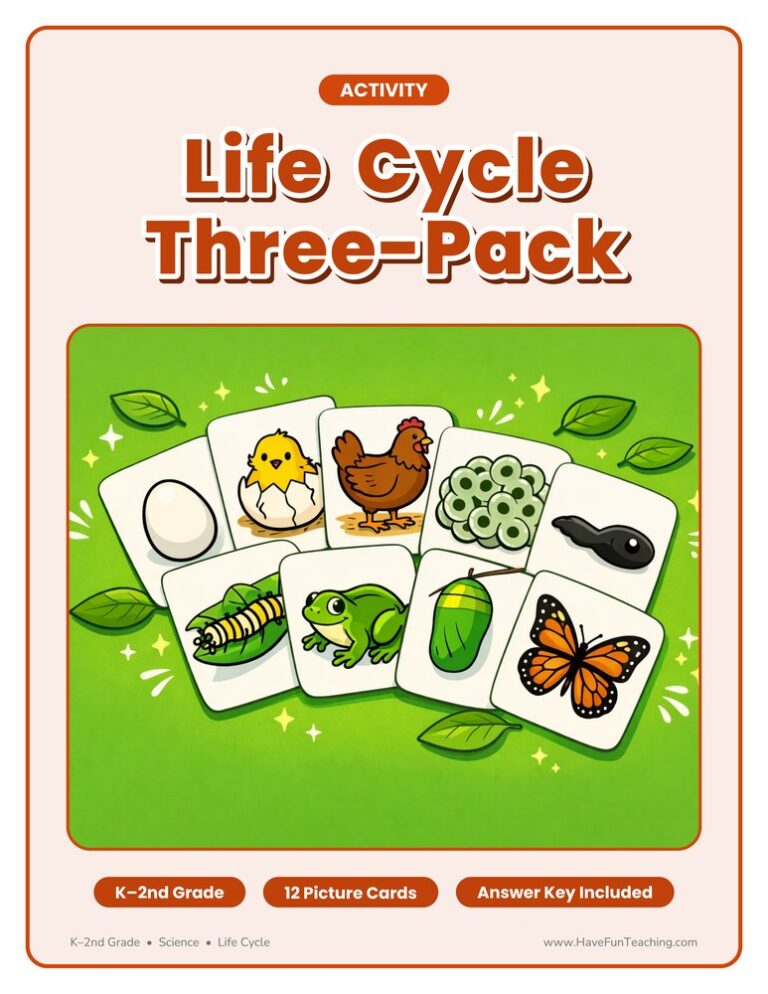
Activity1st GradeLife Cycle Three Pack Science Life Cycles Activity

Try this life cycle three pack science life cycles activity with kindergarten to 2nd grade students. Kids sequence chicken, frog and butterfly picture cards; an answer key is included.

Worksheet
Worksheet1st GradeCircle Living Things Worksheet

This circle living things worksheet helps 1st graders spot the living thing in each row of pictures and words. An answer key is included, making science practice quick and easy to check.

Activity
Activity1st GradeFarm Writing Activity

Using this Farm Writing Activity, students practice their comparing, sequencing, and story writing skills while writing all about farm!

From our teachers' playbook

Does it eat? Does it grow? Let's find out!

What do 1st graders learn about living and non-living things?

First graders become nature detectives! They learn that living things grow, need food and water, breathe and make more of their kind, while non-living things don't. A dog, a tree and a ladybug are living. A rock, a toy car and a cloud are not. Kids sort real objects and pictures, explain their thinking, and learn that plants are alive too, which surprises almost everyone. The click moment is when a child asks "Does it grow?" before deciding.

Our favorite ways to teach living and non-living things

Kids learn this one best by sorting, looking closely and talking about the tricky cases. Here's how we do it.

Sort it with your hands

Fill a basket with a pinecone, a toy, a leaf, a rock and an apple. Kids sort them onto two mats and say why: "It grows, so it's living." Then move to the sorting page so the thinking goes onto paper.

Why it works: the U.S. Department of Education's guide for teaching elementary math recommends moving from hands-on objects to drawings to numbers.

Living and Non-Living Things Sort WorksheetTry it withLiving and Non-Living Things Sort WorksheetWorksheetsOpen it →

The checklist test

Give kids a picture and a quick checklist: Does it grow? Eat or drink? Breathe? If they can check every box, it's living. Tricky ones like fire and the sun spark the best discussions of the year.

Why it works: pairing a picture with each word gives kids two ways to remember it, a well-tested principle of how people learn (Mayer, 2009).

Is it a Living Thing WorksheetTry it withIs it a Living Thing WorksheetWorksheetsOpen it →

Visit it again and again

Come back to living things during the plant, animal and weather units. A two-minute "living or not?" warm-up with each new topic keeps the idea fresh all spring.

Why it works: the brain holds on to what it meets again and again over time; spaced practice was rated among the very best methods (Dunlosky and colleagues, 2013).

Living and Non-Living Things Mini PackTry it withLiving and Non-Living Things Mini PackWorkbooksOpen it →

Questions teachers and parents ask about living and non-living things

How do you explain living and non-living things to a 1st grader?

Living things grow, need food and water, breathe and can make more of their kind. Non-living things can't do any of these. Ask "Does it grow?" as a quick first test.

Are plants living things?

Yes! Plants grow, take in water, use air and make seeds that grow new plants. Many first graders think plants aren't alive because they don't move, so this is worth talking through.

Is fire a living thing?

No. Fire can grow and seems to "eat" fuel, but it doesn't breathe, it isn't made of cells and it can't reproduce. Tricky examples like fire, clouds and the sun make great discussion starters.

What is a fun way to practice at home?

Take a walk and play "Living or Not?" with everything you see. Kids can draw a T-chart and record what they find. A short walk builds more understanding than a long worksheet session.