
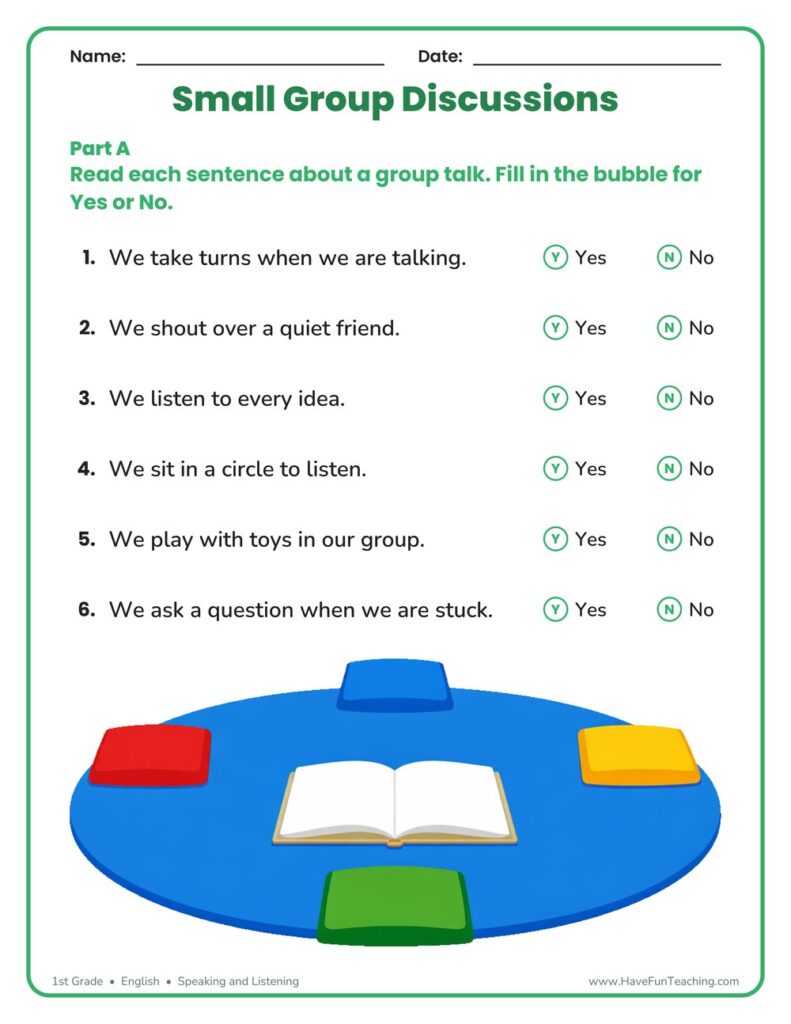
Small Group Discussions Worksheet
This small group discussions worksheet asks 1st graders to read six short sentences about talking in a group and fill in Yes or No for each one. An answer key is included, so the rules are easy to review together.
$6.97
Or free with a membership — members pay $3.33/mo for all 10,000+ resources. See plans
Want this one free?
Tell us where to send it and it’s yours — no card, no catch.
One free resource per teacher. We’ll also send free teaching ideas each week — unsubscribe anytime.
Teaching is easier with a membership
Unlimited printables, games & videos for PreK–6th — for your classroom or homeschool. Cancel anytime.
Start your 3-day free trial$0 today · cancel anytime · Instant access to 10,000+ resources
About this resource
Description
Good conversation is a skill children have to be taught, and this small group discussions worksheet gives first graders a clear, readable place to learn it. Six short sentences describe things that happen when a class sits down to talk together. Three of them are real rules for a group discussion and three of them are not, and the student fills in the bubble for Yes or No beside each one. Because the sentences are short and decodable, a first grader can read and judge them without a teacher reading every line aloud, and every answer is checkable rather than a matter of opinion.
This 1st grade speaking and listening worksheet works as a mini-lesson before literature circles, a review at the start of a partner activity, or a quick check that the class rules are understood. Page one holds the six items and the picture, and page two is the answer key. Read the directions together, let students work down the list on their own, then go back through the sentences as a class and ask children to explain why a rule helps the group. The three sentences keyed No are the ones worth the most talking time.
What’s Included
- 1 print-ready PDF worksheet
- Answer key
- 6 yes-or-no items on the rules for a small group discussion
This small group discussions worksheet helps children in three ways. First, it makes an abstract classroom expectation concrete, because each rule is written as one plain sentence a child can picture. Second, it builds reading stamina at exactly the right level, since judging a sentence requires reading all of it rather than hunting for a key word. Third, it gives the teacher a record: a student who marks yes beside shouting over a friend has told you something a group activity would have hidden.
Teachers and parents can stretch the learning in simple ways. Ask each child to say one more rule out loud and add it to a class chart. Act out a short discussion that breaks one of the rules and have students name which one. Have partners retell each other a favorite part of a book and rate themselves on taking turns. Keep the sheet in a reading folder and return to it whenever a new group starts, so the same language follows students through the year.
Related Resources
What teachers say
Reviews
You must be logged in to post a review.

This 1st Grade Decoding Words Worksheet lets young readers sound out decodable words aloud and circle the correctly spelled word. Answer key included — a quick, no-prep way to build reading fluency and phonics confidence.

This New Friend Reading Comprehension Worksheet gives first graders a short story about making a new friend, plus multiple-choice and short-answer questions. Answer key included for quick, no-prep reading practice.
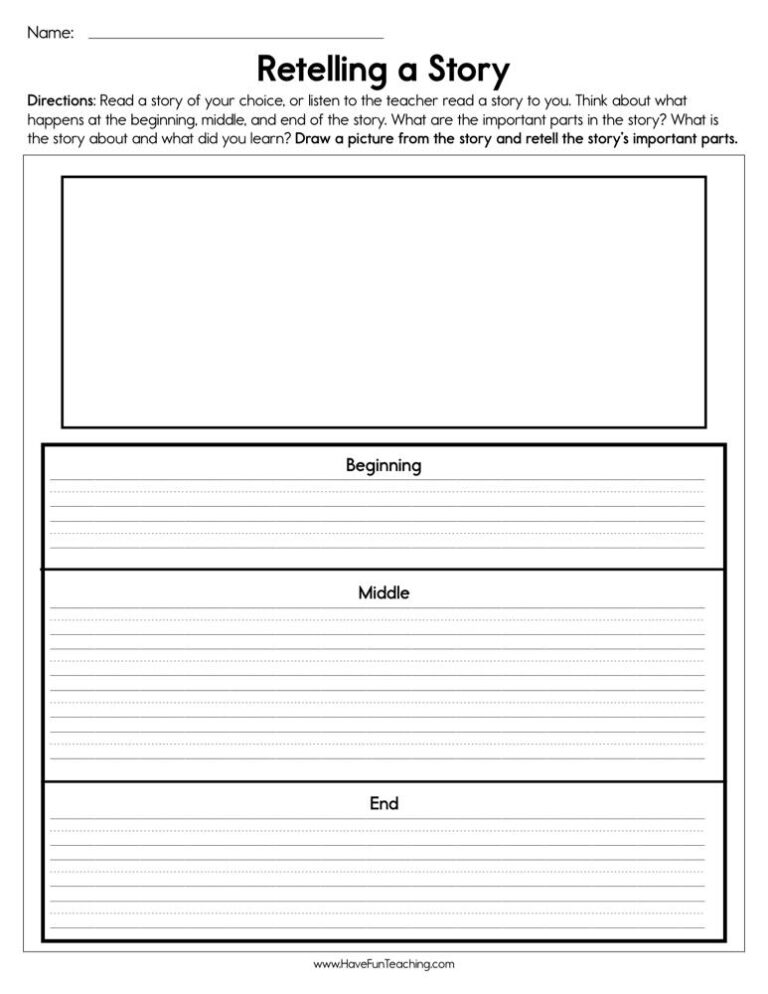
This Retelling a Story Worksheet gives 1st Grade readers a short story to sequence and retell in their own words, with a full answer key included, so comprehension practice is ready to print.
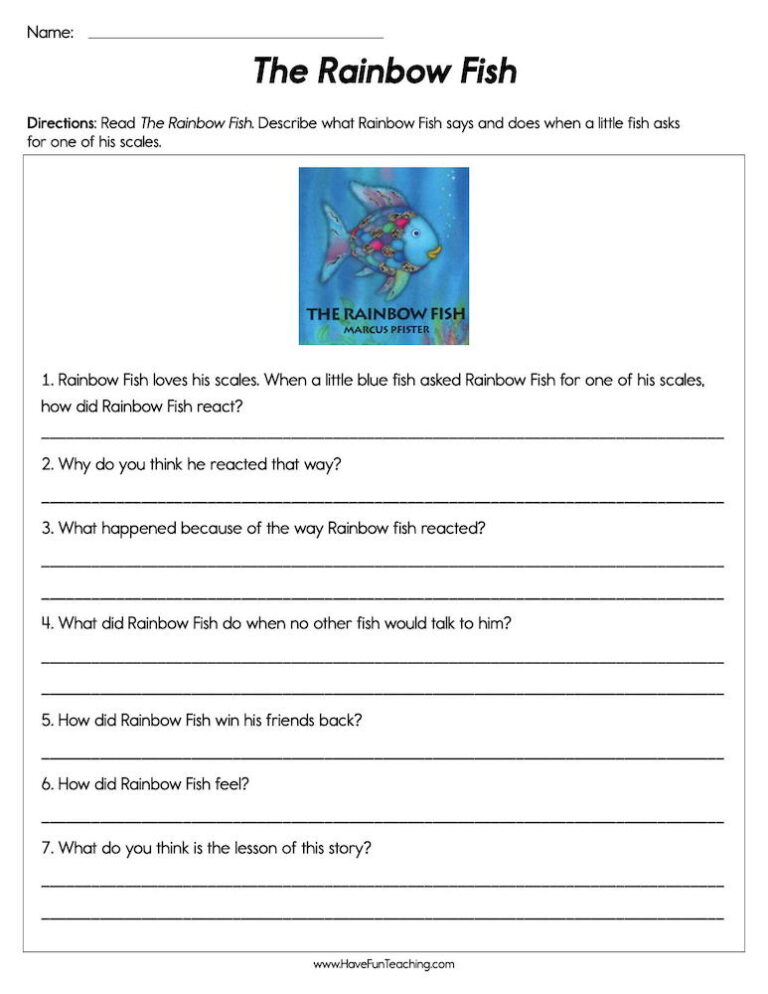
Using The Rainbow Fish Worksheet, students read The Rainbow Fish and describe what Rainbow Fish says and does when a little fish asks for one of his scales.

Using Chrysanthemum Worksheet, students read Chrysanthemum and describe what she says and does when her school friends make fun of her adored name.
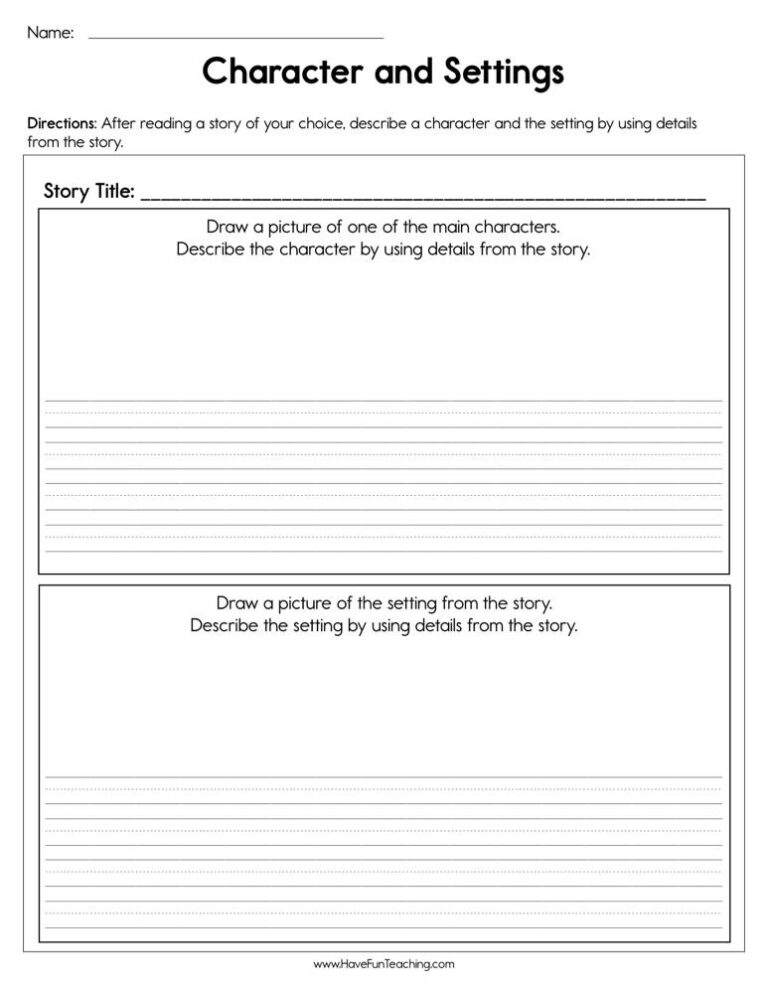
A print-and-go Character and Settings Worksheet that helps 1st graders draw and describe the main character and the setting of any story they choose. Flexible enough for guided reading, independent reading, or a bedtime book at home.
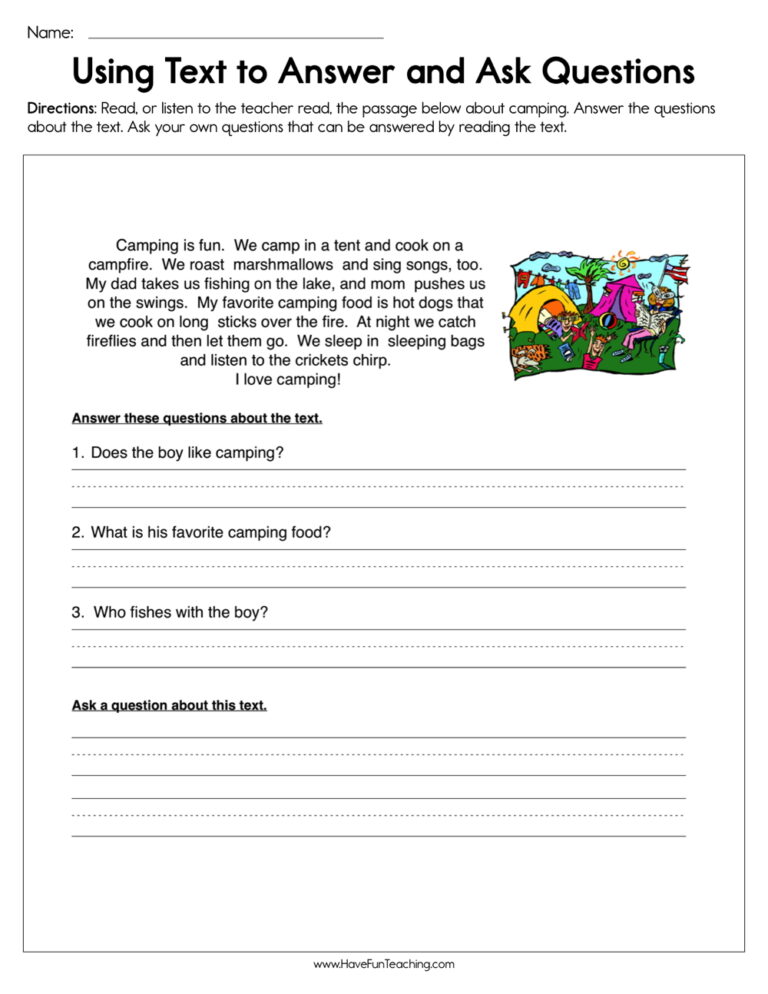
This Using Text to Answer and Ask Questions Worksheet gives 1st graders a short class-garden story, four bubble questions, and space to write a question of their own. Answer key included, so comprehension practice is ready in minutes.

A 1st Grade details of an informational text worksheet built around a short nonfiction text about sunflowers, with bubble questions on the main topic and key details. Answer key included for fast, no-prep nonfiction practice.
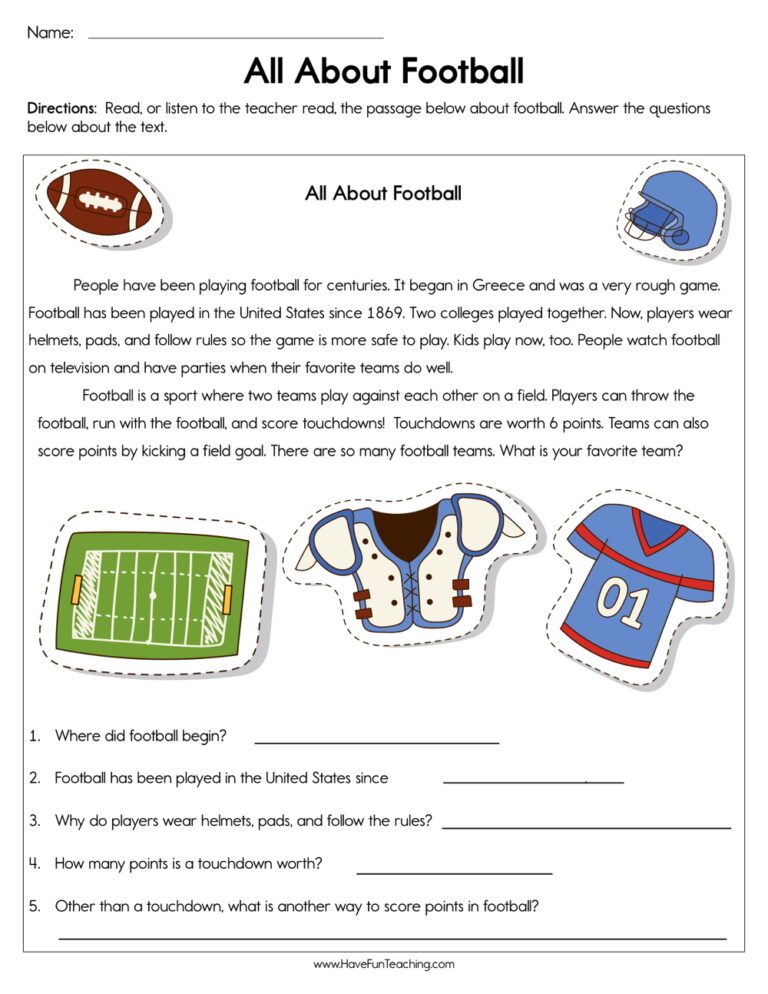
Build 1st Grade reading skills with the All About Football Worksheet, a short informational passage plus five bubble questions and word-box sentences. An answer key is included, so comprehension practice is ready to print.

The A New Friend Reading Comprehension Worksheet gives first graders a short, friendly story and five questions to practice reading. Grade 1, answer key included — a gentle way to build comprehension and kindness.
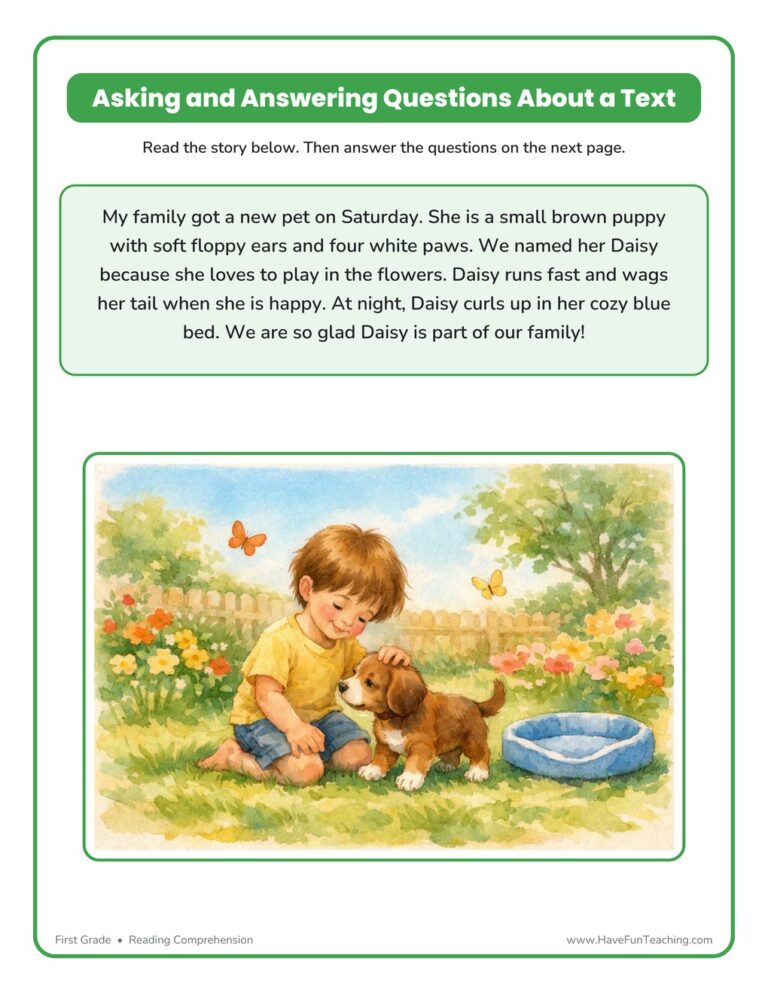
Practice asking and answering questions about a text with this first grade worksheet: read a short story about a new puppy, answer five questions, and write your own. Answer key included.

This Asking Questions About Pictures Worksheet gives 1st Grade students an illustrated scene, four fill-in-the-bubble questions, and room to write a question of their own. Answer key included, so checking takes seconds.




Reviews
There are no reviews yet