
Skip to content
Start My 3 Free Days $0 today · cancel anytime

1st Grade Reading Response Resources

30 1st grade reading response resources: 23 worksheets, 6 activities and 2 assessments. How teachers use these

1st Grade Reading Response Resources

30 1st grade reading response resources: 23 worksheets, 6 activities and 2 assessments. How teachers use these

Worksheet
Worksheet1st GradeAsking Questions About Pictures Worksheet

This Asking Questions About Pictures Worksheet gives 1st Grade students an illustrated scene, four fill-in-the-bubble questions, and room to write a question of their own. Answer key included, so checking takes seconds.

Worksheet
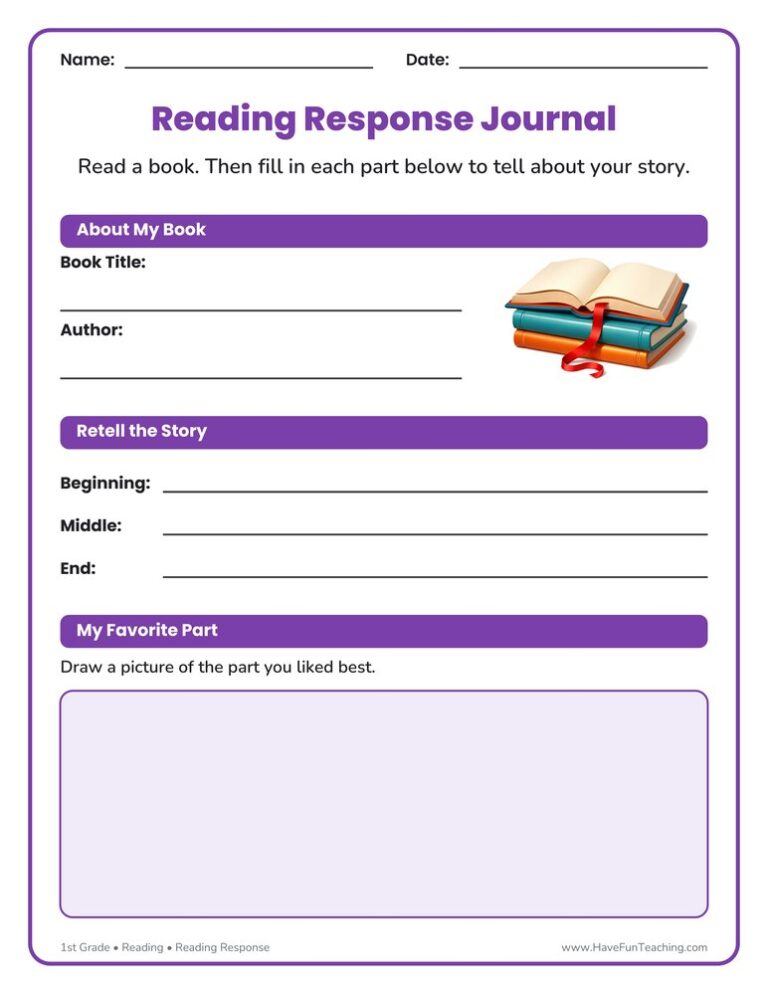
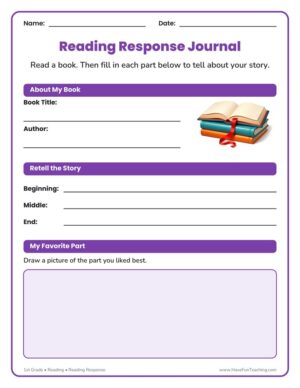
Worksheet1st GradeReading Response Journal

A reading response journal worksheet for 1st grade that works with any book: students record the title and author, retell the beginning, middle, and end, and draw their favorite part. Reusable all year for real comprehension practice.

Worksheet
Worksheet1st GradeWriting about Animals Worksheet

Writing about Animals Worksheet helps 1st graders pick an animal they love and write what it looks like, what it eats, and where it lives on clear, roomy lines that build confident sentence writing.

Worksheet
Worksheet1st GradeResponding to Reading Worksheet

This responding to reading worksheet gives 1st graders one page to name the story, write their own question about it, record what they found out, and draw their favorite part. Works with any book.

Worksheet
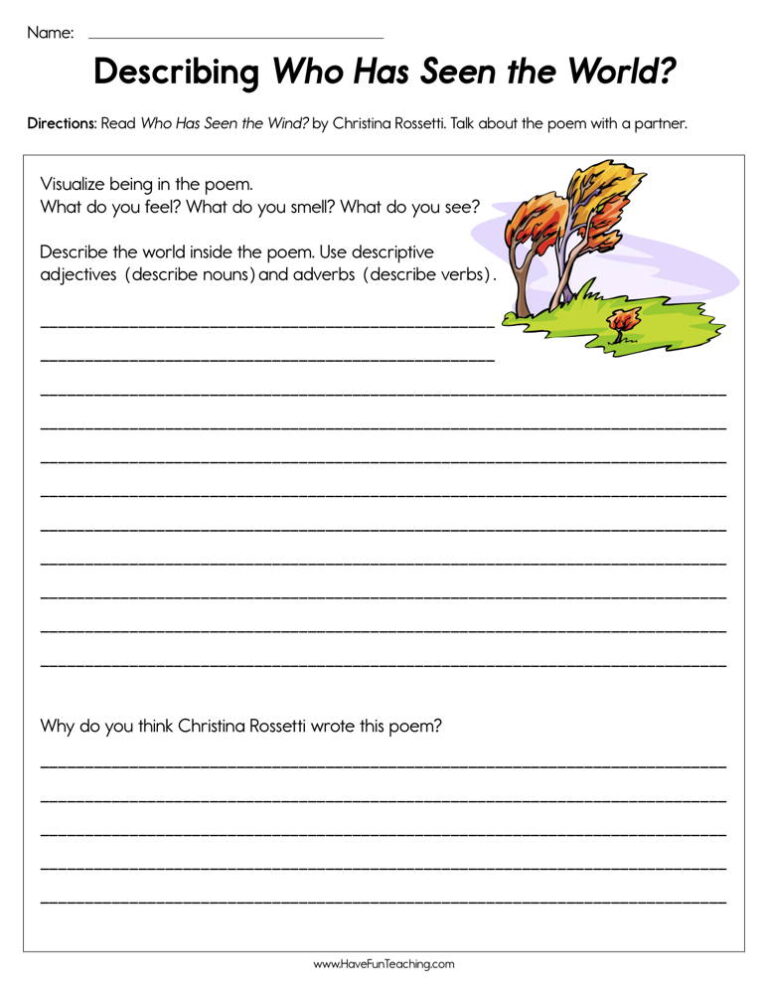
Worksheet1st GradeDescribing Who Has Seen the Wind Worksheet

This describing who has seen the wind worksheet has 1st graders read a classic wind poem, then find and write the describing word in five sentences. An answer key is included.

Worksheet
Worksheet1st GradeGroup Reading Worksheet

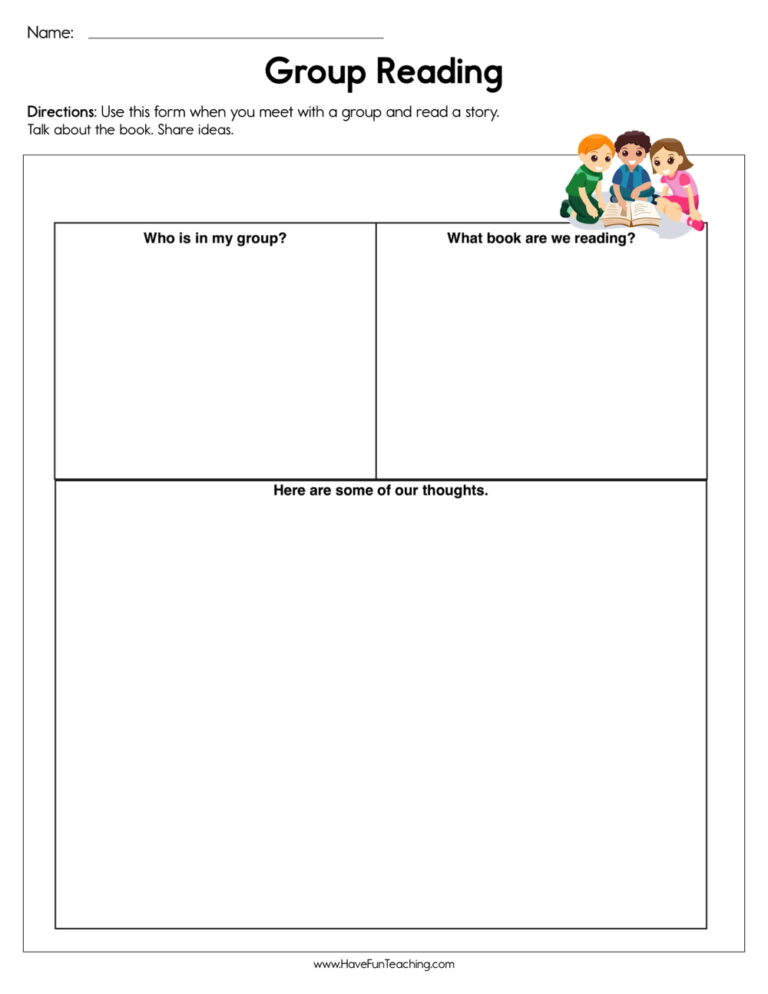
Use this Group Reading Worksheet with 1st Grade guided reading groups. Kids write the book title, their group, what the story is about, and ideas they heard and shared.

Worksheet
Worksheet1st GradeWriting about a Character Worksheet

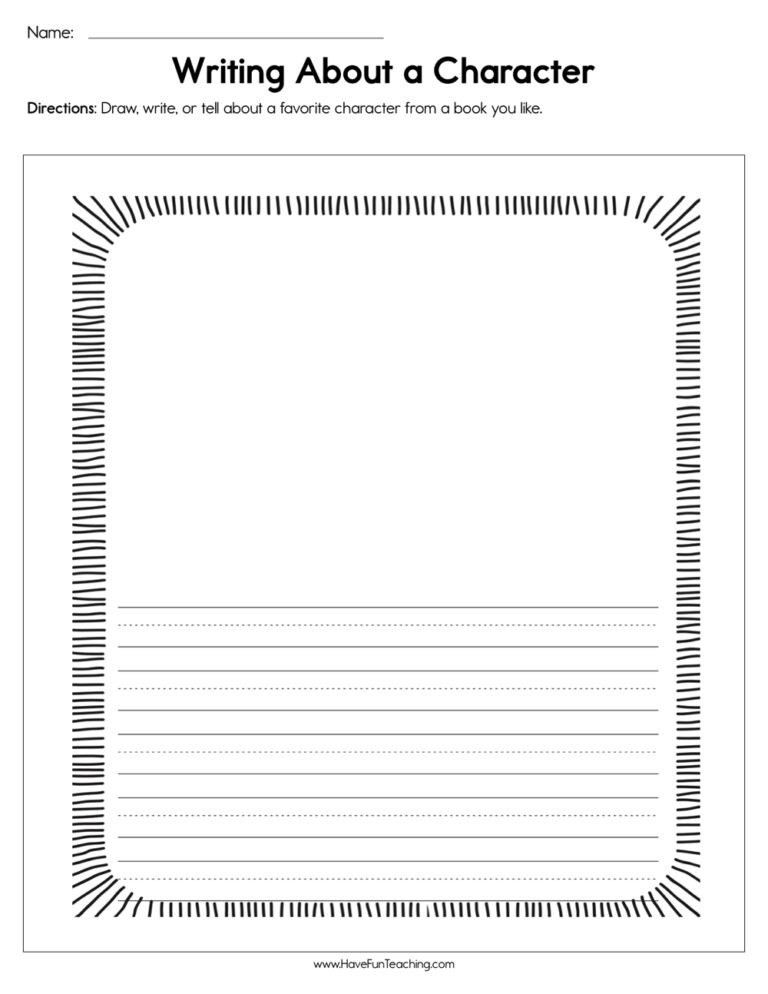
This writing about a character worksheet asks 1st Grade students to draw a favorite book character and then write two things about them, turning any story they read into real writing practice.

Worksheet
Worksheet1st GradeTalking to Peers Assessment Worksheet

The Talking to Peers Assessment Worksheet is a 1st grade teacher form for recording three peer writing conferences, with writer, topic, four behavior checkboxes and note lines on every card.

Worksheet
Worksheet1st GradeWriting about any Topic Worksheet

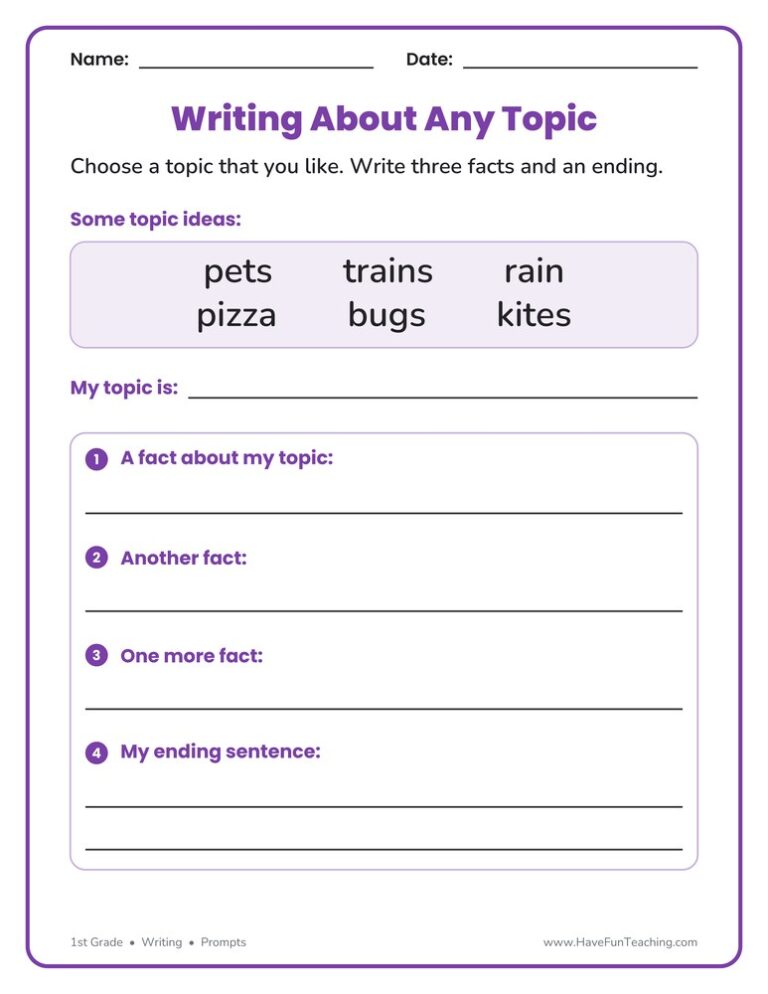
This writing about any topic worksheet helps 1st grade students pick a topic, write three facts, and add an ending sentence. It builds early informative writing skills one clear step at a time.

Worksheet
Worksheet1st GradeWriting about a Favorite Book Worksheet

The Writing about a Favorite Book Worksheet gives 1st Grade students three friendly prompts about the book they like best, with roomy lines that make writing about reading feel easy.

Worksheet
Worksheet1st GradeThe Paper Bag Princess Worksheet

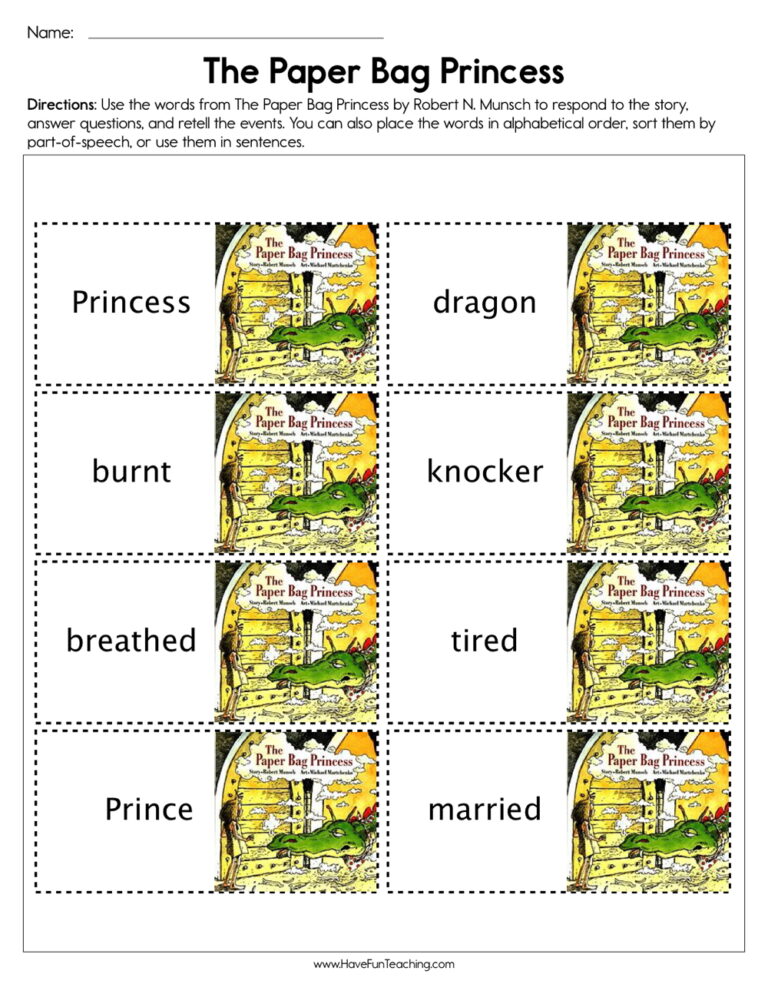
Using this The Paper Bag Princess Worksheet, students use the words from the story to respond to the story and retell the events.

Worksheet
Worksheet1st GradeWriting Sentences Safety Tips Worksheet

This writing sentences safety tips worksheet helps 1st grade students unscramble safety rules, write them with capitals and periods, and add a tip of their own. An answer key is included for quick checking.

Worksheet
Worksheet1st GradeGroup Reading Non-Fiction Worksheet

Use this group reading nonfiction worksheet in small groups: 1st graders record their book, group members, topic, a fact they learned and a new word, building reading and speaking skills.

Worksheet
Worksheet1st GradeSmall Group Discussions Worksheet

This small group discussions worksheet asks 1st graders to read six short sentences about talking in a group and fill in Yes or No for each one. An answer key is included, so the rules are easy to review together.

Worksheet
Worksheet1st GradeDescribing Your Favorite Book Worksheet

This Describing Your Favorite Book Worksheet gives 1st Grade readers three guided prompts and room to write about any book they choose, turning a retell into three easy questions.

Worksheet
Worksheet1st GradeWriting about a Topic Worksheet

A writing about a topic worksheet for 1st grade: name a topic you know well, draw it, then write two facts on the lines. Open-ended, so it can be used again with a new topic.

1st GradeAsking Questions Activity

Using the Asking Questions Activity, students actively engage in group reading activities to discuss purpose and understanding after shared reading.

Activity
Activity1st GradeKey Details in a Text Activity

This key details in a text activity helps K-2nd grade readers answer who, what, where, when, why, and how questions with self-checking story cards. Answer key included.

Activity
Activity1st GradeAfter Reading Discussion Cards Activity

These after reading discussion cards give kindergarten to 3rd grade readers 24 story questions, a spinner and a book talk page for lively group conversations about any book.

Worksheet
Worksheet1st GradeDescribing a Favorite Book Worksheet

This describing a favorite book worksheet lets 1st grade students name a book, tell what it is about, give a reason they like it, and draw a favorite part.

From our teachers' playbook

Read it, think it, say it!

What do 1st graders learn about reading response?

Reading response is how first graders show what a book made them think. They retell key details, name the characters and setting, ask and answer questions, and share what they liked with a reason: I liked the princess because she was brave. Kids respond by talking, drawing and writing a sentence or two, and they learn to listen and add on in small group talks. The click moment comes when a child points to the page to prove their answer, without being asked.

Our favorite ways to grow reading responses

First graders say more than they can write. These moves turn that talk into thoughtful responses.

Model a journal entry

After a read-aloud, fill in a journal page in front of the class, thinking out loud: "What was my favorite part? Why?" Then kids write their own. A quick model shows them exactly what a good response looks like.

Why it works: handing over the work step by step, from teacher to student, is one of the most widely used teaching frameworks (Pearson and Gallagher, 1983).
Reading Response JournalTry it withReading Response JournalWorksheetsOpen it →

Talk before you write

Pass out a discussion card to each pair after reading. Partners answer it out loud, then write one sentence. Talking first gives kids the words they need, and their writing gets longer and clearer.

Why it works: going from real objects to pictures to symbols is a core recommendation of the U.S. Department of Education's elementary math guide.

After Reading Discussion Cards ActivityTry it withAfter Reading Discussion Cards ActivityActivitiesOpen it →

Ask questions about pictures

Before reading, show one illustration and have kids ask, "Who? What? Why?" about it. Then read to find out. Pictures give every child a way into the story, including kids still decoding.

Why it works: pairing a picture with each word gives kids two ways to remember it, a well-tested principle of how people learn (Mayer, 2009).

Asking Questions About Pictures WorksheetTry it withAsking Questions About Pictures WorksheetWorksheetsOpen it →

Questions teachers and parents ask

What is a reading response in 1st grade?

It's a short way for kids to show what they understood or felt about a text. First graders retell, answer questions, describe characters, and share opinions with a reason, by talking, drawing or writing a sentence or two.

How long should a 1st grade reading response be?

One to three sentences plus a picture is plenty for most first graders. Focus on a clear idea and a reason or detail from the book rather than length.

What questions should I ask after reading with my 1st grader?

Try "Who was in the story?", "What was the problem?", "How did it end?" and "What was your favorite part and why?" Ask them to point to the page that shows it.

How do I help a 1st grader who doesn't know what to write?

Have them say their answer out loud first, then write exactly what they said. Sentence starters like "I liked… because…" help a lot.



