
Skip to content
Start My 3 Free Days $0 today · cancel anytime

Author’s Purpose Worksheets

24 author’s purpose worksheets. Teacher favorites: Identifying Author's Purpose Worksheet and Author's Purpose Worksheet. How teachers use these

Author’s Purpose Worksheets

24 author’s purpose worksheets. Teacher favorites: Identifying Author's Purpose Worksheet and Author's Purpose Worksheet. How teachers use these

Worksheet
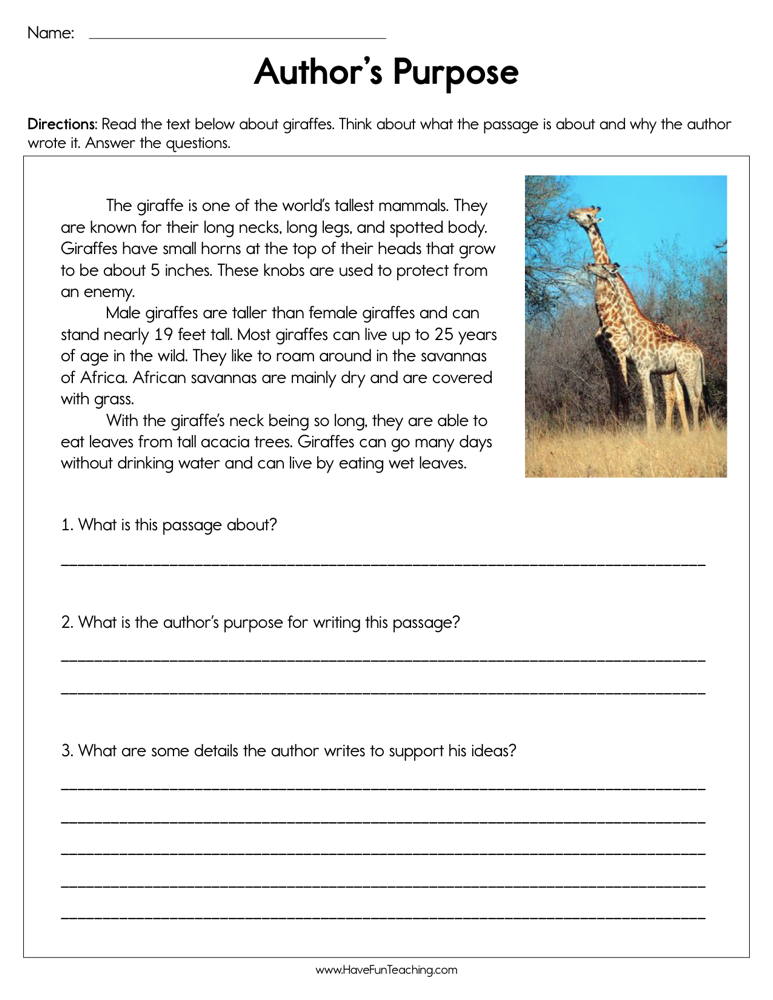
Worksheet3rd GradeIdentifying Author's Purpose Worksheet

This identifying author's purpose worksheet has 3rd graders read a giraffe passage and decide whether the author wants to inform, persuade, or entertain. Answer key included for easy reading practice.

Worksheet
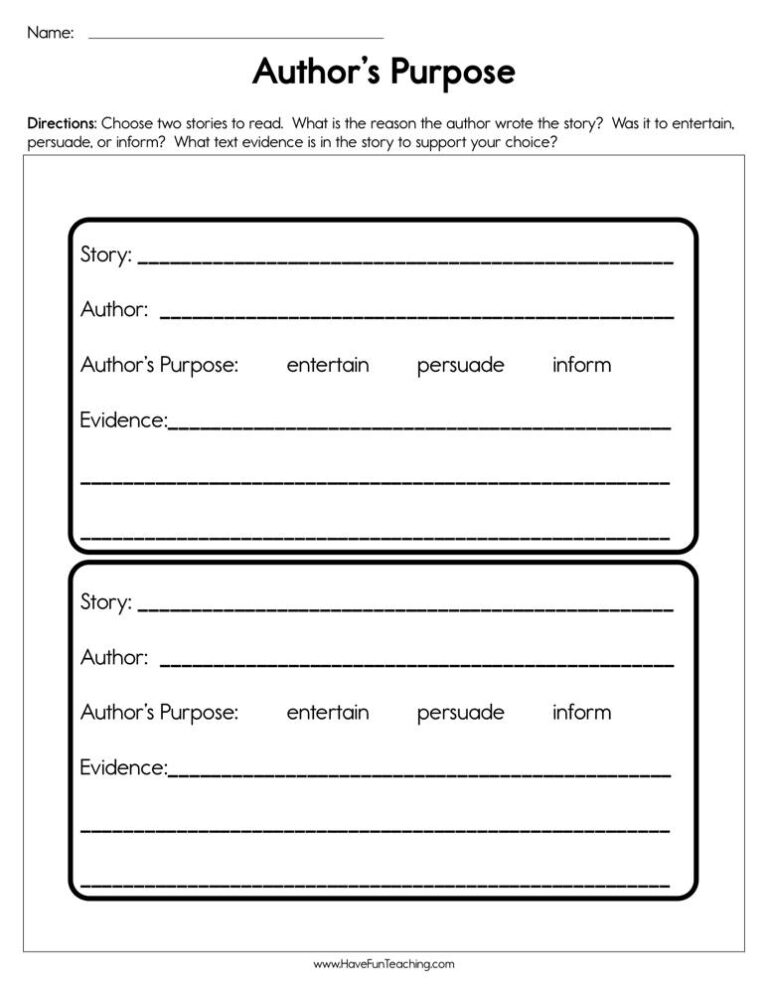
Worksheet2nd GradeAuthor's Purpose Worksheet

An illustrated author's purpose worksheet where 2nd graders read four short passages and fill in the bubble for entertain, persuade, or inform. Answer key included, so reading practice takes minutes to set up and score.

Worksheet
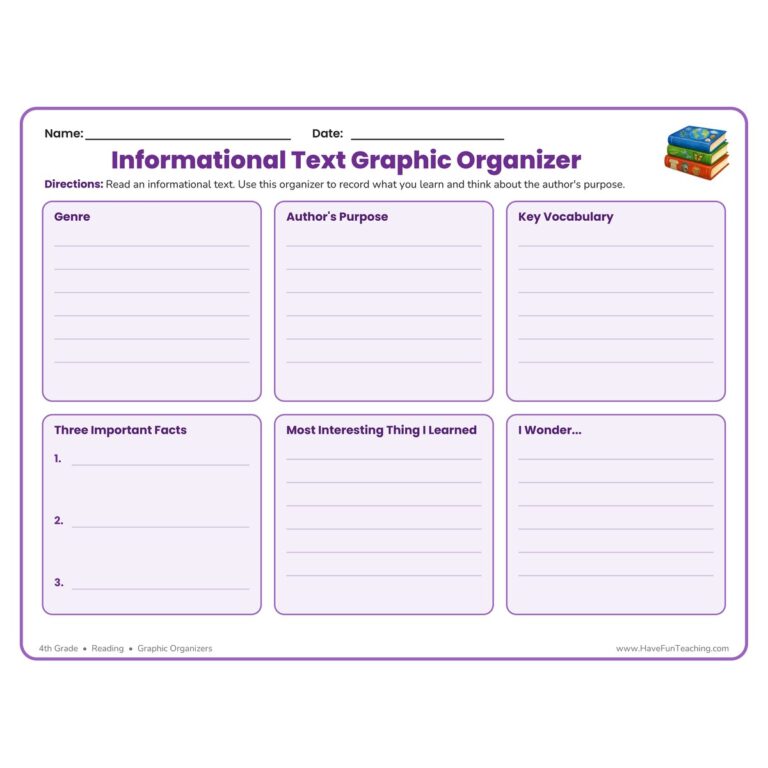
Worksheet4th GradeInformational Text Graphic Organizer Worksheet

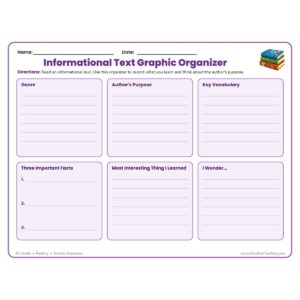
This Informational Text Graphic Organizer Worksheet gives 4th graders one landscape page to record genre, author's purpose, key vocabulary, and important facts from any nonfiction text — a reusable, no-prep way to build stronger reading comprehension.

Worksheet
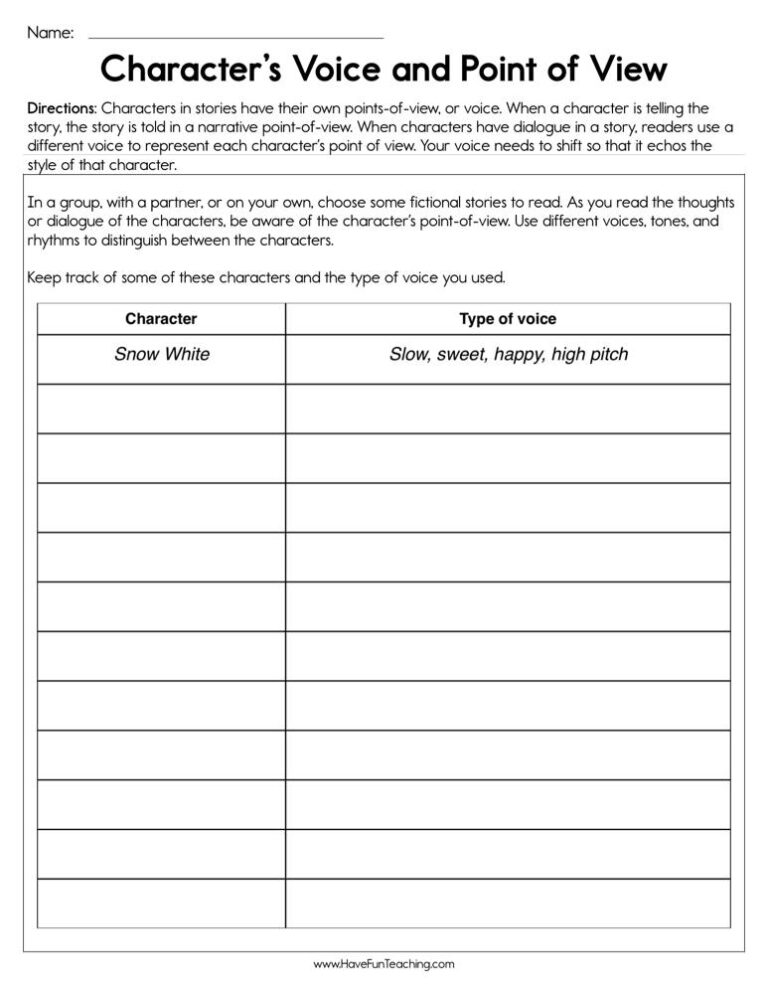
Worksheet4th GradeCharacters Voice and Point of View Worksheet

This characters voice and point of view worksheet gives 4th graders four short stories to sort into first person and third person, with text-evidence lines. Answer key included for fast, no-prep reading practice.

Worksheet
Worksheet3rd GradePurpose Worksheet

This Purpose Worksheet gives 3rd graders six short passages to sort into persuade, inform, or entertain, plus two clue-word items. An answer key is included, so it works as a quick no-prep reading check.

Worksheet
Worksheet1st GradeIdentifying the Author and the Illustrator Worksheet

This Identifying the Author and the Illustrator Worksheet helps 1st Grade readers name who wrote the words and who drew the pictures, with an answer key included so checking work takes seconds.

Worksheet
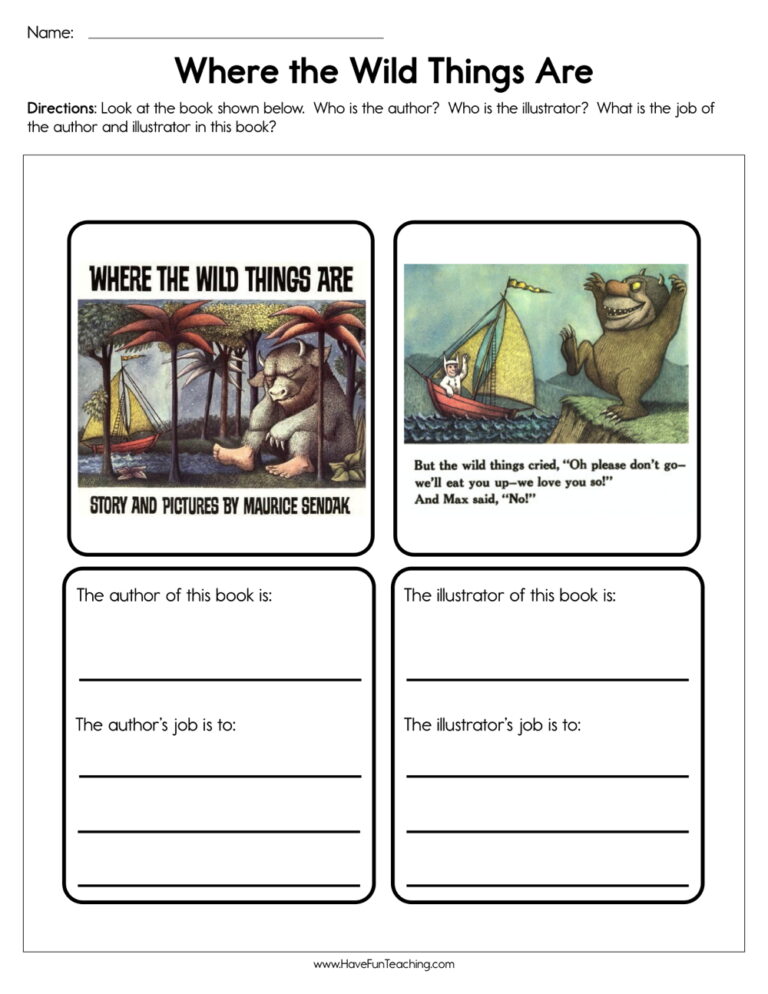
WorksheetPreschoolWhere the Wild Things Are Worksheet

Using this Where the Wild Things Are Worksheet, students describe the title, author, and illustrator of Where the Wild Things Are.

Worksheet
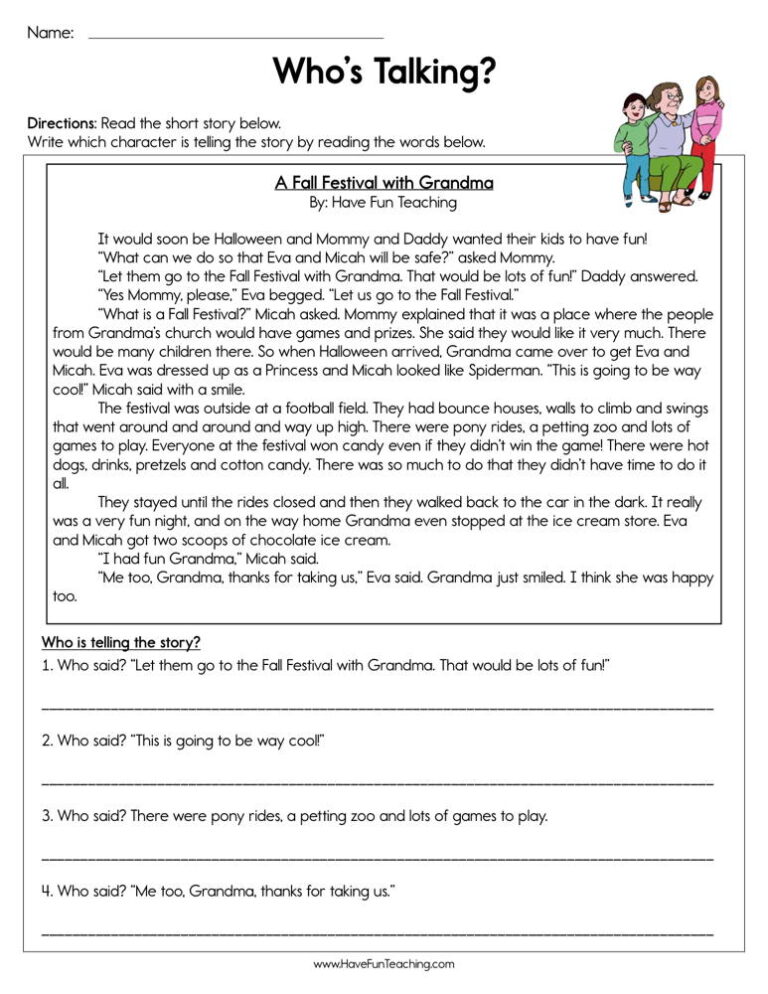
Worksheet2nd GradeWho's Talking Worksheet

This Who's Talking Worksheet asks 2nd Grade readers to match four quoted lines back to the character who said them, then explain how they knew, with an answer key included.

Worksheet
Worksheet3rd GradeAuthor's Point and Supporting Evidence Worksheet

This author's point and supporting evidence worksheet gives 3rd grade students a short persuasive article, four questions, and a written response, with an answer key, so they learn to prove an idea from the text.

Worksheet
WorksheetKindergartenAuthor and Illustrator Worksheet

This author and illustrator worksheet helps kindergarten students circle who made each card, the author who writes words or the illustrator who draws pictures. An answer key is included for quick checking.

Worksheet
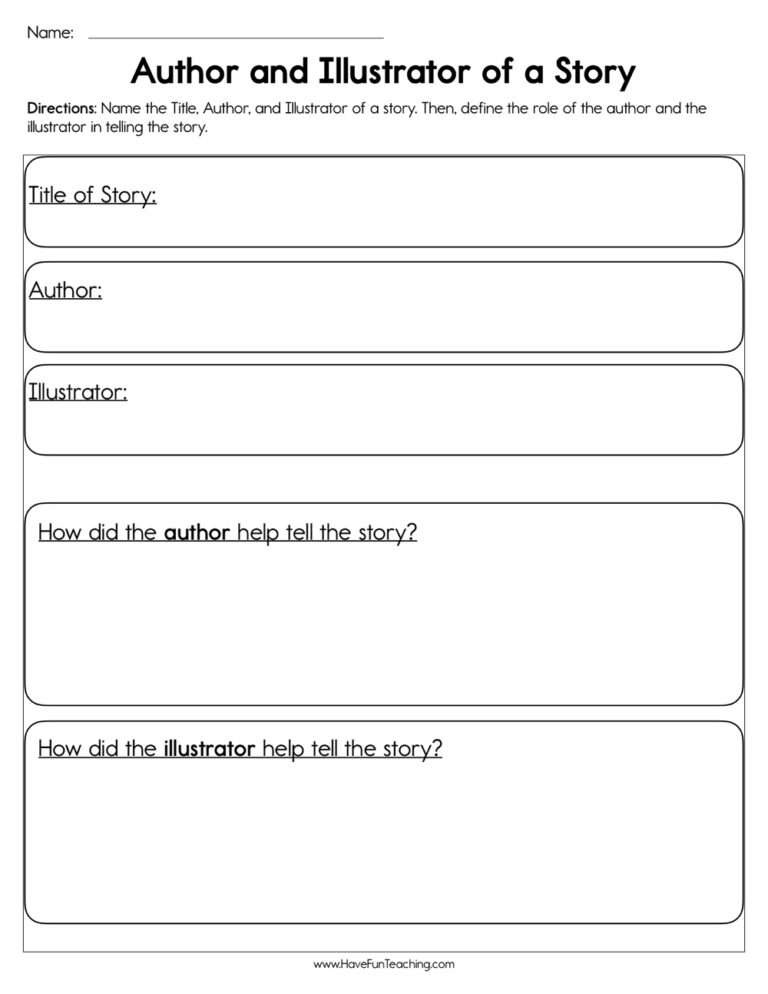
WorksheetKindergartenAuthor and Illustrator of a Story Worksheet

This author and illustrator of a story worksheet helps kindergarten students match each helper to the words or pictures of a book. An answer key is included for quick, easy checking.

Worksheet
Worksheet3rd GradeAuthor's Purpose of Informational Text Worksheet

This author’s purpose of informational text worksheet asks 3rd graders to decide which question each short nonfiction text was written to answer. An answer key is included, so it is easy no-prep practice for close reading.

Worksheet
WorksheetPreschool100th Day of School Party Worksheet

This 100th Day of School Party Worksheet is a great way to teach your kids about the author and illustrator of a book to celebrate the 100th day of school.

Worksheet
Worksheet1st GradeAuthor and Illustrators Worksheet

This Author and Illustrators Worksheet has 1st graders name the author and illustrator of any picture book, tell what the words and pictures add, and draw a favorite page.

Worksheet
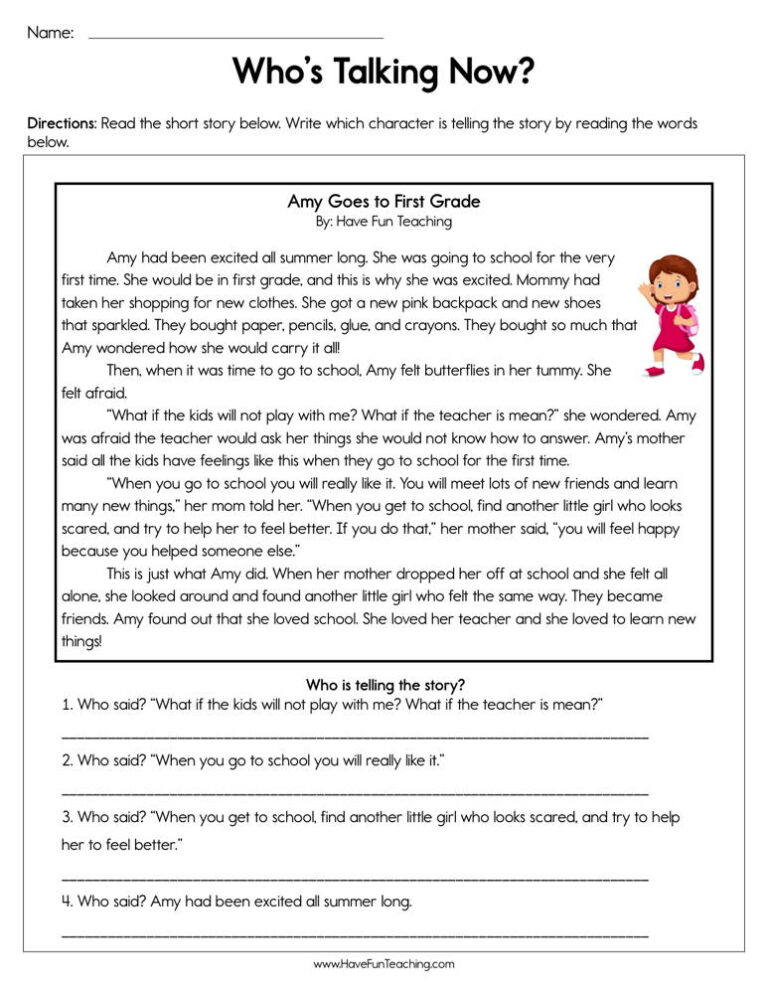
Worksheet4th GradeWho's Talking Now Worksheet

The Who's Talking Now Worksheet gives 4th graders three short stories about one windy morning, told by three different narrators, plus an answer key for quick checking of point of view work.

Worksheet
Worksheet1st GradeMiss Rumphius Point of View Worksheet

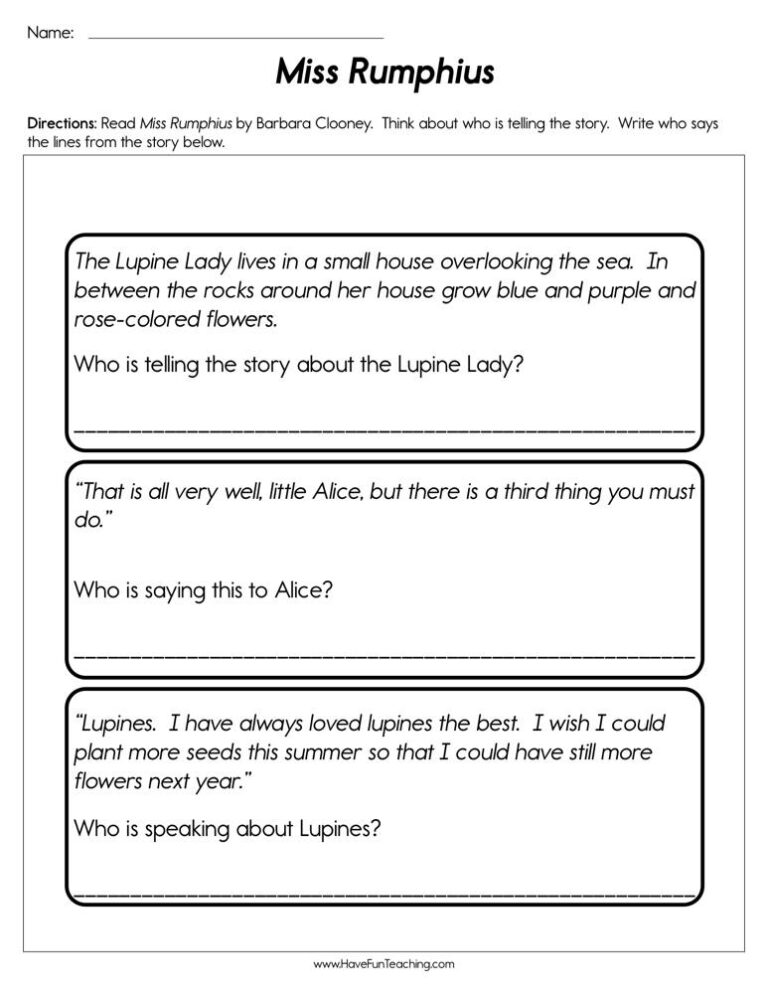
Using Miss Rumphius Point of View Worksheet, students read Miss Rumphius by Barbara Clooney to determine who says the lines from the story.

Worksheet
Worksheet3rd GradeSupport the Point Worksheet

Practice finding reasons with this support the point worksheet for 3rd grade. Students read a short recycling article, answer questions about the author's point, and use evidence. An answer key is included.

Worksheet
WorksheetKindergartenSupporting the Point Worksheet

Use this Supporting the Point Worksheet to help kindergarten students find the reasons an author gives for a big idea, with five bubble questions and an answer key for easy checking.

Worksheet
Worksheet2nd GradeReasons the Author Gives Worksheet

This Reasons the Author Gives Worksheet has 2nd Grade students read a short text about bowling and name the reasons the author gives for the point being made. Includes an answer key.

Worksheet
WorksheetKindergartenMaking a Point with Support Worksheet

Use this making a point with support worksheet to help kindergarten readers find an author's point and the reasons behind it. Includes an answer key and builds early opinion-reading skills.

From our teachers' playbook

Why did the author write this?

What do kids learn about author's purpose?

Author's purpose is the reason someone wrote a text. Many classrooms use the word PIE: to persuade, to inform or to entertain. Younger readers learn what authors and illustrators do. Older readers figure out the purpose of a text, find clues like facts or opinions, and explain how the author supports their points with evidence. The click moment is when a student reads an ad and says "They're trying to convince me!"

How we teach author's purpose

Author's purpose clicks when kids look for clues. These moves help.

Think aloud with PIE

Read a short text and think out loud: "This tells me facts about frogs, so the author wants to inform me." Then read a funny story and an ad. Kids help decide the purpose and point to the clue.

Why it works: handing over the work step by step, from teacher to student, is one of the most widely used teaching frameworks (Pearson and Gallagher, 1983).

Identifying Author's Purpose WorksheetTry it withIdentifying Author's Purpose WorksheetWorksheetsOpen it →
Map the facts

For informational texts, have kids fill in a graphic organizer with the main facts. When they see a page full of facts, it's easy to tell the author's purpose is to inform.

Why it works: pairing a picture with each word gives kids two ways to remember it, a well-tested principle of how people learn (Mayer, 2009).

Informational Text Graphic Organizer WorksheetTry it withInformational Text Graphic Organizer WorksheetWorksheetsOpen it →

Why was it written?

Give groups a stack of short texts: recipes, jokes, ads, letters. They race to sort them by purpose and explain one clue for each. It's quick, active and full of discussion.

Why it works: in a well-known study, a few short sessions of a simple number board game measurably boosted young children's number skills (Ramani and Siegler, 2008).

Why Was it Written? Author's Purpose ActivityTry it withWhy Was it Written? Author's Purpose ActivityActivitiesOpen it →

Author's purpose questions

What are the three types of author's purpose?

To persuade, to inform and to entertain, often remembered as PIE. Some teachers add more, like to explain or to describe.

How do I teach author's purpose to kids?

Show examples of each type and look for clues. Facts usually mean inform, opinions and "you should" mean persuade, and stories mean entertain.

What grade learns author's purpose?

Kids begin identifying authors and illustrators in kindergarten. Most classes teach author's purpose directly in 2nd to 5th grade.

Can a text have more than one purpose?

Yes. A funny story can also teach facts, and an article can inform while also persuading. Older students learn to identify the main purpose.



