Skip to content
Start My 3 Free Days $0 today · cancel anytime

Inference Graphic Organizers

11 inference graphic organizers. Teacher favorites: What I Read What I Know Inference Graphic Organizer Worksheet and Making Inferences Graphic Organizer Worksheet. How teachers use these

Find the perfect resource in seconds

Inference Graphic Organizers

11 inference graphic organizers. Teacher favorites: What I Read What I Know Inference Graphic Organizer Worksheet and Making Inferences Graphic Organizer Worksheet. How teachers use these

Graphic Organizer
Graphic Organizer3rd GradeWhat I Read What I Know Inference Graphic Organizer Worksheet

A reusable What I Read What I Know Inference Graphic Organizer Worksheet that walks 3rd grade readers from text clues to background knowledge to a written inference. Use it with any book, all year long.

Graphic Organizer
Graphic Organizer5th GradeMaking Inferences Graphic Organizer Worksheet

This making inferences graphic organizer worksheet gives 5th grade readers three short stories to find clues, add what they know, and write an inference. An answer key is included for easy checking.

Graphic Organizer
Graphic Organizer3rd GradeWhat I Know About the Text Inference Graphic Organizer

This What I Know About the Text Inference Graphic Organizer Worksheet gives 3rd Grade readers three story clues to turn into inferences using what they already know. An answer key is included for quick, no-prep practice.

Graphic Organizer
Graphic Organizer4th GradeMaking Inferences Recording Worksheet

This Making Inferences Recording Worksheet helps 4th grade readers find story clues, add what they know, and write a clear inference for three short stories. An answer key is included.

Graphic Organizer
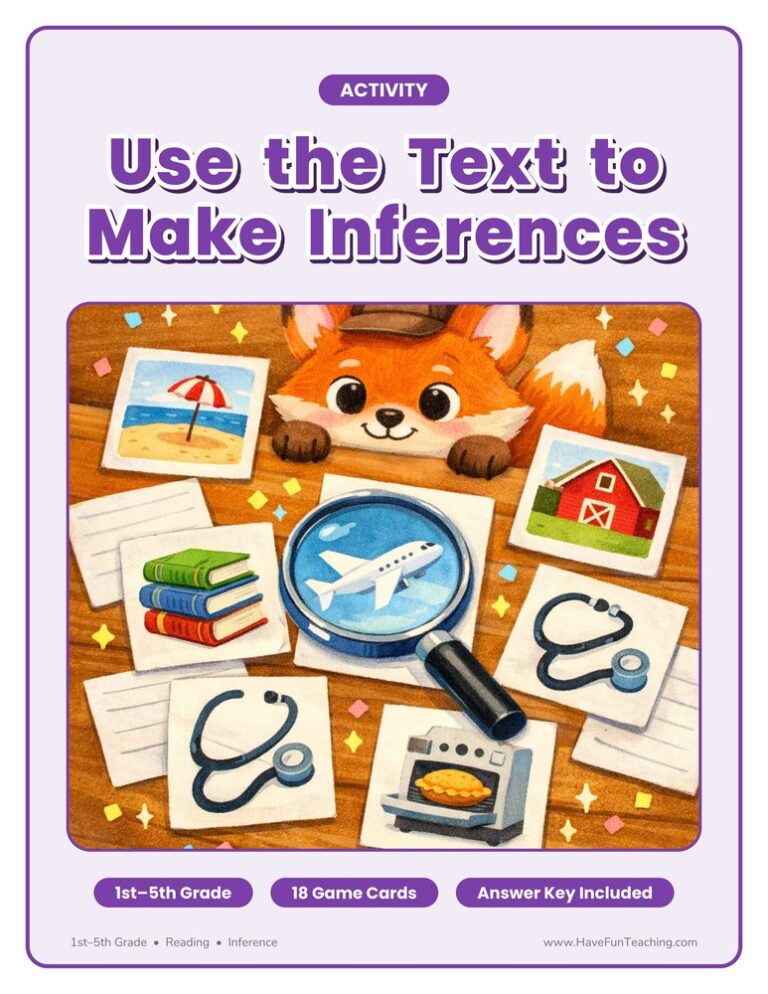
Graphic Organizer1st GradeUse the Text to Make Inferences Activity

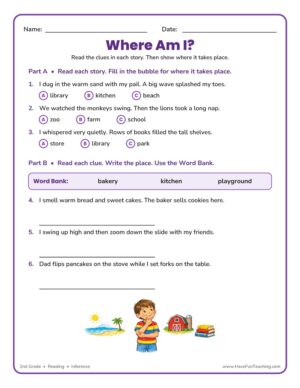
In this use the text to make inferences activity, 1st to 5th grade students read short clue stories, infer the place, and name the text clues. Answer key included.

Graphic Organizer
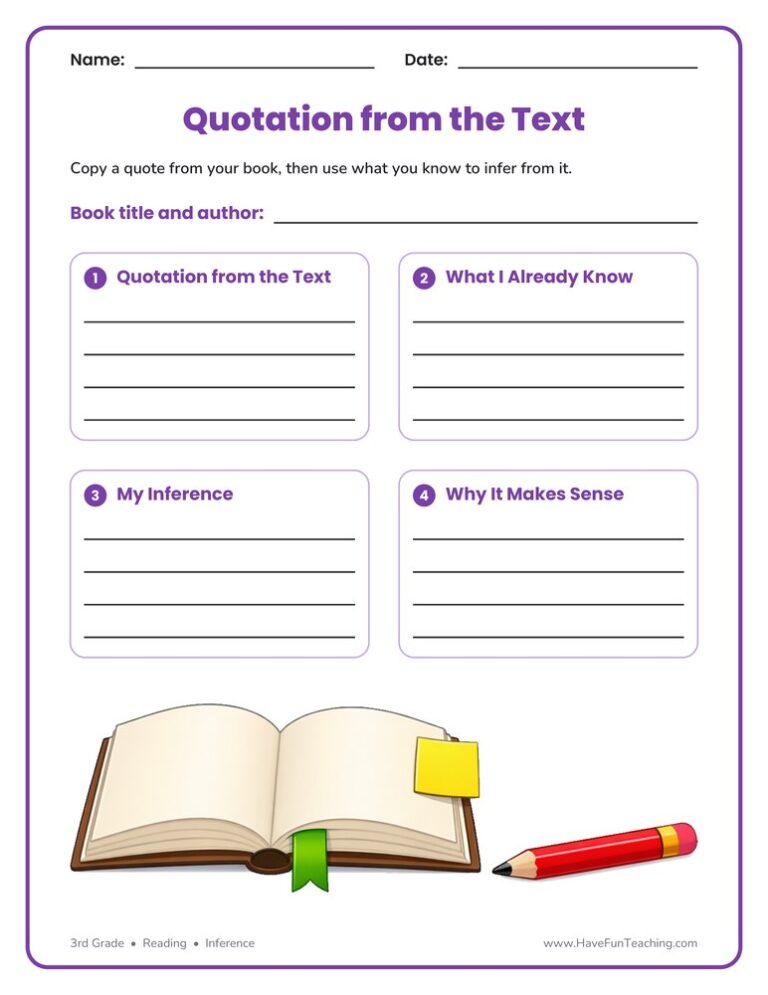
Graphic Organizer3rd GradeQuotation from the Text Graphic Organizer Worksheet

Use this Quotation from the Text Graphic Organizer Worksheet to help 3rd graders copy a quote from any book, connect it to what they know, and write a strong inference with a reason.

Graphic Organizer
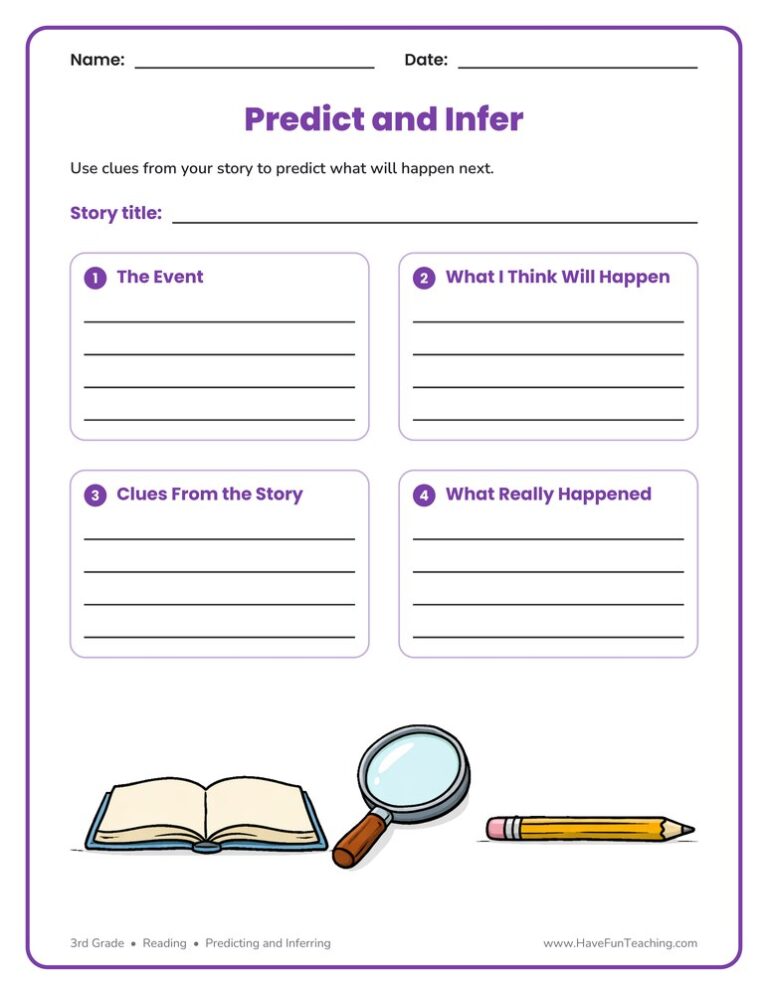
Graphic Organizer3rd GradePredict and Infer Graphic Organizer

This predict and infer graphic organizer worksheet gives 3rd grade readers one page to name an event, predict what happens next, list the clues behind the guess, and then check it against the real ending.

Graphic Organizer
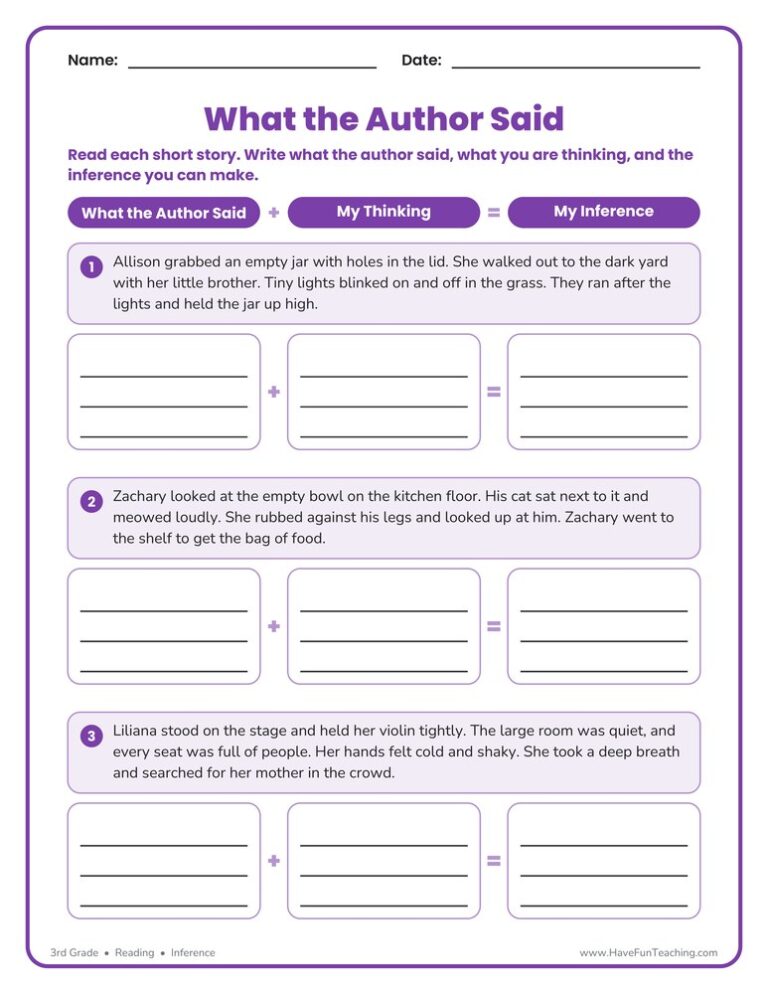
Graphic Organizer3rd GradeWhat the Author Said Graphic Organizer Worksheet

Students use this what the author said graphic organizer worksheet to pair story evidence with their own thinking and write an inference for three short stories. Made for 3rd grade, with an answer key.

Graphic Organizer
Graphic Organizer3rd GradeMaking Inferences Record Worksheet

This making inferences record worksheet helps 3rd grade students read three short stories, record text clues and what they know, and explain each inference. An answer key is included for quick, confident checking.

Graphic Organizer
Graphic Organizer2nd GradeMaking Inferences Graphic Organizer

This making inferences graphic organizer helps 2nd graders read three short stories, find clues, and add what they know to make an inference. An answer key is included for easy checking.

Graphic Organizer
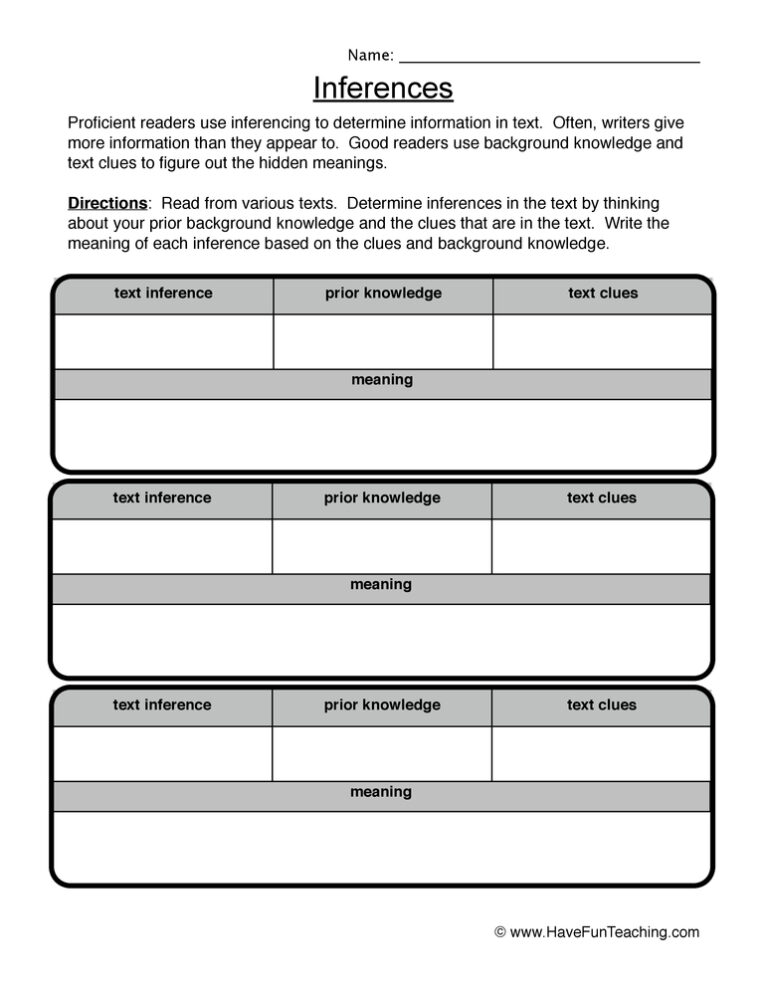
Graphic Organizer4th GradeInference Graphic Organizer Worksheet

Students use this inference graphic organizer worksheet to link text clues with what they already know and write a clear inference for three short stories. Built for 4th grade, with an answer key.

From our teachers' playbook

Read between the lines like a detective!

What do kids learn about inference?

Making an inference means figuring out something the author doesn't say directly. Kids combine clues from the text with what they already know: clues + what I know = inference. If a character grabs an umbrella and frowns at the sky, kids can infer it's about to rain. They learn to back up every inference with evidence. The click moment is when kids realize they make inferences all day long, and reading is just one more place to do it.

Our favorite ways to teach inference

Inference is a thinking skill. These moves make that thinking visible.

Clues plus what I know

Read a short paragraph and think aloud with a two-column organizer: "The text says she yawned. I know people yawn when they're tired. So she's probably sleepy." Then kids try one. Seeing both columns makes inference less mysterious.

Why it works: handing over the work step by step, from teacher to student, is one of the most widely used teaching frameworks (Pearson and Gallagher, 1983).
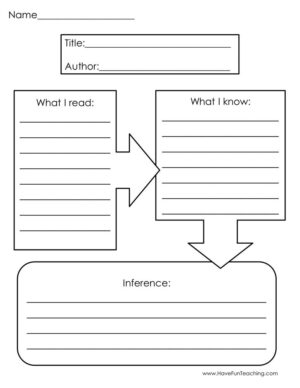
What I Read What I Know Inference Graphic Organizer WorksheetTry it withWhat I Read What I Know Inference Graphic Organizer WorksheetGraphic OrganizersOpen it →

Infer from pictures

Start with pictures before text. Show a picture and ask, "What do you think just happened? What clues tell you?" Pictures let every reader practice inference, even before reading longer texts.

Why it works: pairing a picture with each word gives kids two ways to remember it, a well-tested principle of how people learn (Mayer, 2009).

Inference Drawings WorksheetTry it withInference Drawings WorksheetWorksheetsOpen it →

Reading between the lines

Give kids a set of clue cards and have them build an inference step by step. Moving the cards shows how clues add up to a conclusion.

Why it works: the U.S. Department of Education's guide for teaching elementary math recommends moving from hands-on objects to drawings to numbers.

Reading Between The Lines Inference ActivityTry it withReading Between The Lines Inference ActivityActivitiesOpen it →

Questions parents and teachers ask us

What is an inference for kids?

An inference is a smart guess using clues from the text and what you already know. It's figuring out something the author didn't say directly.

How do you teach inferencing to kids?

Start with pictures and everyday examples, then move to short texts. Use the formula: clues plus what I know equals my inference. Always ask kids to show their evidence.

What is the difference between an inference and a prediction?

An inference figures out something happening now that isn't stated. A prediction is a guess about what will happen next. Both use clues from the text.

What grade learns inference?

Kids make simple inferences in kindergarten and 1st grade with pictures. Inference becomes a major skill in 3rd through 5th grade reading.