
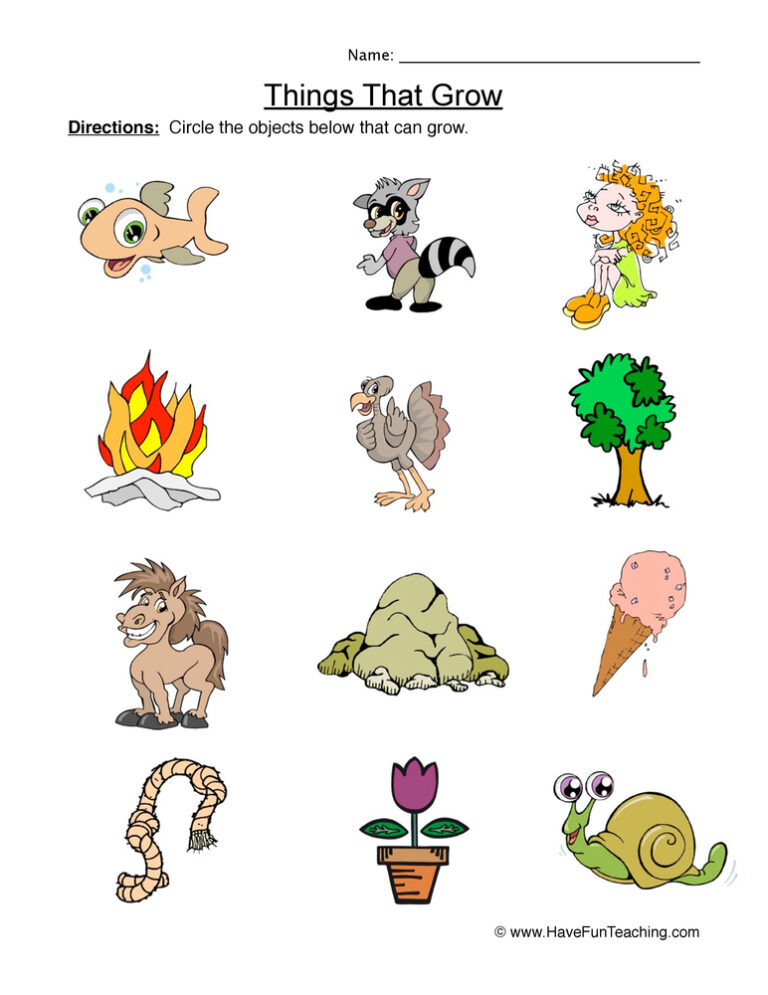
An identifying things that grow worksheet for Kindergarten students learning to tell living things from non-living things. Six picture cards and a two-column sort, with an answer key included, make science practice quick and clear.

This garden vegetables measuring activity has 1st and 2nd grade students measure true-size vegetable cards in inches and make a line plot. Answer key included.

This Shelly's Garden Surprise Reading Comprehension Worksheet gives 2nd graders a cheerful garden story, four bubble questions and a written response. An answer key is included, so checking takes only a moment.

This Plant Riddles Worksheet gives 1st Grade students four three-clue riddles about plants and a word box to answer them from. An answer key is included.

This life cycle of plants observation worksheet has 2nd grade students read a bean plant journal, name each growth stage, and answer questions about height and change. An answer key is included for quick checking.
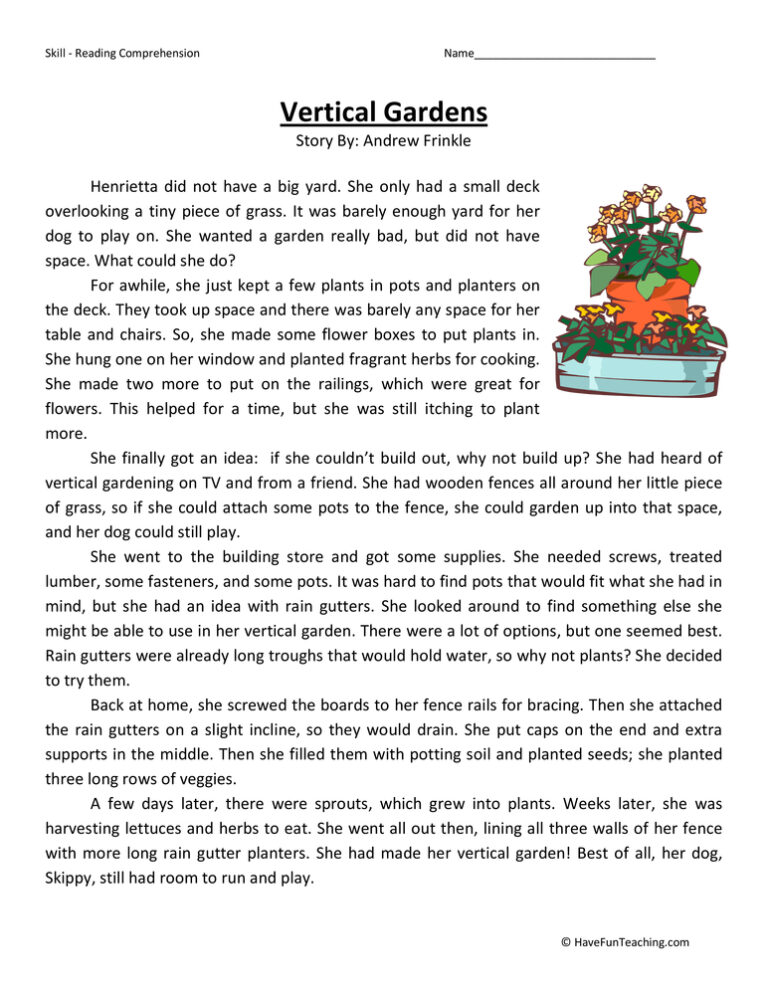
The Vertical Gardens Reading Comprehension Worksheet gives 4th Grade students a two page non-fiction passage about growing food up a fence, plus questions and an answer key that build real reading stamina.
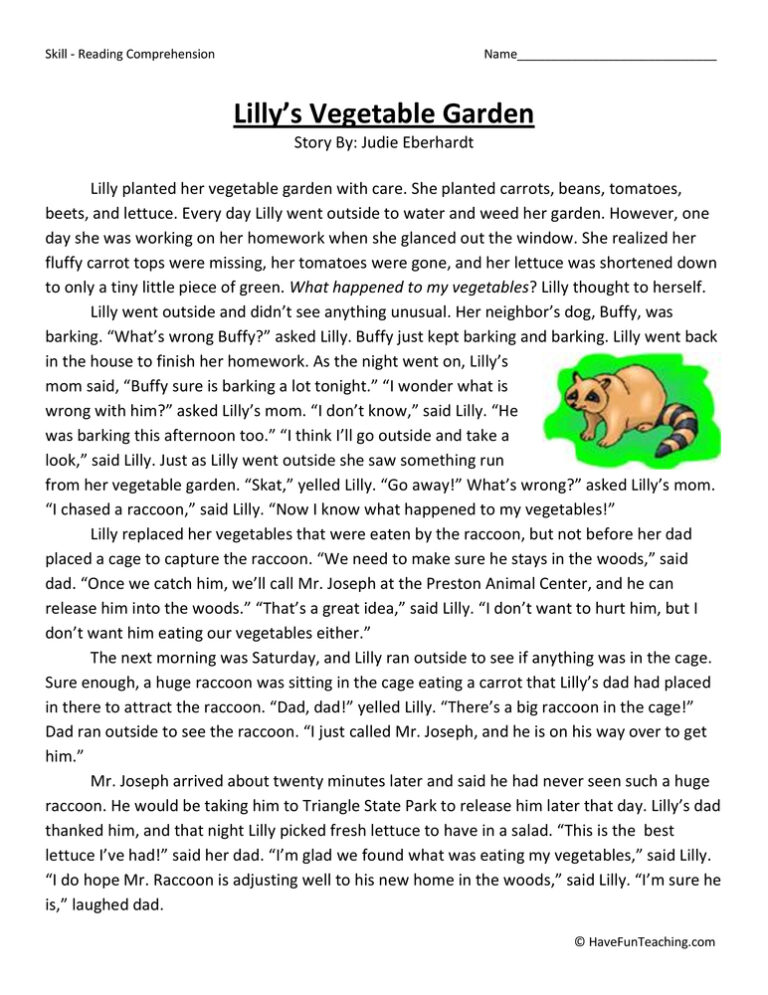
In this Lilly's Vegetable Garden reading comprehension worksheet, third graders read a story about a tomato plant that will not grow, then answer four questions and cite two details in writing. Answer key included.
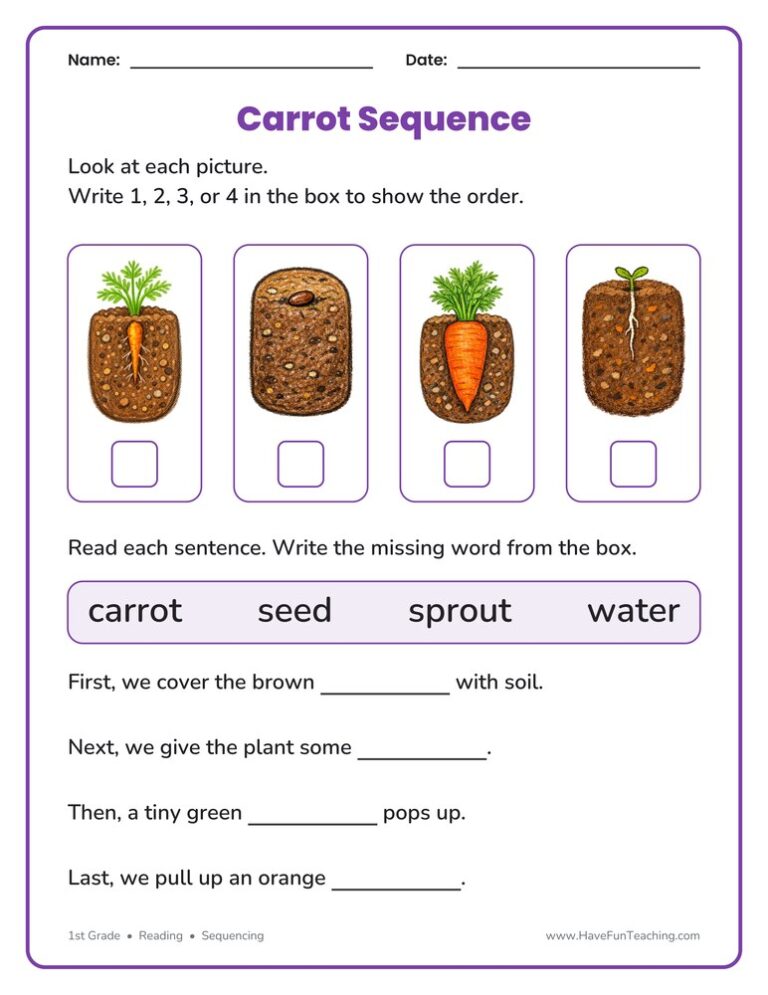
The Planting A Carrot Seed Sequencing Worksheet gives first grade students four carrot pictures to put in order and four sentences to finish from a word box. Answer key included, so it marks in seconds.
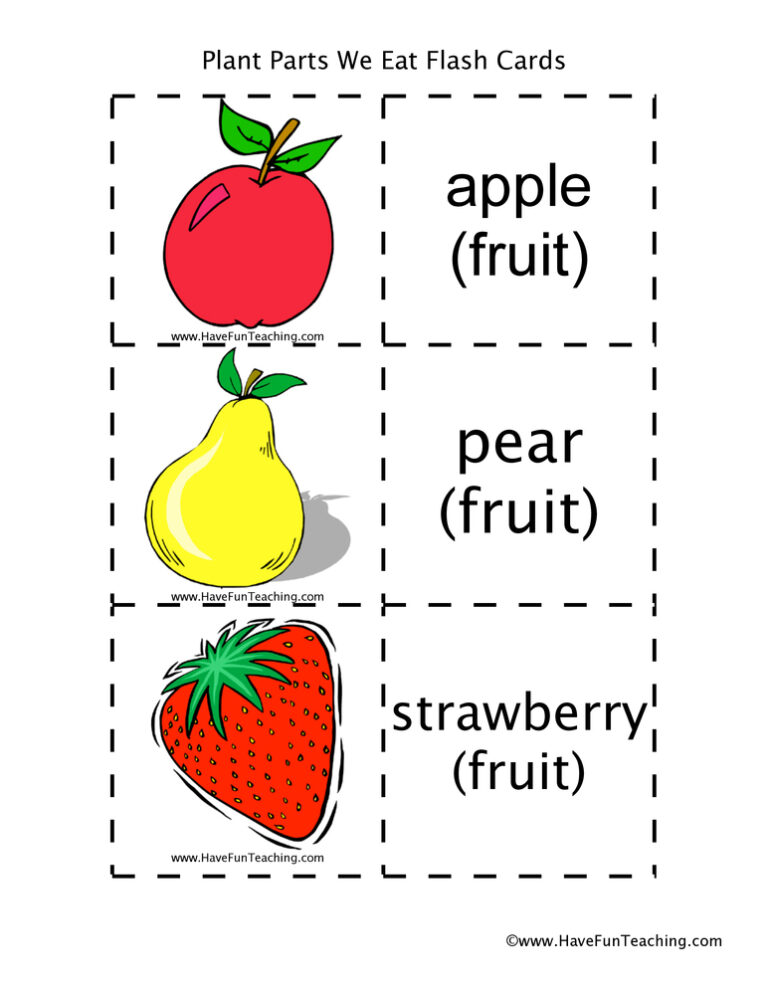
Plants we eat flash cards help Kindergarten to 3rd grade children match 18 foods to the root, stem, leaf, flower, fruit or seed we eat. Answer key included for quick, confident checking.

UsingFruits and Vegetables Activity, studentsplay the Stone Soup game to practice identifying and classifying fruits and vegetables.

This what does a plant need activity has kindergarten and 1st grade children sing, sort picture cards and write about sunlight, water, air and soil. Answer key included.
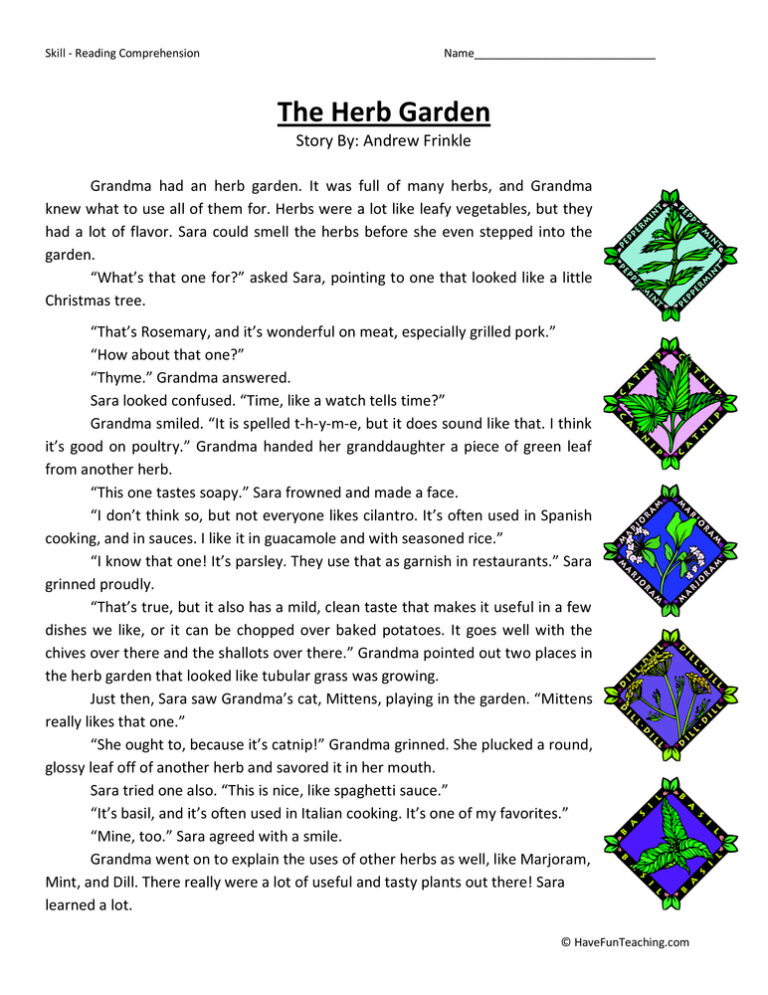
This Herb Garden Reading Comprehension Worksheet gives 3rd graders a short passage about growing basil, rosemary, parsley and mint, then six questions and a written response. Answer key included.
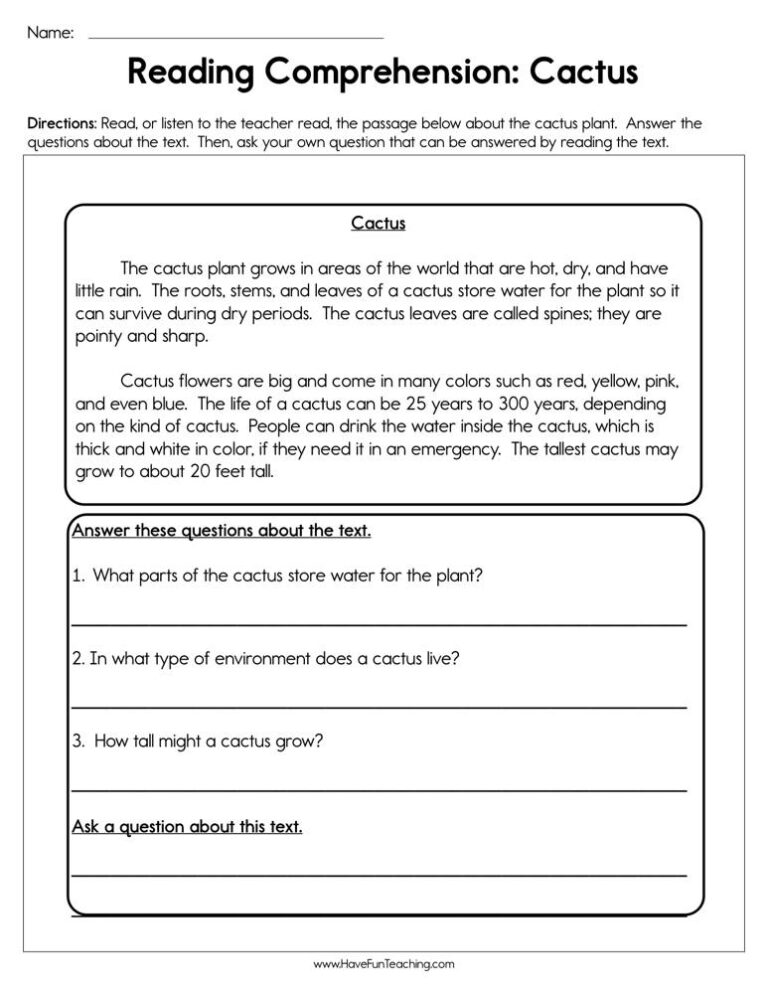
This cactus reading comprehension worksheet gives 1st Grade readers a short nonfiction passage about desert plants and five text-based questions to answer. An answer key is included.

UsingEarth Day Writing Activity, students brainstorm the sequence of events of a growing seed, then publish using them Earth Day themed writing.

This Life Cycle of a Plant Book Worksheet asks 2nd Grade students to name each stage of a plant's life cycle from a word bank, then draw and label a grown plant, with an answer key included.
This What Do Plants Make Worksheet has 3rd graders sort everyday items by whether they come from plants, then use clues to name four useful plants. Answer key included.

The Plant Predict and Infer Worksheet asks 2nd grade students to predict and infer how much each seed will grow from the water and sun it gets. An answer key is included, so checking work takes seconds.
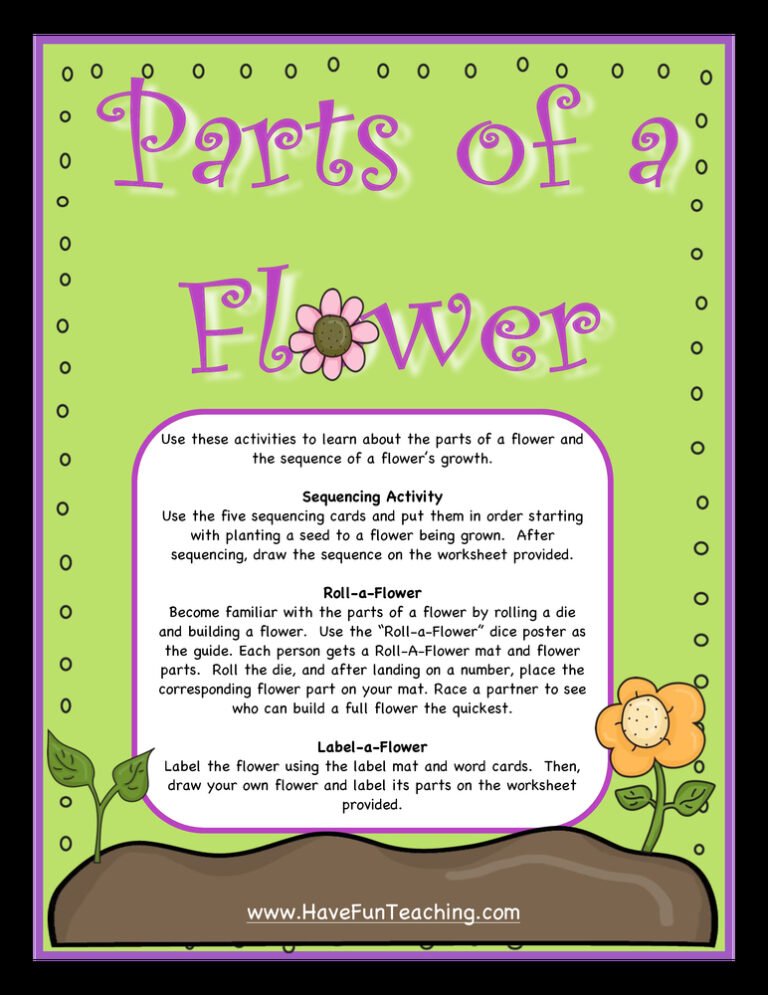
Explore this parts of a flower activity with kindergarten to 2nd grade students. Kids order life cycle cards, spin and color flower parts, and an answer key is included.
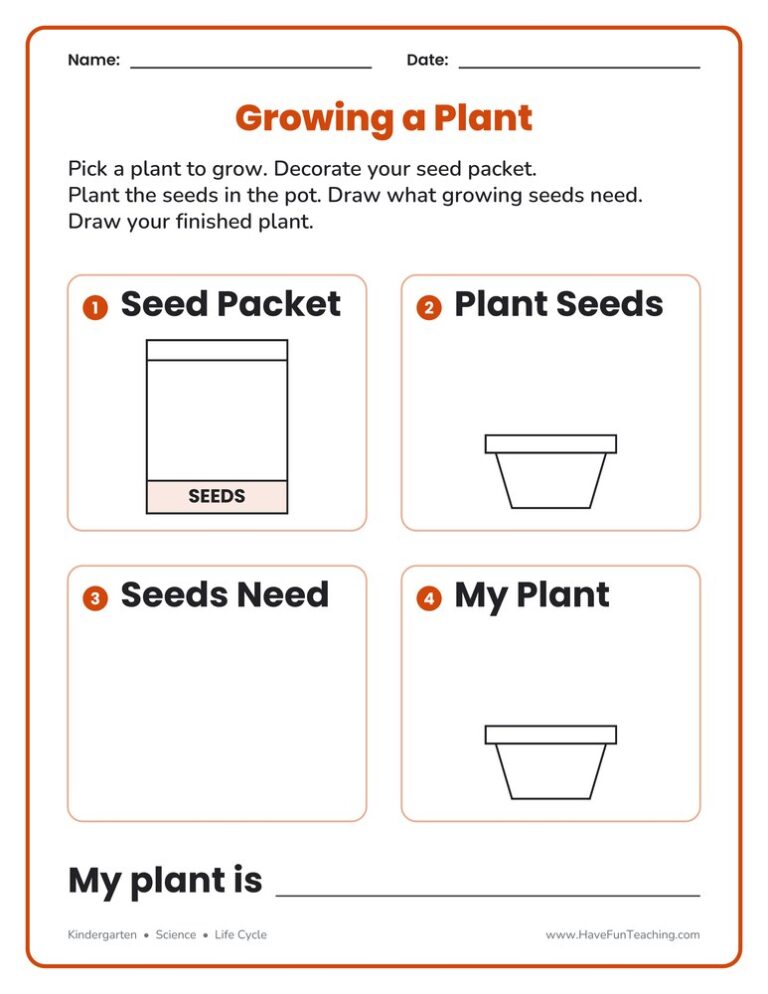
This seeds draw and write worksheet helps kindergarten students show how a seed grows, from a decorated seed packet to planting, plant needs and the finished plant, building early science and writing skills.

This drawing things that grow worksheet helps 2nd graders name what a puppy, acorn, and tadpole grow into, then draw and explain two living things that grow. Answer key included.



