Skip to content
Start My 3 Free Days $0 today · cancel anytime

2nd Grade Living and Non-Living Things Resources

26 2nd grade living and non-living things resources: 15 worksheets, 10 activities and 1 workbook. How teachers use these

2nd Grade Living and Non-Living Things Resources

26 2nd grade living and non-living things resources: 15 worksheets, 10 activities and 1 workbook. How teachers use these

Worksheet
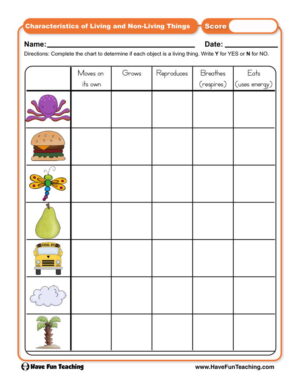
Worksheet2nd GradeCharacteristics of Living and Non-Living Things Worksheet

A hands-on characteristics of living and non-living things worksheet for 2nd grade, where students sort words, judge true traits, and compare examples. Includes an answer key for quick, no-prep science practice.

Worksheet
Worksheet2nd GradeBasic Fish Parts Worksheet

This Basic Fish Parts Worksheet asks 1st graders to label six numbered parts on a big, friendly fish using a word box. An answer key is included, so science practice takes no prep at all.

Worksheet
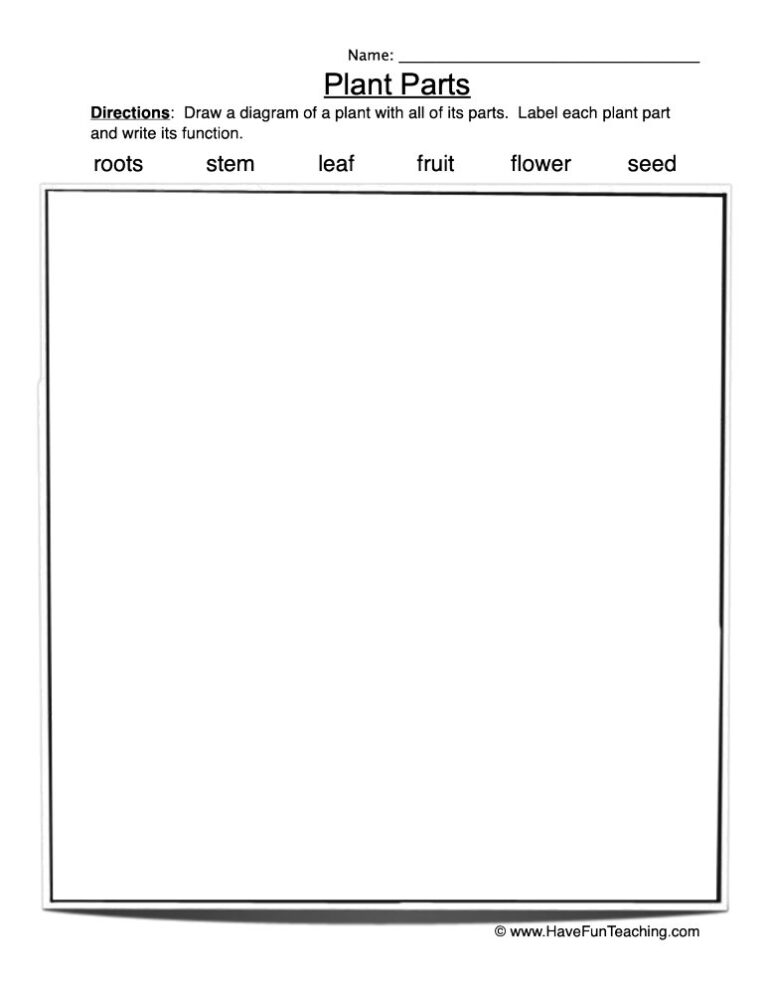
Worksheet2nd GradePlant Parts Drawing Worksheet

This Plant Parts Drawing Worksheet has 2nd Grade students match each plant part to its job, then draw and label a whole plant. An answer key is included, so checking plant vocabulary is quick and easy.

Worksheet
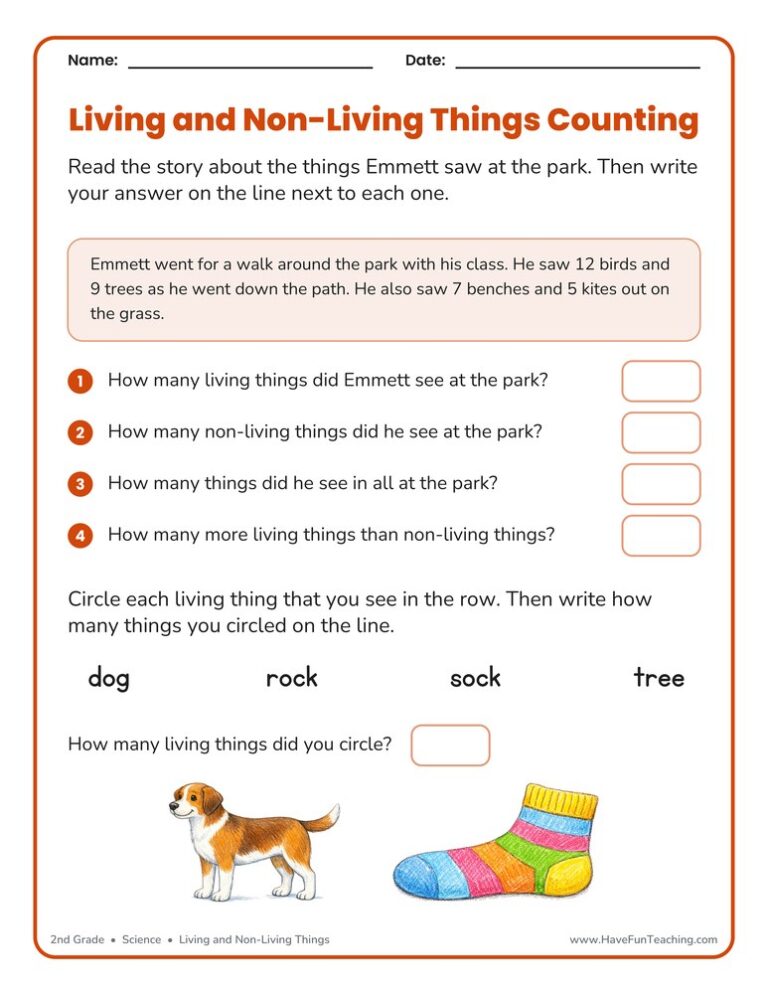
Worksheet2nd GradeLiving Things and Non Living Things Counting Worksheet

This Living Things and Non Living Things Counting Worksheet gives 2nd grade students a park number story to count, classify and compare, with an answer key included so checking the whole page takes seconds.

Activity
Activity2nd GradeFrog Facts Activity

This frog facts activity has children sort 12 fact cards onto TRUE and FALSE lily pads. Made for Kindergarten to 3rd Grade, with a practice page and answer key included.

Worksheet
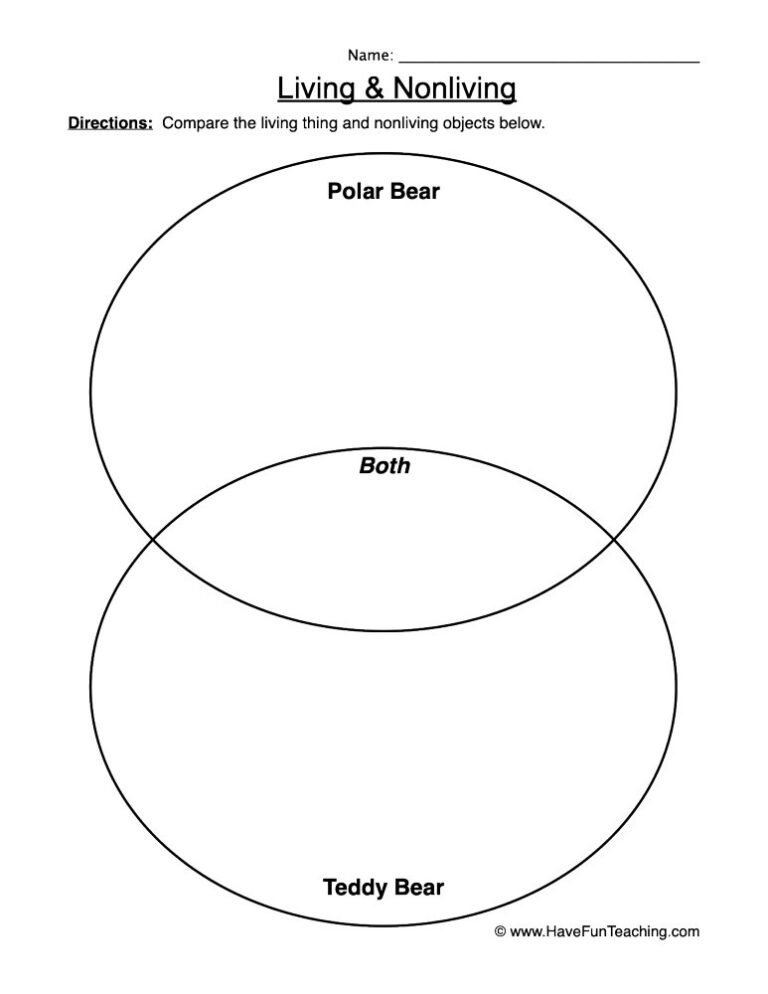
Worksheet2nd GradeLiving Non-Living Venn Diagram Worksheet

This living non-living venn diagram worksheet has 2nd grade students sort six facts about a polar bear and a teddy bear into a Venn diagram. An answer key is included for quick, easy checking.

Worksheet
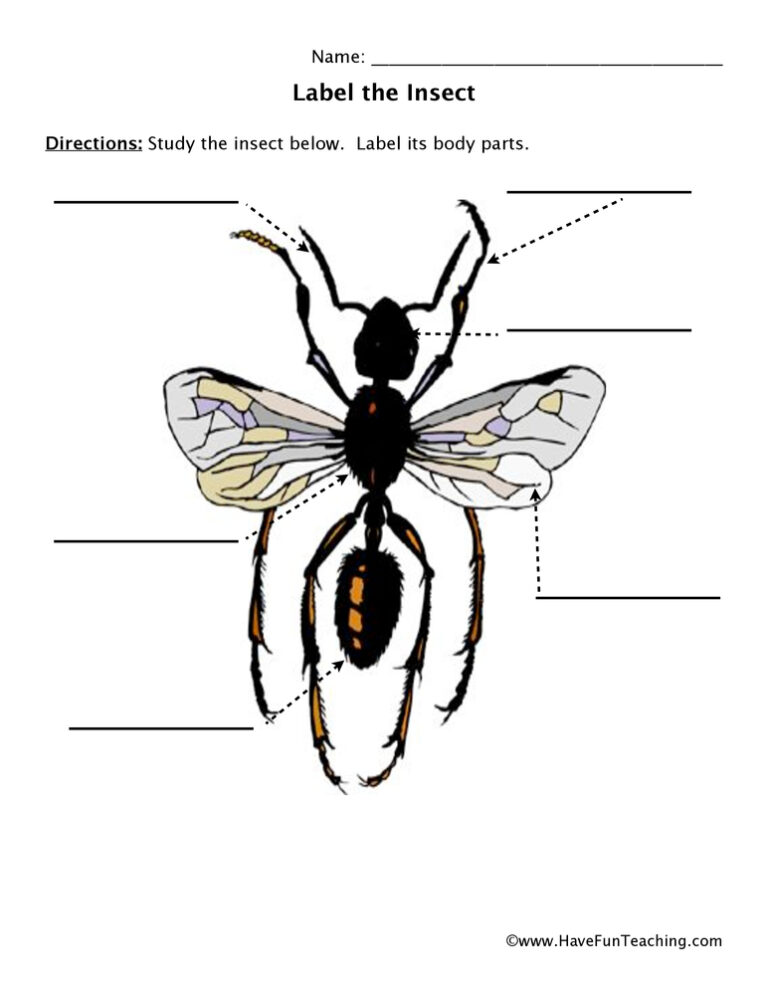
Worksheet2nd GradeWinged Bug Body Parts Worksheet

This winged bug body parts worksheet has 2nd grade students label the head, thorax, abdomen, wing, leg and antenna of an insect. An answer key is included for quick checking.

Worksheet
Worksheet2nd GradeDrawing Living Things Worksheet

This drawing living things worksheet has 2nd graders name what plants and animals need, then draw a living and a nonliving thing. An answer key is included for quick, easy checking.

Activity
Activity2nd GradeLiving and Nonliving Activity

This living and nonliving activity gives kindergarten to 2nd grade students 12 picture cards and a sorting mat to classify things that are alive. A practice page and answer key are included.

Worksheet
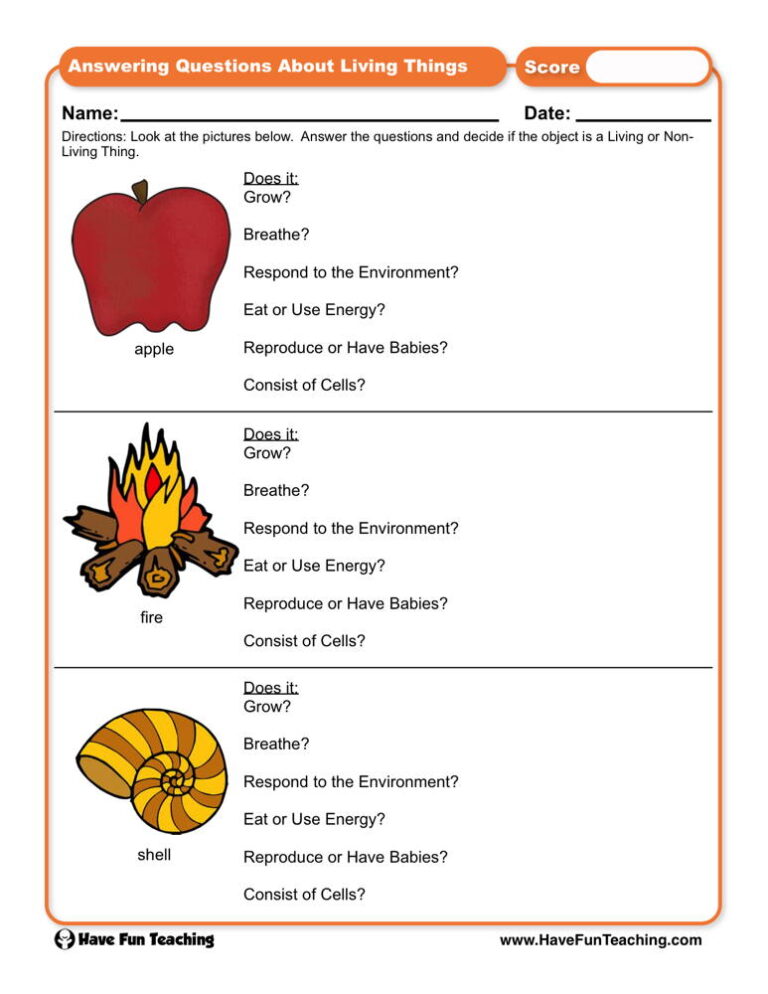
Worksheet2nd GradeAnswering Questions About Living Things Worksheet

This Answering Questions About Living Things Worksheet has second grade students answer Yes or No about seven things, then use those answers to decide if each one is living. An answer key is included.

Worksheet
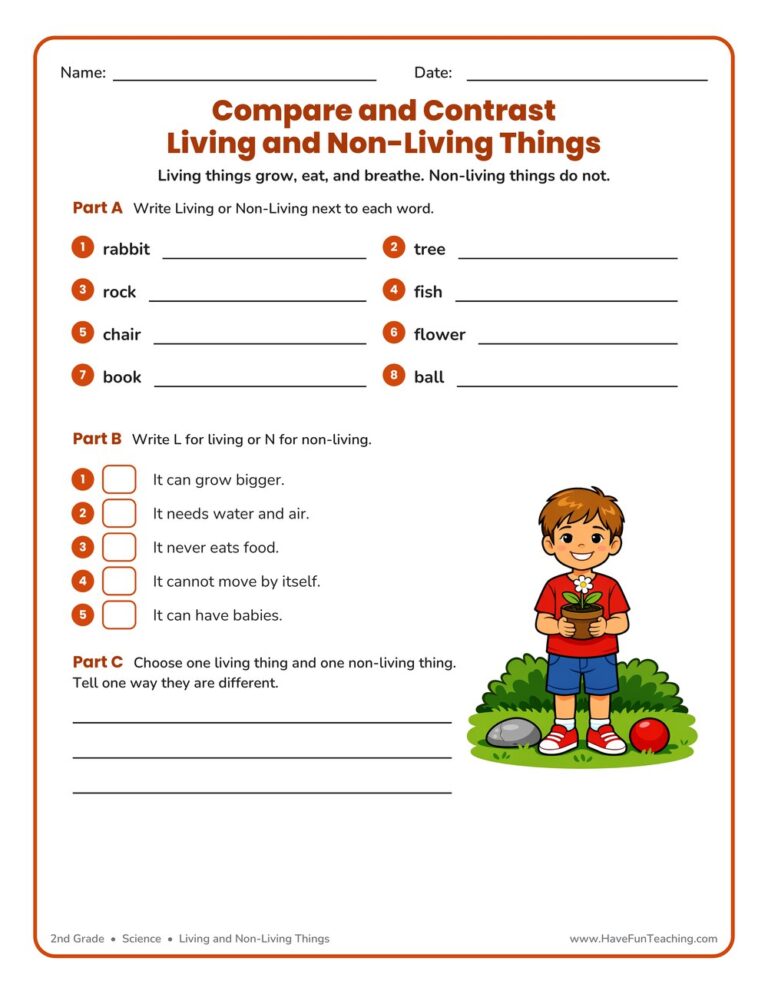
Worksheet2nd GradeCompare and Contrast Living and Non Living Things Worksheet

This compare and contrast living and non living things worksheet has 2nd graders sort six words into Living and Non-Living groups, then match four traits. Answer key included for fast, no-prep science practice.

Worksheet
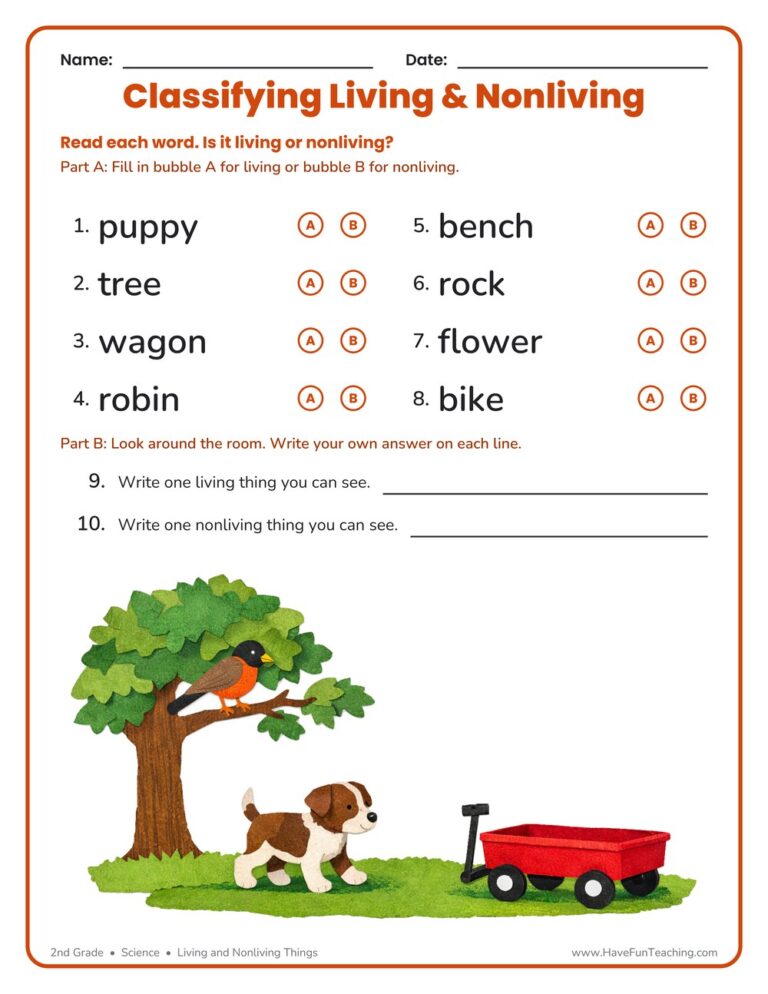
Worksheet2nd GradeClassifying Living and Nonliving Things Worksheet

This Classifying Living and Nonliving Things Worksheet has 2nd Grade students sort eight everyday things into living or nonliving, then find one of each in the room. An answer key is included for quick checking.

Activity
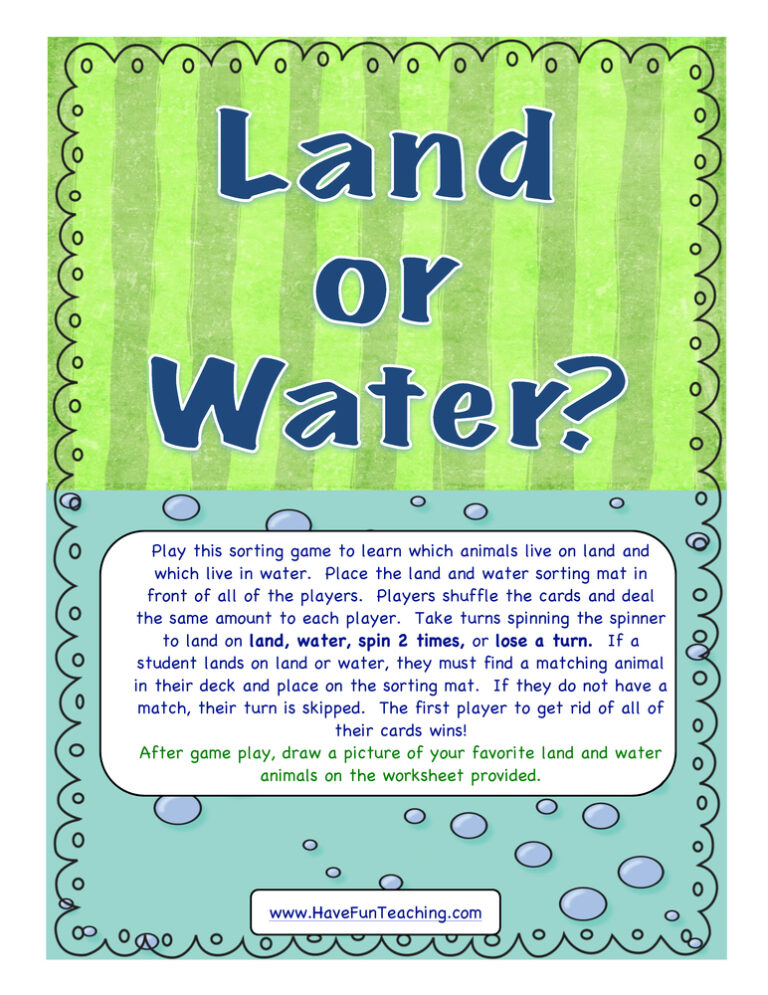
Activity2nd GradeLand or Water Activity

This land or water activity is a K-2nd grade animal sorting card game with a spinner and sorting mat. Children classify animals by where they live, and an answer key is included.

Worksheet
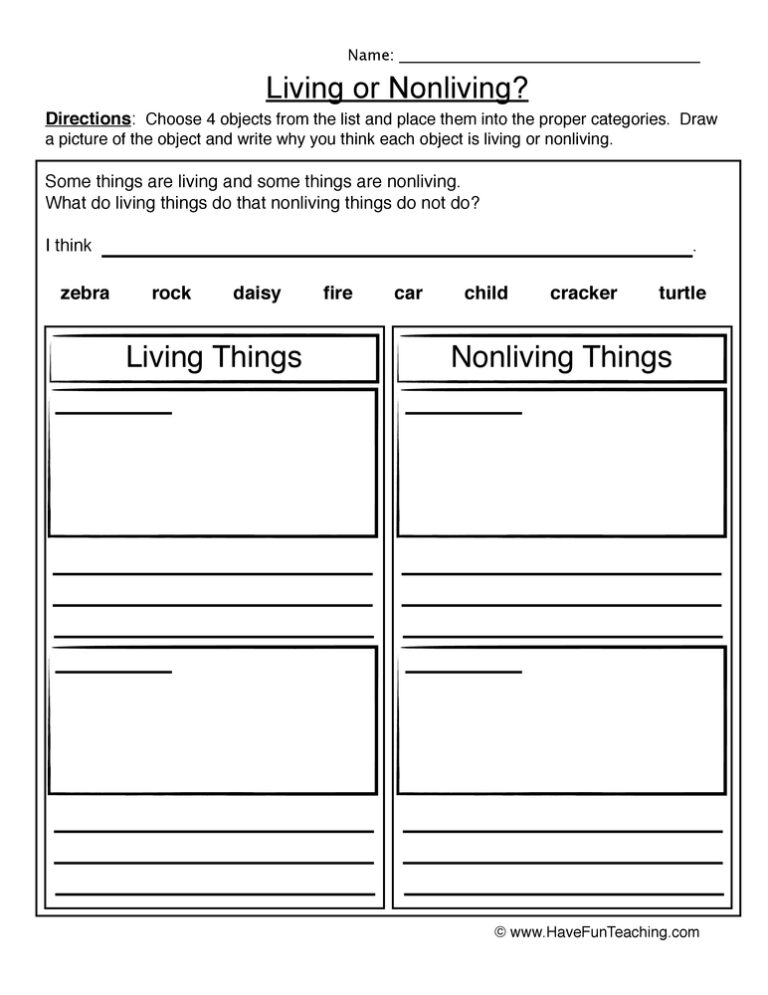
Worksheet2nd GradeDrawing Living Nonliving Worksheet

This drawing living nonliving worksheet has 2nd graders sort six words into Living and Nonliving, then draw and name their own examples. An answer key is included for quick checking.

Worksheet
Worksheet2nd GradeAnt Body Parts Worksheet

This Ant Body Parts Worksheet asks 2nd grade students to use a word box and label six parts on a large ant diagram. An answer key is included, so life science vocabulary practice is ready to print.

Activity
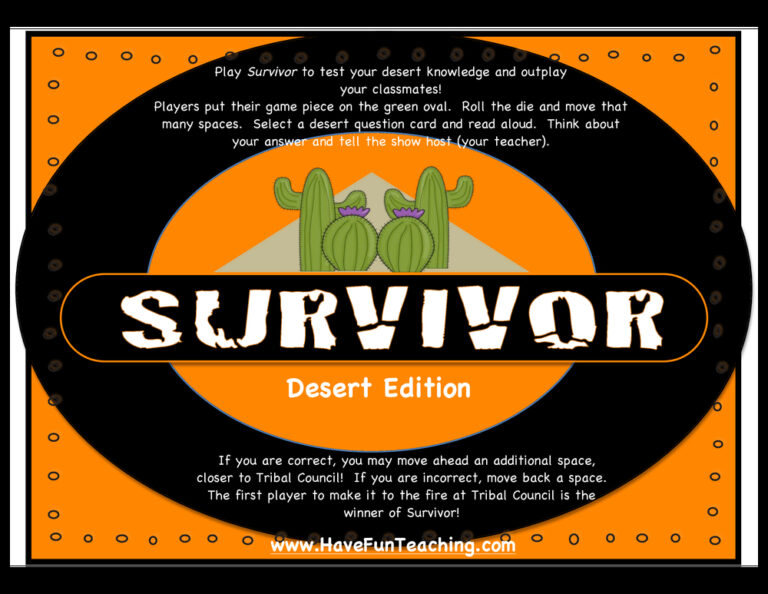
Activity2nd GradeSurvivor Desert Edition Activity

Using this Survivor Desert Edition Activity, students play the survivor board game to test your knowledge of animals and their habitats.

Activity
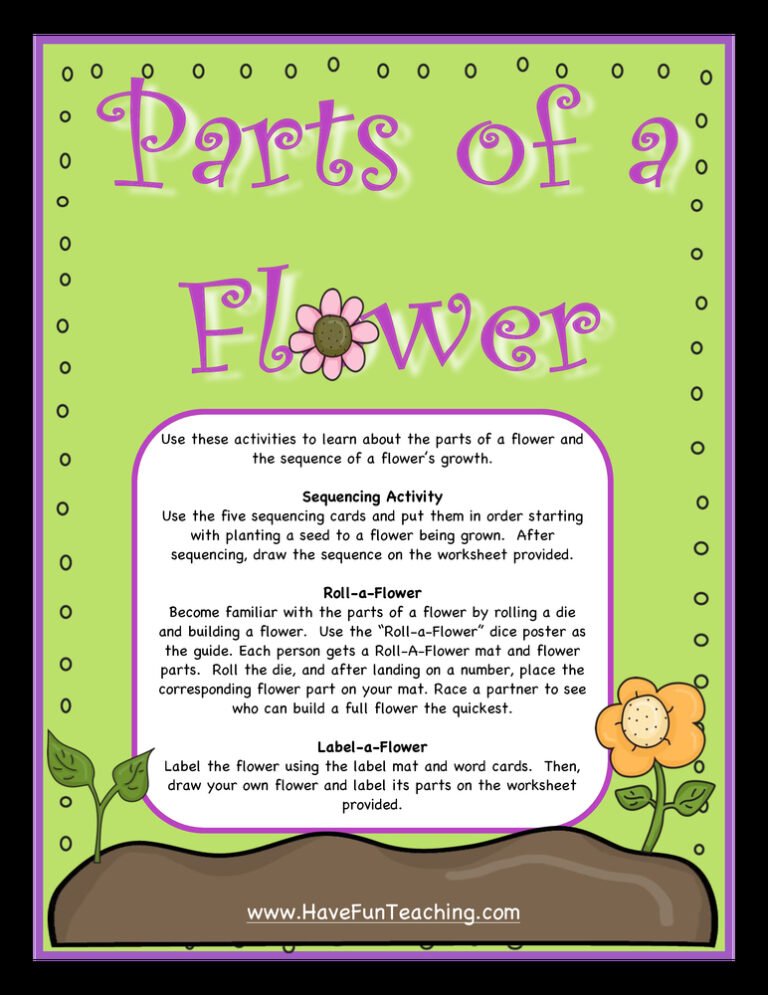
Activity2nd GradeParts of a Flower Activity

Explore this parts of a flower activity with kindergarten to 2nd grade students. Kids order life cycle cards, spin and color flower parts, and an answer key is included.

Worksheet
Worksheet2nd GradeDrawing Things That Grow Worksheet

This drawing things that grow worksheet helps 2nd graders name what a puppy, acorn, and tadpole grow into, then draw and explain two living things that grow. Answer key included.

Activity
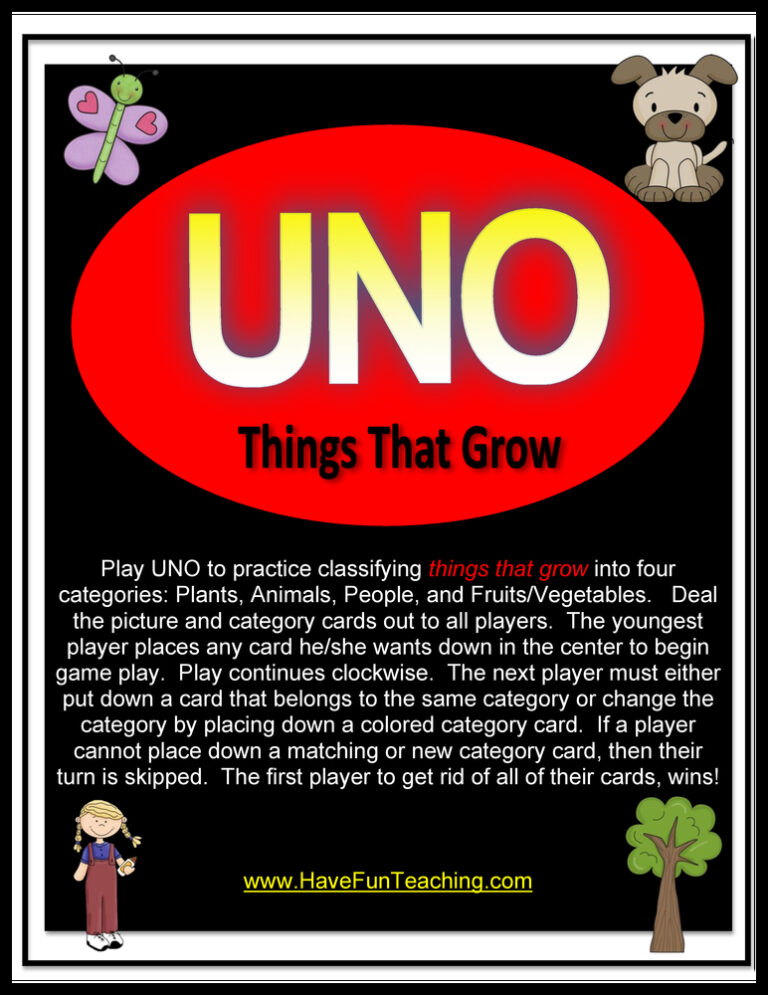
Activity2nd GradeThings That Grow Activity

Using Things That Grow Activity, students play UNO to practice classifying things that grow into four categories.

Activity
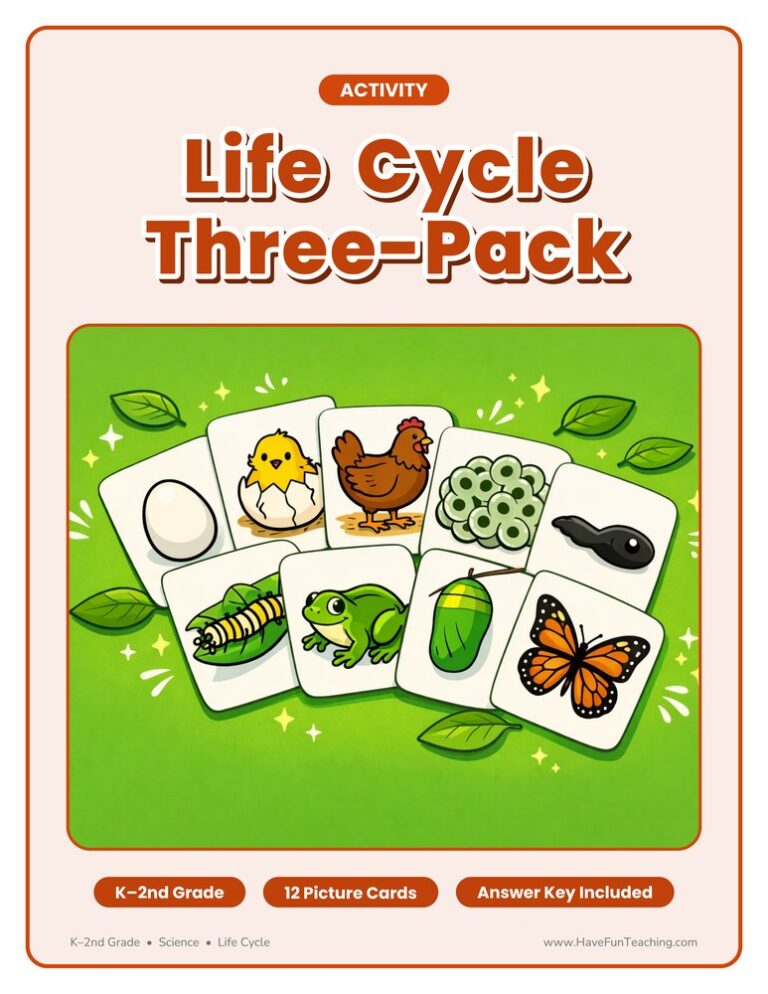
Activity2nd GradeLife Cycle Three Pack Science Life Cycles Activity

Try this life cycle three pack science life cycles activity with kindergarten to 2nd grade students. Kids sequence chicken, frog and butterfly picture cards; an answer key is included.

From our teachers' playbook

Is it alive? Let's find out!

What do 2nd graders learn about living and non-living things?

Second graders learn that living things share a short list of jobs: they grow, need food and water, breathe, move or respond, and make more of their own kind. A rock fails every test. A tree passes them all, even though it never walks anywhere! Kids sort real examples, explain their reasons, and look at what plants and animals need to survive. The big click comes with the tricky ones: fire grows and moves, but it doesn't eat or have babies, so it isn't alive.

Our favorite ways to teach living vs. non-living

Kids already have strong opinions about what's alive. These moves turn those opinions into real reasoning.

Sort it on the table

Fill a tray with a leaf, a pebble, a pinecone, a toy car and a photo of a pet. Kids sort into two piles, then have to say which "living test" each one passed. Arguing over the pinecone is half the fun.

Why it works: kids understand an idea best when they touch it, then draw it, then write it, the order the U.S. Department of Education recommends for elementary math.
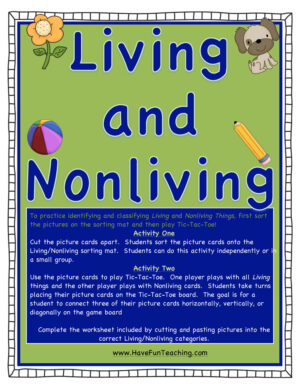
Living and Nonliving ActivityTry it withLiving and Nonliving ActivityActivitiesOpen it →

Venn it out

Draw two overlapping circles and ask what a cat and a robot have in common. Both move! But only one grows and eats. The picture makes the "both" ideas visible, which clears up most mix-ups.

Why it works: children learn more from words and pictures together than from words alone (Mayer, 2009).

Living Non-Living Venn Diagram WorksheetTry it withLiving Non-Living Venn Diagram WorksheetWorksheetsOpen it →

Think aloud with the checklist

Model one example out loud: "Does a sunflower grow? Yes. Does it need water? Yes." Then hand the checklist to the kids. Seeing a teacher reason through it step by step makes the list feel like a tool, not a quiz.

Why it works: showing first, practicing together, then letting kids try alone is the "gradual release" model teachers have relied on for decades (Pearson and Gallagher, 1983).

Characteristics of Living and Non-Living Things WorksheetTry it withCharacteristics of Living and Non-Living Things WorksheetWorksheetsOpen it →

Questions parents and teachers ask us

How do you explain living and non-living things to a 2nd grader?

Living things grow, need food and water, breathe, respond to the world and make more of their own kind. Non-living things don't do all of these. A simple checklist helps kids test any object they find.

Is fire a living thing?

No. Fire grows, moves and needs air, so it fools a lot of kids! But it doesn't eat food, grow from a parent or have young, so it is non-living.

Are seeds living or non-living?

Seeds are living. They are resting, but given water and warmth they sprout and grow. This is a great one to test with a few beans in a wet paper towel.

What activities help kids learn living and non-living things?

Sorting real objects, nature walks with a checklist, Venn diagrams and drawing activities all work well. The key is having kids explain why, not just which pile.