Skip to content
Start My 3 Free Days $0 today · cancel anytime

Social Studies Graphic Organizers

17 social studies graphic organizers, covering history, timelines and community. How teachers use these

Find the perfect resource in seconds

Social Studies Graphic Organizers

17 social studies graphic organizers, covering history, timelines and community. How teachers use these

Graphic Organizer
Graphic Organizer3rd GradeWho What When Where Why Graphic Organizer Worksheet

This who what when where why graphic organizer worksheet helps 3rd graders record the five key details — who, what, when, where, and why — from any story or article. A clear, reusable note-taking template.

Graphic Organizer
Graphic Organizer4th GradeHistorical Timeline Worksheet

A historical timeline worksheet where 4th graders place five national park events on a dated scale and figure out the years between them. Answer key included, for no-prep practice in reading time lines.

Graphic Organizer
Graphic Organizer3rd GradeWho What When Where Why Summary Graphic Organizer Worksheet

A Who What When Where Why Summary Graphic Organizer Worksheet that walks 3rd graders from a short story to the five W answers and on to a written summary. Answer key included, so students get quick feedback and real confidence.

Graphic Organizer
Graphic Organizer4th GradeTimeline Worksheet

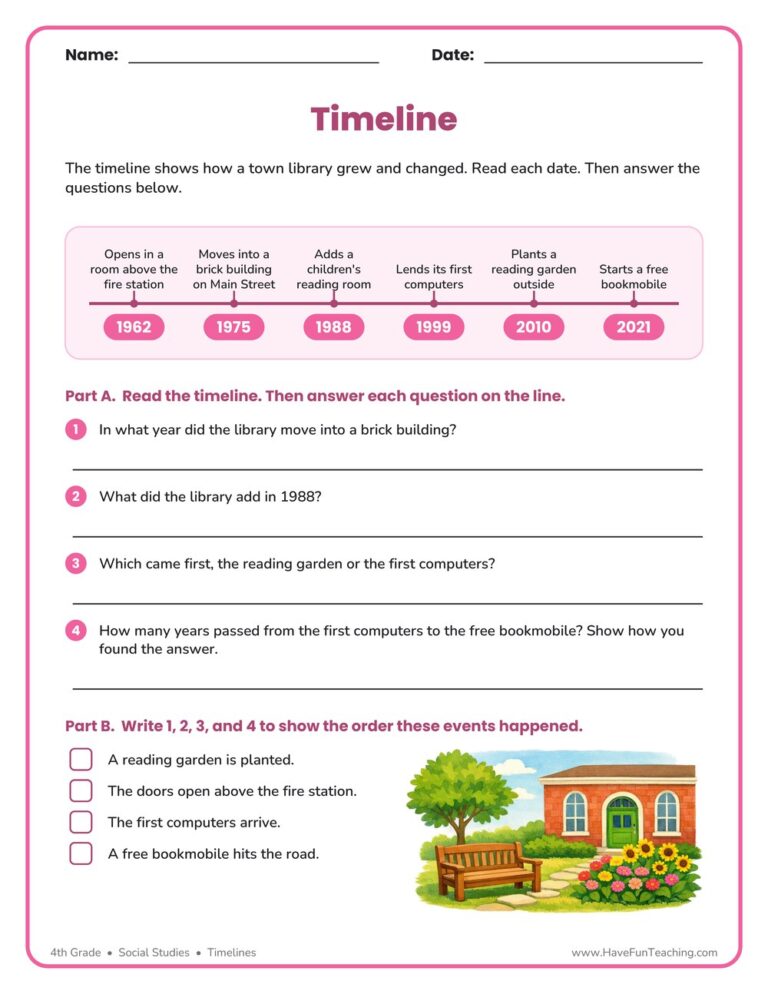
This timeline worksheet gives 4th graders a six-event town library timeline to read, question, and put in order. Answer key included, so students get real practice reading dates and events with no prep at all.

Graphic Organizer
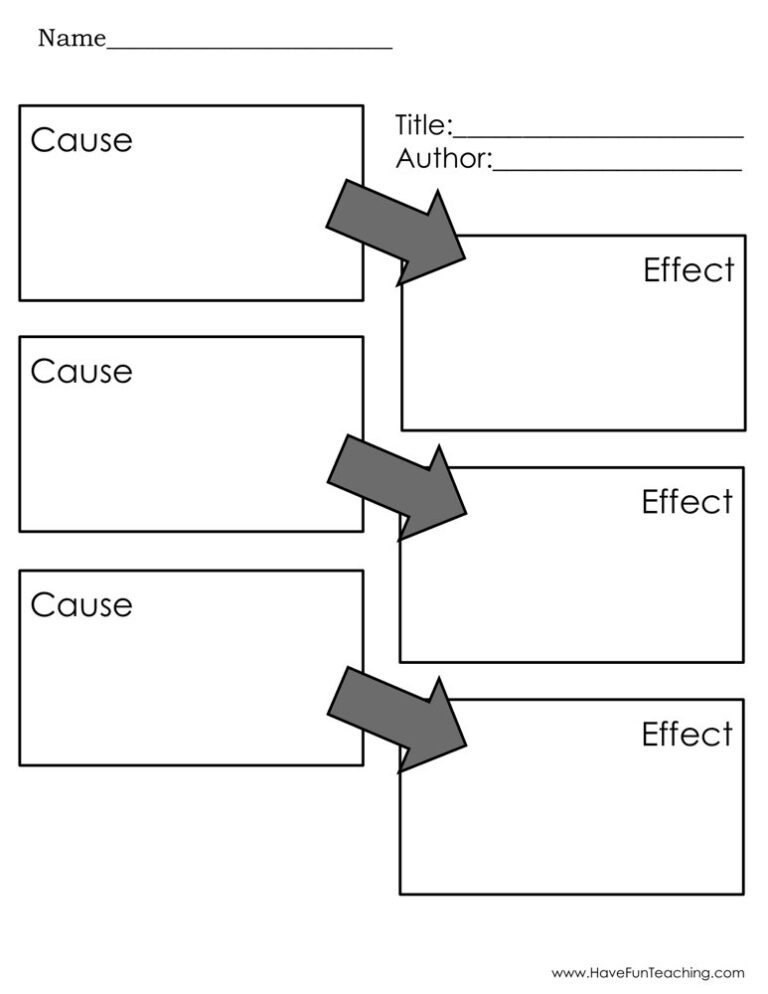
Graphic Organizer3rd GradeCause and Effect Graphic Organizer Worksheet

This cause and effect graphic organizer worksheet has 3rd graders match causes to effects and write their own effect sentences. An answer key is included, making it easy to check understanding.

Graphic Organizer
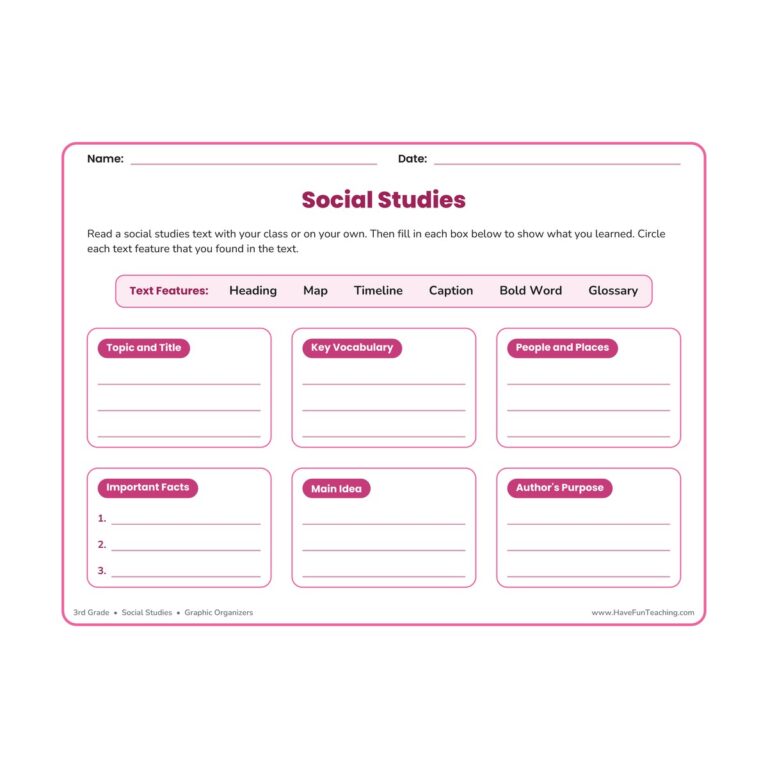
Graphic Organizer3rd GradeSocial Studies Graphic Organizer Worksheet

A one-page social studies graphic organizer worksheet for 3rd graders to capture the topic, key vocabulary, people, three facts, main idea, and author's purpose from any nonfiction text.

Graphic Organizer
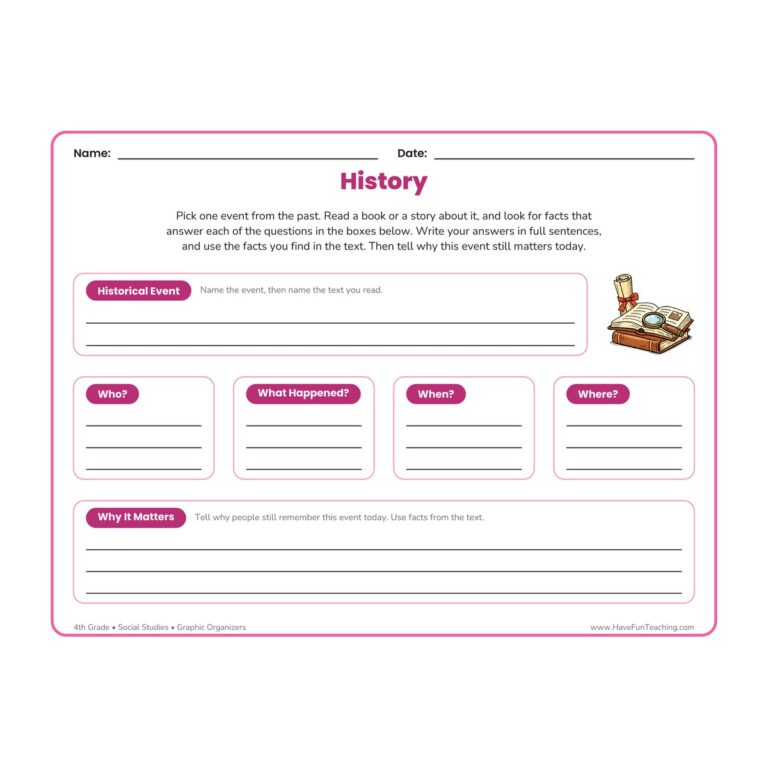
Graphic Organizer4th GradeHistory Graphic Organizer Worksheet

A landscape history graphic organizer worksheet that helps 4th graders record the who, what, when, and where of any historical event from a non-fiction text, then explain in writing why it still matters today.

Graphic Organizer
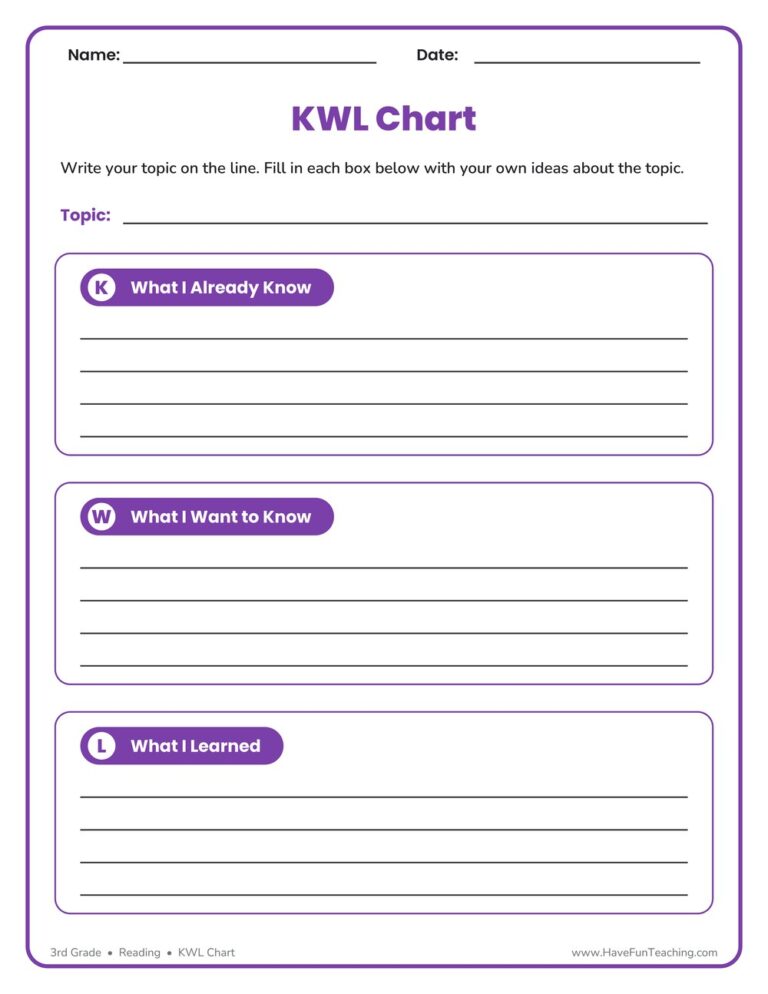
Graphic Organizer3rd GradeKWL About a Topic Graphic Organizer Worksheet

This KWL About a Topic Graphic Organizer Worksheet gives 3rd graders a roomy, full-width chart for recording what they know, what they want to know, and what they learned about any topic — a simple way to make thinking visible.

Graphic Organizer
Graphic Organizer3rd GradeTimeline Graphic Organizer Worksheet

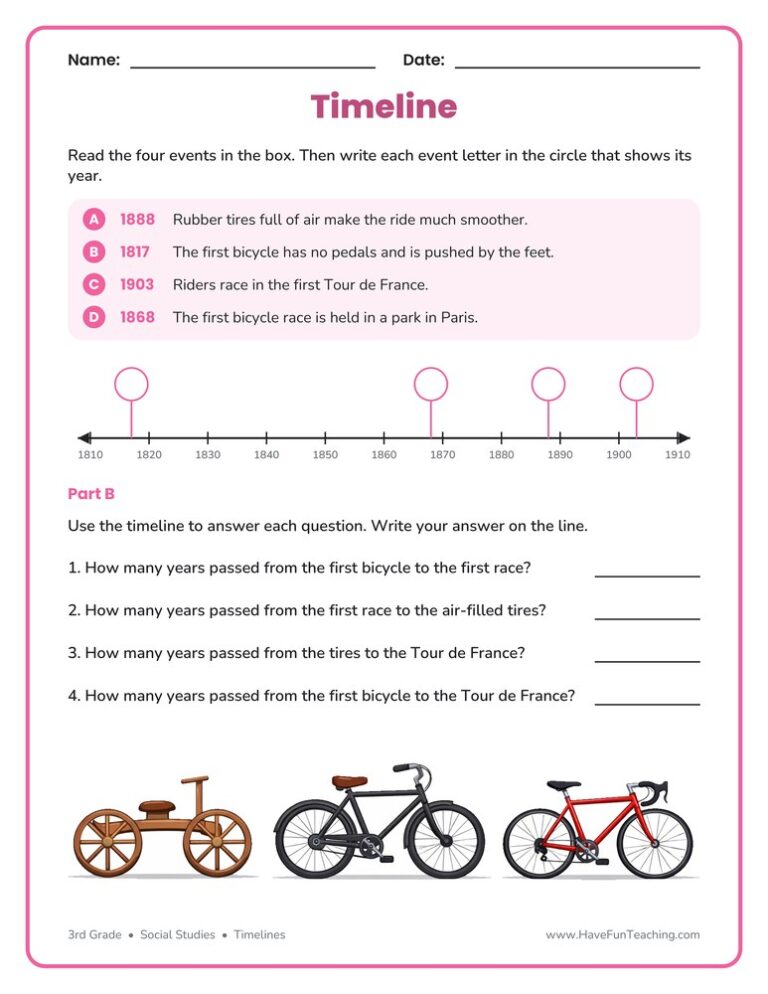
This timeline graphic organizer worksheet has 3rd grade students place four dated events on a decade time line, then subtract dates to find elapsed years. An answer key is included.

Graphic Organizer
Graphic Organizer3rd GradePopcorn Concept Map Graphic Organizer Worksheet

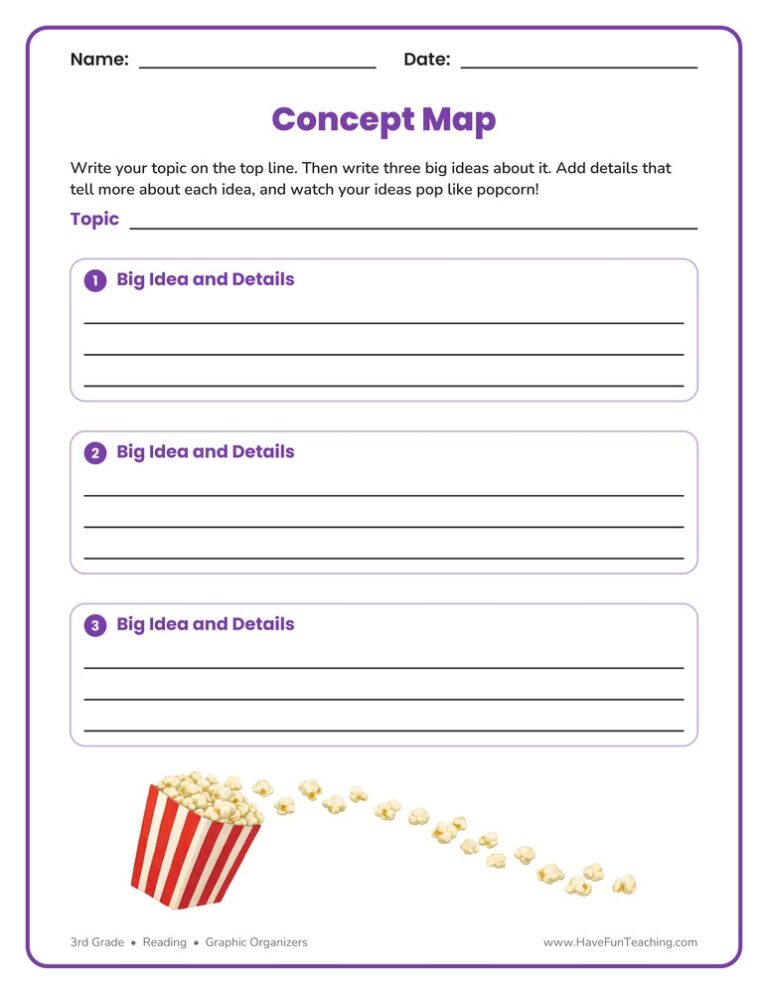
This popcorn concept map graphic organizer worksheet helps third graders sort any topic into three big ideas with supporting details, building strong note-taking habits for reading, science, and social studies.

Graphic Organizer
Graphic Organizer3rd GradeSequence of Events Cycle Graphic Organizer

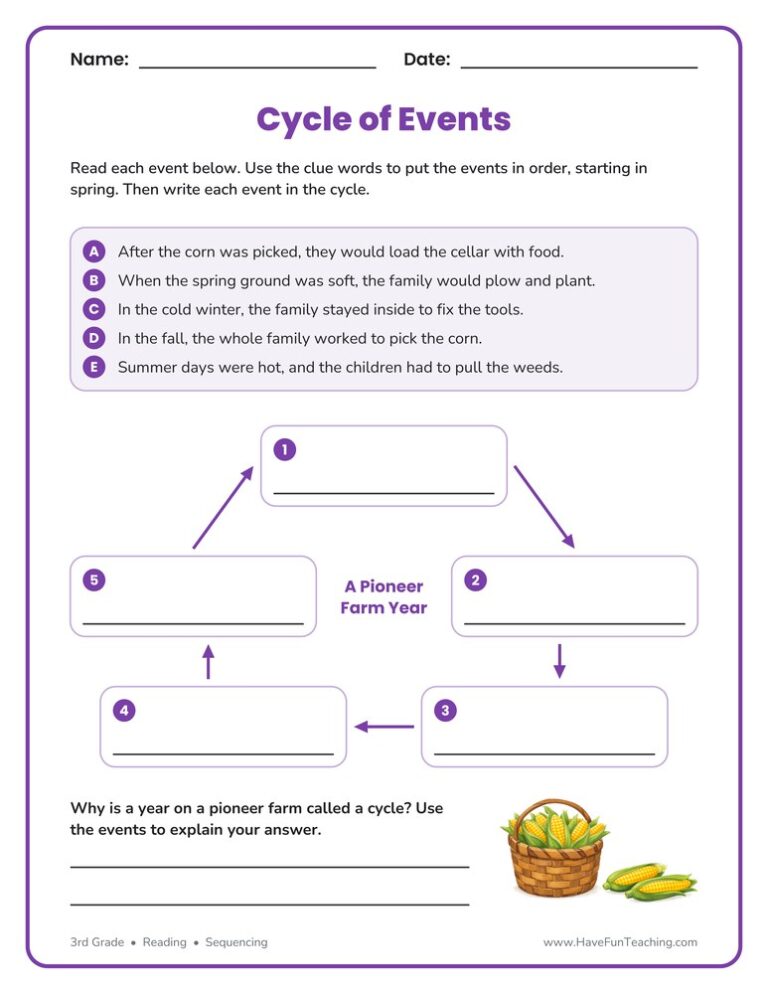
This sequence of events cycle graphic organizer has 3rd grade students order five pioneer farm events by clue words. An answer key is included to make checking quick and easy.

Graphic Organizer
Graphic Organizer4th GradeHistory Horizontal Timeline of Events Graphic Organizer

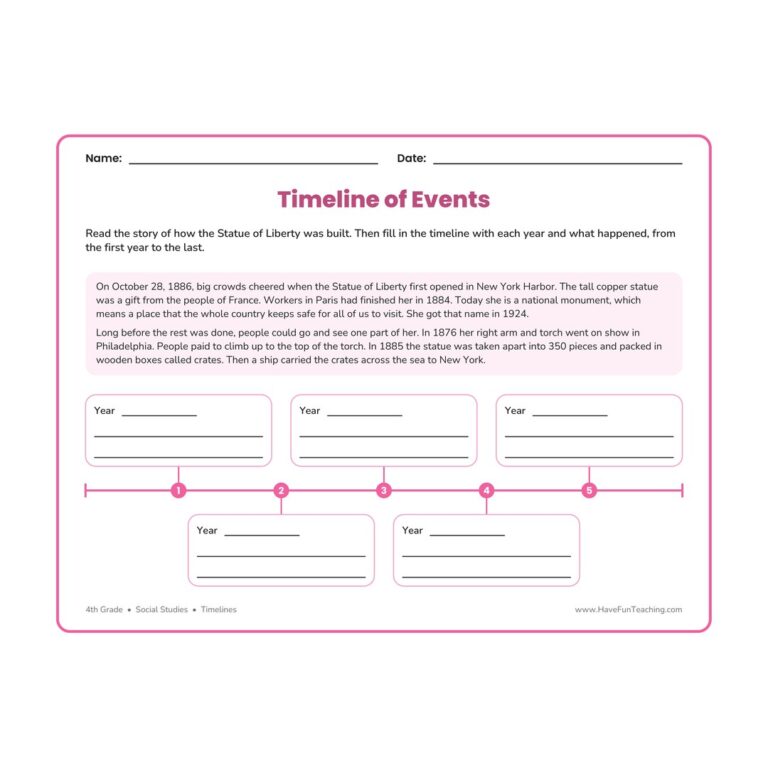
This history horizontal timeline of events graphic organizer worksheet has 4th graders read about the Statue of Liberty and place five dated events in order. An answer key is included for quick checking.

Graphic Organizer
Graphic Organizer5th GradeHistory Vertical Timeline of Events Graphic Organizer

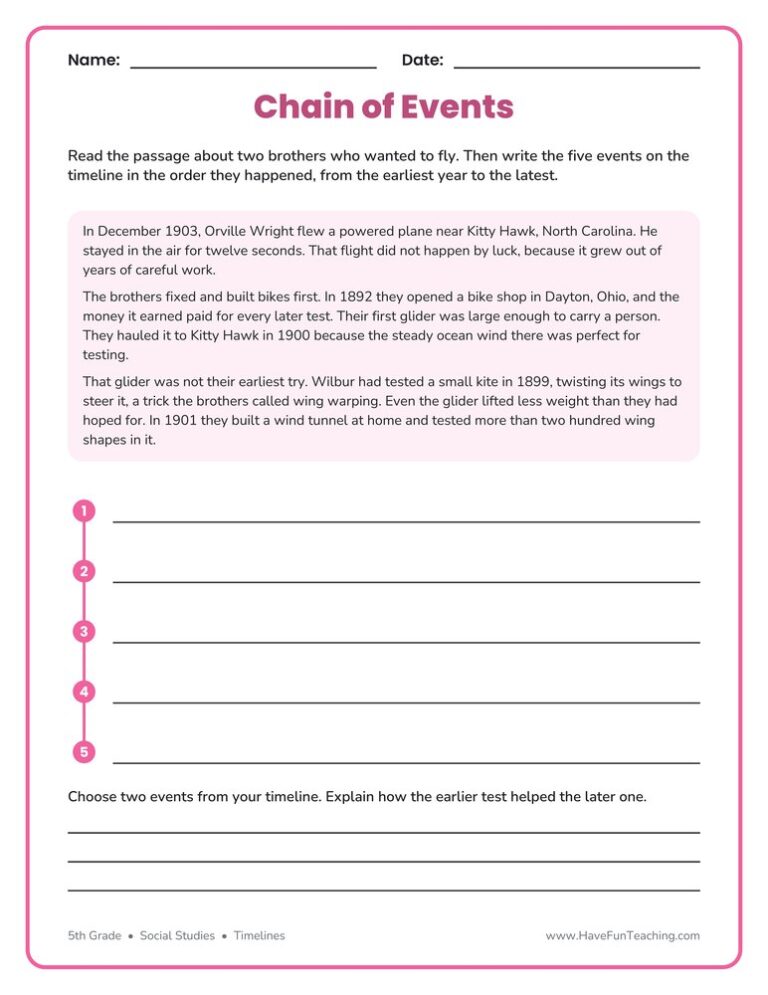
This History Vertical Timeline of Events Graphic Organizer Worksheet has 5th graders read a short Wright brothers passage and order five dated events on a vertical timeline. Answer key included.

Graphic Organizer
Graphic Organizer3rd GradeOrganize Your Thinking Informational Text Activity

This organize your thinking informational text activity helps students take clear notes on nonfiction. Made for 3rd to 5th Grade, with a practice page and answer key included.

Graphic Organizer
Graphic Organizer3rd GradeFire KWL Graphic Organizer

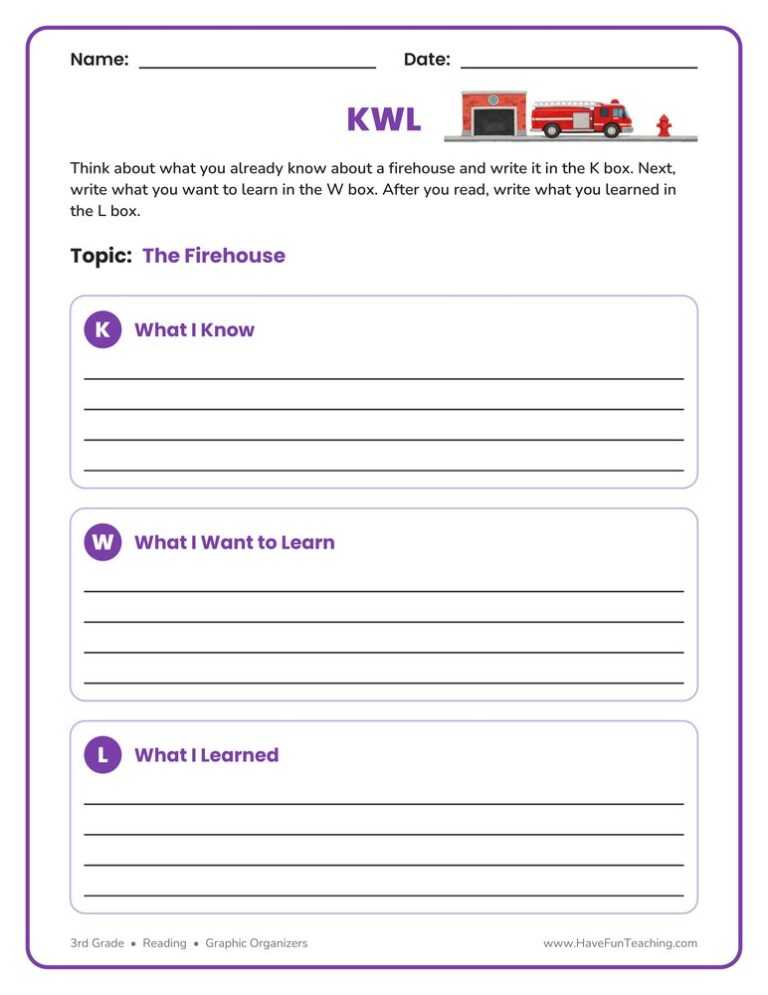
This fire KWL graphic organizer helps 3rd grade students record what they know, what they want to learn, and what they learned about the firehouse, building strong reading and research habits.

Graphic Organizer
Graphic Organizer2nd GradeFirehouse KWL Graphic Organizer

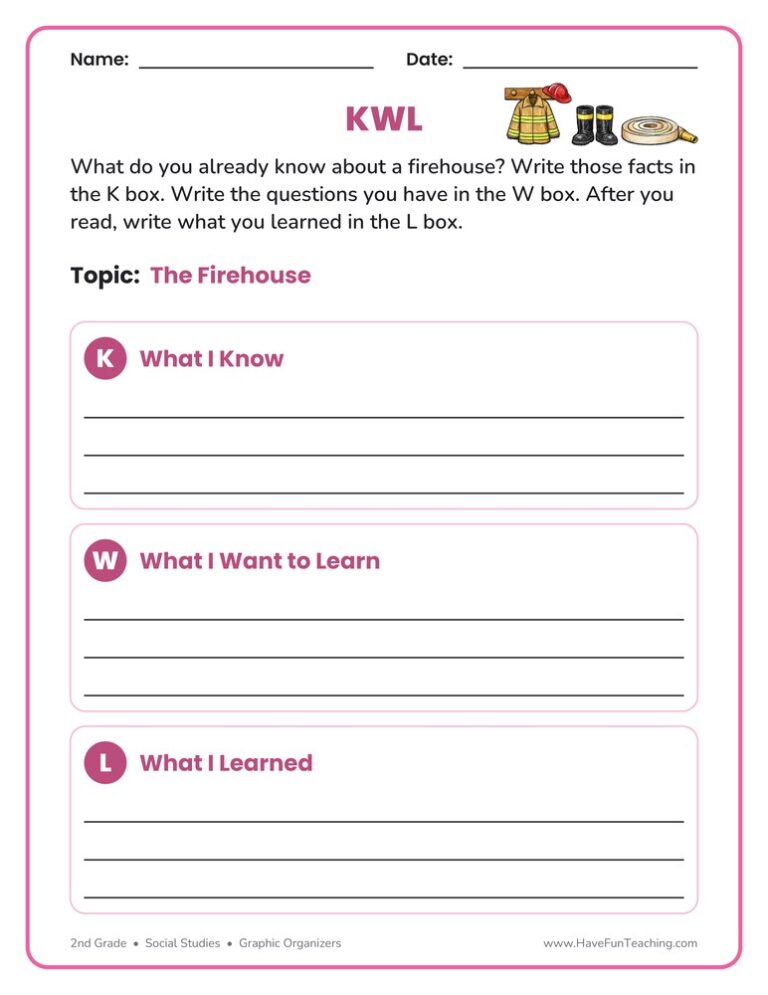
This firehouse KWL graphic organizer lets 2nd grade students write what they know, what they wonder, and what they learn about firefighters, turning any community helpers lesson into active learning.

Graphic Organizer
Graphic Organizer3rd GradeSchool KWL Graphic Organizer

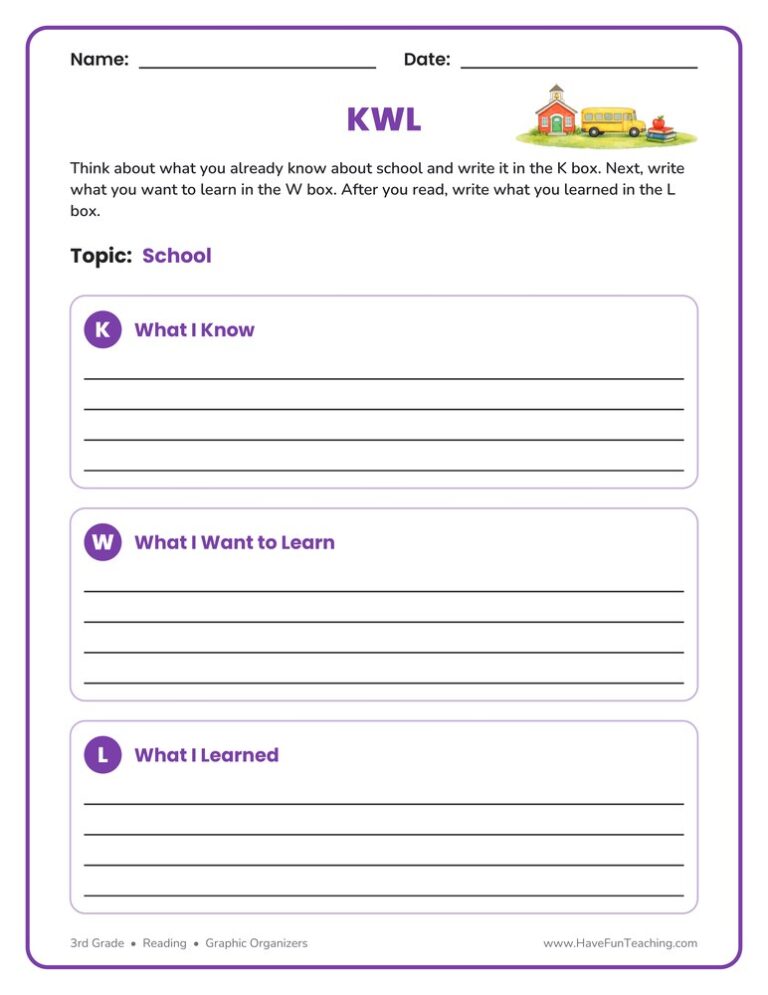
This school KWL graphic organizer lets 3rd grade students list what they know, what they wonder, and what they learn about their school, making the first weeks of class feel welcoming and organized.

From our teachers' playbook

Maps, community and the world around us

What do kids learn in social studies?

Social studies starts close to home and keeps zooming out. Kindergartners and 1st graders learn about themselves, their families, community helpers, rules and being a good citizen. In 2nd and 3rd grade, kids read maps with a compass rose, compare communities, learn about goods and services, and label the continents and oceans. Upper elementary brings state history, US regions, latitude and longitude, the three branches of government and early American history. The click moment is when kids see that every map, law and story is about real people, including them!

Our favorite ways to bring social studies to life

Social studies sticks when kids can see it, sing it and connect it to their own lives. Here's what works in our rooms.

Label the world

Give each child a blank map and have them label and color the continents, saying each name out loud as they go. Then flip the page over and see how many they can place from memory. Repeat it a few times across the month and watch the blanks fill in.

Why it works: pairing a picture with each word gives kids two ways to remember it, a well-tested principle of how people learn (Mayer, 2009).
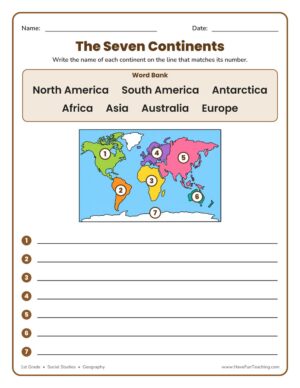
Labeling Continents WorksheetTry it withLabeling Continents WorksheetWorksheetsOpen it →

Sing all 50 states

The 50 States Song makes a long list feel short. Play it every morning for two weeks and pause it now and then so kids can call out the next state. Then point to each state on a US map as you sing.

Why it works: words set to a repeating melody are easier to recall than the same words spoken (Wallace, 1994).

50 States SongTry it with50 States SongSongsOpen it →

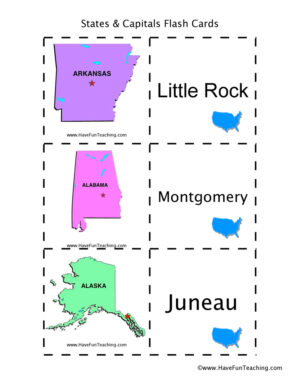
Capital quick draw

Flash a state card and kids race to name its capital. Start with your home state and its neighbors, then add a region each week. Short daily rounds beat one big memorizing night.

Why it works: a big review of study methods ranked quick self-quizzing among the most powerful ways to remember (Dunlosky and colleagues, 2013).

US States and Capitals Flash CardsTry it withUS States and Capitals Flash CardsFlash CardsOpen it →

Social studies questions we hear a lot

What is taught in elementary social studies?

Elementary social studies covers family and community, citizenship, maps and geography, economics like goods and services, government, and history. It starts with the child's own world and expands to their state, country and the world.

What social studies do kindergartners learn?

Kindergartners learn about themselves, their families, community helpers, rules and being a good friend and citizen. They also start talking about holidays, needs and wants, and simple maps of places they know.

How do I teach map skills to kids?

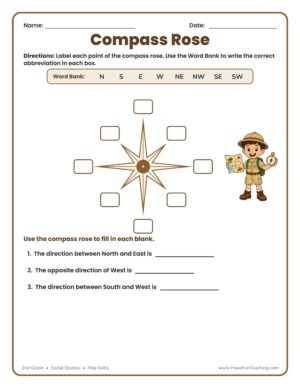
Start with a map of something familiar, like your classroom or bedroom. Then add a compass rose, a key and directions. Once kids can find things on a map of their own space, move to town, state and world maps.

When do kids learn the 50 states?

Many kids learn the states and capitals in 4th or 5th grade, often alongside US regions and history. A song and a little daily practice make it much easier.

Are these social studies worksheets printable?

Yes! Every social studies worksheet prints as a PDF, from blank maps to family trees, and many have matching songs, videos and flash cards.