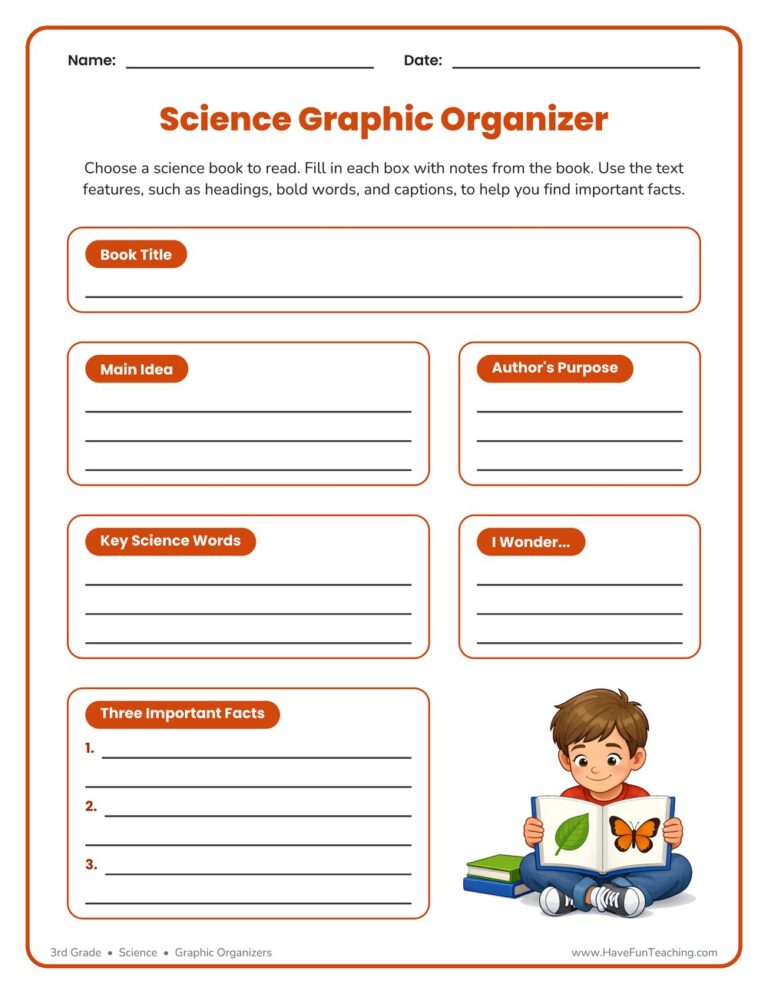
This science graphic organizer worksheet helps 3rd graders take notes on any nonfiction science book, from main idea and author’s purpose to key science words and three important facts. A reusable page that turns reading into real understanding.
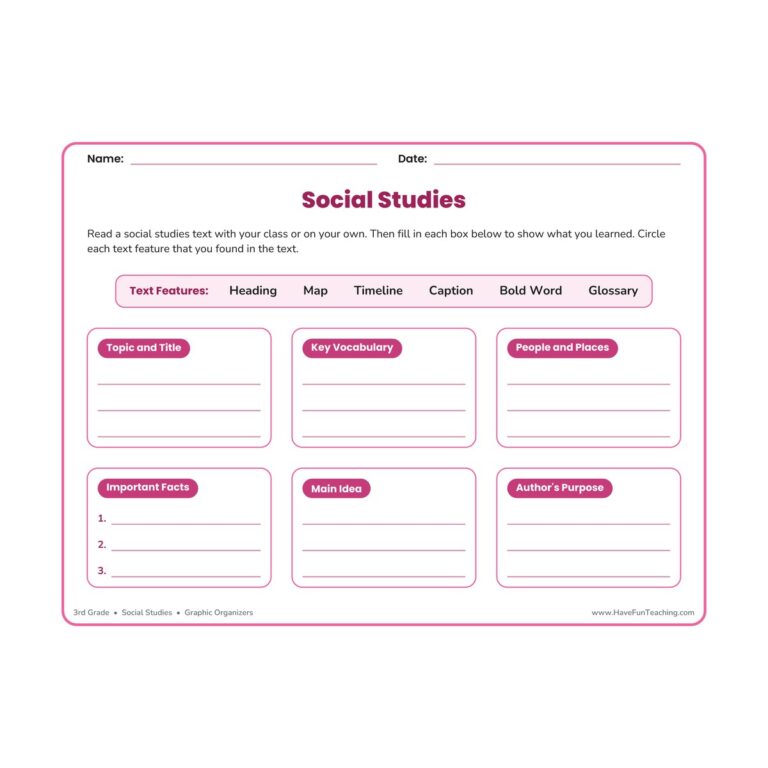
A one-page social studies graphic organizer worksheet for 3rd graders to capture the topic, key vocabulary, people, three facts, main idea, and author's purpose from any nonfiction text.
The Locating Nonfiction Text Features Worksheet asks 3rd Grade readers to name six features cut from one nonfiction page about honey bees, then explain one choice. Answer key included for fast, confident nonfiction reading.
Using I Can Use Nonfiction Text Features Worksheet, students look for things such as bold face type, italics, captions, headings, drawings, charts, and diagrams as they read.
This Using Text or Pictures to Find Information Worksheet asks 2nd graders to decide whether each fact came from the words or the picture. An answer key is included, so nonfiction practice takes no prep.
Using Vocabulary Jeopardy Activity, students determine the meaning of words and phrases as they are used in a text to build their use of vocabulary.
Using Text and Illustration Clues Worksheet, students explain how the illustrations contribute and clarify a text to build their understanding of what has been read.
Using Images to Understand the Information Worksheet, students explain how the illustrations contribute and clarify a text to build their understanding of what has been read.
Using Text or Pictures Worksheet, studentscircle if they found the information by reading the text or looking at the picture.
Using Identifying Literary Elements Activity, students find examples of text features and story elements to build their reading comprehension.
Using Informational Text Vocabulary Worksheet, students use picture clues and context to determine the meanings of the words and phrases.
Using Character Setting Plot Activity, studentsfind examples of story elements as they read to build their reading comprehension.
Using Contributions to the Text Activity, students explain howthe information contributes to an understanding of the text in which itappears.
Using Images in Text Worksheet, students explain how the illustrations contribute and clarify a text to build their understanding of what has been read.
Using Text Features Scavenger Hunt Activity, studentsidentify text features in the books they are reading to gather information about what they will read.
Using Identifying Unknown Words in a Text Worksheet, students read a passage about football to use strategies when they don't know a word.
Using Creating Images in Text Worksheet, students create an diagram, a drawing, or even take a photograph to help support the text.
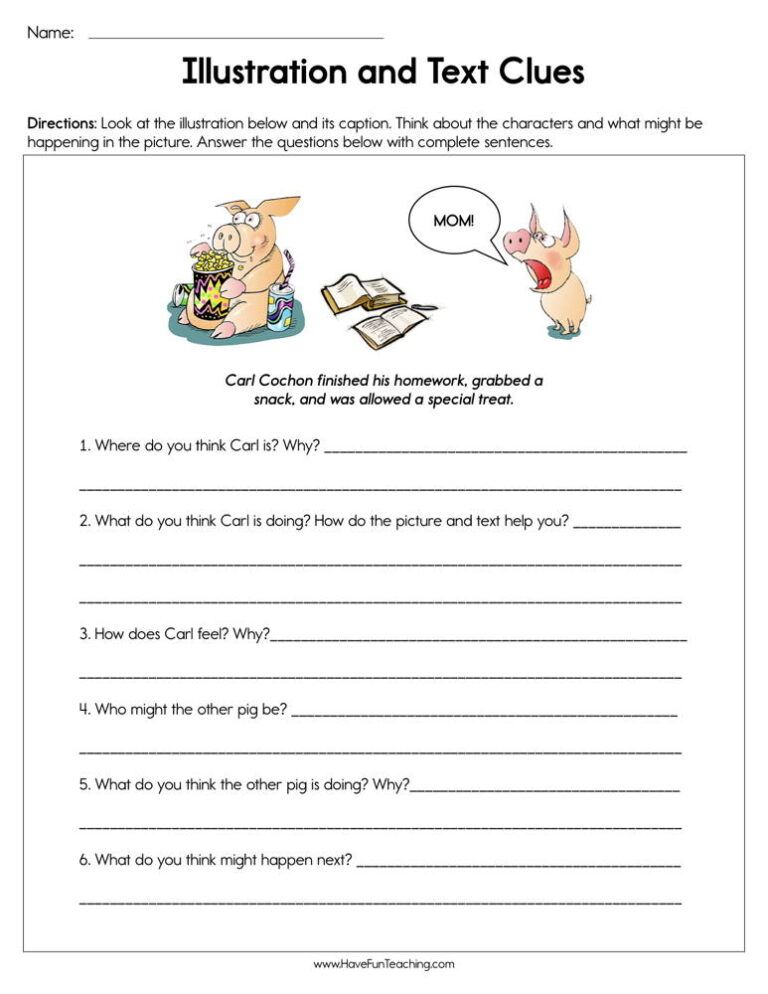
Using Illustration and Text Clues Worksheet, students use an illustration and caption to learn more about characters and picture.
Using this Finding Story Elements Activity, students help three superheroes defeat the evil villain Story Weaver and crack the code in a story. Use the boxes on the next pages to help them do their job!
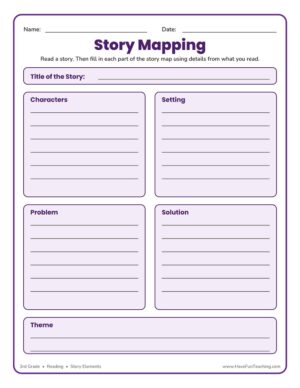
Using these Thinking Maps for Reading Journeys Activity, students map out the important details in a text to show their thinking while building reading comprehension.