Skip to content
Start My 3 Free Days $0 today · cancel anytime

1st Grade Summarizing Resources

28 1st grade summarizing resources: 22 worksheets, 6 activities, 5 assessments and more. How teachers use these

1st Grade Summarizing Resources

28 1st grade summarizing resources: 22 worksheets, 6 activities, 5 assessments and more. How teachers use these

Worksheet
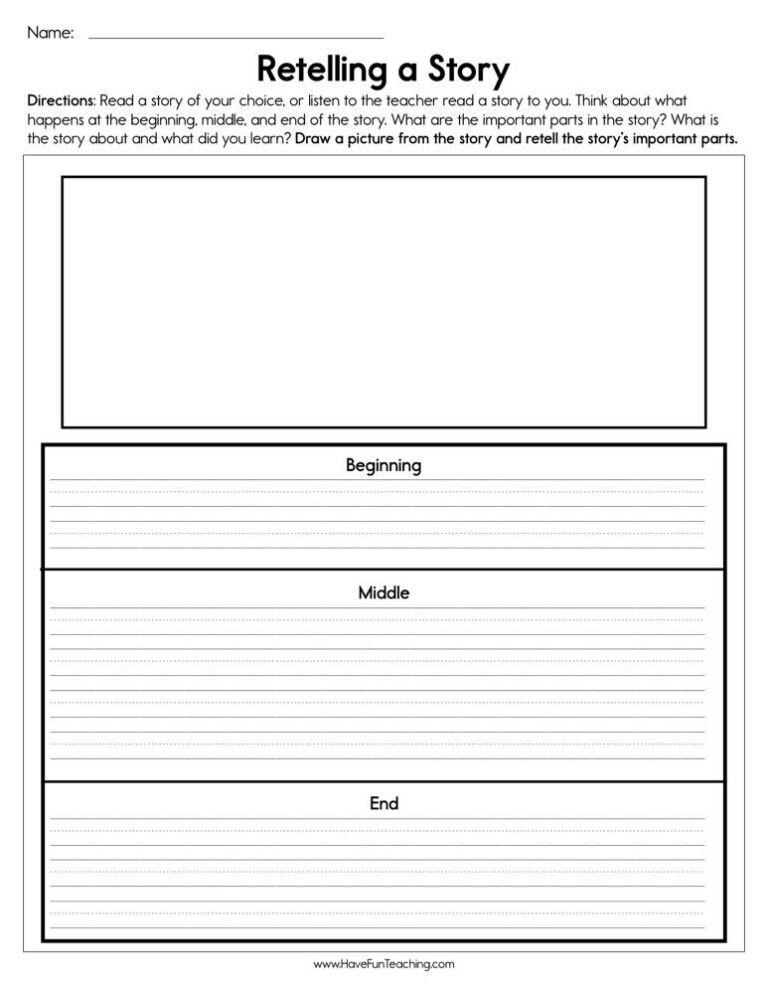
Worksheet1st GradeRetelling A Story Worksheet

This Retelling a Story Worksheet gives 1st Grade readers a short story to sequence and retell in their own words, with a full answer key included, so comprehension practice is ready to print.

Worksheet
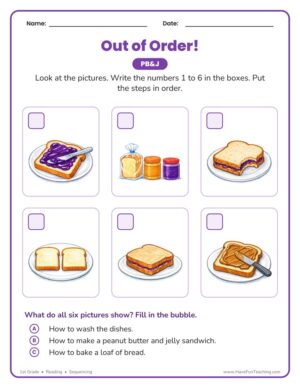
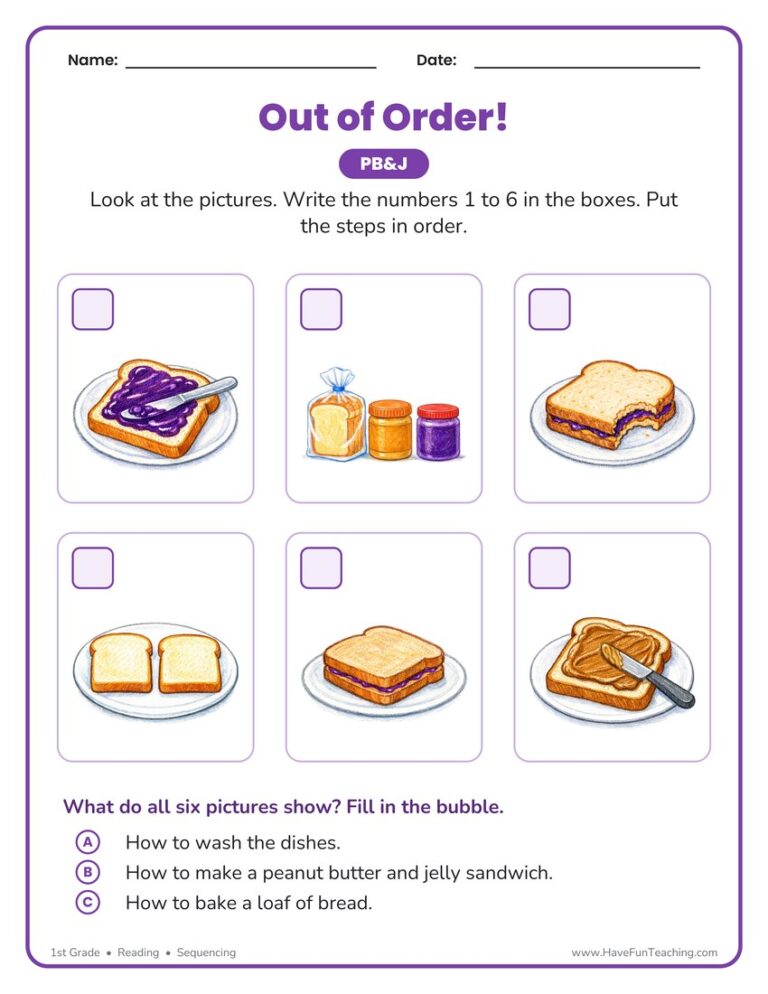
Worksheet1st GradeMaking A Sandwich Sequencing Worksheet

A picture-based Making A Sandwich Sequencing Worksheet that asks 1st graders to number six peanut butter and jelly steps in order, then name what the whole set shows. Answer key included for fast, no-prep retelling practice.

Worksheet
Worksheet1st GradeCarving A Pumpkin Sequencing Worksheet

The Carving A Pumpkin Sequencing Worksheet gives 1st Grade students four out-of-order pictures to number and four order-word sentences to complete, with an answer key, so retelling gets easier.

Worksheet
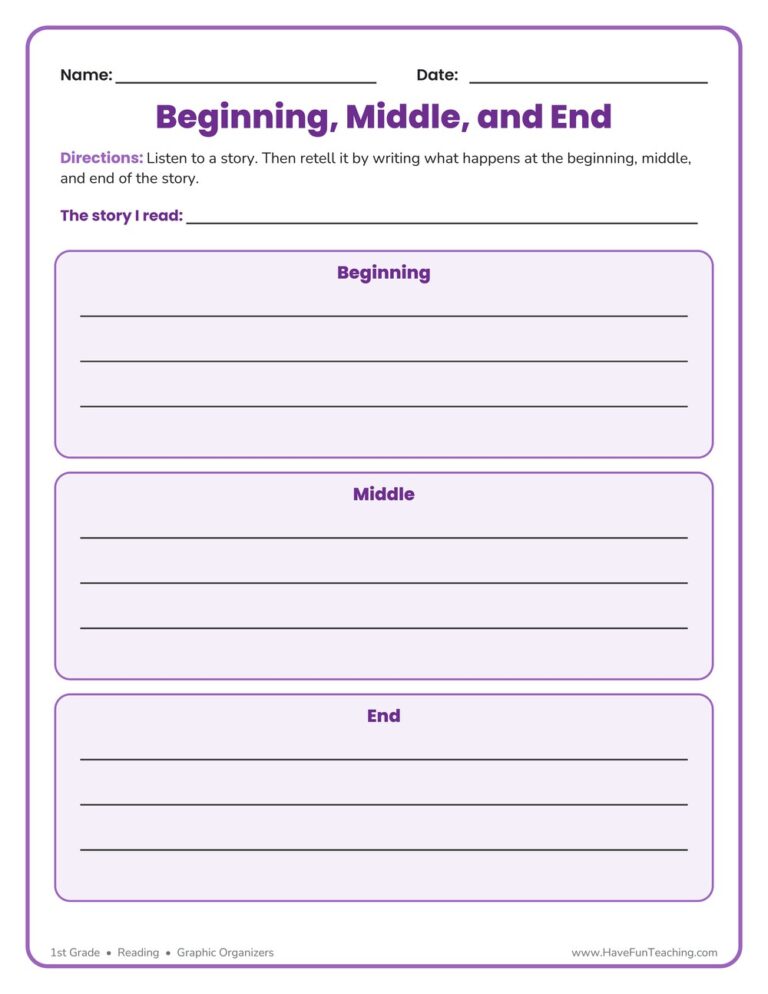
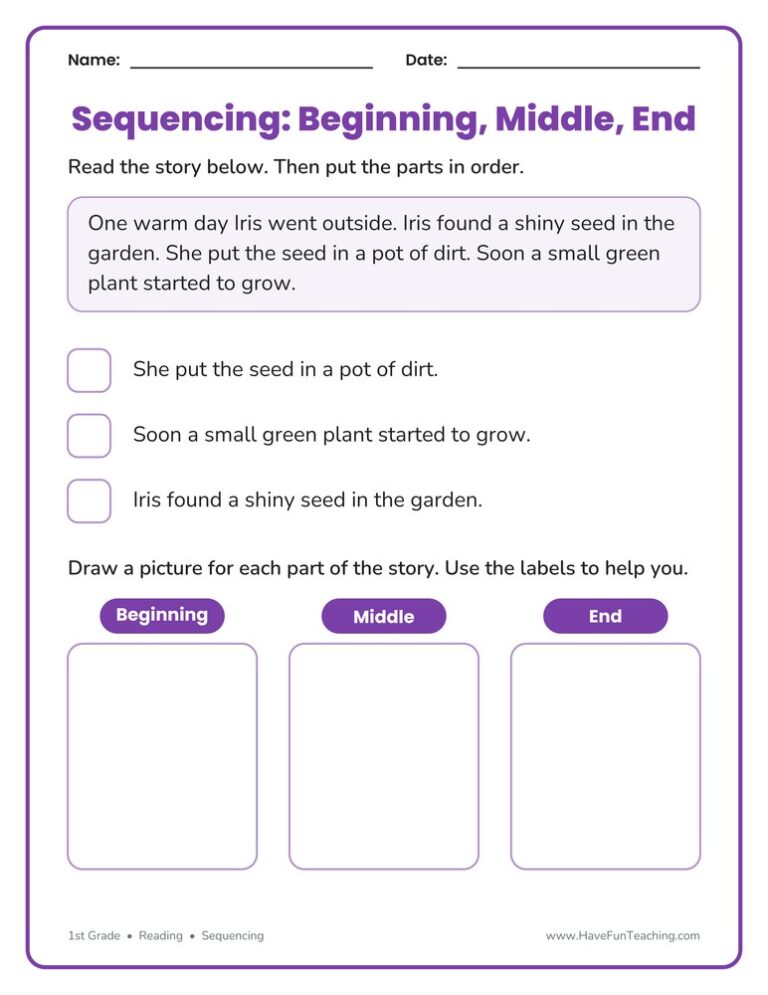
Worksheet1st GradeBeginning, Middle, and End Worksheet

A reusable Beginning, Middle, and End Worksheet that helps 1st graders retell any story in order across three clear sections. Perfect for building sequencing and summarizing skills with every book they read.

Activity
Activity1st GradeSequence of Events Activity

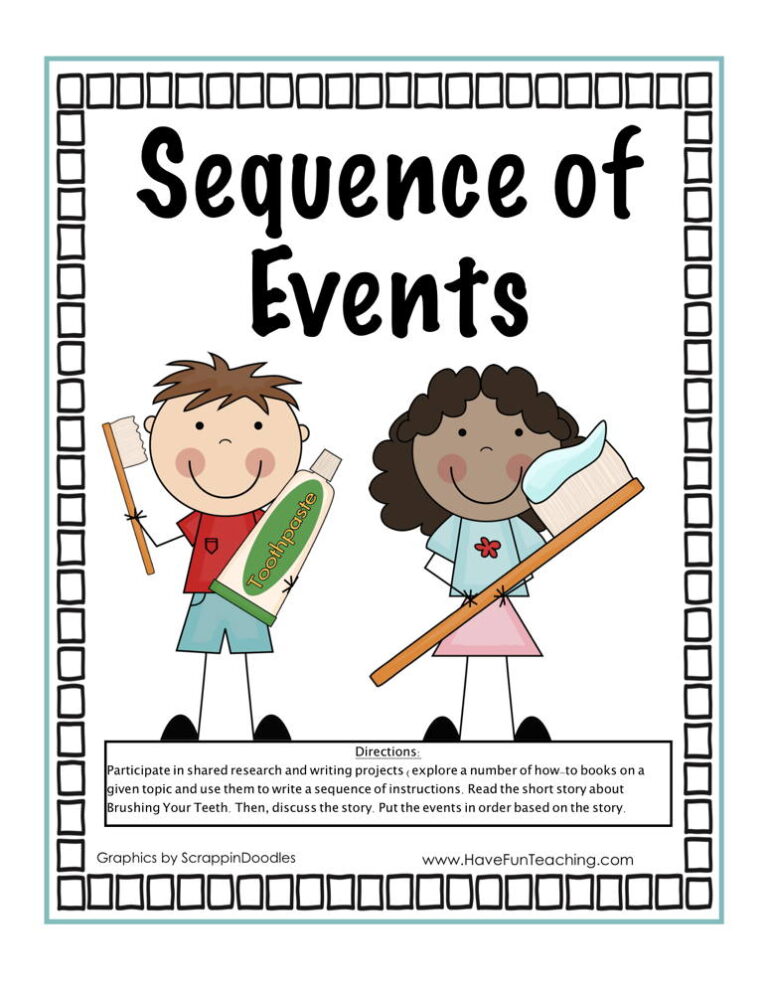
This sequence of events activity helps preschool, kindergarten, and 1st grade children put picture cards in order and retell stories with first, next, then, and last. An answer key is included.

Worksheet
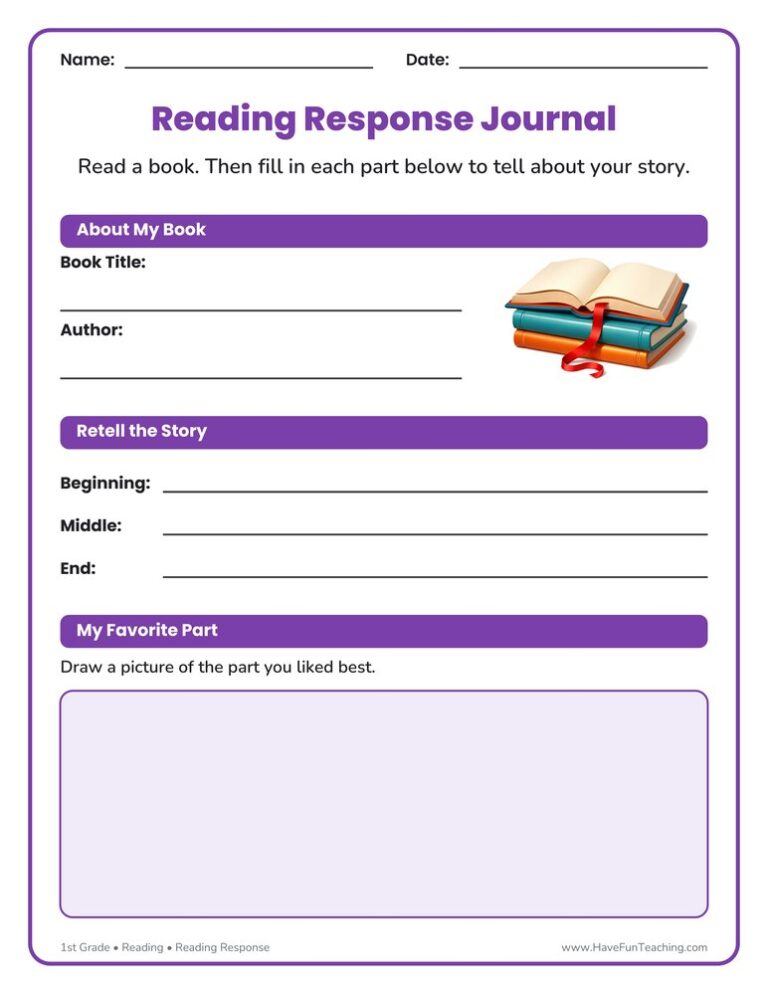
Worksheet1st GradeReading Response Journal

A reading response journal worksheet for 1st grade that works with any book: students record the title and author, retell the beginning, middle, and end, and draw their favorite part. Reusable all year for real comprehension practice.

Worksheet
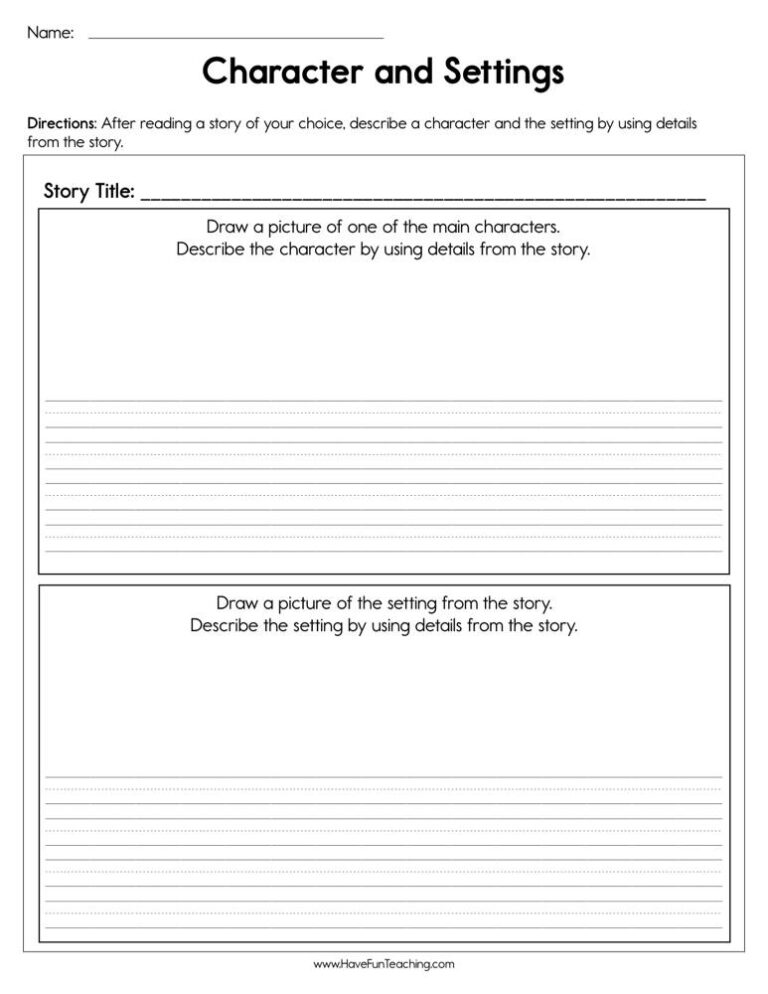
Worksheet1st GradeCharacter and Settings Worksheet

A print-and-go Character and Settings Worksheet that helps 1st graders draw and describe the main character and the setting of any story they choose. Flexible enough for guided reading, independent reading, or a bedtime book at home.

Assessment
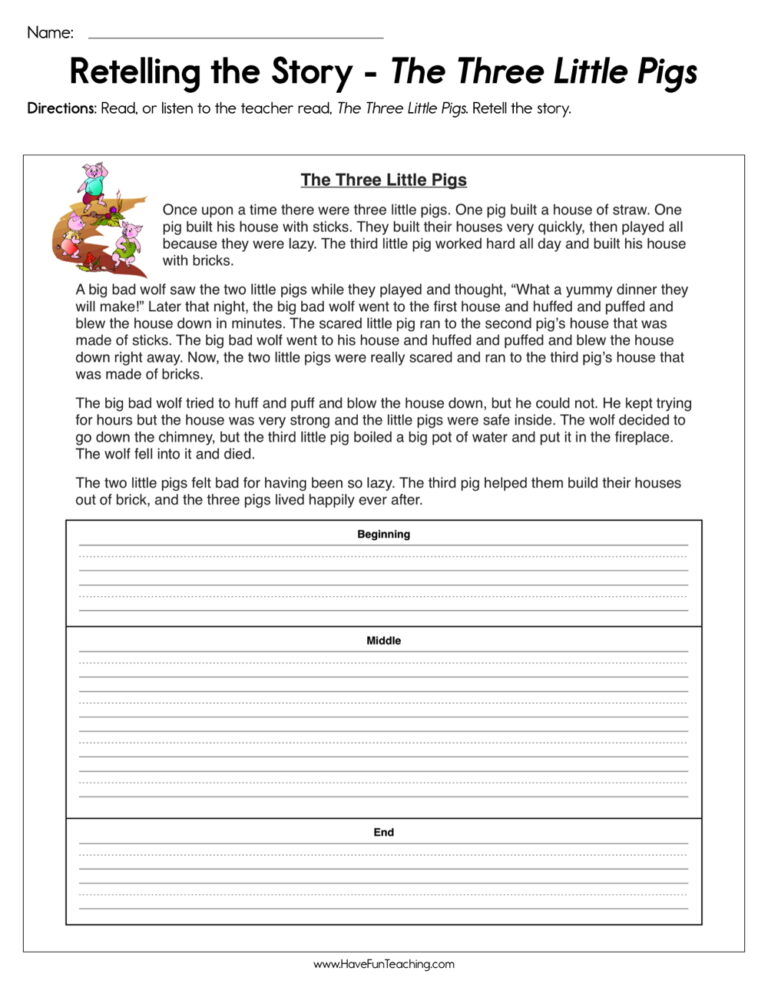
Assessment1st GradeRetelling the Story The Three Little Pigs Worksheet

This Retelling the Story The Three Little Pigs Worksheet gives 1st graders a short story to read, four events to put in order, and Beginning, Middle, and End retell boxes. Answer key included for fast checking.

Worksheet
Worksheet1st GradeBrushing Your Teeth Sequencing Worksheet

This brushing your teeth sequencing worksheet asks 1st graders to number four pictures and four sentences to rebuild a familiar routine. An answer key is included, so checking sequencing practice takes only a moment.

Worksheet
Worksheet1st GradeMaking A Bed Sequencing Worksheet

This making a bed sequencing worksheet gives 1st grade students five out-of-order steps to number 1 to 5, plus a summarizing question. An answer key is included, so ordering practice is ready in one print.

Worksheet
Worksheet1st GradeSequencing Drawing Worksheet

This Sequencing Drawing Worksheet has 1st graders read a short story, number three sentences in order, then draw the beginning, middle and end in three big boxes. Answer key included.

Assessment
Assessment1st GradeTell About the Story Worksheet

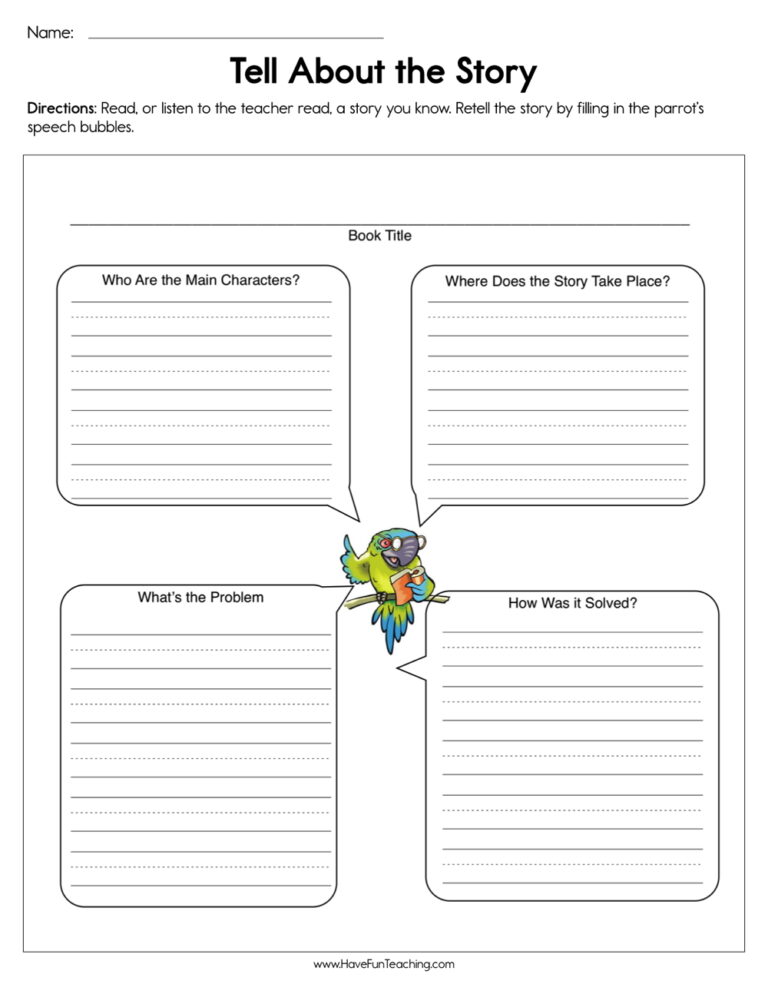
Use this Tell About the Story Worksheet after any book your 1st Grade readers choose. They write the title, then fill four boxes for characters, setting, problem, and ending to retell what they read with confidence.

Worksheet
Worksheet1st GradeRaking The Leaves Sequencing Worksheet

This raking the leaves sequencing worksheet helps 1st grade readers put five fall clean-up steps in order and name the big idea. An answer key is included for quick checking.

Worksheet
Worksheet1st GradePlanting A Carrot Seed Sequencing Worksheet

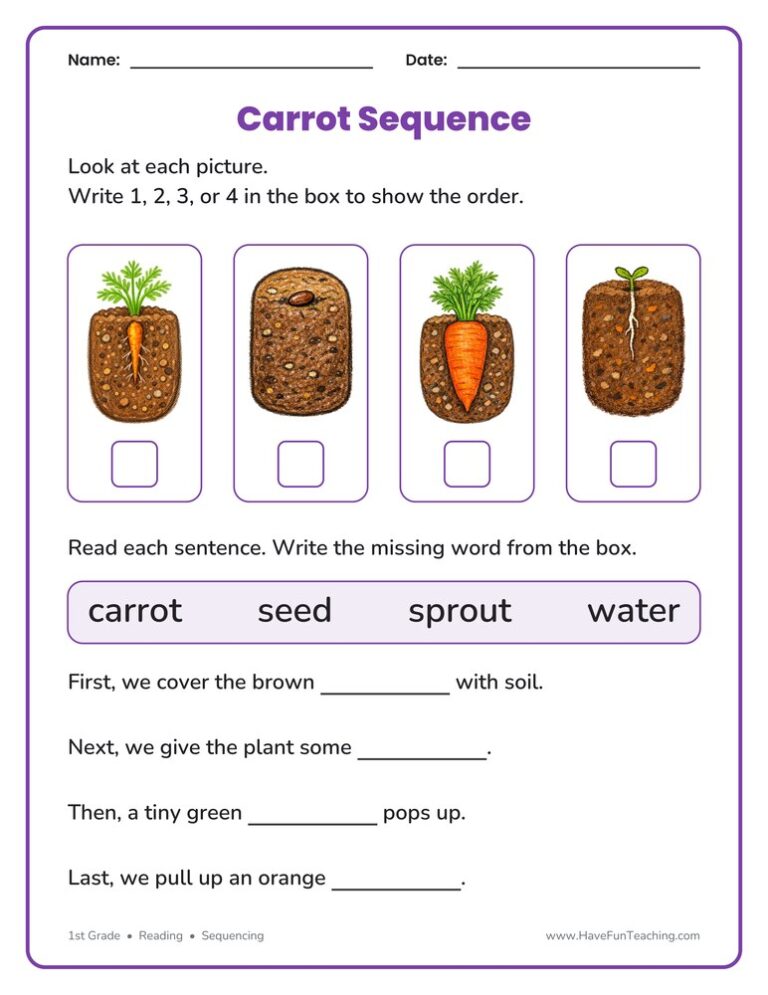
The Planting A Carrot Seed Sequencing Worksheet gives first grade students four carrot pictures to put in order and four sentences to finish from a word box. Answer key included, so it marks in seconds.

Activity
Activity1st GradeRetelling Stories Activity

This retelling stories activity has Kindergarten to 2nd Grade students order picture and sentence cards, then retell a pool-day story. Answer key included to check every card.

Worksheet
Worksheet1st GradeTelling About the Story Worksheet

This Telling About the Story Worksheet gives 1st graders four boxes to retell any book they read - characters, setting, problem, and solution - turning every story into clear, confident writing practice.

Activity
Activity1st GradeBrushing Your Teeth Sequencing Activity

This brushing your teeth sequencing activity helps K-2nd grade students retell a short story in order with picture cards, sentence cards and a story mat. Answer key included.

Activity
Activity1st GradeRetelling Using Key Details Activity

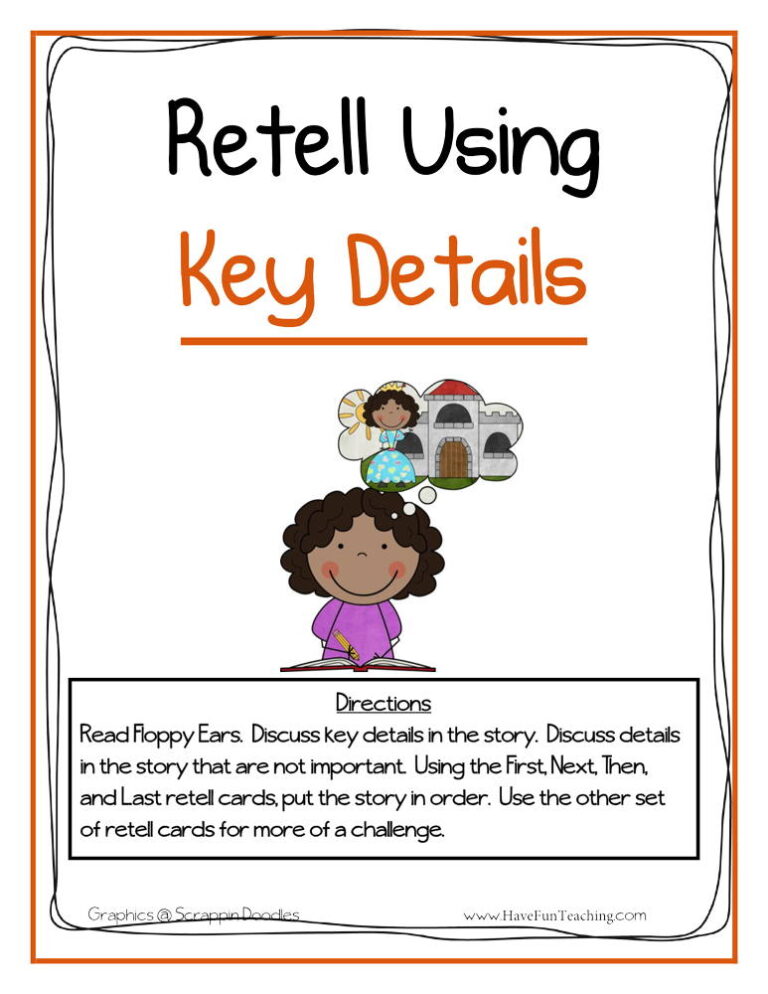
This retelling using key details activity helps kindergarten to 3rd grade students sort key events, put them in order, and retell a story, with an answer key included.

Worksheet
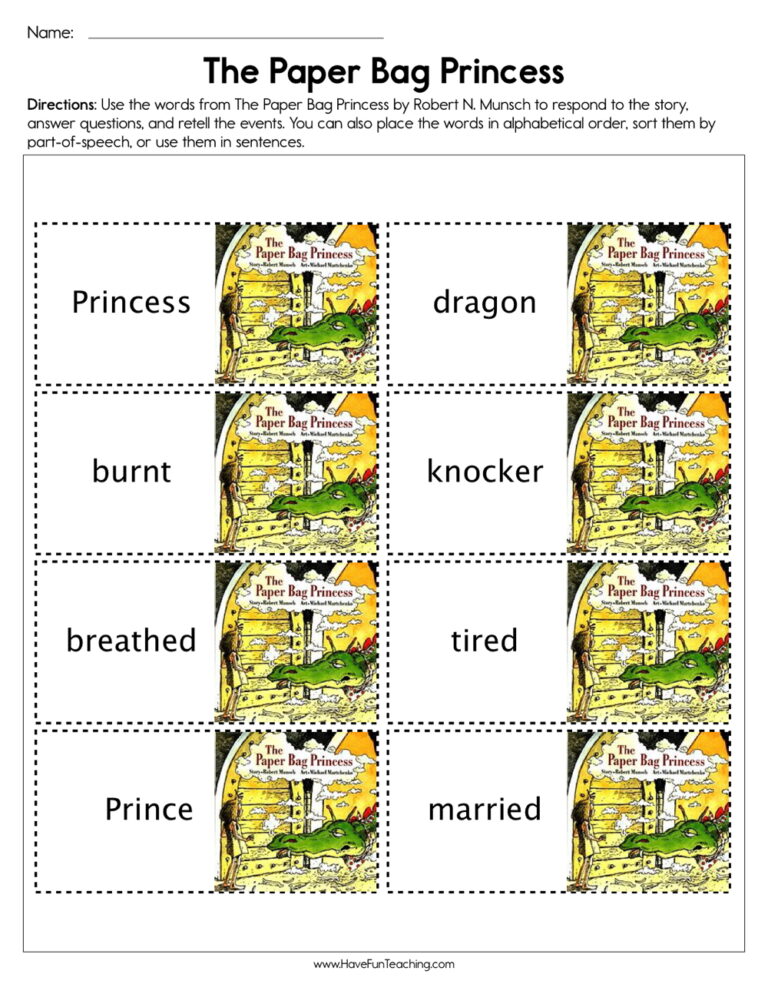
Worksheet1st GradeThe Paper Bag Princess Worksheet

Using this The Paper Bag Princess Worksheet, students use the words from the story to respond to the story and retell the events.

Worksheet
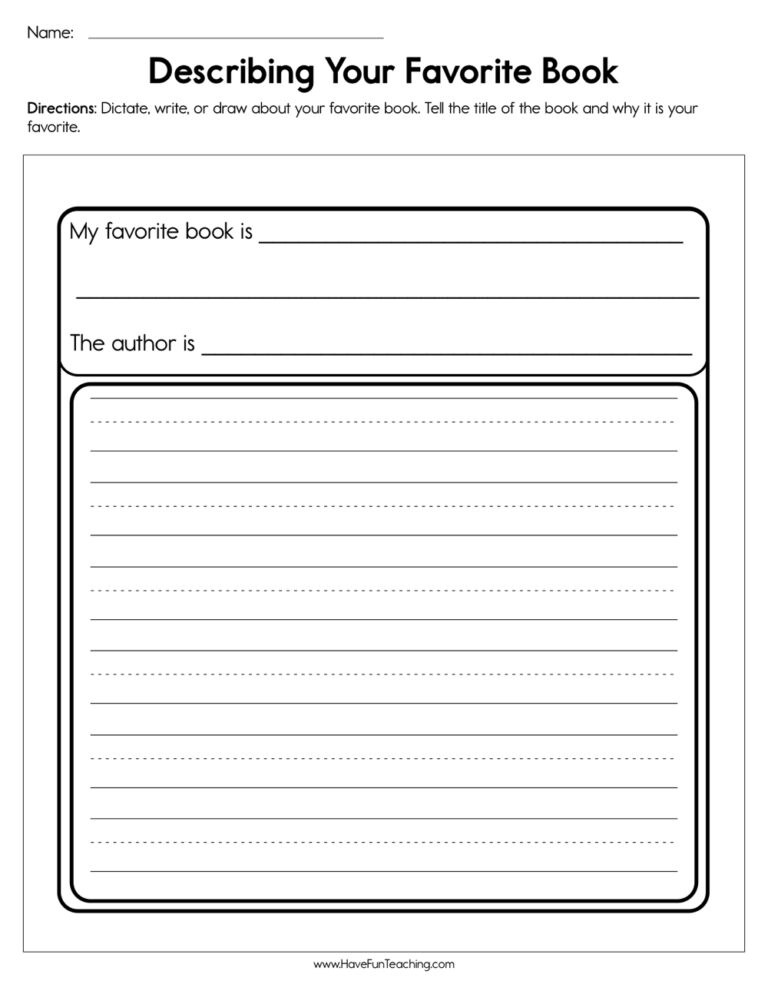
Worksheet1st GradeDescribing Your Favorite Book Worksheet

This Describing Your Favorite Book Worksheet gives 1st Grade readers three guided prompts and room to write about any book they choose, turning a retell into three easy questions.

From our teachers' playbook

First, next, then, last, ta-da!

What do 1st graders learn about summarizing?

In 1st grade, summarizing starts as retelling. Kids learn to tell a story back in order using the key details: who was in it, where it happened, the problem and how it got solved. Little order words do the heavy lifting: first, next, then, last. They also practice the beginning, middle and end of a story, and put everyday steps like making a sandwich in the right order. The click moment is when a child stops retelling every single page and starts picking out just the important parts.

Our favorite ways to teach retelling and summarizing

First graders love to talk about stories. These moves turn all that talk into a clear, ordered retell.

Retell it on your fingers

After a read-aloud, hold up one finger at a time while you retell: "First, the pig built a straw house. Next, the wolf blew it down." Then kids retell to a partner using their own fingers. The Retelling a Story worksheet turns that same routine into writing.

Why it works: showing first, practicing together, then letting kids try alone is the "gradual release" model teachers have relied on for decades (Pearson and Gallagher, 1983).

Retelling A Story WorksheetTry it withRetelling A Story WorksheetWorksheetsOpen it →

Three boxes, one story

Fold a paper into three boxes labeled beginning, middle and end. Kids draw one picture in each and add a short sentence underneath. Drawing first helps early writers hold the whole story in their heads.

Why it works: pairing a picture with each word gives kids two ways to remember it, a well-tested principle of how people learn (Mayer, 2009).

Beginning, Middle, and End WorksheetTry it withBeginning, Middle, and End WorksheetGraphic OrganizersOpen it →

Retell a story they already know

Start with a familiar tale like The Three Little Pigs, so kids can focus on the order instead of the plot. Have them retell it in writing, then check the order together and fix any parts that got mixed up.

Why it works: a big review of study methods ranked quick self-quizzing among the most powerful ways to remember (Dunlosky and colleagues, 2013).

Retelling the Story The Three Little Pigs WorksheetTry it withRetelling the Story The Three Little Pigs WorksheetAssessmentsOpen it →

Questions teachers and parents ask

What is summarizing in 1st grade?

In 1st grade, summarizing mostly means retelling a story in order with its most important details. Kids tell the beginning, middle and end and name the characters, setting and main events.

What's the difference between retelling and summarizing?

Retelling tells the story back in order with lots of the details. Summarizing is shorter and keeps only the most important parts. First graders retell, and that practice grows into summarizing in later grades.

How do I help my 1st grader retell a story?

Ask four simple questions after reading: Who was in the story? Where did it happen? What was the problem? How did it end? Then have your child put those answers together using first, next, then and last.

Why does my child retell every single detail?

That's very normal at this age! Try asking, "If you could only tell me three things, what would they be?" Picking the most important parts is a skill that takes lots of practice.