Skip to content
Start My 3 Free Days $0 today · cancel anytime

Base 10 Activities

11 base 10 activities. Teacher favorites: Printable Base 10 Blocks and Finding 10 More 10 Less Activity. How teachers use these

Base 10 Activities

11 base 10 activities. Teacher favorites: Printable Base 10 Blocks and Finding 10 More 10 Less Activity. How teachers use these

Activity
Activity2nd GradePrintable Base 10 Blocks

This Printable Base 10 Blocks worksheet gives 2nd graders cut-out hundreds, tens, and ones blocks to build numbers by hand — a no-prep, hands-on way to make place value, counting, and addition click.

Activity
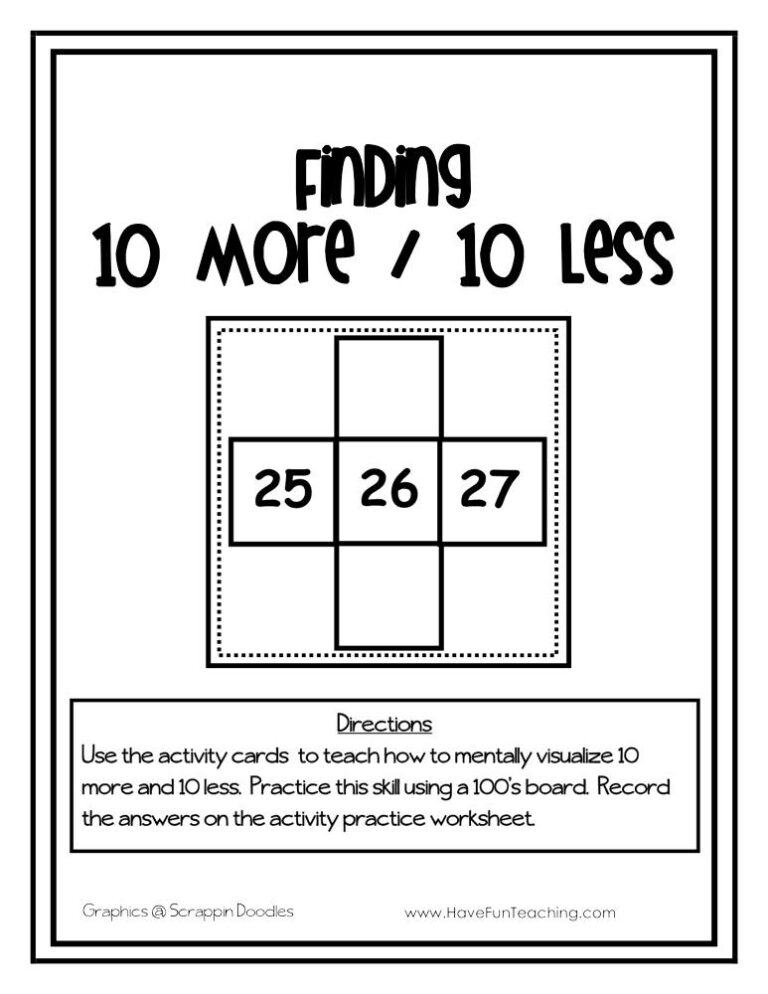
Activity1st GradeFinding 10 More 10 Less Activity

This finding 10 more 10 less activity helps 1st and 2nd grade children use a hundred chart to find 10 more and 10 less. Practice page and answer key included.

Activity
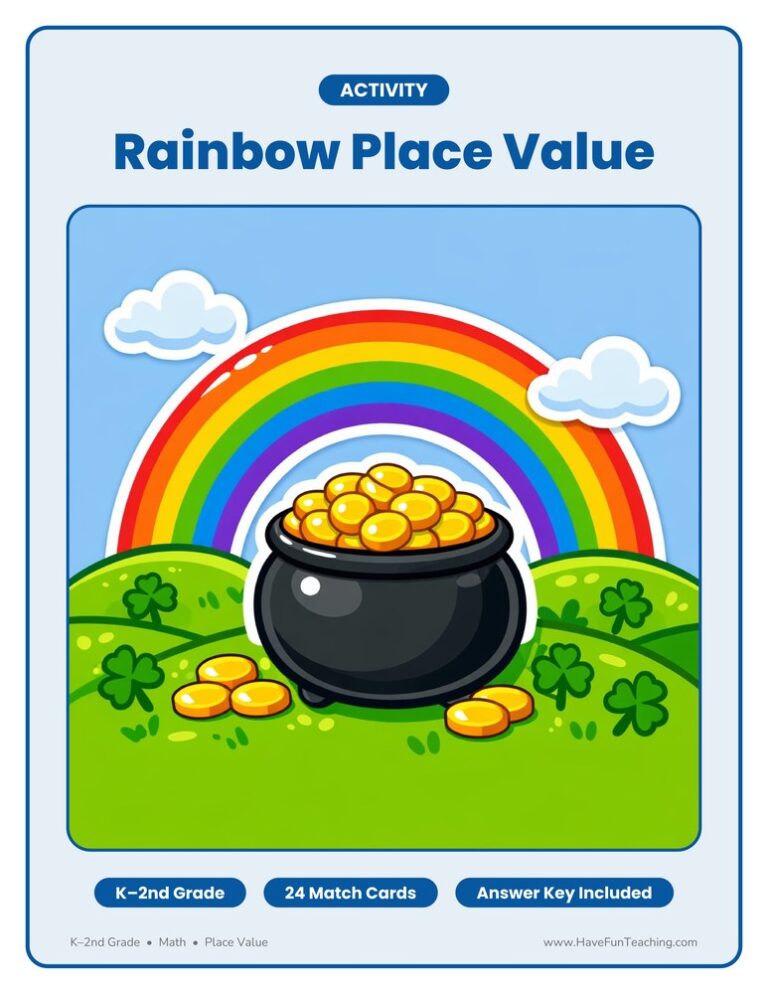
ActivityKindergartenRainbow Place Value Activity

This rainbow place value activity has children match pots of gold to tens and ones cards. Made for Kindergarten to 2nd Grade, with a practice page and answer key included.

Activity
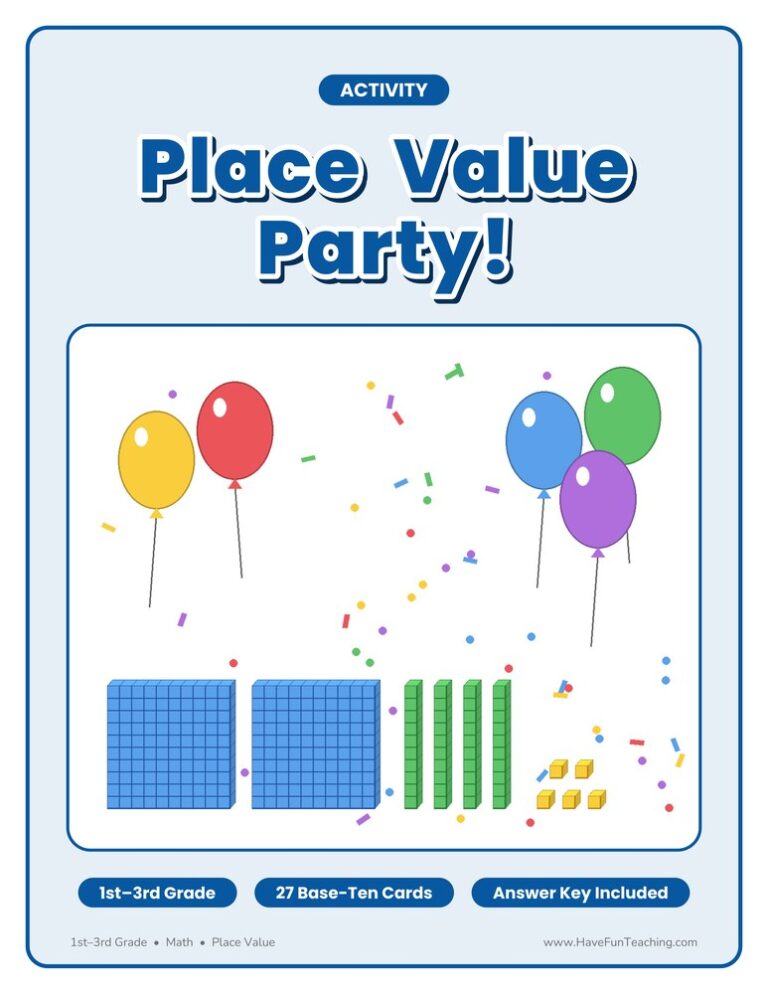
Activity1st GradePlace Value Party Place Value Activity

The Place Value Party Place Value Activity lets 1st to 3rd Grade students spin numbers, build them with base-ten cards and write expanded form. Answer key included.

Activity
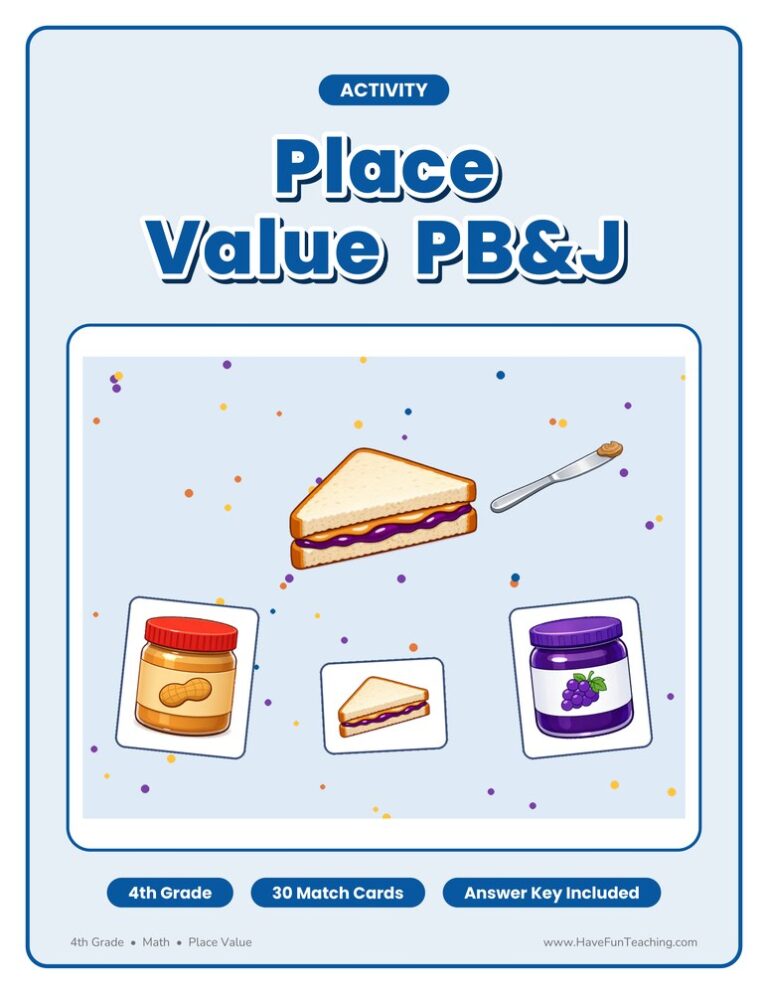
Activity4th GradePBJ Place Value Activity

Match standard, word and expanded form with this PBJ place value activity for 4th grade: 30 sandwich, peanut butter and jelly cards, a recording sheet and practice, answer key included.

Activity
Activity3rd Grade3.NBT.1 Common Core Activity

This 3.NBT.1 Common Core Activity lets 3rd Grade students round numbers to the nearest 10 or 100 by sorting 24 cards into Round Up and Round Down, with an answer key included.

Activity
Activity1st GradeBlast Off With Numbers Base Ten Words Expanded Form Activity

In this Blast Off With Numbers Base Ten Words Expanded Form Activity, students will read and write numbers to 1000 using base-ten numerals, number names, and expanded form.

Activity
Activity2nd Grade2.NBT.3 Common Core Activity

In this 2.NBT.3 Common Core Activity, students will read and write numbers to 1000 using base-ten numerals, number names, and expanded form.

Activity
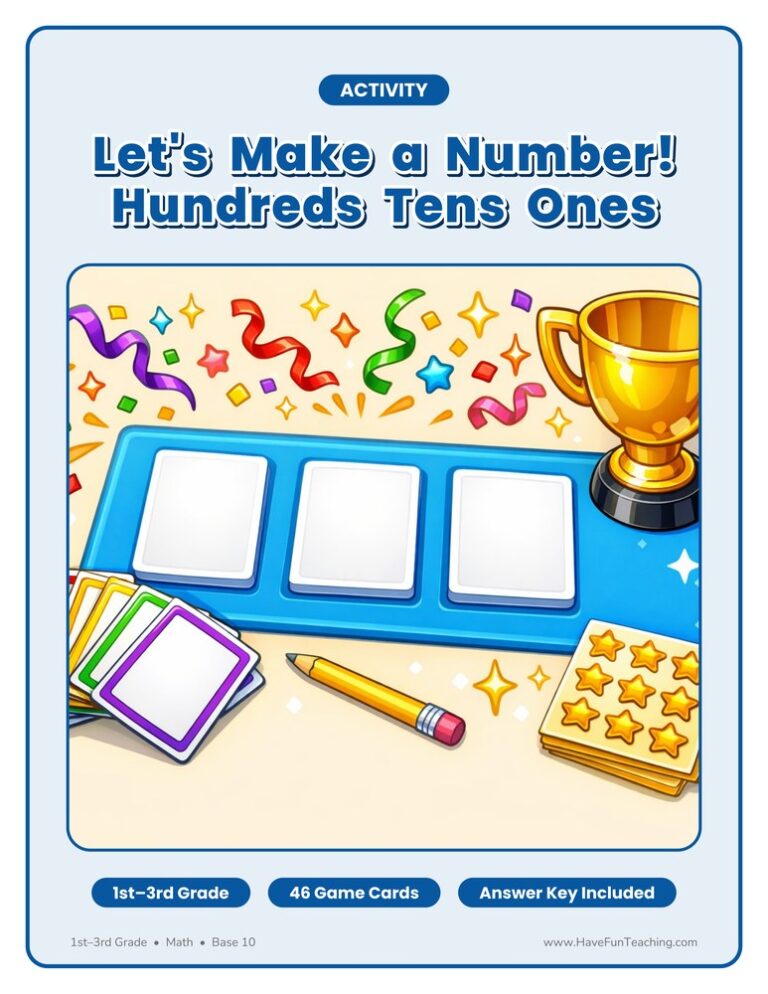
Activity1st GradeLet's Make a Number Hundreds Tens One Activity

The Let's Make a Number Hundreds Tens One Activity has 1st to 3rd grade students build and compare three-digit numbers with cards and a place value mat. Answer key included for quick checking.

Activity
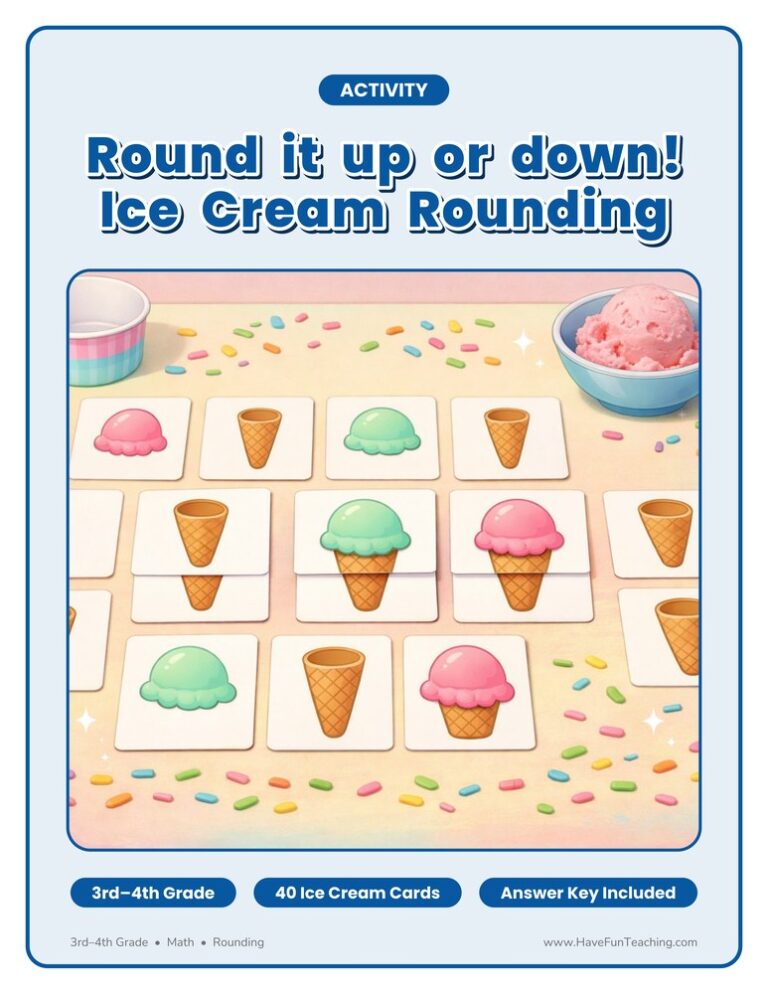
Activity3rd GradeRound it Up or Down Ice Cream Activity

This round it up or down ice cream activity has 3rd and 4th grade students match number scoops to cones by rounding to the nearest ten and hundred. Answer key included for quick checking.

Activity
Activity3rd GradeScooping Up Hundreds Rounding Activity

In this Scooping Up Hundreds Rounding Activity, students use place value understanding to round whole numbers to the nearest 100.

From our teachers' playbook

Cubes, rods and flats, oh my!

What do kids learn about base 10?

Our number system is built on groups of ten, and base 10 is how kids learn that. They see that ten ones make a ten (a rod) and ten tens make a hundred (a flat). First graders work with tens and ones, second graders add hundreds, and older students stretch to thousands: 2,345 = 2 thousands + 3 hundreds + 4 tens + 5 ones. Base 10 blocks make the idea something kids can hold. The click moment is when a child trades ten little cubes for one rod and says "It's the same amount!"

How we teach base 10

Base 10 makes sense when kids touch it, draw it and then use it.

Trade up!

Give each pair a pile of cubes and a die. They roll, take that many cubes, and trade ten cubes for a rod whenever they can. First to make a flat wins. Trading over and over shows them exactly how our number system groups.

Why it works: kids understand an idea best when they touch it, then draw it, then write it, the order the U.S. Department of Education recommends for elementary math.

Printable Base 10 BlocksTry it withPrintable Base 10 BlocksActivitiesOpen it →
Quick place value checks

Play a short place value game at the start of math: "What is the 6 worth in 462?" Quick retrieval keeps the idea fresh, and kids love beating their own score.

Why it works: a big review of study methods ranked quick self-quizzing among the most powerful ways to remember (Dunlosky and colleagues, 2013).

Determining Place Value GameTry it withDetermining Place Value GameGamesOpen it →

Draw sticks and dots

Once kids know the blocks, have them draw a line for each ten and a dot for each one. It's fast, works anywhere and moves them from objects to symbols.

Why it works: children learn more from words and pictures together than from words alone (Mayer, 2009).

Drawing Tens and Ones WorksheetTry it withDrawing Tens and Ones WorksheetWorksheetsOpen it →

Base 10 questions from teachers and parents

What does base 10 mean?

It means our number system is built on groups of ten. Each place is worth ten times the place to its right: ones, tens, hundreds, thousands.

What are base 10 blocks?

They're math blocks that show place value: small cubes are ones, rods are tens and flats are hundreds. Big cubes show thousands.

What grade learns base 10?

Kids start in kindergarten with teen numbers as ten and some more. First grade covers tens and ones, second grade adds hundreds, and fourth grade extends to larger numbers.

Can I make base 10 blocks at home?

Yes. Use printable blocks, straws bundled into tens or even pennies and dimes.