
Using Finding the Author and Illustrator Activity, students define the role of an author and illustrator using the definition cards.

Using Why Was it Written Author's Purpose Activity, students identify if the author wrote a text in order to answer, explain, or describe.

Using Author and Illustrator Activity, studentsname the author and illustrator of a text and define the role of each in presenting the ideas or information in a text.

Using Authors Purpose Picture Sorting Activity, students identify the reasons an author gives to support points in a text.

Using this Author's Purpose Activity, students read and sort story idea cards to determine the author's purpose as to inform, entertain, or persuade.

Using this Reasons and Evidence Activity, students identify the reasons and evidence a speaker provides to support particular points.

Using Authors Purpose Matching Activity, studentsmatch the text to the Author's Purpose activity card to explain why the author wrote the book.
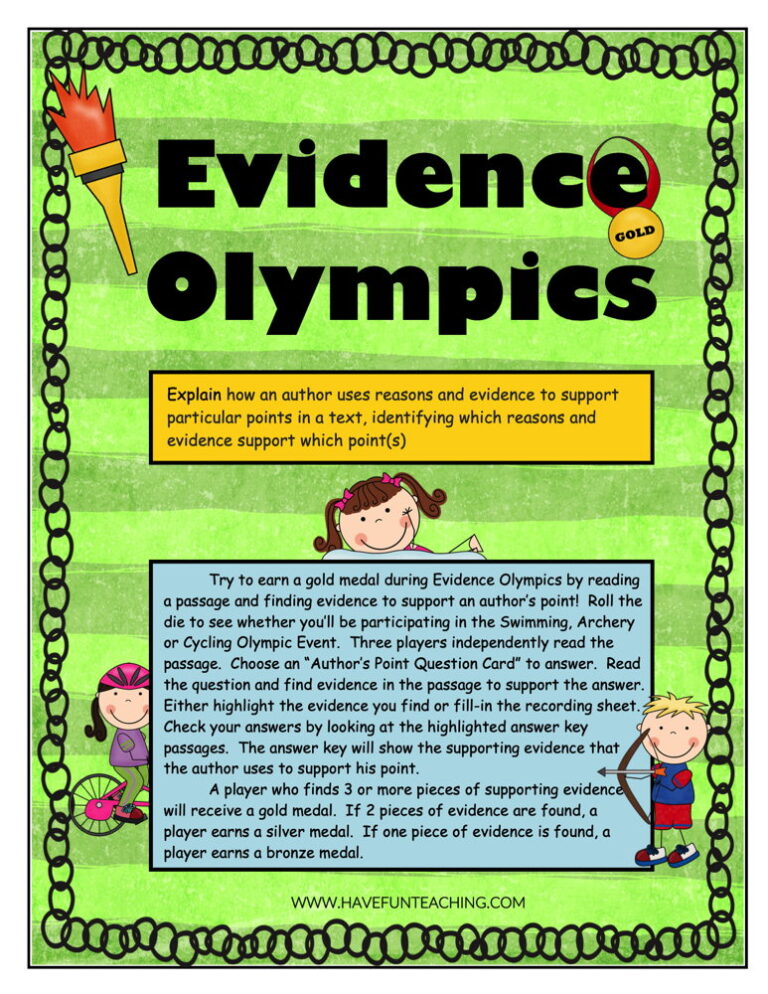
Using this Evidence Olympics Authors Purpose Activity, students try to earn a gold medal during Evidence Olympics by reading a passage and finding evidence to support an author's point.
Using Let's Give Some Support Activity, students describe how reasons support specific points the author makes in a text.
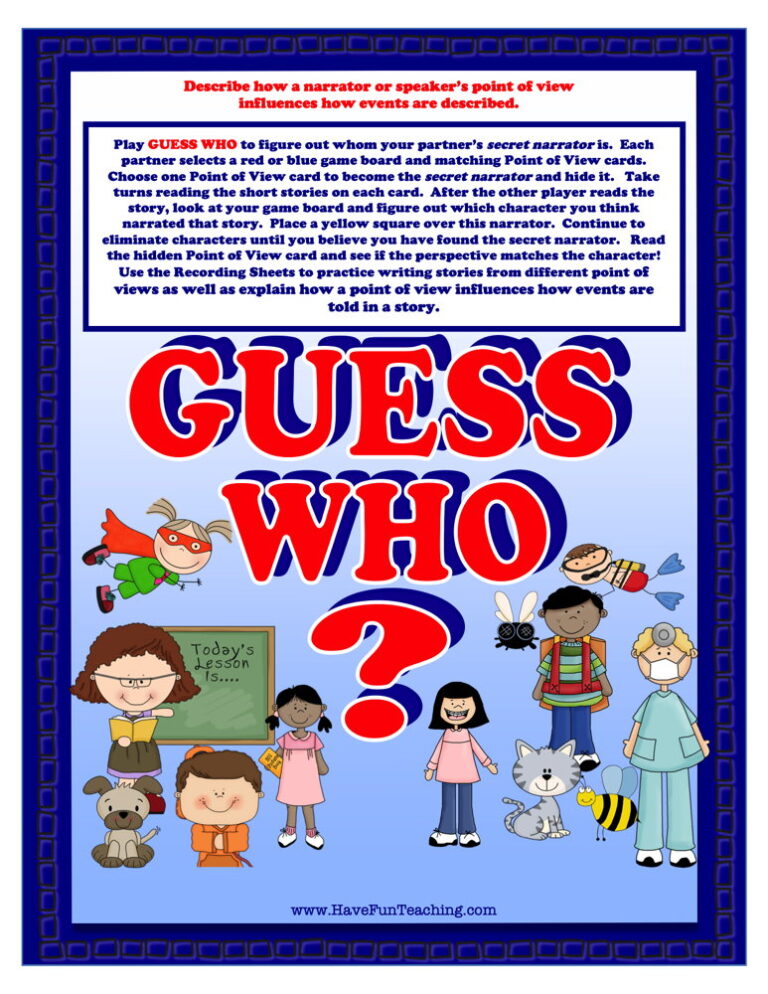
Using this Guess Who Point of View Activity, students identify their partner's "secret narrator" as the partner reads a text card.
Using Comparing Points of View Activity, students distinguish their own point of view from that of the author of a text.
Using Author's Purpose Sorting Activity, students identify the reasons an author gives to support points in a text.

Using My Point of View Activity, students distinguish their own point of view from that of the narrator or those of the characters.

Using Point of View Activity, students identify who is telling the story at various points in a text.

Using Author Research Activity, students explore books written by a single author to discuss opinions and ideas of that author.

Using this Whose Point of View Compare and Contrast Activity, students identify whether a story is being told in a first- or third-person POV, while comparing and contrasting the two.

Using Firsthand and Secondhand Accounts Activity, students read both firsthand and secondhand accounts of the same event to describe the differences in the information provided.

Using Animal Myth Busters Author's Purpose Activity, students read animal myths to explain how an author uses evidence to support points in a text.
Using Looking at the Character's Viewpoints Activity, students acknowledge differences in the points of view of characters to gain a different perspective.