
A kindergarten characters, settings, and events worksheet that helps young readers identify story elements—who is in a story, where it happens, and what happens—using a simple three-column graphic organizer for retelling any story.

This who what when where why graphic organizer worksheet helps 3rd graders record the five key details — who, what, when, where, and why — from any story or article. A clear, reusable note-taking template.
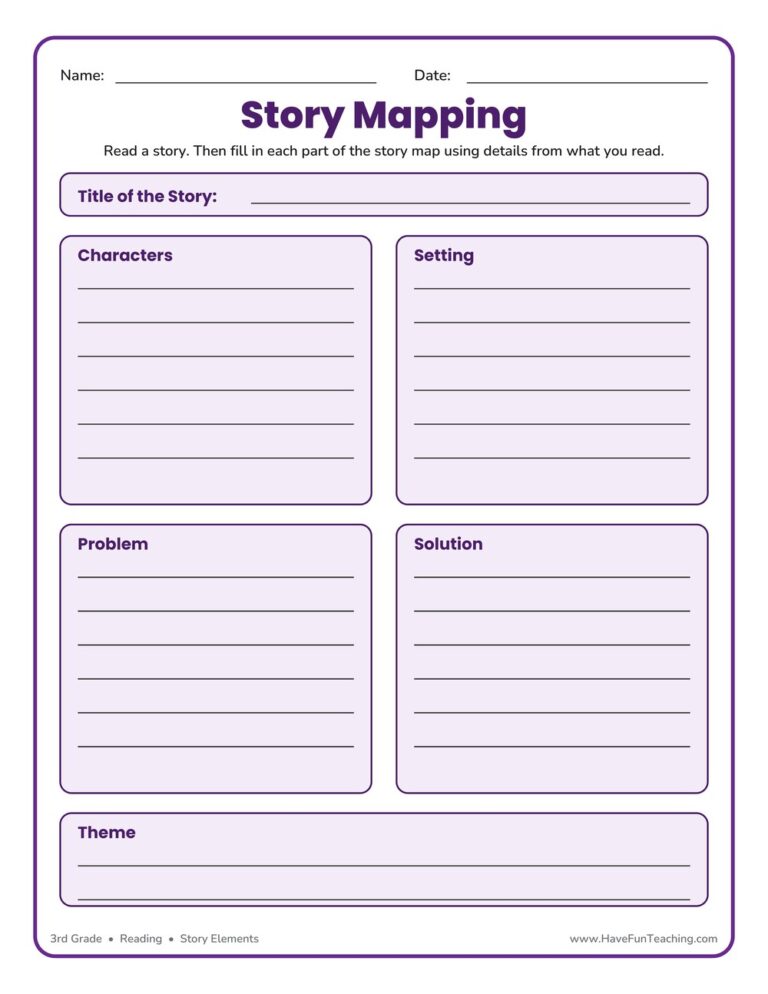
This 3rd grade Story Map Graphic Organizer Worksheet has students record a story's characters, setting, problem, solution, and theme in one clear, reusable page that strengthens reading comprehension.

A characters, settings, and big events worksheet for 1st Grade: students read a short story, then draw and write the characters, setting, and big event in a simple organizer. Answer key included for quick, no-prep story elements practice.

A Who What When Where Why Summary Graphic Organizer Worksheet that walks 3rd graders from a short story to the five W answers and on to a written summary. Answer key included, so students get quick feedback and real confidence.
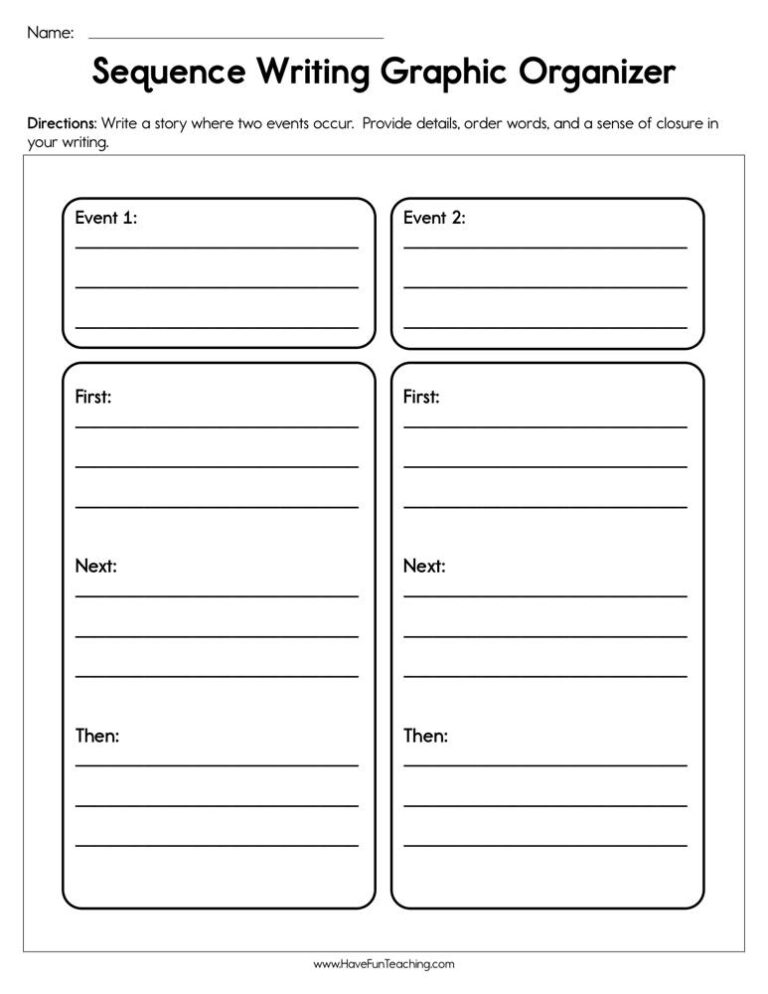
Plan a story from start to finish with this Sequence Writing Graphic Organizer Worksheet. First Grade writers name their story idea, then write what happens First, Next, Then, and Last on wide primary lines.

A story elements reading graphic organizer worksheet for 2nd grade: read a short story, then fill in Somebody, Wanted, But, and So. Answer key included, so retelling practice takes no prep.

This story map worksheet lets 3rd grade students record the characters, setting, problem, main events, and solution of any story they read, building stronger comprehension and retelling skills.

This story elements graphic organizer worksheet gives 3rd grade readers one page for the characters, setting, problem and solution of any book they choose, with room to write a real sentence in each box.
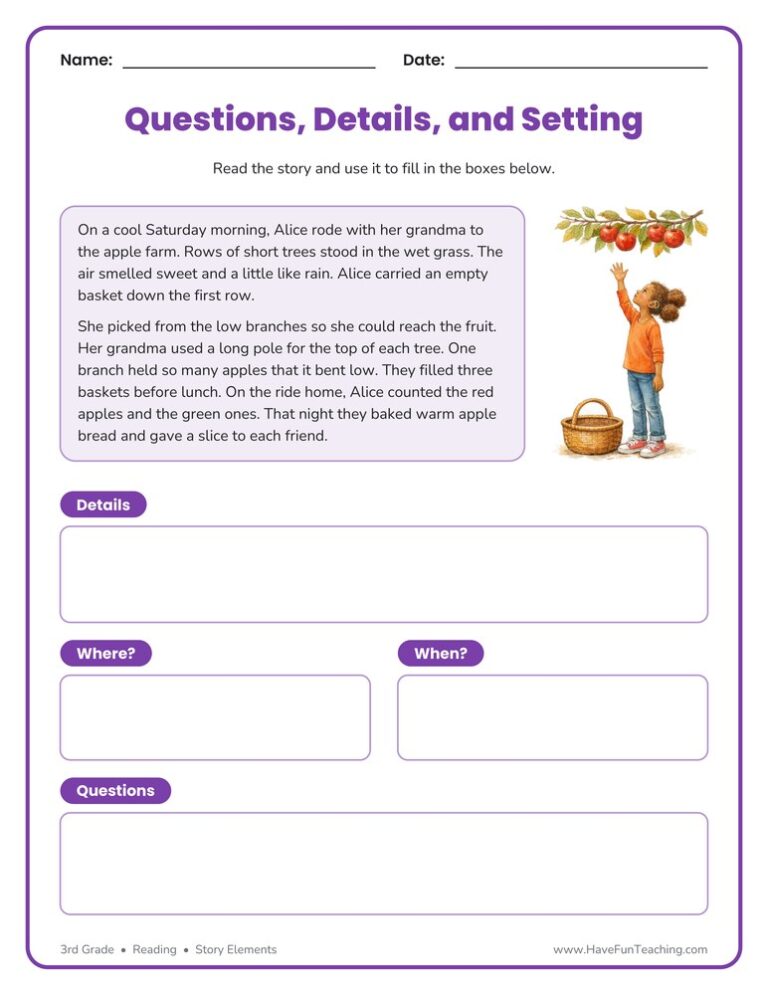
This Questions Details and Setting Graphic Organizer Worksheet gives 3rd graders a short story plus four boxes for details, place, time, and their own questions. An answer key is included, so comprehension practice takes no prep.

This Problem and Solutions Graphic Organizer Worksheet gives 3rd Grade readers a short story plus boxes for the problem, three solutions, and the best one. An answer key is included, so checking work takes seconds.
Using this Determining Theme Graphic Organizers Activity, students determine the theme of a story, drama, or poem from details in the text using Graphic Organizers.

This fantasy and realism story elements worksheet has 3rd graders sort characters, settings and events into make-believe or real, then label story sentences. An answer key is included for quick checking.
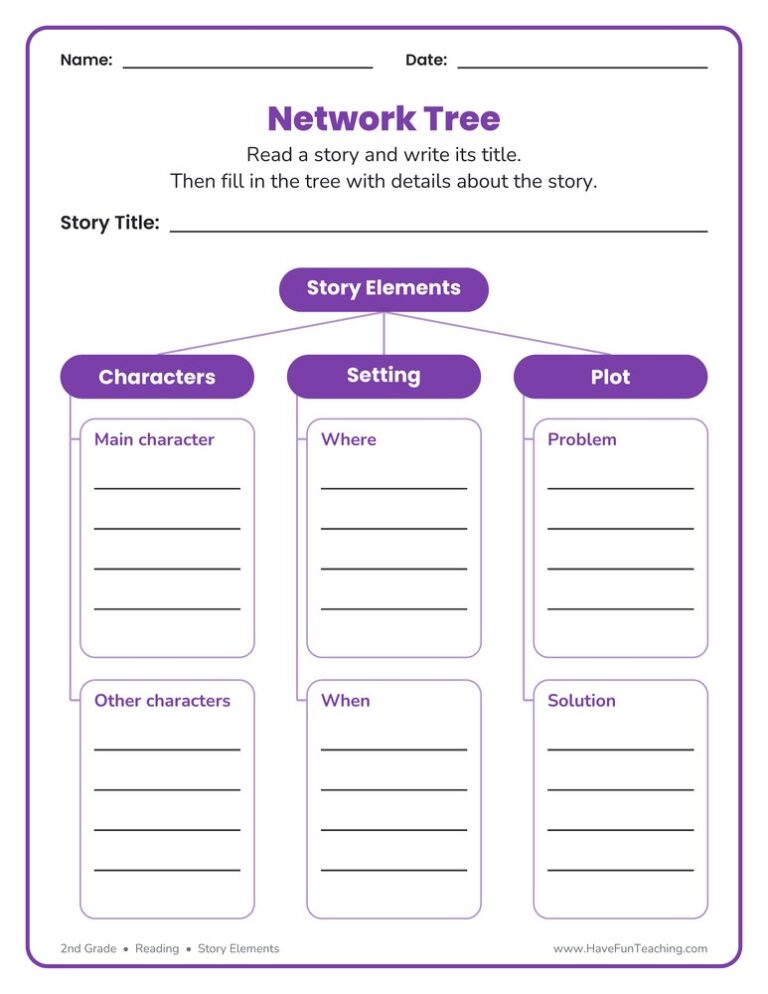
This story elements network tree graphic organizer helps 2nd grade readers map the characters, setting and plot of any book. Answers vary, so it works with every story children read.

Using the Comparing Themes of Two Stories Activity, students use a Venn Diagram to compare and contrast the theme of two passages.
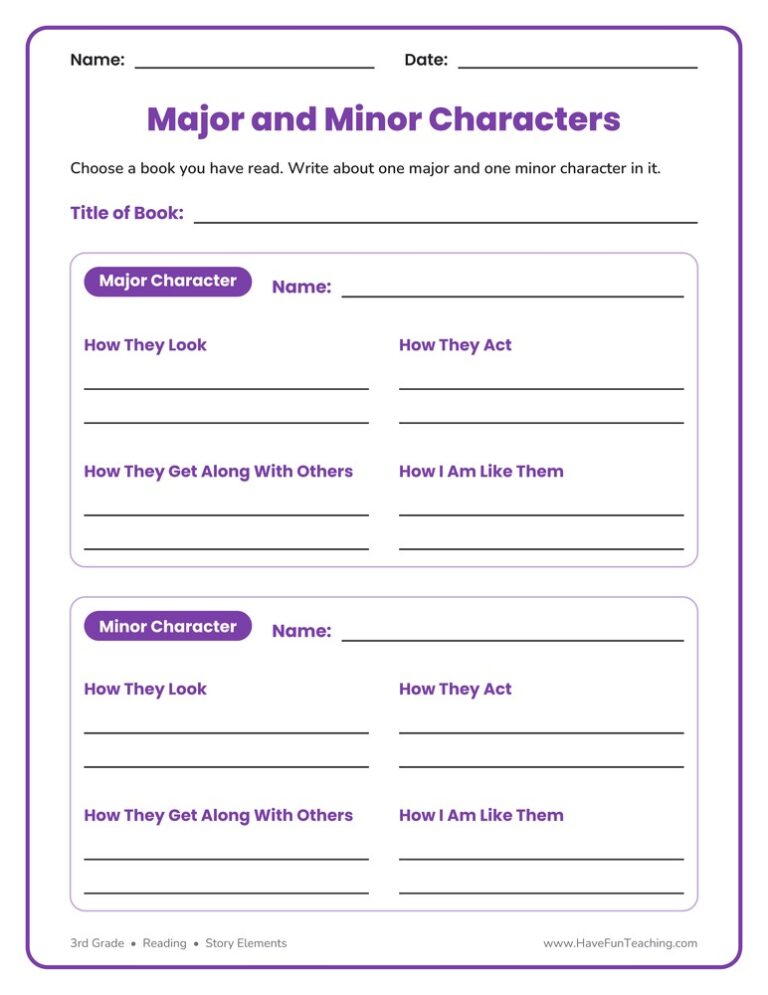
This major and minor character graphic organizer helps 3rd graders describe two characters from any book, including how each one looks, acts, and gets along with others.
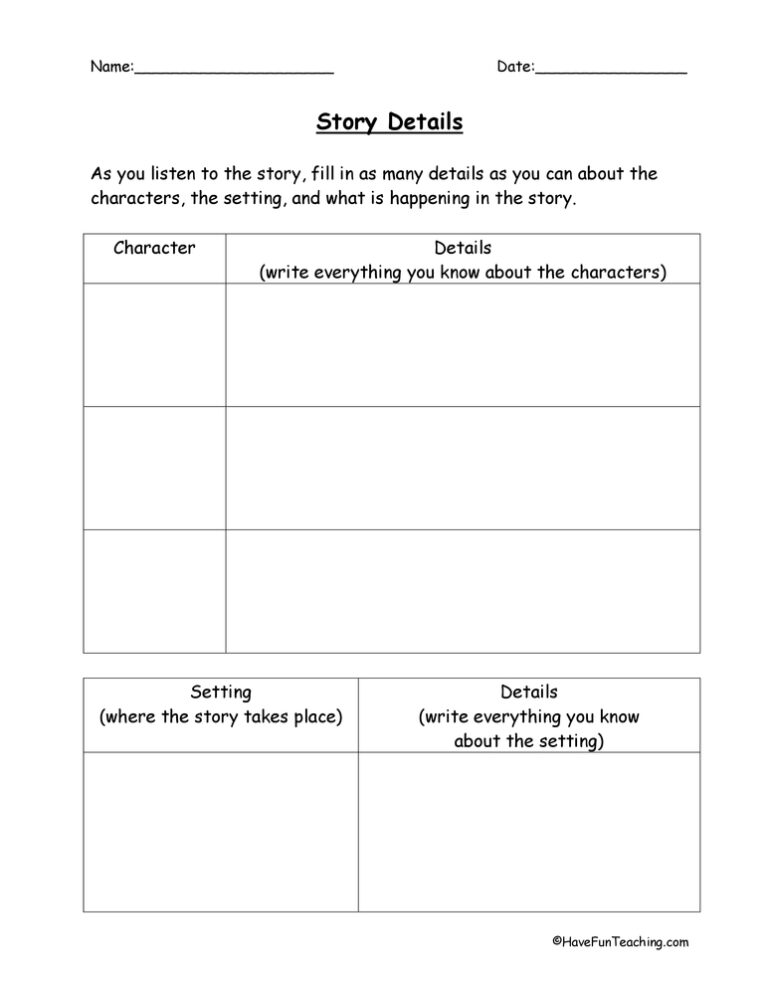
This story elements graphic organizer worksheet helps 2nd graders name the characters in any story, describe what each one is like, and tell where and when the story happens.