

This Team Sports Health and Fitness Reading Comprehension Worksheet gives 5th graders a lively non-fiction passage about staying active, plus main-idea, detail, and inference questions. An answer key is included for fast, no-prep reading practice.
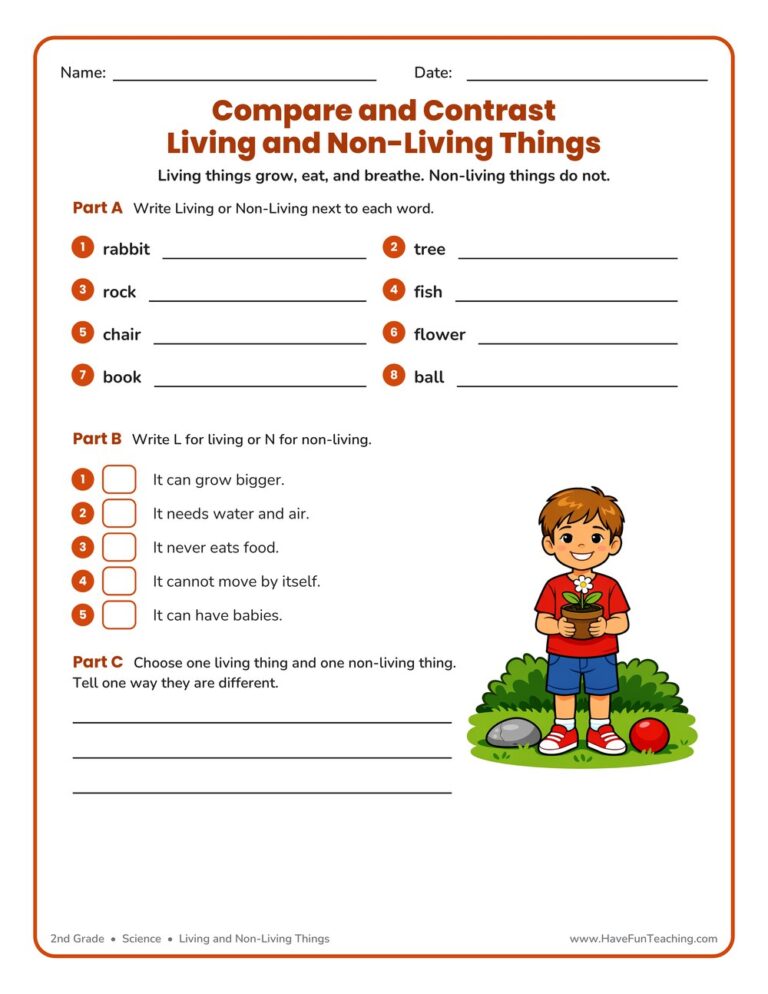
A hands-on characteristics of living and non-living things worksheet for 2nd grade, where students sort words, judge true traits, and compare examples. Includes an answer key for quick, no-prep science practice.
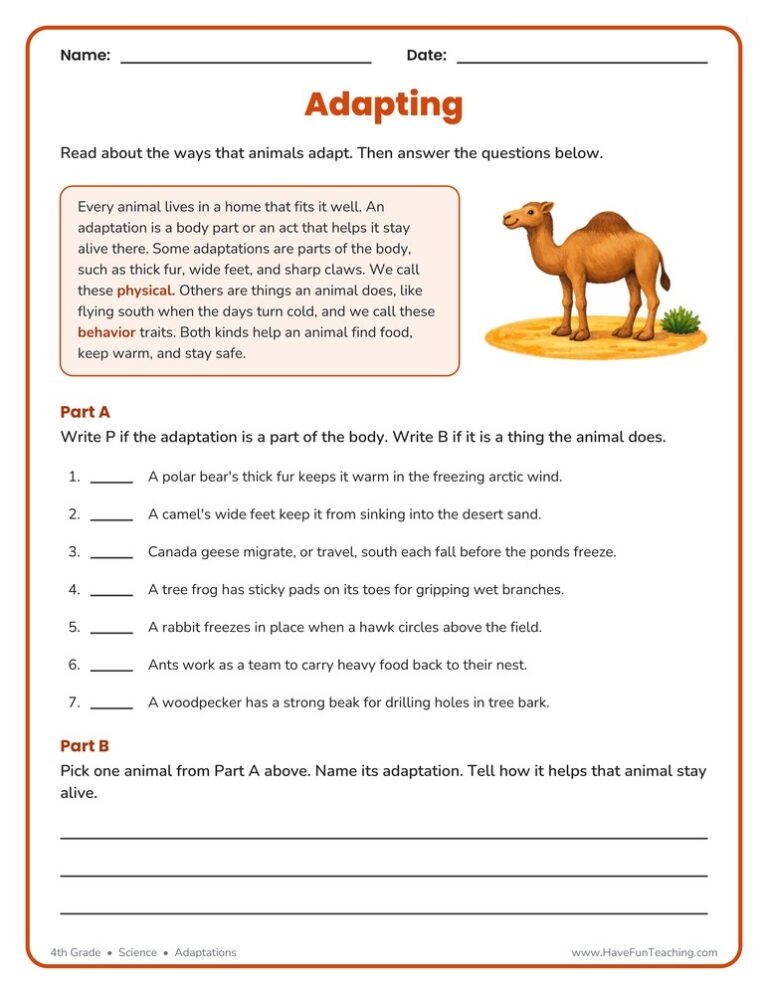
This adaptation worksheet has 4th graders sort seven animal traits into physical and behavioral adaptations, then explain how one helps an animal survive. Answer key included for fast, no-prep life science practice.
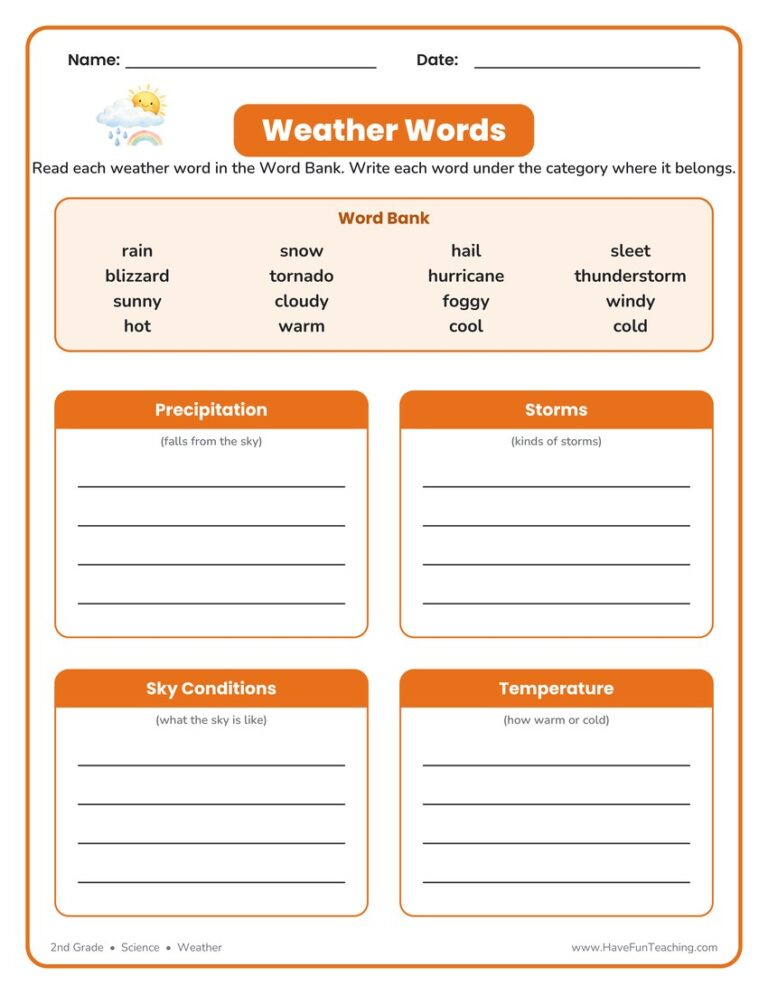
This Weather Words Worksheet helps 2nd graders sort sixteen weather terms into precipitation, storms, sky conditions, and temperature. Answer key included — a quick, no-prep way to grow earth science vocabulary.
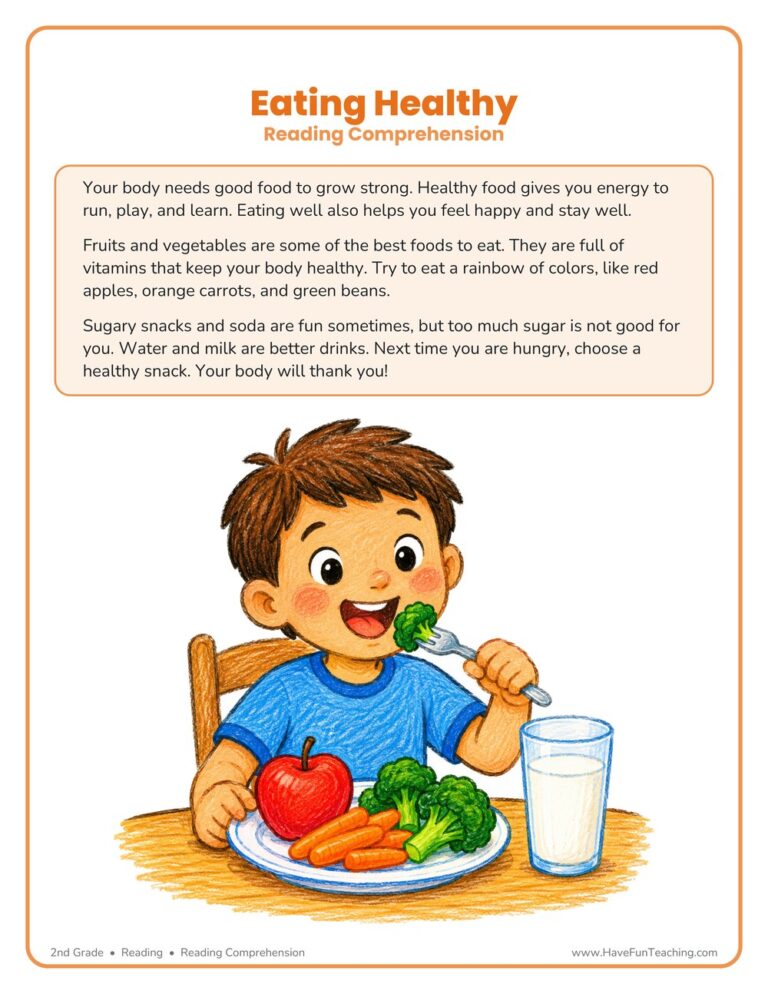
The Eating Healthy Reading Comprehension Worksheet gives 2nd graders a fun passage about healthy food plus six questions to check understanding. Answer key included—perfect for no-prep reading and nutrition practice at home or school.

This animal words matching worksheet has Kindergarten students match four animal names to their pictures, then trace three more. Answer key included for fast, no-prep science and sight-word practice.
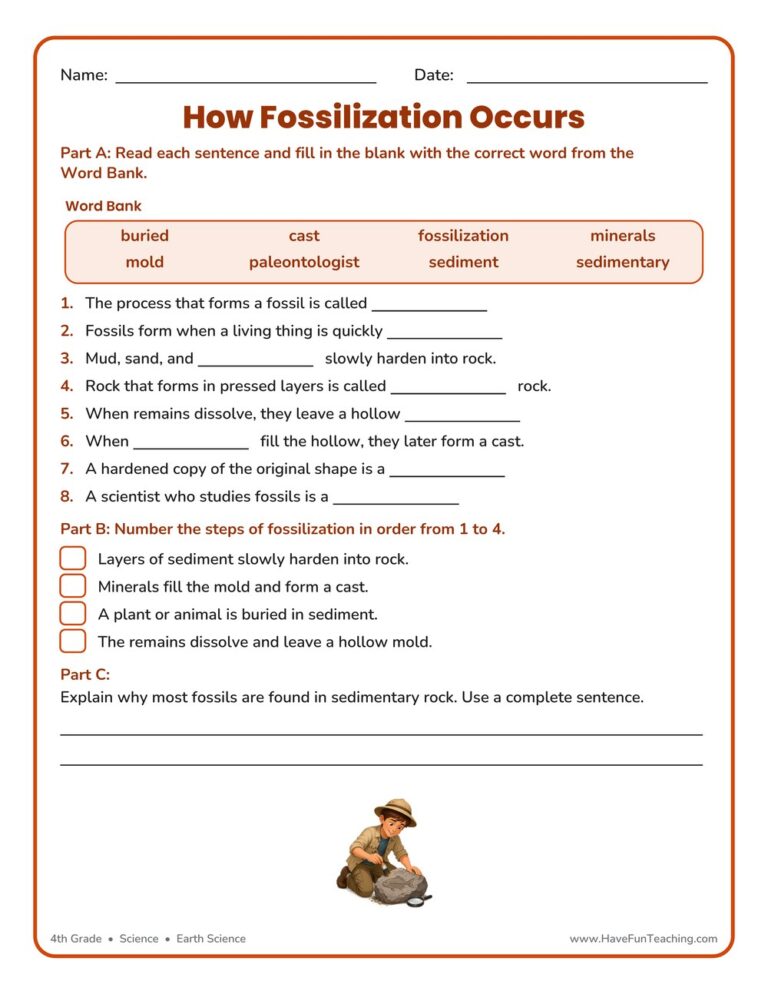
This Fossils Fill in the Blank Worksheet gives 4th grade students hands-on earth science practice with fossilization, sedimentary rock, and key vocabulary. Answer key included to make review quick and easy.

This magnetic objects worksheet lets 1st graders circle pictures and words to show which things a magnet will pull. An answer key is included for quick checking.
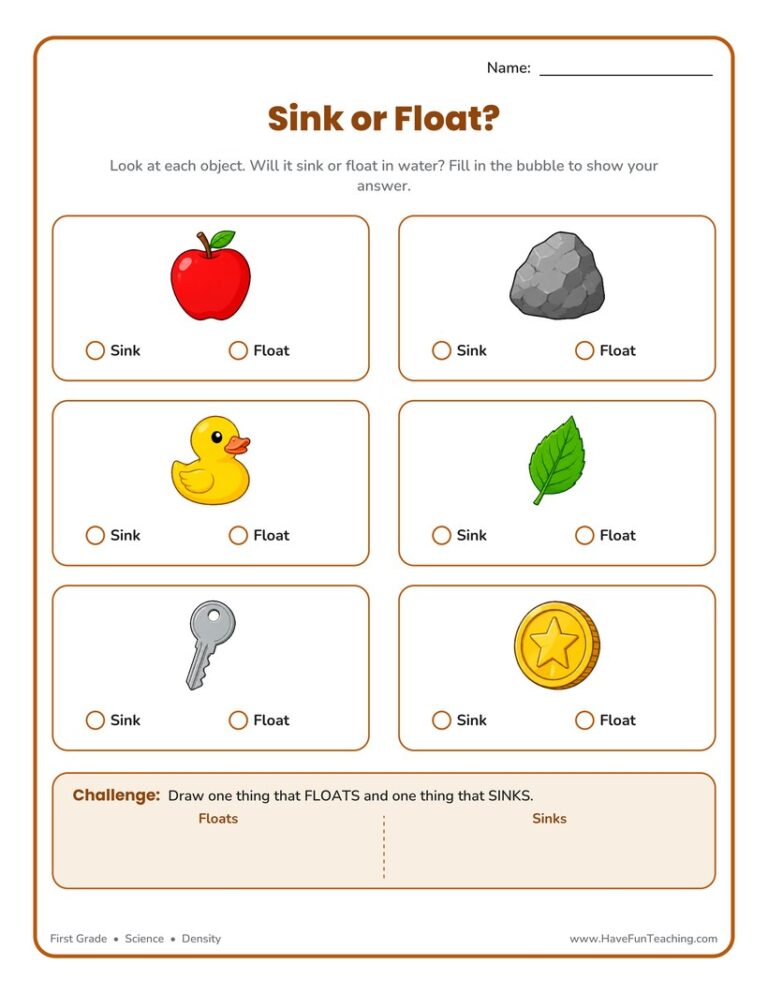
This sink float identify worksheet lets first graders predict whether an apple, rock, duck, and more will sink or float in water. Includes an answer key for a fun, hands-on introduction to density.
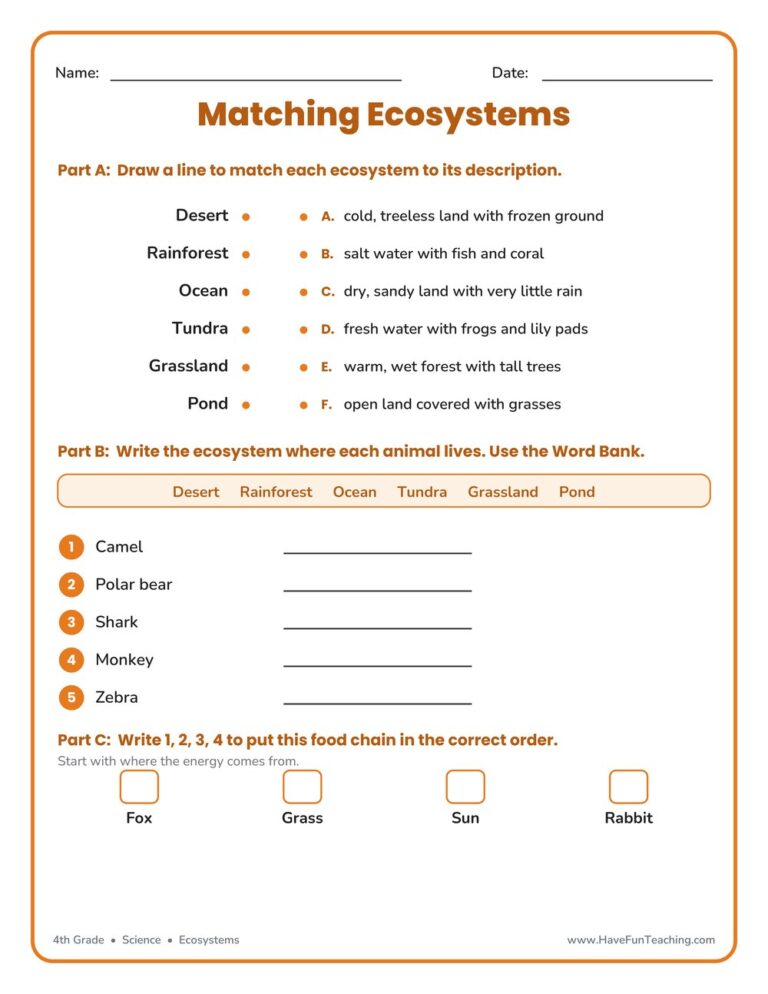
This matching ecosystems worksheet helps 4th grade students match ecosystems to descriptions, sort animals into habitats, and order a food chain. Includes an answer key for easy, no-prep science practice.

This matching habitats worksheet has 3rd graders link five animals to the habitats they live in, then explain two animal adaptations in writing. Answer key included for fast, no-prep science practice.
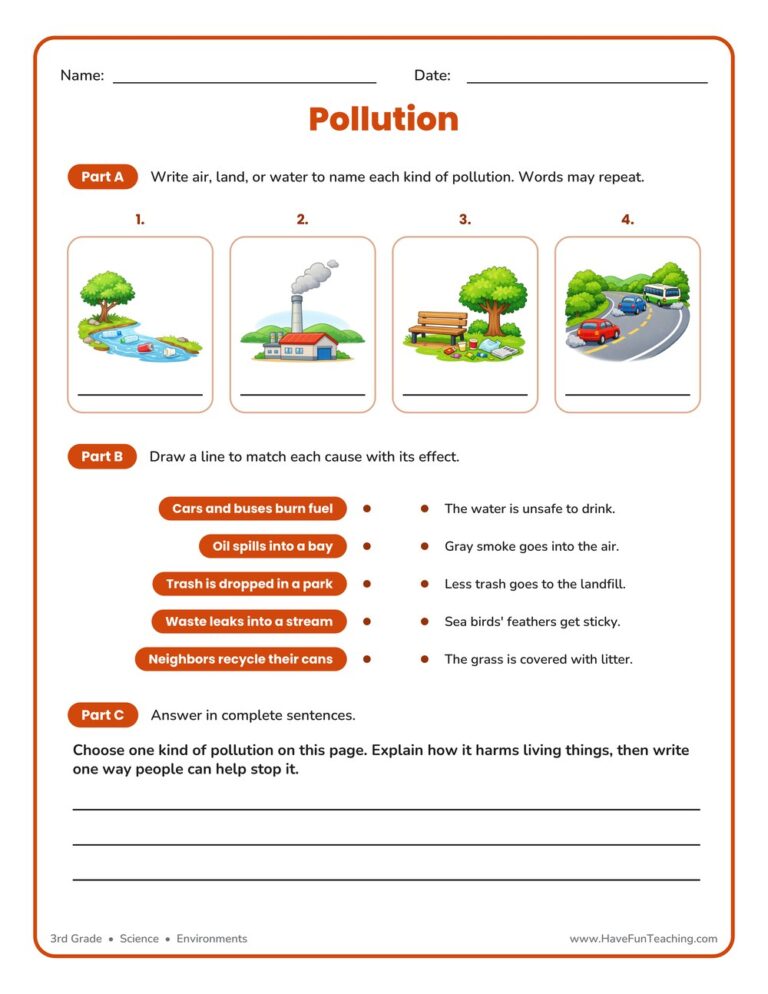
This pollution worksheet helps 3rd graders name air, land, and water pollution, match each cause with its effect, and explain one way people can help. Answer key included for no-prep science practice at school or home.

A read a thermometer worksheet for 3rd Grade: students find the temperature on four Fahrenheit scales, then solve multi-step temperature problems. Answer key included, so measurement practice is ready to print and quick to check.
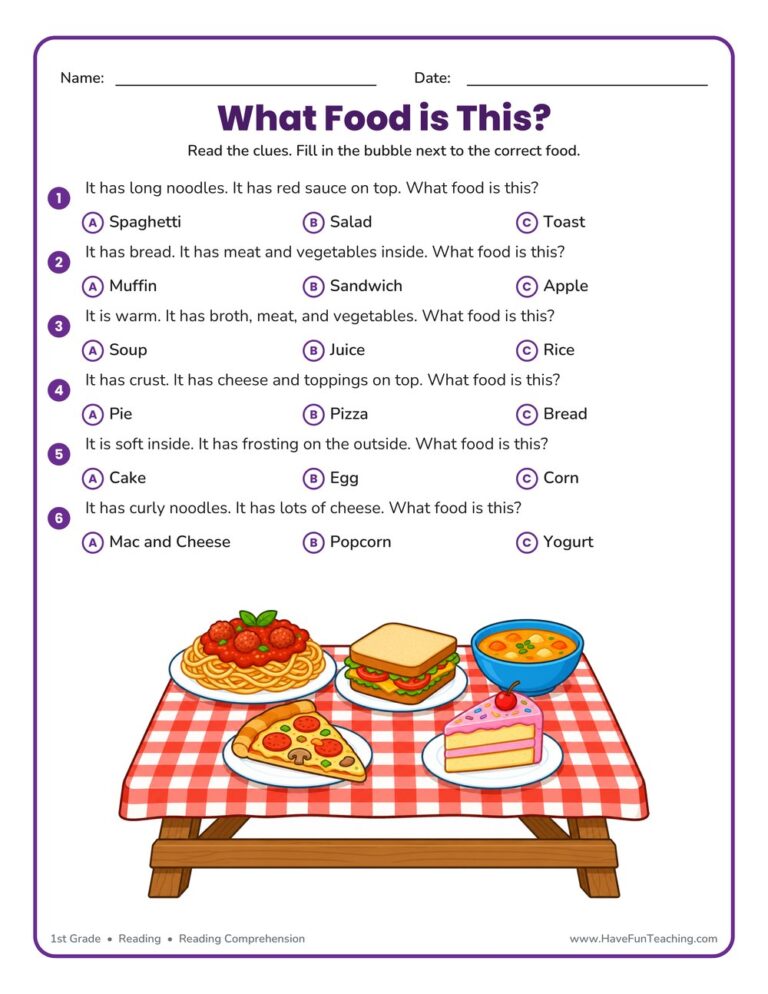
This what food is this reading comprehension worksheet lets 1st graders read food clues and choose the correct food in six fun riddles. Includes a complete answer key — great for quick, no-prep reading practice.

This physical properties matter worksheet gives 3rd grade students practice naming color, texture, size, shape, and mass, plus states of matter. An answer key is included, so checking work takes seconds.
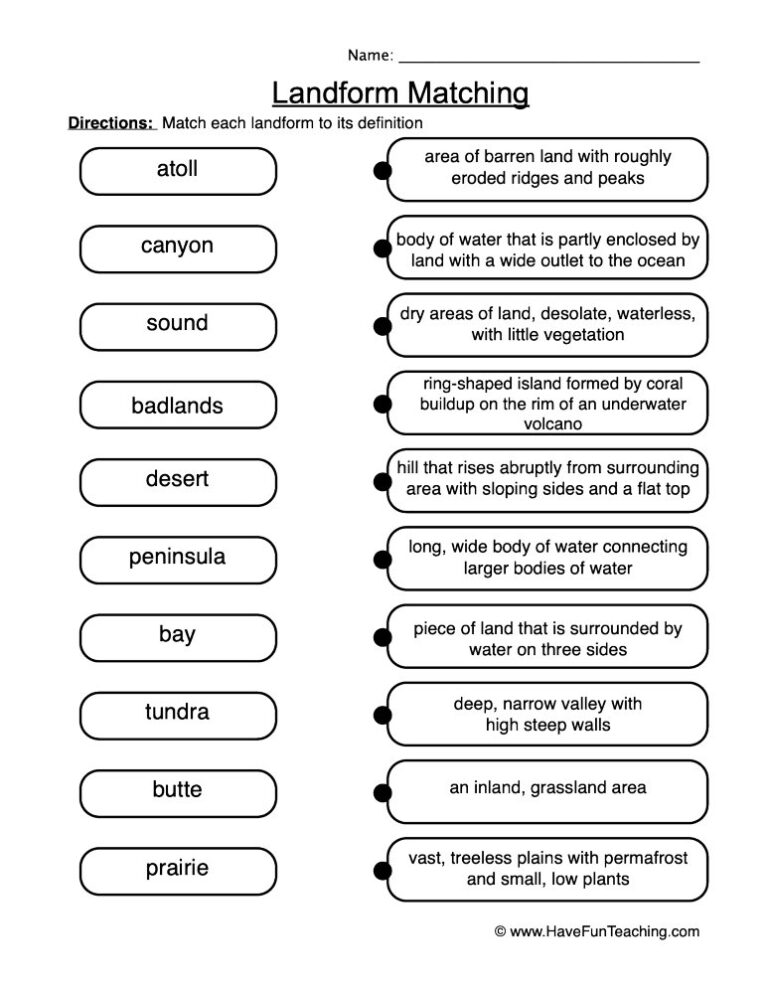
A landform definitions worksheet where 4th graders match six landforms to their meanings, complete clue sentences, and explain their thinking in writing. Answer key included for fast, no-prep geography review.
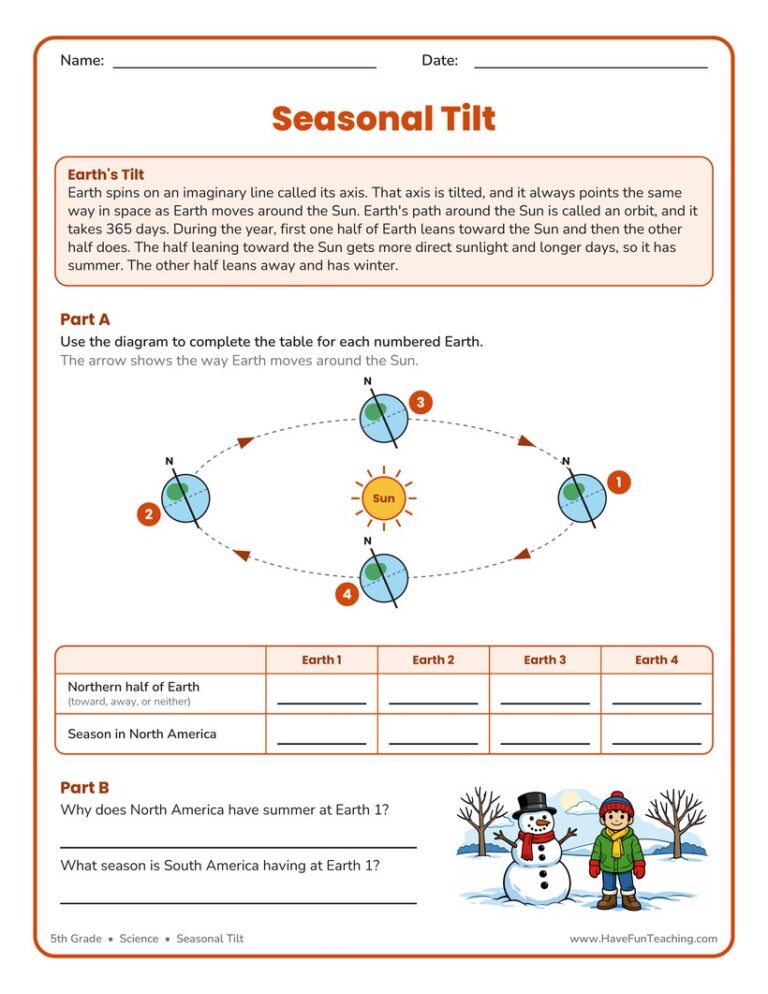
This Seasonal Tilt Worksheet asks 5th graders to read an Earth and Sun orbit diagram, name the season at four positions, and explain what causes the change. Answer key included for fast, confident grading.
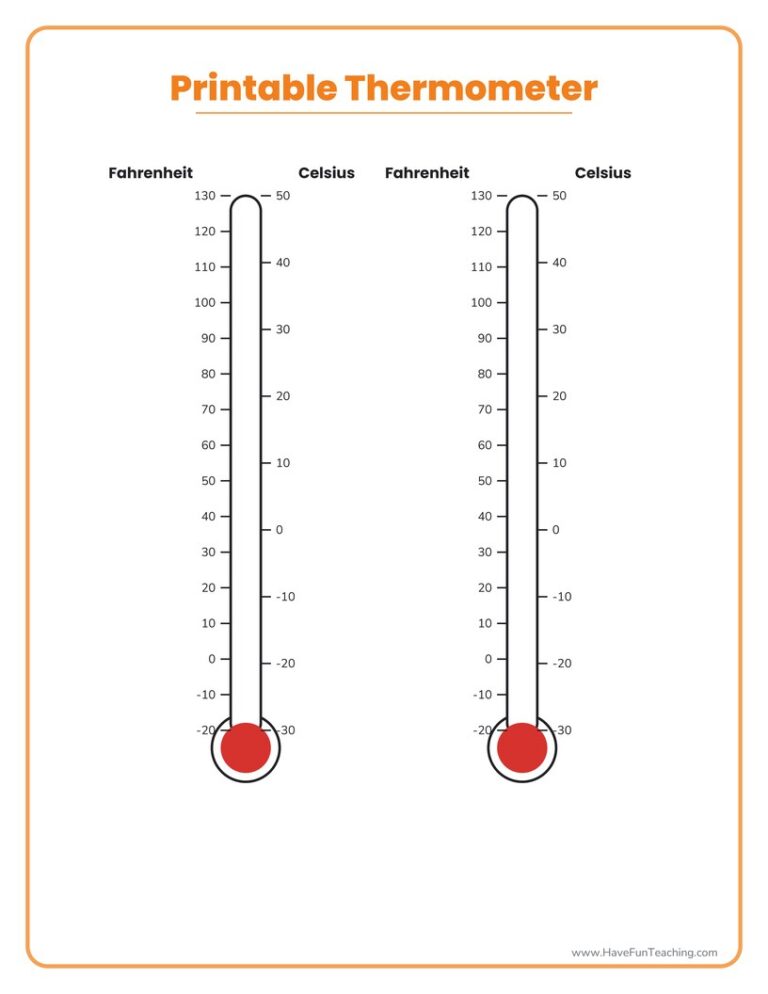
This Printable Thermometer shows Fahrenheit and Celsius scales side by side, giving 2nd grade students an easy classroom tool for tracking temperature and weather. Print, mark, and reuse all year long.
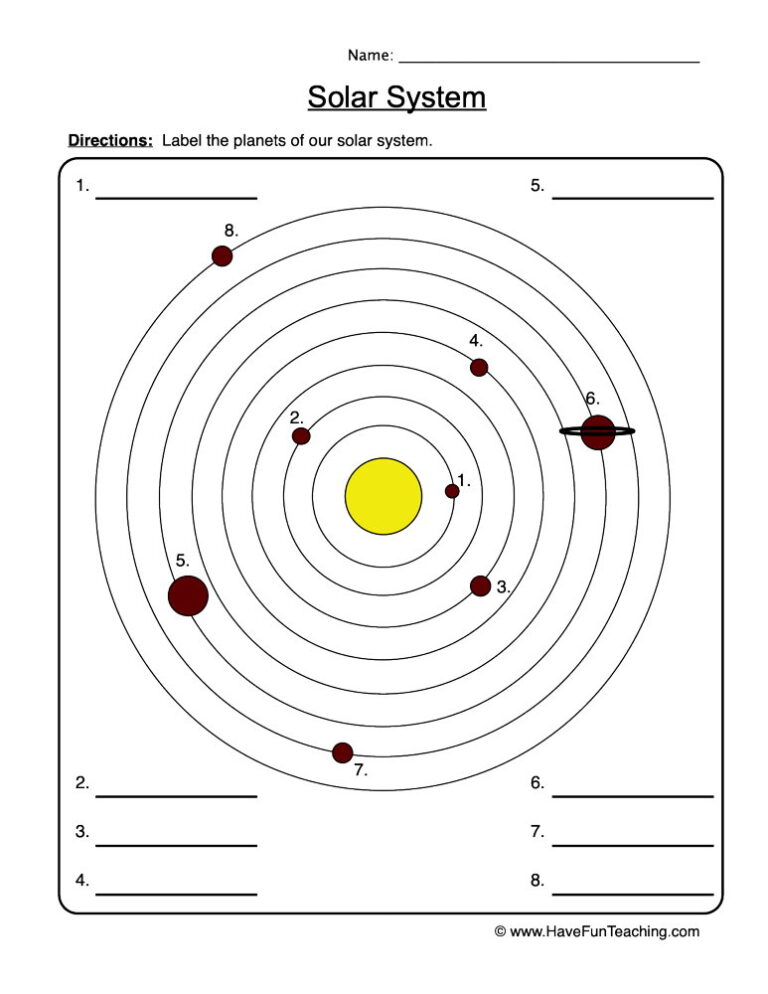
This solar system diagram worksheet has 4th graders label all eight planets in order from the Sun, then answer four questions about the diagram. An answer key is included, so review takes only minutes.
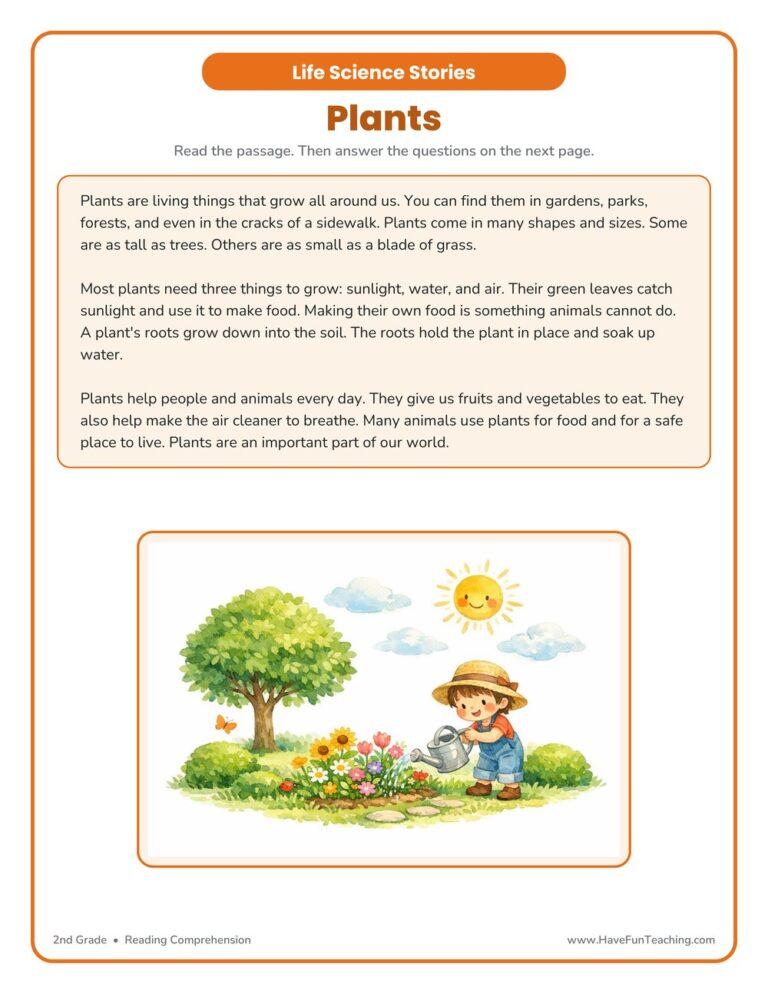
This Plants Life Science Reading Comprehension Worksheet gives 2nd graders a short nonfiction passage about plants plus questions that build reading comprehension. Includes a complete answer key — perfect for no-prep science and reading practice.



