Skip to content
Start My 3 Free Days $0 today · cancel anytime

Force Resources

26 force resources: 21 worksheets, 4 activities and 1 flash card. How teachers use these

Force Resources

26 force resources: 21 worksheets, 4 activities and 1 flash card. How teachers use these

Worksheet
Worksheet3rd GradeForces Motion Worksheet

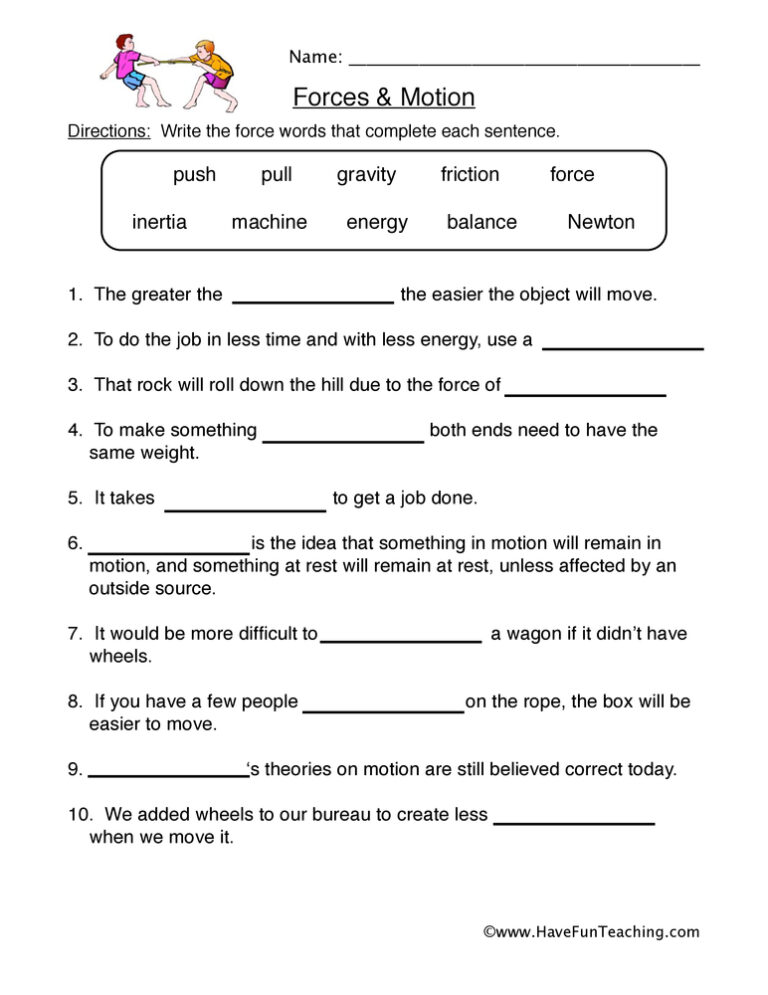
A 3rd grade forces motion worksheet where students use a word bank to complete eight sentences about force, push, pull, gravity, friction, motion, speed, and magnets. Includes an answer key for easy, no-prep science practice.

Worksheet
WorksheetKindergartenPush or Pull Force Worksheet

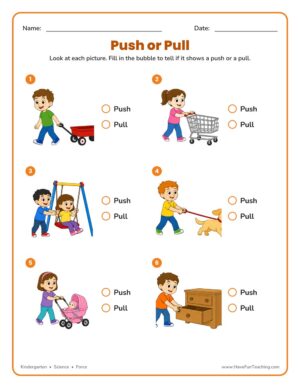
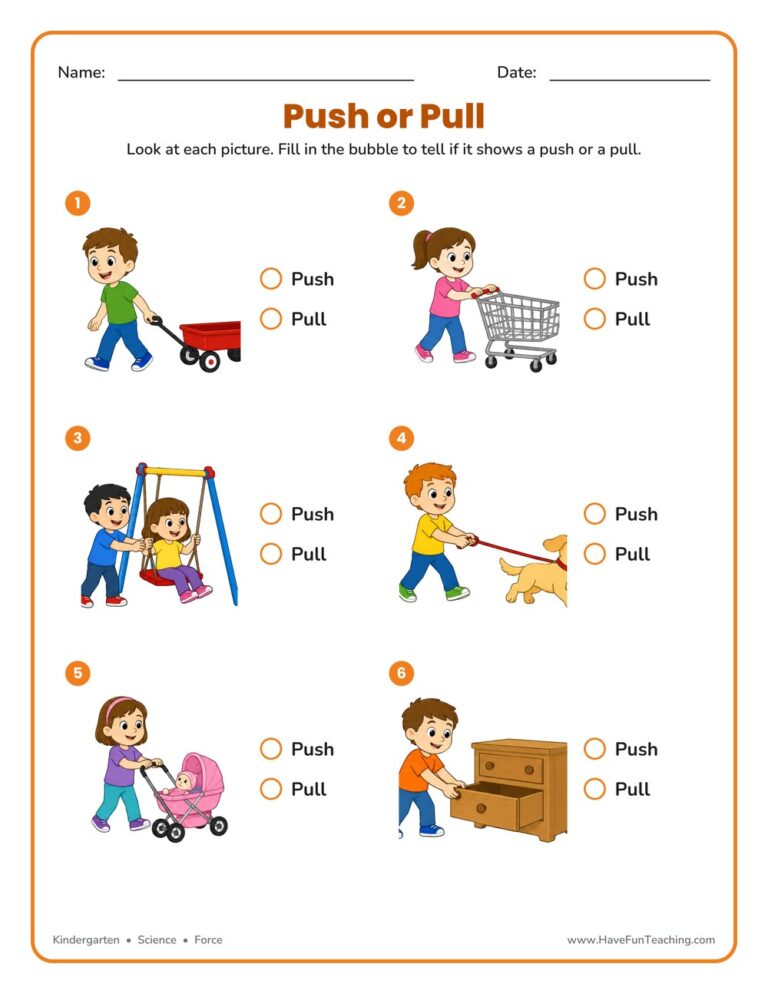
This push or pull force worksheet lets kindergarten students look at six pictures and fill in the bubble to show whether each action is a push or a pull. Includes an answer key—a simple, no-prep introduction to force.

Worksheet
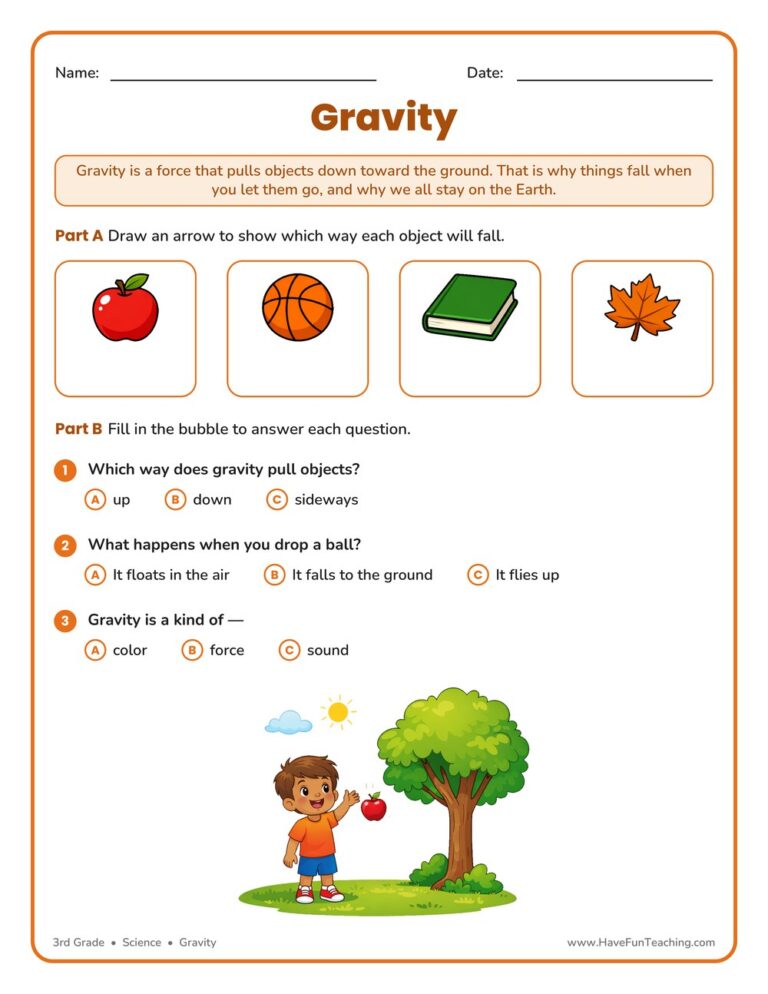
Worksheet3rd GradeFalling Gravity Worksheet

This falling gravity worksheet helps 3rd graders show which way objects fall and explain how gravity pulls things down. Answer key included — a quick, no-prep way to practice force and motion at home or in class.

Worksheet
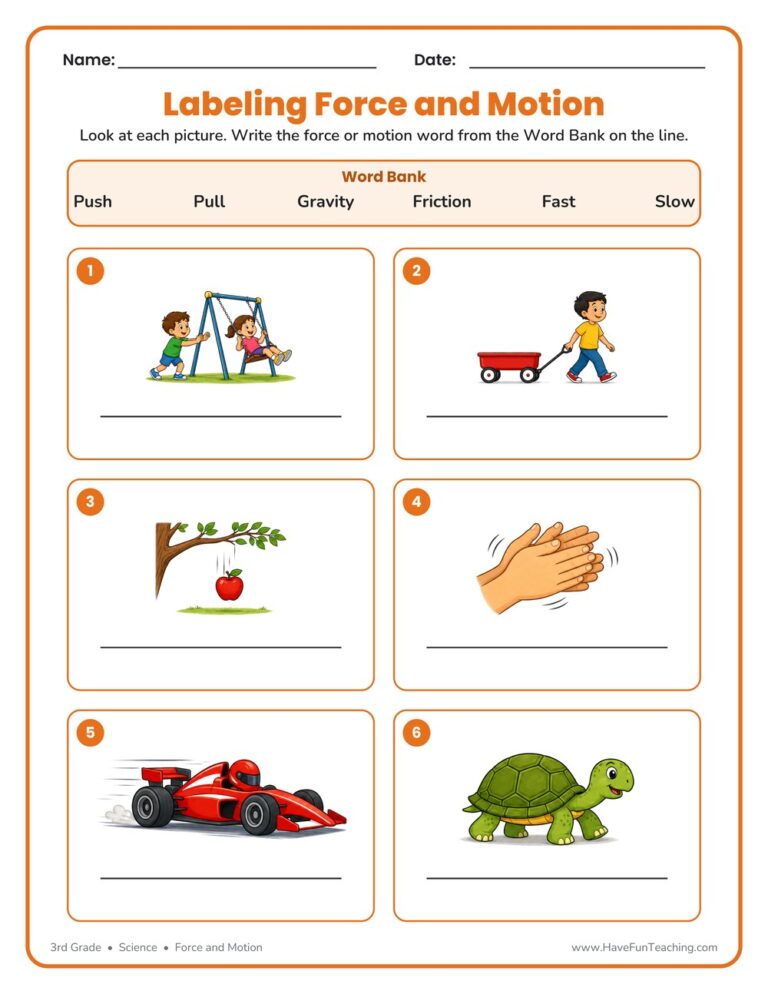
Worksheet3rd GradeLabeling Force and Motion Worksheet

The Labeling Force and Motion Worksheet has 3rd graders label six pictures with push, pull, gravity, friction, fast, and slow from a word bank. Includes an answer key for easy, no-prep science practice.

Worksheet
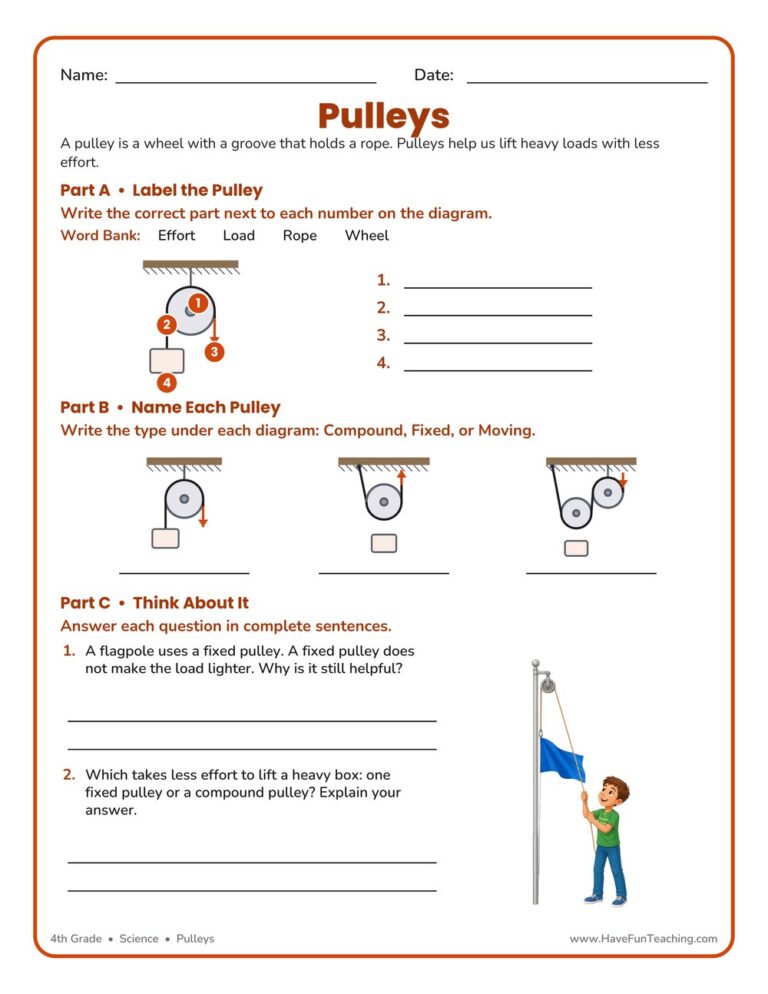
Worksheet4th GradePulleys Worksheet

This Pulleys Worksheet helps 4th graders label a pulley, compare fixed, moving, and compound pulleys, and explain how pulleys lift heavy loads. Includes an answer key — a no-prep way to practice simple machines science.

Worksheet
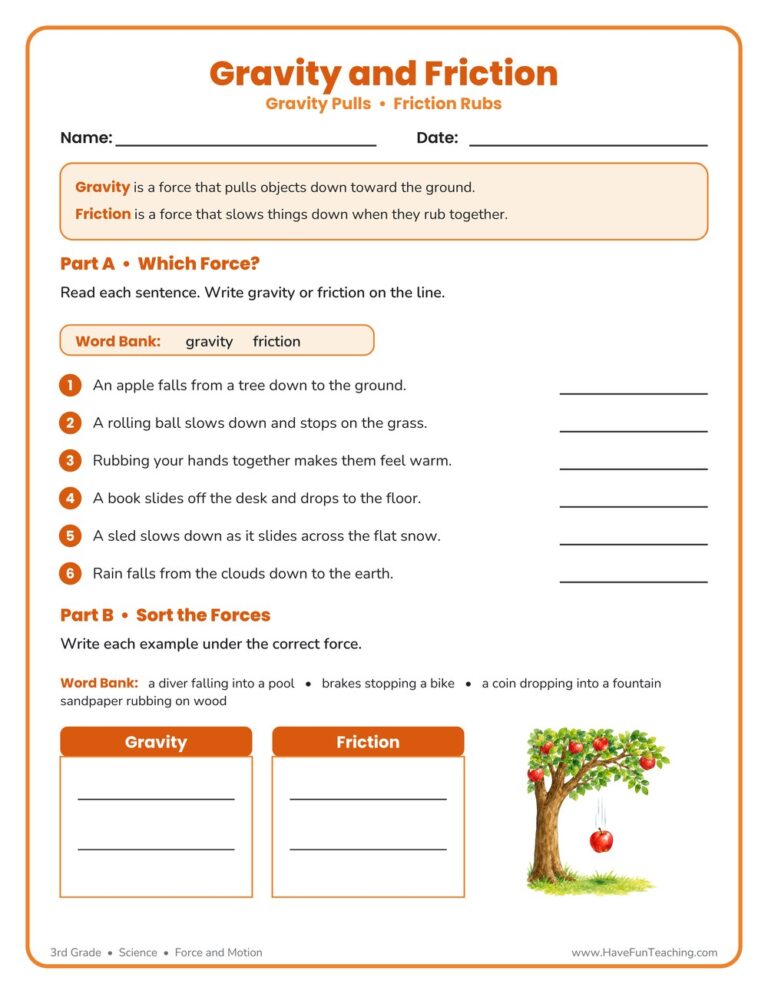
Worksheet3rd GradeGravity or Friction Force Worksheet

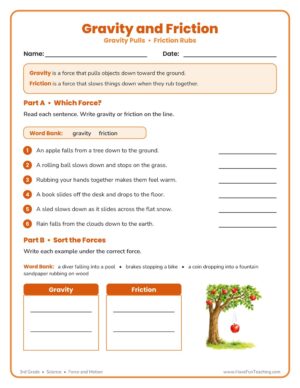
This Gravity or Friction Force Worksheet helps 3rd grade students tell the difference between gravity and friction by identifying and sorting real-life examples. Includes a complete answer key for quick, no-prep science practice.

Worksheet
Worksheet3rd GradeFall Faster Gravity Worksheet

This Fall Faster Gravity Worksheet asks 3rd graders to predict which dropped object lands first and to explain why, using gravity and air resistance. Answer key included for fast, no-prep science practice.

Worksheet
Worksheet3rd GradeDrawing Friction Worksheet

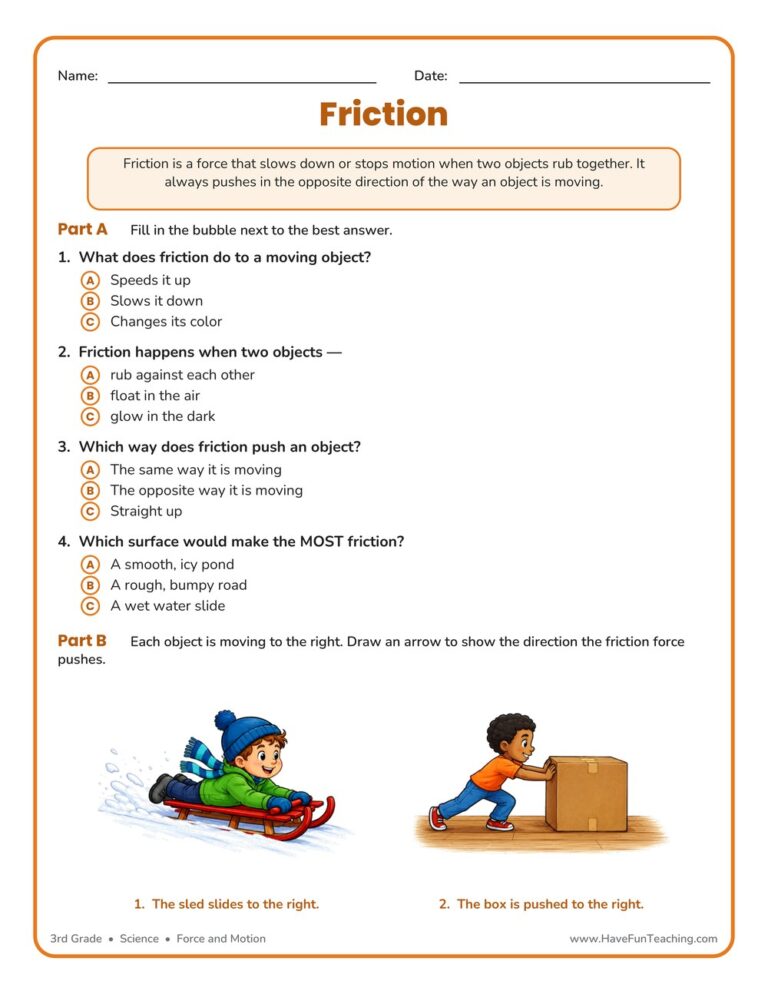
This drawing friction worksheet lets 3rd graders explore force and motion by answering questions and drawing arrows to show which way friction pushes. Answer key included for quick, no-prep science practice.

Worksheet
Worksheet3rd GradeMagnetism Worksheet

A magnetism worksheet for 3rd grade: sort eight classroom objects by whether a magnet attracts them, then find the magnetic object in four sentences. Answer key included for no-prep science practice.

Worksheet
Worksheet5th GradeNewton's Laws Force and Motion Worksheet

This Newton's Laws force and motion worksheet has 5th grade students name the law behind six everyday events and explain one in writing, with an answer key for fast checking.

Worksheet
Worksheet4th GradeLevers Worksheet

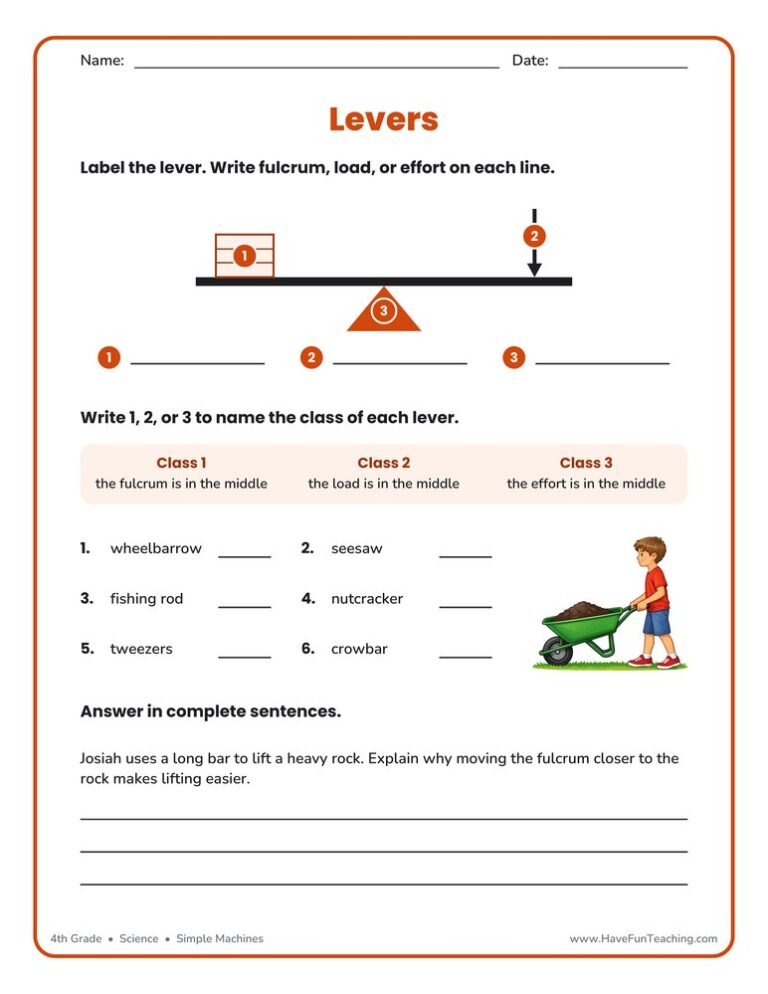
This Levers Worksheet helps 4th grade students label the fulcrum, load, and effort, then name the class of six everyday tools. An answer key is included, so practice checks fast.

Worksheet
Worksheet3rd GradeFriction Worksheet

This Friction Worksheet asks 3rd grade students to name the sliding, rolling, or fluid friction shown in six pictures, then explain one of them. An answer key is included, so checking work takes seconds.

Worksheet
Worksheet5th GradeSimple Machines Worksheet

This simple machines worksheet has 5th graders sort everyday objects into six machine columns and name the machine each tool uses. An answer key is included for quick, confident checking.

Worksheet
Worksheet1st GradeMagnetic Objects Worksheet

This magnetic objects worksheet lets 1st graders circle pictures and words to show which things a magnet will pull. An answer key is included for quick checking.

Worksheet
Worksheet1st GradeClassroom Objects Magnet Attraction Worksheet

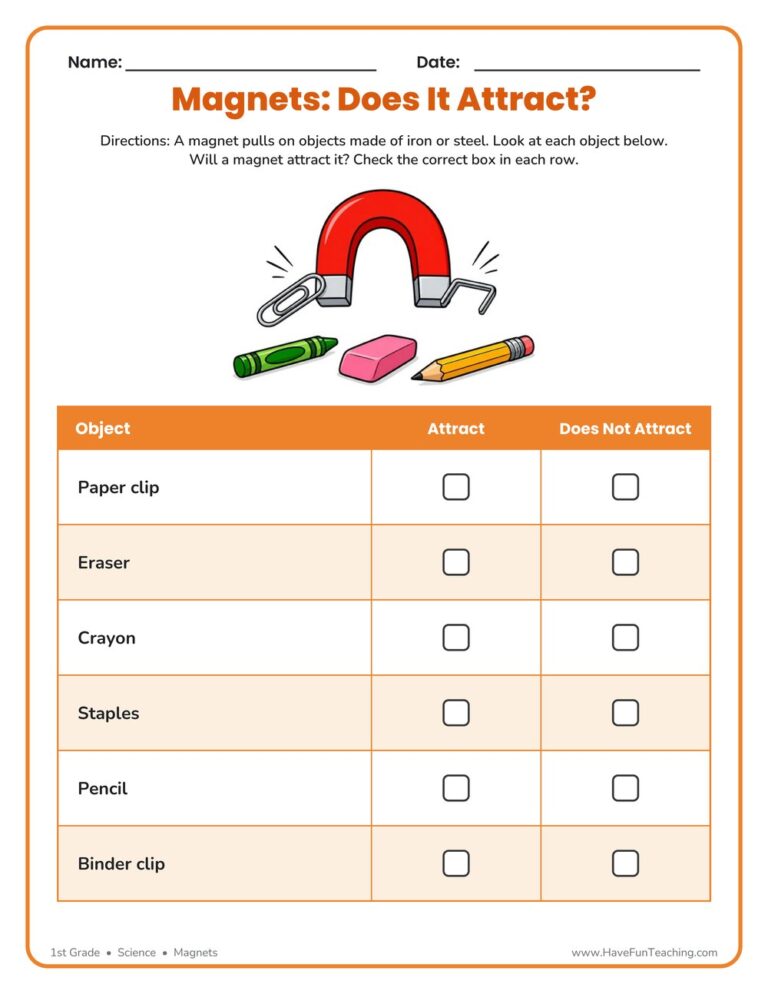
This first grade classroom objects magnet attraction worksheet has students sort six everyday items into attract or does-not-attract columns as they explore magnetism. Answer key included — a quick, hands-on way to practice physical science.

Worksheet
Worksheet3rd GradeFriction Worksheet - Draw

This friction drawing worksheet sends 3rd graders hunting for four real places where surfaces rub together. They sketch each one and write about it, turning an abstract force into something they can point to.

Activity
Activity2nd GradeMotion Activity

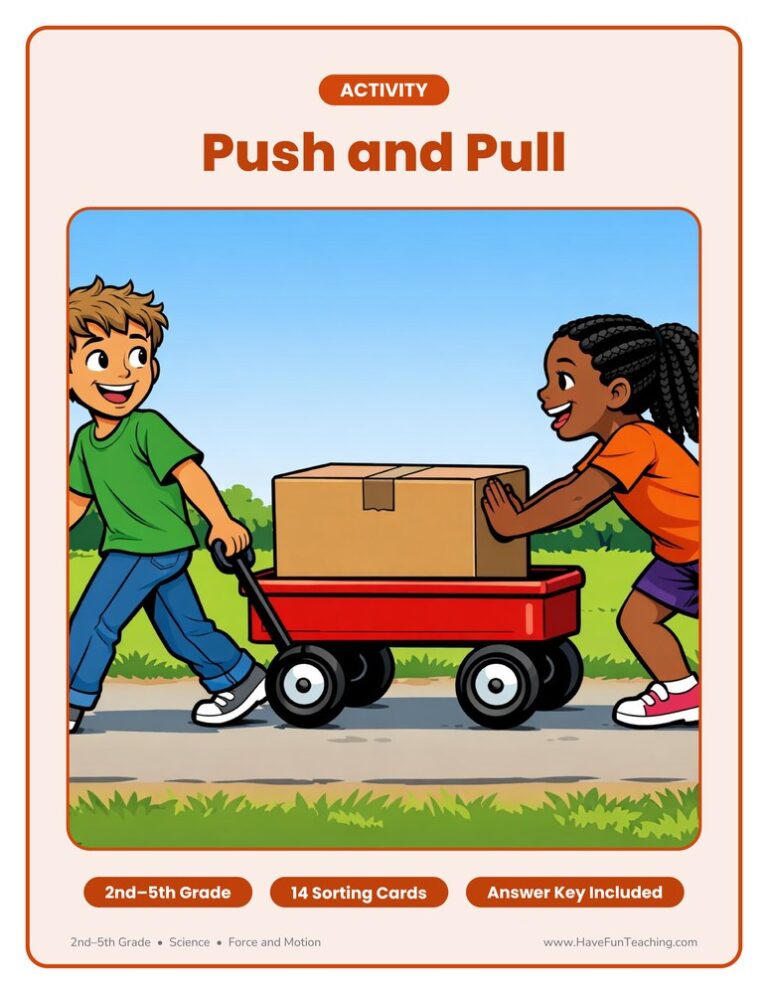
This motion activity helps 2nd to 5th grade students sort everyday actions into pushes and pulls, with 14 sorting cards, a practice page, and an answer key included.

Worksheet
Worksheet3rd GradeFields and Poles Magnets Worksheet

This fields and poles magnets worksheet has 3rd Grade students name the poles and field of a magnet, predict a push or a pull, and explain how a compass works. An answer key is included.

Activity
ActivityKindergartenMagnet Activity

This magnet activity has kindergarten to 3rd grade students sort picture cards into things a magnet will pull and things it will not, with a sorting mat, practice page and answer key.

Flash Cards
Flash Cards2nd GradeForce and Motion Word Wall

Post these force and motion word wall flash cards for 2nd to 5th grade: 16 science words with kid-friendly meanings, plus a vocabulary practice page, answer key included.

From our teachers' playbook

Push it, pull it, watch it go!

What do kids learn about force?

A force is a push or a pull, and forces make things start, stop, speed up, slow down or change direction. Kids learn about everyday forces like gravity pulling things down, friction slowing things on rough surfaces, and magnets pulling on some metals without touching. Older students explore balanced and unbalanced forces and how simple machines make work easier. The click moment comes when a child pushes a ball on carpet and on tile and explains, "The carpet has more friction!"

Our favorite ways to make force stick

Forces are everywhere, so kids learn best by testing them. These moves keep hands busy.

Test it with a ramp

Set up a ramp and roll a toy car down it, then change the height or the surface. Kids predict and record how far it goes. Changing one thing at a time teaches real science thinking.

Why it works: going from real objects to pictures to symbols is a core recommendation of the U.S. Department of Education's elementary math guide.
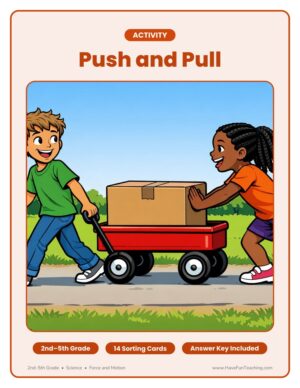
Motion ActivityTry it withMotion ActivityActivitiesOpen it →
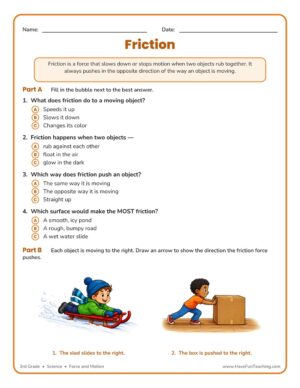
Draw the force arrows

After an experiment, have kids draw the object and add arrows showing which way each force pushes or pulls. Drawings make invisible forces visible and show what kids really understand.

Why it works: children learn more from words and pictures together than from words alone (Mayer, 2009).

Drawing Friction WorksheetTry it withDrawing Friction WorksheetWorksheetsOpen it →

Gravity or friction?

Give a mix of examples, like a falling apple and a sliding sled, and have kids decide which force is at work. Mixing forces on one page makes them think about each situation.

Why it works: shuffled practice teaches kids to choose the right strategy, not just repeat one, and it improved test scores in research (Rohrer and Taylor, 2007).

Gravity or Friction Force WorksheetTry it withGravity or Friction Force WorksheetWorksheetsOpen it →

Questions teachers and parents ask

What is a force for kids?

A force is a push or a pull. Forces can make objects move, stop, speed up, slow down or change direction.

What are the main types of forces kids learn?

Elementary students usually learn about pushes and pulls, gravity, friction and magnetism. Older students also study balanced and unbalanced forces.

Do heavier objects fall faster?

Not really. Without air in the way, objects fall at the same rate. Air resistance is why a feather or flat paper falls slower than a rock.

What's an easy force experiment at home?

Roll a toy car down a ramp onto different surfaces like carpet, tile and a towel. Measure how far it goes to see friction at work.

Keep exploring